
Near print getting fuzzy? You don’t have to give up contacts. Multifocal (progressive-style) contact lenses are designed to keep distance, computer, and reading clear — without juggling readers. If you already wear contacts and notice presbyopia creeping in, these can be a fast, glasses-free upgrade.
Already know what you are looking for?
Shop here: Shop Multifocal Contact Lenses
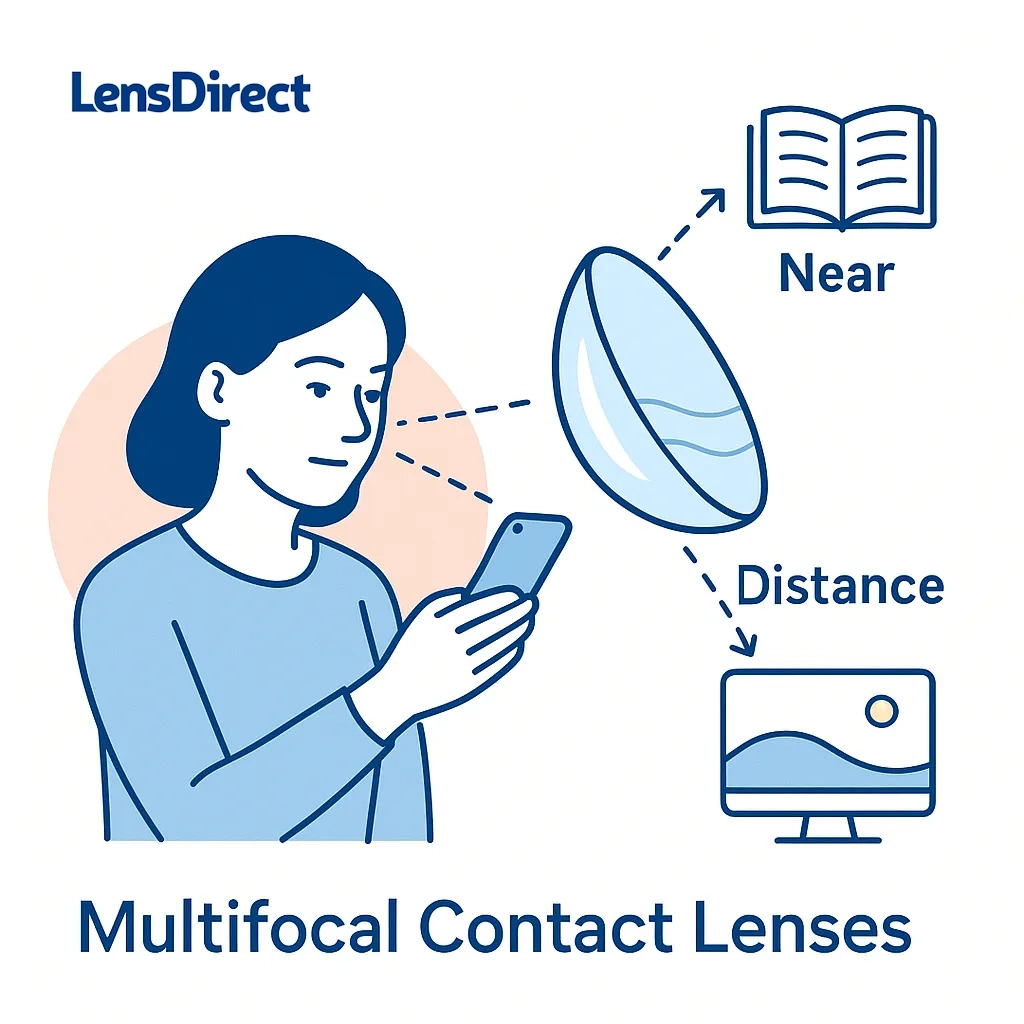
Presbyopia 101: Why Near Vision Changes After 40
Presbyopia is a normal age-related change: the eye’s internal lens becomes less flexible, so near tasks (labels, menus, phones) blur. Readers and progressive glasses help, but multifocal contacts let you stay glasses-free for most of your day — especially handy for work, workouts, and travel.
Transition: Once you know presbyopia is the culprit, the next step is choosing the right lens design.
Bifocal vs. Multifocal Contacts (and Monovision)
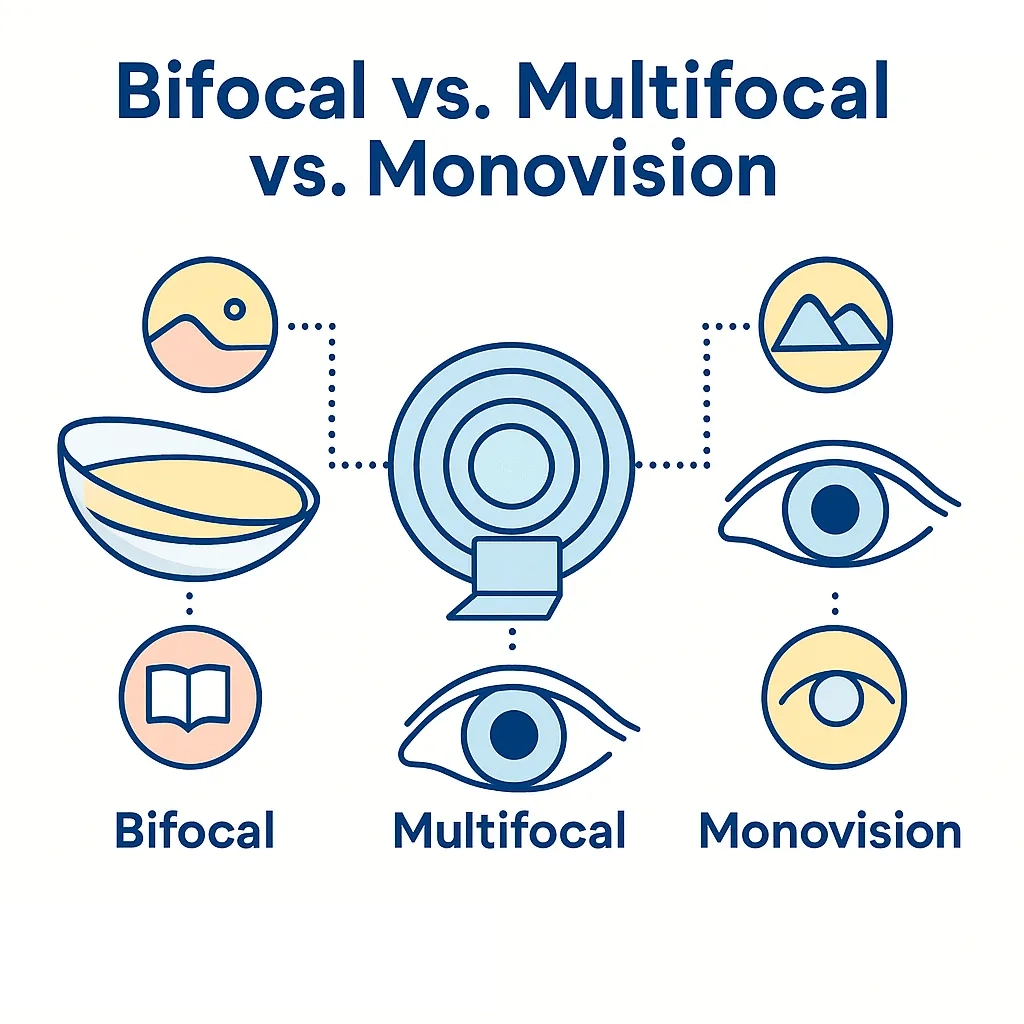
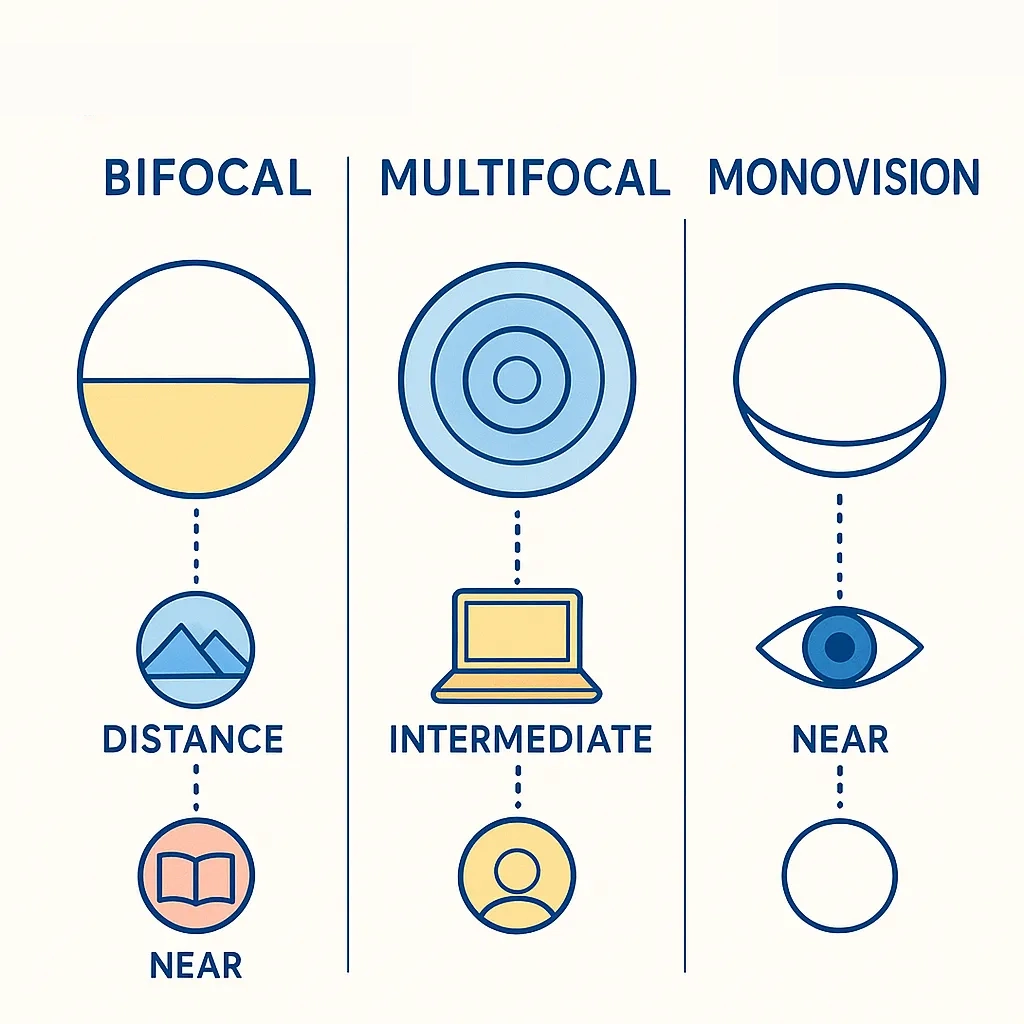
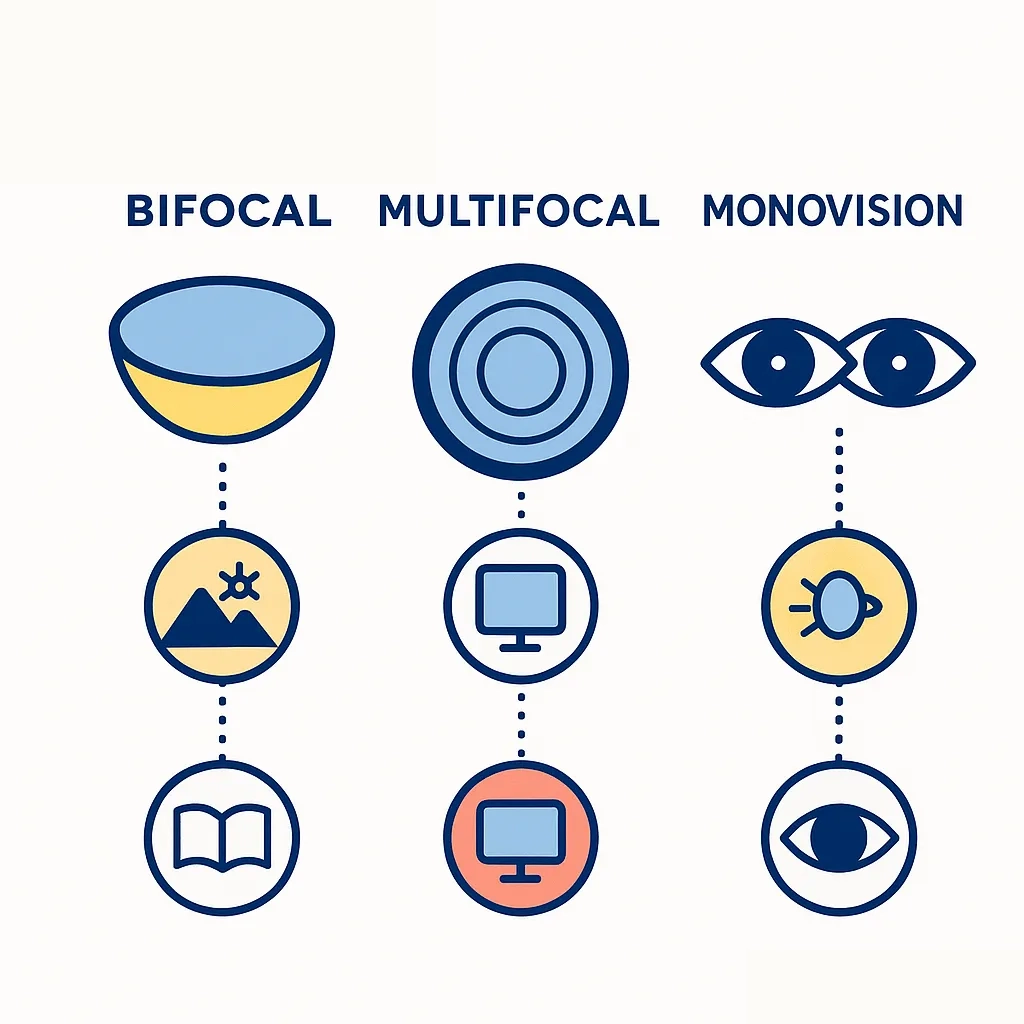
- Bifocal contacts: Two distinct zones for distance/near.
- Multifocal contacts: Multiple powers (aspheric or concentric) for distance → intermediate → near — similar in concept to progressive glasses.
- Monovision: One eye set for distance, the other for near. It’s simple, but some people notice reduced depth perception versus modern multifocals.
Explore designs on our Multifocal category or start with popular options like Biofinity Multifocal, PureVision 2 Multifocal, and Bausch + Lomb ULTRA for Presbyopia.
Transition: With the basics down, match the lens type to how you actually spend your day.
Who Benefits Most? (Real-World Use Cases)
- New presbyopes (~40–55): Keep wearing contacts — no readers needed for most tasks.
- Heavy screen users: Need a strong intermediate zone for laptops/monitors.
- Active lifestyles/travelers: Skip foggy, smudgy glasses at the gym, on runs, or on the go.
- Astigmatism wearers: Ask about toric multifocal designs or alternatives; start with toric contacts and discuss multifocal options with your prescriber.
- Dry-eye-prone wearers: Daily multifocals can be more comfortable and lower-maintenance.
Quick browse: Use filters on the Multifocal Contacts page to compare daily vs monthly options.
Lens Types & Wear Schedules
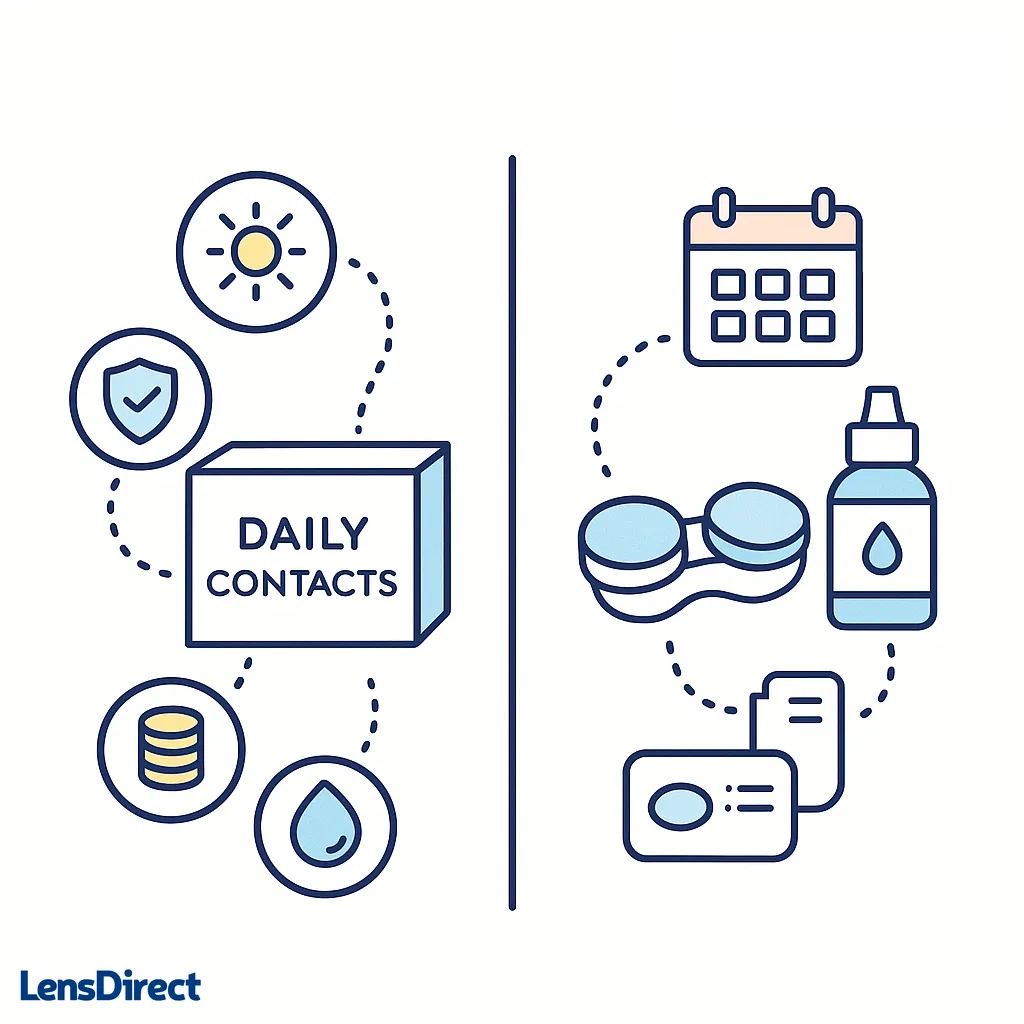
Soft dailies (max convenience & hygiene):
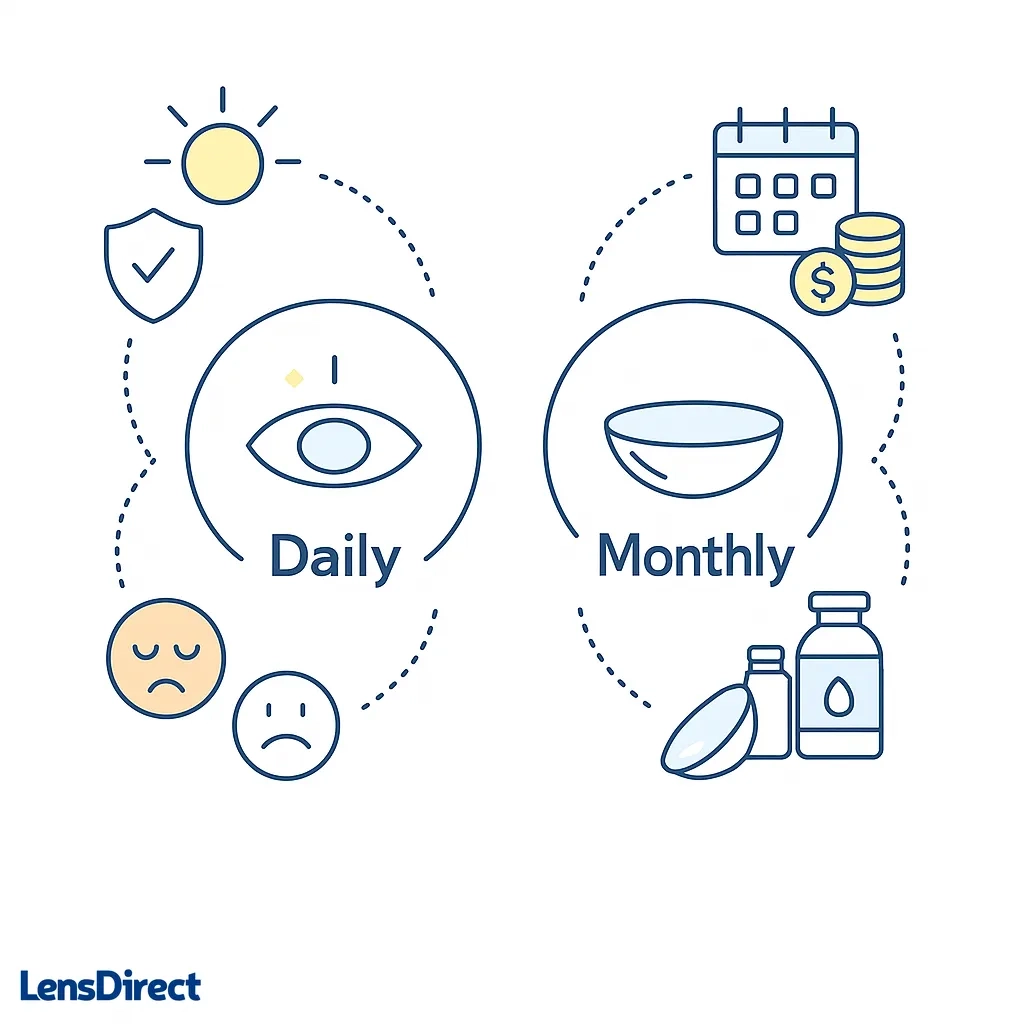
Monthlies (great value per day with proper care):

RGP/Hybrids:
- Maximum crispness for some wearers;
- Expect a short adaptation and get fit by your eye doctor.
Related read: Daily vs. Monthly Contacts: Pros, Cons & Best Practices
Fitting & Adaptation: What to Expect
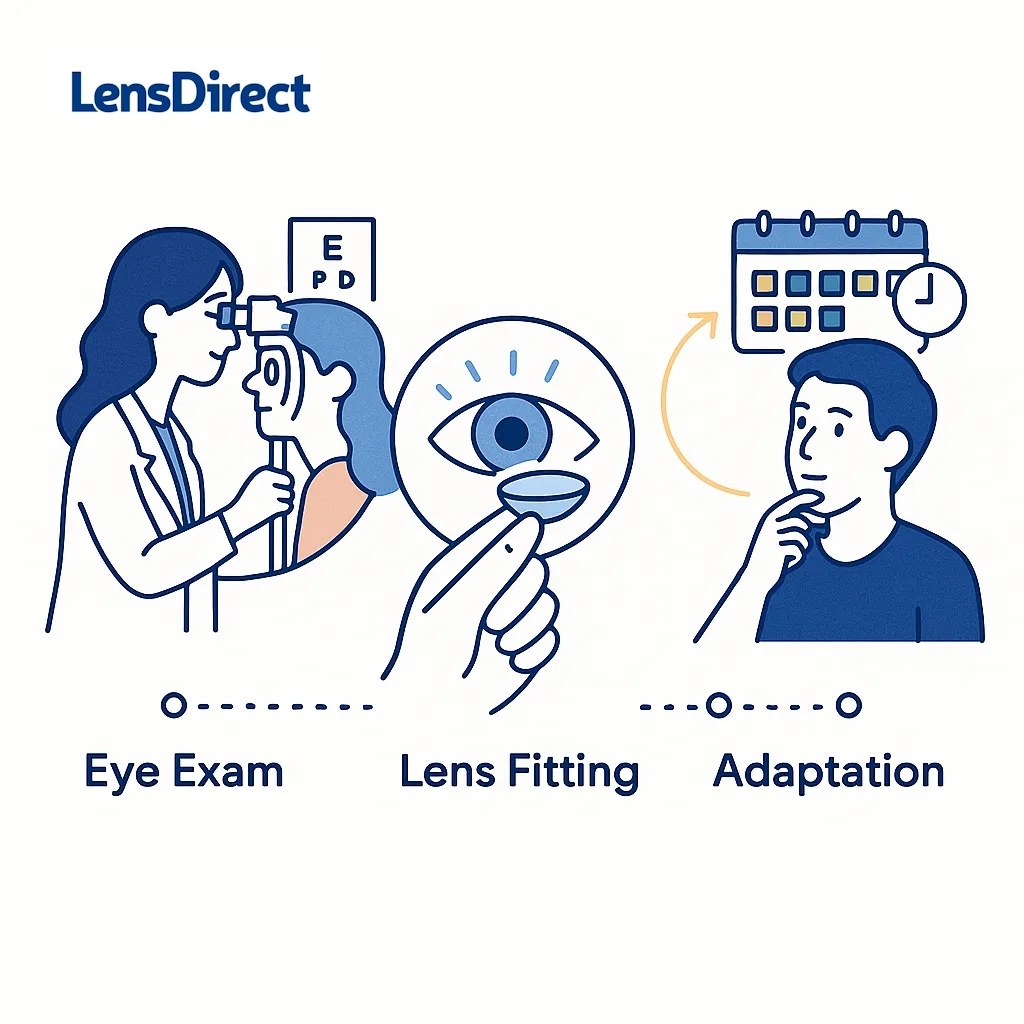
A great fit typically includes eye dominance testing, picking center-near or center-distance designs, and dialing in ADD power.
Plan on several days to a couple of weeks of consistent wear while your visual system adapts.
Mild low-light halos or ghosting often improve with fine-tuning; if night driving stays tricky, tell your fitter — they can tweak design, powers, or dominance.
Medical note: Informational only; not a substitute for professional care.
Bifocal vs. Multifocal vs. Alternatives (At-a-Glance)
| Option | Best For | Pros | Considerations | Try If You… |
| Soft Multifocal (Daily/Monthly) | All-distance convenience | Natural transitions; both eyes work together | Brief adaptation; occasional night halos | Want one-lens simplicity |
| Toric Multifocal | Presbyopia + astigmatism | Cylinder correction + multifocal benefits | Availability varies; professional fitting needed | Have noticeable astigmatism |
| RGP/Hybrid Multifocal | Maximum crispness | Sharp optics, great for detail tasks | Longer adaptation; specialty fitting | Want the sharpest optics |
| Monovision | Simple, budget-friendly setup | Easy to trial and refine | Reduced depth perception for some tasks | Didn’t love multifocal optics in trials |
| Readers + Distance Contacts | Occasional near work | Cheapest/fastest “backup” | Carry readers; not hands-free | Only need near help sometimes |
Cost, Insurance, HSA/FSA
Dailies typically cost more per day but save time on care; monthlies are cost-efficient with proper hygiene (see daily vs. monthly).
You can use HSA/FSA on eligible items and submit for out-of-network reimbursement — see our Vision Insurance page and FAQ on using HSA/FSA with insurance.
How to Read Your Multifocal Rx (So Ordering Is Easy)
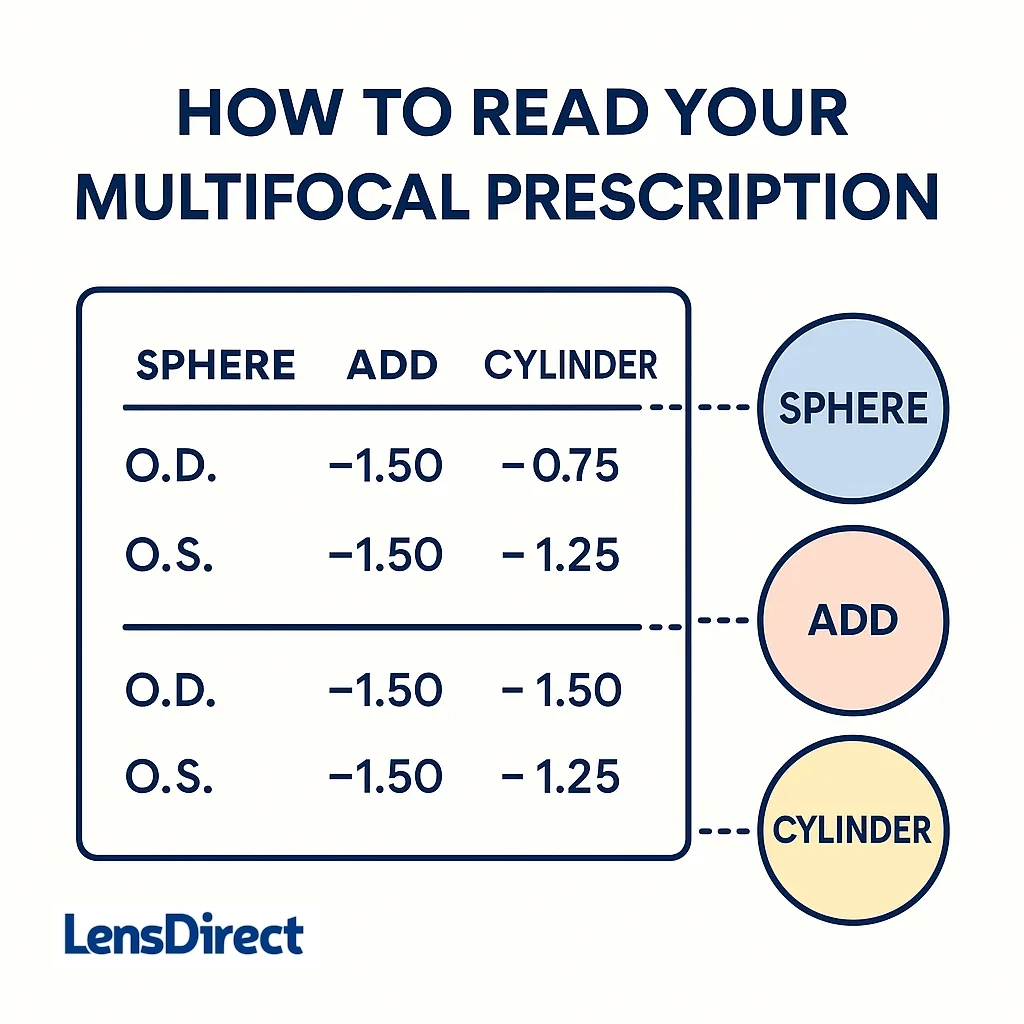
Your contact lens Rx may include Sphere (Power), ADD (near boost), and for astigmatism, Cylinder/Axis. Some prescriptions also specify a brand family or design. New to this? Start here:
- How to Read a Contact Prescription
- Eyeglass Rx Terms (incl. ADD & Base Curve)
- Optional precision step: Measure your PD or print our PD ruler and learn how to dot your pupils for Rx orders.
How Ordering Works at LensDirect (Step-by-Step)
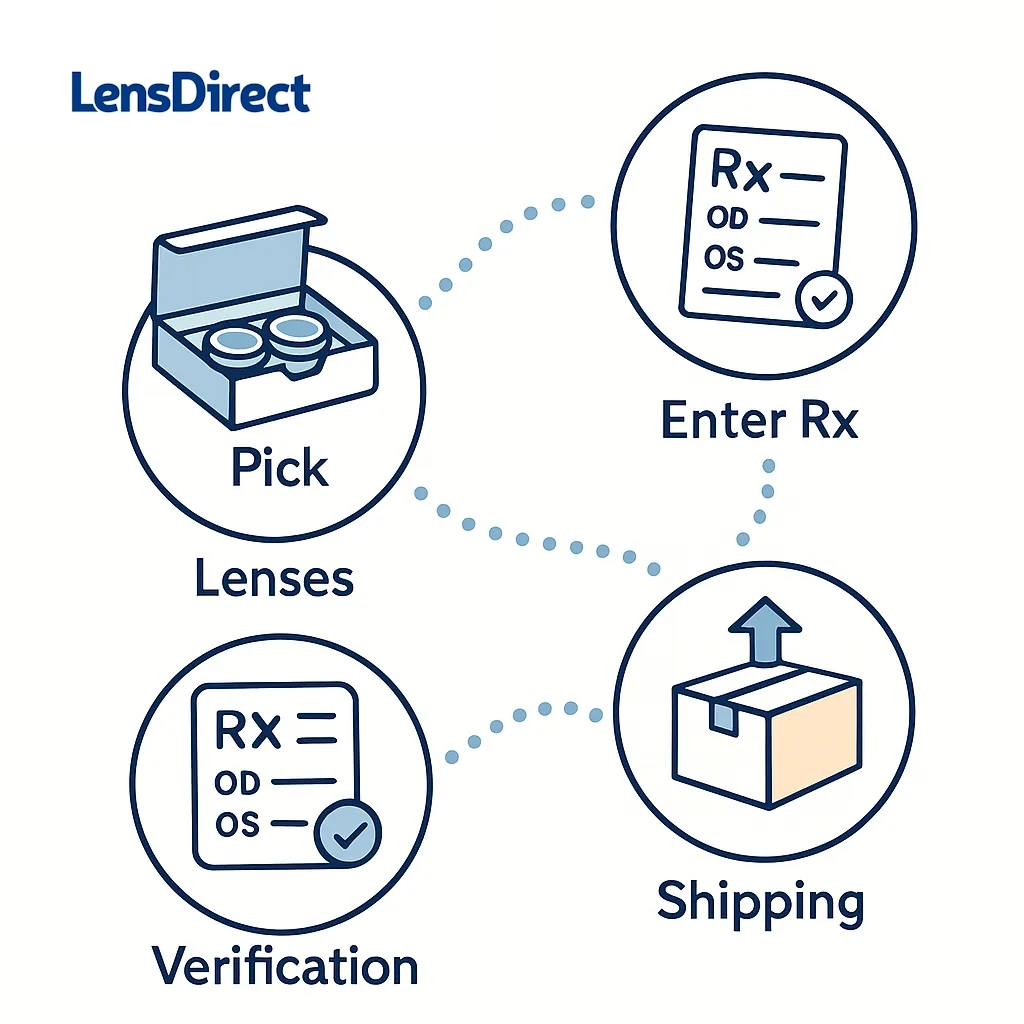
- Pick your lens from Multifocal Contacts (filter daily/monthly/toric).
- Enter your Rx exactly as written.
- We verify your prescription with your prescriber — see: Do I need a prescription to order? and How does LensDirect confirm my prescription?.
- You’ll get order updates; after verification, most orders ship quickly (specialty toric/multifocals can take a bit longer).
Pro tip: Turn on Subscribe & Save for auto-refills and ongoing savings.
Care & Comfort Tips (Keep Vision Crisp)
- Dailies: Fresh pair every day — great for allergy or dry seasons.
- Monthlies: Rub-and-rinse nightly, fresh solution, on-schedule replacement (set reminders).
- Refreshers: Carry contact-safe drops like OptiFree PureMoist Rewetting Drops.

Who Might Not Be a Good Candidate?
If you have uncontrolled dry eye or ocular surface disease, irregular corneas, or critical low-light job needs, your doctor may recommend alternative designs or task-specific glasses. A brief professional fitting confirms candidacy quickly.
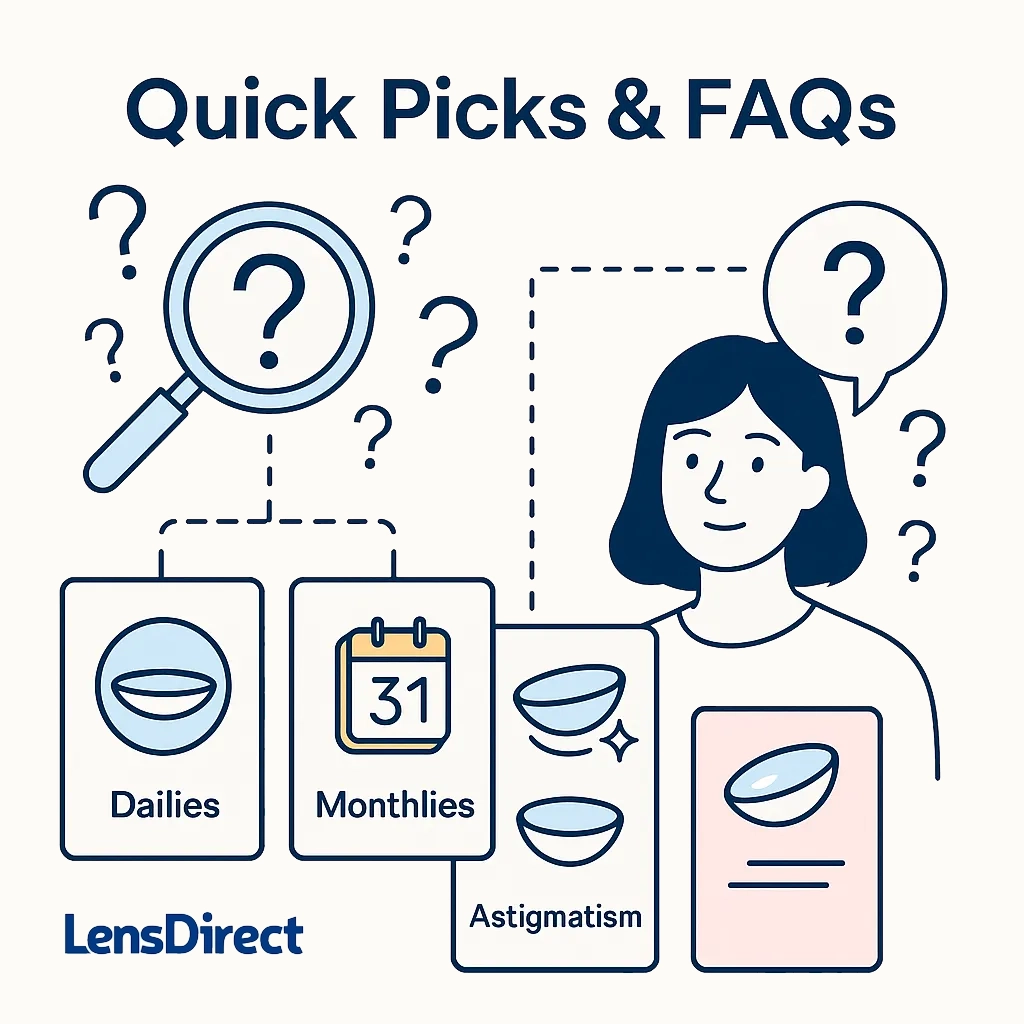
Quick Picks (Choose Your Path)
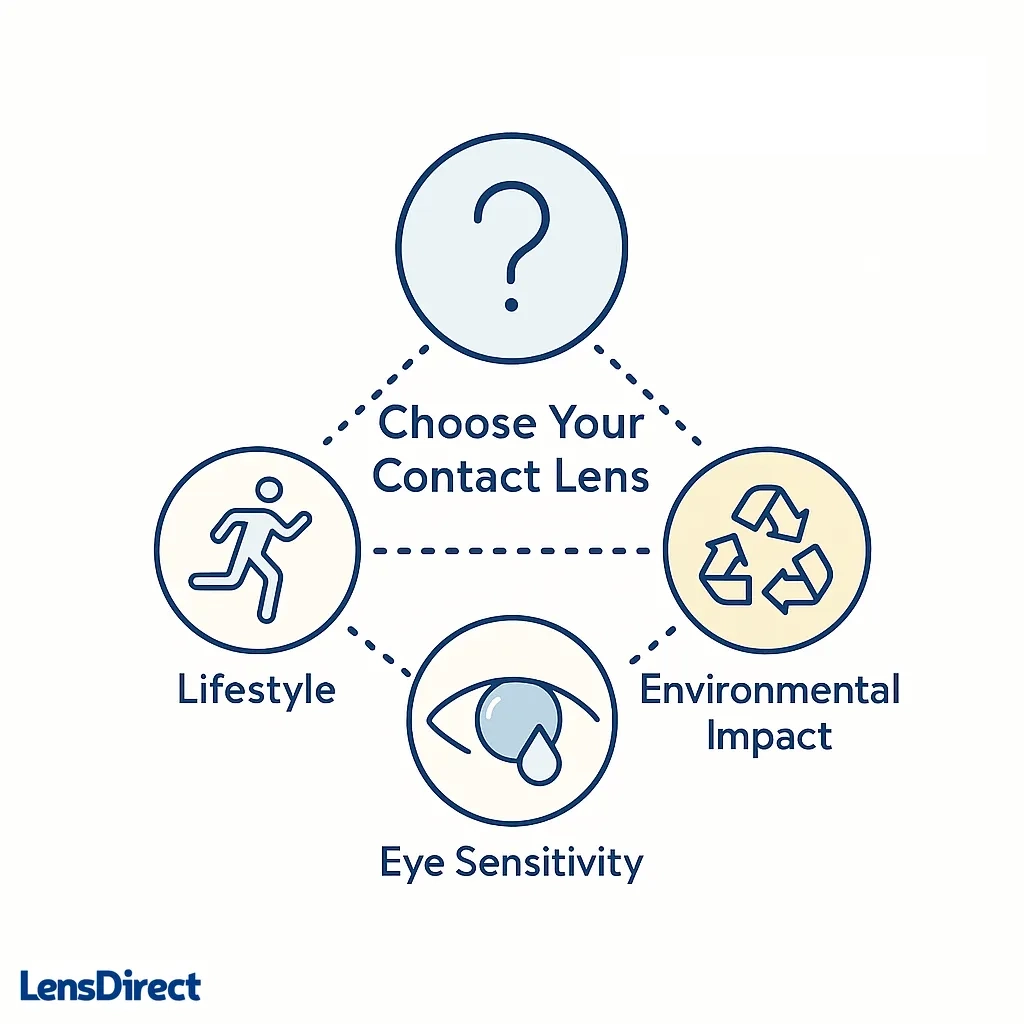
- “Set-and-forget hygiene” → Dailies like DAILIES Total 1 Multifocal or 1-Day Acuvue Moist Multifocal.
- “Best value per day” → Monthlies like Biofinity Multifocal or PureVision 2 Multifocal.
- “I have astigmatism” → Start with Toric Contacts and ask about multifocal solutions.
Get Started with LensDirect Today
If you want glasses-free clarity from grocery aisles to spreadsheets to tonight’s book, multifocal contacts are designed for exactly that.
Get a quick professional fitting, then order with easy Rx verification, fast shipping, and subscription savings at LensDirect.
Start shopping: Multifocal Contacts • Compare Daily vs. Monthly • Use HSA/FSA or Insurance Reimbursement
Frequently Asked Questions
Are multifocal contacts the same as progressive glasses?
They’re analogous — multiple powers in one lens — but contact-lens optics differ because the lens sits on the eye. Many wearers find multifocals feel natural after a brief adaptation.
How long does adaptation take?
Often several days to a couple of weeks. If night driving or tiny print stays tricky, your fitter can adjust design (center-near vs center-distance), dominance, or ADD power.
Can I wear multifocal contacts with astigmatism?
Yes — ask about toric multifocal options. Availability varies by brand and prescription. Start with toric contacts and discuss multifocal fits with your prescriber.
Do I still need readers sometimes?
Some people keep a slim pair for tiny print in dim lighting — especially with lower ADD powers. It’s a common, practical combo.
Are daily or monthly multifocal contacts better?
It depends on routine and comfort. Dailies maximize convenience and hygiene; monthlies can be more cost-efficient with proper care. Compare here: Daily vs. Monthly Contacts.
Can I drive at night with multifocals?
Many people do fine; early on you may notice mild halos or ghosting that often improve with fine-tuning. Tell your eye doctor if issues persist — they can tweak the fit.
Can I subscribe for automatic deliveries?
Yes — enable Subscribe & Save at checkout to get on-time refills and savings.
How do I measure PD for ordering?
Use our PD measurement tool or print a PD ruler. For precise orders, learn how to dot your pupils.
Author

Subscribe to our email newsletter to get the latest posts delivered right to your email.