
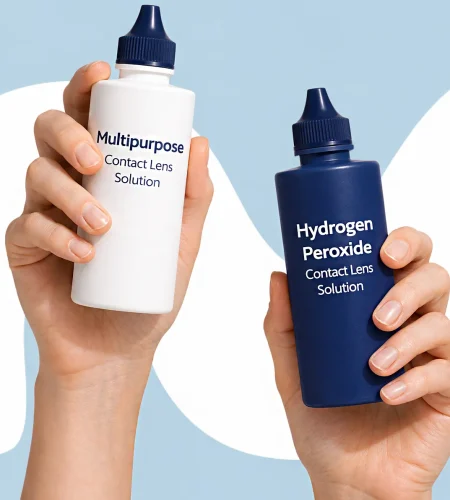
Choosing a contact lens cleaning system is not just about “what’s popular.” It is about matching the disinfecting method to your eyes, your schedule, and how you actually use your lenses day to day.
This guide is for contact lens wearers who want a clear, practical comparison of multipurpose contact lens solution vs. hydrogen peroxide systems, including how to clean contact lenses properly, how to keep your contact lens case hygienic, and what to pack for travel. You will also get an easy checklist to decide which system fits your routine.
Quick definitions: the two main cleaning systems
Multipurpose solution (MPDS)
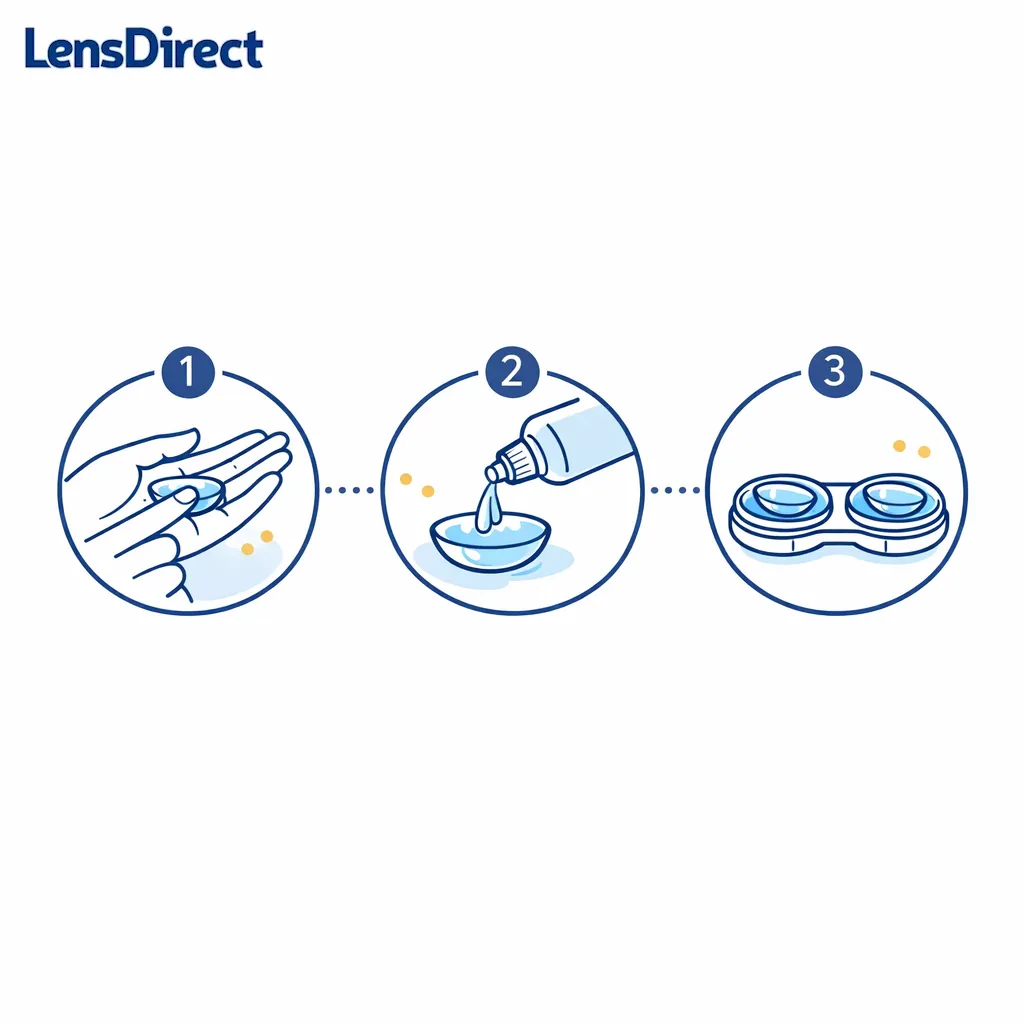
Multipurpose solutions are designed to clean, rinse, disinfect, and store soft contact lenses in one bottle, following the product label. The FDA describes these as multipurpose (all-in-one) solutions used for cleaning, rinsing, disinfecting, and storing.
Most routines are straightforward: rub and rinse the lens, then store it in fresh solution in a clean case. The convenience makes MPDS a common choice for busy schedules and travel.
Hydrogen peroxide-based systems
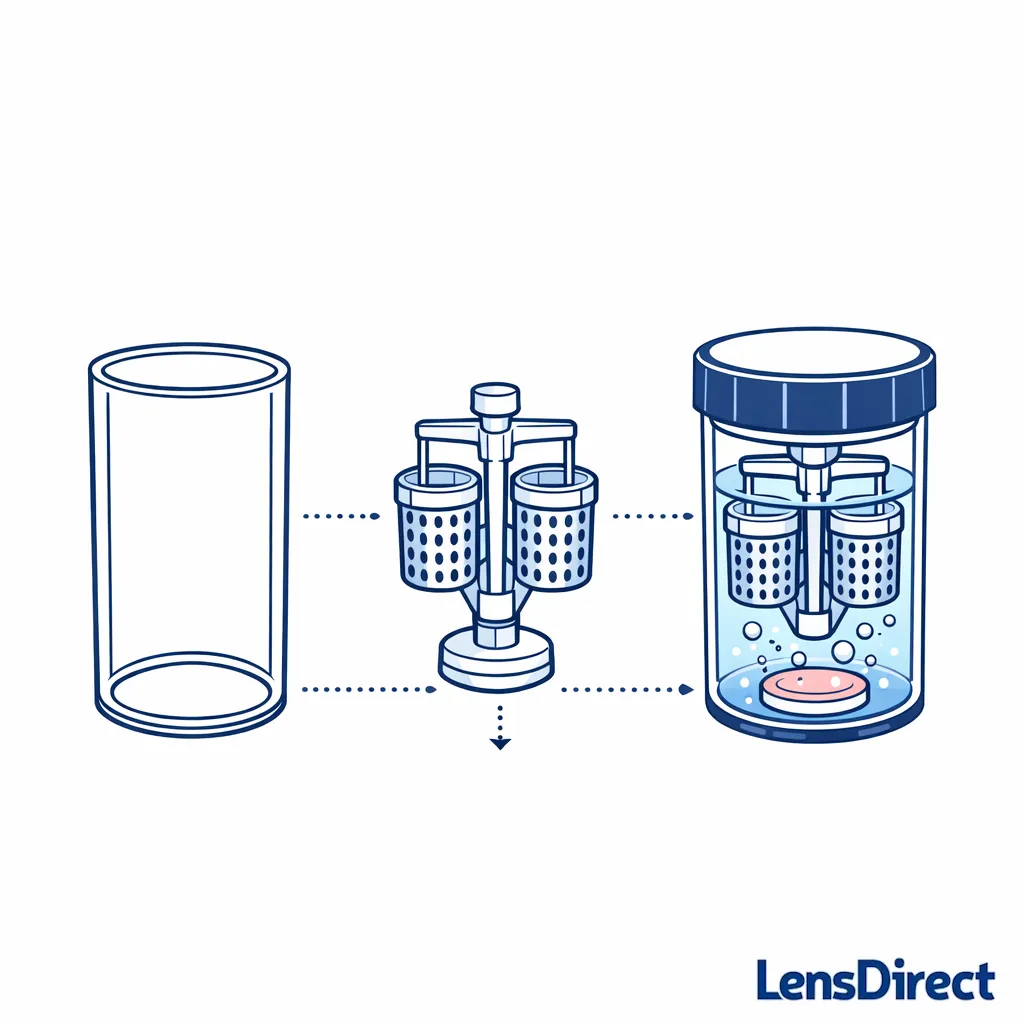
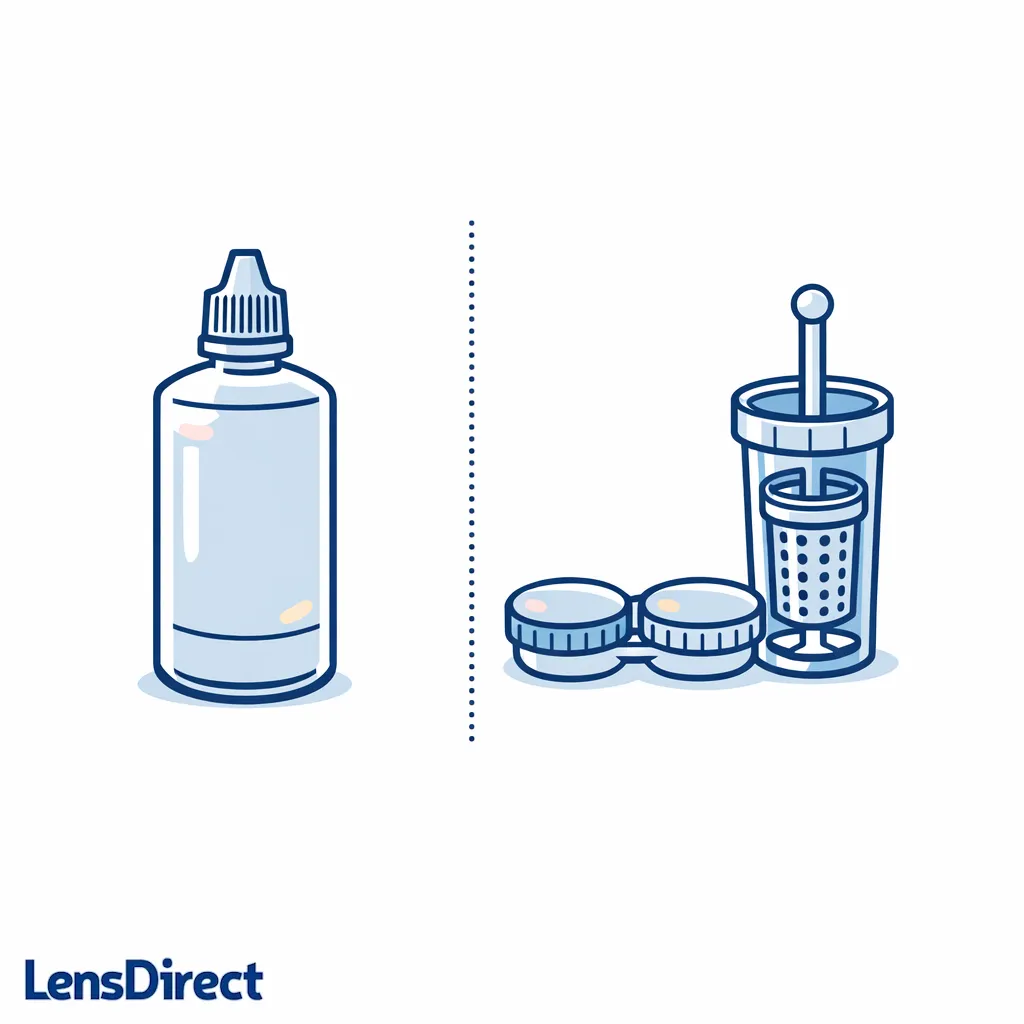
Hydrogen peroxide contact lens solutions disinfect using peroxide and require a special case that neutralizes the peroxide before the lenses can be worn. The FDA explains that hydrogen peroxide-based systems require neutralization and use a special lens case, which is why you should never “swap in” a regular case.
This category includes products often compared as “Clear Care vs multipurpose solution,” but the key distinction is the system type, not the brand name. The routine can be very comfortable for some people, but it is less flexible if you need a quick same-night clean-and-wear cycle.
How they work (and why the steps matter)
Disinfection is non-negotiable
Both systems are meant to disinfect lenses to reduce the risk of eye infection when used as directed. The CDC notes that improper lens care can lead to serious eye infections and complications, which is why “shortcuts” are not worth it.
If you are ever unsure whether your lenses are safe to put in, it is better to switch to backup glasses for the day and contact your eye care professional for guidance.
Multipurpose: simple steps, but technique matters
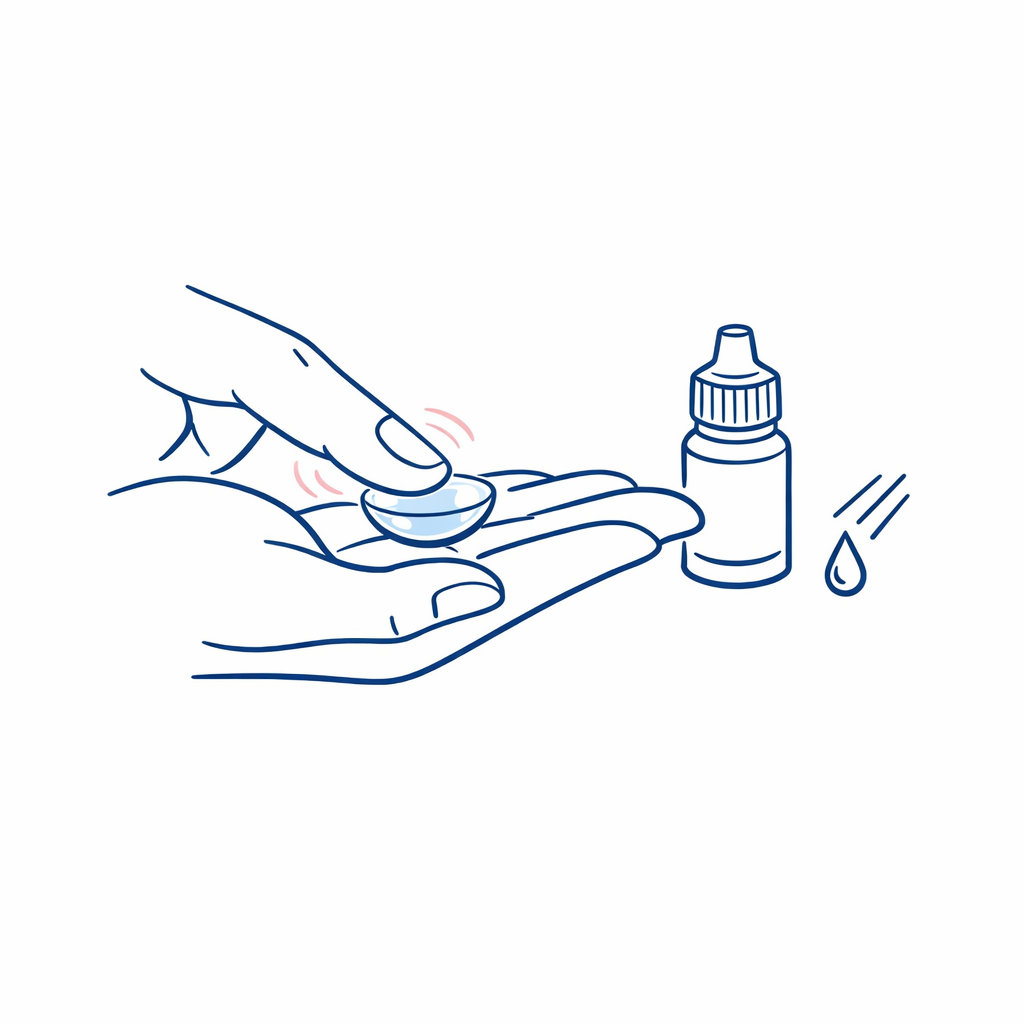
A common misconception is that “no-rub” means you can skip rubbing entirely. The CDC’s lens care guidance emphasizes following directions and includes steps for cleaning and disinfecting contact lenses properly, which typically includes rubbing and rinsing unless your eye doctor and the product labeling say otherwise.
Multipurpose routines are forgiving in the sense that you can disinfect and store in the same case. They are not forgiving if you re-use old solution or let case hygiene slide.
Hydrogen peroxide: powerful disinfection, with one big safety rule
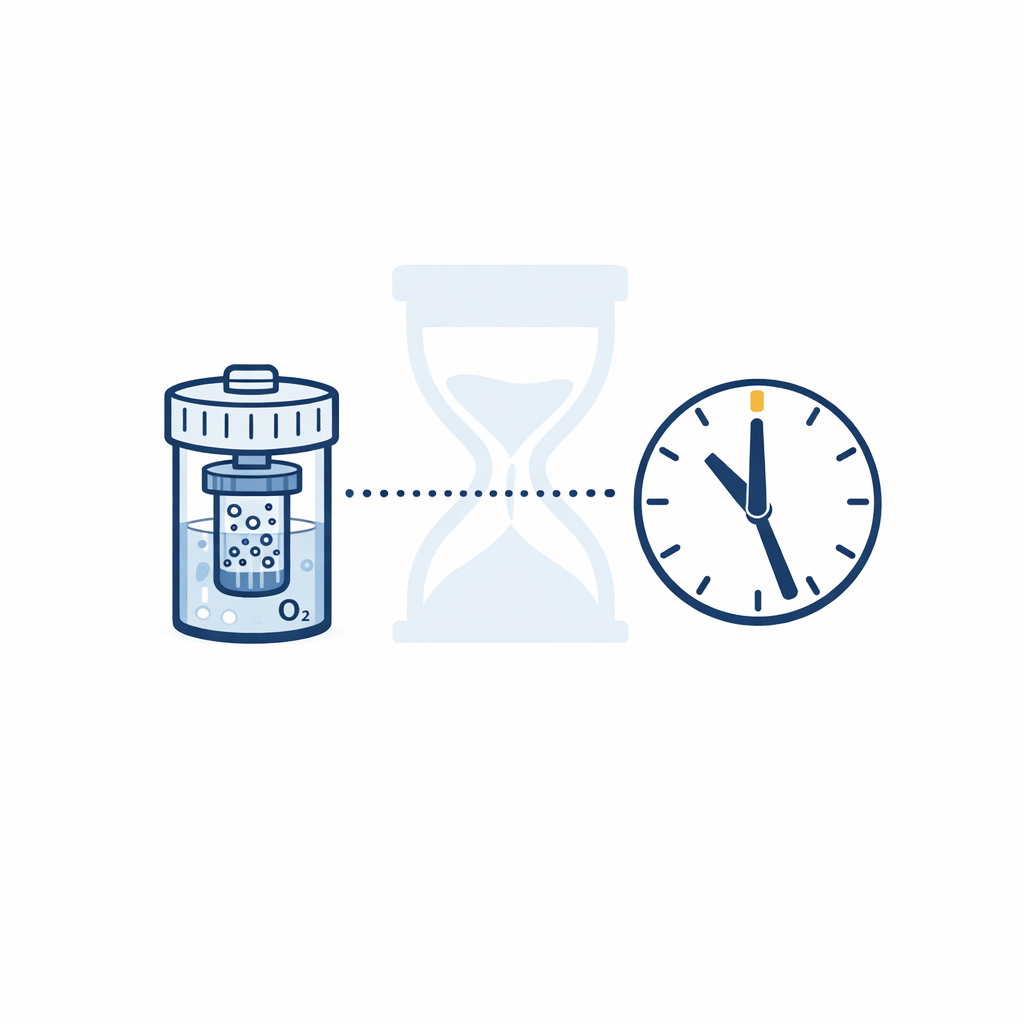
Hydrogen peroxide solutions must be neutralized before the lens touches your eye. The FDA cautions that hydrogen peroxide solutions require special handling and neutralization, which is why you should only use the provided peroxide case and follow the soak time on the label.
If you accidentally put unneutralized peroxide in your eye, it can cause intense burning and irritation. Treat peroxide systems like a “process,” not just a bottle.
Which system fits your routine? A real-life comparison
If convenience is your top priority
Multipurpose solution usually wins for convenience. One bottle, one case, and a routine that works at home, at a friend’s place, or on a quick overnight trip.
- Best fit: people who want a simple nightly routine and minimal extra parts
- Watch-outs: “topping off” old solution and neglecting the case are common failure points
If you have sensitive eyes (or suspect solution sensitivity)
If your eyes sting with some solutions, you might be reacting to an ingredient or to deposits on the lens rather than the lens material itself. Some wearers find peroxide systems more comfortable because the disinfecting ingredient is neutralized before wear, but you should still choose based on your optometrist’s recommendation and your own response.
Also consider non-solution factors that mimic “solution sensitivity,” like overwearing lenses, sleeping in lenses, or letting lenses contact water. The CDC specifically warns against exposing contact lenses to water, including showering and swimming in lenses.
- Best fit: people who want an alternative system and can commit to the full neutralization process
- Watch-outs: never use peroxide without the correct neutralizing case
If you travel often
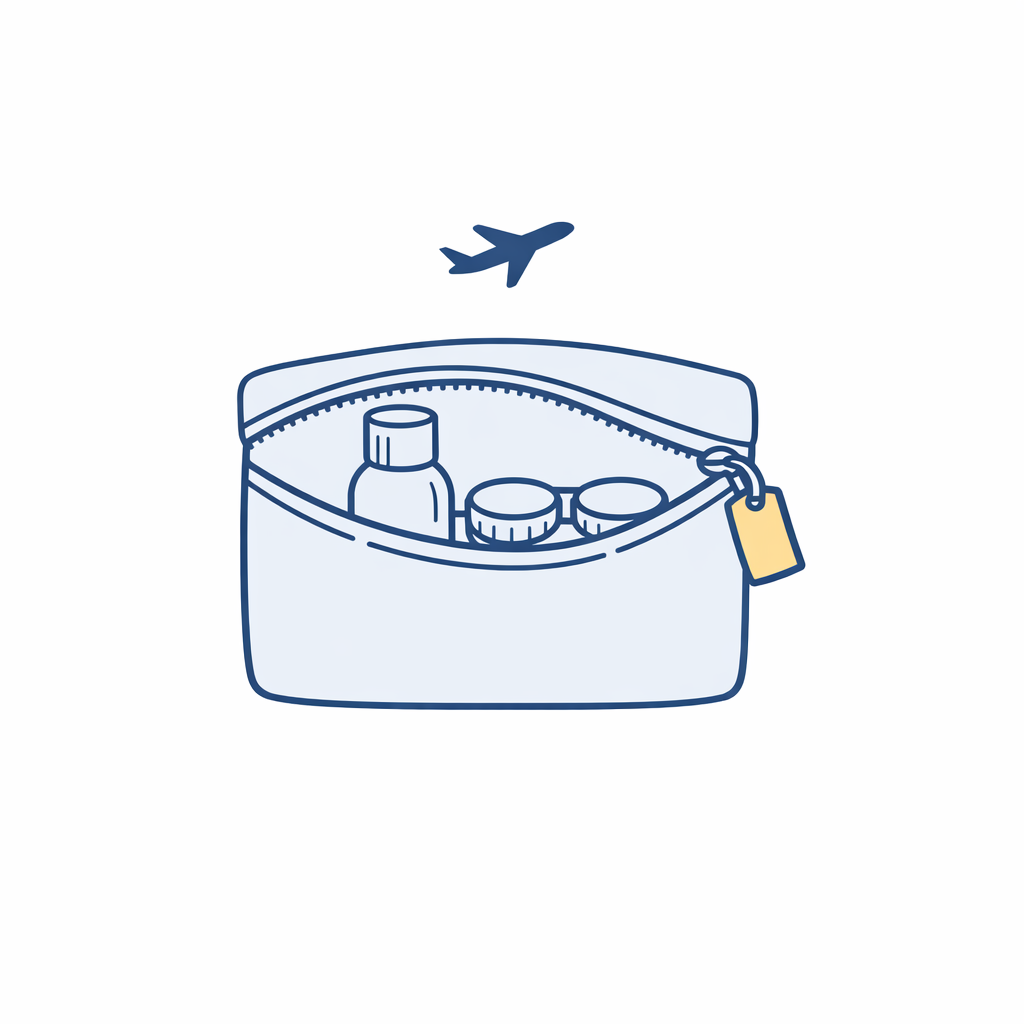
For travel, multipurpose solution is usually easier because you can pack a small bottle and a standard case. If you use peroxide, you need room for the special case and you need to plan for the full soak/neutralization time.
For carry-on luggage, remember the TSA liquid limit. The TSA explains the 3-1-1 liquids rule (3.4 ounces or 100 mL per container), which can influence whether you buy travel-size solution or pack it in checked luggage.
- Best fit: MPDS for flexible packing; peroxide if you can bring the case and keep the routine consistent
- Watch-outs: do not transfer peroxide into travel bottles that are not designed for it
If your schedule is unpredictable
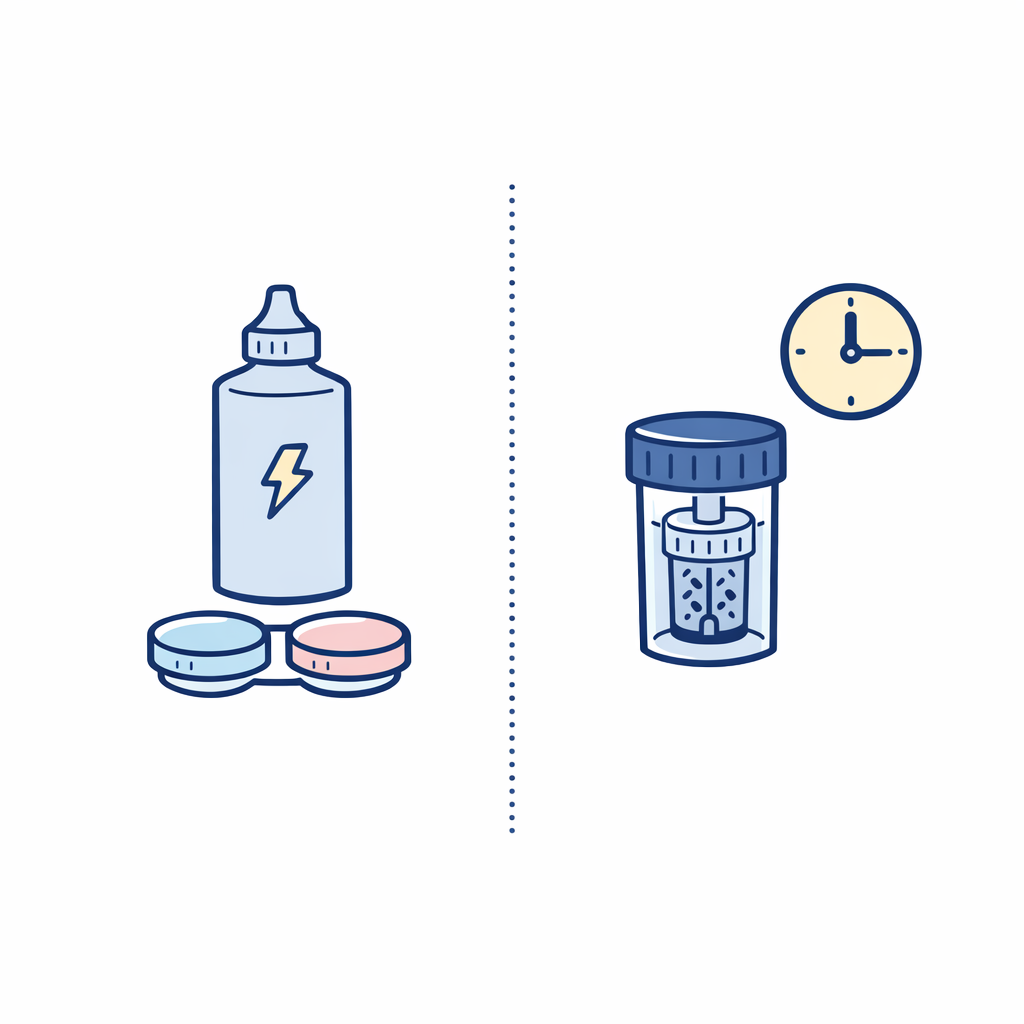
Hydrogen peroxide systems are less “on-demand.” They work best when you can reliably soak lenses for the required time and you are not frequently cleaning and reinserting lenses throughout the day.
If you often remove lenses mid-day due to dryness or sports, multipurpose can be easier. In those scenarios, your biggest win may be tightening hygiene and keeping a clean spare case, rather than switching systems.
If you are trying to improve case hygiene
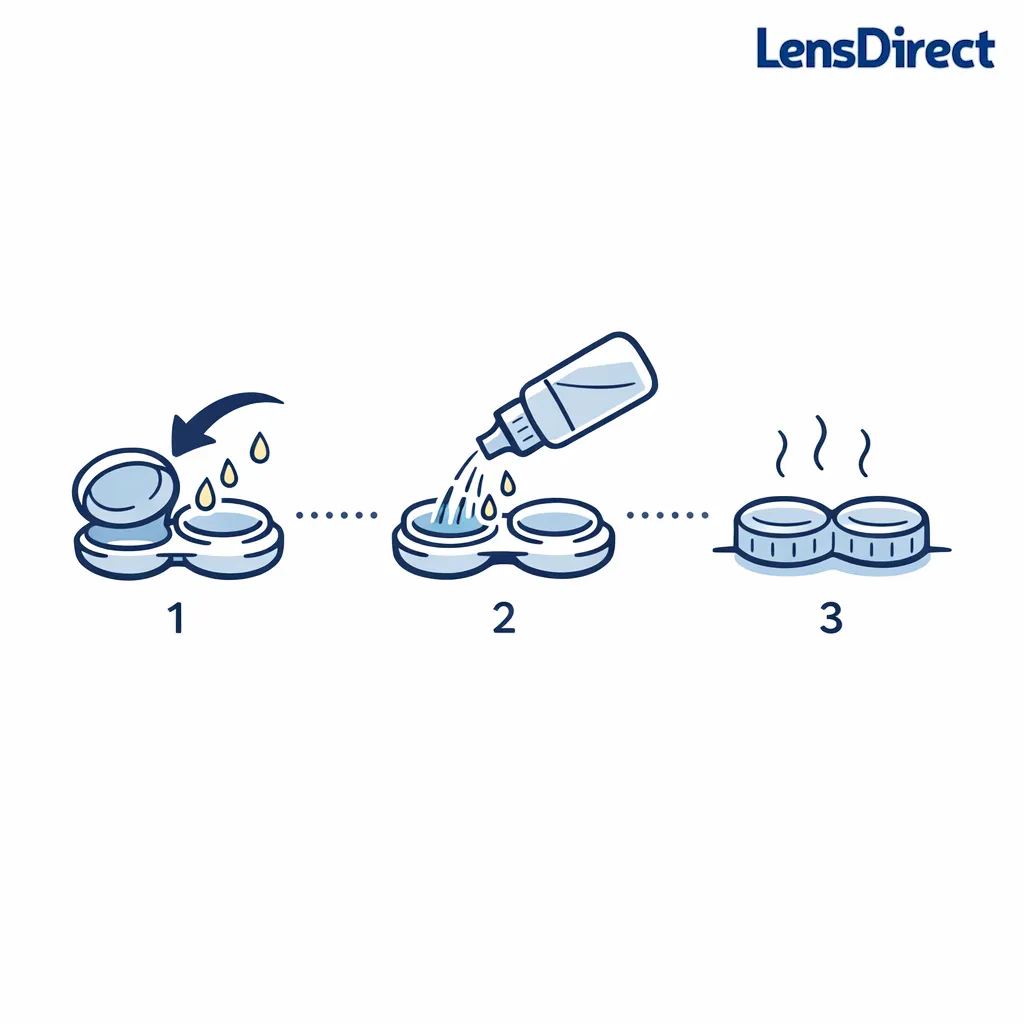
Case hygiene is a major driver of outcomes regardless of which system you use. The CDC recommends cleaning, rinsing, and air-drying your contact lens case and replacing it regularly, because the case can become a reservoir for contamination.
Peroxide cases are specialized and must be replaced according to product directions. Multipurpose cases are inexpensive, so replacing them on schedule is usually easy once you build the habit.
What’s new (and what hasn’t changed) in contact lens cleaning
For many wearers, the “new” challenge is not a brand-new technology. It is lifestyle: more switching between glasses and contacts, more on-the-go lens handling, and more situations where you are tempted to rinse with whatever is nearby.
What has not changed is the core public health guidance: avoid water exposure, keep the case clean, use fresh disinfecting solution, and follow the labeled steps every time. The CDC continues to emphasize keeping water away from contact lenses and maintaining good contact lens case care.
How to clean contact lenses properly (step-by-step)
Multipurpose solution routine (typical nightly routine)
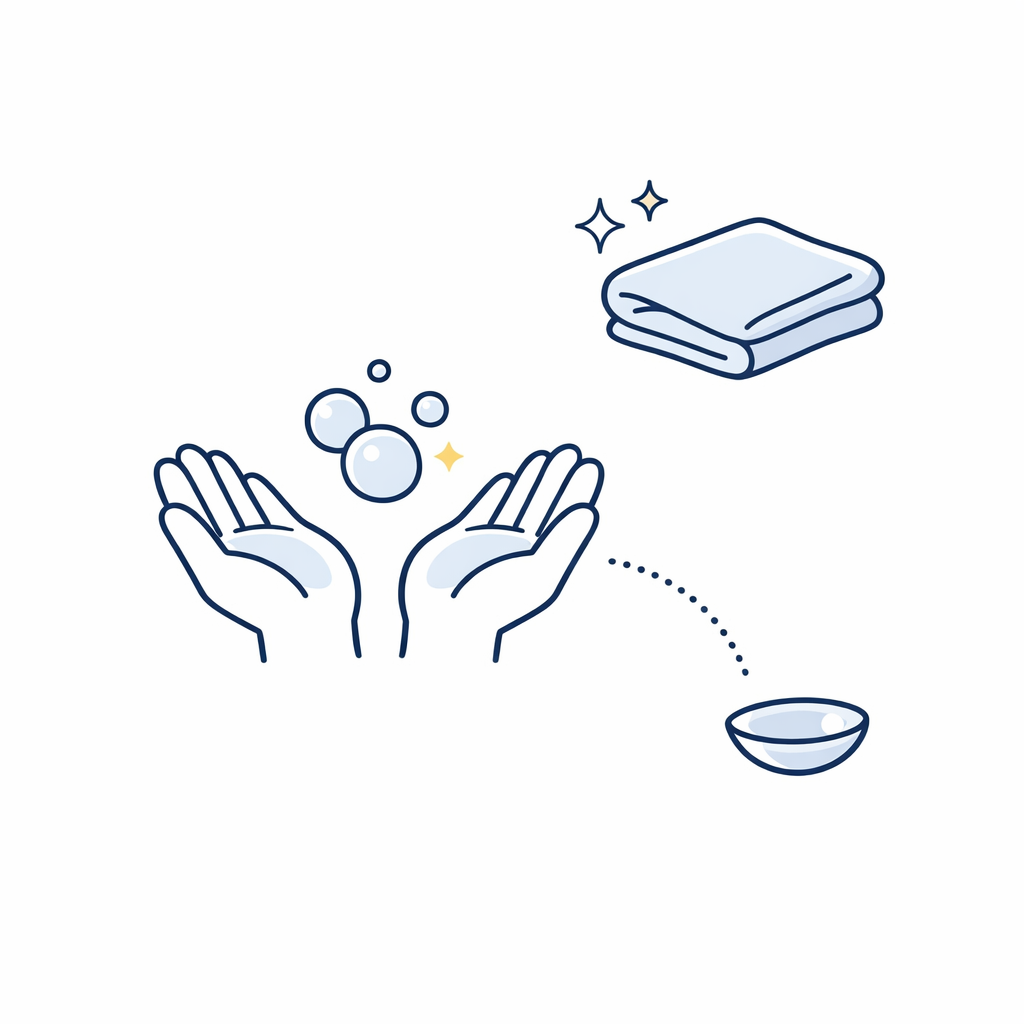
Always follow your eye doctor’s instructions and the product label, but this is the general approach most people are aiming for. The CDC outlines best practices for cleaning and disinfecting lenses that align with these steps.
- Wash hands with soap and water, then dry with a lint-free towel.
- Remove one lens and place it in a clean palm.
- Apply fresh multipurpose solution and rub the lens gently as directed.
- Rinse the lens with fresh solution (not tap water).
- Place the lens in a clean case well and fill with fresh solution.
- Repeat for the other lens, close the case, and soak for the time on the label.
Hydrogen peroxide system routine (typical nightly routine)
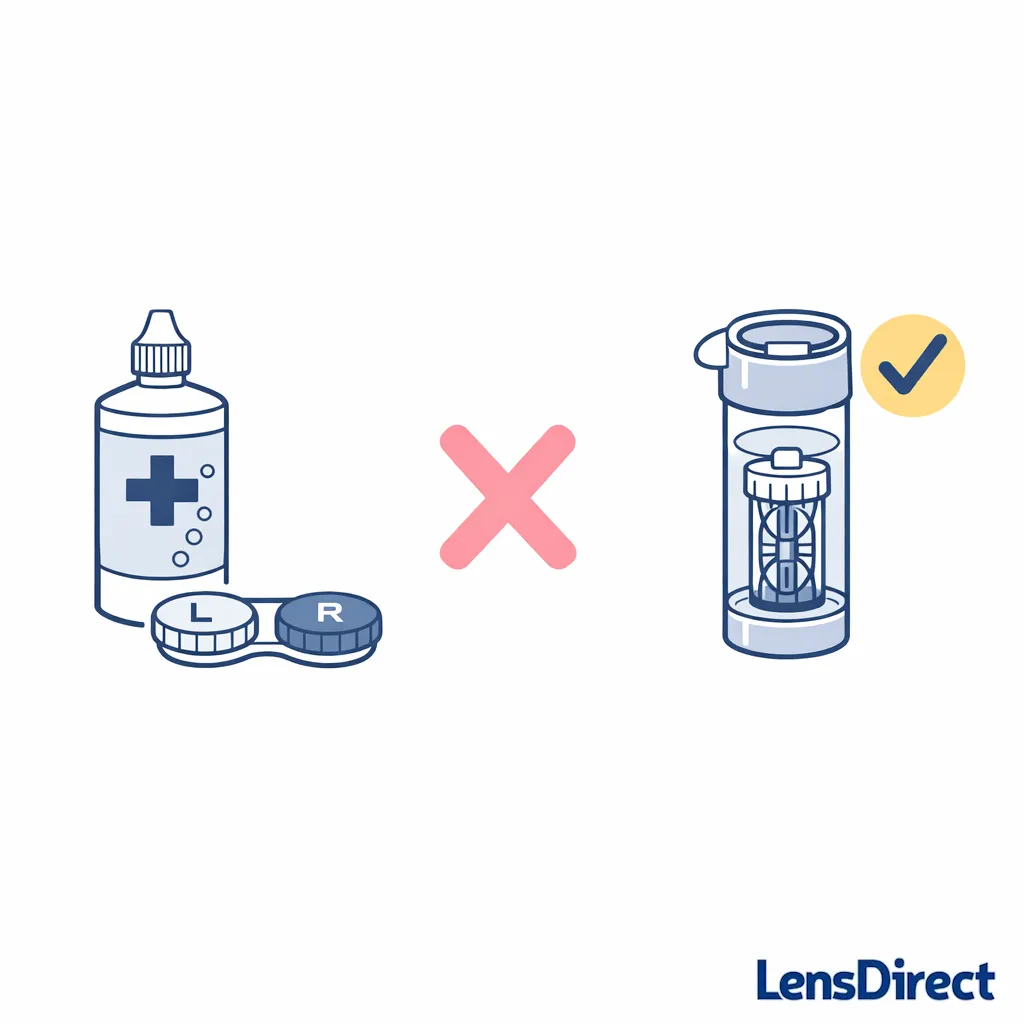
Peroxide systems are very “follow the system” by design. The FDA explains that hydrogen peroxide systems require the special case and neutralization, so the case is part of the safety mechanism.
- Wash and dry your hands.
- Place lenses in the provided baskets/holders (right/left).
- Fill the special peroxide case to the indicated line with peroxide solution.
- Place the lens holder into the case and close it.
- Soak for the full time required on the label so the peroxide neutralizes.
- Only insert lenses after neutralization is complete.
If you are unsure whether the peroxide is fully neutralized, do not put the lenses in. When in doubt, switch to glasses and reset the process.
Common mistakes and misconceptions (and how to avoid them)
Mistake: Using tap water to rinse lenses or the case
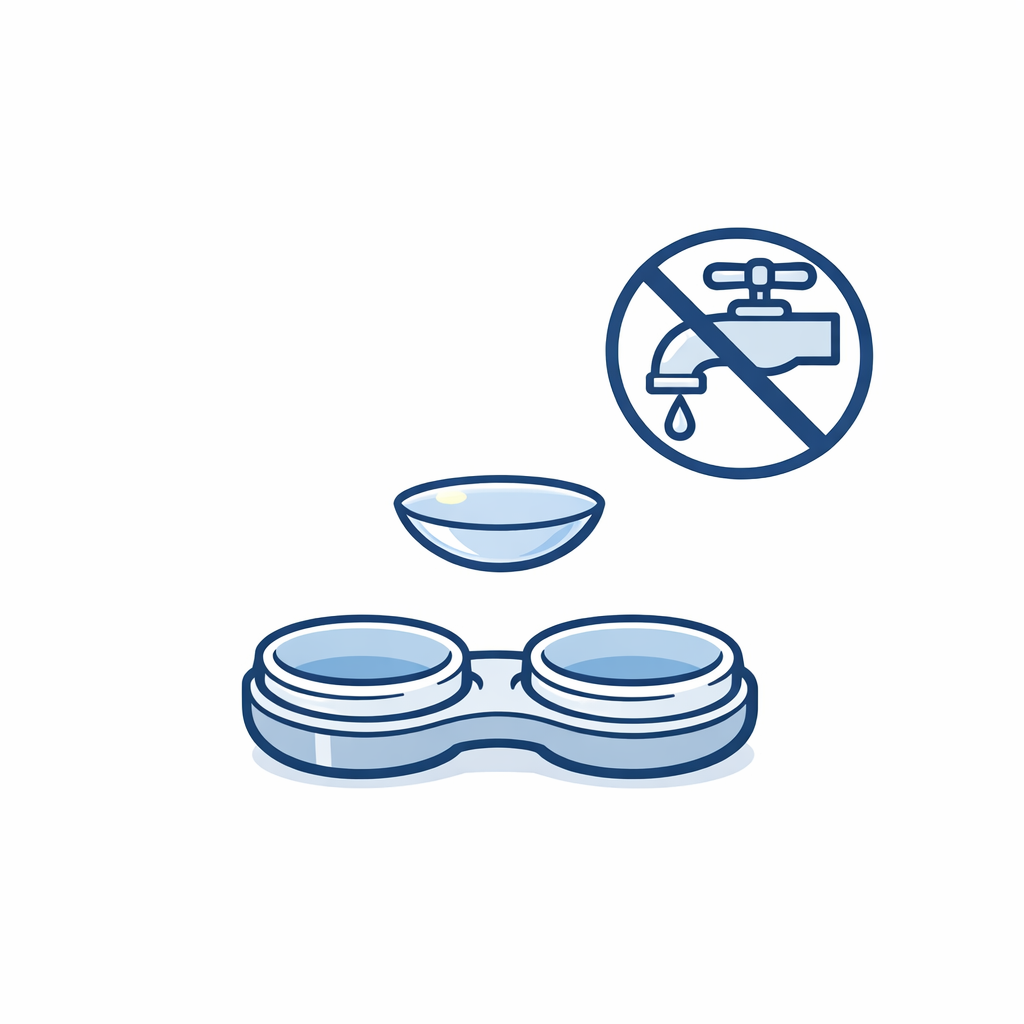
Water is not sterile, and it is a common source of contamination risk. The CDC advises keeping contact lenses away from all water, including rinsing or storing lenses in water and wearing lenses while showering or swimming.
Mistake: “Topping off” old solution
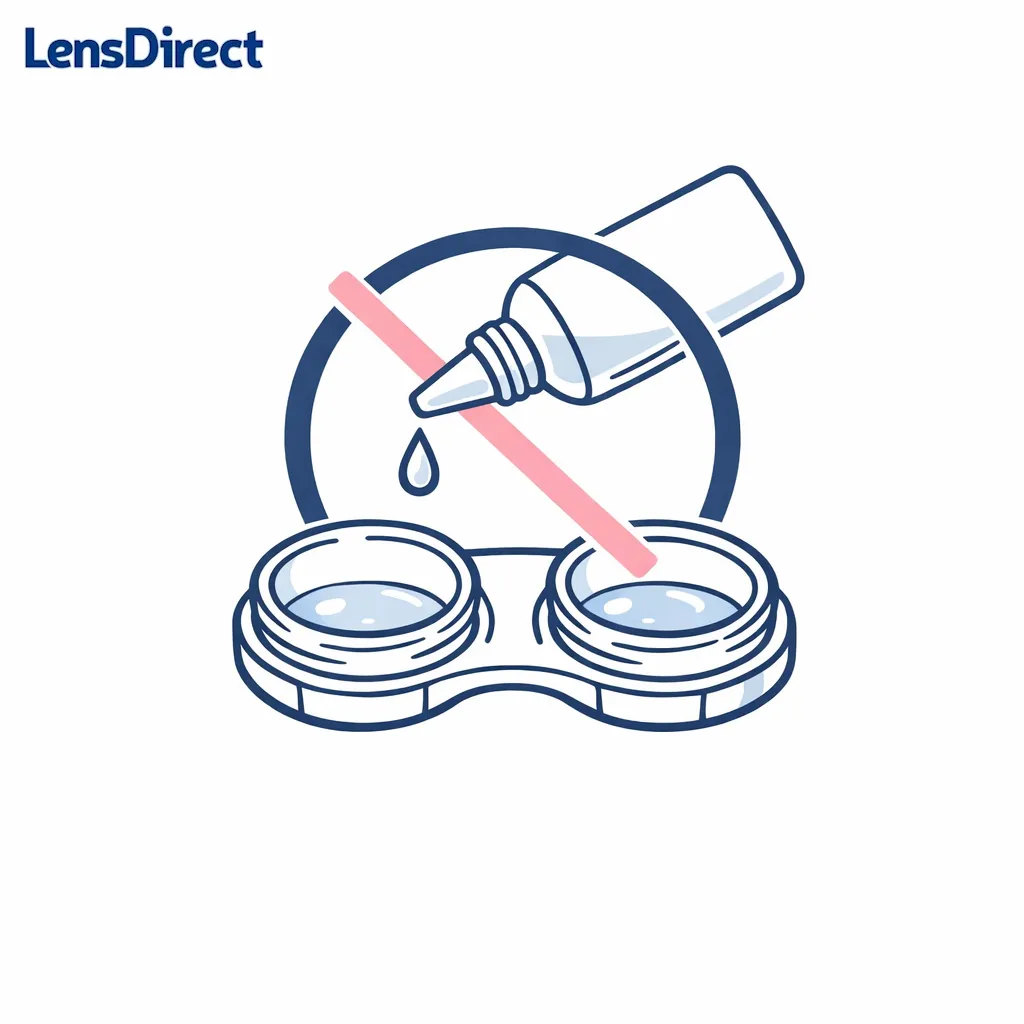
Re-using solution lowers disinfecting effectiveness and increases contamination risk. The CDC’s guidance on proper cleaning and disinfecting steps supports using fresh solution each time rather than mixing old and new.
Mistake: Treating saline like disinfecting solution
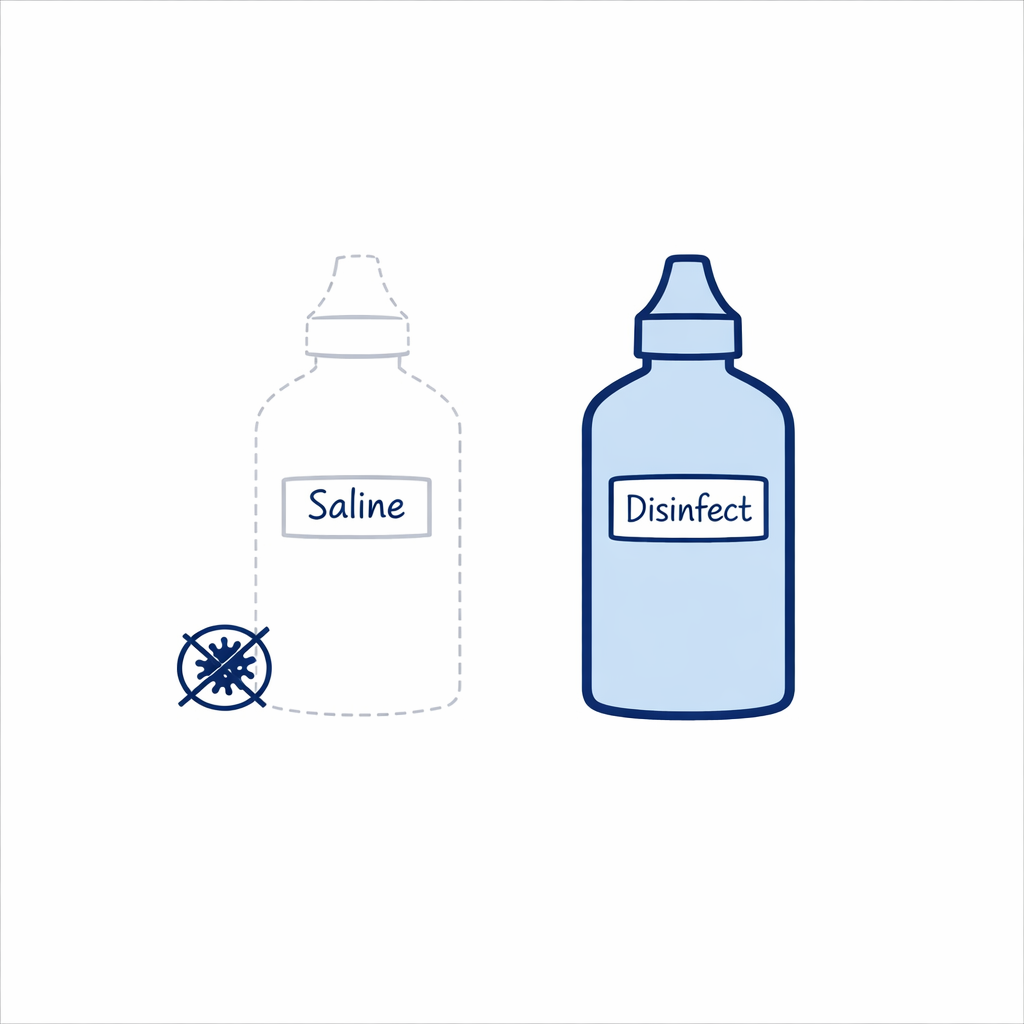
Saline can be used for rinsing in some routines, but it is not a disinfectant. The FDA distinguishes between product types and notes that saline solutions and rewetting drops are not designed to disinfect.
Mistake: Putting peroxide directly in your eye (or using the wrong case)
This is the big one. Hydrogen peroxide must be neutralized, and the case is part of that process. The FDA explains that peroxide systems require a special case to neutralize the solution, so do not improvise with a flat case or a travel case not made for peroxide.
Mistake: Keeping a contact lens case “forever”
Even if you rinse it, an old case can build up residue and microbes over time. The CDC recommends replacing your contact lens case regularly and maintaining daily case hygiene (empty, rinse with solution when appropriate, and air-dry).
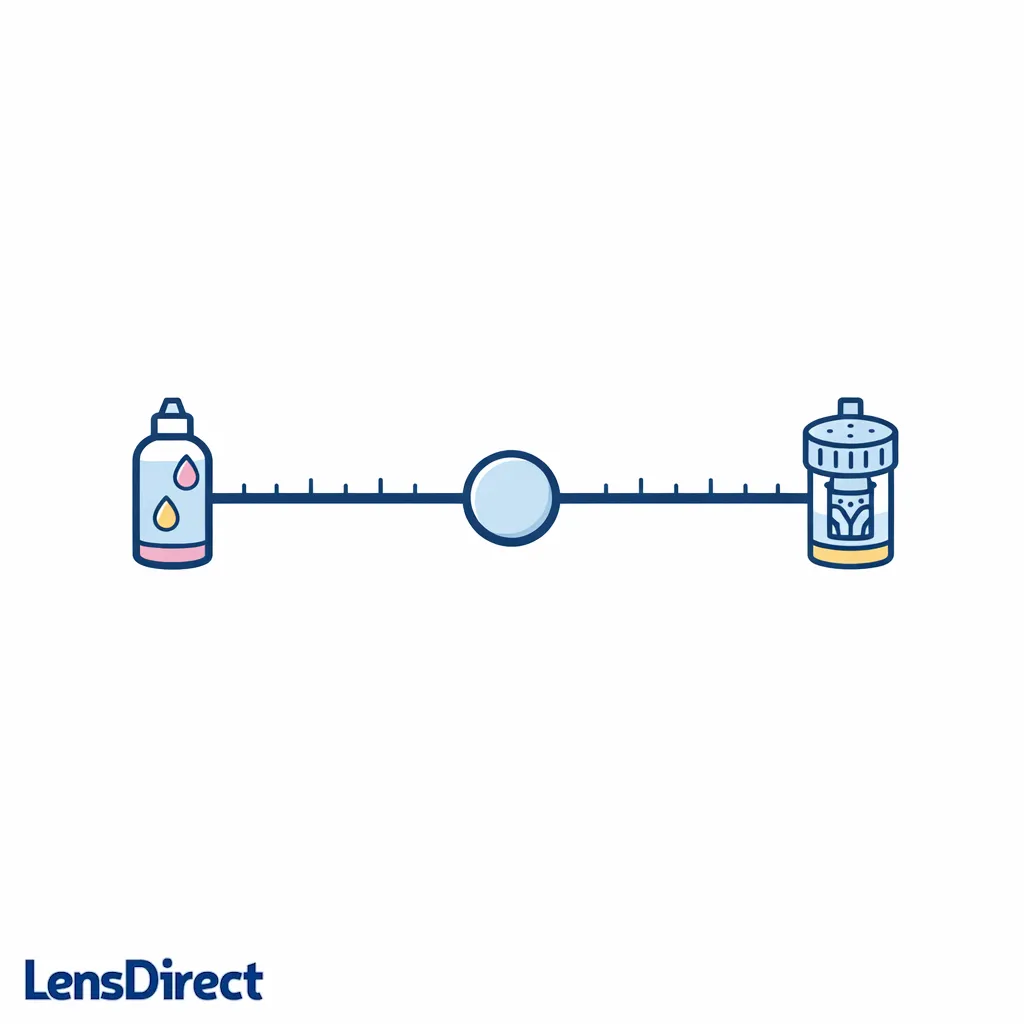
A practical decision guide: multipurpose vs peroxide
Pick multipurpose if you want the simplest routine
- You want one-bottle convenience.
- You travel often and need a straightforward setup.
- You are confident you can avoid “topping off” and keep a clean case.
Pick hydrogen peroxide if you can commit to the full system
- You want an alternative cleaning approach and can follow the neutralization step every time.
- You prefer a routine that is structured and consistent.
- You will always use the provided peroxide case and never shortcut the soak time.
Ask your eye doctor before switching if any of these apply
Some lens types and eye conditions require specific care systems. If you have frequent redness, pain, light sensitivity, unusual discharge, or reduced vision, stop lens wear and seek care promptly because the CDC warns that contact lens-related infections can be serious.
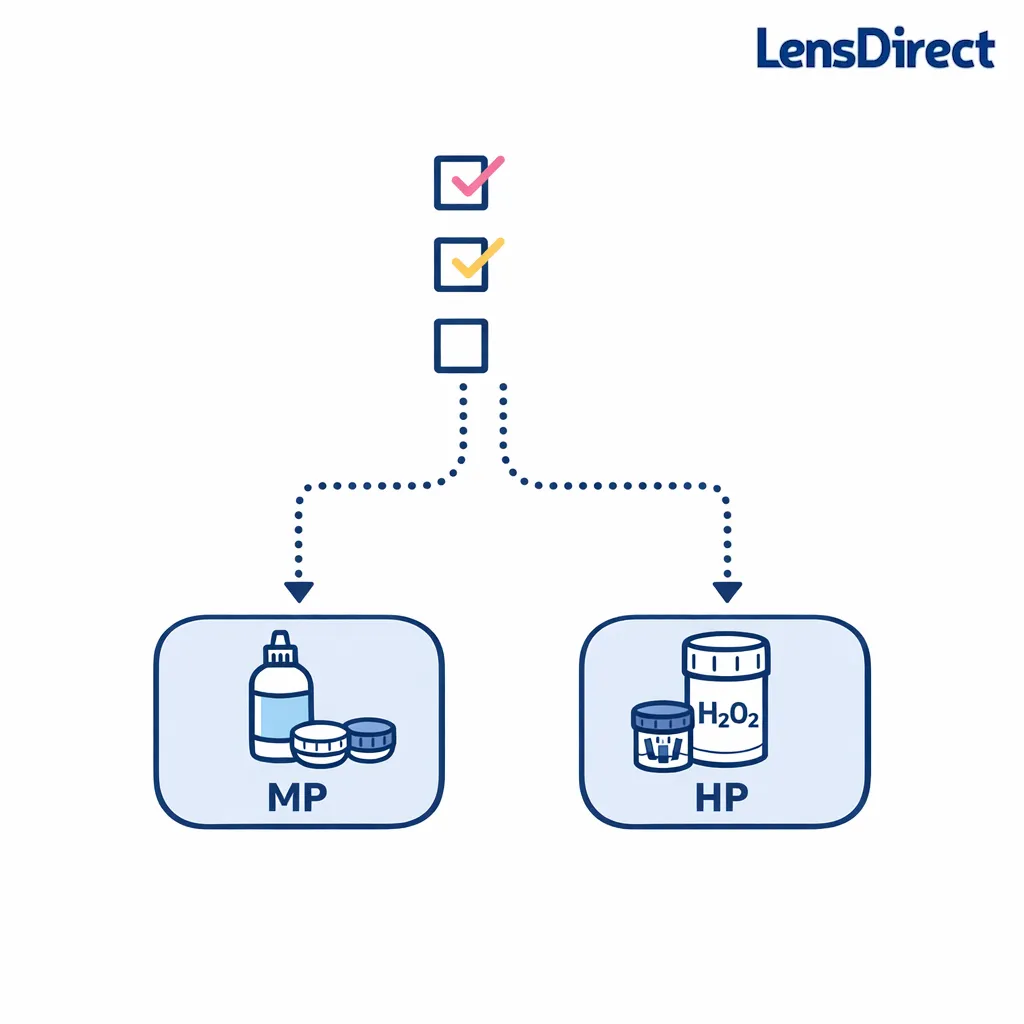
Contact lens solution checklist (save this for your next restock)
- Compatibility: Confirm your solution type matches your lens type and your eye doctor’s recommendation.
- Routine fit: Be honest about whether you can complete peroxide neutralization or whether MPDS flexibility fits better.
- Case plan: Commit to daily case care and regular replacement as recommended by the CDC contact lens case guidance.
- Water avoidance: Build habits that align with CDC guidance to keep lenses away from water.
- Travel setup: Pack enough fresh solution and follow the TSA 3-1-1 liquids rule for carry-ons.
- Backup option: Keep glasses available for days when your eyes need a break or you cannot complete safe disinfection.
Shop contacts and eyewear essentials at LensDirect
If you are updating your routine, it helps to refresh the basics at the same time: a current prescription, the right lenses for your lifestyle, and dependable backups for travel or long days.
- Shop Contacts for your regular supply and easy reorders.
- Shop Glasses for a comfortable backup pair (and screen-time days).
- Shop Sunglasses for driving glare and outdoor comfort.
- Replace Your Lenses if your frames are fine but your lenses need a refresh.
- Full-Service Replacement (send-it-in option) if you prefer a hands-off process.
- Order Replacement Lenses (DIY option) if you want to replace lenses yourself.
- Learn How to Measure Your Pupillary Distance to help ensure a comfortable, accurate glasses order.
- Learn How to Get Reimbursed by Your Insurance if you plan to submit for out-of-network benefits.
- Find Your Fit if you are choosing new frames and want a quicker shortlist.
Author

Subscribe to our email newsletter to get the latest posts delivered right to your email.