

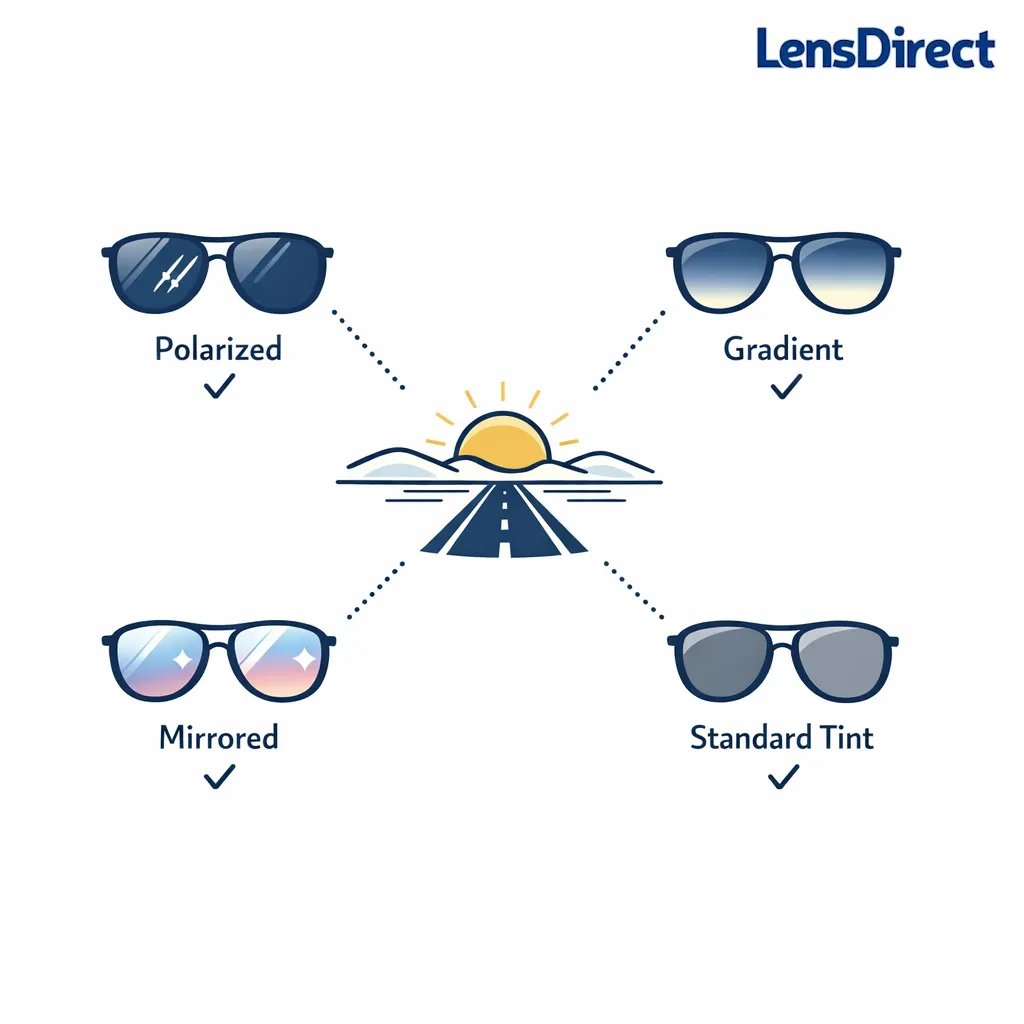
Choosing the best prescription sunglass lenses for driving sounds easy until you start comparing polarized, gradient, mirrored, and standard tinted options. One lens might feel amazing on a bright highway but annoy you every time you glance at your dashboard. Another might look stylish but do less than you expect for road glare.
This guide is for everyday drivers, commuters, road-trippers, and online eyewear shoppers who want a clear, buyer-friendly answer. You will learn which lens features matter most behind the wheel, when polarized prescription sunglasses for driving are worth it, when gradient lenses are the smarter pick, and how to match tint, coatings, and material to the way you actually drive.
Short answer: For most daytime drivers, the best starting point is a prescription sun lens that blocks 99% to 100% of UVA and UVB rays and, if glare is your main complaint, uses polarized lenses to reduce glare. If your car has a digital dashboard or head-up display and you notice dimming or rainbow-like distortion, a non-polarized tint or a gradient lens can be the better everyday choice because some polarized lenses can make certain LCD-style displays harder to read.
What makes a prescription sunglass lens good for driving?
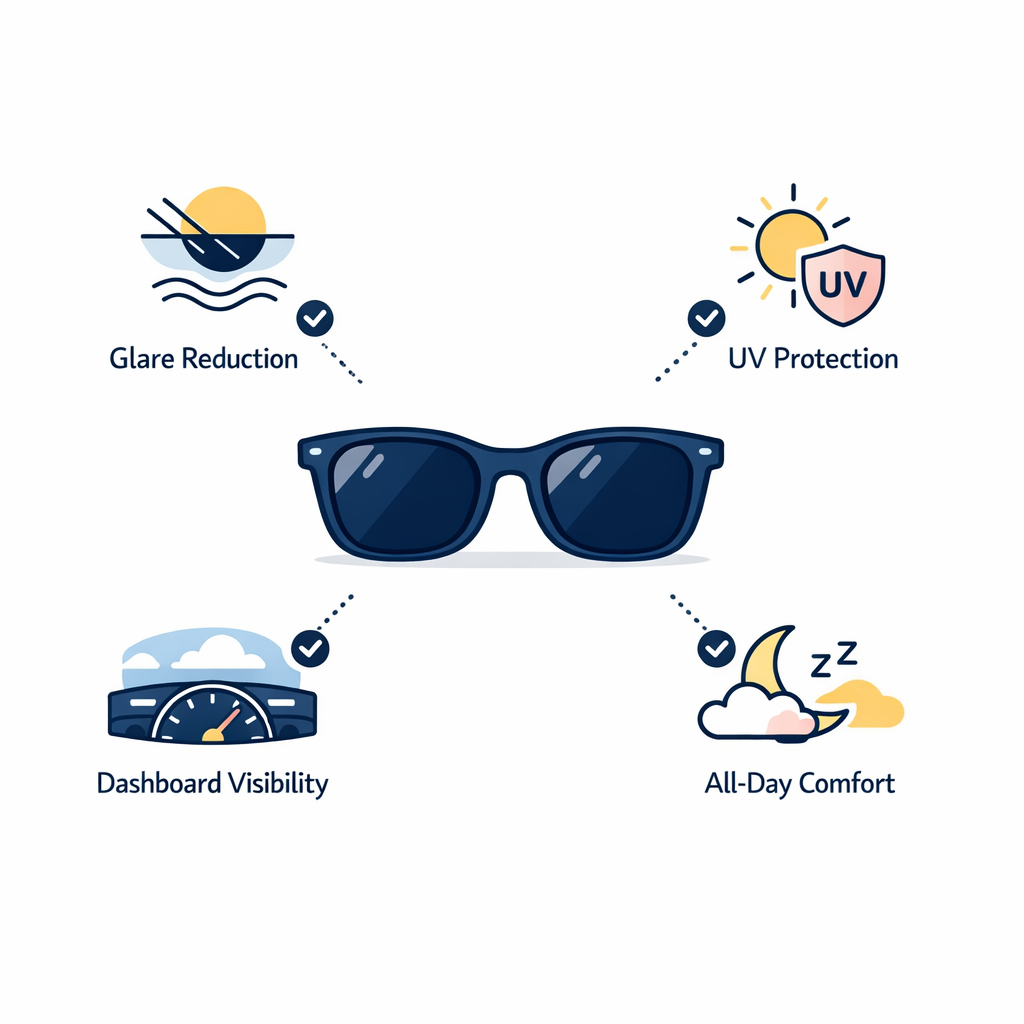
A good driving sun lens does four jobs well. It cuts discomfort from bright light, keeps the road scene easy to read, lets you check your dashboard without strain, and feels comfortable enough that you will actually wear it.
The non-negotiable feature is real UV protection. Lens darkness alone is not enough, because UV exposure can harm the eyes over time, and the smarter standard is to choose sunglasses that explicitly state full UVA and UVB protection.
- Glare reduction: especially useful on highways, wet pavement, and low-angle afternoon sun.
- UV protection: essential whether you choose polarized, gradient, mirrored, or standard tinted lenses.
- Color comfort: some tints feel more natural, while others boost contrast.
- Dashboard visibility: important if you use a digital cluster, center screen, or HUD.
- All-day wearability: weight, fit, and lens clarity matter on longer drives.
What type of sunglass lens is best for driving? If you drive mostly in bright daytime sun, polarized prescription sunglasses are usually the first option to consider. If you care more about seeing your dashboard clearly in mixed light, gradient or standard tinted lenses may be the better fit.
Polarized prescription sunglasses for driving
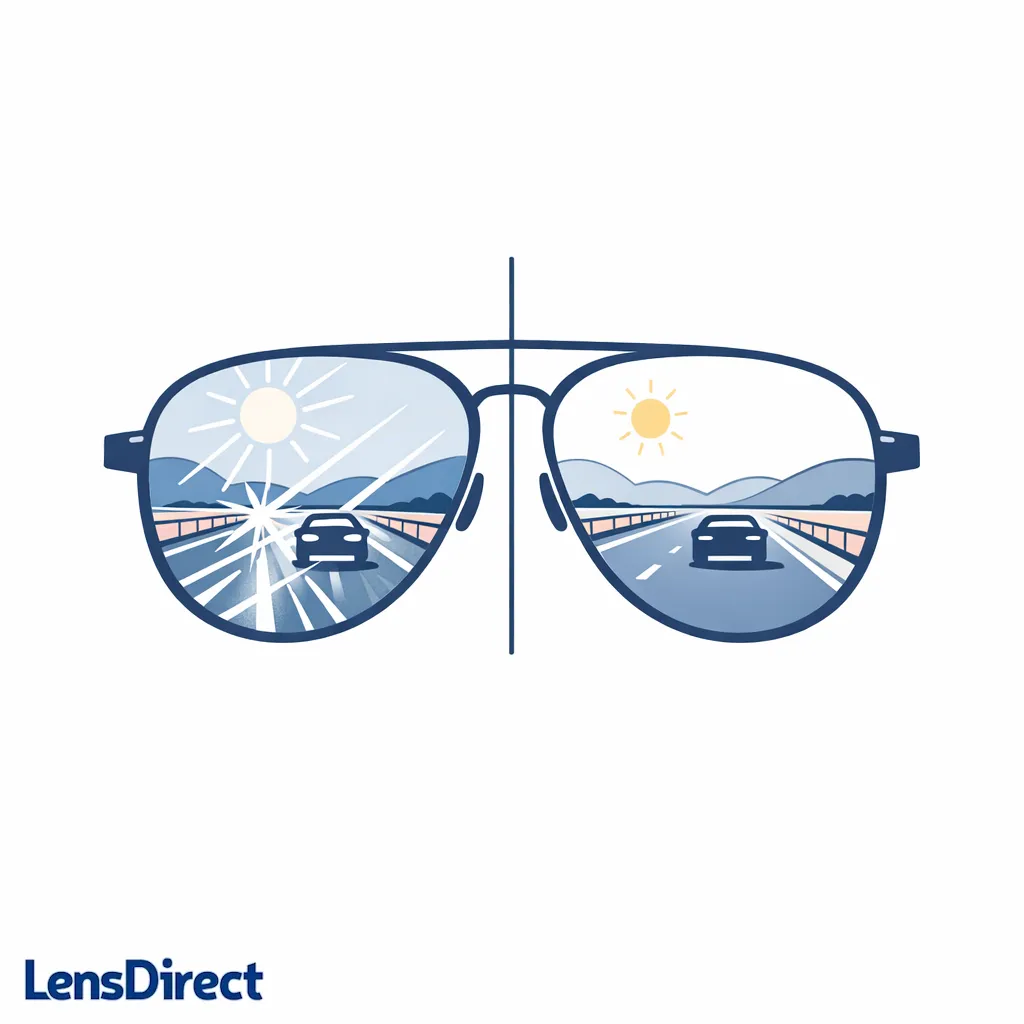
Polarized prescription sunglasses for driving are popular for a reason. They are designed to cut the harsh reflected glare that bounces off flat surfaces, and that can make a bright road feel less squinty and less tiring during daytime driving.
For the right driver, polarized is the easiest upgrade. If your commute includes shiny highways, wet roads, lots of open sun, or long midday trips, polarization is often the lens feature that feels most noticeable right away.
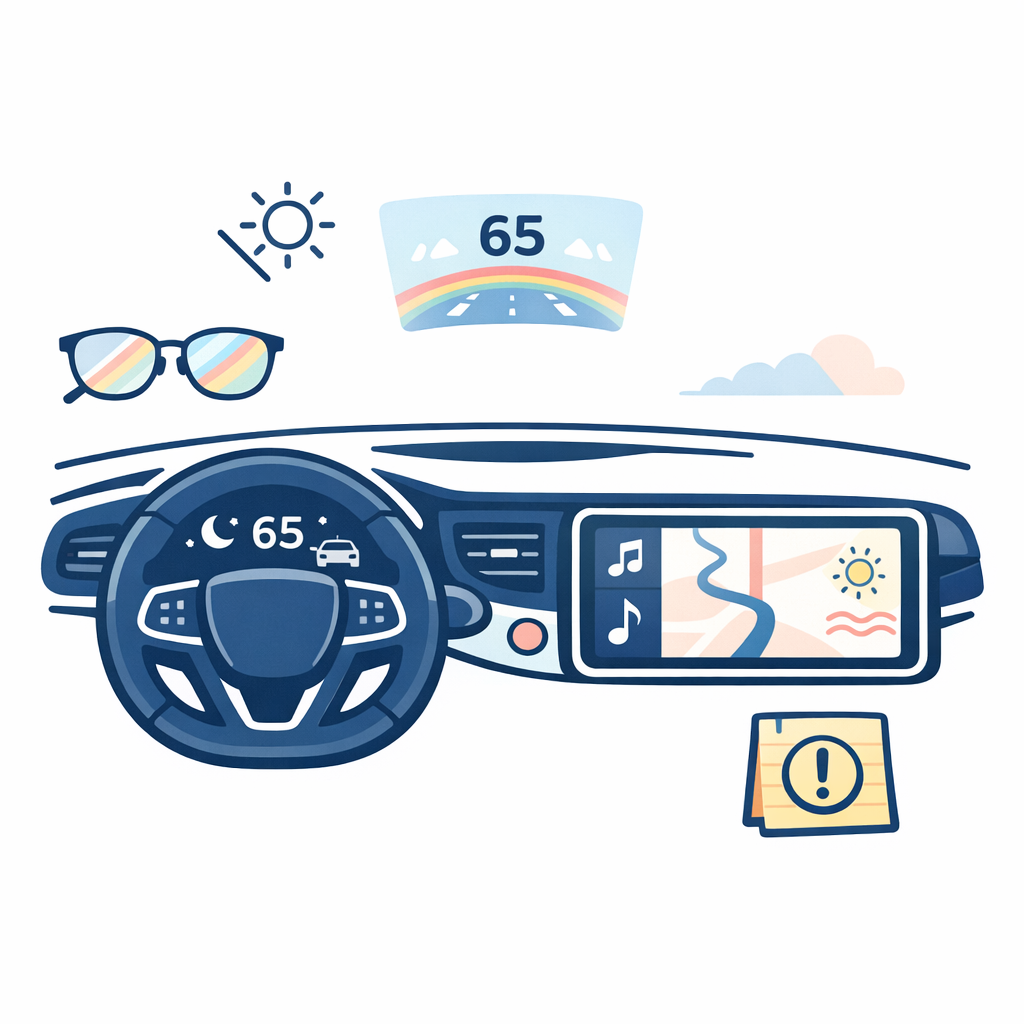
Where shoppers get tripped up is assuming polarized is automatically best for every car and every habit. In real life, some drivers find that their dash, infotainment screen, or HUD does not look as clean through a polarized lens, so this is the category to test carefully if your vehicle is screen-heavy.
- Best for: bright daytime driving, reflected road glare, beach roads, open highways, and road trips in strong sun.
- Maybe not best for: drivers who rely heavily on digital displays and already know they are sensitive to polarized lenses.
- Usually pair it with: gray or brown-family tints for the broadest everyday use.
Are prescription sunglasses good for driving? Yes, for daytime driving they can be an excellent tool because they combine vision correction with sun comfort in one pair. The key is choosing a lens that solves your main problem, whether that is glare, brightness, dashboard readability, or a mix of all three.
Gradient lenses for driving
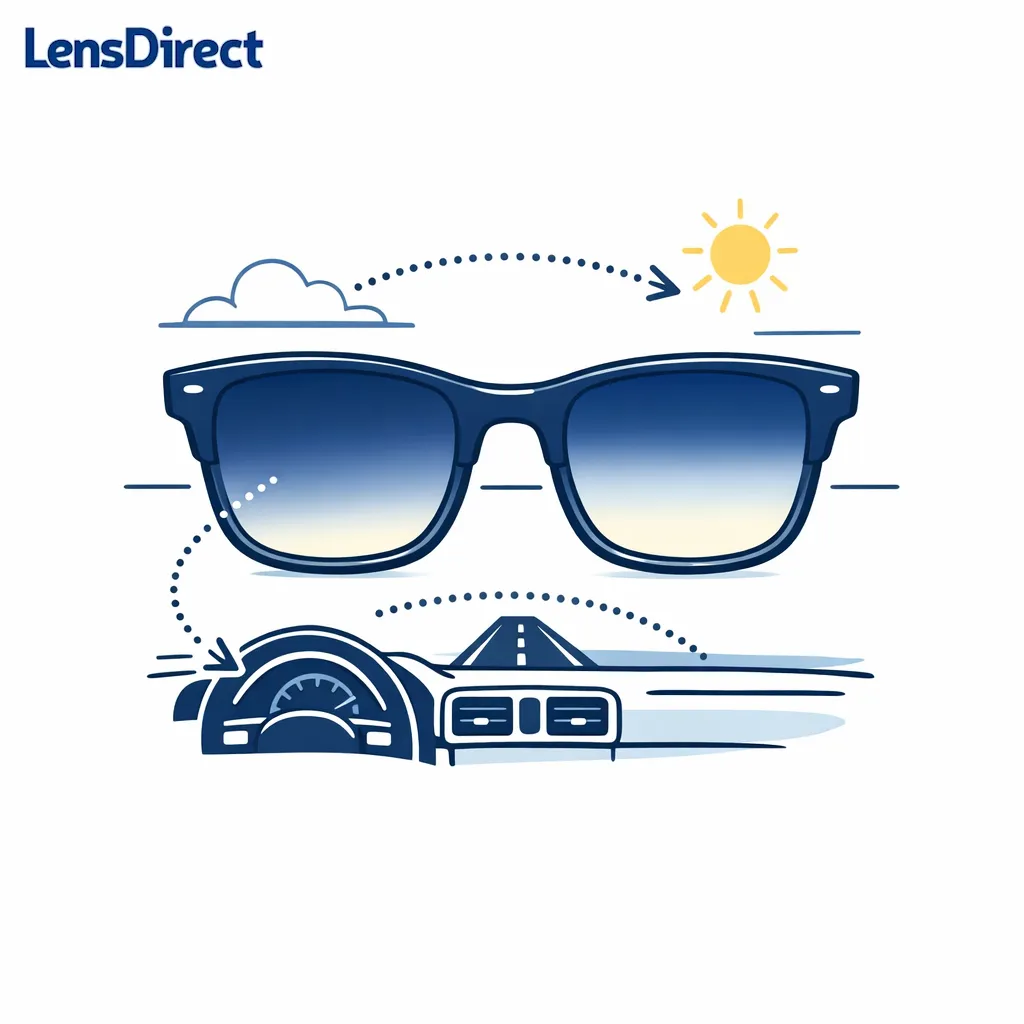
Gradient lenses are a smart option when your biggest annoyance is bright sky overhead, but you still want an easier view of your dashboard, GPS, and controls. The darker top helps cut incoming sun, while the lighter lower portion can feel less heavy when you look down.
This is why many drivers like gradient lenses for commuting and mixed conditions. They often feel more natural than a full dark tint when your day includes parking garages, tree cover, changing weather, and frequent glances between the road and the cabin.
Gradient can beat a solid tint when you want sun protection without making the lower field of view feel too dark. It can also be the more comfortable compromise for drivers who tried polarization and did not love the way their screens looked.
- Best for: mixed lighting, city driving, drivers who look at their dash often, and shoppers who want a lighter-feeling lens.
- Less ideal for: extremely bright, reflective environments where maximum glare control matters more than dash visibility.
- Good pairing: gray gradient for a neutral look, or brown gradient if you want a warmer visual feel.
Are gradient lenses good for driving? They can be excellent for driving, especially when readability inside the car matters as much as blocking bright light outside the car. If you want a more versatile daytime lens instead of the strongest possible anti-glare effect, gradient is often the most underrated choice.
Mirrored sunglasses for driving

Mirrored sunglasses for driving are best understood as a coating choice, not a completely separate lens family. A mirror finish reflects some incoming light off the front of the lens, and mirror-coated lenses can reduce the amount of visible light entering the eyes, which is why they are most useful in very bright conditions.
The main shopping question is not mirror or prescription. It is mirror on top of what base lens. For driving, a mirrored coating usually works best as an add-on to a well-chosen tint, and sometimes to a polarized lens if your car screens tolerate it.
Mirrored is not the same thing as polarized. If your main goal is reducing reflected glare off the road, I would usually prioritize polarization first. If your main goal is taking the edge off intense brightness in open, high-sun environments, mirror can be a worthwhile extra.
- Best for: very bright sun, open-road driving, desert or coastal routes, and drivers who prefer a stronger light-cutting feel.
- Less ideal for: cloudy climates or drivers who already dislike darker lenses.
- Best way to think about it: mirror is a finishing feature, not the core decision.
Are mirrored sunglasses good for driving? They can be, especially in harsh daylight. Just do not confuse mirror with glare control by itself. Start with the right tint and lens type first, then decide whether mirror helps your conditions enough to justify it.
Best lens colors for driving
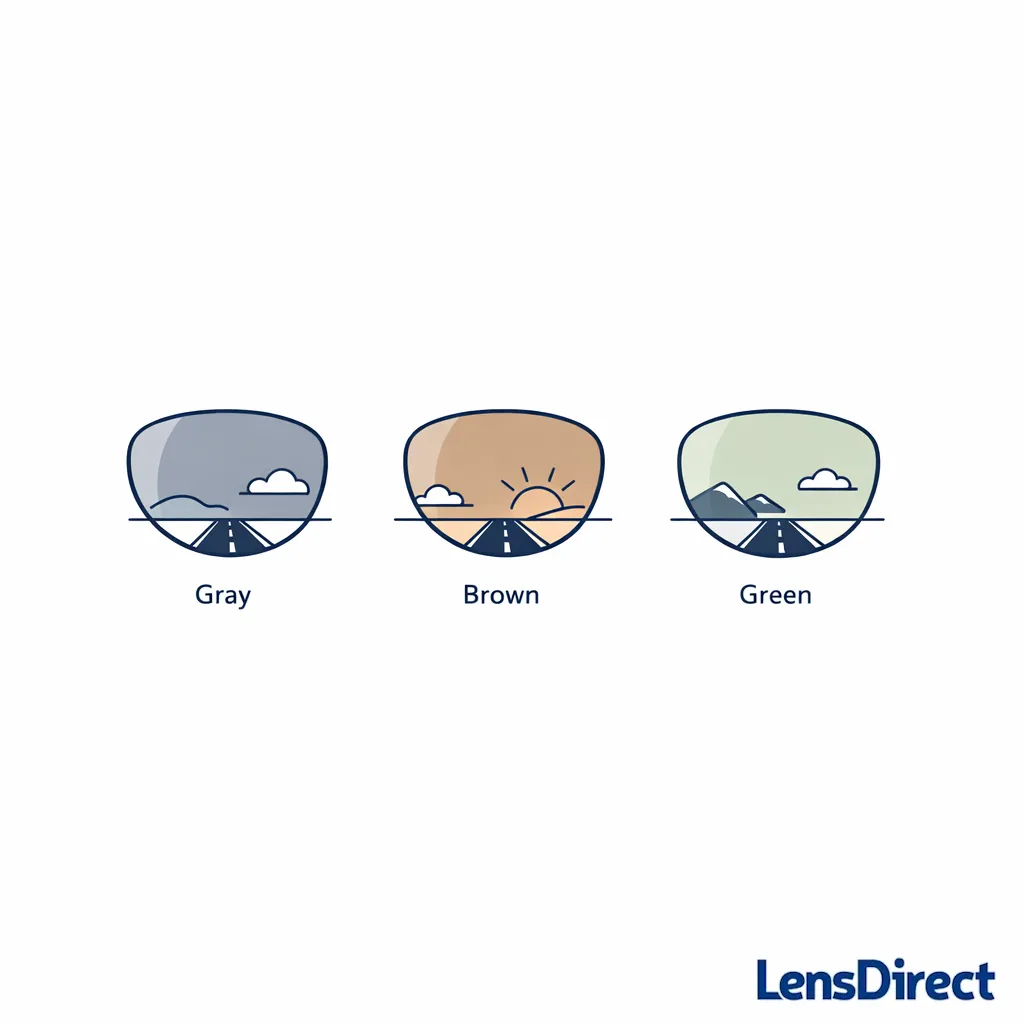
Lens color is where comfort becomes personal. Two drivers can love the same lens type but prefer completely different tints because one wants a neutral view and the other wants a little more contrast.
Brown, copper, and amber
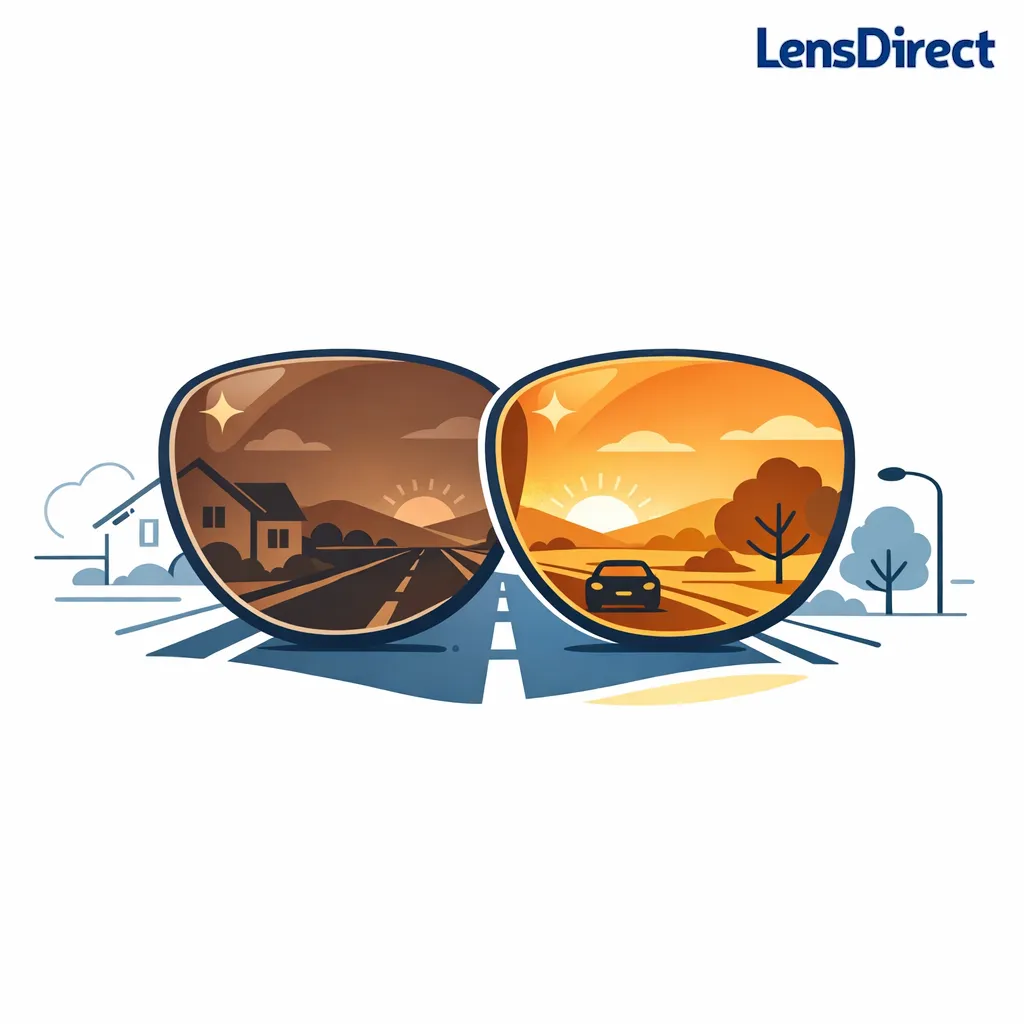
If you like a warmer view and want the road scene to feel a bit richer, this family is often the first one to try. Many drivers describe brown, copper, and amber tints as easier on the eyes in bright sun because the world can look a little more defined and less washed out.
These tints are especially appealing if your drives include changing pavement texture, bright shoulders, or lots of rural and suburban roads. They can also feel more comfortable than gray if a fully neutral lens looks flat to you.
Gray
Gray is the safest blind pick for many shoppers. It tends to feel balanced, versatile, and easy to wear when you want a dark sun lens without a strong color cast.
If you drive in many different places and do not want to overthink tint, gray is usually the simplest everyday answer. It is often the easiest place to start for first-time prescription driving sunglasses.
Green
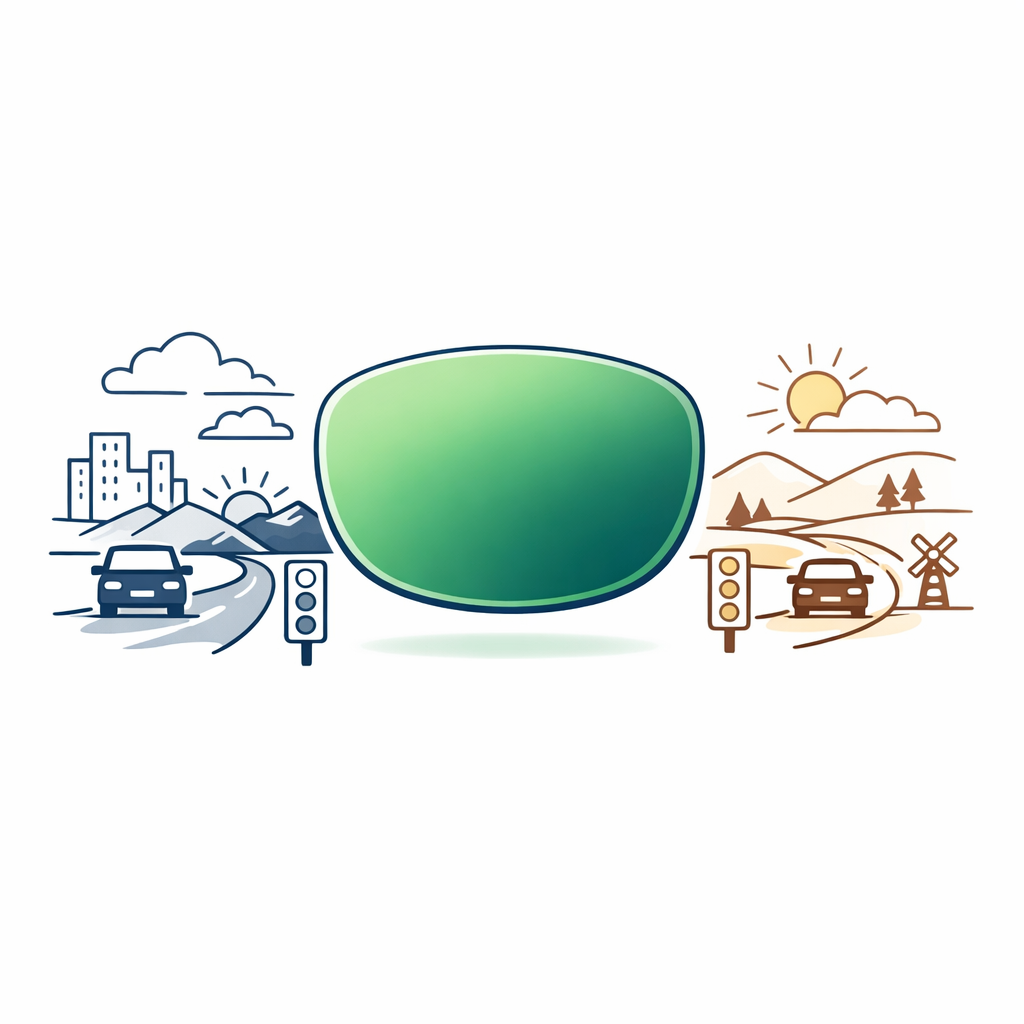
Green usually lands in the middle. It can feel a touch livelier than gray without looking as warm as brown or copper, which makes it a good compromise for people who want a little contrast but not a dramatic tint personality.
If you are torn between gray and brown, green is worth a look. It often works best for drivers who want one pair to handle lots of situations reasonably well rather than one condition perfectly.
Lens materials and coatings to consider
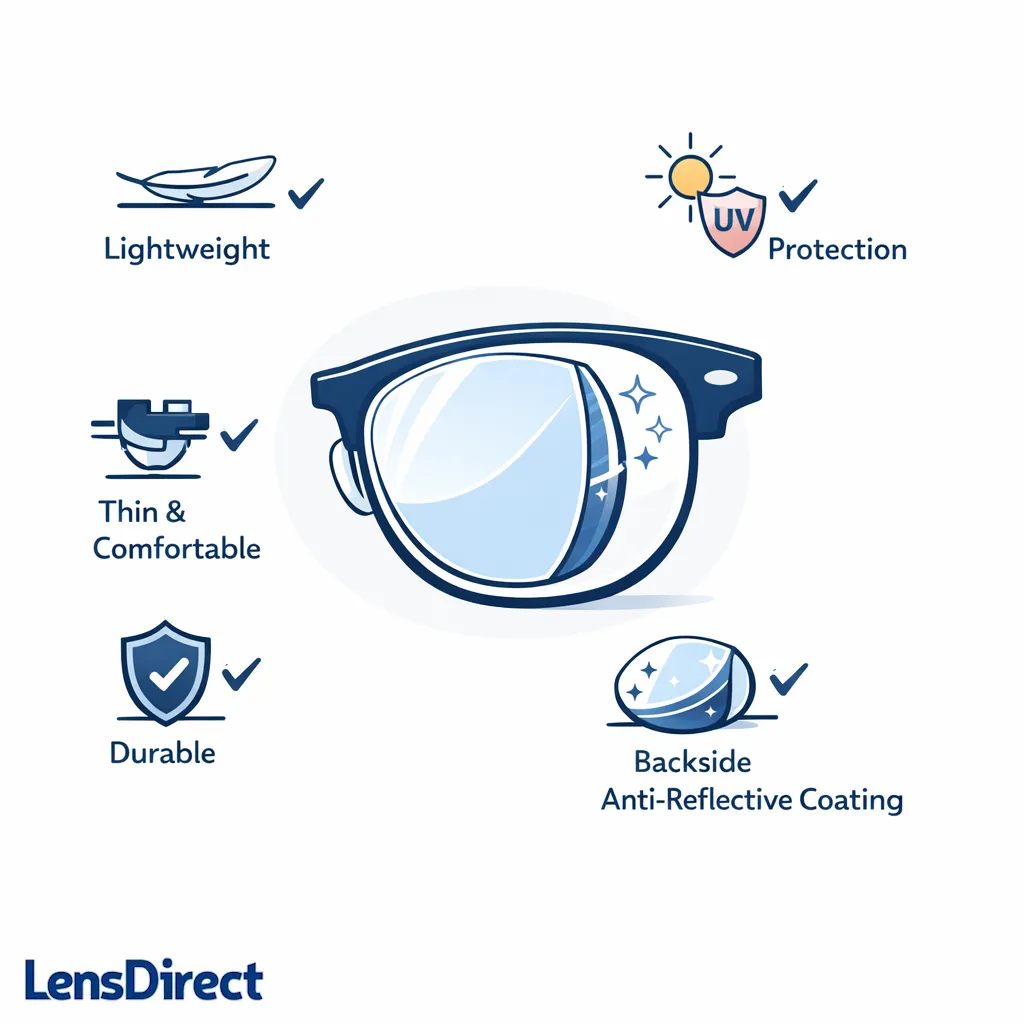
Once you choose the lens style, look at the build. For prescription driving sunglasses, material and coatings affect comfort more than many shoppers expect.
In practice, many buyers compare Trivex and polycarbonate first. Both are common choices when you want a durable everyday lens, while the final pick usually comes down to how your prescription, frame style, weight preference, and budget balance out.
If you spend a lot of time driving with the sun coming from the side or slightly behind you, ask about a backside anti-reflective coating. It can make the lens feel cleaner and less distracting because light is not bouncing toward your eyes from the rear surface as much.
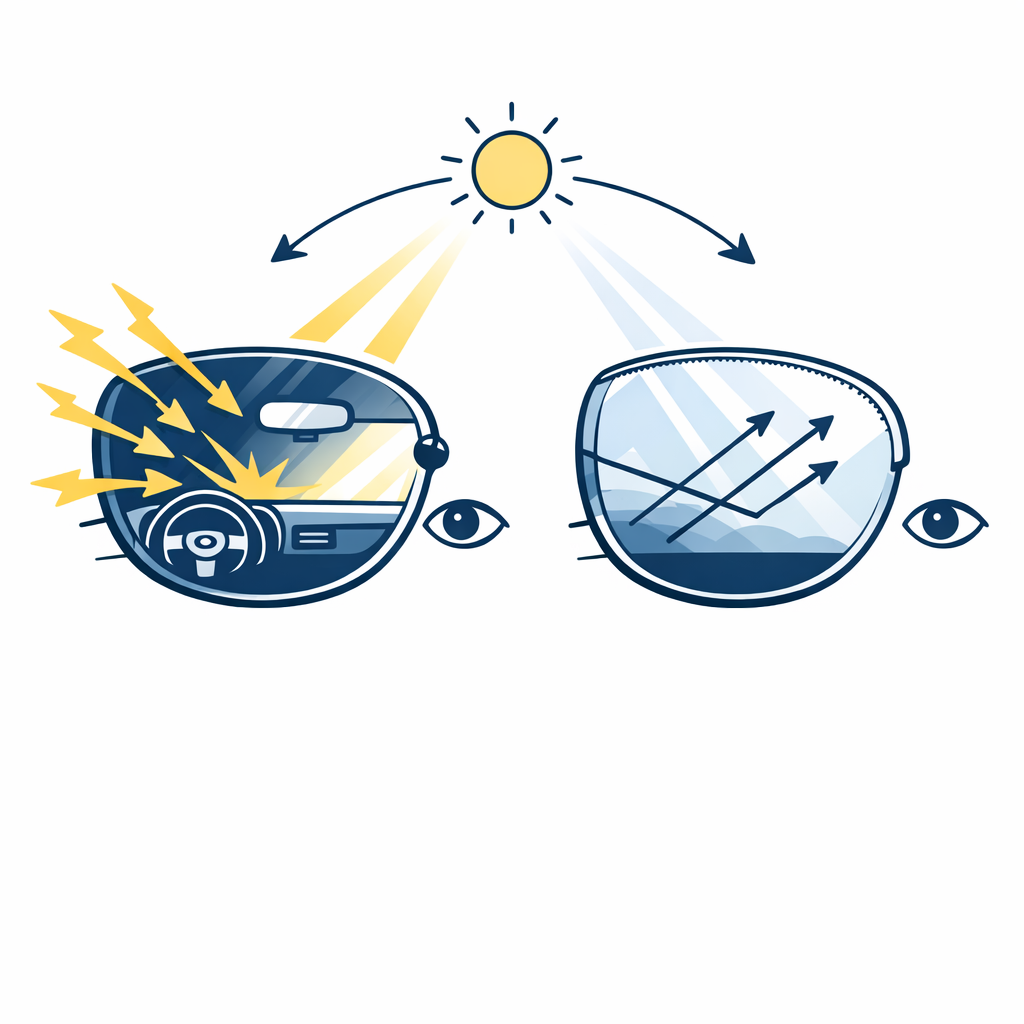
- Ask about weight: lighter lenses are easier to wear on long drives.
- Ask about thickness: especially important in stronger prescriptions and wrap-style frames.
- Ask about backside AR: particularly helpful if late-afternoon reflections bother you.
- Do not skip UV: polarization, mirror, and tint do not replace verified UV protection.
How to choose by driving condition
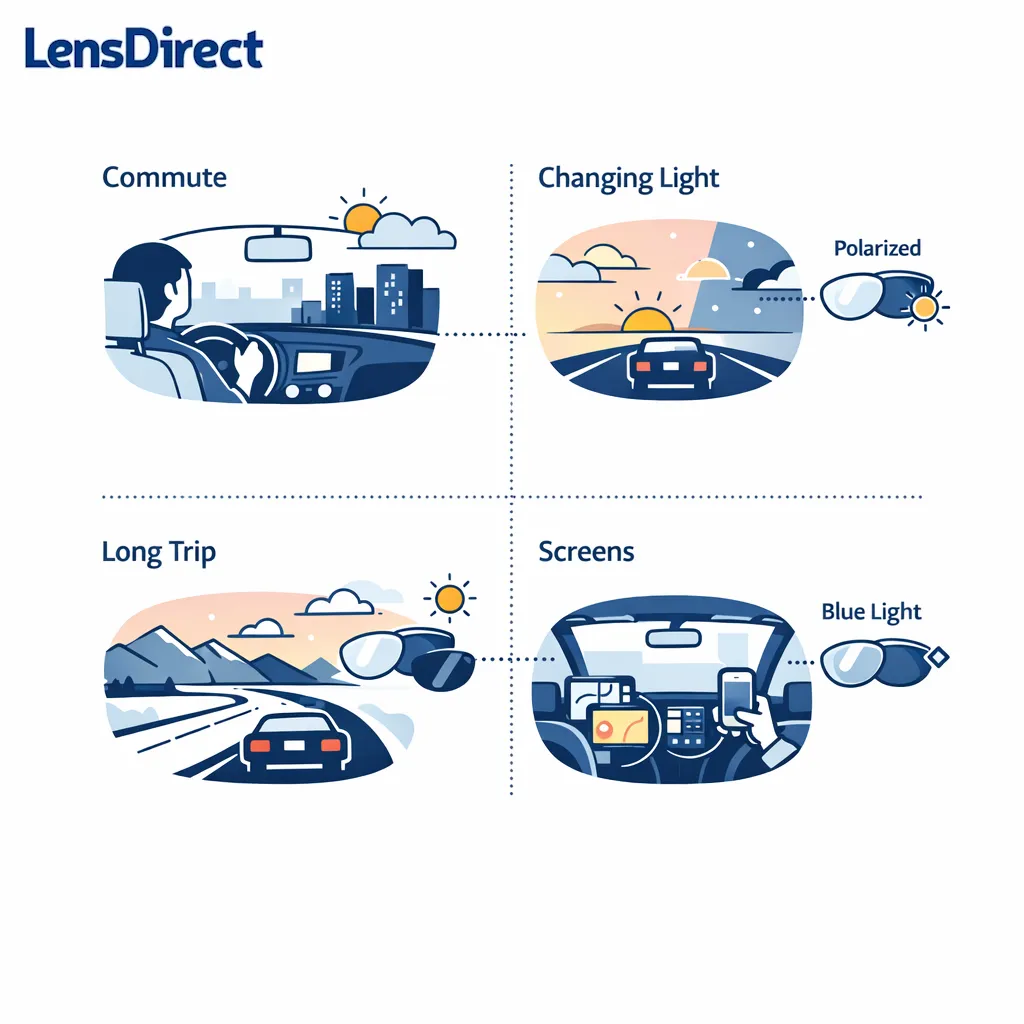
Daily commuting in bright sun
Start with polarized if glare is what wears you out. A gray or brown polarized prescription sun lens is the most reliable starting point for a bright daytime commute.
If you have a screen-heavy car, consider ordering from a retailer with a solid return policy or try a lower-commitment option first. The right answer is the pair that feels relaxing on the road and still lets you read your car comfortably.
Overcast or changing light
Gradient often shines here. It gives you sun help from above without making the inside of the car feel too dim whenever clouds roll in, you pass under trees, or you move in and out of shade.
A lighter gray or brown gradient is usually the best place to start for all-purpose daytime versatility. This is also the lane for drivers who dislike very dark sunglass lenses.
Long road trips
Think about fatigue, not just brightness. On longer drives, a lens that feels comfortable for three hours matters more than a lens that feels impressive for 20 minutes in a parking lot.
For many people, that means polarized plus a comfortable tint color. For others, especially drivers who check maps, screens, and controls constantly, gradient is the better long-haul answer because it feels less visually demanding inside the car.
Drivers with digital dashboards or HUDs
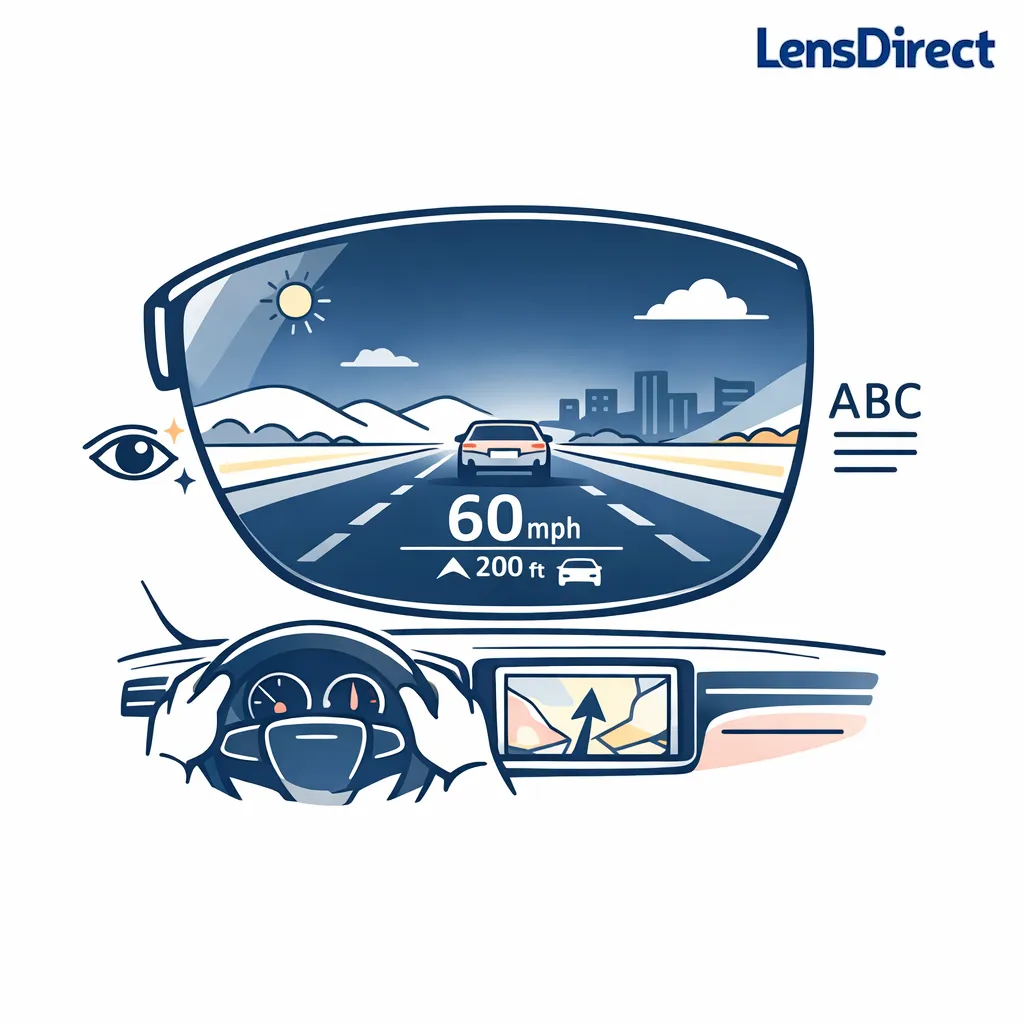
This is where you should be more careful with polarized lenses. If you already know certain sunglasses make your screen look dim, patchy, or rainbowed, skip the guesswork and look at gradient or standard tinted lenses first.
For this group, a solid gray tint or a gray gradient is often the simplest solution. You give up some glare-cutting power compared with polarization, but you may gain a much easier overall driving experience.
Quick comparison
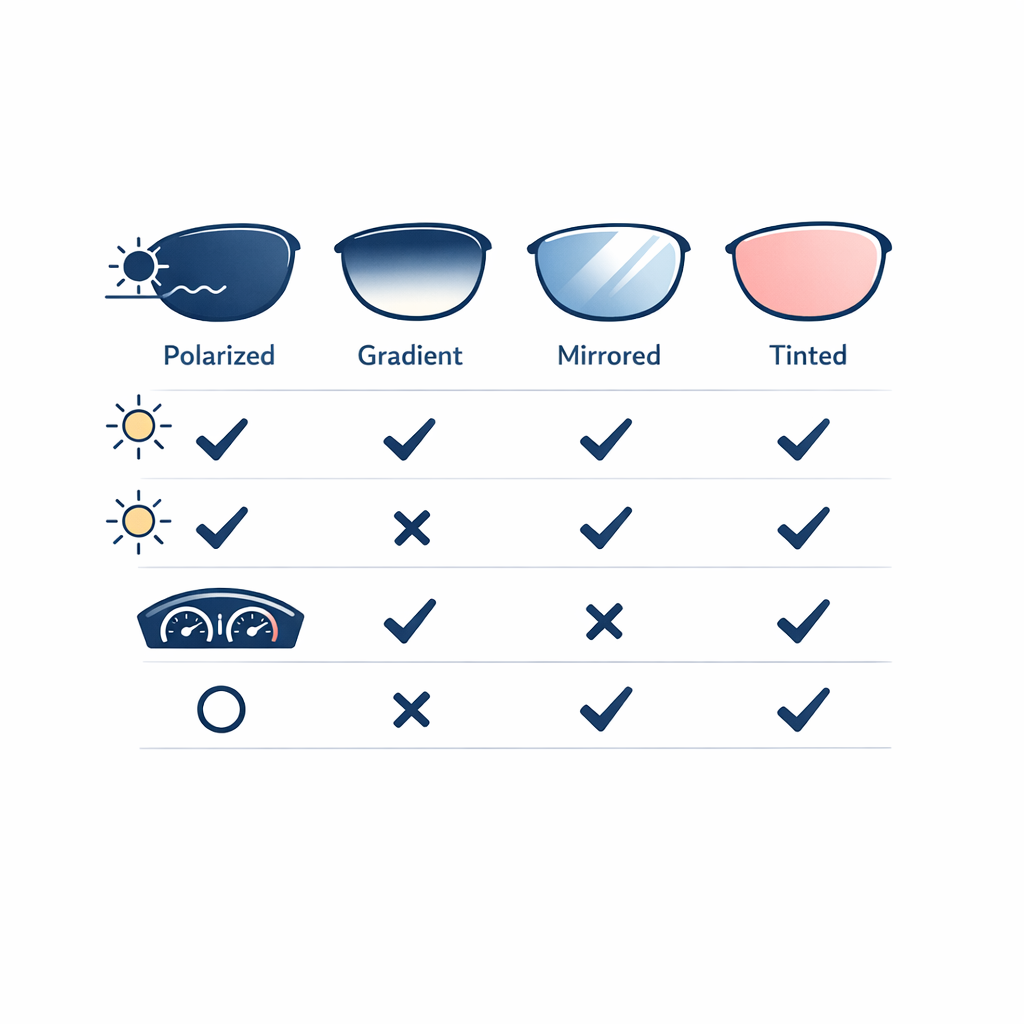
- Polarized: best for strong daytime glare and reflective roads; possible issue with some dashboards and HUDs.
- Gradient: best for balancing bright sky with easier dashboard visibility; less aggressive against reflected glare than polarized.
- Mirrored: best as an add-on for very bright sun; not a replacement for choosing the right base lens.
- Standard tint: best if you want a simple, predictable lens and do not want to deal with possible display interference.
Common mistakes and misconceptions
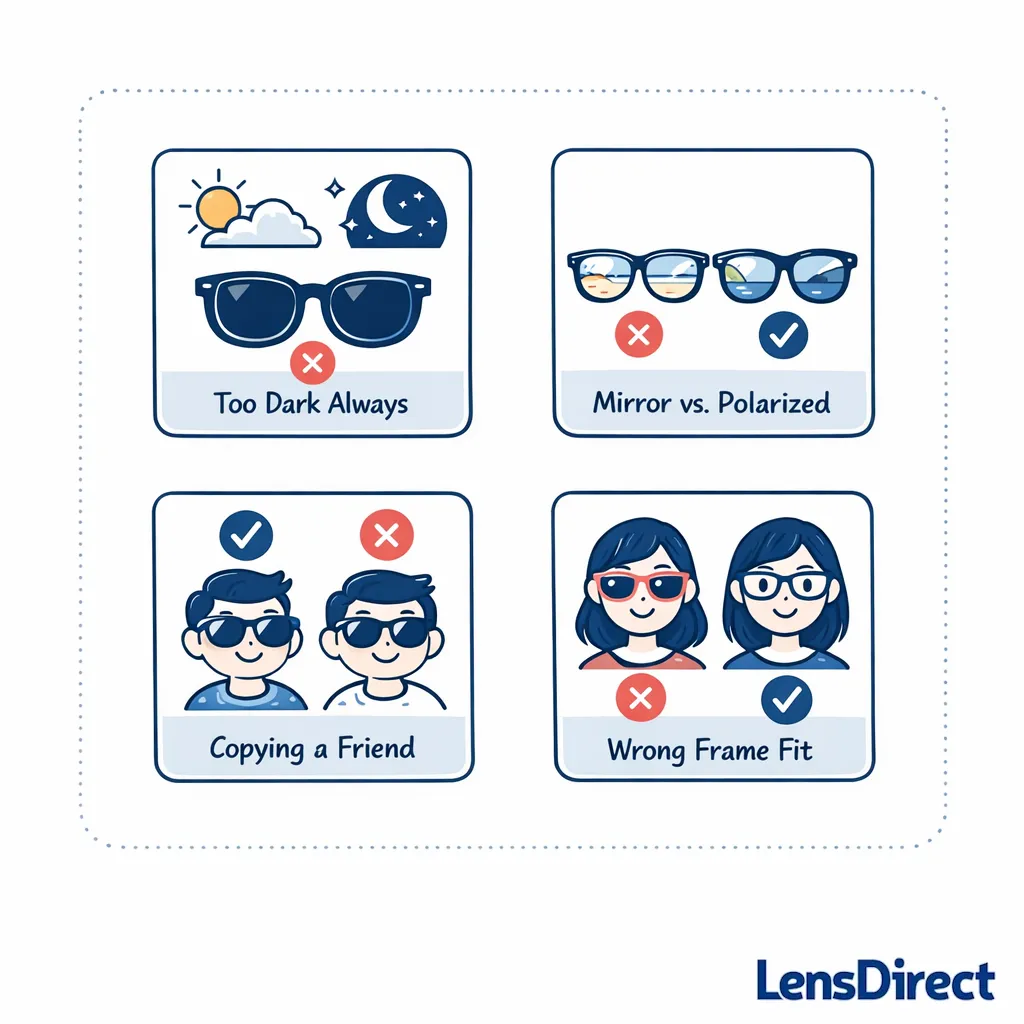
Mistake one: choosing by darkness alone. A darker lens is not automatically a safer lens. What matters is whether the sunglasses provide proper UVA and UVB protection and suit the way you drive.
Mistake two: assuming mirrored means polarized. Mirror changes how much bright light hits the lens surface, but it is not the same shopping decision as glare control. Treat mirror as an enhancement, not the main feature.
Mistake three: copying someone else’s “best” lens. The best prescription sunglasses for driving depend heavily on your car, your route, your light sensitivity, and whether you use digital displays all day.

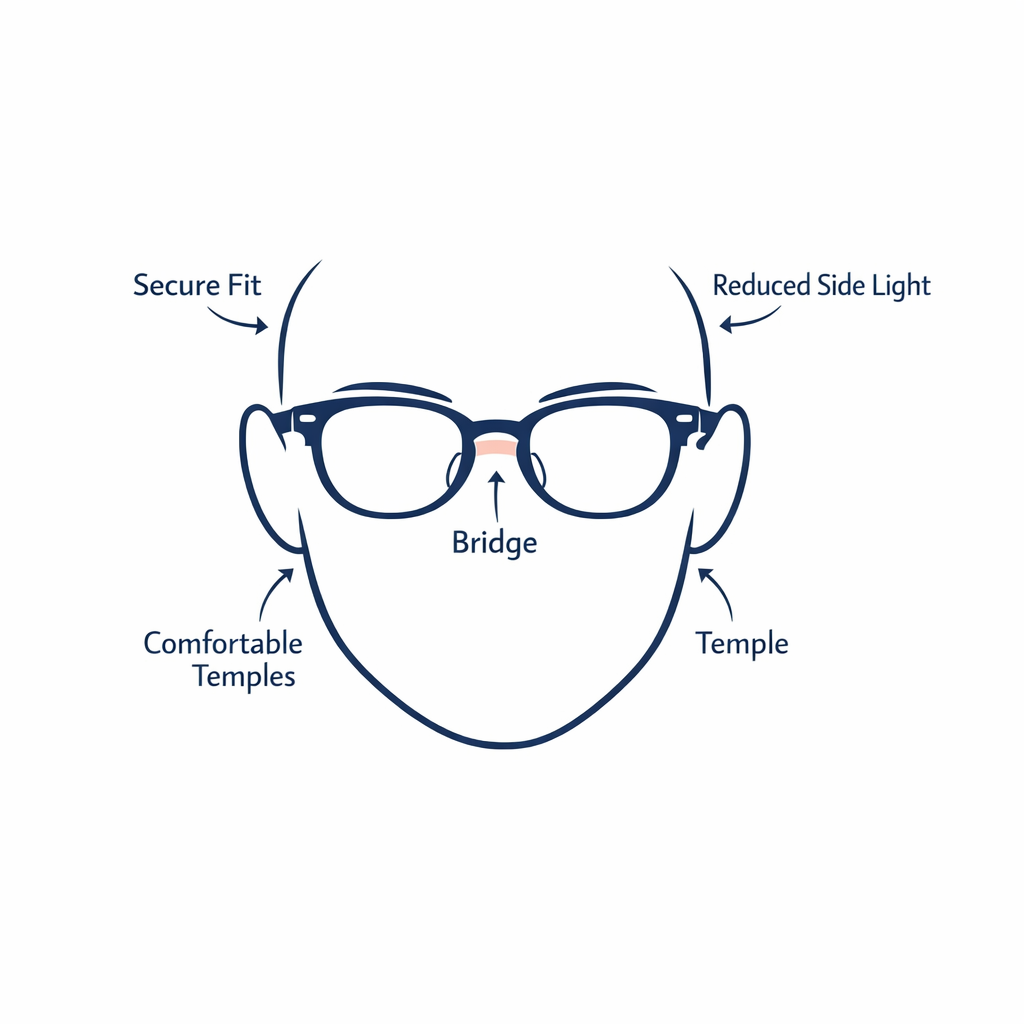
Mistake four: forgetting the fit. A technically great lens still fails if the frame slides, pinches, or lets too much light in from the sides. If you are unsure about shape and size, use a fit guide before you buy.
FAQ
What are the best prescription sunglasses for driving? For most daytime drivers, start with gray or brown polarized prescription sunglasses. If your dashboard or HUD is the bigger issue, look first at gradient or non-polarized tinted lenses.
What prescription glasses are best for driving? In daylight, prescription sunglasses with full UV protection are usually best. At night, your regular clear prescription is usually the better tool, and if glare or halos are getting worse, it is smart to ask your eye doctor about it.
Can you get prescription sunglasses for driving? Yes. You can order dedicated prescription sunglasses, choose prescription driving sunglasses with polarization or gradient options, or replace the lenses in a frame you already own.
Is it worth getting polarized sunglasses for driving? Usually yes if reflected glare is what bothers you most. The main exception is when your vehicle’s screens do not play nicely with polarized lenses.
Are gradient lenses better than polarized? Not universally. Gradient is often better for dashboard visibility and mixed light, while polarized is often better for strong reflected glare.
Which is better, polarized or mirrored sunglasses? If you have to choose one core feature for driving, polarized usually does more for road glare. Mirror makes more sense as an extra feature for very bright environments.
What to do next
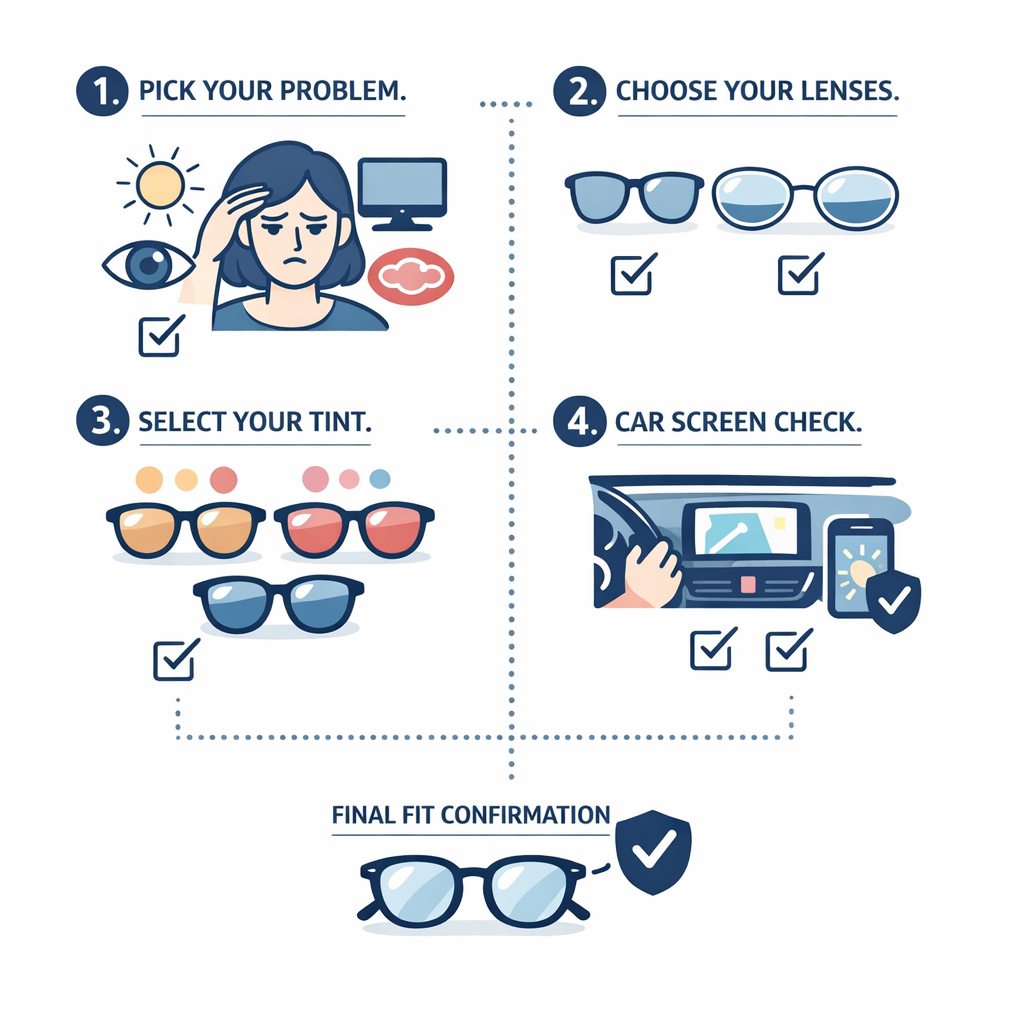
- Decide your top problem: glare, brightness, dashboard readability, or all-day comfort.
- Pick your lens type: polarized for maximum daytime glare relief, gradient for balance, standard tint for simplicity, mirror as an add-on.
- Choose a tint family: gray for neutral, brown/copper/amber for a warmer higher-contrast feel, green for a middle ground.
- Check your car: if you use a HUD or digital cluster, think twice before defaulting to polarized.
- Confirm your measurements: if you are ordering online, learn how to measure your pupillary distance before you buy.
- Think about fit: a secure, comfortable frame matters on long drives, so use LensDirect to find your fit if you need help narrowing the style.
- Use your benefits: if you have vision coverage, learn how to get reimbursed by your insurance before you place the order.
Build your driving pair with LensDirect
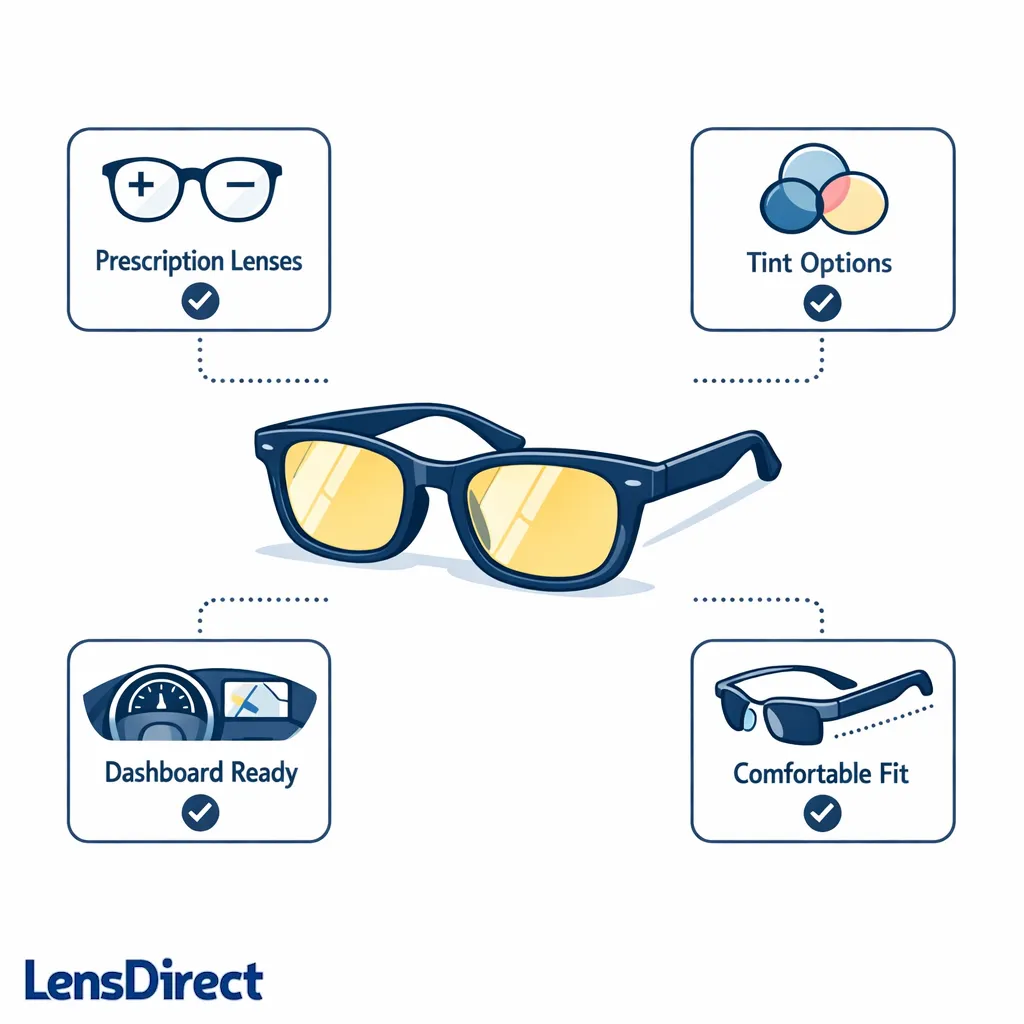
If you are ready to buy, LensDirect makes it easy to shop by the job you need your eyewear to do. If you want a dedicated pair for the road, start with Shop Sunglasses and narrow by style, tint, and prescription needs.
If you already own a frame you love, you do not always need to start over. You can Replace Your Lenses, choose the Full-Service Replacement option if you want to send your frame in, or use Order Replacement Lenses if your frame qualifies for the DIY route.
If you are refreshing more than one part of your eyewear setup, you can also Shop Glasses for everyday clear vision or Shop Contacts if you like the flexibility of switching between sunglasses and contacts on travel days. The best driving pair is the one you will reach for every time the sun comes out.
Author

Subscribe to our email newsletter to get the latest posts delivered right to your email.