
January is quietly one of the most practical months of the year to invest in new glasses. While it does not come with flashy promotions or seasonal trends, it offers something far more valuable: clarity. Financial clarity, insurance clarity, and lifestyle clarity all tend to align at the beginning of the year, making it an ideal moment to reassess your vision needs and replace eyewear that may no longer be serving you well.
For many people, glasses become an afterthought.
Frames get bent, lenses accumulate scratches, prescriptions slowly drift out of date, and discomfort becomes normalized.

January interrupts that cycle. It creates a natural pause after the holidays and before the pace of the year accelerates again. That pause is exactly what makes it such a strong buying window.
This article explains why January stands out as the smartest time to buy new glasses, focusing on insurance resets, budgeting logic, and comfort improvements rather than hype or urgency. The goal is simple: help you make a confident, well-timed decision that benefits your eyes and your routine for the rest of the year.
January Creates a Natural Reset for Vision Care
January is a reset month across nearly every area of life. Calendars turn over, routines shift back to normal, and people reassess systems that quietly impact their daily comfort. Vision care fits squarely into that category.

Throughout the year, it is easy to postpone buying new glasses.
Work gets busy. Prescriptions feel “good enough.”
Minor headaches or eye strain are blamed on screens or stress.
By January, however, those compromises become more visible.
You are no longer rushing through summer travel, holiday schedules, or year-end deadlines. There is mental space to notice discomfort and make deliberate improvements. That clarity alone makes January an ideal time to evaluate your eyewear honestly.
Insurance Benefits Reset at the Start of the Year
One of the most concrete reasons January is such a strong buying window is the reset of vision insurance benefits.
Many plans operate on a calendar-year basis, meaning allowances and coverage amounts renew on January 1.
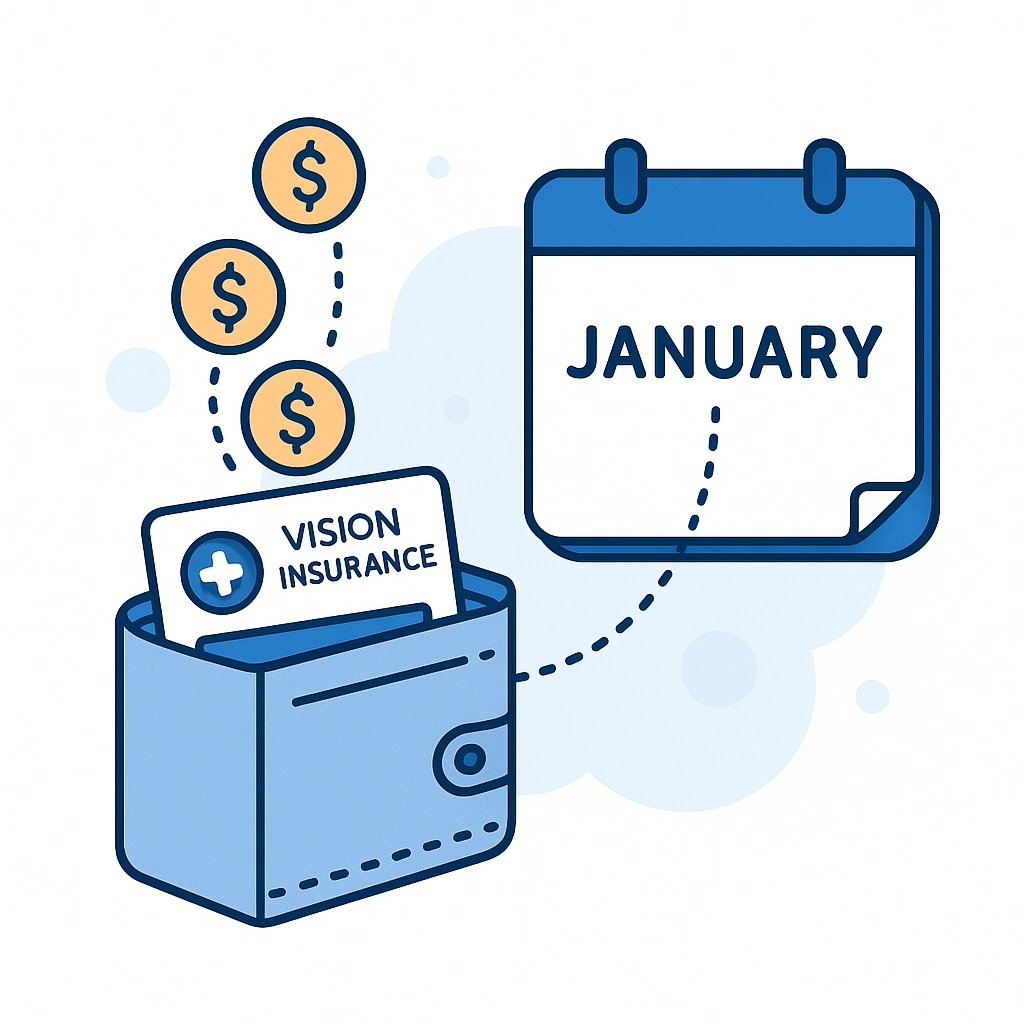
If you delayed buying glasses toward the end of the previous year or skipped it entirely, January gives you access to a fresh set of benefits that can significantly reduce out-of-pocket costs.
New Allowances Become Available
Most vision plans include an annual allowance for frames and lenses.

Once January arrives, that allowance typically resets in full.
This means you can select frames and lens options without worrying about having already used your benefit.
Waiting until later in the year often means competing priorities pull that allowance elsewhere or time slips by before you take advantage of it. January removes that friction.
Lens Upgrades Are Easier to Justify
With benefits fully reset, January is also a good time to consider lens upgrades that improve daily comfort.
Options like anti-reflective coatings, blue-light filtering, or thinner lens materials often feel more reasonable when insurance support is at its maximum.
Instead of downgrading lenses to save money late in the year, January allows you to prioritize clarity and comfort from the start.
January Aligns With Smarter Budgeting Decisions
Beyond insurance, January is when many people reassess their personal budgets.

Holiday spending has ended, credit card balances are visible, and financial goals for the year are being set.
Buying glasses during this period fits naturally into a practical budgeting mindset.
Vision Becomes a Planned Expense, Not a Surprise
When glasses are purchased reactively, it is often because something broke or became unbearable.
That usually leads to rushed decisions and higher stress around cost.

In January, glasses can be treated as a planned investment rather than an emergency. This allows you to compare options calmly, choose frames you genuinely like, select lenses that match your daily habits, and avoid paying extra for rushed replacements.
Annual Cost Is Spread Over More Time
When you buy glasses in January, you benefit from them for the entire year.
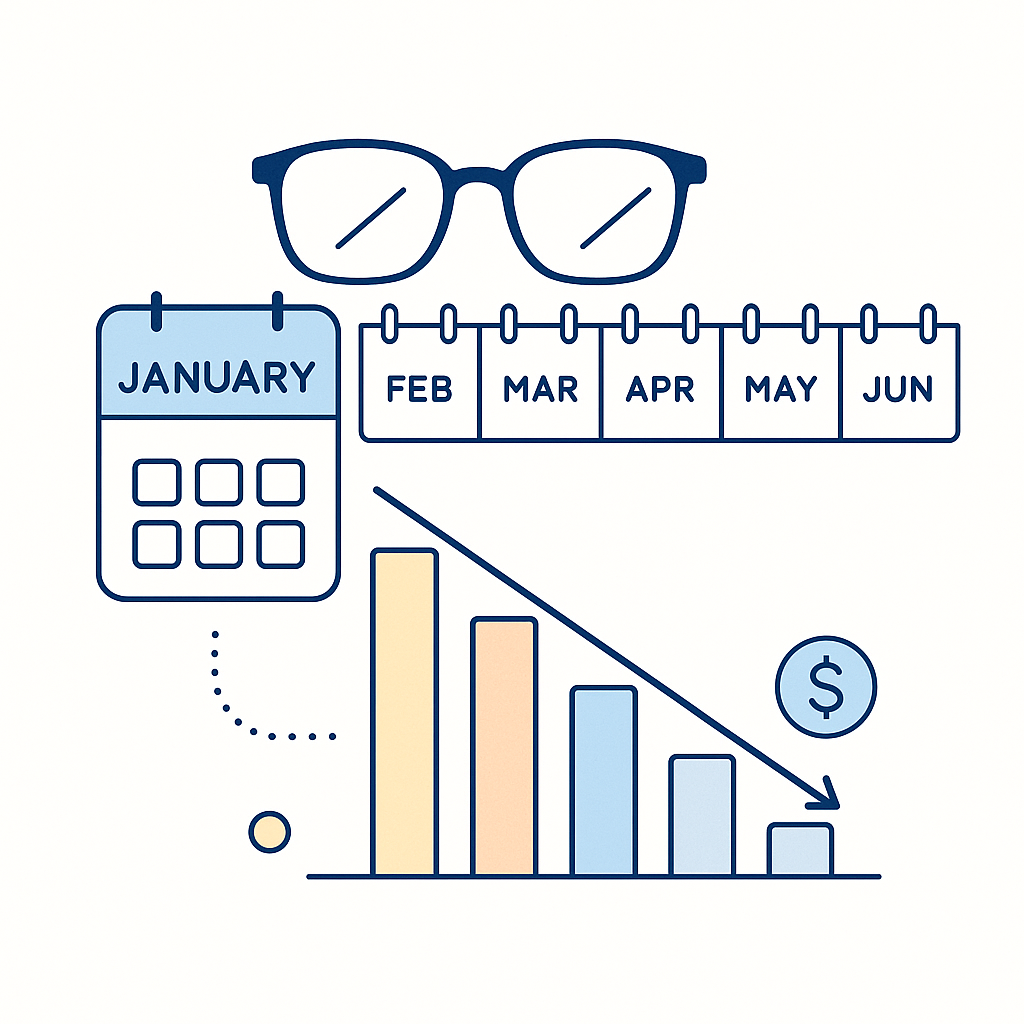
From a value perspective, this maximizes cost-per-use.
A pair purchased late in the year may only see a few months of wear before benefits reset again or prescriptions change. January purchases deliver the longest possible return on investment.
Comfort Issues Become More Noticeable After the Holidays
The holiday season often masks physical discomfort.
Travel, altered routines, and irregular schedules make it harder to pinpoint ongoing issues with eyewear.

Once January arrives and routines stabilize, subtle problems become more obvious.
Daily Screen Use Returns to Normal Levels
Work and school schedules typically resume in January, bringing consistent screen exposure back into daily life.

This is often when eye strain, headaches, and blurred vision become more noticeable.
If your glasses are outdated or poorly fitted, these issues tend to surface quickly once normal routines resume.
Seasonal Changes Affect Vision Comfort
Winter environments can also reveal eyewear shortcomings.
Dry indoor air, glare from snow, and longer periods indoors can all affect how your lenses perform.

January is a good time to assess whether your current glasses are actually supporting you in these conditions or simply getting by.
January Encourages Proactive Eye Health
Buying glasses is not just about style or convenience. It is a core part of long-term eye health. January’s reset mindset encourages proactive care rather than reactive fixes.
Updated Prescriptions Reduce Subtle Strain
Even small prescription changes can make a noticeable difference in comfort.

Wearing outdated lenses forces your eyes to work harder than necessary, often without obvious symptoms at first.
January is an ideal moment to update your prescription and start the year with clearer, more accurate vision.
New Glasses Reinforce Better Habits
Starting the year with new eyewear can also reinforce healthier daily habits.
People are more likely to wear glasses consistently instead of squinting, use task-specific lenses properly, maintain lens cleanliness, and pay attention to visual comfort.

These small behavioral shifts add up over time.
Why Waiting Later in the Year Often Backfires
Many people assume it makes sense to wait until glasses feel absolutely necessary. In practice, that delay often leads to worse outcomes.
End-of-Year Purchases Are Often Rushed
Late-year purchases are frequently driven by expiring benefits or sudden lens damage.
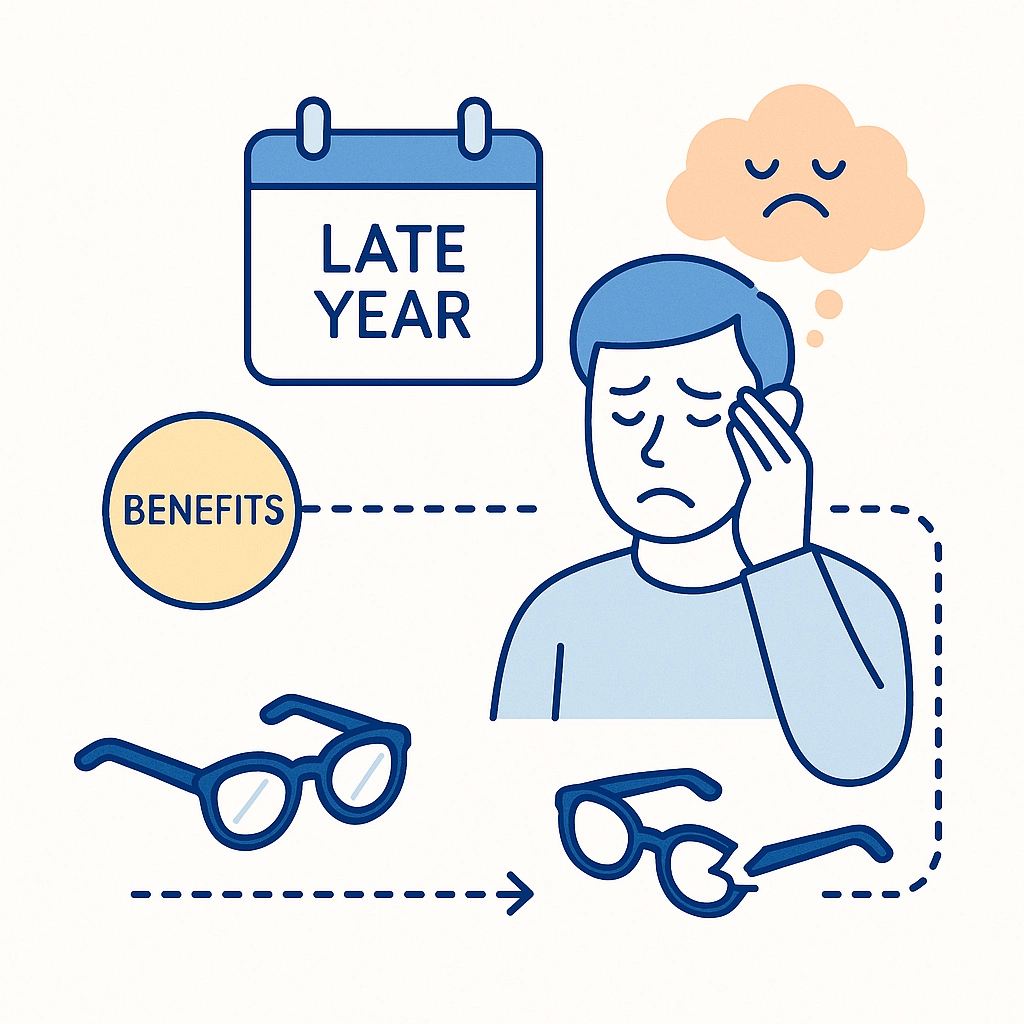
That urgency limits choice and increases frustration.
Frames are chosen quickly, lens options are compromised, and satisfaction suffers.
Discomfort Is Normalized for Too Long
The longer you wait, the more likely you are to accept discomfort as normal.
Eye strain, minor headaches, and visual fatigue become part of the background.

January interrupts that normalization and encourages improvement instead of endurance.
Key Reasons January Stands Out at a Glance
The advantages of January are not subtle when viewed together. They stack in ways that make the month uniquely practical for buying new glasses.
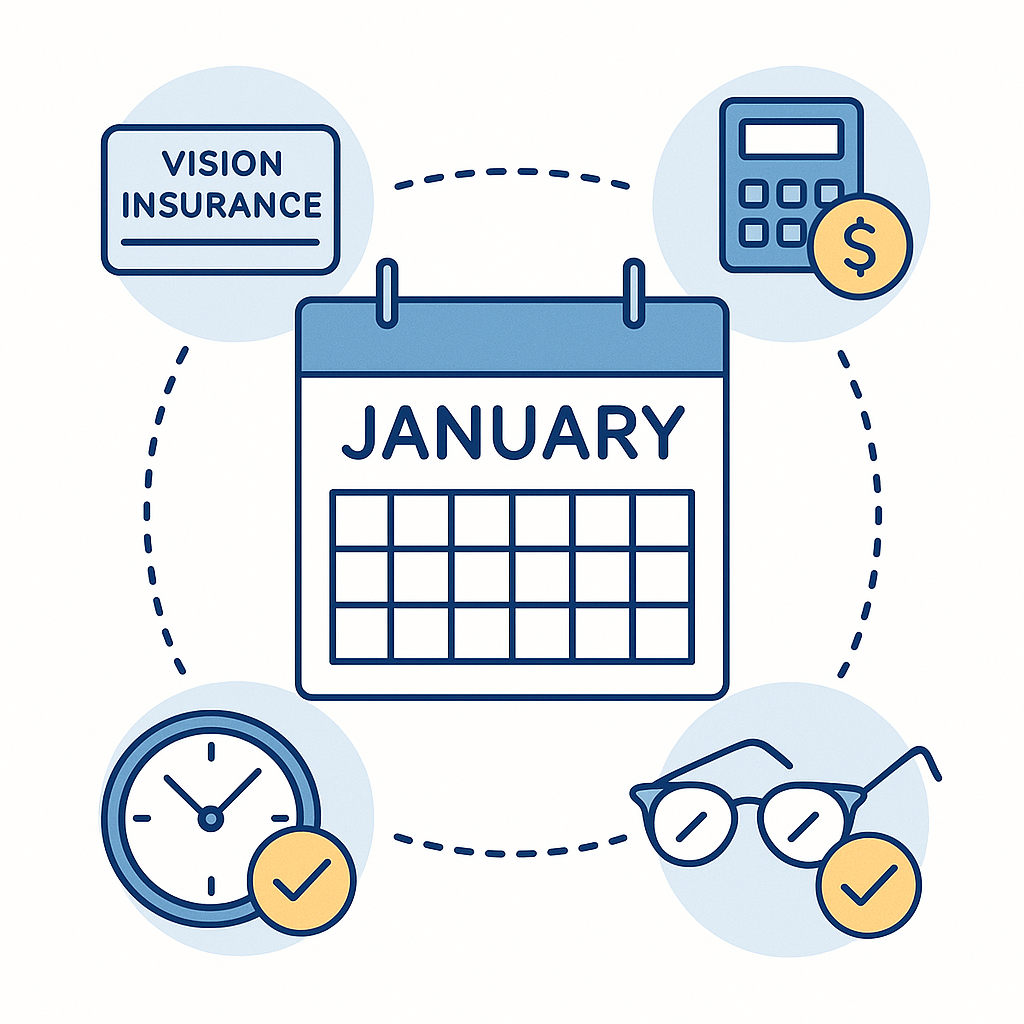
- Insurance benefits are fully reset and unused
- Budgets are being reviewed with fresh awareness
- Routines stabilize, revealing real comfort needs
- Screen time increases, making clarity more important
- Purchases feel intentional rather than rushed
This combination rarely occurs again in the same way later in the year.
Comparing January to Other Buying Times
The value of January becomes clearer when compared to other common times people replace their glasses.
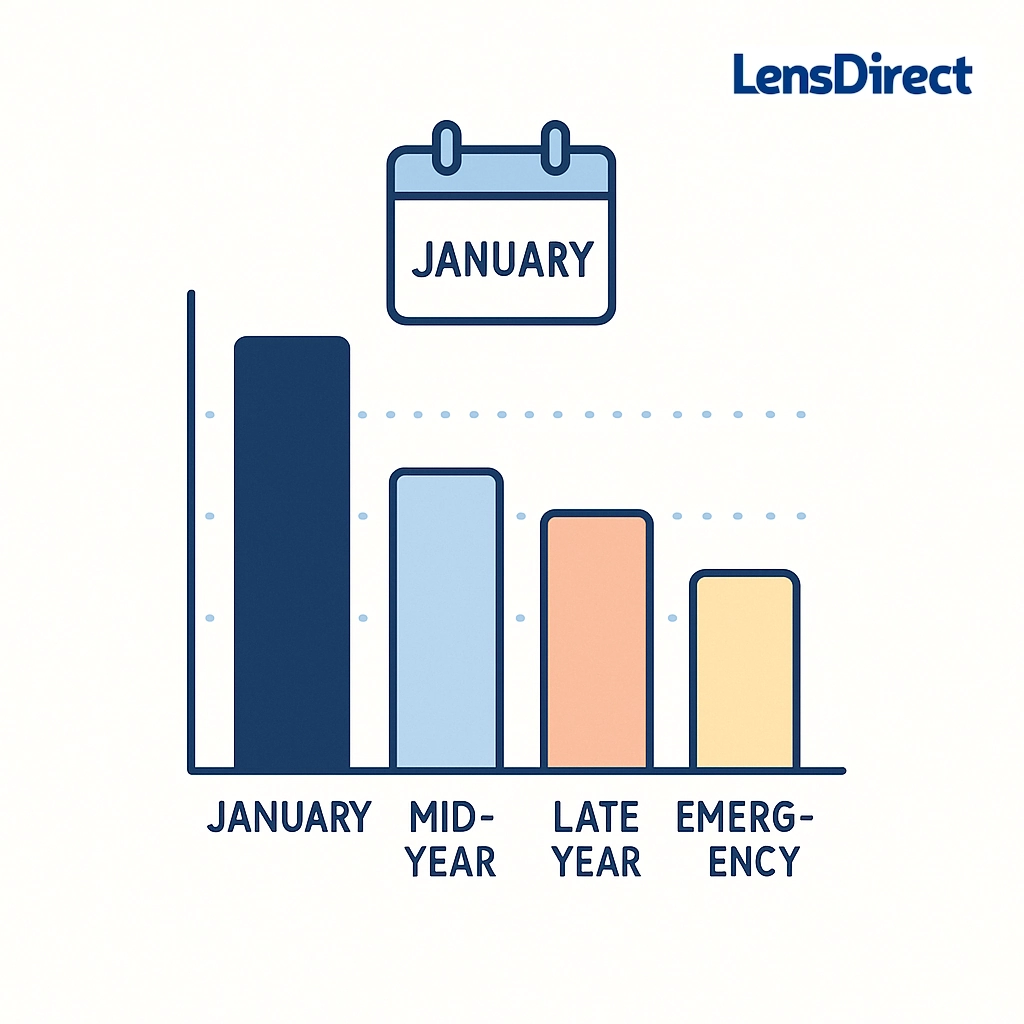
Value Comparison
| Timing | Typical Motivation | Common Drawbacks | Overall Value |
| January | Planning, insurance reset, comfort | Minimal | High |
| Mid-Year | Gradual discomfort | Partial benefits used | Moderate |
| Late Year | Expiring benefits or damage | Rushed decisions | Low to Moderate |
| Emergency Replacement | Broken or lost glasses | Stress, limited choice | Low |
January stands out because it is driven by intention rather than pressure.
January Is Ideal for Evaluating How Glasses Fit Your Lifestyle
Your lifestyle evolves over time. January is when many people reassess work habits, screen usage, and daily routines.
Work and Screen Habits Often Change
New projects, new roles, or hybrid work arrangements often begin early in the year.
These changes can affect how you use your eyes throughout the day.

January is the right time to ask whether your glasses match how you actually live and work now.
Comfort Becomes a Daily Priority

As the year begins, people often focus on small improvements that make daily life easier.
Comfortable glasses fall squarely into that category.
Better-fitting frames, clearer lenses, and reduced strain contribute quietly but consistently to overall well-being.
How Buying in January Supports Long-Term Value
The benefits of buying glasses in January extend beyond the month itself.
Longer Wear Time Before Replacement
Buying early in the year means your glasses remain current for the longest possible period.
This delays the need for replacement and maximizes value.

Easier Planning for Future Updates

When glasses are purchased deliberately in January, future updates become easier to plan.
You know when benefits reset, when prescriptions are due, and what improvements matter most next time.
This turns eyewear into a predictable system rather than an ongoing inconvenience.
A Practical January Checklist for Glasses Buyers
Before buying new glasses in January, it helps to approach the decision thoughtfully.
- Review your current prescription and how it feels
- Note any discomfort, headaches, or eye strain
- Consider how much screen time you have daily
- Check insurance benefits and allowances
- Think about fit, weight, and long-term comfort
- Choose lenses that support how you actually use your eyes
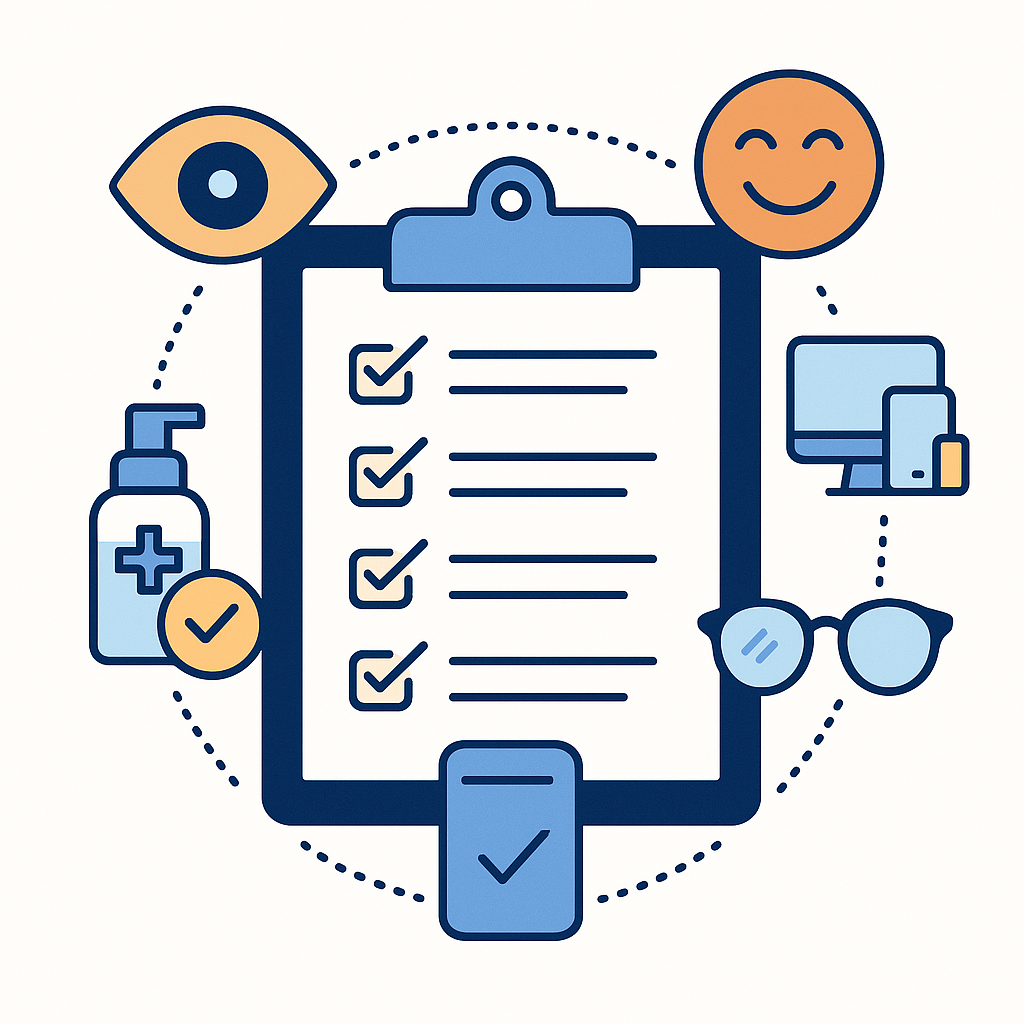
This simple process ensures your purchase is based on real needs rather than assumptions.
Why January Purchases Feel More Satisfying
There is a psychological component to timing that should not be overlooked.

January purchases tend to feel more satisfying because they align with improvement rather than reaction.
You are not fixing a problem under pressure – you are setting yourself up for a better year.
That mindset leads to better choices and greater satisfaction with the outcome.
Start the Year Seeing Better
January is not the loudest or flashiest time to buy new glasses, but it is the most sensible. Insurance benefits reset, budgets are clearer, routines stabilize, and comfort issues become easier to identify.
Buying glasses in January allows you to act deliberately instead of reactively.
It maximizes value, reduces stress, and improves daily comfort for the entire year ahead.

If you are going to rely on your vision every single day, starting the year with eyewear that truly supports you is one of the most practical decisions you can make.
Author

Subscribe to our email newsletter to get the latest posts delivered right to your email.