
Vacation is when you want the most freedom: ocean days, pool laps, hot tubs, quick showers, and zero fuss about seeing clearly. The problem is that water and contact lenses do not mix well, even when the water looks clean.
This guide is for contact lens wearers who travel, swim, play water sports, or just want easy “get ready and go” routines. You’ll learn why water exposure matters, what to do in common vacation scenarios (pool, beach, shower, hot tub), and the safest practical alternatives like prescription swim goggles and travel-friendly lens habits.
Why water and contact lenses are a risky combination
Any water that touches your lenses can carry microorganisms and debris that may get trapped against your eye. The CDC warns that exposing contact lenses to water can increase your risk of eye infections and inflammation.
One of the biggest concerns is Acanthamoeba, a microscopic organism found in water and soil that can cause a rare but serious corneal infection. The CDC’s Acanthamoeba keratitis guidance explains that infection can be vision-threatening and may be difficult to treat.
“But it’s just a little water” is exactly how problems start
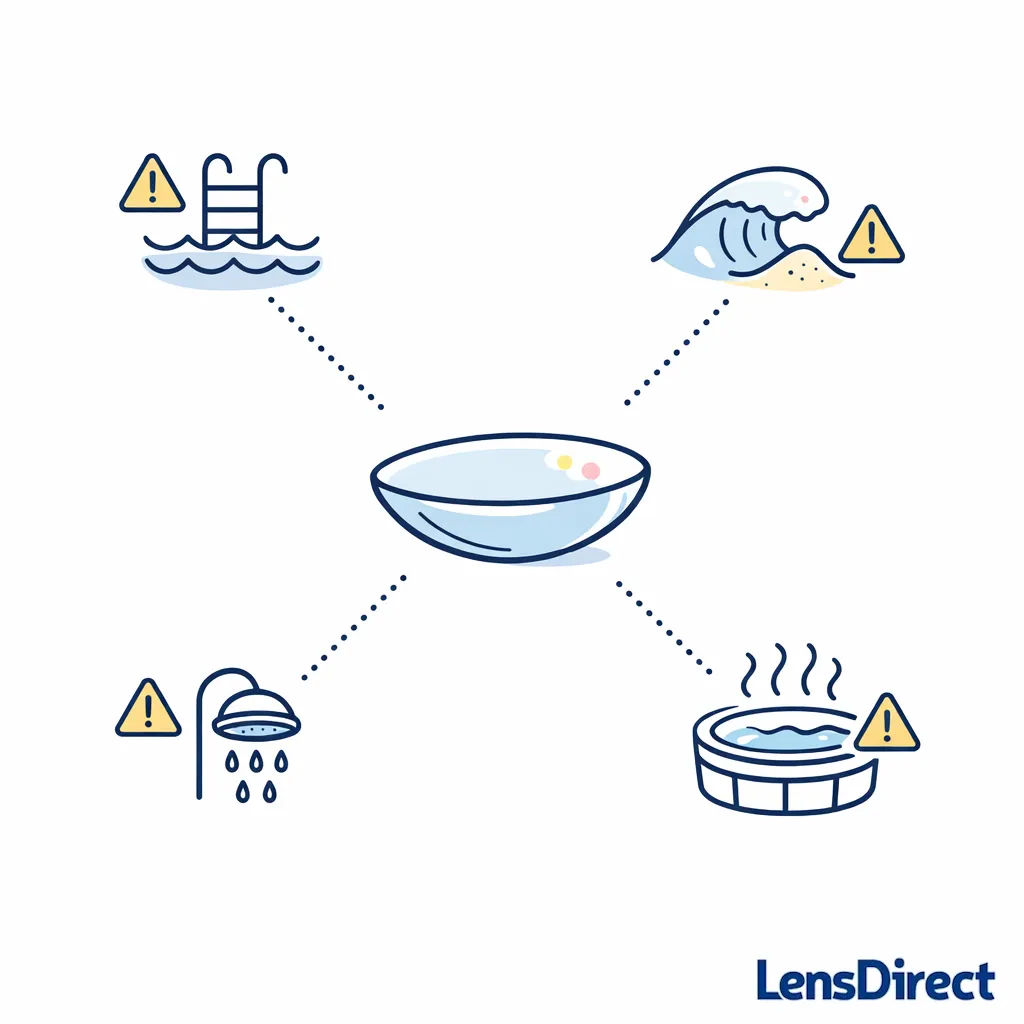
Most people don’t plan to dunk their head in a hotel pool while wearing contacts. The issue is that “little” exposures add up: a splash at the beach, a quick rinse in the shower, steam from a hot tub, or a wet hand adjusting a lens.
If you remember one principle, make it this: treat your lenses like they should only touch your eye and sterile contact lens products. The FDA’s contact lens care tips emphasize avoiding water contact and following lens and solution directions closely.
Can you swim with contact lenses?
If you’re looking for a strict safety answer, eye-health authorities generally advise not swimming in contacts. The American Academy of Ophthalmology’s guidance on swimming with contact lenses explains why swimming in lenses can raise infection risk and recommends safer alternatives.
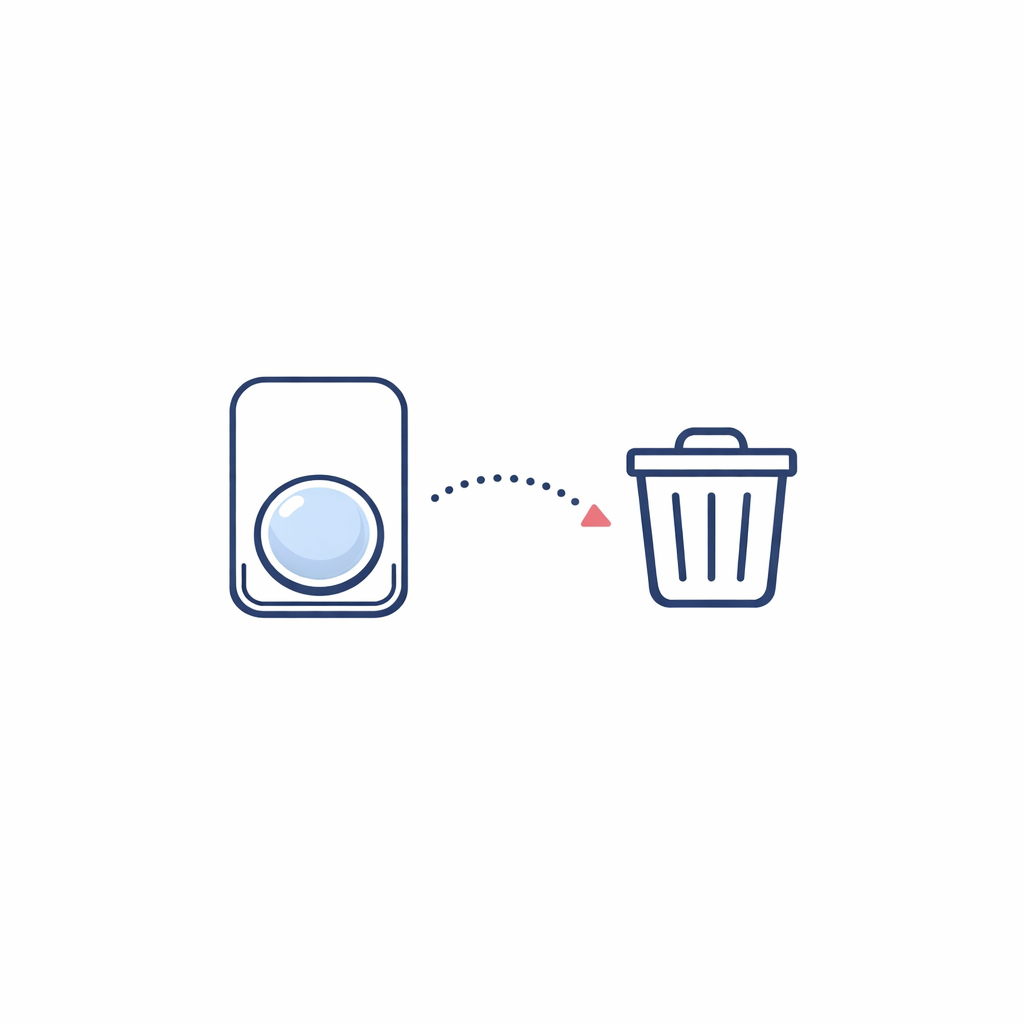
That said, real life happens, and many travelers still end up in the pool or ocean with contacts in. The goal is to reduce risk as much as possible and know what to do immediately afterward.
Pool swimming (chlorine does not make it “safe”)
Chlorinated pools can still contain germs, especially if chlorine levels aren’t maintained or if disinfection hasn’t had enough time to work. The CDC’s Healthy Swimming information explains that pool disinfection helps but does not guarantee water is germ-free at every moment.
With contacts, even “clean-looking” pool water is still water, and water is the issue. The CDC’s contact lenses and water guidance specifically includes swimming as a water exposure to avoid.
Ocean swimming and the beach
Saltwater, sand, and wind create a perfect storm for irritated eyes and lenses that feel gritty or dry. Even if the ocean feels “natural,” it can still introduce microorganisms and particles that get trapped under or on a lens, which the CDC notes is a key concern with water exposure and contacts.
For “contacts at the beach,” think beyond swimming. A windy beach day can make you rub your eyes more, and rubbing can worsen irritation or scratch the surface of the eye, especially if debris is present.
Lakes, rivers, and freshwater swimming are higher risk
Freshwater is a common environment for organisms that can cause severe eye infections. The CDC explains that Acanthamoeba is found in freshwater sources, which is one reason freshwater swimming in contacts is a particularly bad idea.
If your trip includes paddleboarding, kayaking, waterfall hikes, or lake swimming, plan your vision setup ahead of time (more on that below) rather than hoping you can “keep your head above water.”
Showering with contacts (including “just rinsing my face”)
Showering in contacts is a very common habit, and it’s also a major source of water exposure. The CDC advises avoiding showering while wearing contact lenses because tap water can introduce germs and because water can get trapped between the lens and the eye.
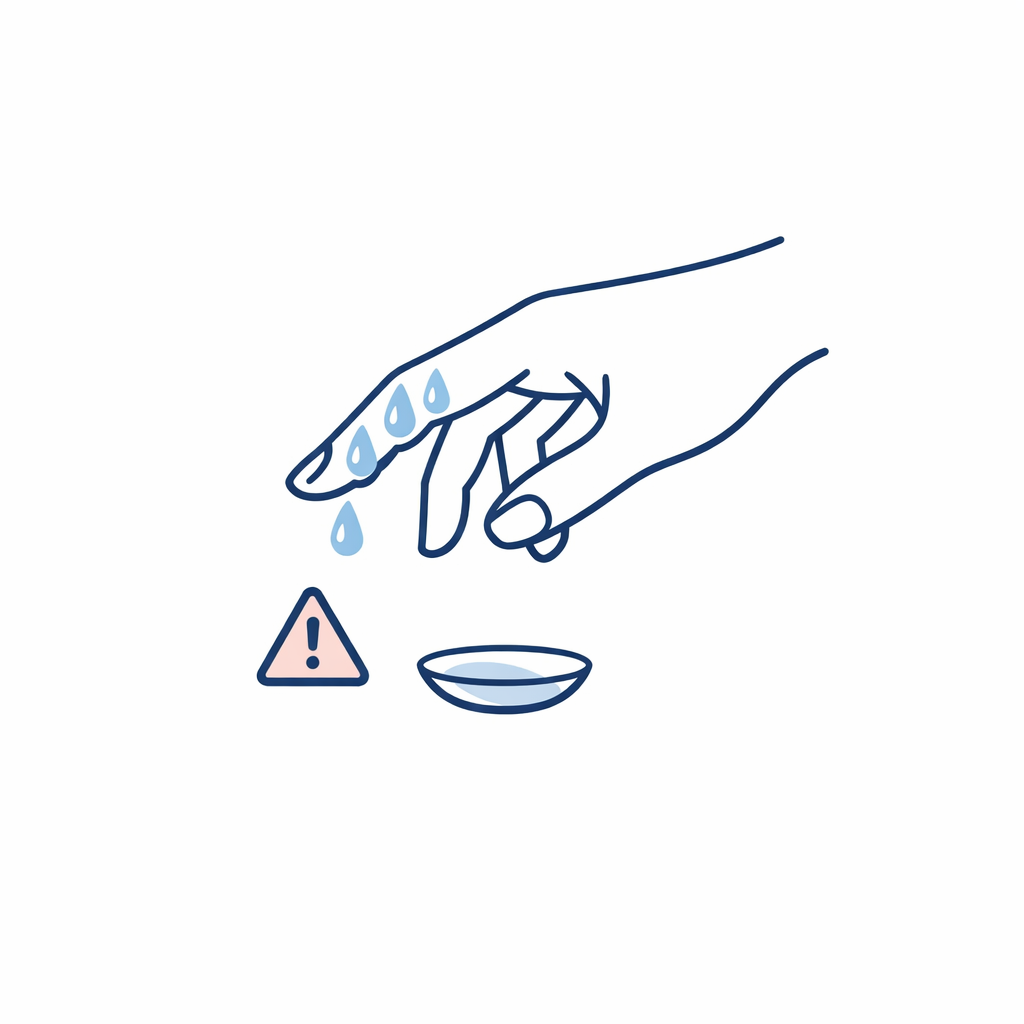
Even if you don’t feel water directly hit your eyes, splashes from washing your face, shampoo runoff, and steam can all contribute. If you’re trying to simplify your routine while traveling, the safest order is: remove lenses first, shower, then insert lenses with clean, dry hands.
Common shower scenario: “I’ll keep my eyes closed”
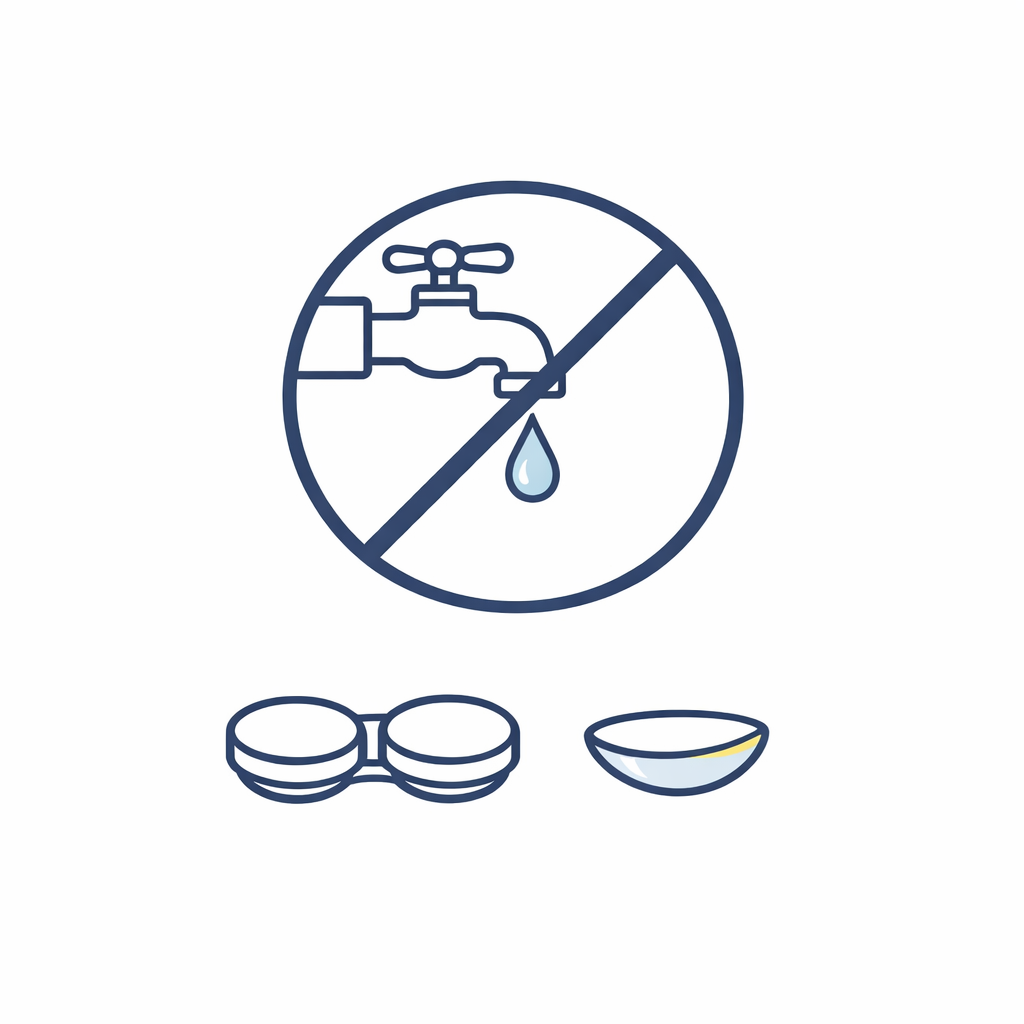
Closed eyes help, but it only takes a small amount of water to end up in the eye area. The underlying issue is still that water is not sterile and can carry organisms that don’t belong under a contact lens, which is why the FDA recommends keeping contacts away from water.
Contacts in a hot tub or spa
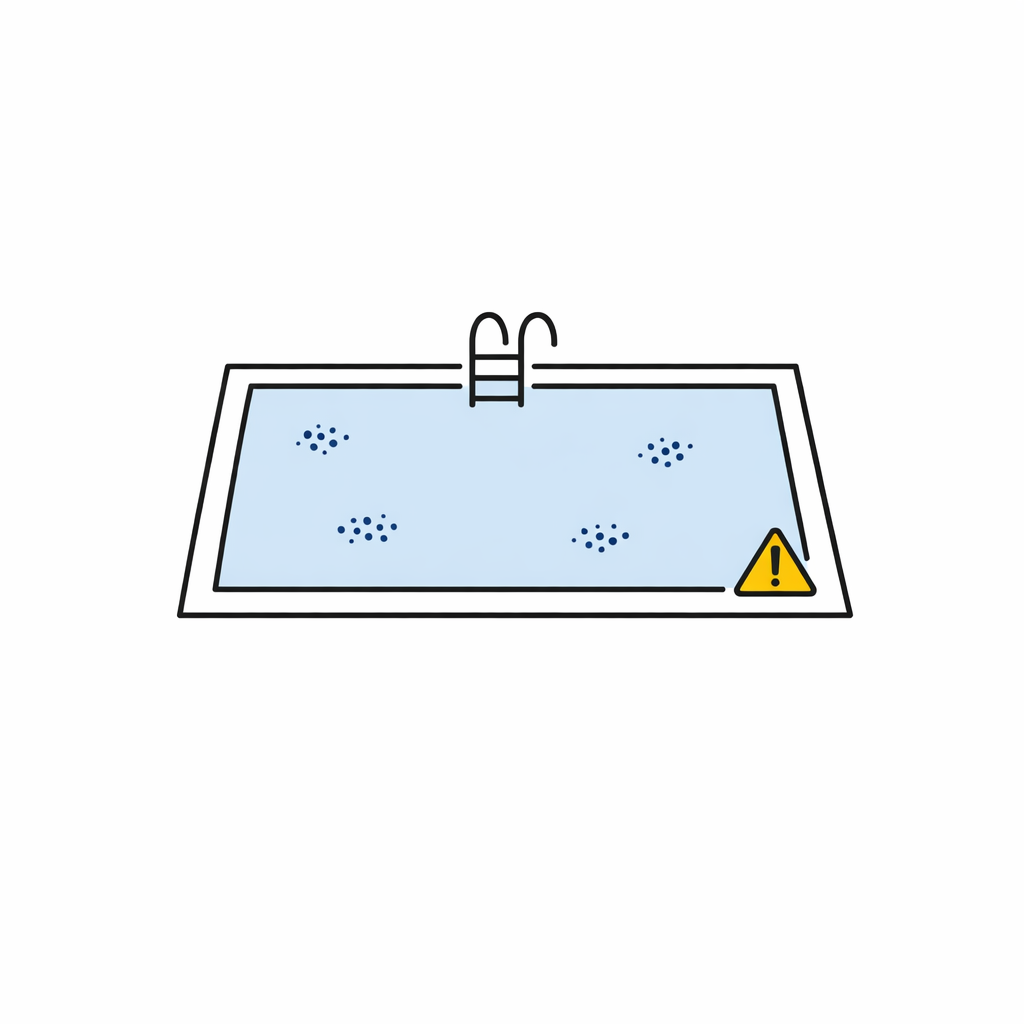
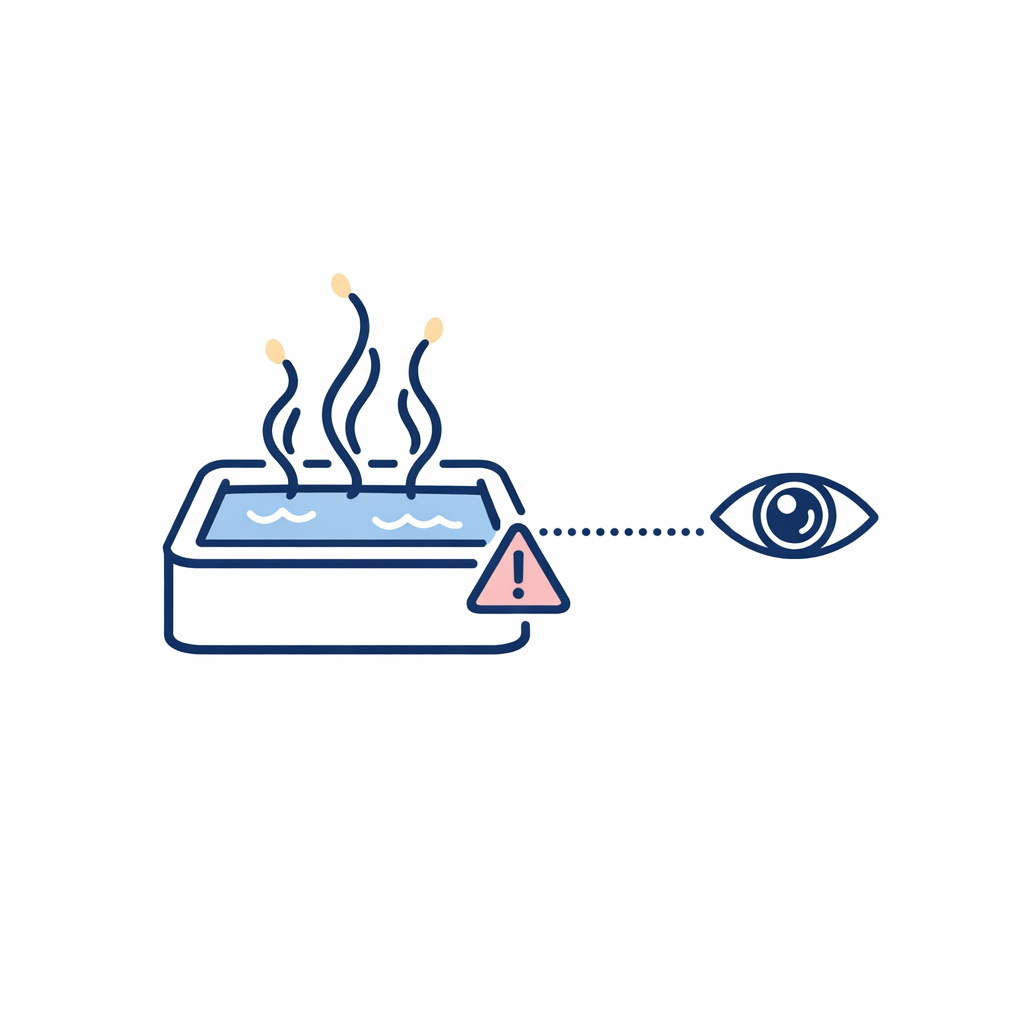
Hot tubs add two risk boosters: warm water and lots of people. Warm water can support the growth of certain microorganisms, and heavy use can make water chemistry harder to maintain consistently.

Even when hot tub water is treated, it’s not a controlled sterile environment. The CDC’s Healthy Swimming resources explain why recreational water can still spread germs, and the CDC’s contact lens water guidance includes hot tubs as a water exposure to avoid while wearing lenses.
If you must be near water: the “least risky” setup
Sometimes you’re on a trip and choices are limited. If you absolutely must wear contacts around water, try to reduce exposure and follow a strict aftercare plan.
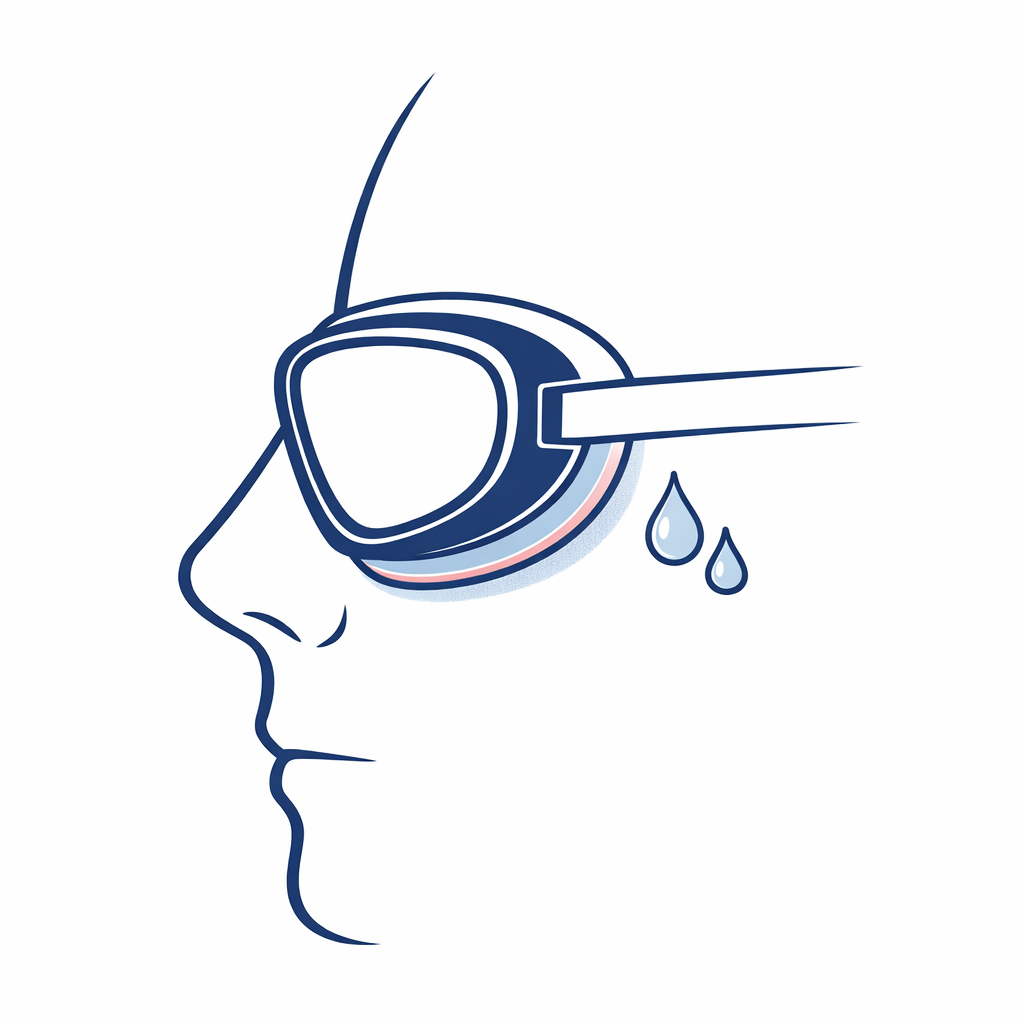
Wear watertight swim goggles designed to seal well, not just “fitness” goggles that leak easily.
- Wear watertight swim goggles designed to seal well, not just “fitness” goggles that leak easily.
- Avoid opening your eyes underwater and avoid splashes directly to the face.
- Use daily disposable lenses if your eye care professional approves so you can throw them away immediately after water exposure (instead of trying to “rescue” them).
- Remove lenses as soon as possible afterward and follow your product instructions; the FDA stresses following lens and solution labeling for safe use.
Safer ways to see clearly for water activities
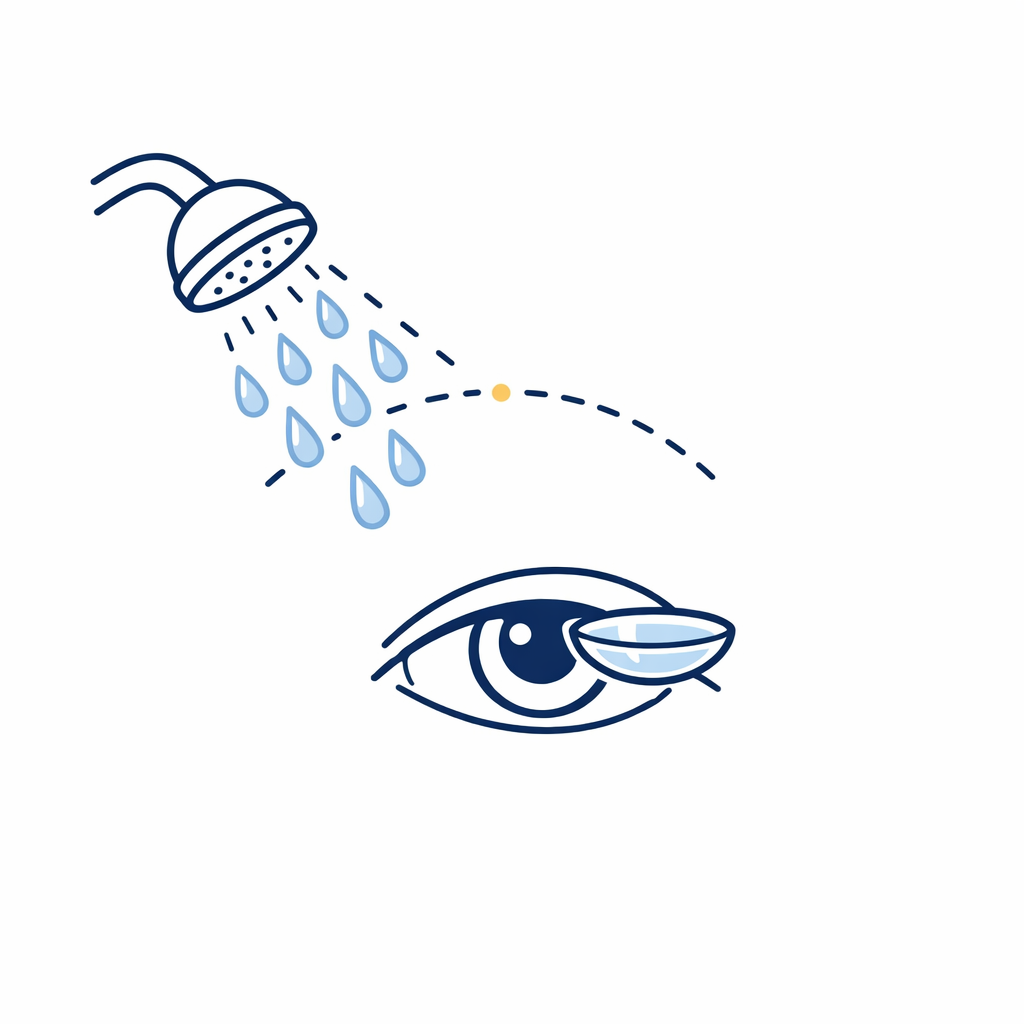
If you’re searching for “prescription swim goggles,” “rx swim goggles,” or “prescribed swimming goggles,” you’re on the right track for pool days. Prescription goggles let you see clearly without putting a lens directly on the eye, which helps avoid the core problem highlighted by the CDC’s warning about water exposure while wearing contacts.
Option 1: Prescription swim goggles (often the simplest answer)
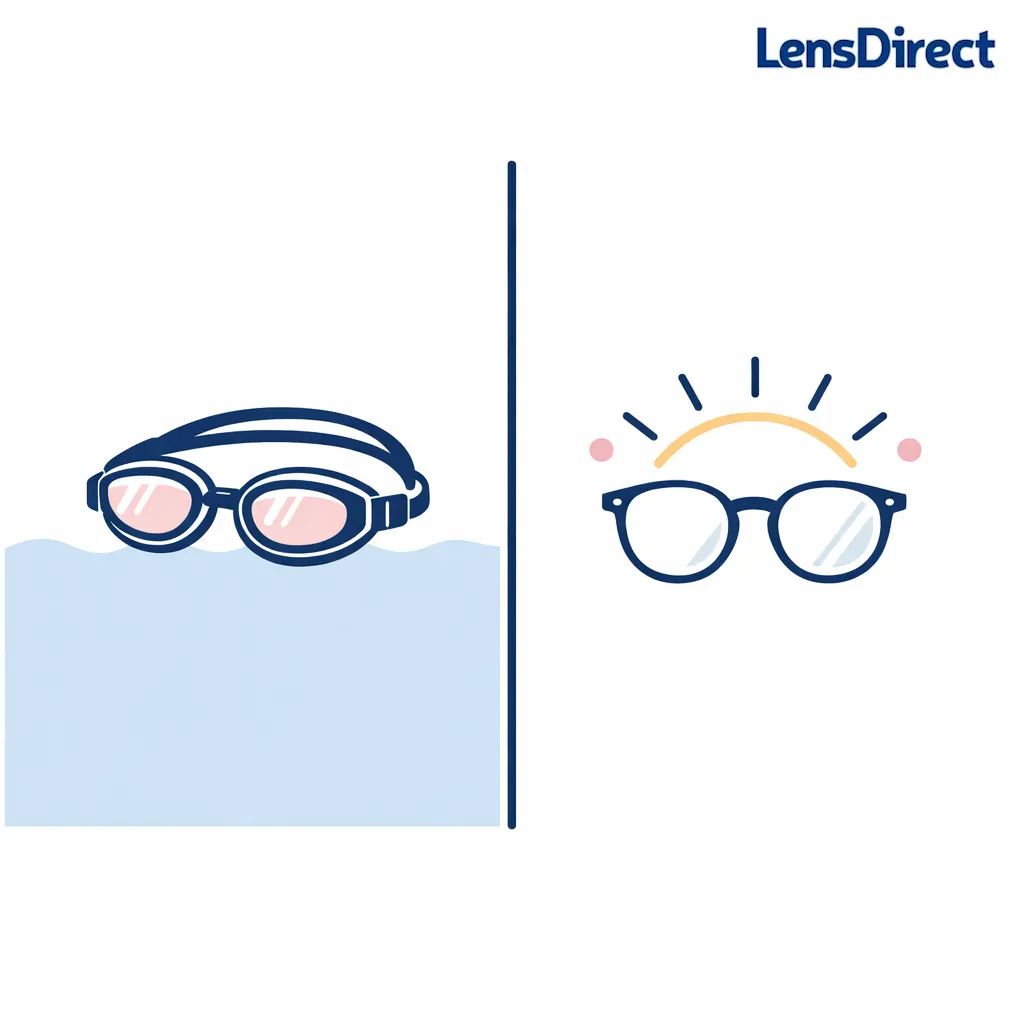
When shopping, focus on fit and clarity first. Look for a comfortable seal (to prevent leaks), anti-fog features, and a prescription range that matches your needs closely enough for safe navigation in and around water.
Option 2: A dedicated “water pair” of glasses for everything except swimming
Many vacations involve lots of wet-adjacent moments that are not actually swimming: walking to the pool, showers, spa time, boating, beach games, and humid weather. Having a dedicated, affordable glasses option can keep you out of the “contacts + water” danger zone for most of the day.
If you tend to bounce between contacts and glasses, it can help to pack a backup pair in a hard case so you’re never tempted to rinse lenses or handle them with wet hands.
Option 3: Daily contacts for travel convenience (with strict water rules)
Daily disposables can be convenient for trips because you don’t have to carry as many supplies and you can discard a lens after an exposure. Convenience is not the same as permission to swim in them, though, and the American Academy of Ophthalmology still cautions against swimming in contact lenses even when wearers choose practical workarounds like goggles.
If you want to switch brands or lens types before a trip, do it early enough to make sure the fit and comfort work for you. If anything feels off, check with your eye care professional.
What to do if water gets in your contacts
This is the moment most people panic-search for “what to do if water gets in contacts.” The first priority is to stop the exposure and get the lens off your eye safely.
Step-by-step, right after exposure
- Get out of the water and don’t rub your eyes. Rubbing can worsen irritation, especially if debris is present.
- Remove the lens as soon as you can with clean, dry hands.
- If you wear daily disposables, discard the lens. This aligns with the general safety goal in the CDC’s guidance to avoid continued wear after water exposure.
- If you wear reusable lenses, follow your lens care directions exactly. Use only the products and steps described on labeling, as emphasized by the FDA’s contact lens care recommendations.
- Switch to glasses for the rest of the day if possible. This gives your eyes a break and reduces the chance you’ll trap more irritation under a lens.
When to treat it as urgent
If you develop increasing pain, redness, light sensitivity, blurred vision, or discharge, treat it as an eye-urgent issue rather than “normal irritation.” The CDC’s Acanthamoeba keratitis information lists symptoms that can overlap with other serious infections, which is why prompt professional evaluation matters.
If you think you may have an eye infection, stop wearing contacts until you’ve been evaluated and follow the advice of a qualified clinician. If symptoms are severe or worsening, seek urgent care immediately.
Vacation contact lens hygiene travel tips (the packing list that prevents problems)
Travel is when hygiene shortcuts sneak in: rinsing a case with tap water, “topping off” solution, or sleeping in lenses because you’re exhausted. The FDA’s guidance is clear that contact lenses are medical devices and should be cared for with proper products and habits.
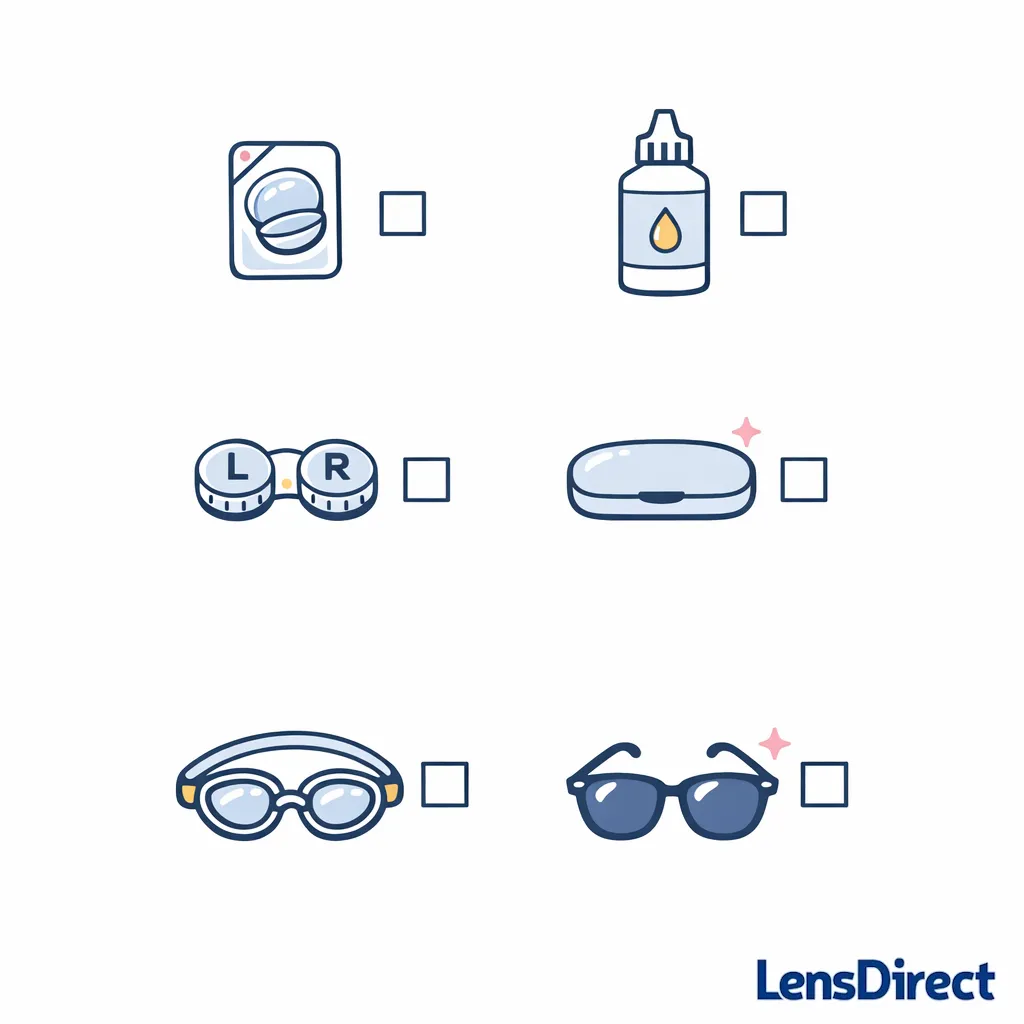
Pack these items so you’re not forced into risky choices
Enough lenses for the trip plus extras (especially if you wear dailies).
- Enough lenses for the trip plus extras (especially if you wear dailies).
- Your recommended disinfecting solution (if you wear reusables) and a backup bottle.
- A clean contact lens case if you use one, and consider bringing a spare.
- A hard glasses case and a backup pair of glasses.
- Swim goggles that seal well (prescription if needed).
- Sunglasses for UV and glare comfort on beach and boat days.
Simple rules that cover 90% of travel mistakes
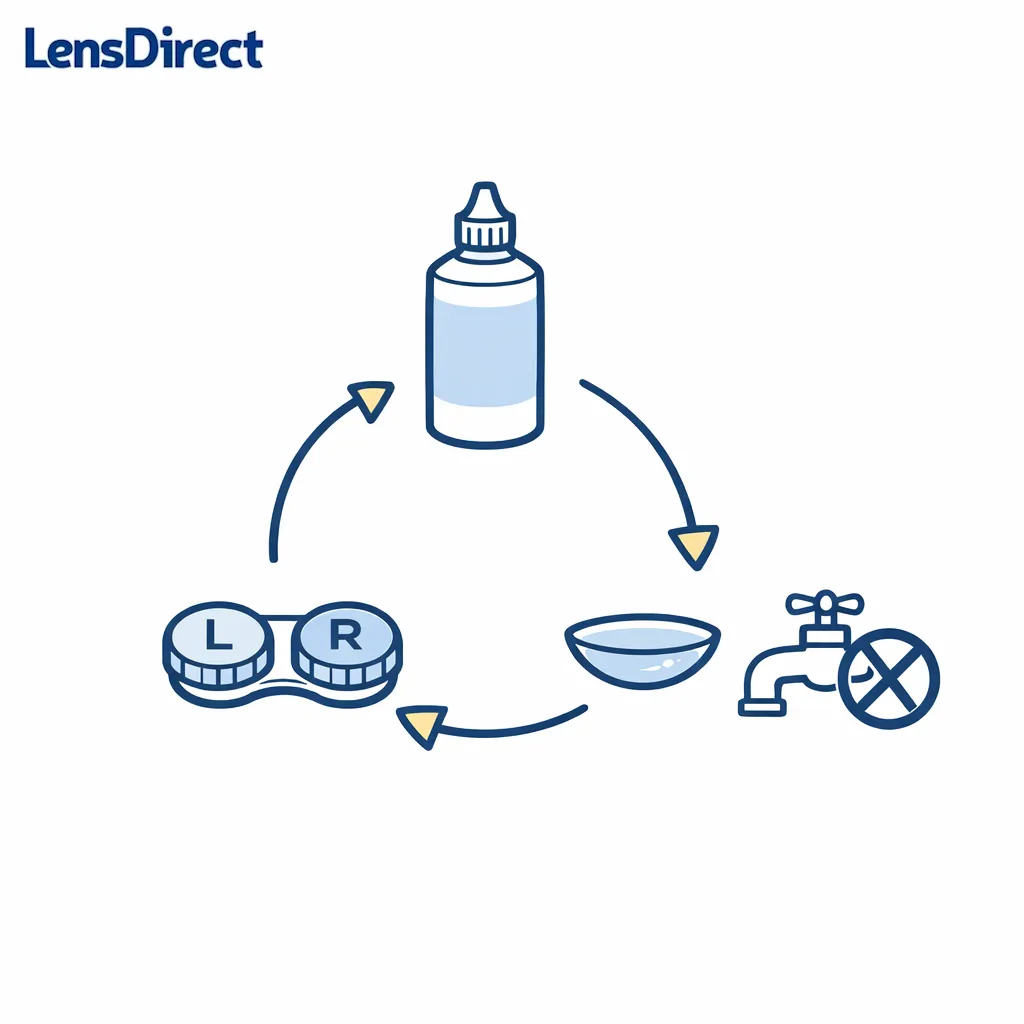
Never use tap water on lenses or cases. This is directly aligned with the CDC’s warning that water exposure can introduce germs.
- Never use tap water on lenses or cases. This is directly aligned with the CDC’s warning that water exposure can introduce germs.
- Do not “top off” old solution. Use fresh solution each time, following the product directions highlighted by the FDA’s care tips.
- Set a nightly reminder to remove lenses. Vacation schedules make it easy to fall asleep in contacts unintentionally.
Common mistakes and misconceptions
Mistake: “Chlorine kills everything, so contacts in the pool are fine”
Pool disinfection reduces risk, but it does not make water sterile at every moment, especially with heavy use or uneven maintenance. The CDC’s Healthy Swimming guidance explains why germs can still spread in recreational water, and the CDC’s contact lens water guidance still advises against swimming while wearing contacts.
Mistake: “I can just rinse my lenses with water if they feel gritty”
Rinsing with water is exactly what you want to avoid, because water can carry organisms that may stick to a lens. The FDA specifically advises keeping lenses away from water and using proper lens care products.
Mistake: “Hot tubs are basically clean because the water is treated”
Hot tubs are treated, but they are also warm and heavily shared, which can create conditions where germs persist or spread. The CDC’s recreational water guidance explains why treatment helps but doesn’t eliminate all risk, and the CDC includes hot tubs in water exposures to avoid with contacts.
Mistake: “If my eyes don’t hurt, I’m fine”
Some infections can start subtly, and irritation can be delayed. The CDC notes symptoms of serious corneal infection that can develop over time, which is why it’s smart to take water exposure seriously even if you feel okay right away.
What changed and what’s new (and what hasn’t)
The most important “update” is that the core safety message is steady: avoid exposing contacts to any water. The CDC continues to advise keeping contact lenses away from water because water can introduce germs and increase infection risk.
What has gotten easier for many travelers is building a practical plan around that guidance. More people now combine strategies like daily disposables (when appropriate), prescription swim goggles for pool days, and a reliable backup pair of glasses so they can enjoy water activities without gambling on eye health.
What to do next checklist (save this before your trip)
Decide your “water vision plan”: prescription swim goggles, glasses for most of the day, or contacts only when you’re away from water.
- Decide your “water vision plan”: prescription swim goggles, glasses for most of the day, or contacts only when you’re away from water.
- Pack extras: lenses, solution, a spare case, and a backup pair of glasses.
- Commit to the no-water rule: no swimming, showering, or hot tubbing in contacts, consistent with CDC guidance.
- If exposure happens, remove lenses ASAP and follow product instructions emphasized by the FDA.
- Know red flags: pain, worsening redness, light sensitivity, blurred vision, discharge; see the symptom guidance in the CDC’s Acanthamoeba keratitis information.
- Plan sun and glare protection: bring sunglasses for beach, driving, and boating days.
Shop travel-ready vision essentials with LensDirect
If your trip includes water time, the easiest way to stay comfortable is to plan ahead so you’re not forced into risky “contacts and swimming” decisions. LensDirect makes it simple to stock up before you go, whether you want a fresh supply of lenses, a backup pair of glasses, or sunglasses for glare-heavy days.
- Shop Contacts
- Shop Glasses
- Shop Sunglasses
- Replace Your Lenses (refresh your current frames for the trip)
- Full-Service Replacement (send-it-in option)
- Order Replacement Lenses (DIY option)
If you’re ordering glasses for vacation, these quick guides can help you get it right the first time: Learn How to Measure Your Pupillary Distance, Find Your Fit, and Learn How to Get Reimbursed by Your Insurance.
Author

Subscribe to our email newsletter to get the latest posts delivered right to your email.