

For many people, the choice between contacts and glasses isn’t an either-or proposition. Both types of eyewear have their advantages and drawbacks, and using them interchangeably can give you flexibility, comfort, and the best possible vision. This guide compares the pros and cons of contacts and glasses, helps you decide when to switch between them, and offers practical tips to maximize comfort for each — so you can build a smart “dual-wearer” routine that fits your life.
Quick comparison at a glance
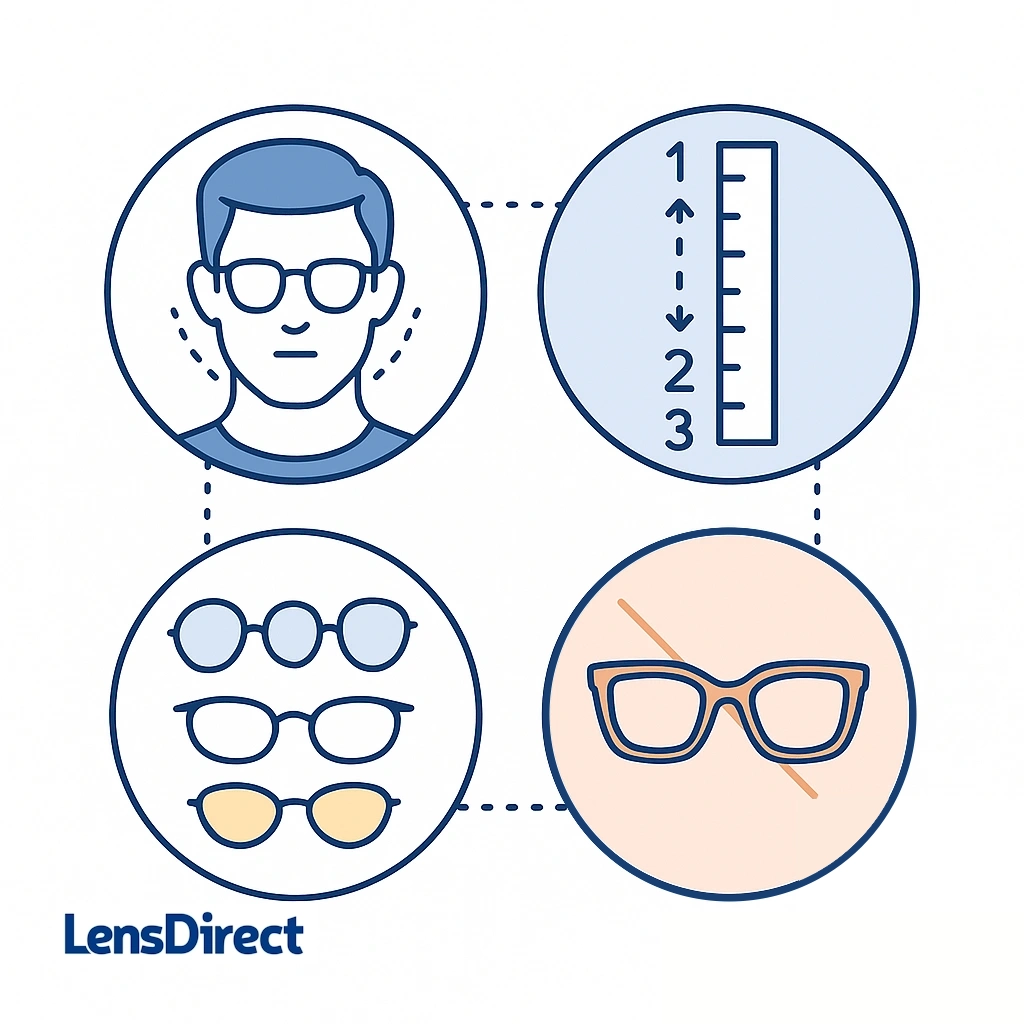
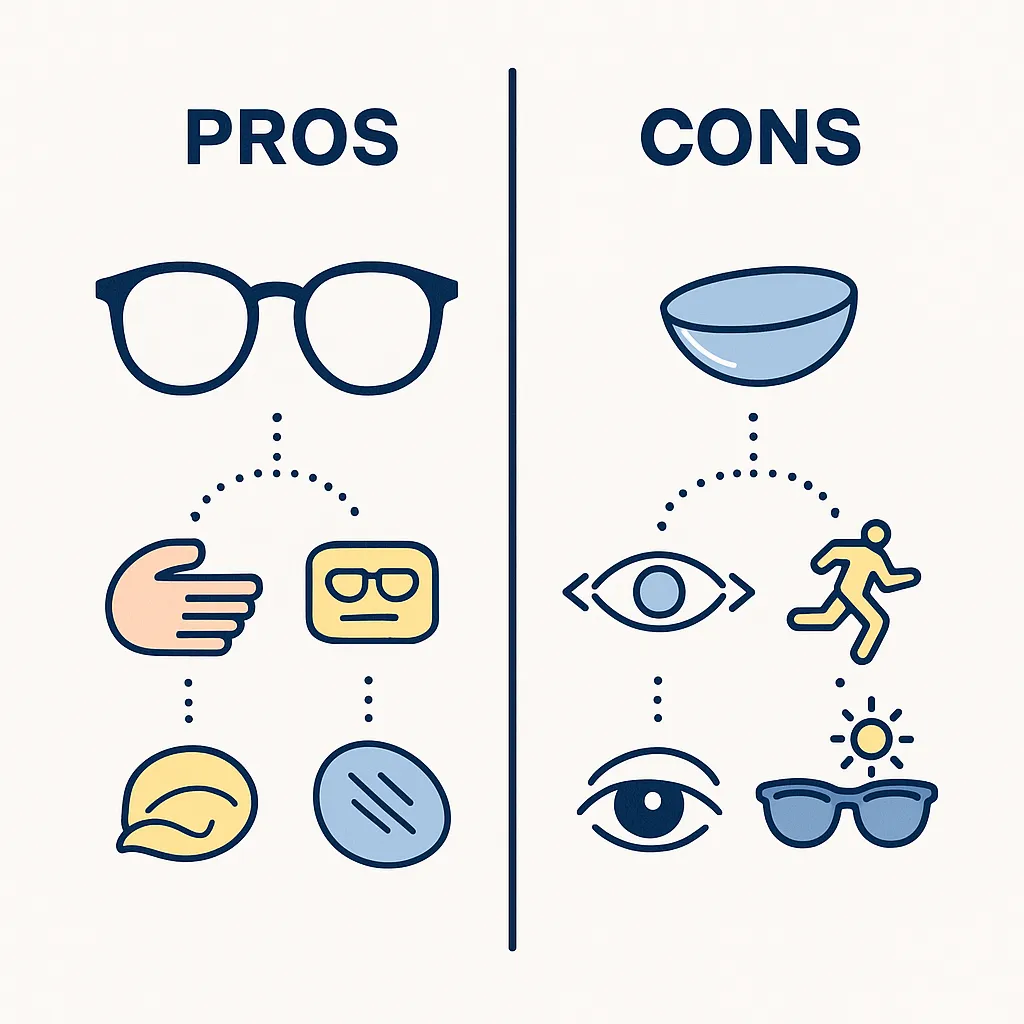
- Glasses: Easy on/off, zero eye-touching, countless styles, and protective against wind/dust. But they can fog, scratch, slip, and limit peripheral vision.
- Contacts: Full field of view, won’t fog, great for sports, nearly invisible, and easy to pair with non-prescription sunglasses. But they require strict hygiene, can dry out with screen time, and raise infection risk if misused.
Pros and cons of glasses
Glasses have been correcting vision for centuries, and there are good reasons why they remain popular. They’re easy to wear and remove, simple to clean and store, and come in virtually unlimited frame styles. You don’t have to touch your eyes to use them, and lenses can be customized with progressive, light-responsive, or sunglass tints. Glasses also provide a physical barrier against dust and wind.
Other upsides to consider
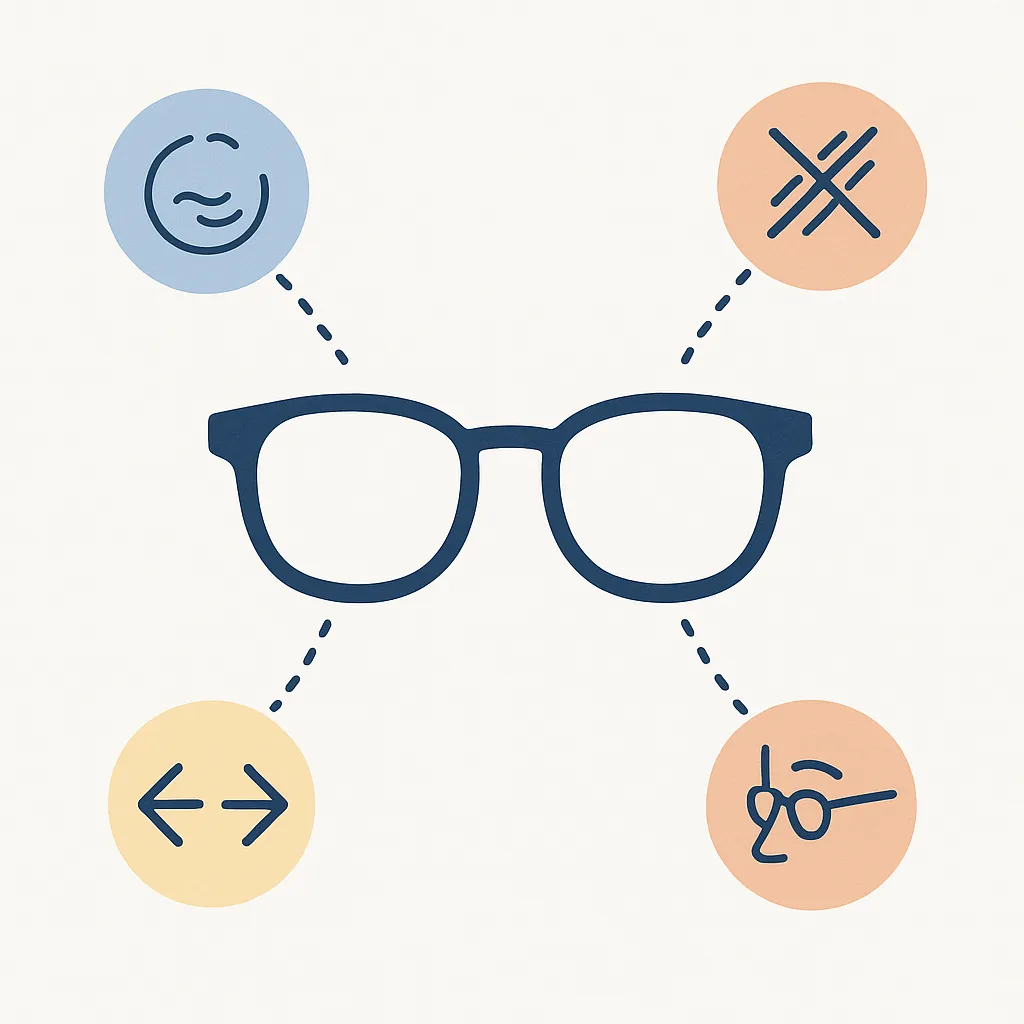
- Versatile lens options: Anti-reflective, anti-scratch, and photochromic coatings can boost comfort and durability. High-index materials slim down strong prescriptions.
- No replacement schedule: Unlike contacts, there’s no daily/bi-weekly/monthly disposal. Clean them and you’re done.
- Great for sensitive or allergy-prone eyes: When pollen counts are high or you’re under the weather, glasses give your corneas a break.
Limitations to keep in mind
Glasses provide limited peripheral vision and can be uncomfortable on the nose and ears for some people.
They’re more expensive to replace if lost or damaged and can fog up or get scratched.
Strong prescriptions may cause lenses to magnify or minimize the appearance of your eyes.
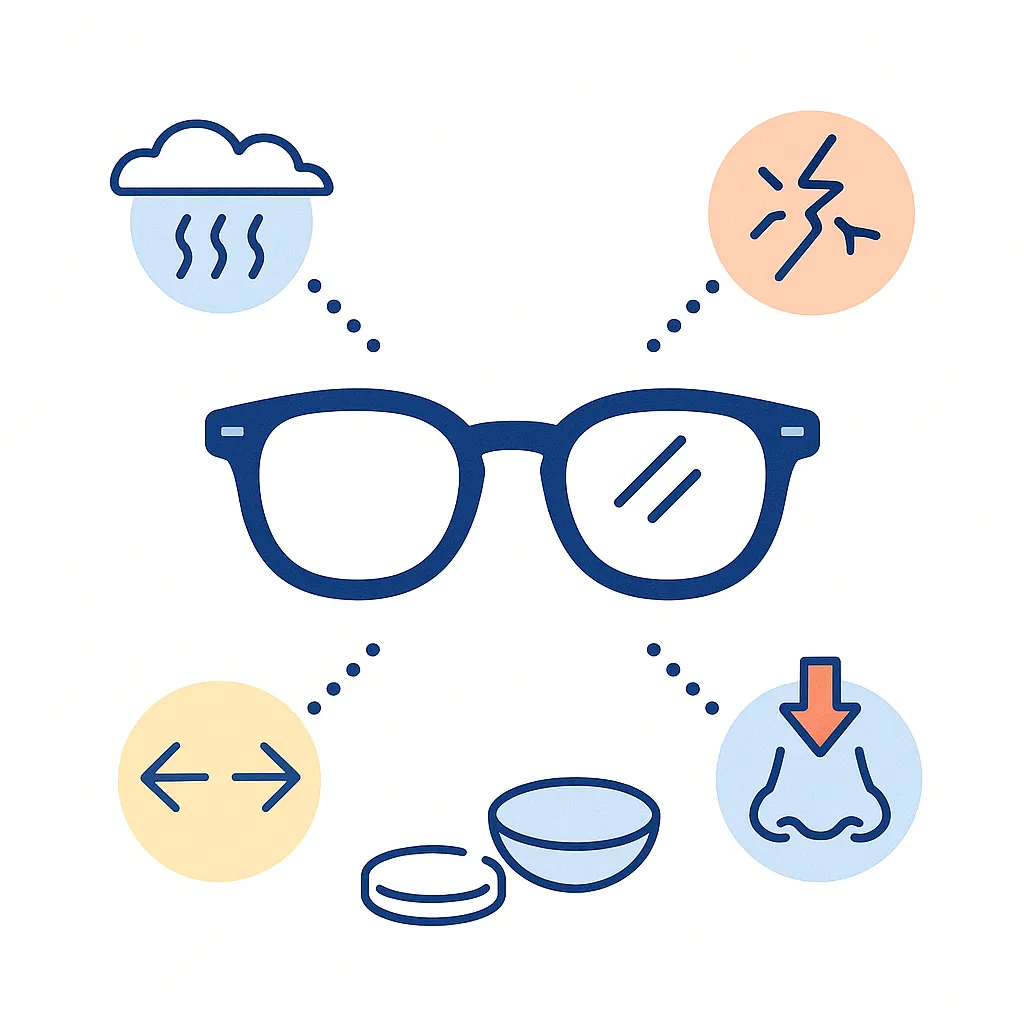
You may also notice size distortions at the lens edges, and if you’re new to progressives, there’s a short adaptation period as you learn where to look for near vs. distance vision.
Pros and cons of contact lenses
Contacts offer a seamless field of vision because they sit directly on the eye. Contacts provide a natural viewing experience with no peripheral obstruction and stay in place during sports and physical activity. They’re nearly invisible and allow you to wear non-prescription sunglasses. They’re also less costly to replace if lost compared with glasses.
Other upsides to consider
- Cosmetic neutrality: No frame lines in photos; makeup and facial features take center stage.
- Specialty designs: Toric contacts for astigmatism, multifocals for presbyopia, and specialty/RGP lenses for complex prescriptions can deliver sharp, tailored vision.
- Daily disposables = convenience: Fresh pair every morning, minimal care steps — great for travel or variable schedules.
Limitations to keep in mind
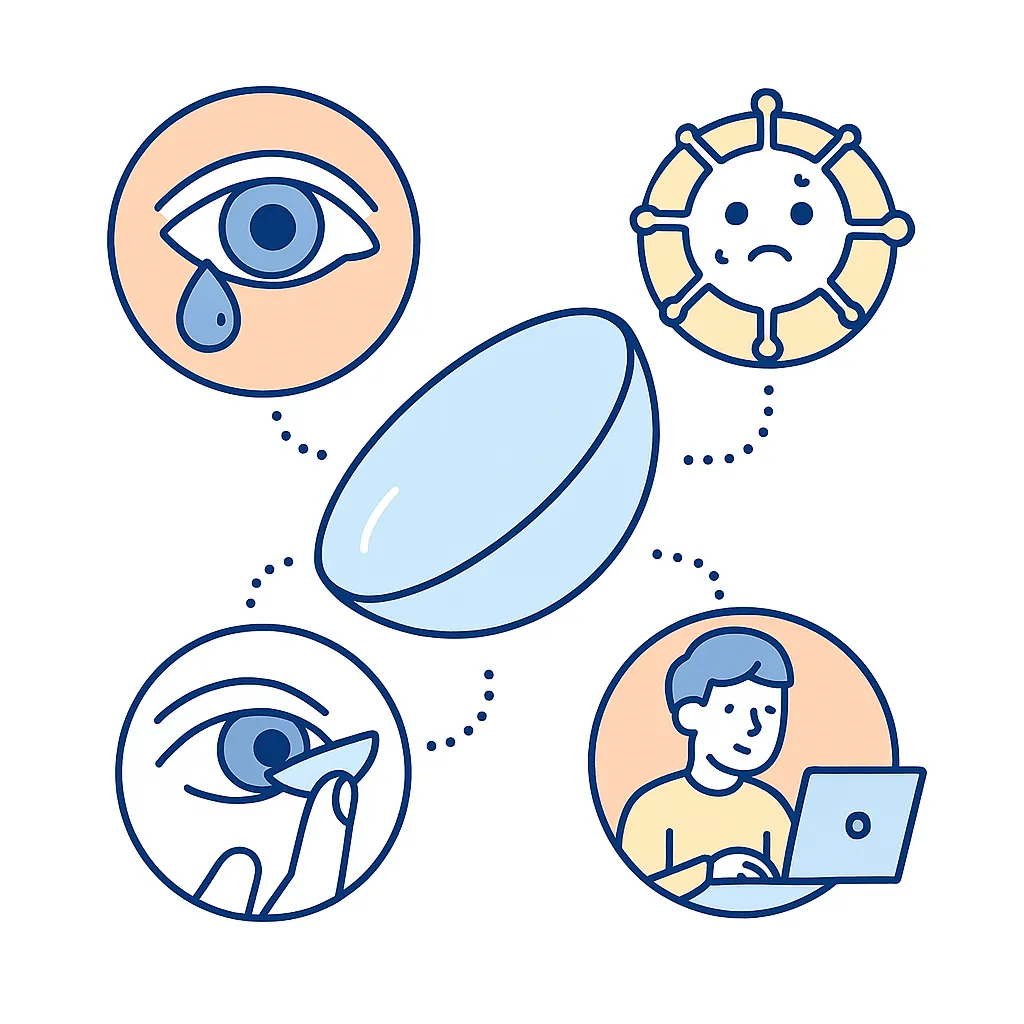
Contacts require diligent care: cleaning, disinfecting, storing, and replacing them on schedule.
Learning to insert and remove them can be challenging for first-time wearers.
Improper use raises the risk of dry eye, infections, and digital eye strain.
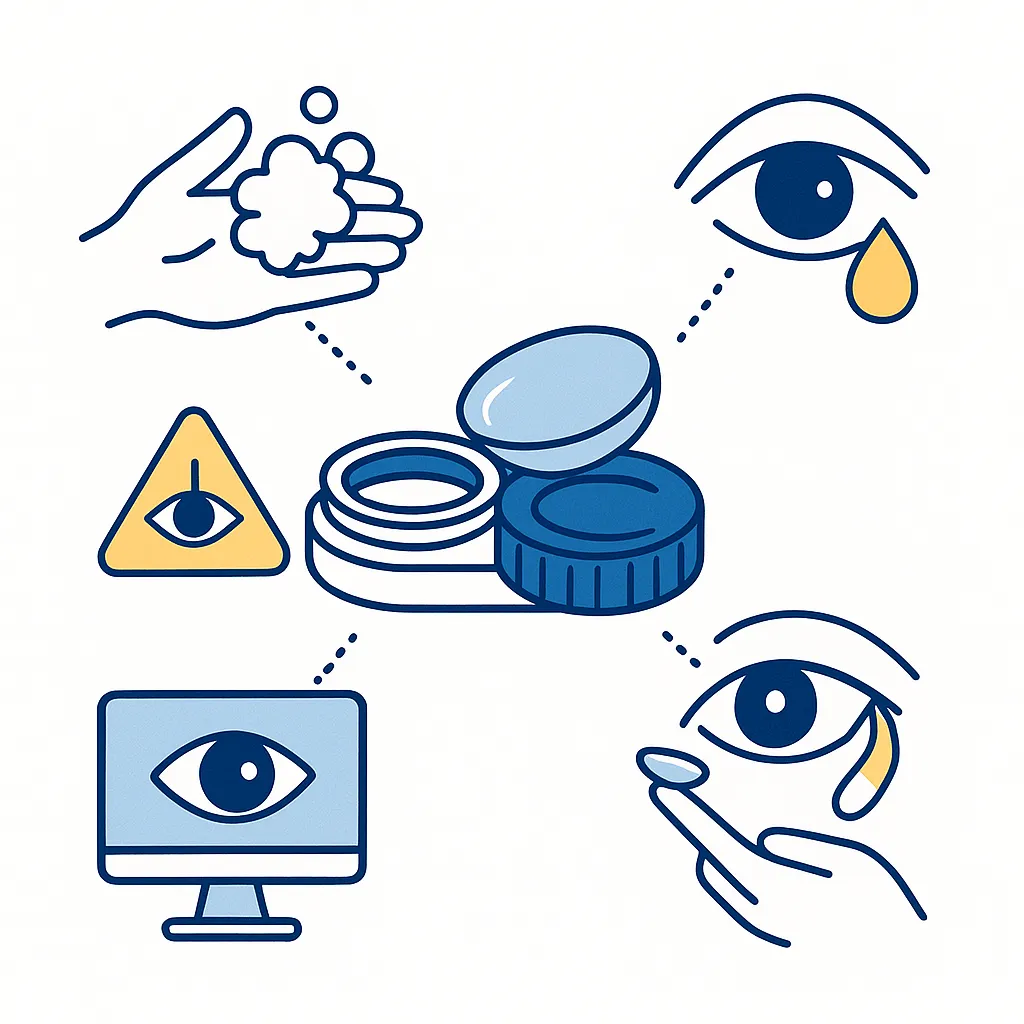
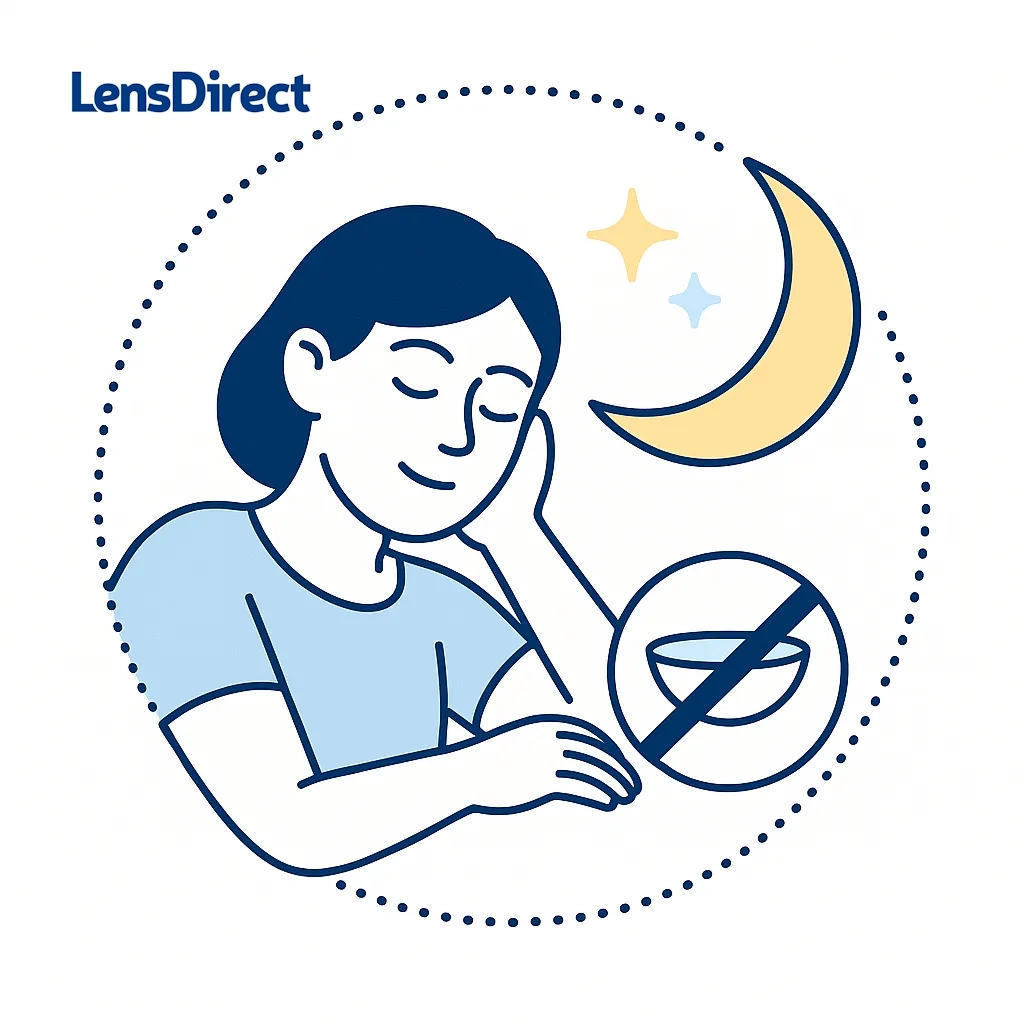
Screen use may worsen dryness in contact lens wearers. Swimming, showering, or sleeping in lenses (unless specifically prescribed) also increases risk — when in doubt, switch to glasses.
When to wear contacts
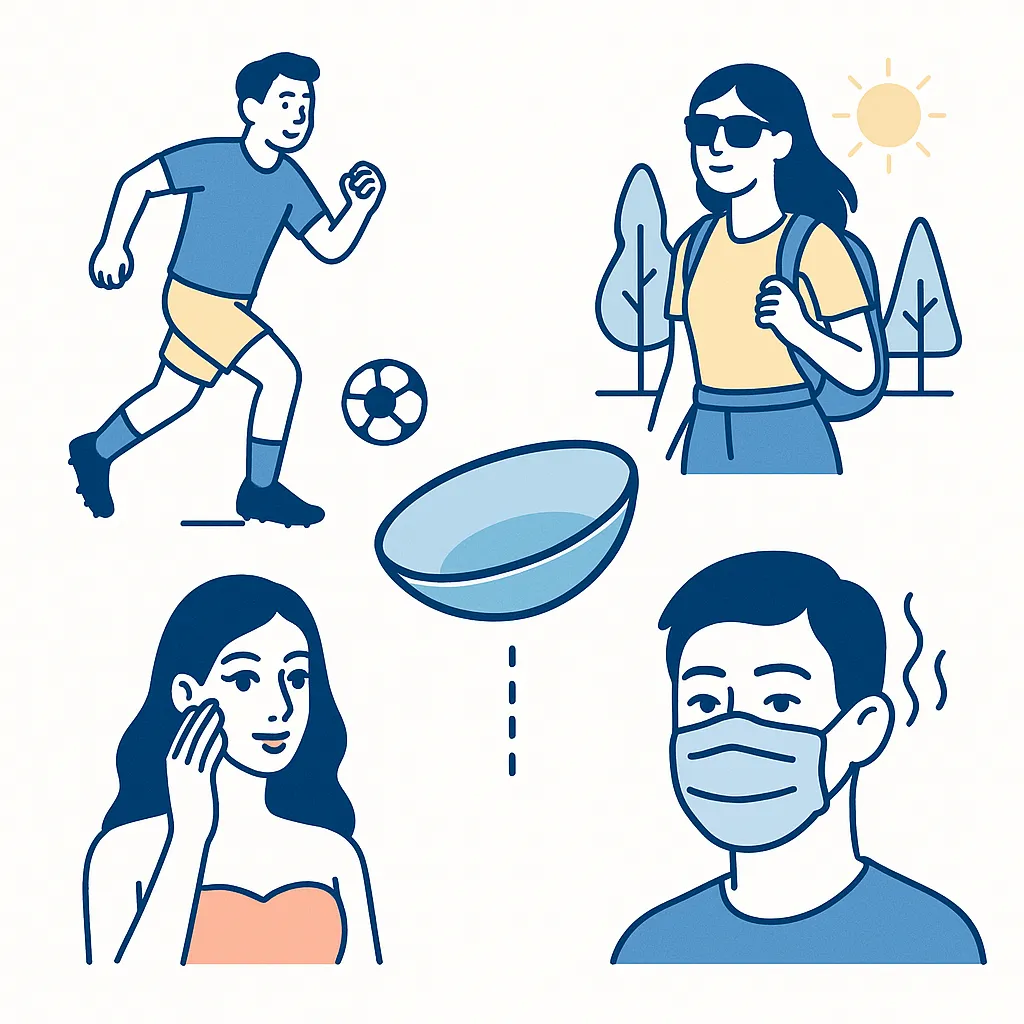
Sports and exercise. Contacts won’t slide down your nose or fog up during workouts. For high-impact or ball sports, wear protective goggles over contacts to prevent injury.
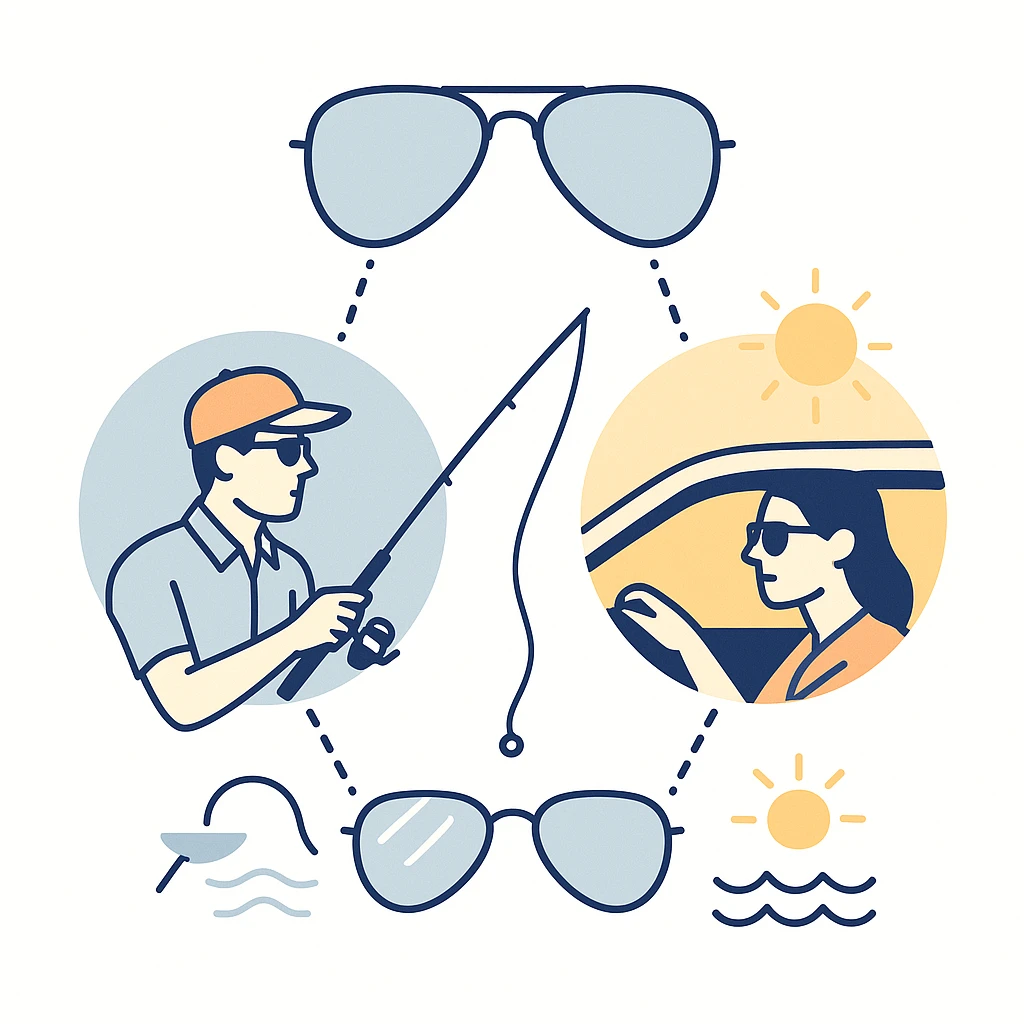
Outdoor activities. Contacts let you wear any sunglasses you like and provide a full field of view — great for driving, hiking, skiing, or beach days. Daily disposables are handy if you travel often or don’t have access to cleaning supplies.
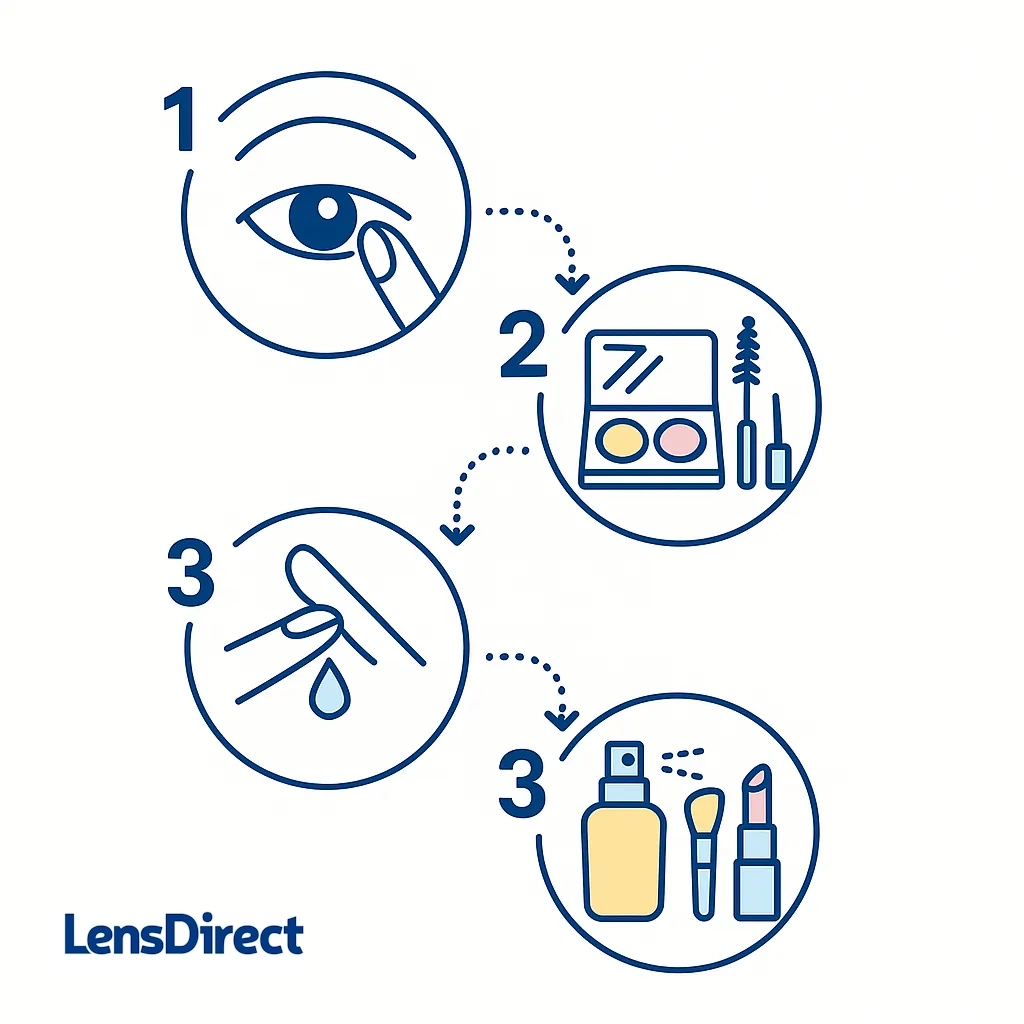
Special occasions and makeup. Contacts highlight your eye makeup and are nearly invisible, letting your personal style shine. Studies and brand surveys suggest contacts can boost confidence and help people express themselves.
Mask-related fogging. If your glasses fog with face masks, contacts can be a hassle-free alternative.
When to wear glasses
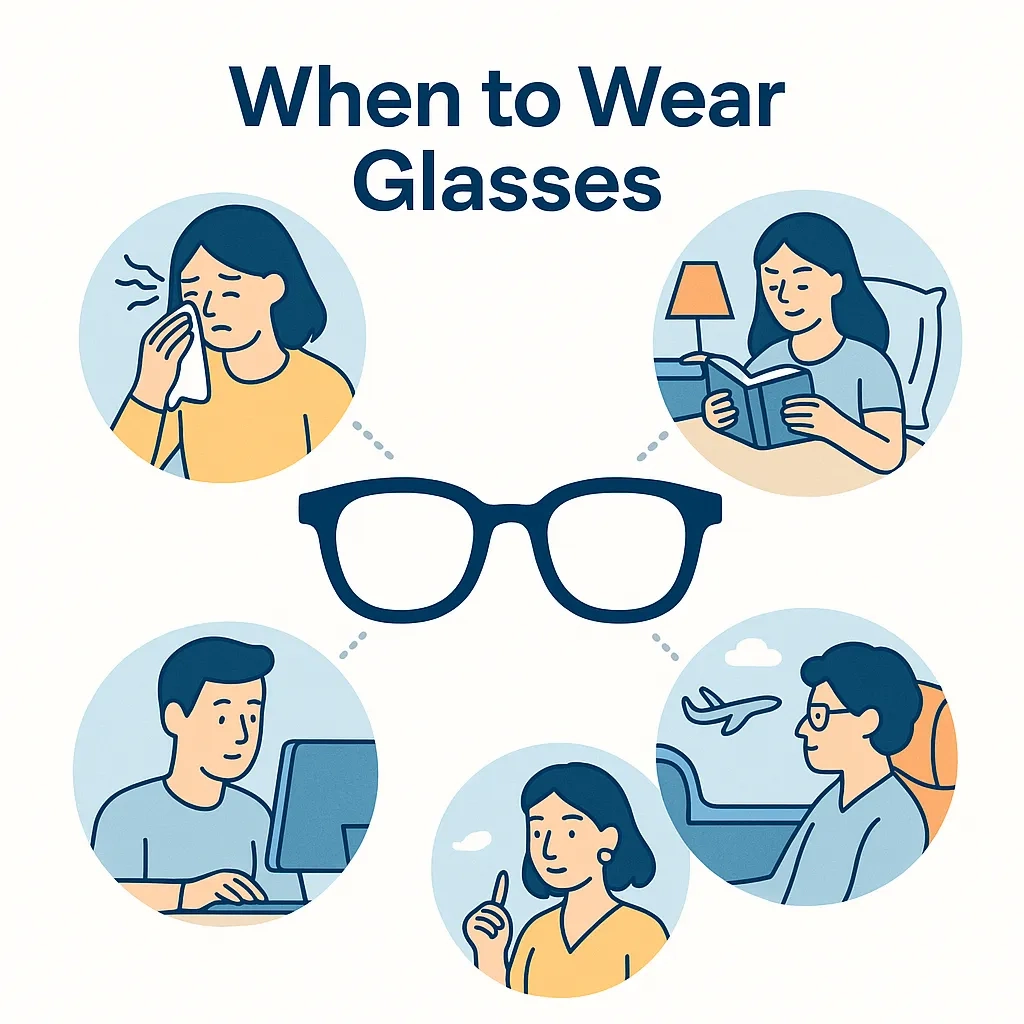
During illness or allergies. When you have a cold or flu, wearing glasses avoids introducing germs to your eyes and may reduce dry eye symptoms (infectioncontroltoday.com). Glasses also sidestep allergy-related lens discomfort.
At home or before bedtime. Give your eyes a break from contacts and reduce the risk of overwear. Always have a backup pair of glasses and switching to them regularly.
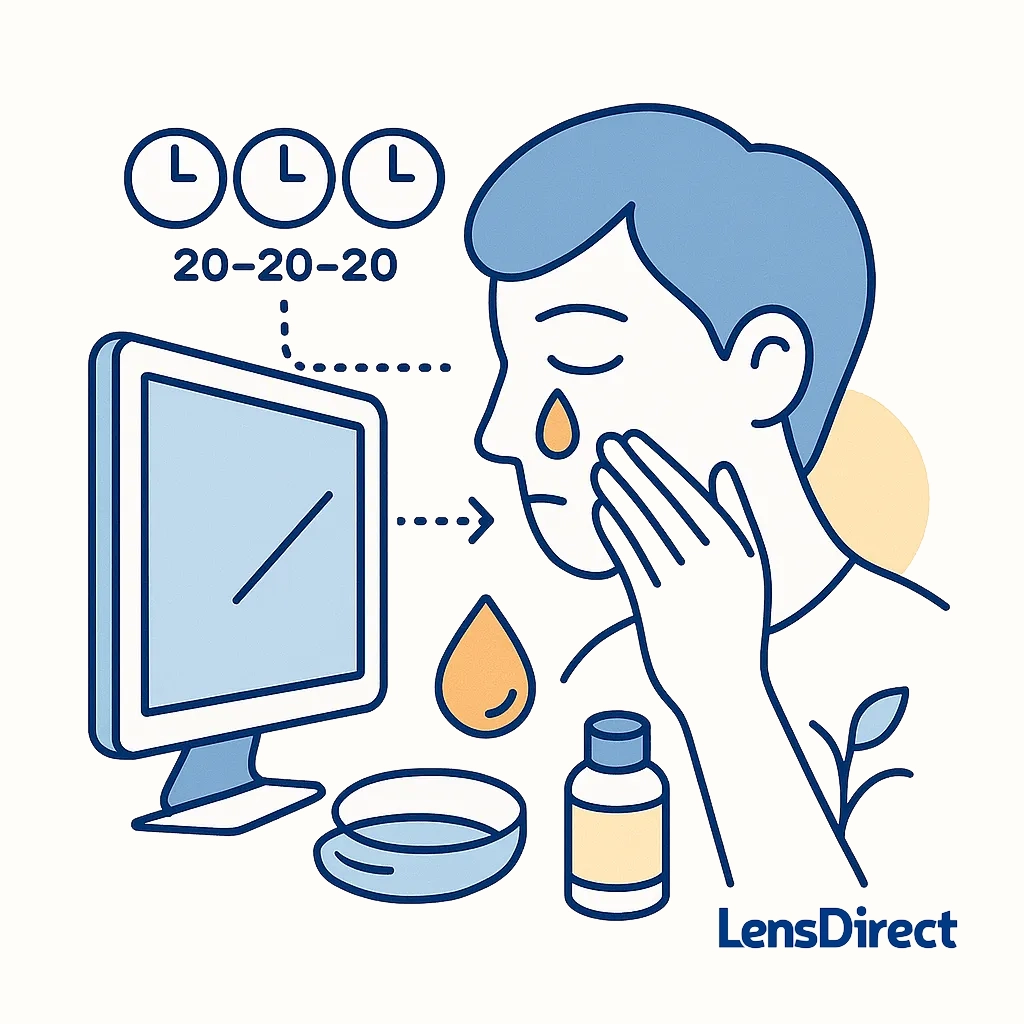
Extended computer work. Glasses help manage digital eye strain; anti-reflective or “anti-fatigue” lens designs reduce glare and may ease focusing fatigue.
After eye surgeries or during infections. Follow your doctor’s advice and avoid contacts until your eyes have fully healed.
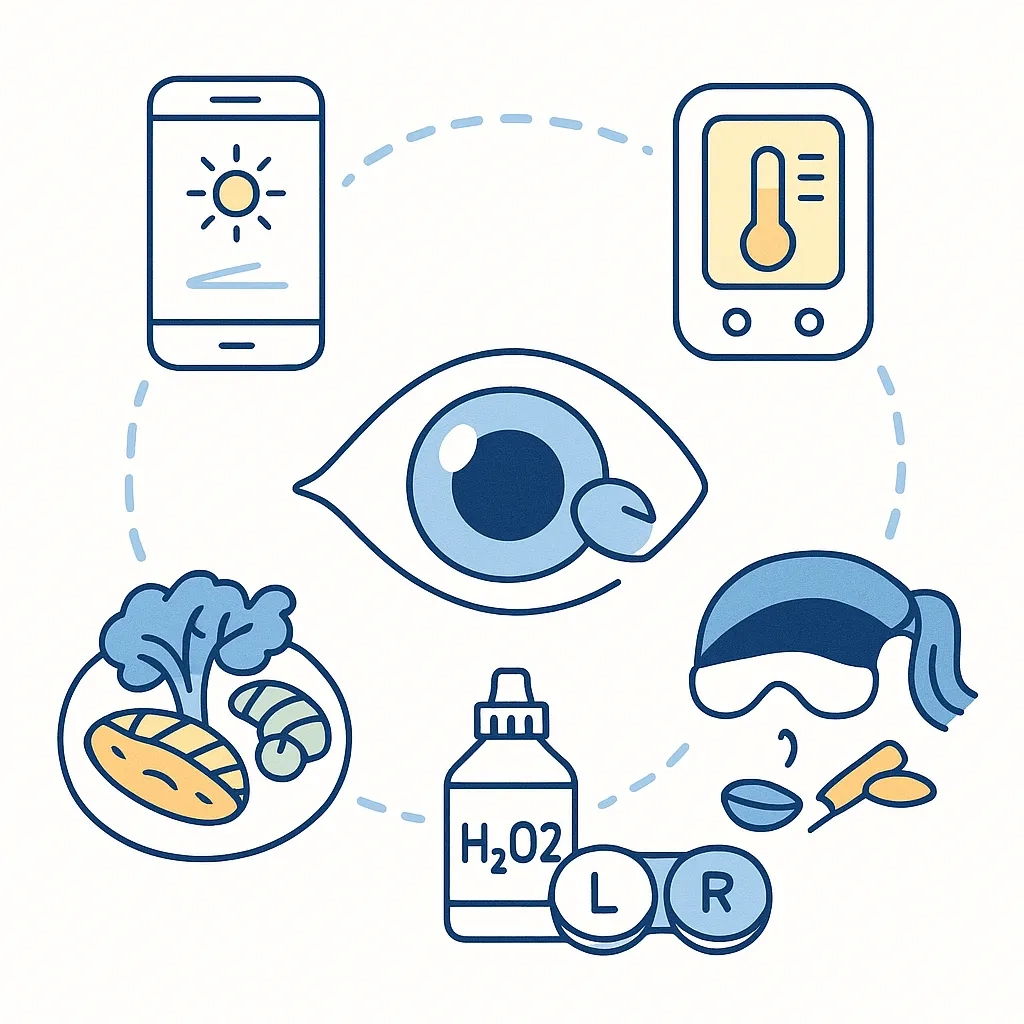
Long flights and dry environments. Cabin air is dehydrating. Glasses keep you comfortable and reduce mid-flight dryness.
How to switch smoothly (your “dual-wearer” routine)
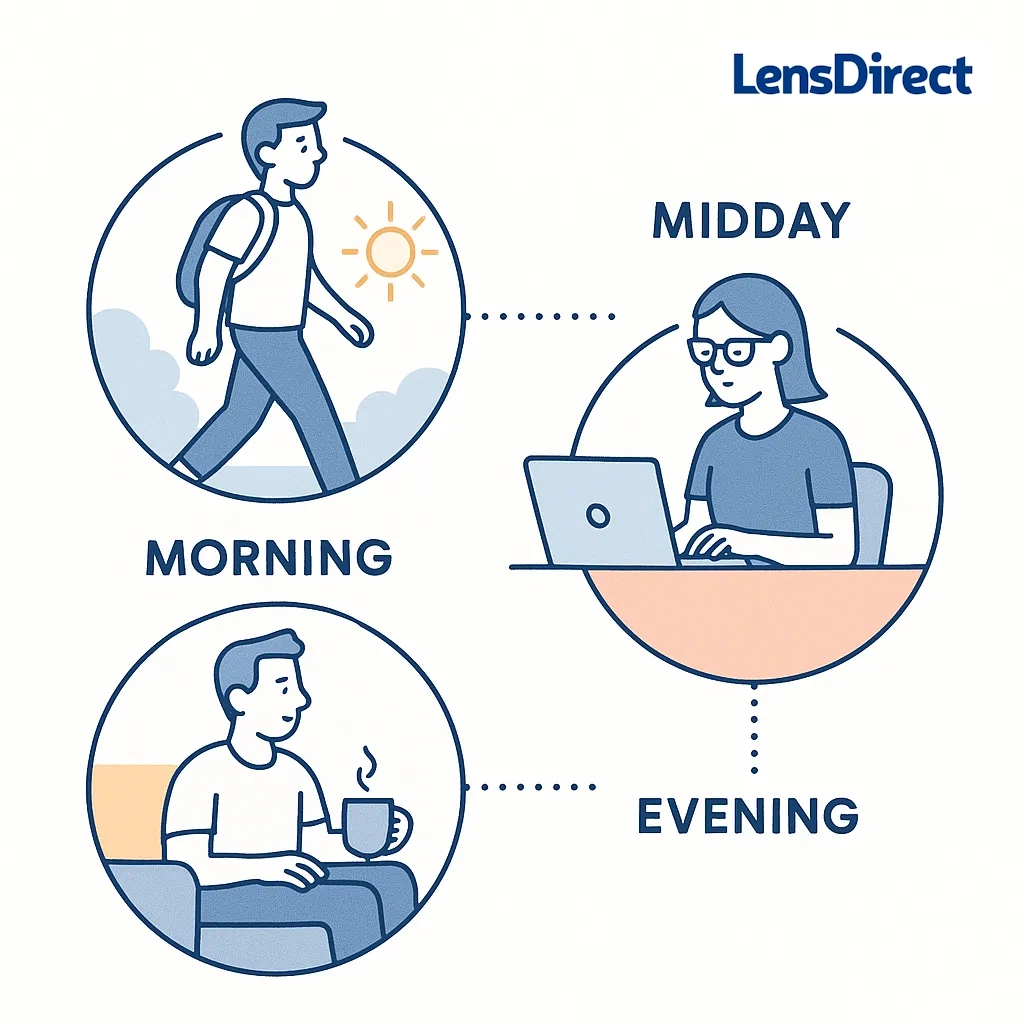
Think of your day in blocks and plan your eyewear accordingly:
- Morning commute & outdoor time: Contacts + non-prescription sunglasses for wider peripheral vision.
- Long desk block: Switch to glasses around lunch to reduce dryness and screen fatigue.
- Evening wind-down: Keep glasses on to avoid falling asleep in contacts.
Everyday carry kit
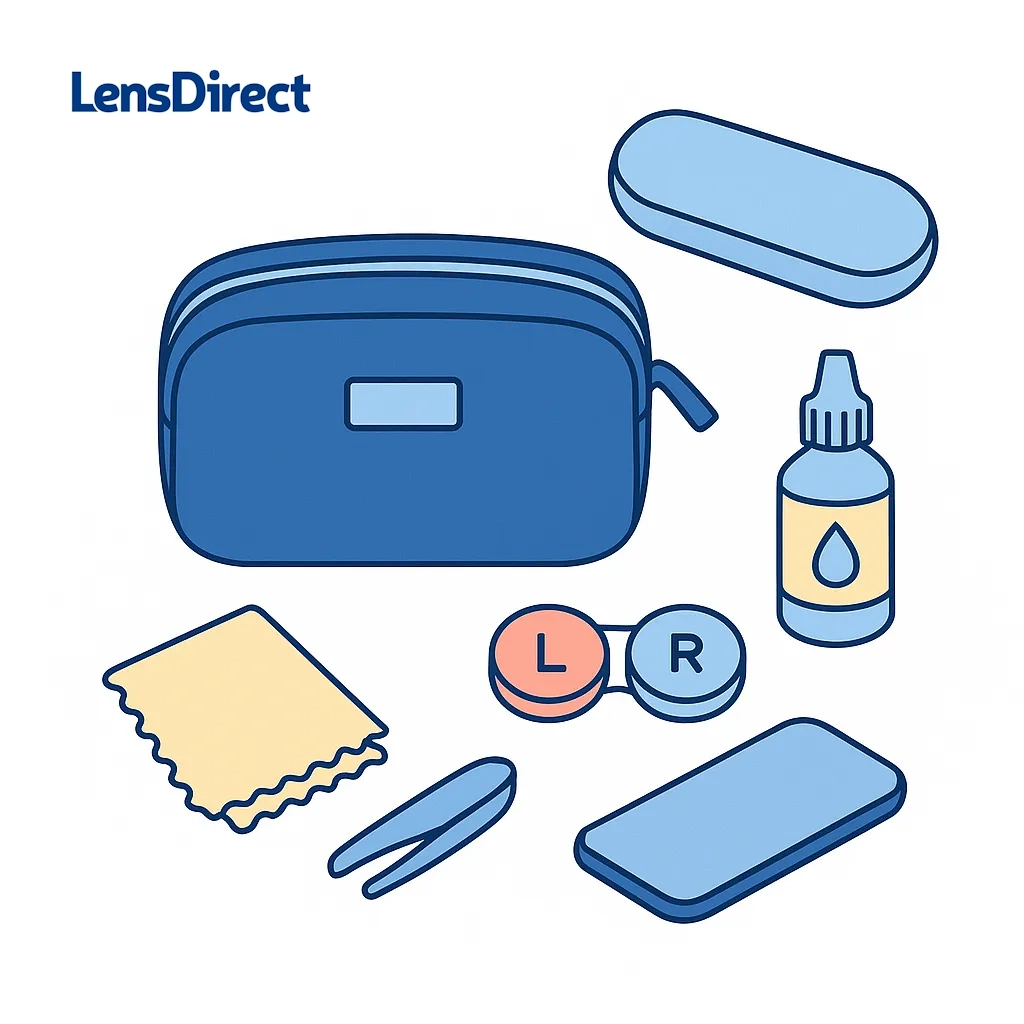
- Slim glasses case, small contact lens case with fresh solution, a couple of daily disposable lenses, lubricating drops (preservative-free), and a microfiber cloth.
- Set phone reminders for contact replacement (daily, 2-week, or monthly) and for lens-case replacement every three months (aoa.org).
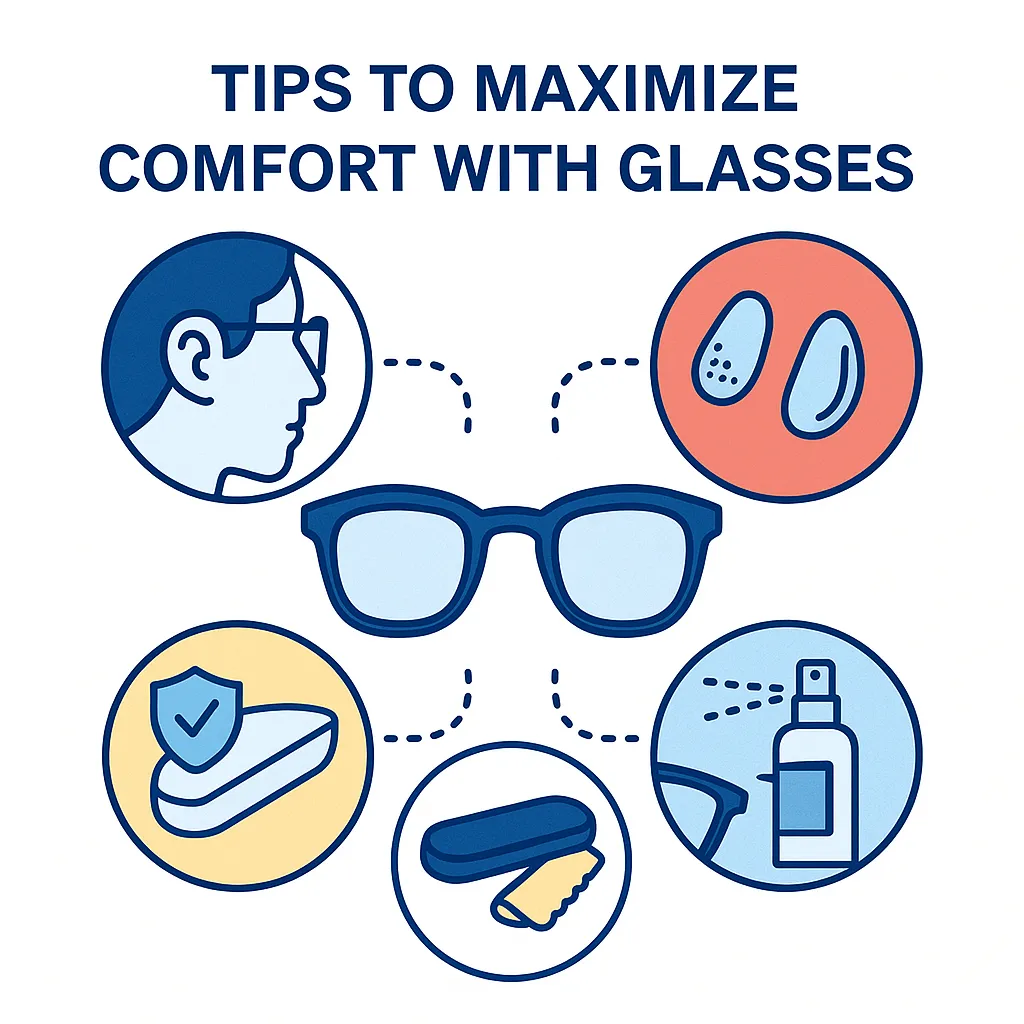
Tips to maximize comfort with glasses
Choose the right frame size and weight. Lightweight materials (like titanium or acetate) and proper fit reduce pressure on your nose and ears. Visit a professional optician for adjustments if your frames feel uncomfortable.
Optimize nose pads and temples. Silicone pads, a slight temple bend, or wider nose bridges can relieve hot spots and slipping.
Opt for lens coatings. Anti-reflective coatings reduce glare from screens and headlights; photochromic lenses darken in sunlight, eliminating the need for prescription sunglasses. Scratch-resistant coatings help preserve clarity.
Anti-fog strategies. Use an approved anti-fog spray/wipe or ask for lenses with built-in anti-fog tech if you’re in steamy or mask-heavy environments.
Clean regularly. Use lens-friendly soap or cleaner and a microfiber cloth to prevent smudges and scratches. Avoid paper towels and clothing hems, which can grind dust into the lens surface.
Tips to maximize comfort with contacts
Follow the replacement schedule. Don’t wear lenses longer than prescribed. Discard daily disposables at day’s end and mark replacement dates for bi-weekly or monthly lenses.
Practice proper insertion and removal. Use your fingertip (not nails), keep lenses oriented correctly (watch the bowl shape), and avoid touching lenses with dirty or soapy hands.
Use rewetting drops and blink often. Preserve moisture by blinking regularly and applying preservative-free lubricating drops as needed — especially during screen sessions.
Store lenses correctly. Use fresh solution each time; rub and rinse lenses for at least 20 seconds with a multipurpose solution (aoa.org). Replace your lens case every three months (aoa.org). Never “top off” old solution.
Mind your water exposure. Don’t swim, shower, or hot-tub in contacts. If it happens, discard dailies or disinfect reusable lenses per your eye-care provider’s instructions.
Consider material and modality. Silicone hydrogel lenses often deliver higher oxygen transmission and can feel better for long days. If allergies or deposits bug you, ask your doctor whether daily disposables might help.
Give your eyes a break. Alternate with glasses to let your corneas breathe and reduce the risk of complications. We recommend being a “dual wearer” and switching based on your needs.

Common scenarios & what to wear
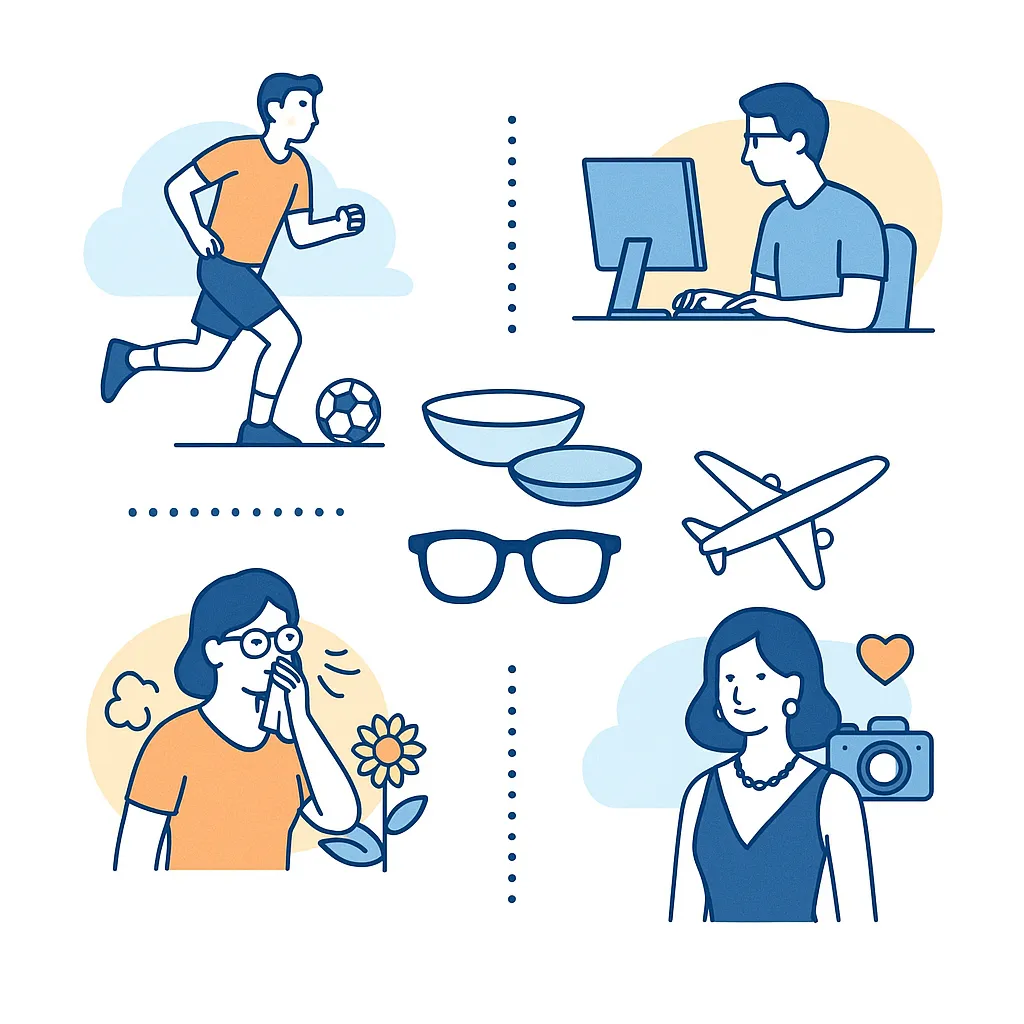
- Heavy workout or team sports: Contacts + sport goggles if needed for impact protection.
- All-day coding or spreadsheets: Start with glasses (anti-reflective), consider a midday switch if you want contacts for an after-work class or event.
- Allergy season: Lean on glasses; if you choose contacts, daily disposables plus lubricating drops can improve comfort.
- Dusty/windy day or yardwork: Glasses add a barrier. Consider wrap-style sunglasses over contacts if you prefer the wider view.
- Air travel: Glasses on the plane; save contacts for arrival.
- Formal event/photos: Contacts for frameless look and full peripheral vision.
Signs it’s time to switch right now
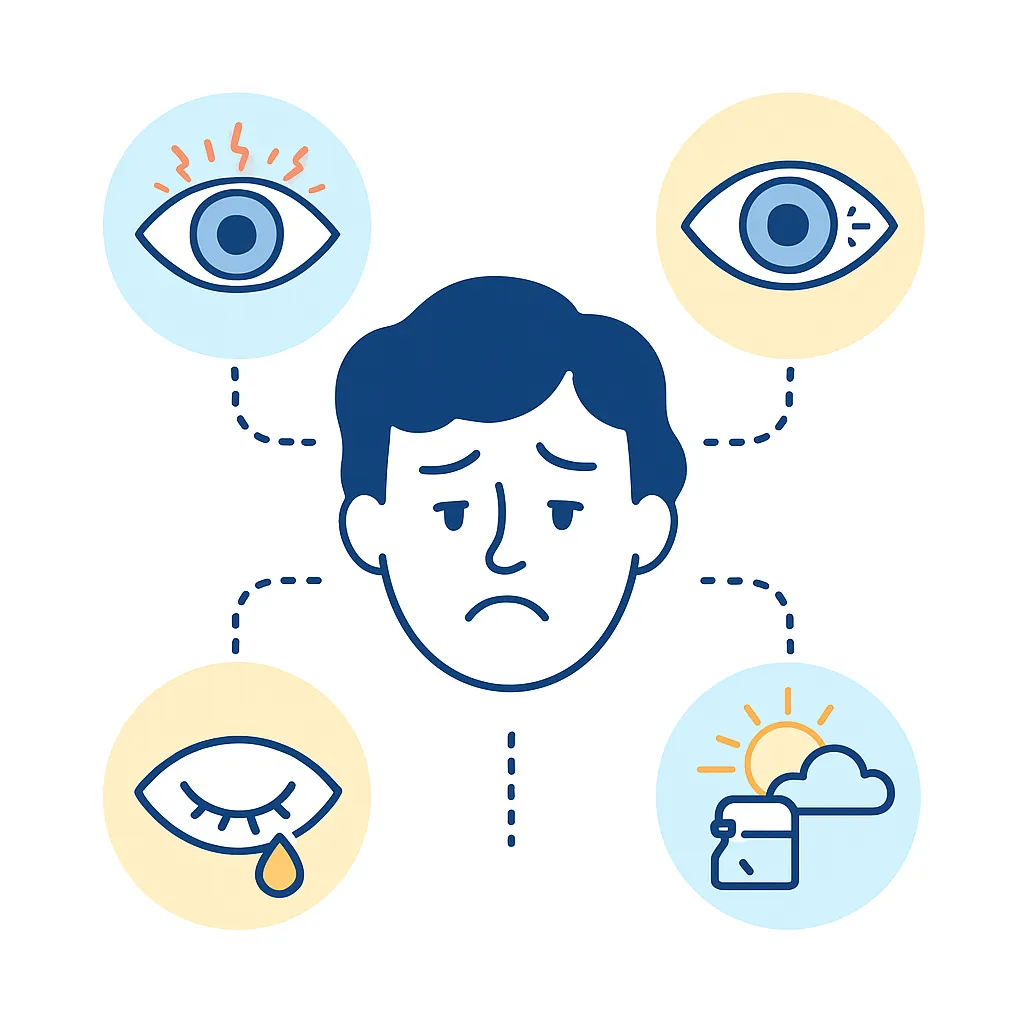
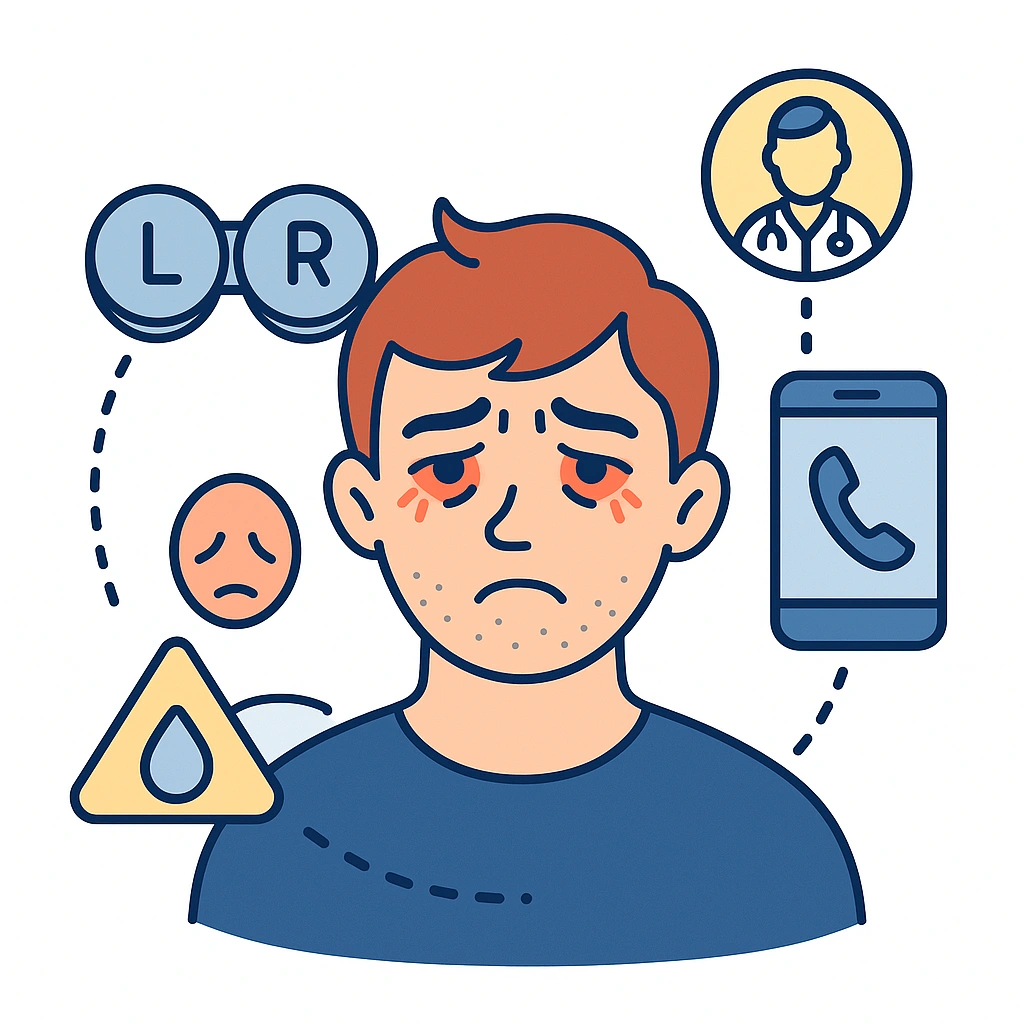
- For contact wearers: Burning, redness, scratchiness, halos, reduced clarity that cleaning doesn’t fix, or sensitivity to light — remove lenses and switch to glasses. If symptoms persist, call your eye doctor.
- For glasses wearers: Persistent fogging or slipping during activity; limited side vision for driving/athletics — consider contacts for that block of time.
- For either: Headaches or eye strain may signal prescription changes — book an exam.
Building your personal eyewear plan
- Audit your week: Note when you move, type, commute, or socialize.
- Set “switch points”: Choose 1–2 times per day when it’s convenient to change (e.g., after lunch, before the gym).
- Stock the essentials: Keep a backup pair of glasses and spare lenses/drops where you work and in your gym/travel bag.
- Review quarterly: Prescriptions, comfort, and habits change — adjust your routine and gear accordingly.
Whether You Need Glasses, Contacts, or Both, LensDirect Is Here to Help
There is no single right answer to the contacts vs. glasses debate.
Each offers unique benefits, and most people enjoy using both.
By understanding when to switch and how to care for each, you can enjoy clear, comfortable vision in every situation.
Always keep your prescriptions up to date and consult your eye doctor with any concerns.
At LensDirect, we believe great vision should always feel effortless — whether you prefer the freedom of contacts or the style and simplicity of glasses. Knowing when to switch between them isn’t just about convenience; it’s about protecting your eye health and maximizing comfort every day.
That’s why we make it easy to get both. With our wide selection of top contact lens brands and stylish, affordable eyewear, you can find the perfect balance for your lifestyle. Need new lenses for your favorite frames? Our Lens Replacement Service brings them back to life with premium, prescription-quality lenses delivered right to your door.
Ready to build your “dual-wearer” setup?
Explore a wide selection of top contact lens brands (including daily disposables, toric, and multifocal options).
Shop stylish, lightweight frames — so you’re covered for the gym, the office, and everything in between.
Keep a backup pair of glasses, set reminders for contact replacement, and enjoy the flexibility that comes from having both at the ready.
Author

Subscribe to our email newsletter to get the latest posts delivered right to your email.