

If you love the way your frames fit, look, or feel, buying a whole new pair every time your prescription changes can feel unnecessary. This guide is for shoppers who want to keep existing frames, understand when changing lenses in glasses is realistic, and know when a mail-in service is smarter than a home attempt.
You’ll learn how to tell whether your frames are worth saving, which frame types are the most practical for lens replacement, how DIY removal differs for plastic and metal frames, and how to avoid the mistakes that usually lead to cracks, stripped screws, or poor alignment. If your vision has changed, it is always safer to start with a current prescription rather than guessing your old lenses are “close enough.”
Short answer: Yes, you can often change lenses in glasses you already own if the frame is still structurally sound and the new lenses are appropriate for that frame. After your exam, the FTC’s Eyeglass Rule requires your prescriber to give you a copy of your eyeglass prescription, which makes professional or online lens replacement much easier.
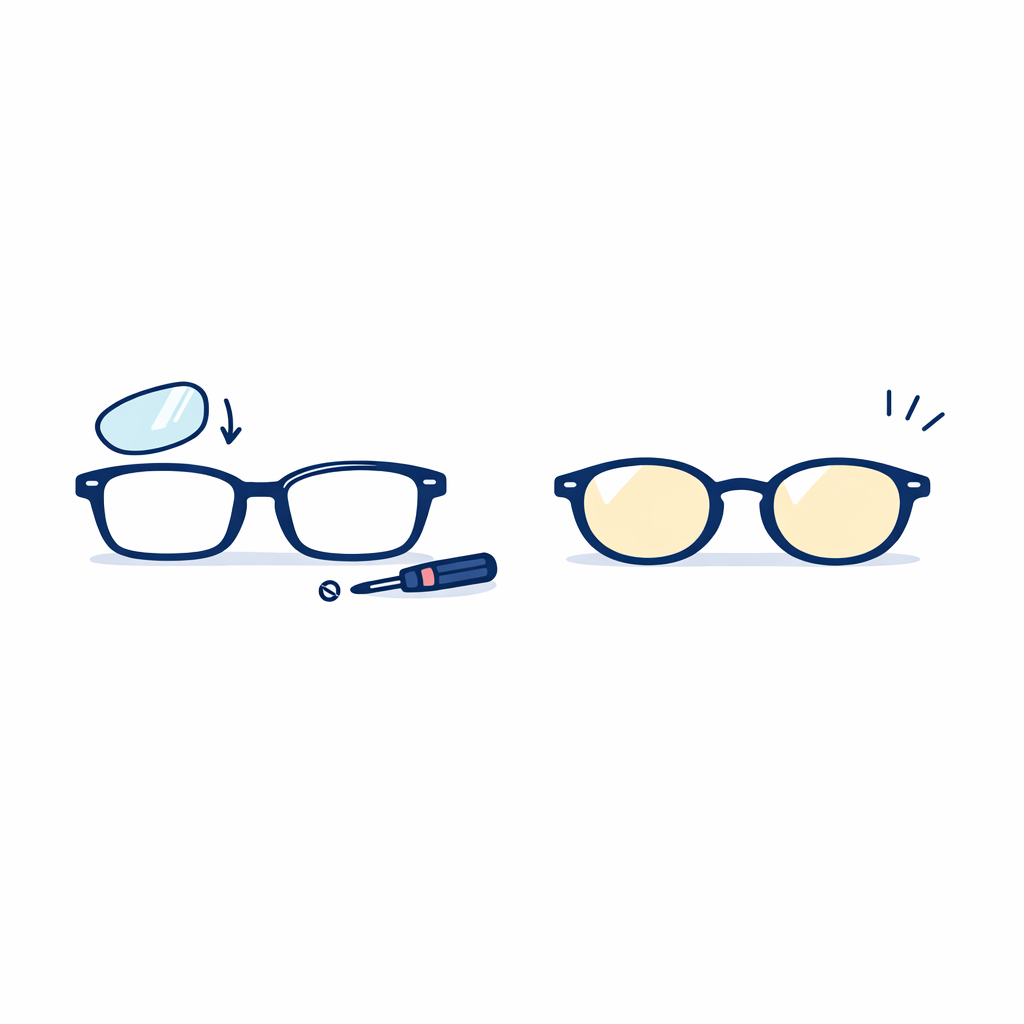
Can you change lenses in glasses without buying new frames?
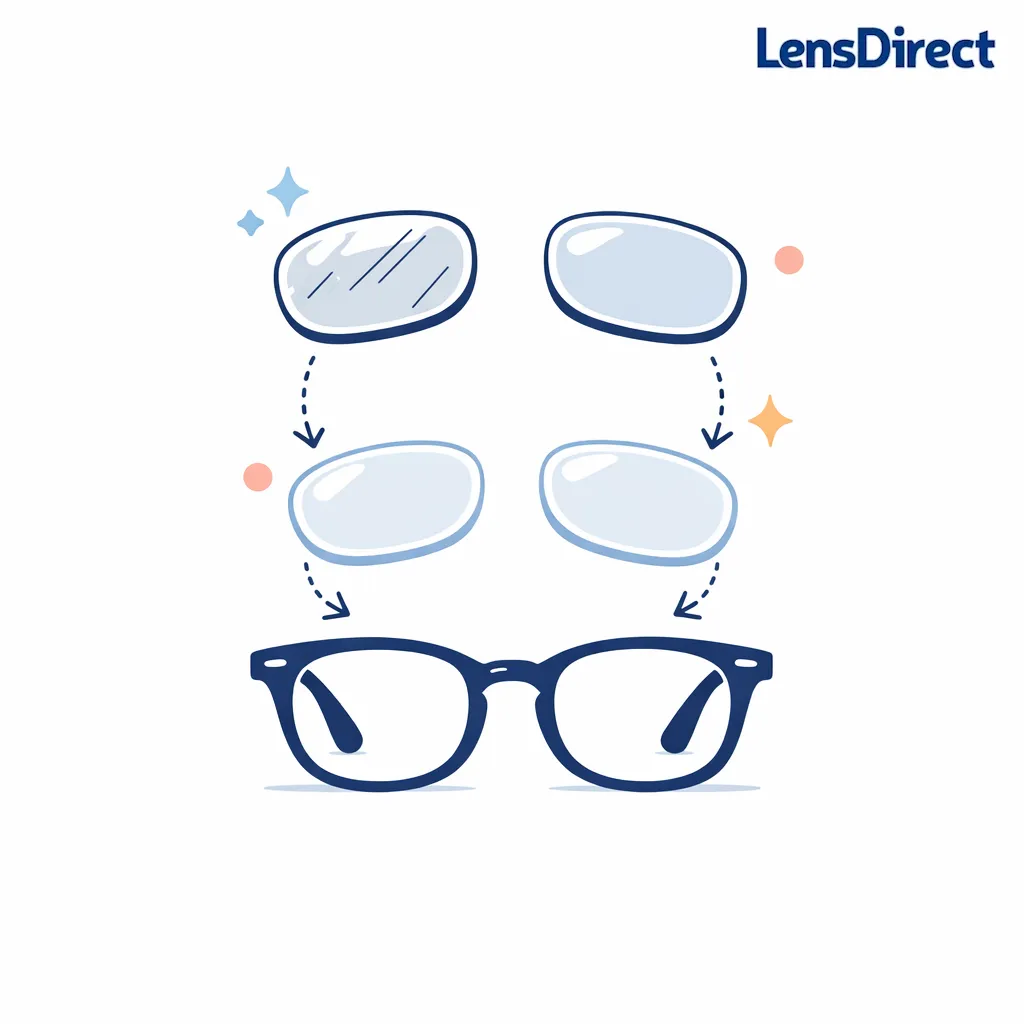
Usually, yes. As a rule of thumb, the best candidates are simple everyday frames that still sit straight, open and close smoothly, and show no cracking around the lens area.
Where people get into trouble is assuming every old frame is automatically a good candidate. If the frame is sentimental, visibly stressed, badly bent, or hard to replace, treat lens swapping as a precision job rather than a quick at-home fix.
Signs your frames are still worth keeping
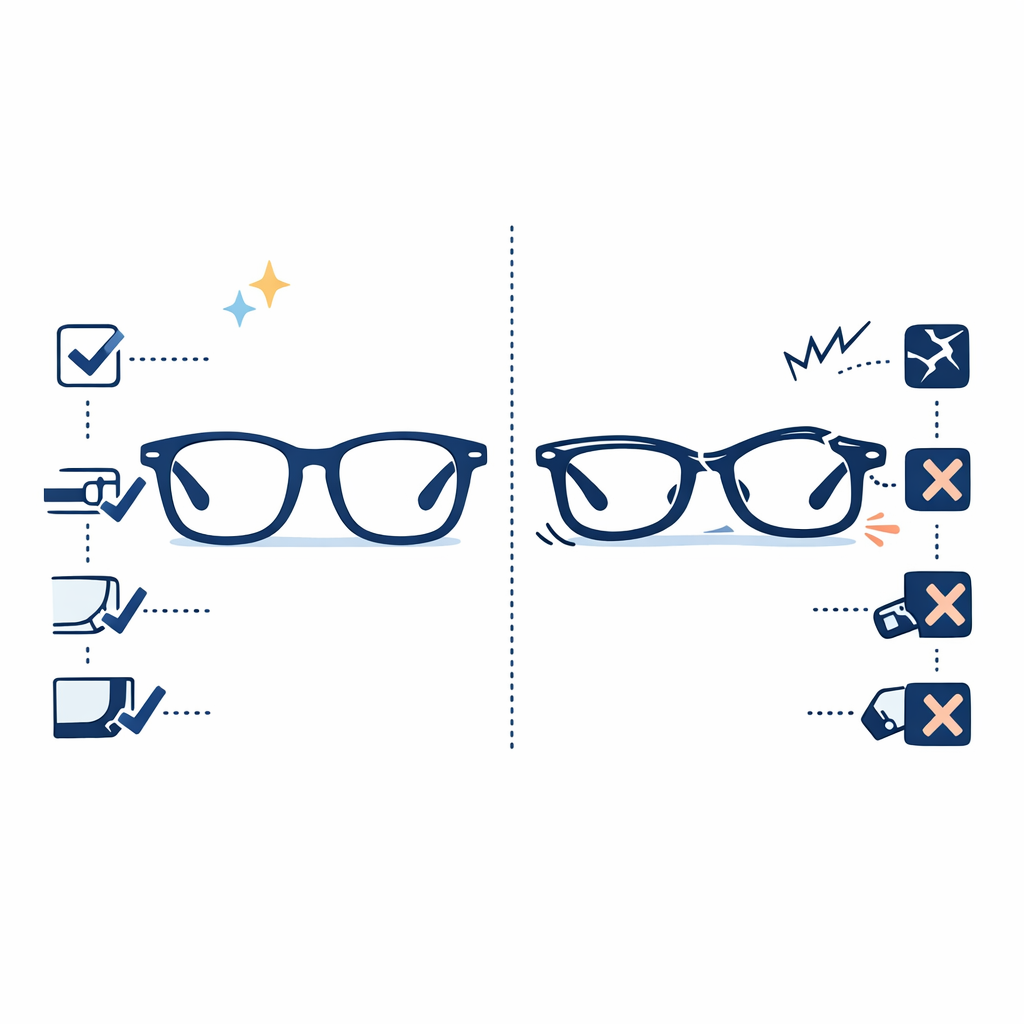
- The frame front still looks symmetrical when you set it on a flat surface.
- The temples open and close normally instead of feeling loose, gritty, or ready to snap.
- There are no cracks near the bridge, hinges, or lens groove.
- You still like the fit, and your main issue is the prescription or worn lenses, not the frame itself.
Signs you should replace the whole pair instead
- The frame already has stress marks, chips, or spreading at the corners.
- The metal is bent enough that the lenses no longer sit evenly.
- The frame is very old, dry, brittle, or no longer holds adjustments.
- You want a very different look, a better fit, or a shape that works better with your current prescription.
When lens replacement makes sense

Lens replacement is a smart move when the frame is still doing its job but the lenses are not. Common reasons include an updated prescription, scratched lenses, a switch from clear to sun lenses, or a move from basic single-vision to more specialized lens designs.
If your doctor has updated your correction for refractive errors such as nearsightedness, farsightedness, or astigmatism, replacing only the lenses lets you keep the pair you already know fits your face. If you spend a lot of time outdoors, adding sunglasses or lenses with proper UV protection can be a meaningful upgrade even when the frame stays the same.
Which frame types are usually eligible for new lenses
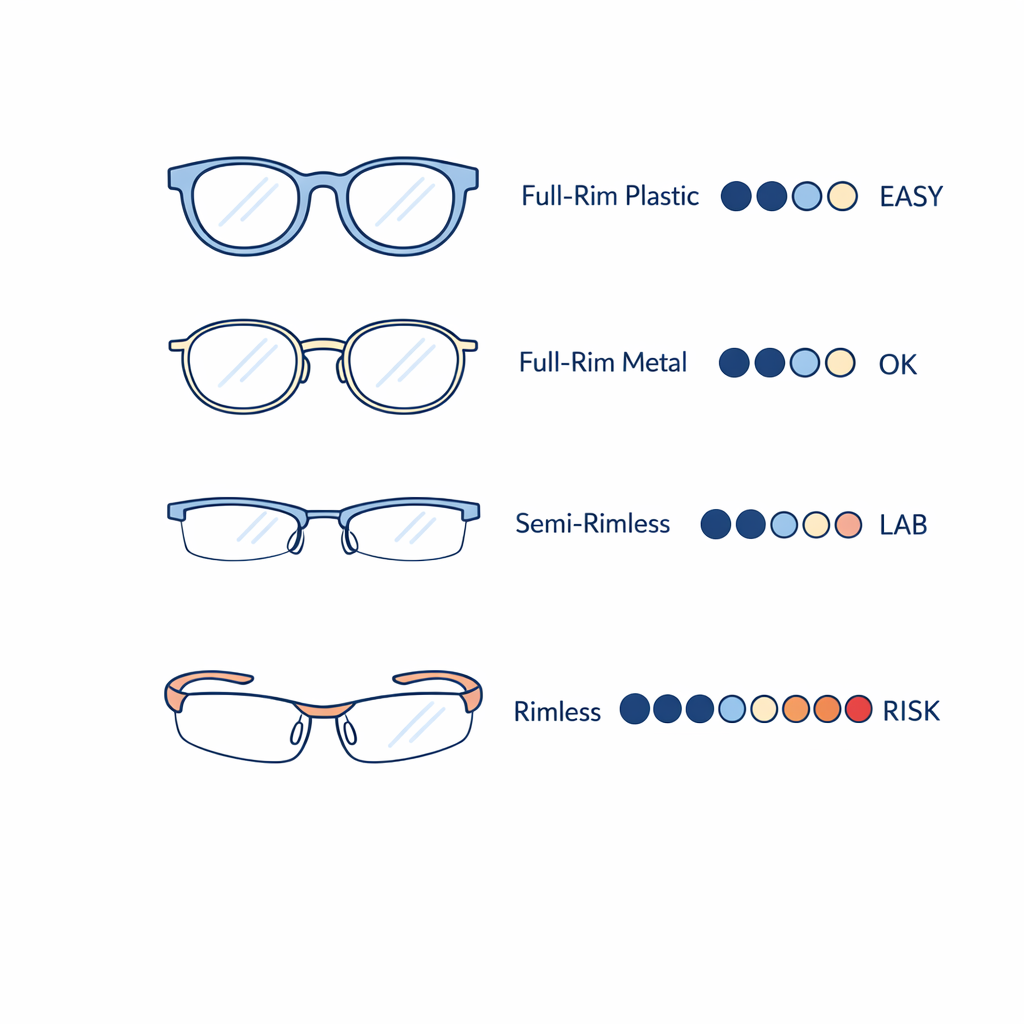
Think of frame eligibility as a spectrum, not a yes-or-no rule. The real question is not just whether a new lens can be made, but whether the old frame can survive removal, edging, and reinstallation without damage.
Quick eligibility checklist
- Usually the easiest: full-rim plastic frames in good condition.
- Often workable with care: full-rim metal frames that use a screw to open the eyewire.
- Better left to a lab: semi-rimless frames, rimless drill mounts, progressives, stronger prescriptions, and valuable designer frames.
- Often not worth the risk at home: brittle vintage plastics, warped frames, or wraparound sports styles with complex curves.
Full-rim plastic frames
If you are considering a home attempt, full-rim plastic is usually the least intimidating place to start. The lens is fully captured, and there are no tiny screws to lose, but older plastics can still crack if you rush.
Metal screw-mounted frames
These can also work, but the job is less forgiving. A stripped screw, over-opened eyewire, or slightly twisted frame can turn a simple lens swap into a repair project.
Semi-rimless and rimless cautions
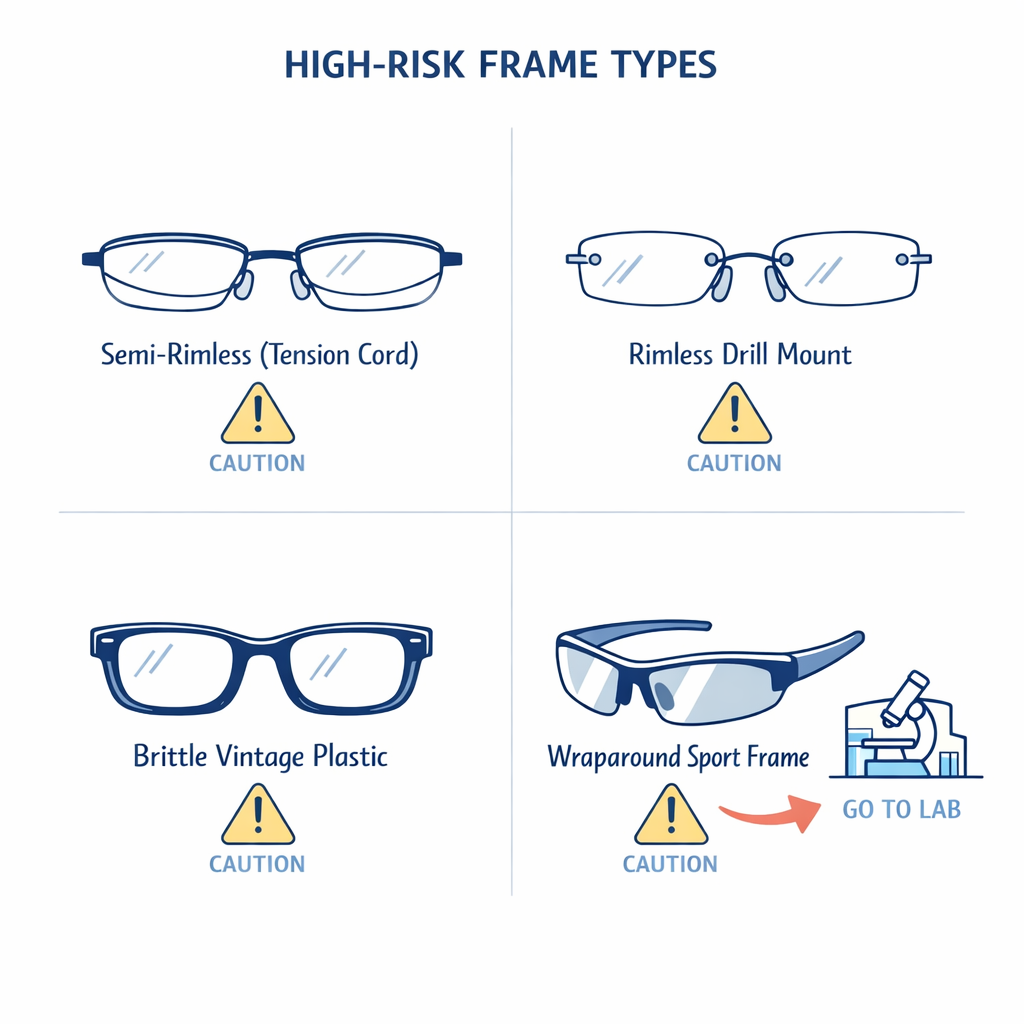
These styles are where many first-time DIY attempts go sideways. The lens is part of the structure, so cord tension, drill placement, and alignment matter much more than they do on a basic full-rim frame.
Vintage, brittle, and wraparound frame limitations
Older plastics can feel fine right up until they crack, especially if they have dried out over time. Wraparound sunglasses can also be harder because their more curved shape is less forgiving than a flat everyday frame.
When DIY works and when it doesn’t
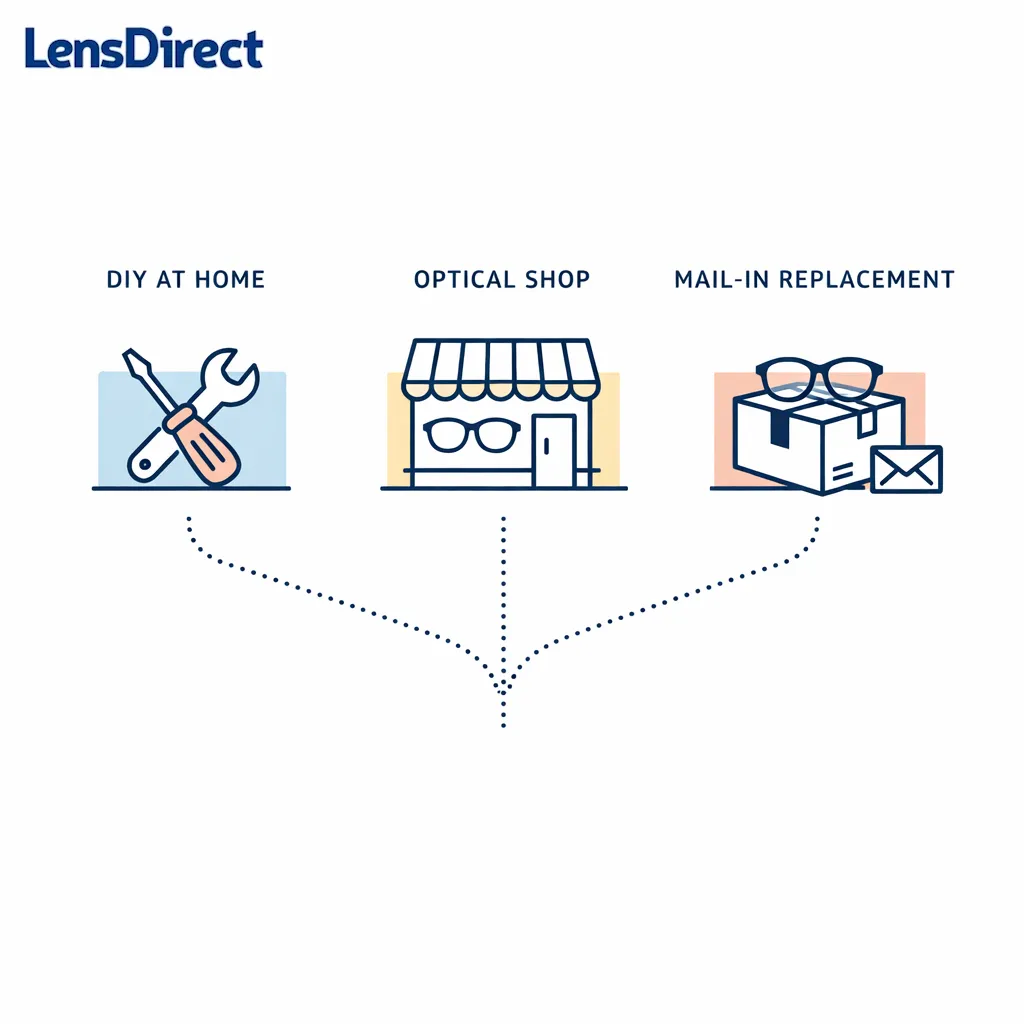
DIY works best when the goal is simple: remove an old lens from a sturdy frame and install a correctly cut replacement without forcing anything. It works worst when the frame is delicate, the prescription is complex, or the new lens needs precise alignment to feel right in daily wear.
Quick comparison
- DIY: best for simple full-rim frames, patient hands, and low-risk situations where replacing the frame would not be a disaster.
- Local optical shop: best when you want someone to inspect the frame in person before committing.
- Mail-in lens replacement: best when you want to keep existing frames but let a lab handle removal, edging, and fitting.
Tools and prep before attempting removal
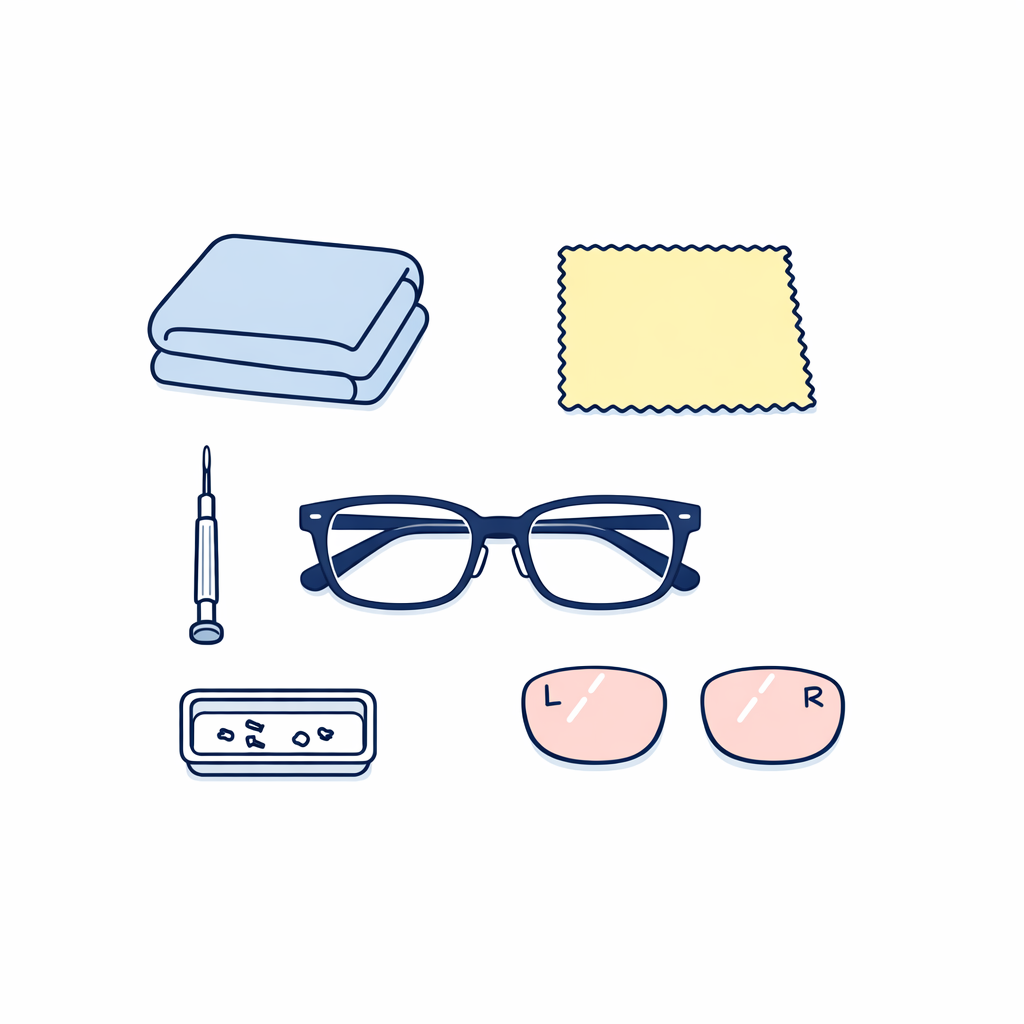
- A clean, bright workspace with a soft towel or mat under the frame.
- A microfiber cloth so grit does not scratch the lenses or frame.
- A small eyeglass screwdriver if the frame has screws.
- A safe place to store the old lenses and tiny hardware.
- Your new lens orientation clearly marked before you start.
Why PD, progressive alignment, and complex Rx jobs need a lab
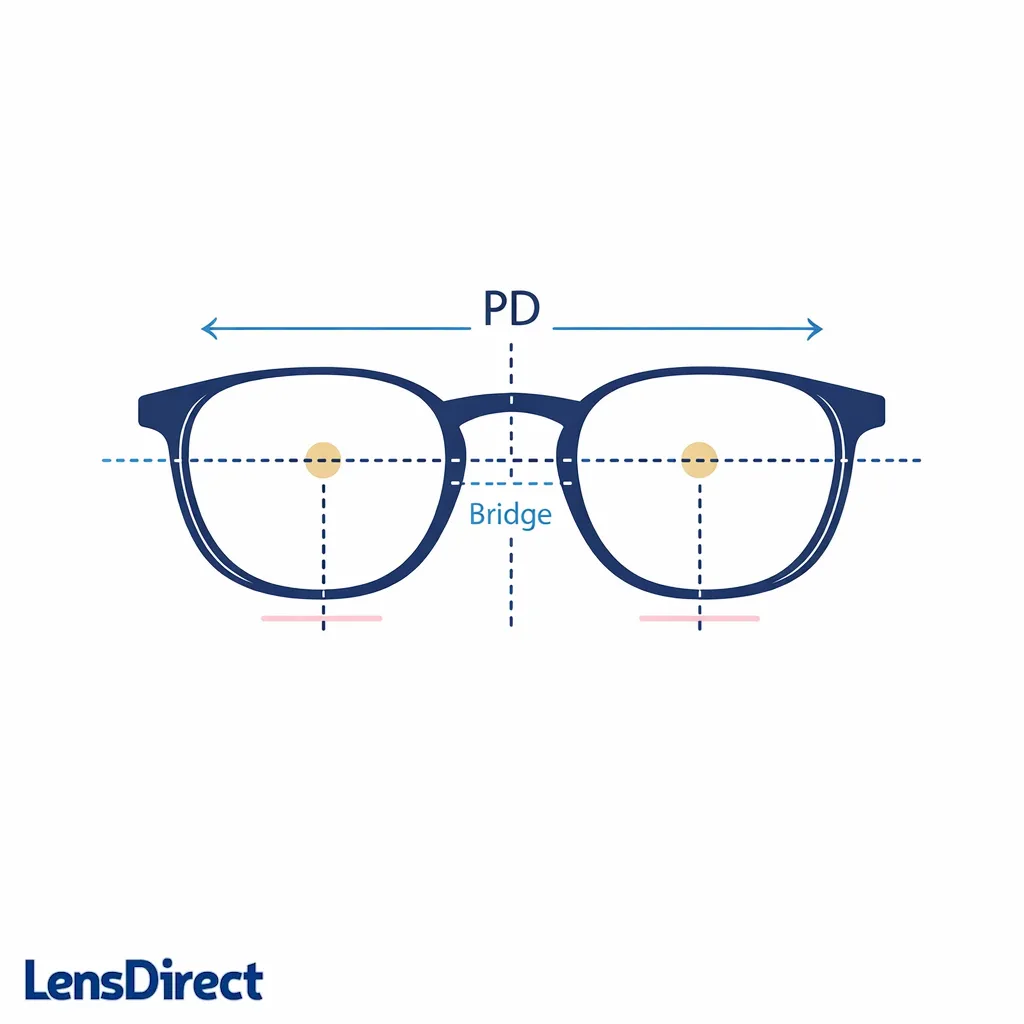
When people say they want to replace prescription lenses, they are usually thinking about the frame-handling part. The harder part is that some lenses need much more exact positioning to feel comfortable and natural once you start wearing them.
If your order depends on details like pupillary distance, progressive fitting, or a stronger prescription, letting a professional lab handle the job usually saves frustration. The same is true if the glasses are your daily pair and you cannot afford a bad fit.
How to change lenses in plastic frames
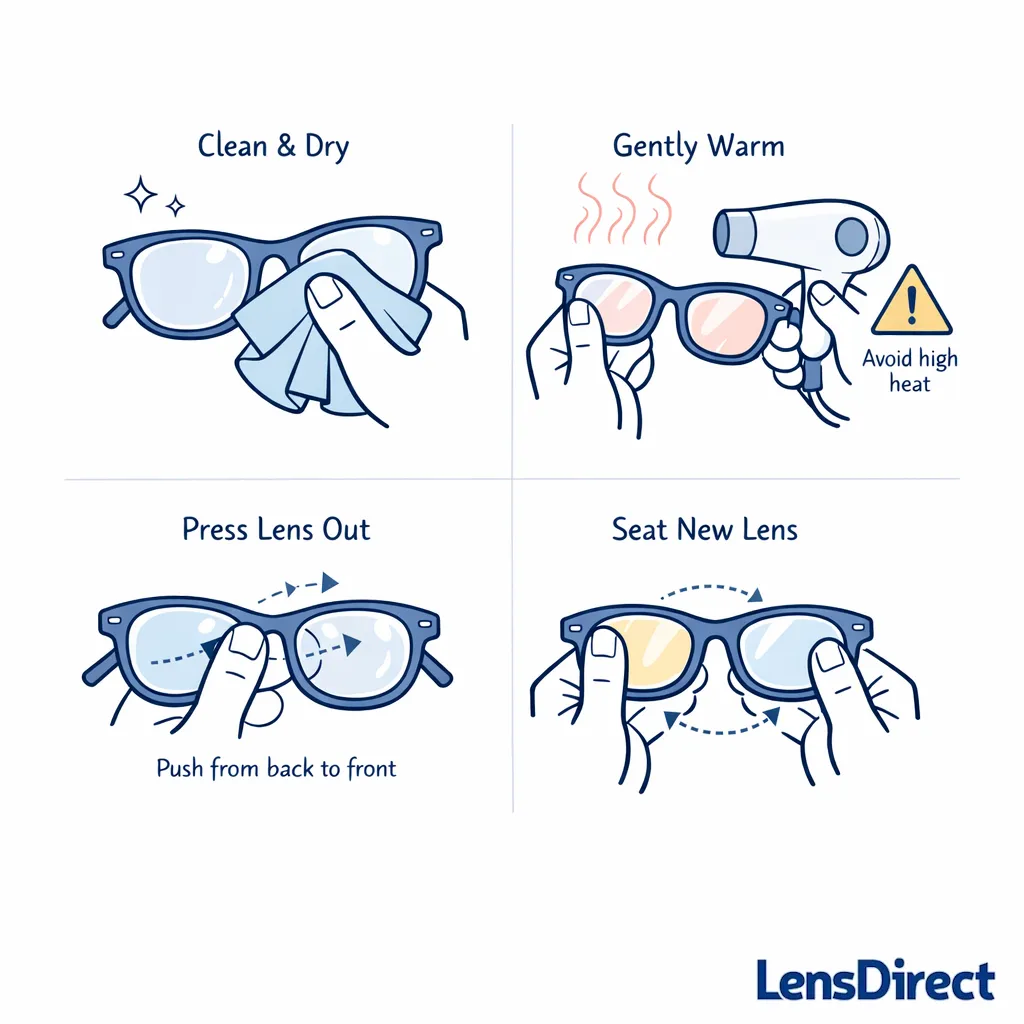
Plastic frames are the classic at-home project, but slow hands matter more than force. If the frame feels resistant, that is your signal to stop, not push harder.
How to warm plastic safely

The goal is only mild flexibility. You want the frame a little easier to flex, never hot, glossy, or soft.
- 1. Clean and dry the frame so dust or oil does not drag across the lens as it moves.
- 2. Warm the frame gently with your hands or brief lukewarm air, and avoid harsh heat sources.
- 3. Hold the frame close to the lens opening, then press the old lens out from the back toward the front.
- 4. Seat one edge of the new lens first, then work the rest into the groove with steady, even pressure.
- 5. If you hear cracking, see whitening around the rim, or need real force, stop and switch to professional help.
How to change lenses in metal frames
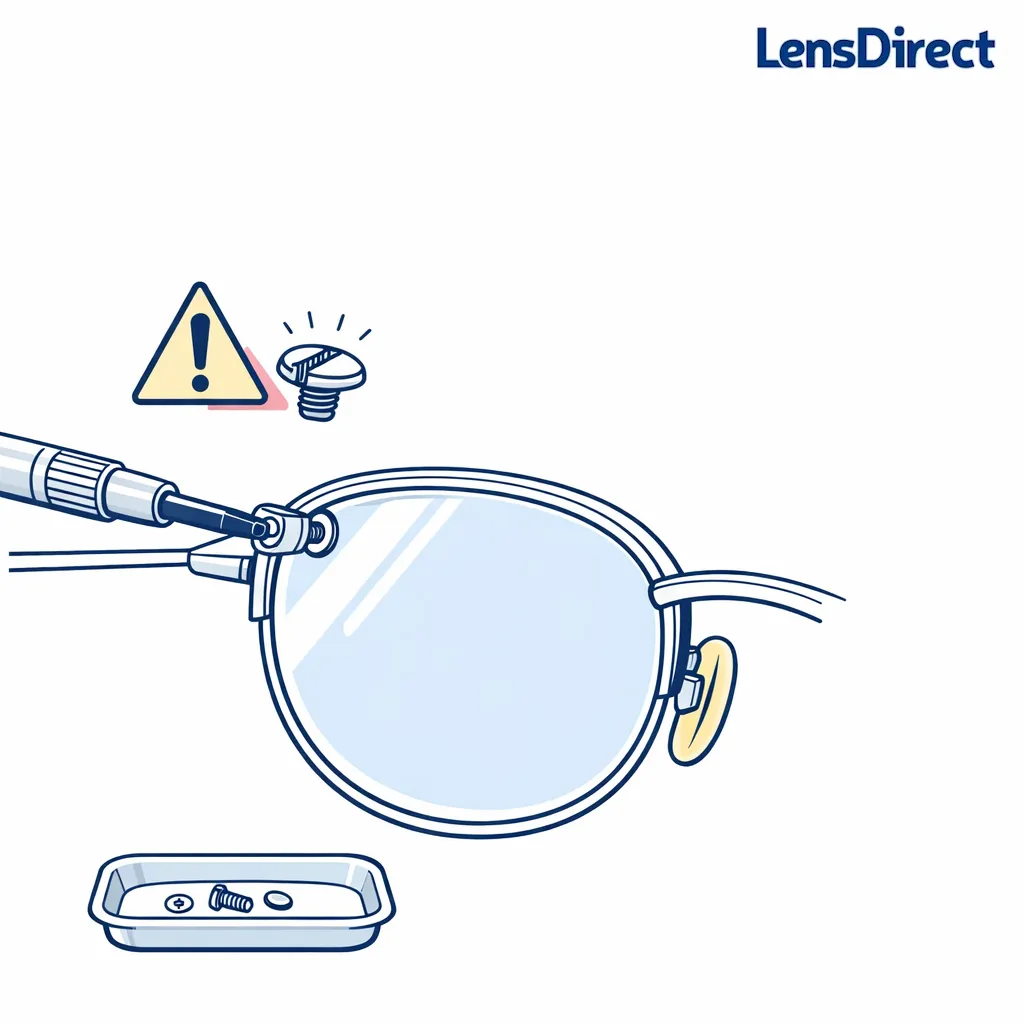
Metal frames depend more on precise hardware and less on flex. That makes them neat and controllable when everything goes well, but easy to damage when the screw or eyewire fights back.
How to loosen metal frames without stripping screws
- 1. Work over a tray, towel, or mat so a dropped screw does not vanish.
- 2. Use the correctly sized screwdriver and turn slowly to loosen the eyewire only as much as needed.
- 3. Slide the old lens out without over-bending the frame front.
- 4. Place the new lens into position and close the eyewire gradually, checking that the lens seats evenly all the way around.
- 5. Tighten the screw until secure, not until it feels maxed out.
If the screw head is already worn, the hinge feels unstable, or the metal springs out of shape during removal, stop there. A small hardware issue is usually much cheaper to solve in a lab than after a stripped screw damages the frame.
Common mistakes that can damage frames or lenses
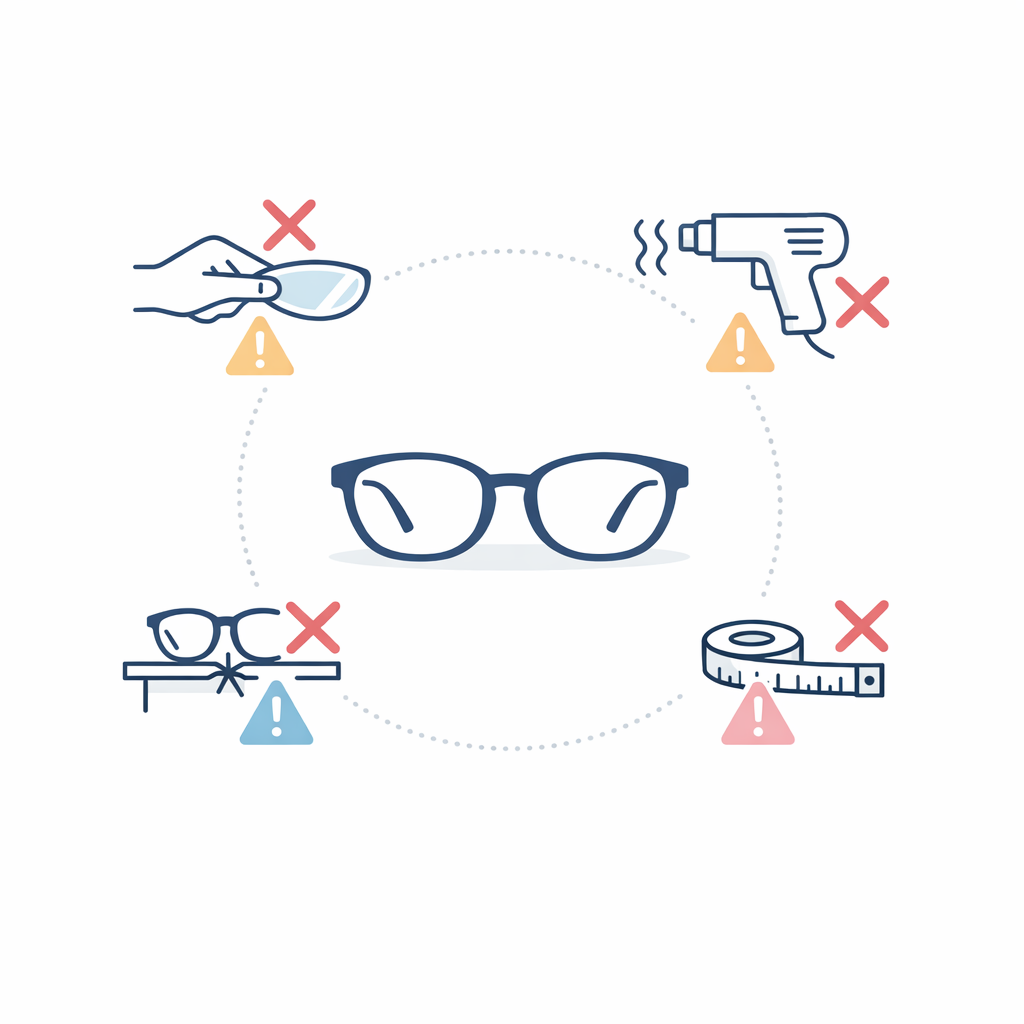
- Using force instead of inspection. If you have not identified how the current lens is seated, more pressure usually makes things worse.
- Applying too much heat. Overheated plastic can lose shape before you realize it.
- Working without a protected surface. Tiny screws bounce, lenses scratch, and expensive frames chip when they hit a hard counter.
- Assuming all frames are equally DIY-friendly. Semi-rimless, rimless, wrap, and valuable vintage frames deserve more caution.
- Ordering without the right measurements. If you need help before ordering, use LensDirect’s guide to measure your pupillary distance.
- Skipping the prescription step. Under the FTC’s Eyeglass Rule, you should receive your eyeglass prescription after the exam so you can order lenses where you prefer.
When mail-in lens replacement is easier than DIY
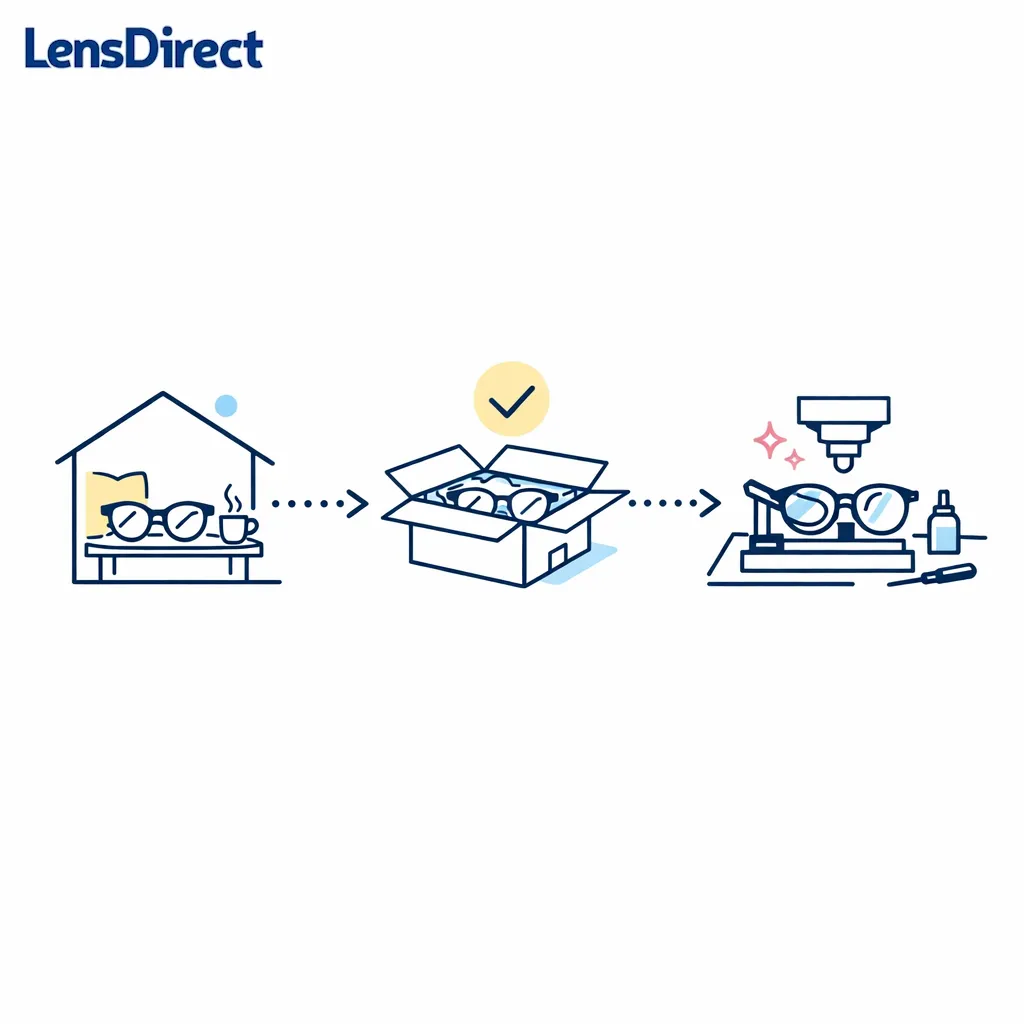
Mail-in lens replacement is the practical middle ground between doing it yourself and starting over with a whole new pair. It is especially appealing when you want to keep existing frames, but the prescription, frame style, or value of the pair makes home removal feel like a gamble.
This is usually the better path for progressives, stronger prescriptions, sunglasses, and frames you would hate to break. It is also the better path when you simply do not want to troubleshoot fit, pressure points, or tiny hardware on your kitchen table.
What to expect for turnaround, shipping, and pricing factors

Turnaround depends on the lens type, the complexity of the prescription, and how quickly the frame gets to the lab. Cost usually tracks the choices you make, with basic single-vision lenses on one end and premium materials, progressive designs, coatings, or sun options on the other.
How LensDirect’s lens replacement process works
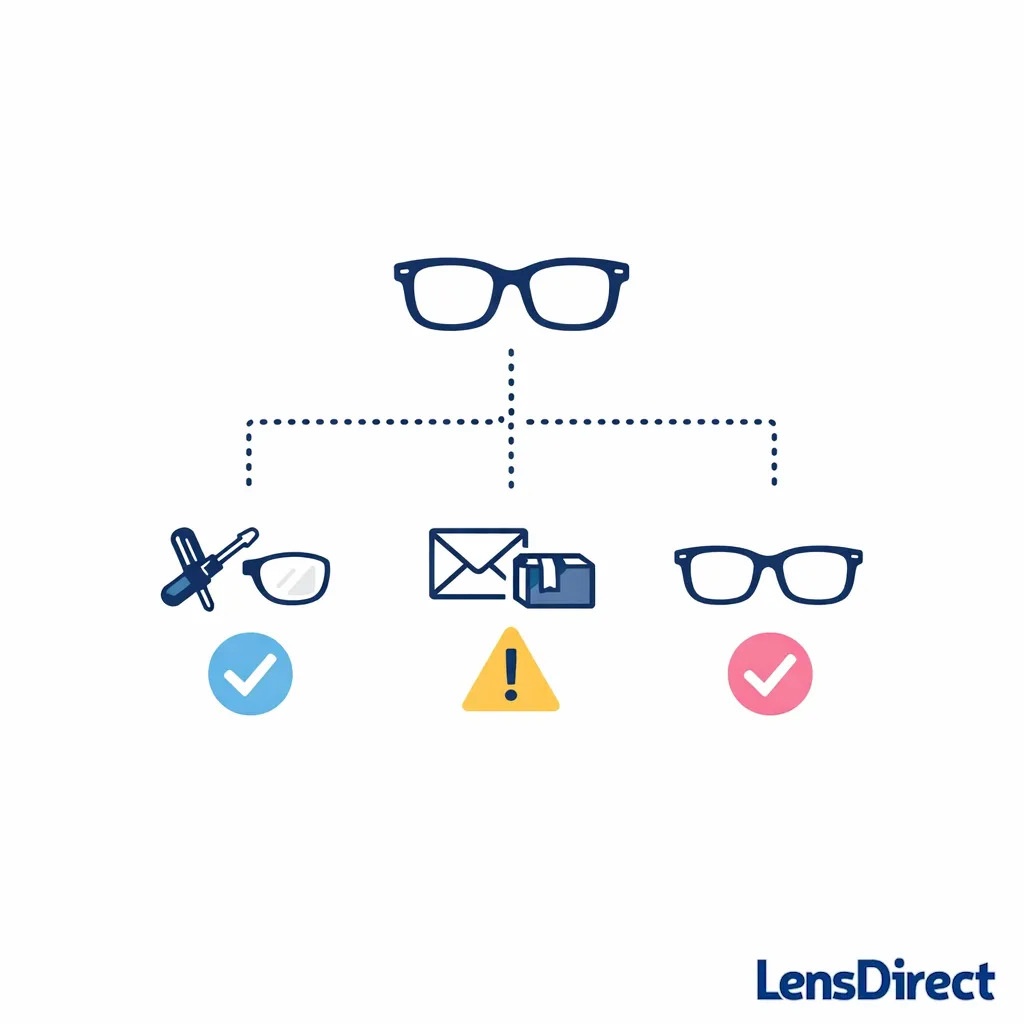
LensDirect offers two straightforward ways to change lenses in glasses you already own. If you want the lab to handle the work, start with full-service prescription lens replacement; if you are comfortable installing lenses yourself, browse DIY replacement lenses by brand.
- Choose the path that matches your comfort level: full-service for convenience or DIY for hands-on replacement.
- Use your current prescription and check your measurements before ordering.
- Pick lens features based on how you actually use the glasses, whether that is everyday wear, screen time, driving, or sun coverage.
- If you plan to use out-of-network benefits, review how to get reimbursed by your insurance before you place the order.
If your old frame fails the inspection checklist, do not force the save. In that case, starting over with a new pair is often smarter than risking a break during lens removal.
What to do next
- Get or confirm your current prescription before you order.
- Inspect the frame front, hinges, screws, and lens groove for cracks or stress.
- Decide whether the frame is a simple DIY candidate or a better mail-in candidate.
- If the frame matters to you, choose the lower-risk option first.
- Keep a backup pair if these are your everyday glasses.
FAQs

Can I just change the lenses in my glasses?
Yes, if the frame is still in good condition and the new lenses are appropriate for that shape. The better the frame condition and the simpler the lens job, the more realistic replacement becomes.
Is it expensive to change lenses in glasses?
Not always. If your frame is still great, replacing only the lenses can be a better value than buying a full new pair, but the total still depends on prescription complexity, lens material, coatings, and whether you choose DIY or professional service.
Can I just get the lenses replaced in progressive or astigmatism glasses?
Usually yes, but progressive designs and prescriptions that correct astigmatism are less forgiving of alignment errors. That is why mail-in or in-person lab service is often the safer route.
Can lens replacement cure astigmatism?
No. Astigmatism is a refractive error, so glasses help correct vision while you wear them, but changing lenses does not change the shape of your eye.
Will Walmart replace lenses in old frames?
Store policies can change, and many retailers decide case by case based on frame condition and liability concerns. The practical move is to ask the specific optical department before you bring in a sentimental or older pair.
How long does it take to replace lenses in glasses?
It depends on the lens type, prescription, and service model. A simple job can move faster than a progressive or specialty sunglass order, and mail-in service adds shipping time on top of lab time.
Choose the easiest way to keep your favorite frames

If your current pair is still solid, LensDirect makes it easy to Replace Your Lenses. If the frame is past its prime, you can Shop Glasses, Shop Sunglasses, or Shop Contacts for a backup vision option.
If you want help before you order, use Find Your Fit, Learn How to Measure Your Pupillary Distance, and Learn How to Get Reimbursed by Your Insurance. That way, you can keep the frames you love without making the process harder than it needs to be.
Author

Subscribe to our email newsletter to get the latest posts delivered right to your email.