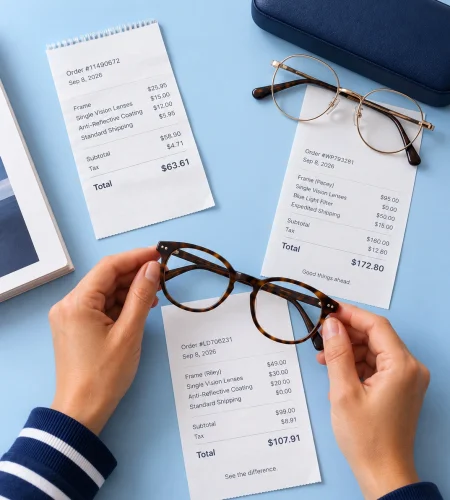
Buying glasses online can be a smart way to save money, but the lowest advertised price is rarely the amount you actually pay. This guide is for shoppers comparing affordable glasses websites, cheap prescription glasses online, and other budget glasses websites who want a clearer way to judge real value.
You will learn how to compare frame price, included lenses, upgrade costs, shipping speed, return rules, and reimbursement options without getting distracted by a flashy starting number. If you want the best glasses deals online, the goal is simple: compare the total order value, not just the sticker price on the frame.
What is the cheapest website to buy eyeglasses?
There is no single cheapest website for everyone. The cheapest option is the store that gives you the lowest total for your real prescription, lens type, add-ons, shipping, and return risk.
If you wear a simple single-vision prescription, one site may look cheapest. If you need progressives, thinner lenses, or faster delivery, a different site may end up being the better deal. That is why a proper online glasses price comparison starts at checkout, not on the homepage.
How to compare online glasses prices in 5 steps
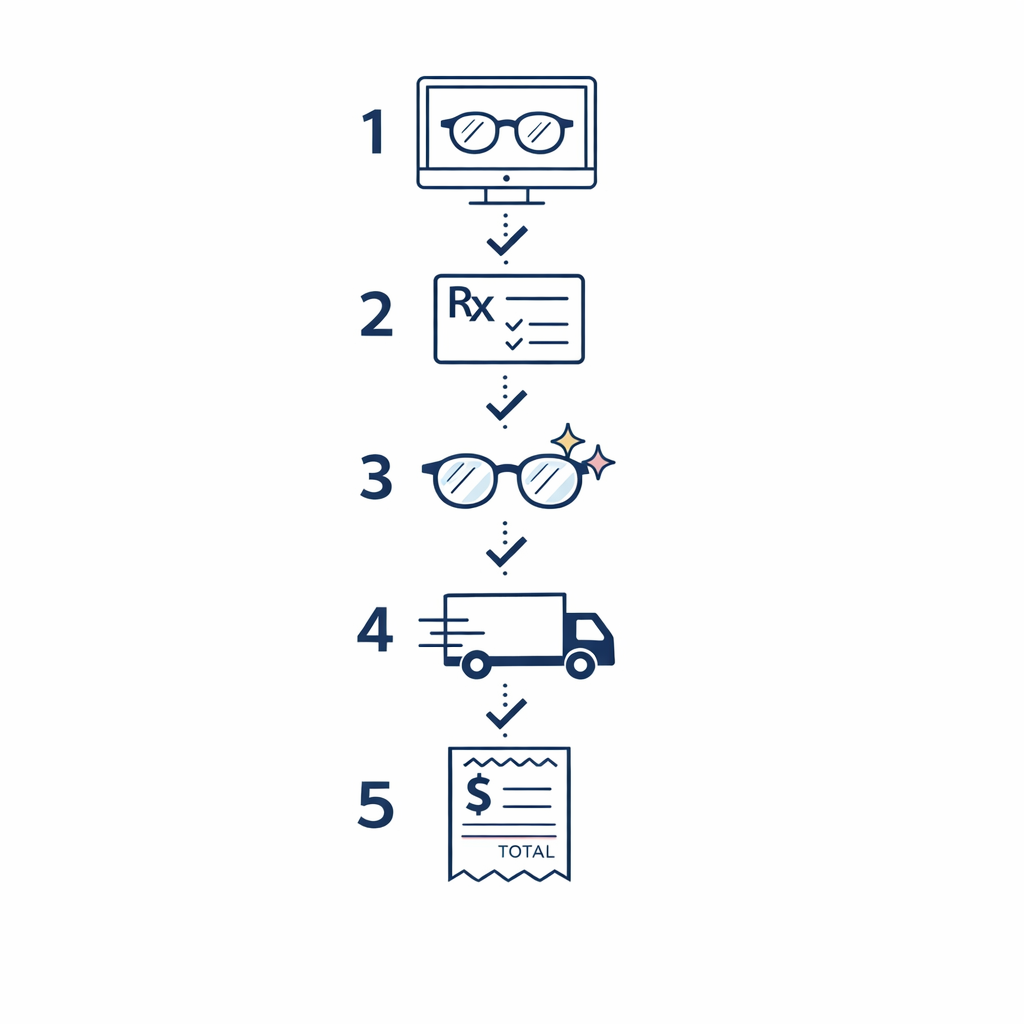
- 1. Pick a frame you would actually wear, not just the lowest starting-price option.
- 2. Select the prescription type you really need, whether that is single vision, bifocal, or progressive.
- 3. Add only the lens upgrades you would truly use every day.
- 4. Compare shipping time, shipping cost, and return terms before you pay.
- 5. Judge the final delivered price, not the frame price by itself.
How to compare affordable glasses websites without getting fooled by the base price
What total glasses cost means
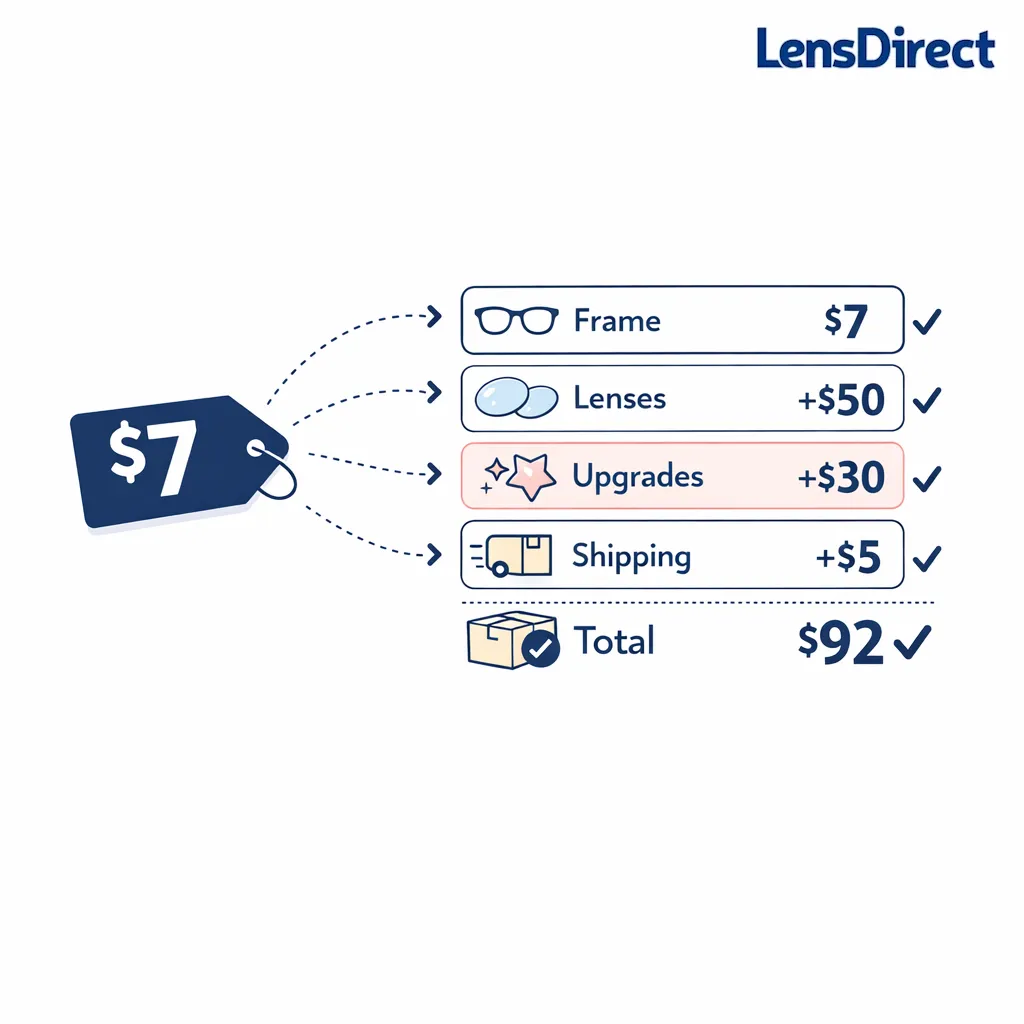
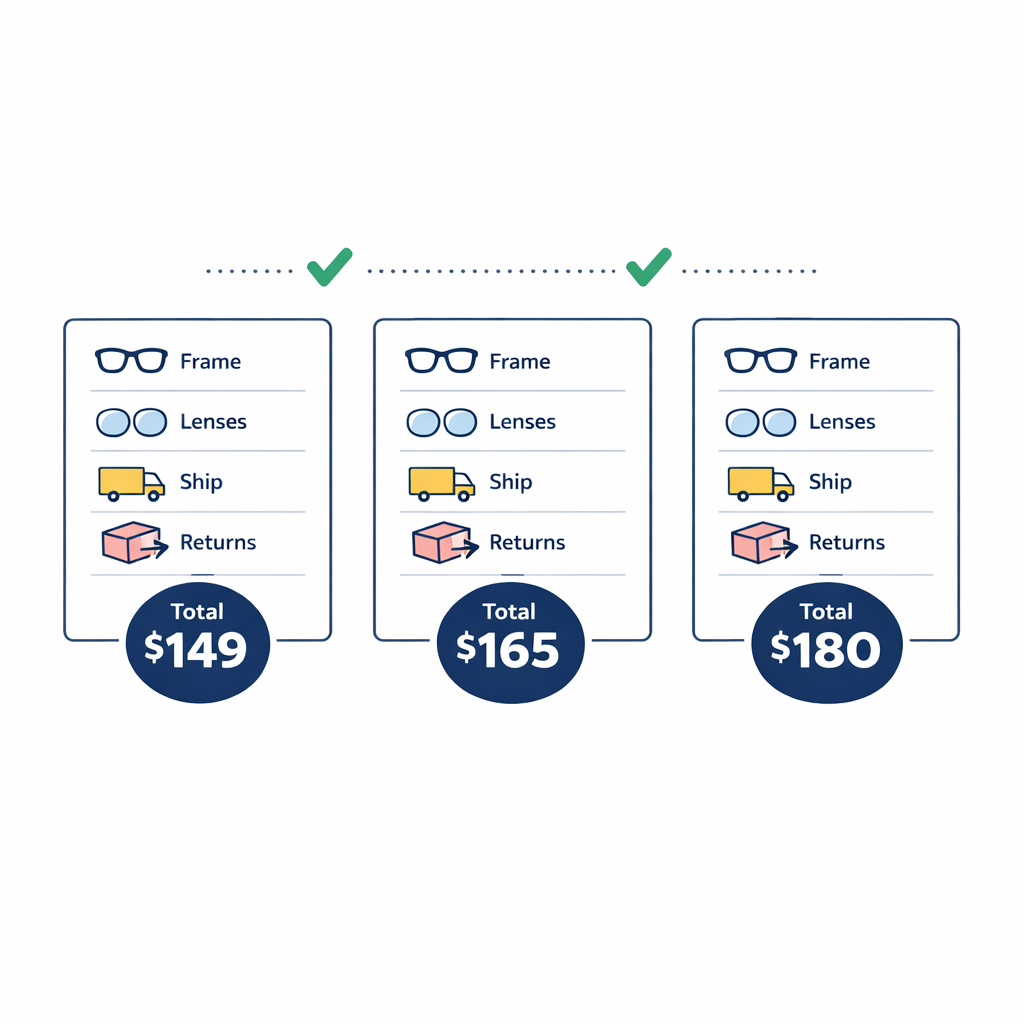
Total glasses cost is the number that matters most: frame price plus the prescription lens package you need, plus any upgrades, plus shipping, plus any likely exchange or remake cost. Once you use that formula, many “cheap” pairs stop looking so cheap.
Why a $7 frame can become a much higher total at checkout
A very low starting price often reflects the frame alone or the most basic lens setup. If your real order includes a different prescription type, thinner lenses, glare reduction, or faster delivery, the number can change quickly.
That does not mean low-price sites are bad. It means you should treat the base price as the beginning of comparison, not the answer.
The three costs that matter most: frame, lens upgrades, and shipping
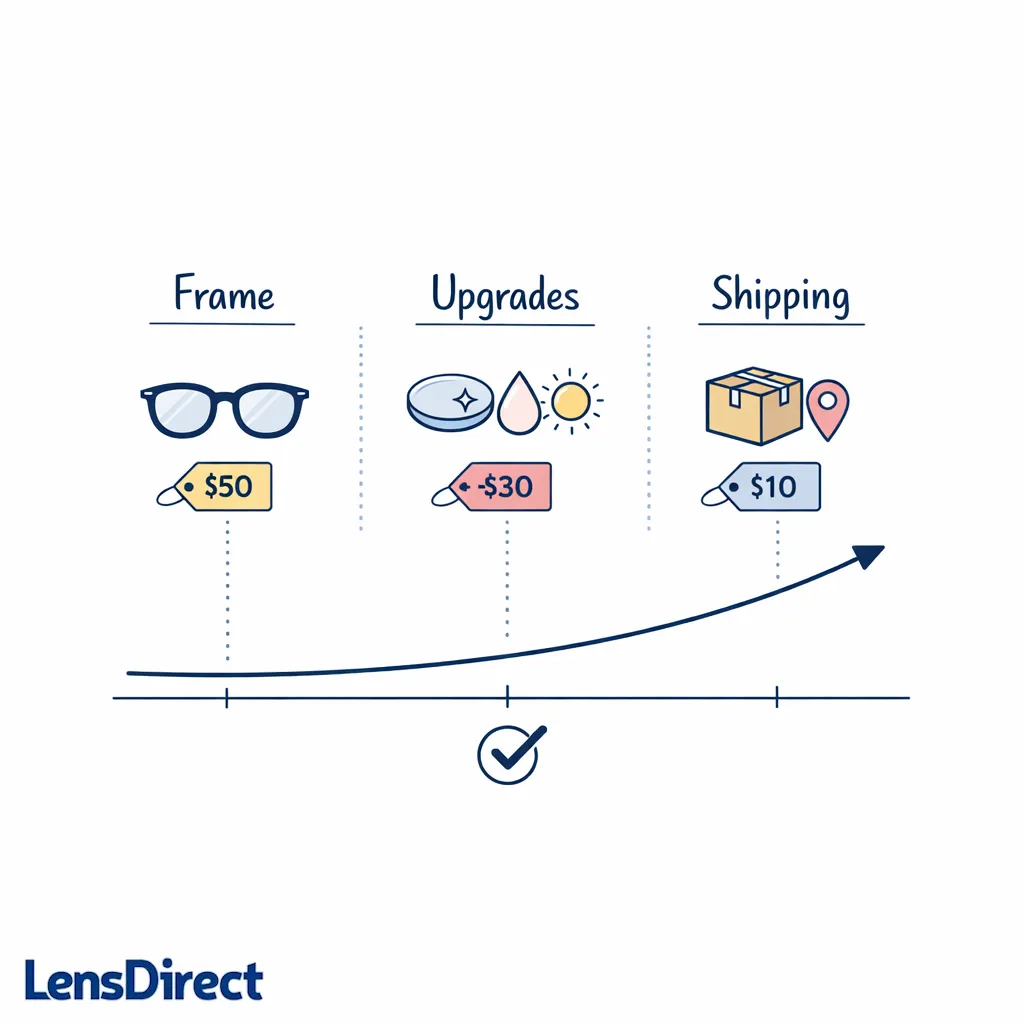
For most shoppers, the real comparison comes down to three buckets: the frame you want, the lens options you need, and the speed and cost of getting the order to your door. If one store wins on frame price but loses badly on upgrades or shipping, it may not be the best discount glasses online after all.
If you already own frames you like, there is a fourth option that budget shoppers often forget: replacing just the lenses. That can be especially useful when your frame still fits well and only the prescription, coatings, or lens condition needs an update.
A simple comparison checklist for online glasses stores
Base frame price
Start with frames you would realistically keep and wear. Comparing a clearance frame you would settle for against a better-fitting frame you would wear daily is not a fair value comparison.
Included lens type
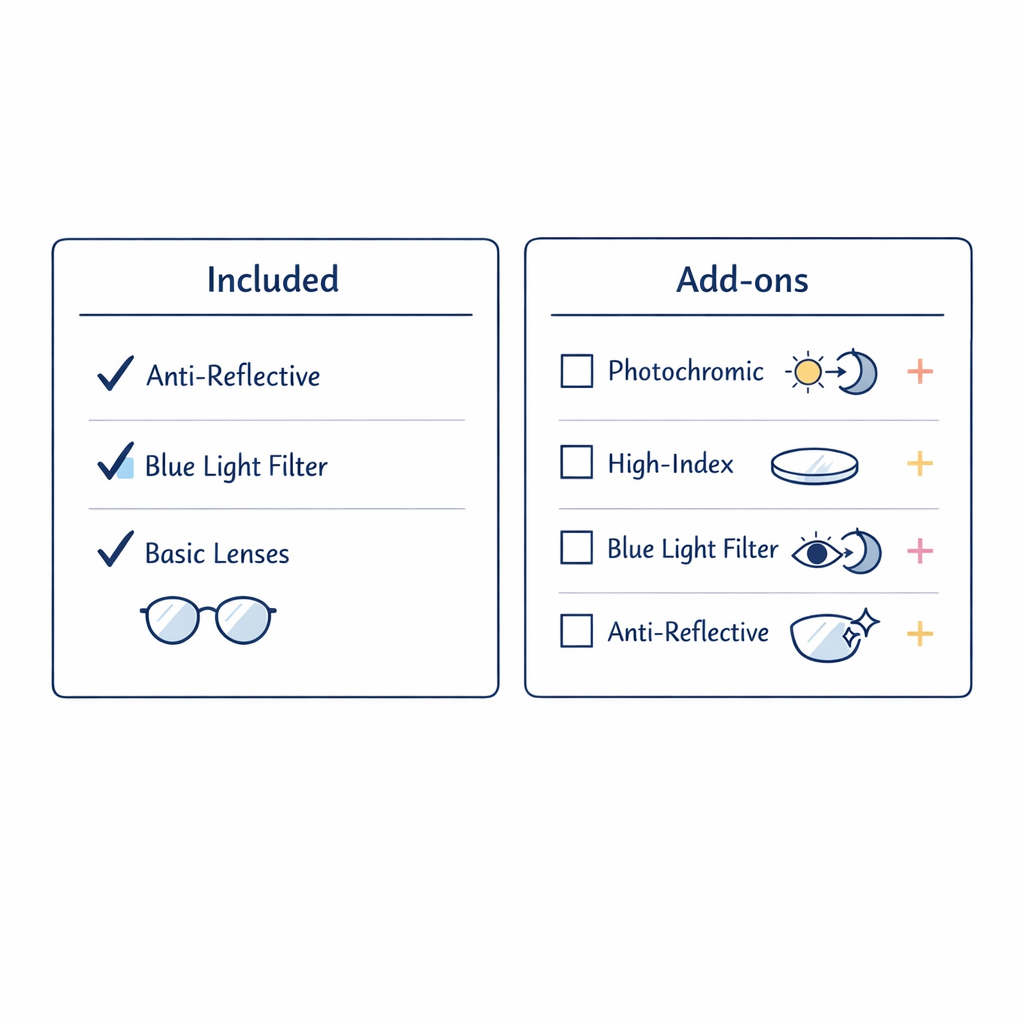
Before you judge price, see what the starting package includes. A site can look inexpensive on the frame page but become less attractive once you choose the prescription category you actually need.
Compare like with like. Single vision should be compared against single vision, and progressive pricing should be compared against progressive pricing.
Upgrade pricing for blue light, progressive, photochromic, polarized, and high-index options
This is where affordable online eyeglasses often separate into true value and fake value. Price the exact version you want, then remove every extra you do not care about and rebuild the cart once more.
If you are shopping on a budget, ask one question for each upgrade: “Will I notice this every day?” If the answer is no, it may be optional for this purchase.
Shipping speed and thresholds for free delivery
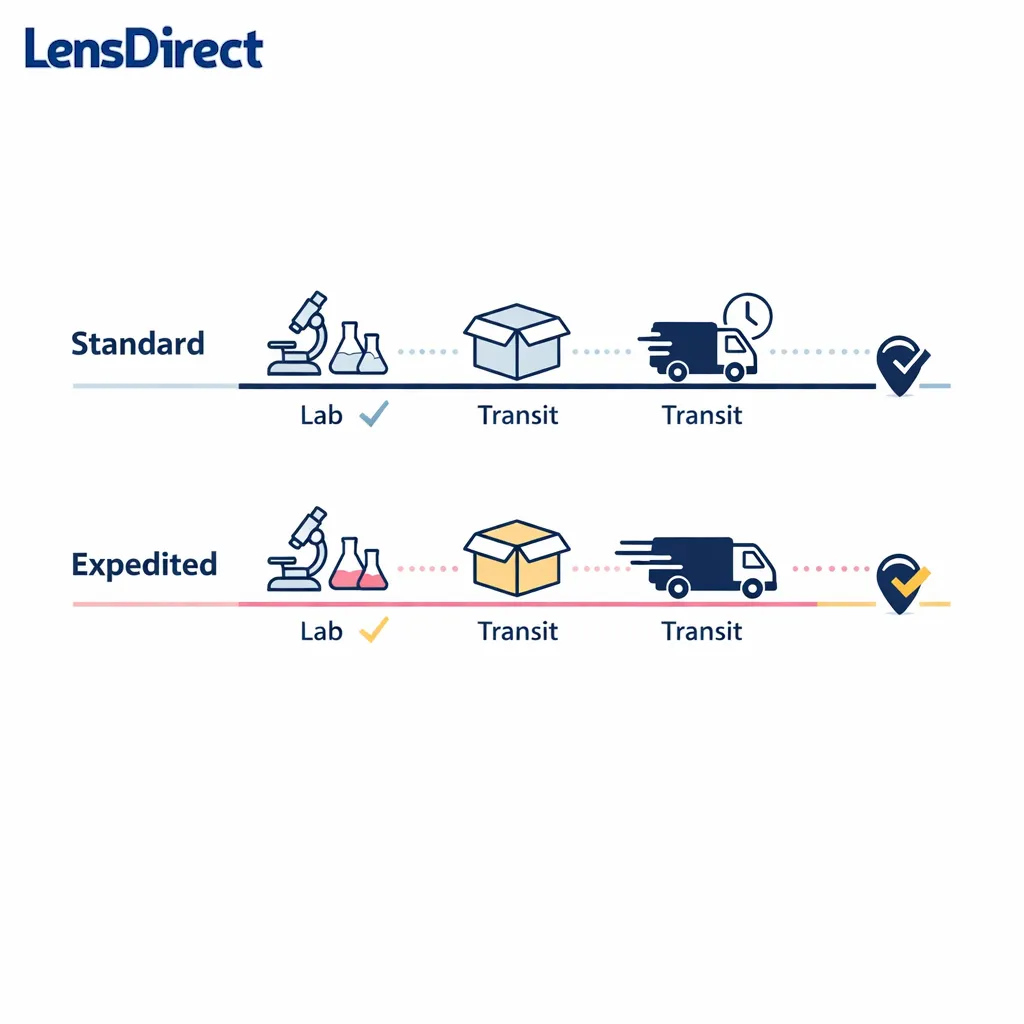
Check both production time and transit time. A low shipping charge does not help much if the order sits in processing longer than you expected.
If you need glasses for travel, work, school, or an upcoming event, compare the estimated arrival window, not just the word “free.” Faster delivery may be worth paying for on an essential pair, while a backup pair can wait.
Returns, exchanges, and warranty windows
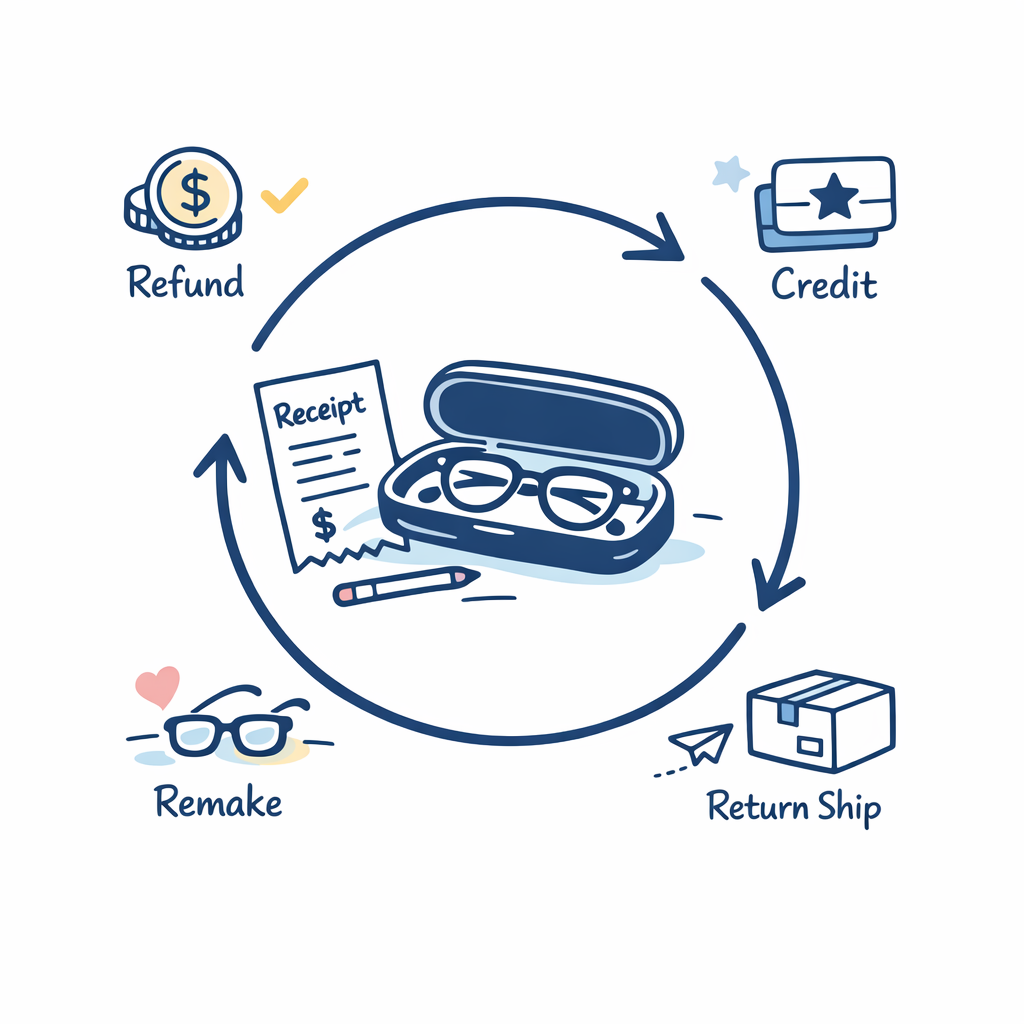
Read the policy before you order, especially on prescription eyewear. Look for whether the site offers refunds or store credit, whether return shipping is deducted, and whether remakes are handled differently from non-prescription style returns.
A generous return policy can make a slightly higher upfront price the better value. That is especially true if you are trying a new frame shape, a new lens type, or a brand you have never worn.
Insurance, FSA, and HSA compatibility
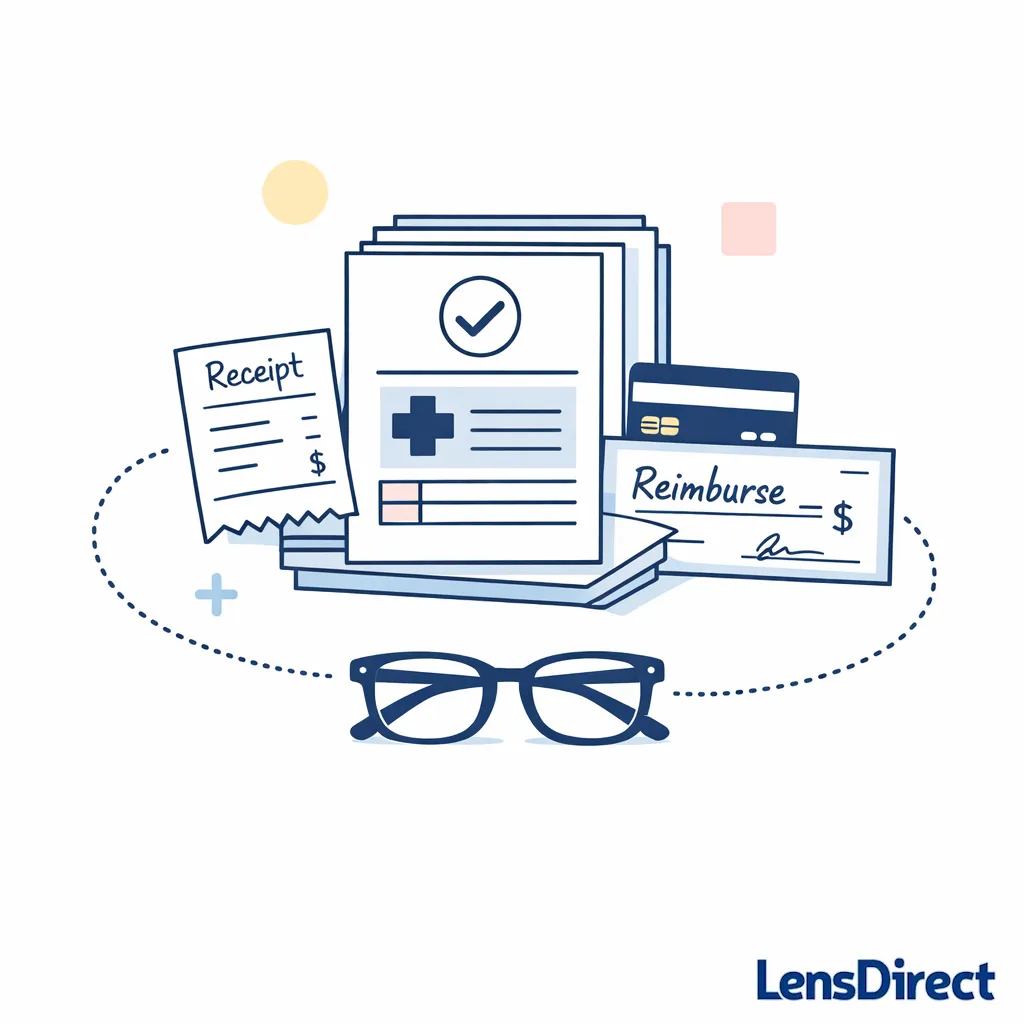
If you plan to use benefits, check the paperwork before checkout. IRS Publication 502 lists prescription eyeglasses as a medical expense, and IRS Publication 969 explains the rules for tax-favored accounts such as HSAs and health FSAs.
Even when a site does not bill insurance directly, reimbursement may still be possible if you keep the right receipt and submit the claim correctly. If you want a practical walkthrough, learn how to get reimbursed by your insurance before you order.
Lens upgrades that change the real value
Single vision vs bifocal vs progressive
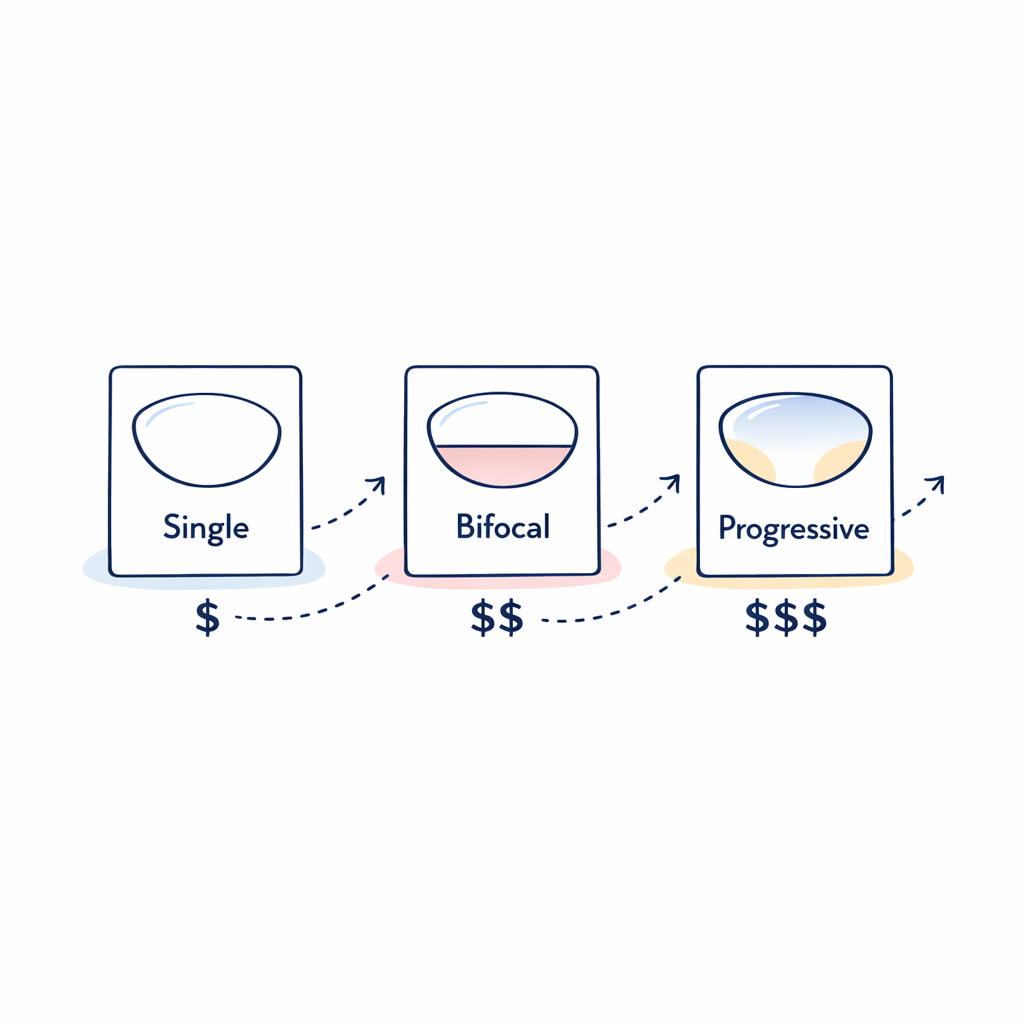
Your prescription type changes the comparison more than almost anything else. A store that is great for cheap prescription glasses online with a simple single-vision order may not be the best value once you move into a more customized lens package.
That is why the best online retailer for glasses depends on your prescription complexity, not just its homepage pricing.
High-index lenses for stronger prescriptions
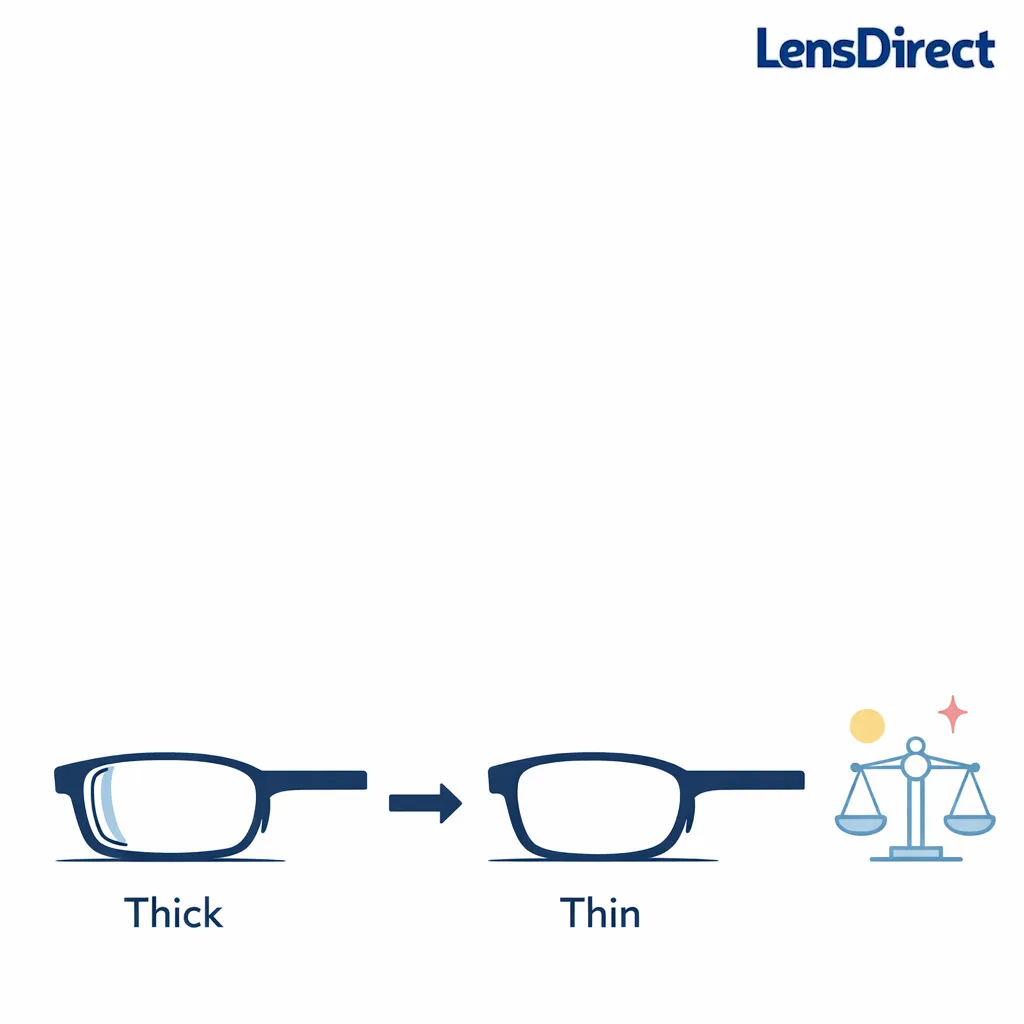
If your current lenses feel bulky or heavy, price a thinner lens material as a targeted upgrade instead of assuming every add-on is necessary. Budget shopping works best when you solve the biggest comfort or appearance issue first, then stop.
Blue light, anti-reflective, and photochromic add-ons
These upgrades affect value very differently from shopper to shopper. If glare, reflections, or screen appearance bothers you, you may care more about lens clarity than about trend-driven extras.
If you want one pair to handle indoor and outdoor use, photochromic lenses may be worth pricing out. If you already own sunglasses, that money may be better saved or redirected to a feature you will notice more often.
Which upgrades are worth paying for on a budget
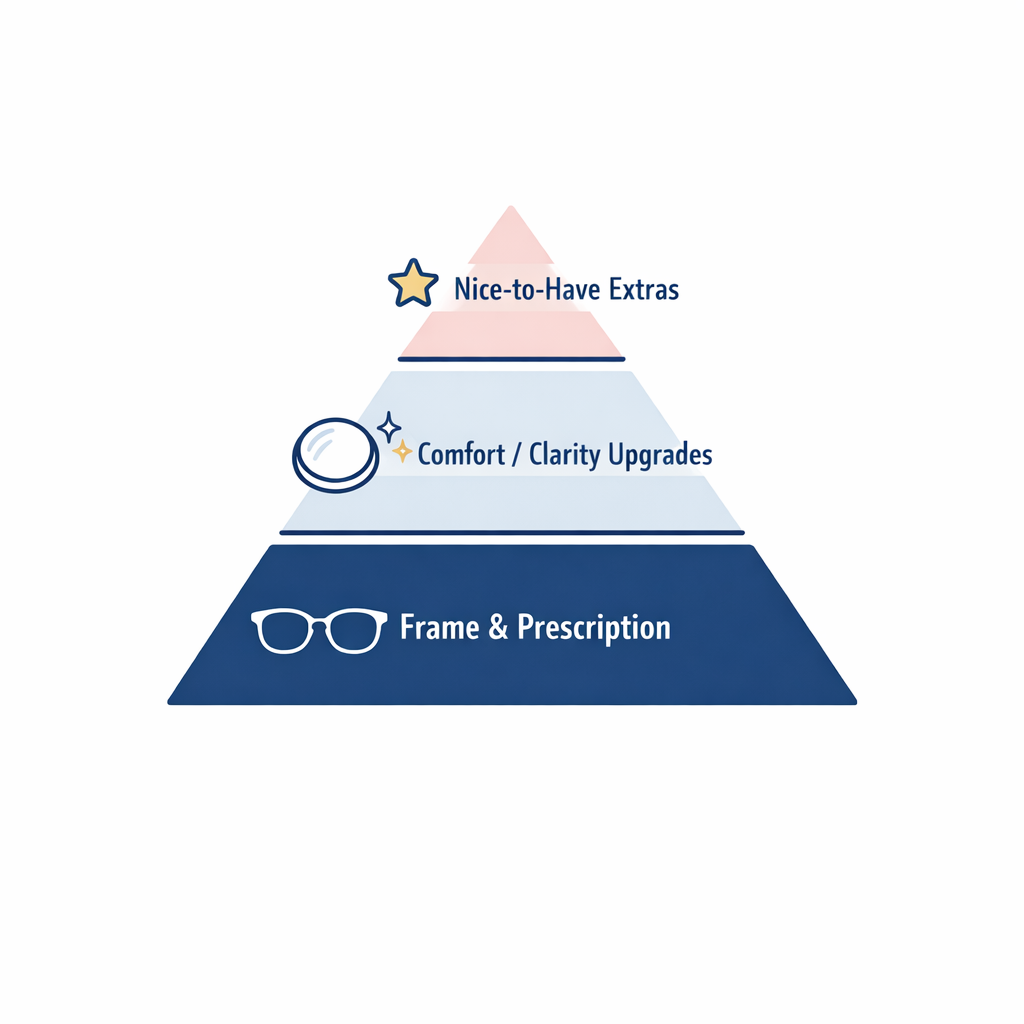
A good budget order usually follows this priority:
- First: get the correct prescription type and a frame that fits.
- Second: pay for comfort or clarity upgrades you know you will notice.
- Third: skip extras that sound nice but do not solve a real problem for you.

If your current frames still work, another value move is to send in your frames for full-service lens replacement or order replacement lenses for compatible frames. For many shoppers, that is a smarter spend than buying a whole new pair.
Shipping and return policies to compare before you order
Standard vs expedited shipping
Do not treat shipping as a last-minute detail. Compare the promised timeline from order placement to delivery, including any lab or production time, because that is what determines when the glasses actually arrive.
Home try-on, virtual try-on, and fit support
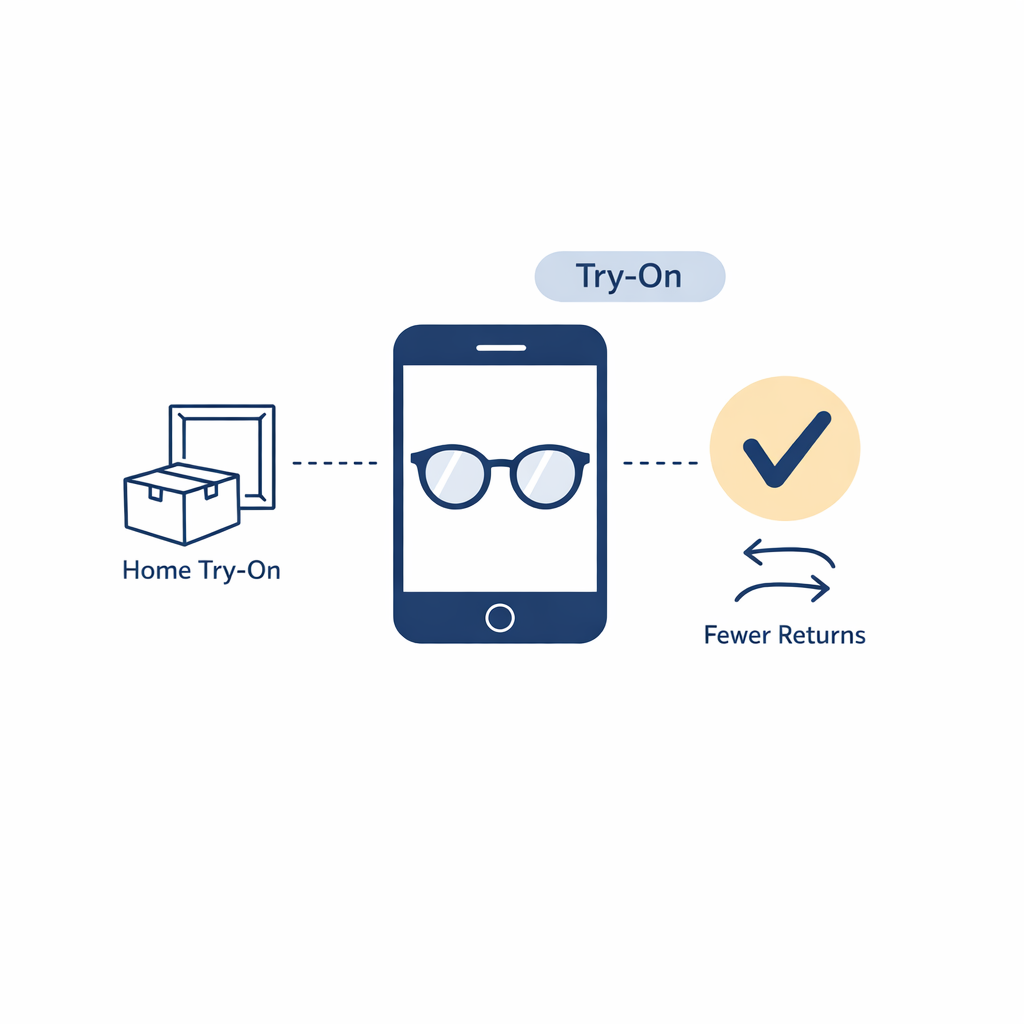
These tools matter most when you are experimenting with style or sizing. If you are not sure what shape works on your face, narrowing choices before checkout reduces the odds of paying for something you will not wear.
If you want help before ordering, find your fit first. A little fit research can save more money than chasing the very lowest frame price.
Return shipping costs, restocking fees, and remake policies
This is where cheap-looking orders can get expensive. If the return process is hard, slow, or costly, the effective price of the order goes up the moment something is off.
When you compare affordable glasses websites, look at the refund path as carefully as the checkout path. Value includes how easy it is to fix a mistake.
What budget shoppers should have ready before ordering online
Prescription details
If you do not already have a copy of your eyeglass prescription, the FTC Eyeglass Rule requires prescribers to give you one after your eye exam. That makes it much easier to compare stores without going back and forth for basic paperwork.
If the numbers on your prescription are unclear, verify them with your optometrist before ordering. It is much cheaper to ask one extra question than to remake a pair you cannot use.
Pupillary distance (PD)
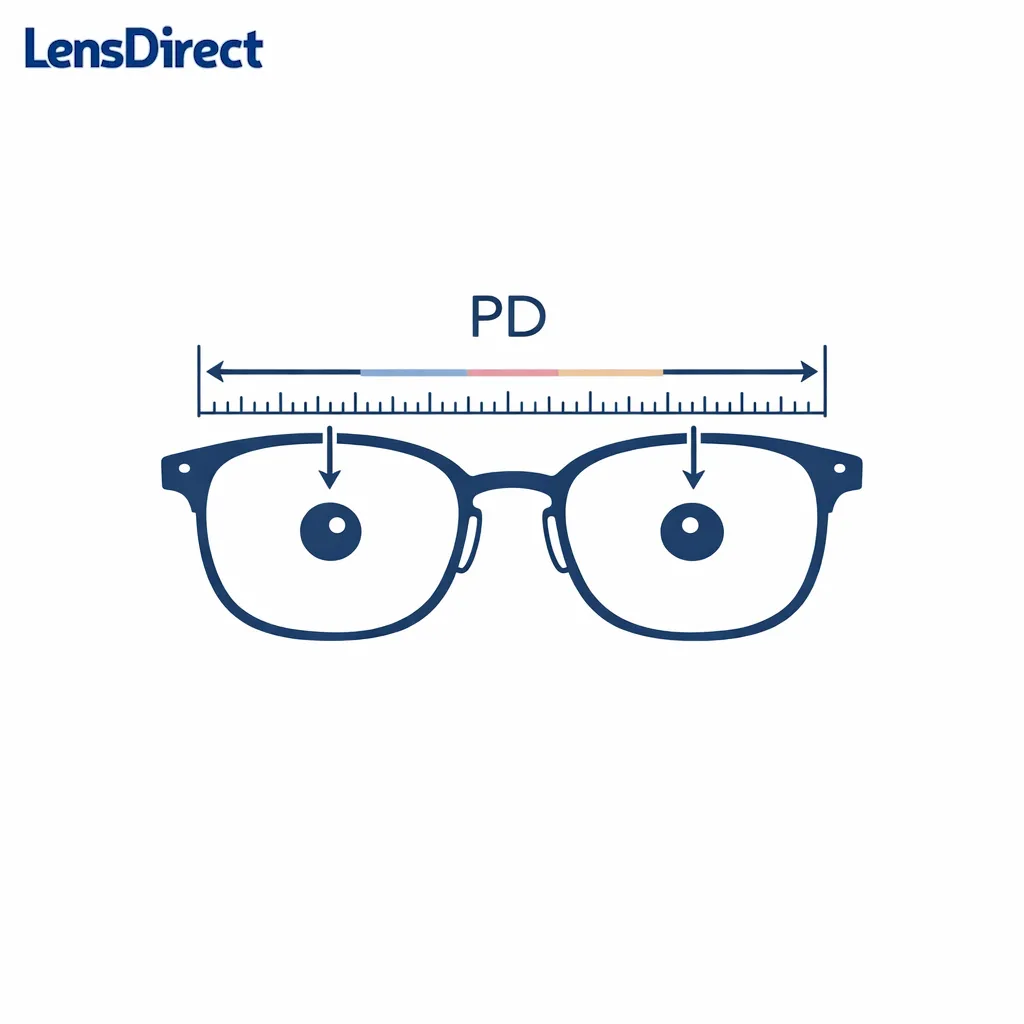
Pupillary distance, or PD, is the measurement used to line up your lenses with your eyes. If you do not already have it, measure carefully and avoid guessing.
For simple prescriptions, a small mistake may be annoying. For more complex orders, it can matter much more, which is why accurate measurements belong in every online glasses price comparison.
Frame measurements and face-shape considerations
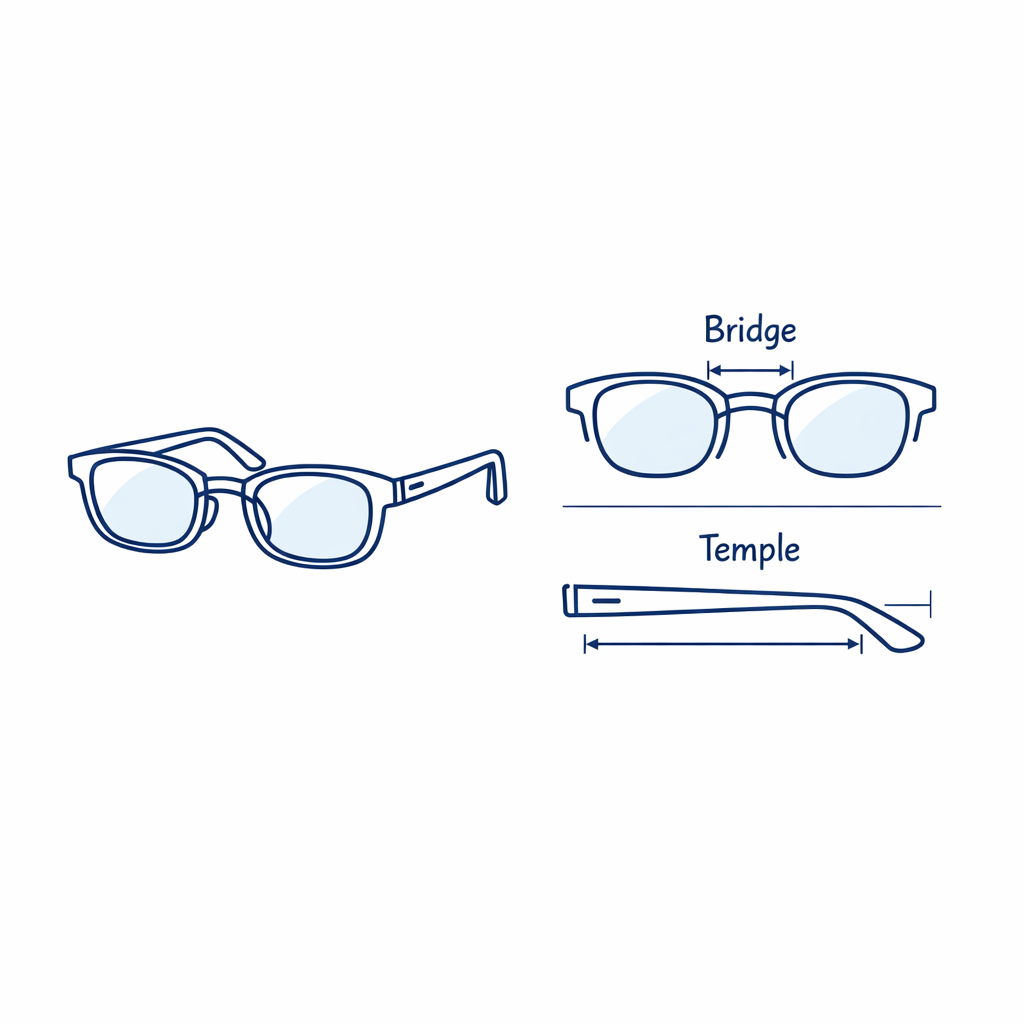
The easiest starting point is the pair you already like. Use your current glasses as the comfort baseline, then compare those dimensions with the sizing information on the product page.
If you want a shortcut on style and proportion, use a face-shape guide before you browse too deeply. It is a practical way to filter out frames that are unlikely to work.
Affordable glasses websites by shopper type
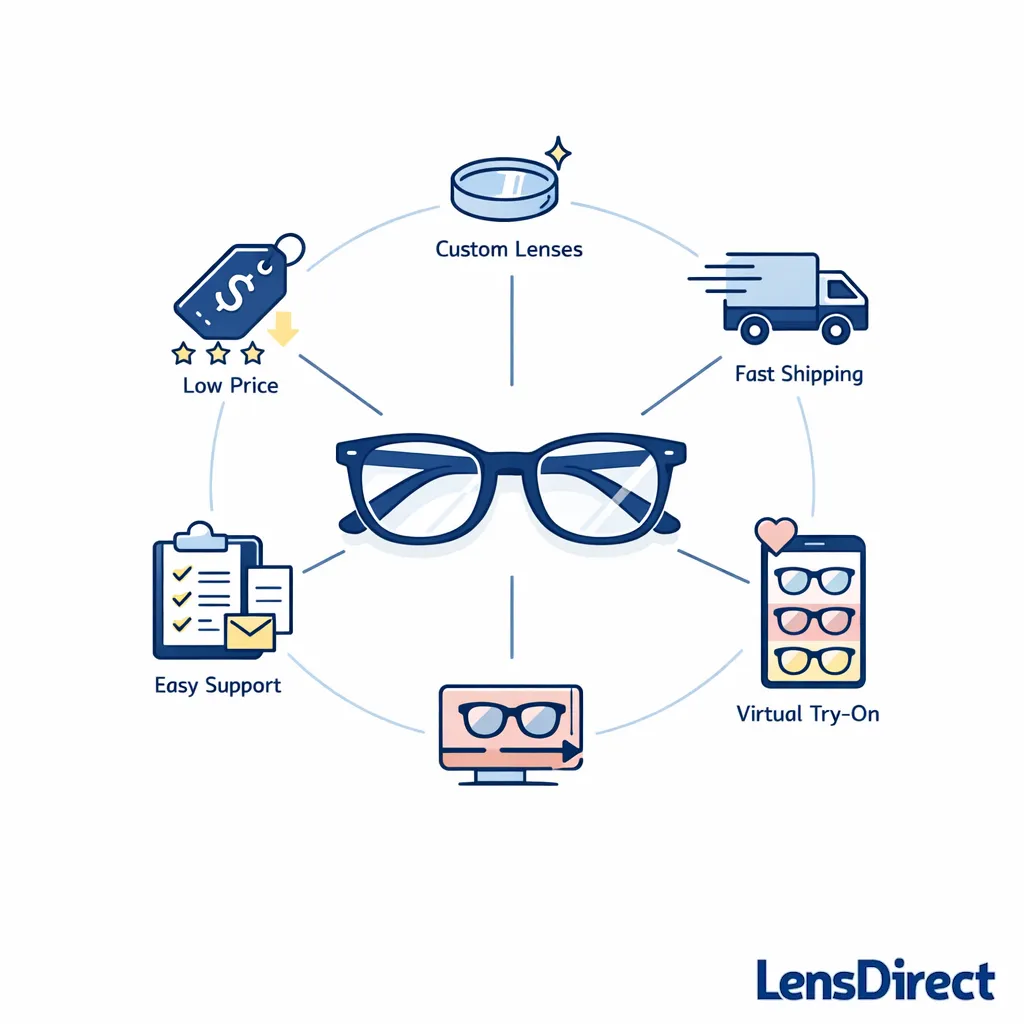
If you are wondering which online retailer is best for glasses, the honest answer is that the best one depends on how you shop and what you need.
Lowest upfront price
This approach fits shoppers with a straightforward prescription, flexible style preferences, and time to compare carts carefully. Just remember that the cheapest frame is not always the cheapest finished order.
Best for lens customization
If your prescription is more specific or your lens preferences matter a lot, prioritize sites with clear option menus and easy-to-understand upgrade pricing. A slightly higher base frame price can still win if the lens choices are easier to match to your needs.
Best for faster shipping
If speed matters, choose stores that make timelines easy to understand before payment. The best value here is usually the site with the most predictable arrival date, not necessarily the cheapest shipping label.
Best for insurance and FSA/HSA shoppers
These shoppers should prioritize itemized receipts, reimbursement support, and easy documentation. If you are paying with benefits, the cleanest paperwork can be worth as much as a coupon.
Best for trying styles at home or virtually
If fit anxiety is your biggest barrier, look for better try-on support instead of the absolute lowest sticker price. The right style tool can keep you from ordering two or three “cheap” pairs that do not work.
Common mistakes and misconceptions
Are cheap glasses online good quality?
Sometimes, yes. But “cheap” and “good value” are not the same thing. Good value usually shows up in clear prescription options, understandable lens choices, accurate sizing information, and a return policy you can live with.
Is Warby Parker better than Zenni?
Not universally. One shopper may prefer a smoother buying experience and another may care more about a lower starting price. The smarter comparison is what is included, how fast the order arrives, how returns work, and how much your actual prescription changes the total.
Is Zenni Optical legit?
A better question than “Is this brand legit?” is “Does this site clearly explain what I am buying?” Look for transparent prescription categories, real delivery estimates, lens-option detail, and visible return terms before you trust any retailer with your order.
Do I need glasses if I am getting headaches?
Do not use online shopping to self-diagnose. If headaches are the reason you are browsing, pause and book an eye exam first so you are solving the right problem before you spend money.
What to do next
- Get your current eyeglass prescription and confirm it is still usable for ordering.
- Measure your PD carefully before you build a cart.
- Decide which lens upgrades are must-haves and which are just nice-to-haves.
- Compare at least three finished carts, including shipping and return terms.
- If your existing frame still works, compare the cost to replace your lenses instead of buying a full new pair.
Find the best value for your next pair
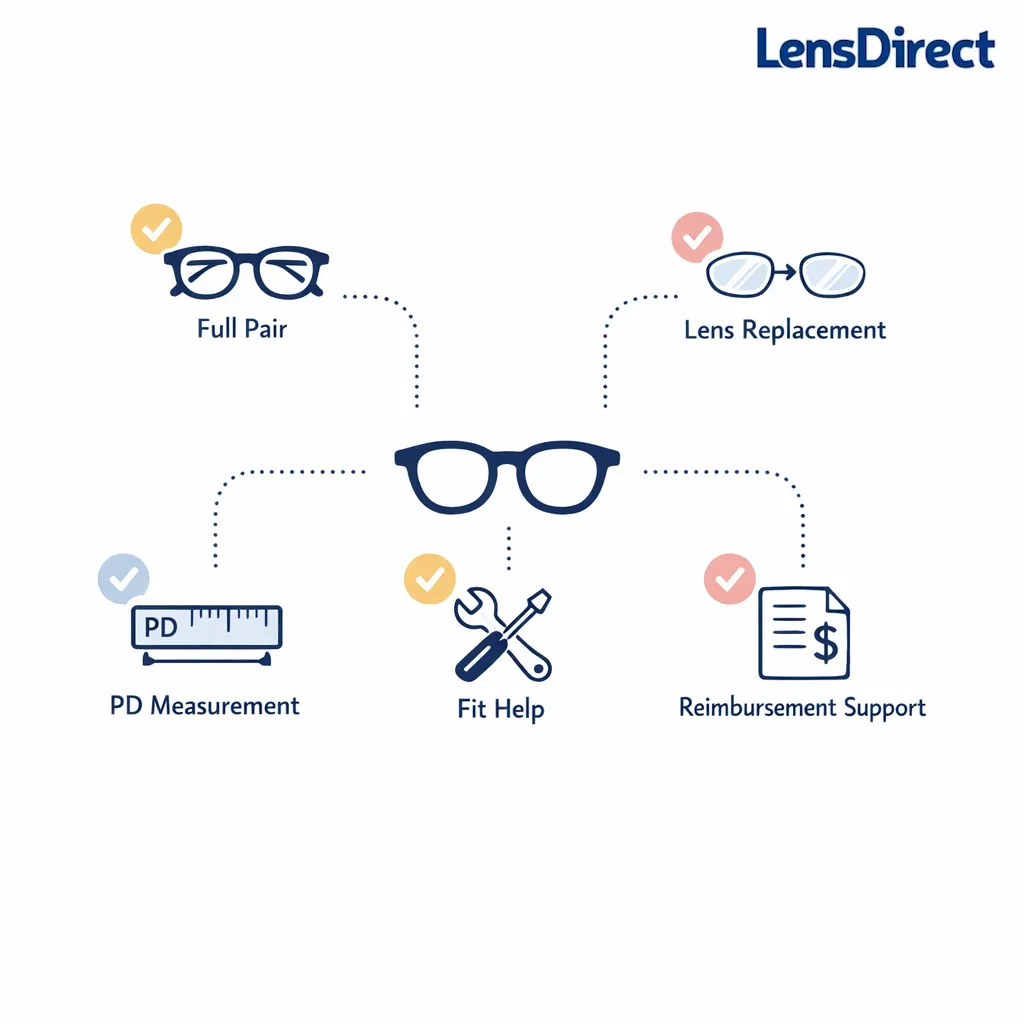
If you want a simpler way to shop by job-to-be-done, LensDirect can help you compare full-pair and lens-only options without overcomplicating the process. You can shop glasses, shop sunglasses, or shop contacts if you are building a more complete eyewear lineup.
If saving money means keeping the frame you already love, start with replace your lenses, choose full-service replacement if you want to send your frames in, or use DIY replacement lenses if your frame is eligible. And if you still need help with fit, reimbursement, or measurements, use LensDirect to find your fit, learn how to get reimbursed by your insurance, and learn how to measure your pupillary distance.
Author

Subscribe to our email newsletter to get the latest posts delivered right to your email.