
If menus look sharper when you hold them farther away, you are probably shopping for reading glasses because of presbyopia, the age-related loss of near focusing ability that commonly starts around age 40. It is a normal change, but the way you correct it can make a big difference in comfort, cost, and how often you actually wear your glasses.
This guide is for people buying eyewear online and trying to sort through reader strengths, lens types, frame comfort, and the question of whether over-the-counter readers are enough. You will learn how to choose a starting strength, what lens options mean in plain English, when prescription readers are worth it, and how to order more confidently from a site like LensDirect.
What reading glasses are and who needs them
Reading glasses are near-vision lenses. Their job is simple: make close tasks like reading a book, checking your phone, threading a needle, or looking at a recipe feel clear and less tiring.
The need for readers often creeps up slowly. You may start pushing text farther away, turning up the lights, or getting tired during close work as presbyopia continues to develop gradually through midlife and later adulthood.
Some people do great with a basic pair they keep in a bag or at a desk. Others need a more customized solution because their eyes do not work the same way, they want one pair for several distances, or their prescription includes astigmatism correction.
Over-the-counter readers are the quick, convenient option. Prescription reading glasses are the tailored option. Neither is automatically better for everyone. The right choice depends on how you use them and how precise your vision needs are.
How to choose the right reading glasses strength
What diopters mean
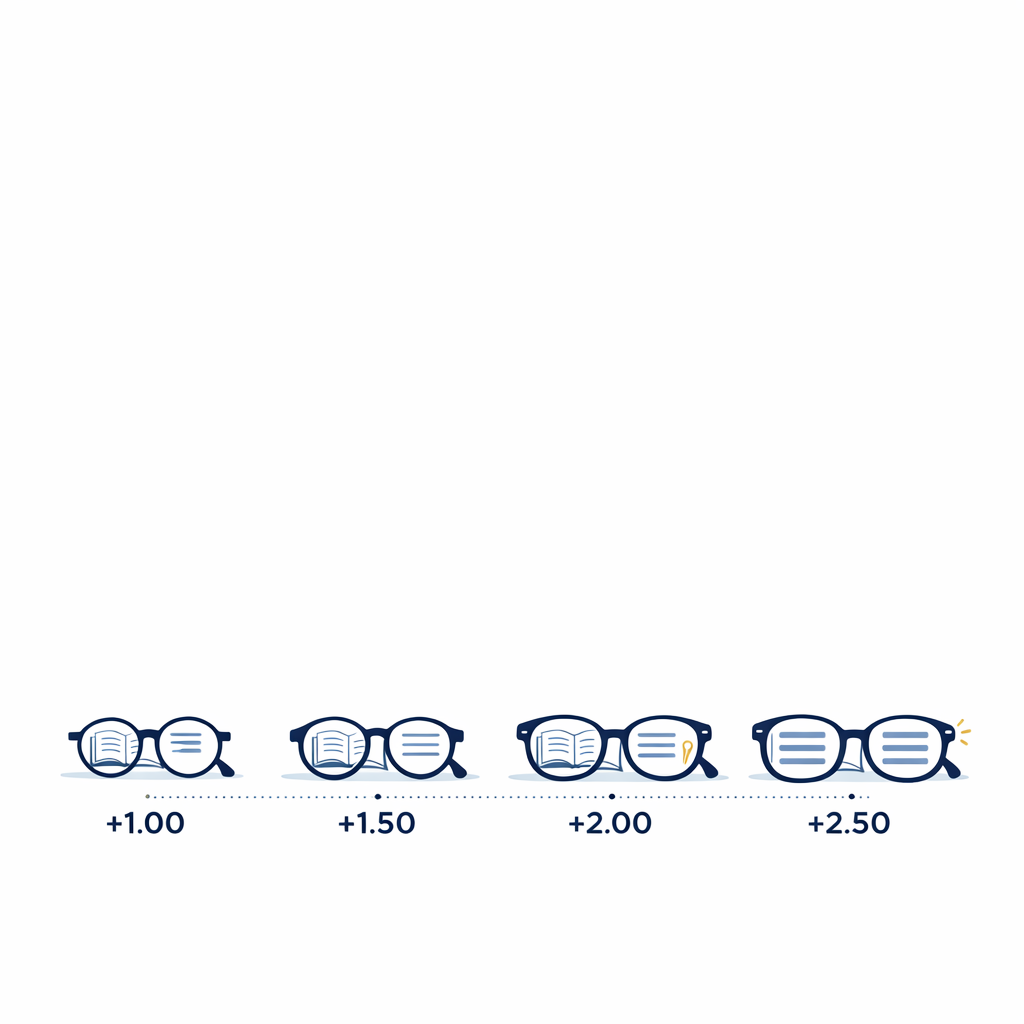
The strength number on readers is the lens power, measured in diopters. In shopping terms, that is the plus number you see on the frame or listing, such as +1.00, +1.25, +1.50, or +2.00.
As the plus number goes up, the lens gives more near magnification. More power is not automatically better. The goal is not the strongest pair you can tolerate. The goal is the weakest pair that lets you read comfortably at your normal distance.
Common strength ranges and increments
Most readers are sold in small step-ups in power. That is why two nearby options can both feel usable, but one will usually feel more natural over time.
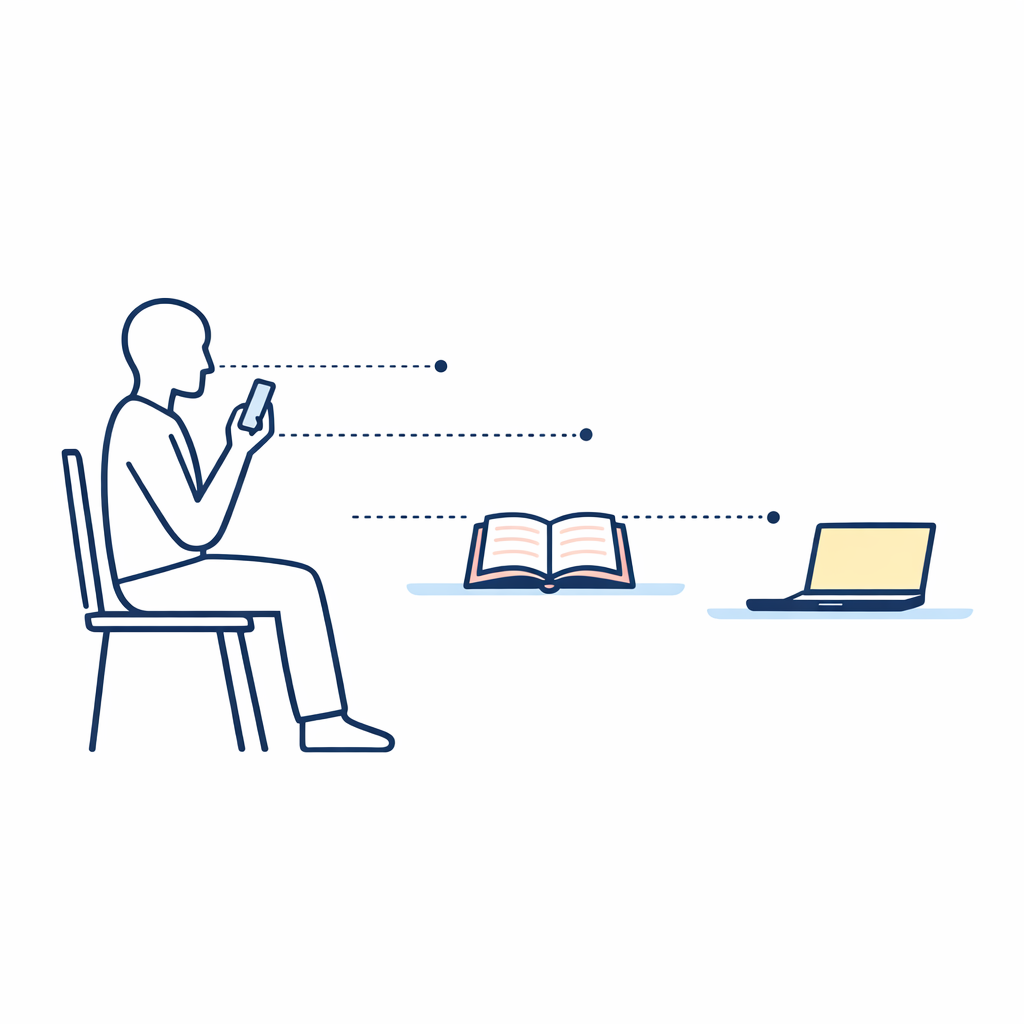
A lower strength usually works better when the task sits farther away, like a laptop or desktop monitor. A higher strength usually works better when the task is closer, like a paperback, a medicine label, or your phone.
- Lower powers are often a better starting point for first-time readers and longer working distances.
- Mid-range powers are common for everyday book and phone reading.
- Higher powers are more likely to feel right for very close work or for people whose presbyopia has progressed more.
How to test your strength at home
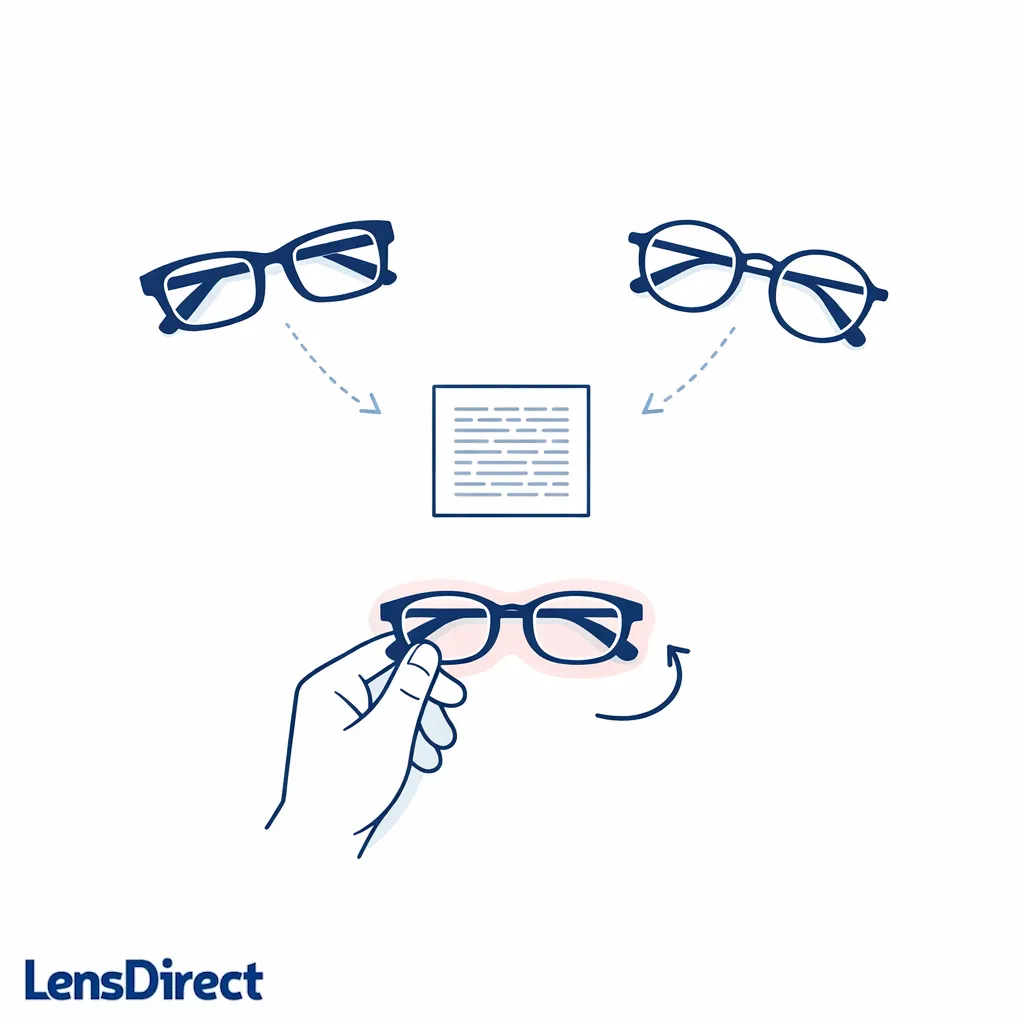
If you are trying over-the-counter reading glasses, keep the test simple. Use the smallest print you actually read in real life, stand or sit in your usual lighting, and hold the item at your normal reading distance.
- Start with the lowest strength that seems realistic.
- Read for a full minute, not just a quick glance.
- Compare it with one step weaker and one step stronger.
- Choose the pair that feels easiest, not the pair that makes tiny print look aggressively sharp.
- If you have to keep moving the page closer and farther away, test again before you buy multiple pairs.
A common mistake is choosing a power that only works when you hold the page at an unnatural distance. If you read books in your lap, cook from a counter, or work at a monitor, test for that specific setup.
Age-based guidelines and why they are only a starting point
Age can give you a rough starting point because near focus usually changes gradually over time. But age alone is not enough to pick the best power, since your lighting, screen habits, posture, and preferred working distance all change what feels comfortable.
That is why age charts are useful for narrowing down options, not for making the final decision. Two people the same age can prefer different strengths because they do not read at the same distance or for the same amount of time.
Signs your readers are too strong or too weak
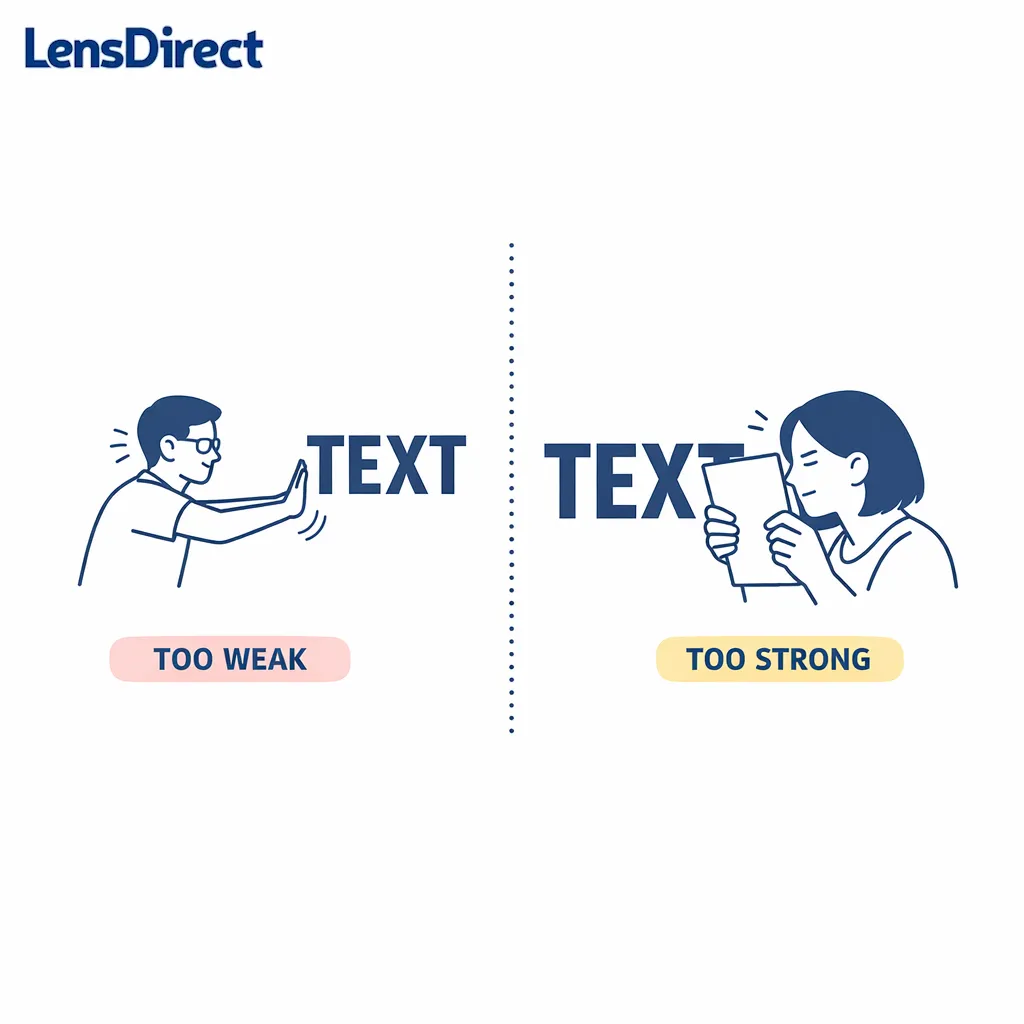
Your readers may be too weak if you still squint, need brighter light than usual, or have to push reading material farther away to clear it up. You may also notice that you can read, but only for a short stretch before your eyes feel tired.
Your readers may be too strong if you feel like text only looks right when it is uncomfortably close, or if glancing up across the room feels more disruptive than expected. A pair that seems “extra crisp” for ten seconds can become annoying after twenty minutes.
If one eye feels noticeably worse than the other, or you keep struggling to find a power that feels balanced, stop guessing. That is usually the point where prescription reading glasses make more sense.
Reading glasses lens options explained
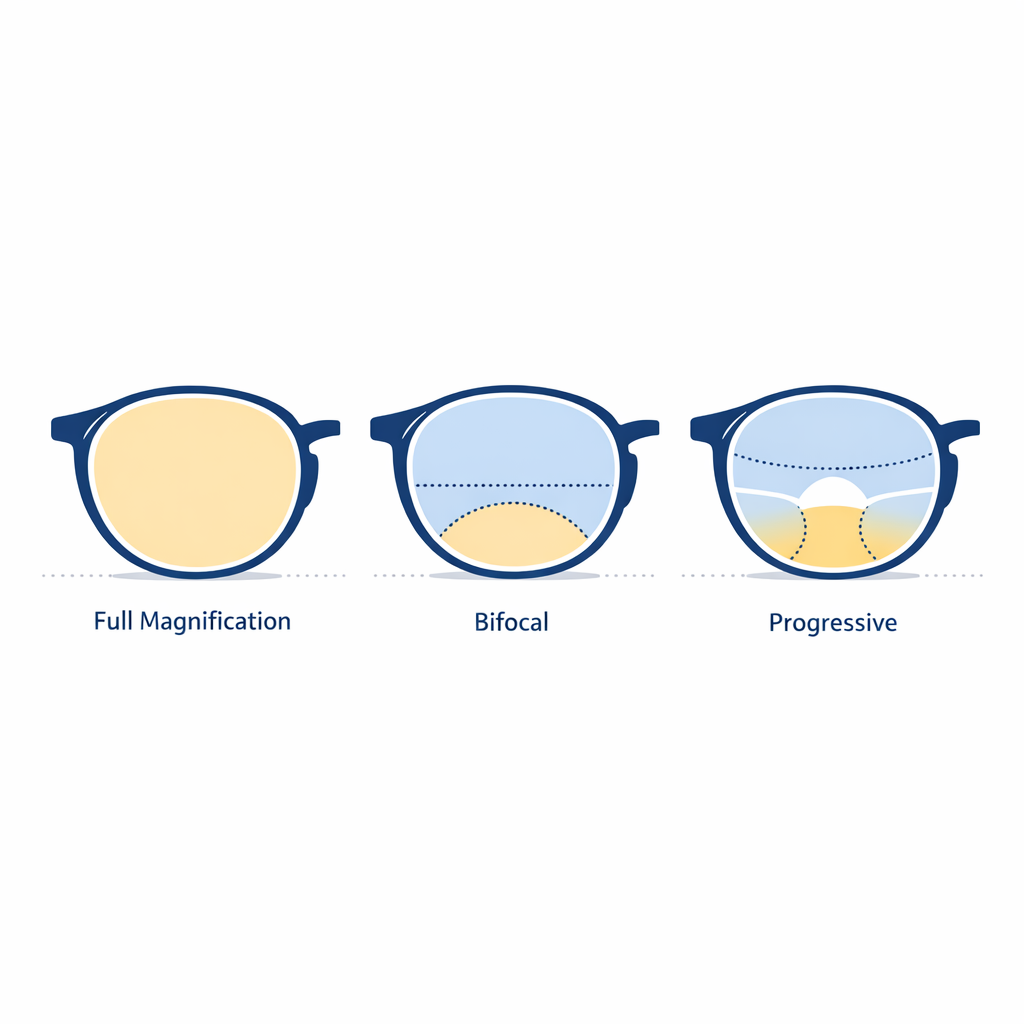
Full magnification lenses
These are classic readers. The whole lens is set to one near power, so the entire view is optimized for close work.
They are great for reading, hobbies, bills, labels, and quick phone checks. They are less useful if you want to look down at a page and then straight ahead at a room without taking them off, because the full lens is built for near vision.
Bifocal-style readers
Bifocal-style readers split the lens into zones. You get a reading area for close work and a clearer area above for looking farther away.
This style can be useful if you want to move between near tasks and quick distance glances without constantly removing your glasses. They are practical, but some people notice the line or prefer a smoother transition.
Progressive readers
Progressive readers blend lens powers more gradually. They are designed for people who want a more seamless feel than a lined bifocal.
If you spend a lot of time shifting between a book, a countertop, and people across the room, progressive reading glasses can feel more natural. They do take a little adjustment, so give yourself time before deciding whether they are right for you.
Blue light filtering options
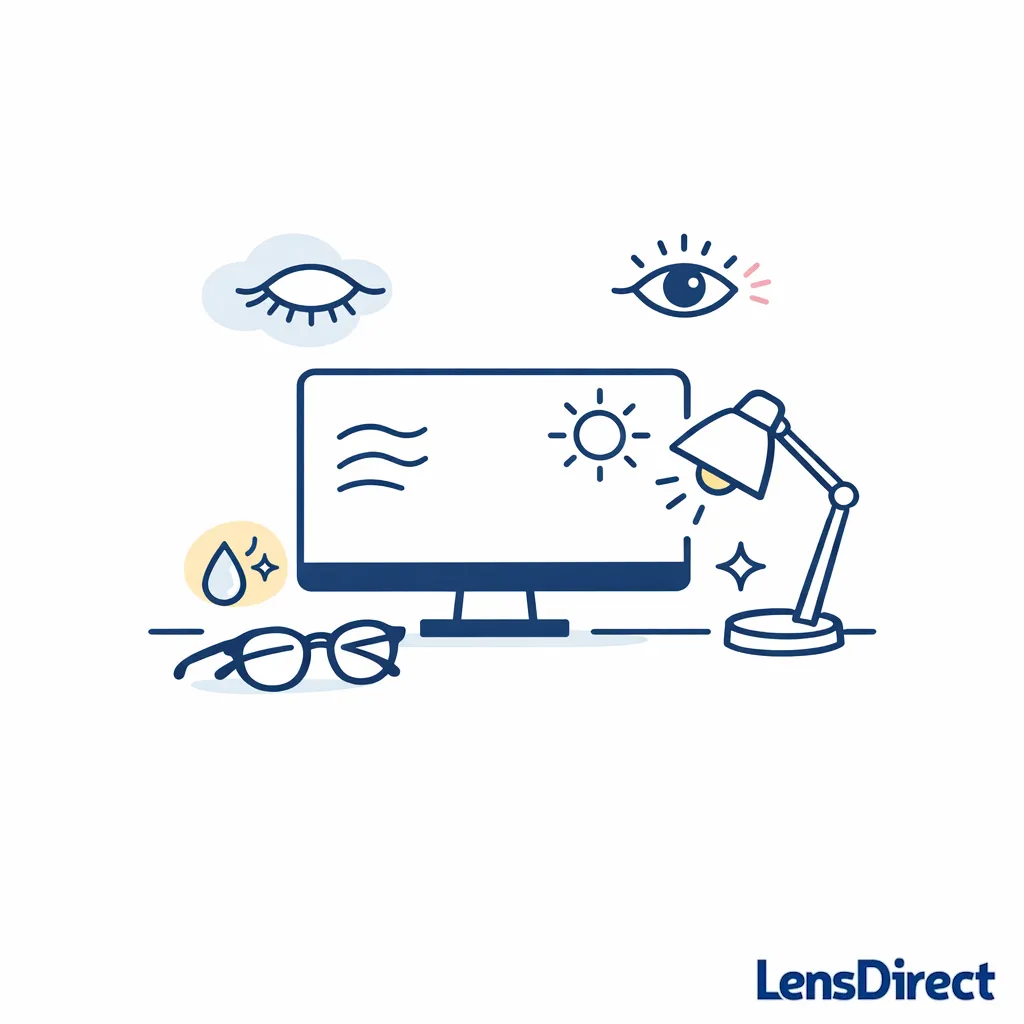
If your issue is more “my eyes feel tired at the computer” than “I cannot read this menu,” think about the task before you think about the coating. In many cases, computer vision syndrome is commonly tied to prolonged near work, glare, dry eye, and reduced blinking.
That means a blue light filter can be a preference feature, but it does not replace the right reading power or better screen habits. For many people, a slightly different strength for computer distance matters more than any add-on coating.
Prescription reading glasses vs non-prescription readers
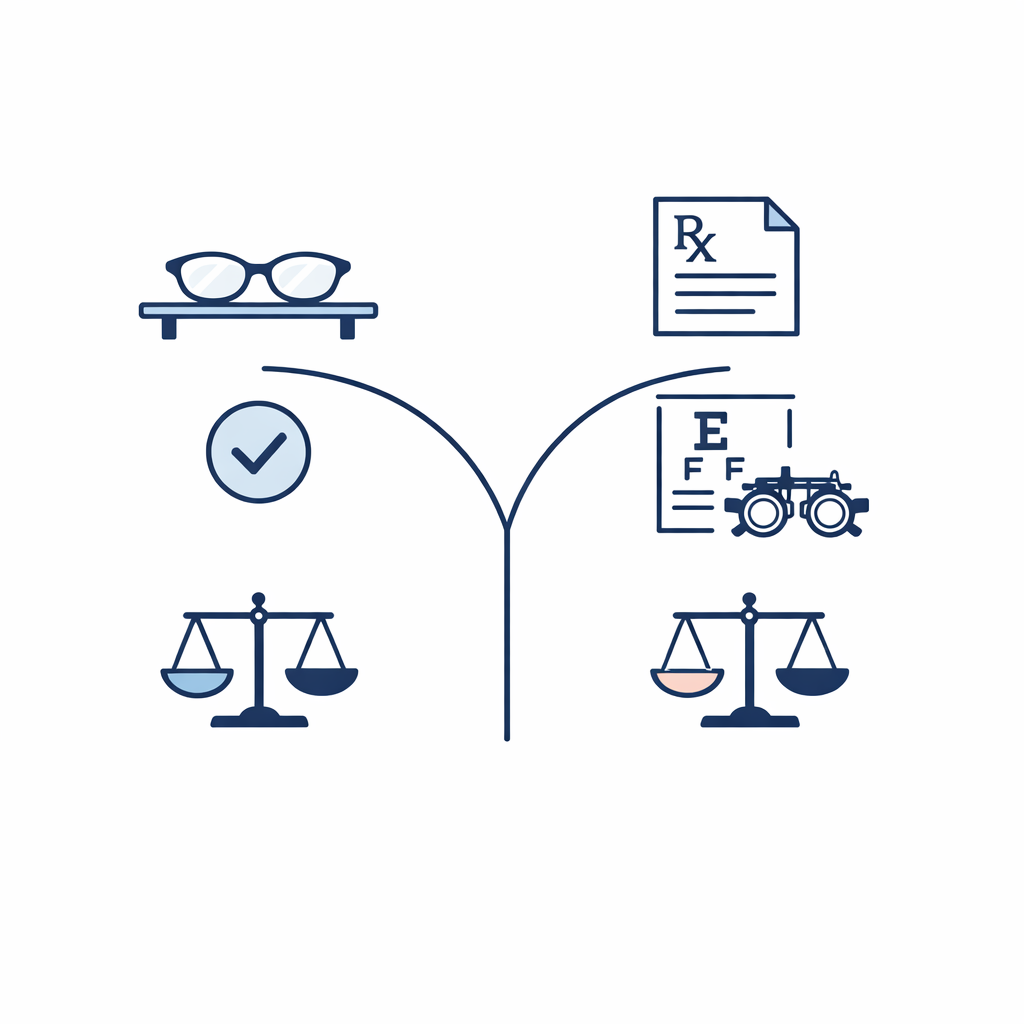
Non-prescription readers are fast and budget-friendly. They are best when one simple power feels clear and comfortable for the specific near task you need them for.
Prescription readers are better when you want the lens built around your exact needs. That can mean different strengths for each eye, correction beyond simple magnification, or a custom setup for reading, office work, hobbies, or multitasking.
How to pick frames that are comfortable for daily wear
Lightweight materials like TR-90, titanium, and metal
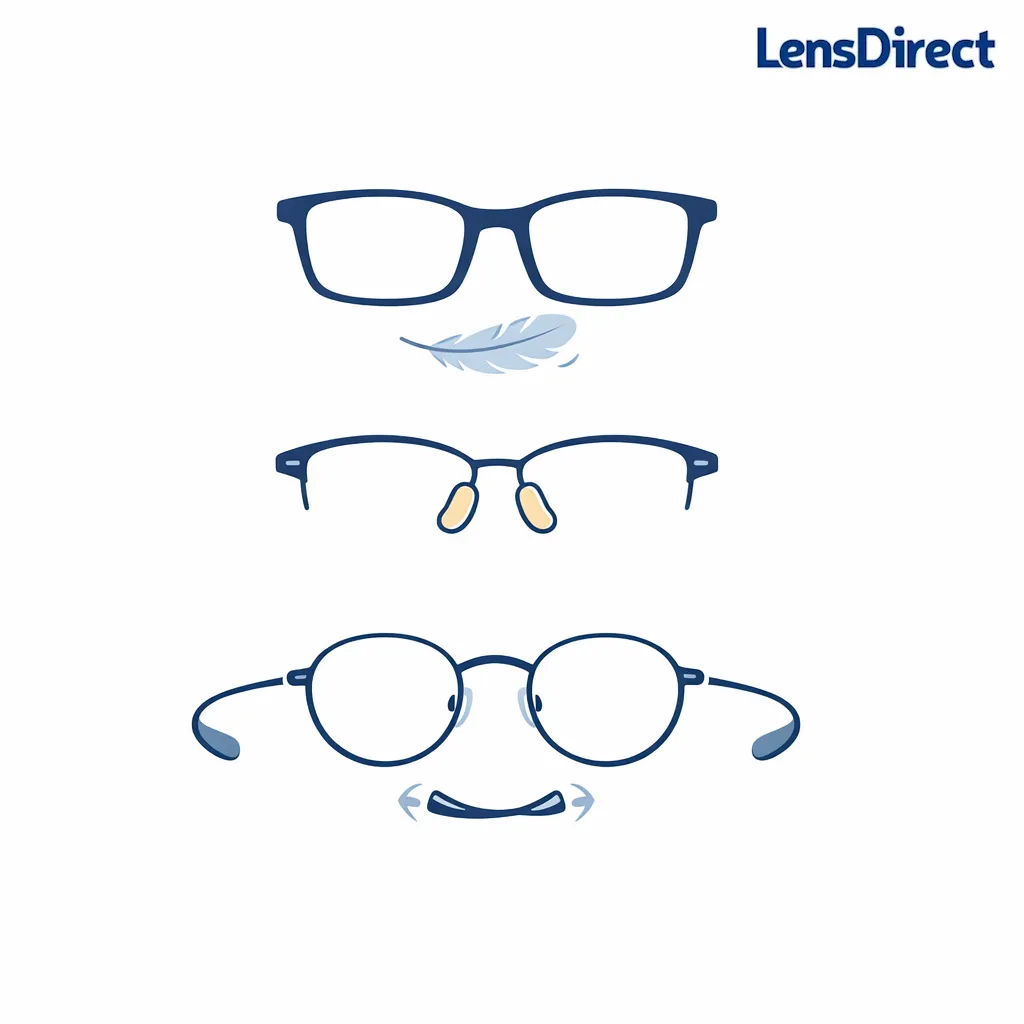
If you put readers on and off all day, weight matters. Lightweight glasses usually feel better on the nose, slide less, and are easier to keep with you instead of leaving on a table.
TR-90, titanium, and thin metal styles are popular because they keep the frame light without looking flimsy. If you are shopping for the best reading glasses for daily wear, comfort usually beats trendiness after the first week.
Full-rim, semi-rimless, and rimless choices
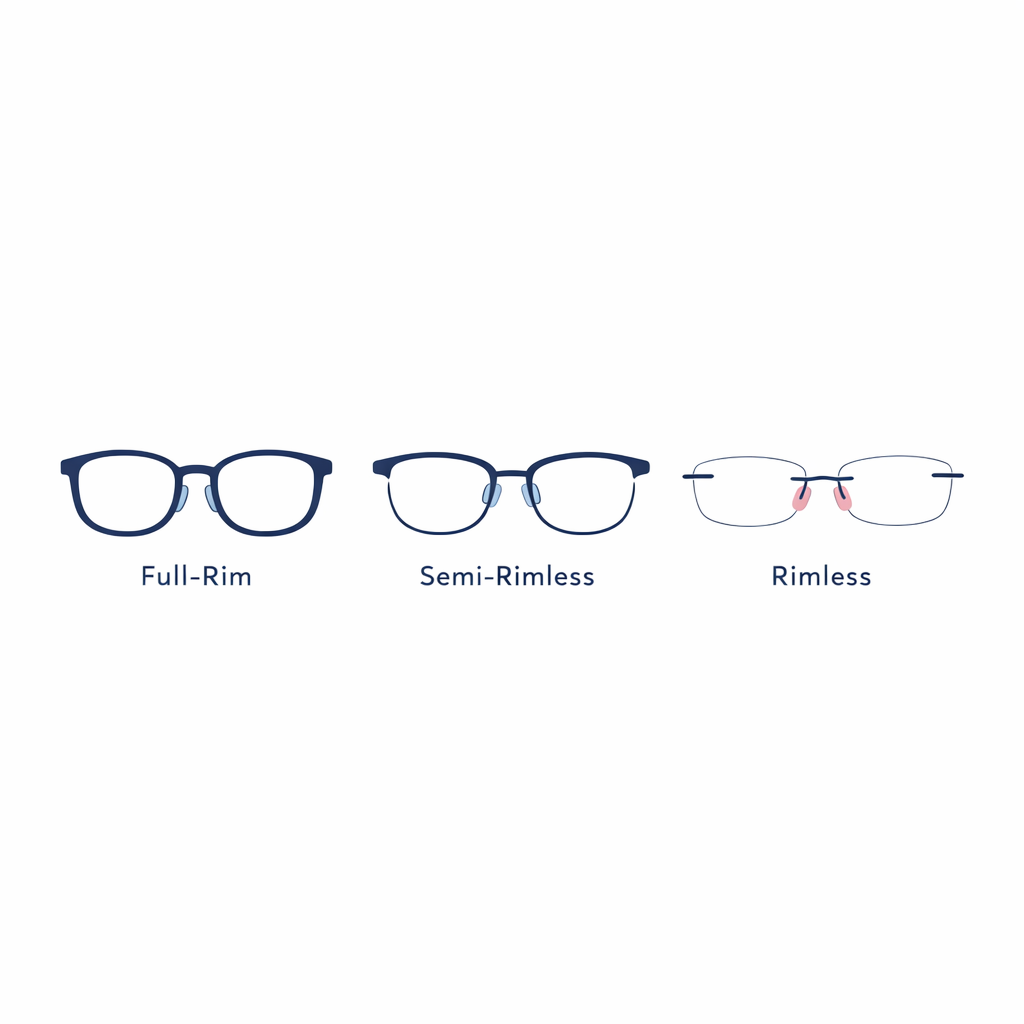
Full-rim frames feel the most substantial and often give you the most style variety. They are a smart pick if you want durability or a bolder look.
Semi-rimless frames can feel lighter and cleaner. Rimless frames often feel the least noticeable on your face, which is appealing if you want lightweight glasses that disappear while you work.
Fit, face shape, and intended use
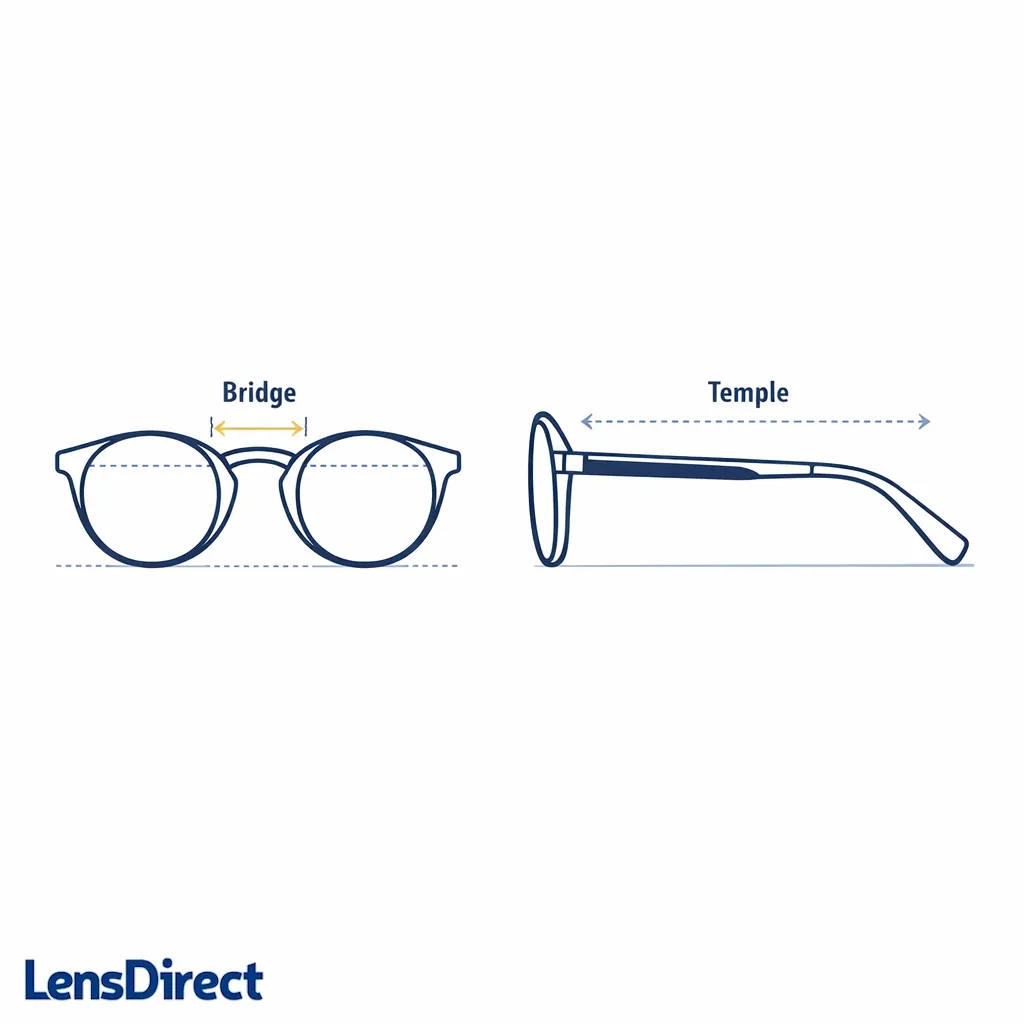
Do not buy readers based on front-view style alone. Look at bridge fit, temple length, overall width, and whether you tend to wear glasses low or high on your nose.
Also think about the job the frame has to do. A pair for ten-minute phone checks can be different from a pair for two hours of spreadsheet work. If you read outdoors, a sunglass-friendly option may matter more than ultra-thin styling. If you mostly use readers at a desk, stable nose fit matters more.
And if you are comparing reading glasses for women or reading glasses for men, use those labels as starting filters only. Fit, lens height, and comfort are more important than the gender category on the product page.
When over-the-counter reading glasses are enough
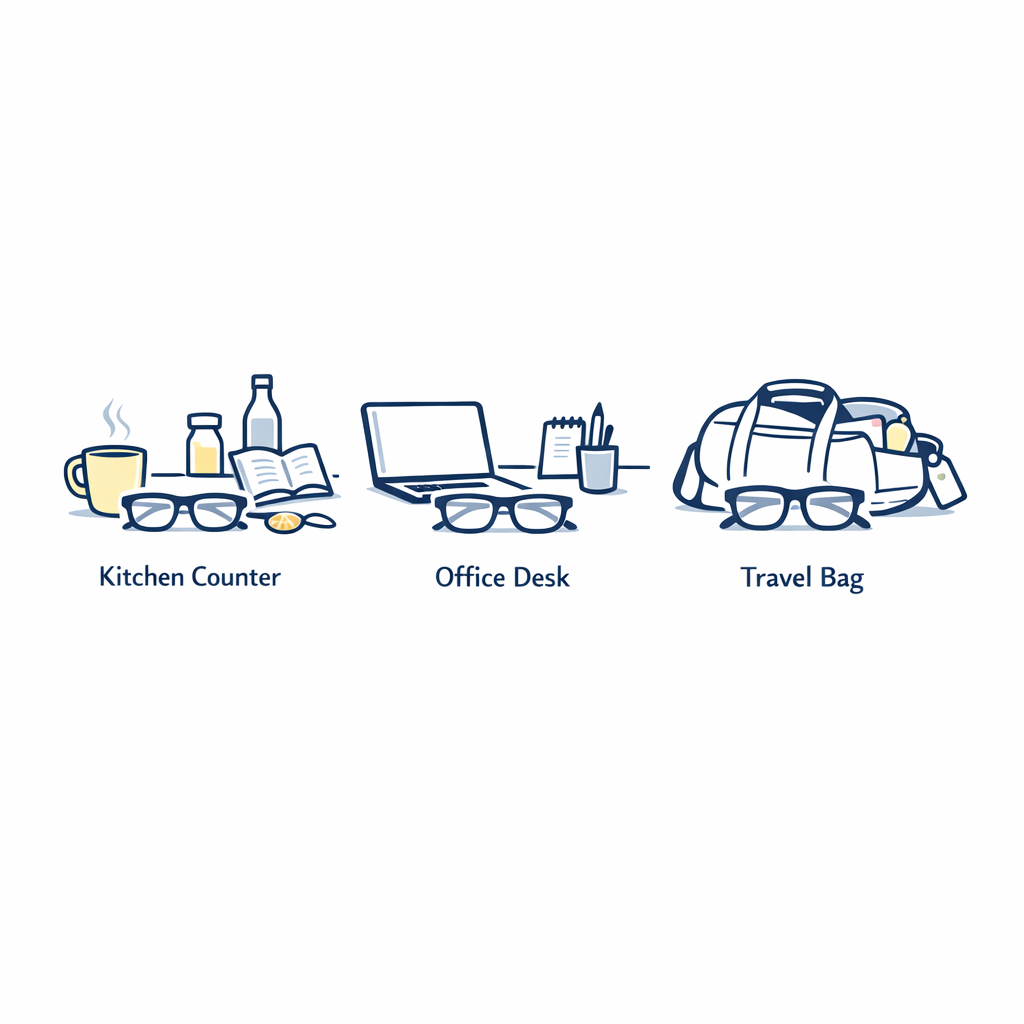
Over-the-counter reading glasses are often enough when your goal is simple near help, not all-day custom correction. They make the most sense when a single power feels balanced, your close-up tasks are straightforward, and you are comfortable taking the glasses off when you are done.
They are also a practical choice when convenience matters. Many people like keeping one pair in the kitchen, one at work, and one in a travel bag instead of treating readers like a single precious item.
If you mainly read a book, check your phone, or scan labels now and then, OTC readers can be a very reasonable solution. They are especially useful as backups even if you later decide to buy a prescription pair.
When you should buy prescription reading glasses instead
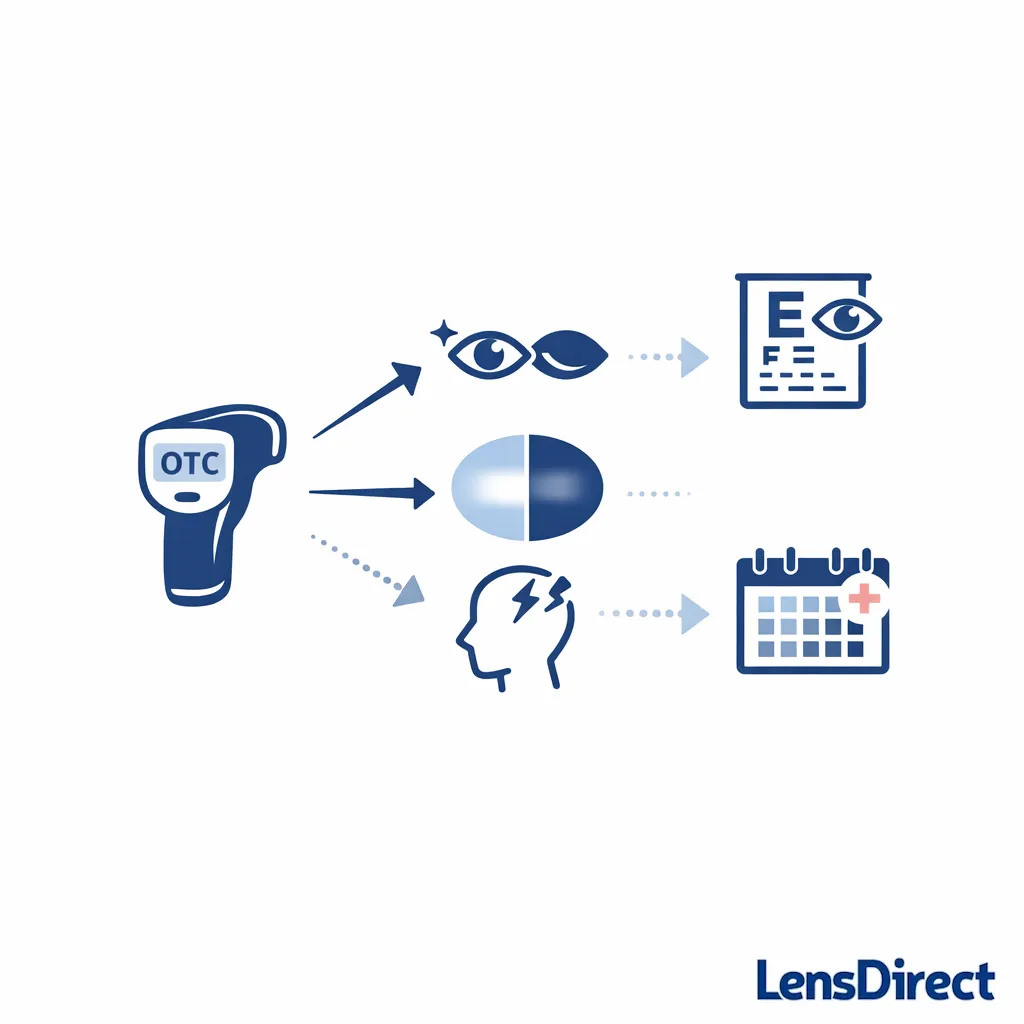
Prescription readers are usually the better buy when one eye always seems to do more work, your vision feels inconsistent from pair to pair, or you want one pair optimized for a very specific distance. They also make more sense when you wear readers for long sessions and start noticing comfort issues, not just clarity issues.
If you have not had an eye exam lately, a comprehensive dilated eye exam can also uncover eye problems that may not cause early symptoms. That is important because not every “I need stronger readers” feeling is just normal presbyopia.
Prescription readers are also the safer route if your blur came on suddenly, one eye seems much worse than the other, or headaches keep showing up with close work. Those are situations where DIY trial and error should stop and an eye doctor should weigh in.
When it makes sense to buy reading glasses online
Price, variety, and lens customization
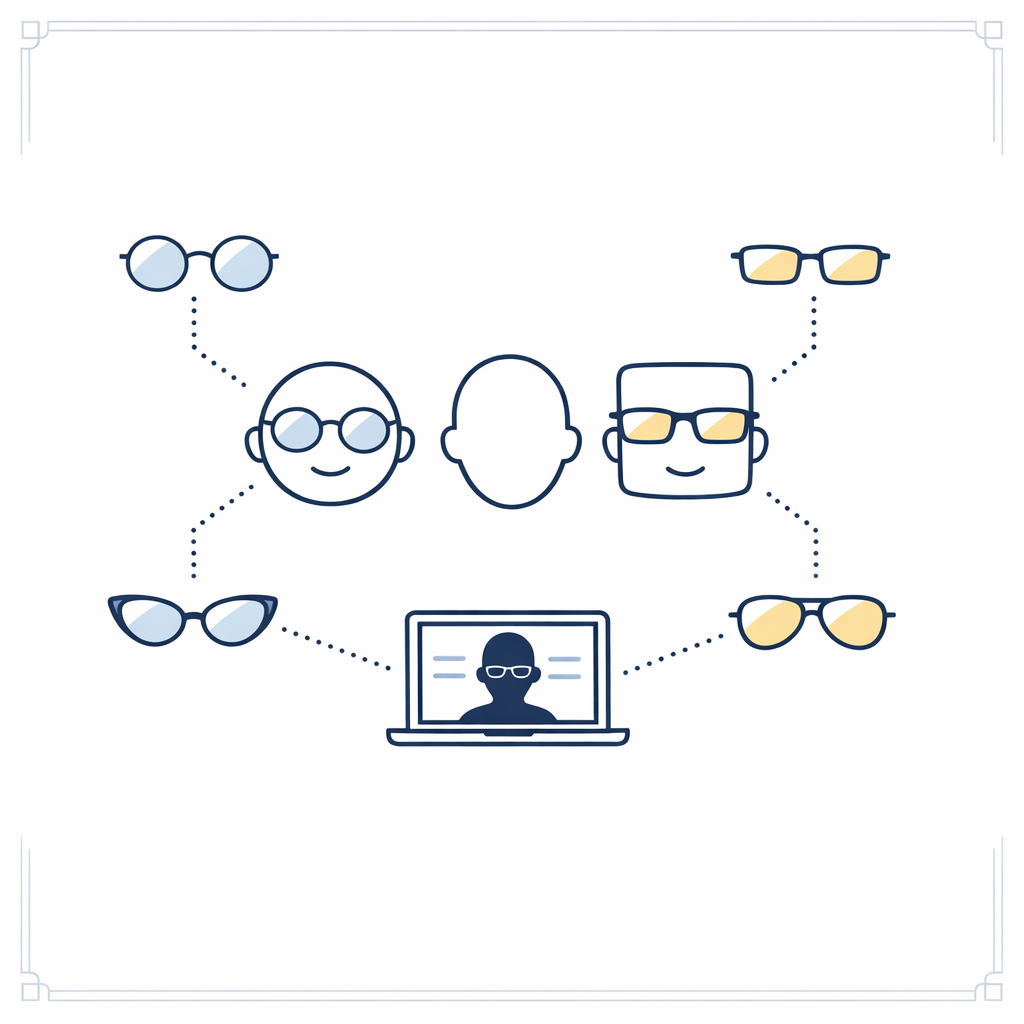
Buying reading glasses online makes sense when you want more choice than a drugstore rack gives you. You can compare sizes, materials, lens styles, and colors at your own pace instead of settling for whatever is hanging near the checkout line.
Online shopping is especially useful if you already know what you like. Maybe you want lightweight frames, progressives, bifocal-style readers, or a second pair in a different color. It is much easier to compare those details when every specification is listed clearly.
What measurements and prescription details to have ready
If you are buying prescription reading glasses, start with your current prescription. Under the FTC Eyeglass Rule, you have the right to get a copy of your prescription after an eye exam, so do not feel like you have to guess.
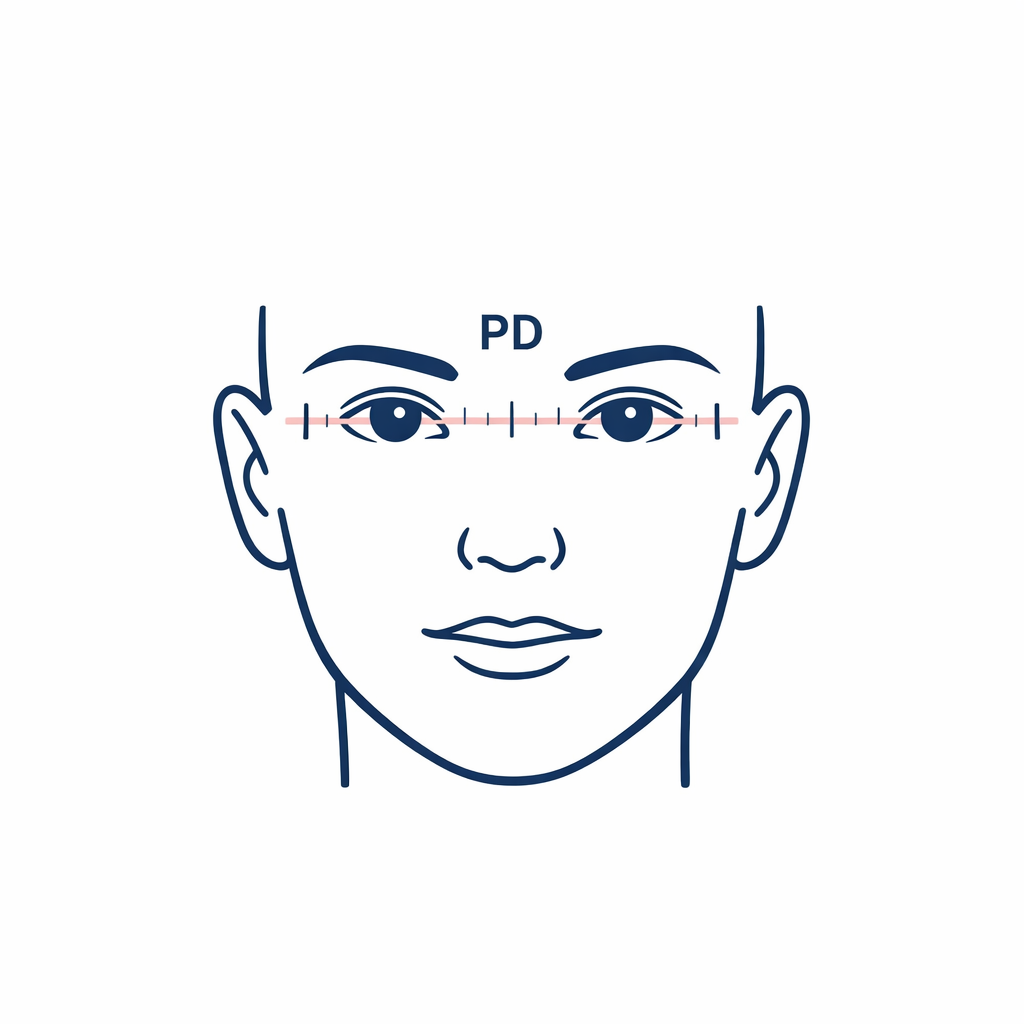
You should also have your pupillary distance, or PD, plus a sense of your current frame measurements if you already own a pair that fits well. Those details make online ordering much smoother and reduce the chance of getting a frame that looks right on screen but feels wrong on your face.
What to check before placing an order
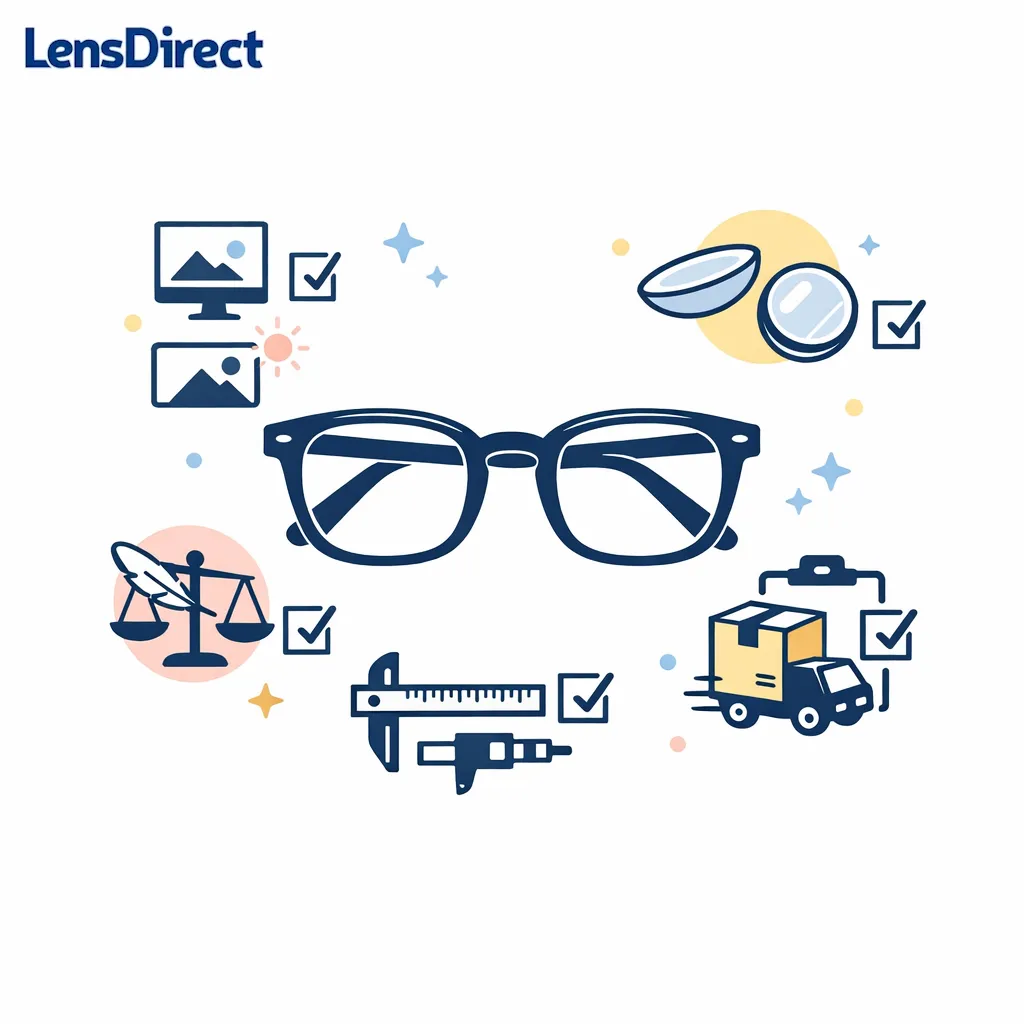
- Use case: Are these for books, phones, computers, hobbies, or all-purpose around-the-house wear?
- Lens type: Full reader, bifocal-style, progressive, or sun reader.
- Frame weight: Especially important if you wear them for long stretches.
- Lens height: More height can help if you want a larger reading area.
- Measurements: Compare width, bridge, and temple length to a pair you already like.
- Strength strategy: If you are between powers, think about your normal reading distance before you choose.
Return policy, shipping, and warranty checklist
Before you buy, make sure the return process feels as clear as the product page. You want to know how long you have to test the glasses, whether prescription orders are treated differently, and what happens if the fit is off.
Also check shipping timing if you need the pair for work, travel, or an upcoming event. A great price matters less if the glasses arrive too late or you cannot exchange them easily.
Common mistakes to avoid
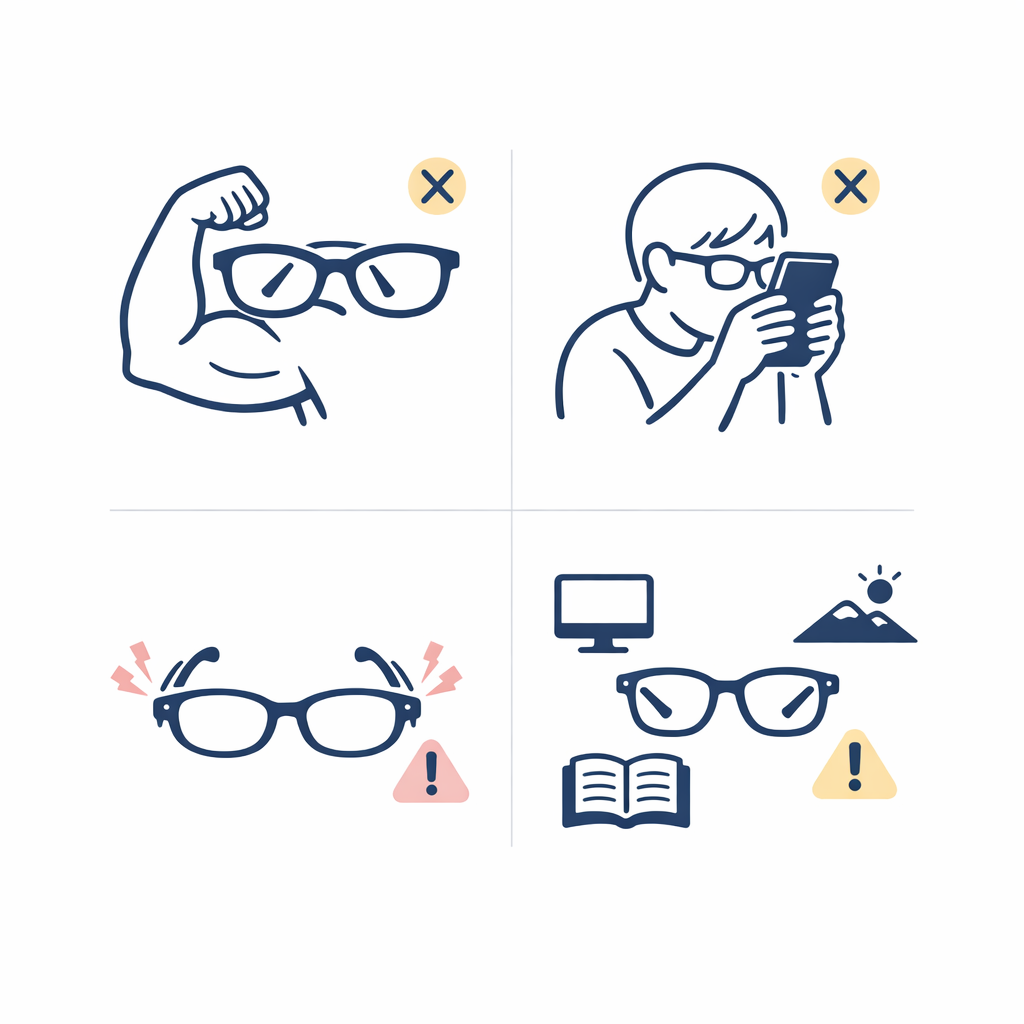
- Buying too strong on purpose. Stronger is not more advanced. It can force you into an awkward reading distance and feel tiring fast.
- Testing on the wrong task. A power that works for a novel may not work for a laptop or a craft table.
- Ignoring comfort. The best reading glasses are not just clear. They are also light, stable, and easy to wear for the amount of time you need them.
- Assuming cheap and expensive pairs are identical. Price does not guarantee quality, but clearer optics, better fit, stronger hinges, and more lens choices can absolutely improve the experience.
- Using OTC readers to solve every vision problem. If the glasses never feel quite right, that is useful information. Do not keep forcing a simple fix onto a more specific need.
FAQs about reading glasses
How do I know which strength reading glasses to get?
Start with the weakest power that makes your normal reading material clear at your normal distance. Then compare one step lower and one step higher. Keep the pair that feels easiest to use for a few minutes, not just the one that makes print pop for a moment.
Is it okay to buy over-the-counter reading glasses?
Yes, if they feel balanced and comfortable for simple near tasks. OTC readers are a good option when you want convenience and one basic power works well. If the two eyes do not feel equally clear, move up to a prescription pair.
Are cheap reading glasses just as good as expensive ones?
Sometimes, but not always. A low-priced pair can be perfectly fine for backup use, while a more premium pair may give you better fit, lighter materials, improved durability, or lens options that make daily wear easier. Think about value, not just price.
What brand of reading glasses is best?
The best brand is the one that gives you the right strength, lens style, fit, and return flexibility for how you actually read. Brand names matter less than matching the glasses to the job. A stylish pair you never wear is not better than a simple pair that feels great every day.
What to do next
- Decide whether you need readers for books and phones, computer distance, or mixed use.
- Test strength based on your real reading distance, not a random chart alone.
- If one eye seems off, or you keep failing the at-home test, book an eye exam instead of buying stronger and stronger OTC pairs.
- Choose a frame that matches how long you will wear it. For frequent use, lightweight glasses are often worth prioritizing.
- Before ordering online, gather your prescription, PD, and frame measurements.
- Buy with a specific use case in mind, and consider adding a backup pair once you know what works.
Start with the Pair You Will Actually Wear
If you want reading glasses that feel easy to use, start by matching the strength to your real task and the frame to your real routine. LensDirect can help whether you want a fresh pair, a sun option for outdoor reading, contacts for switching back and forth, or new lenses in frames you already love.
- Shop Glasses if you are ready to compare frames for everyday reading or prescription wear.
- Shop Sunglasses if you read outdoors or want a second pair for bright conditions.
- Shop Contacts if you alternate between contacts and readers.
- Replace Your Lenses if your current frames still fit and you only need updated optics.
- If you already have frames you love, compare Full-Service Replacement and Order Replacement Lenses to choose the easier path for your setup.
- Use Find Your Fit and Learn How to Measure Your Pupillary Distance before you place an order.
- If you plan to use out-of-network benefits, Learn How to Get Reimbursed by Your Insurance.
Author

Subscribe to our email newsletter to get the latest posts delivered right to your email.