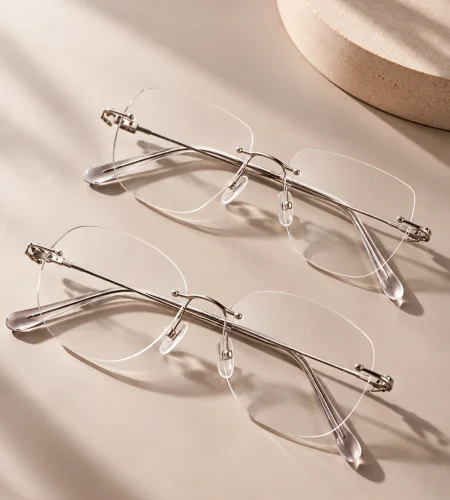
Rimless glasses are appealing for a simple reason: they feel lighter, look cleaner, and put the focus on your face instead of a heavy frame. But if you are shopping online, the big question is not just style. It is whether rimless glasses are durable enough for your day-to-day life, prescription, and budget.
This guide is for shoppers who want rimless glasses without making an expensive mistake. You will learn what rimless glasses are, where they shine, where they fall short, how durable they really are, and how to choose a pair online that is more likely to hold up. If you are ordering from an online retailer, the FTC’s Eyeglass Rule also means you should be given a copy of your prescription after your exam, which makes comparison shopping much easier.
What are rimless glasses?
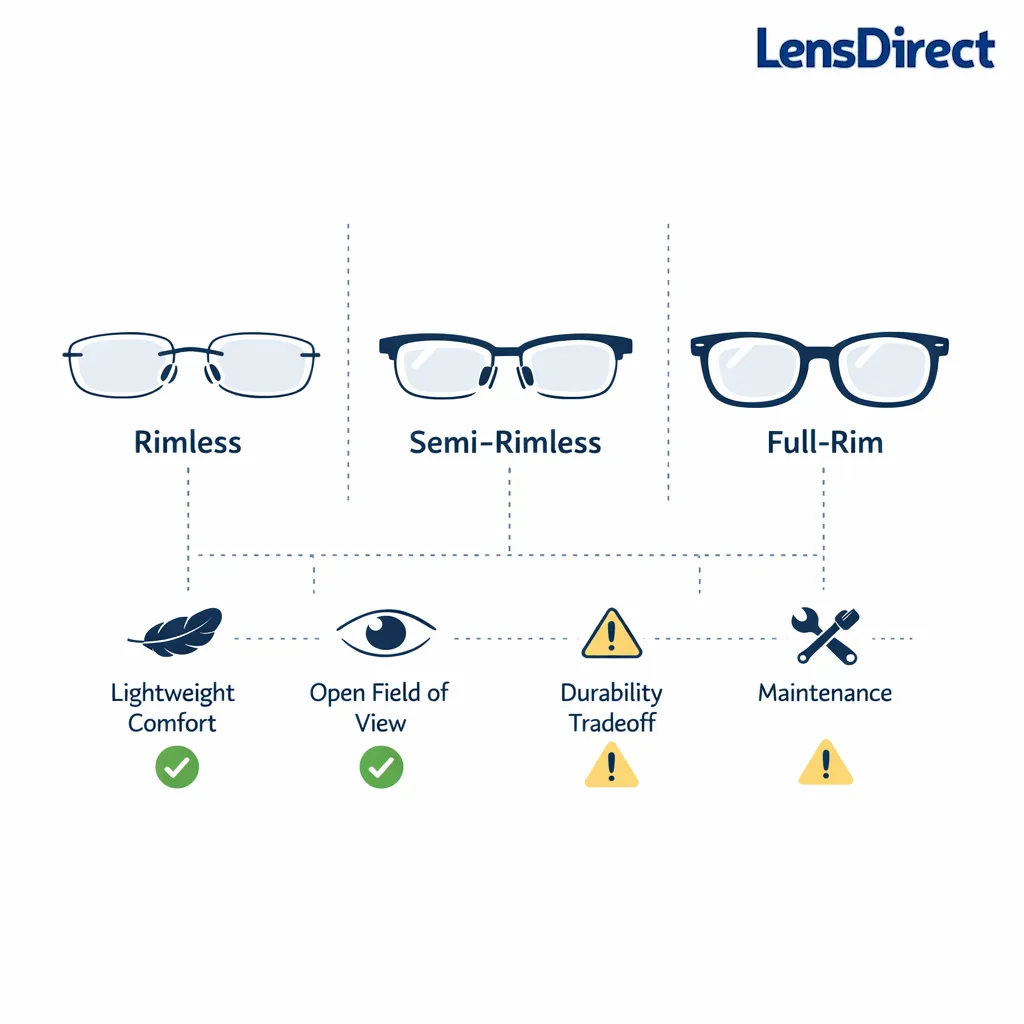
Rimless vs frameless vs semi-rimless
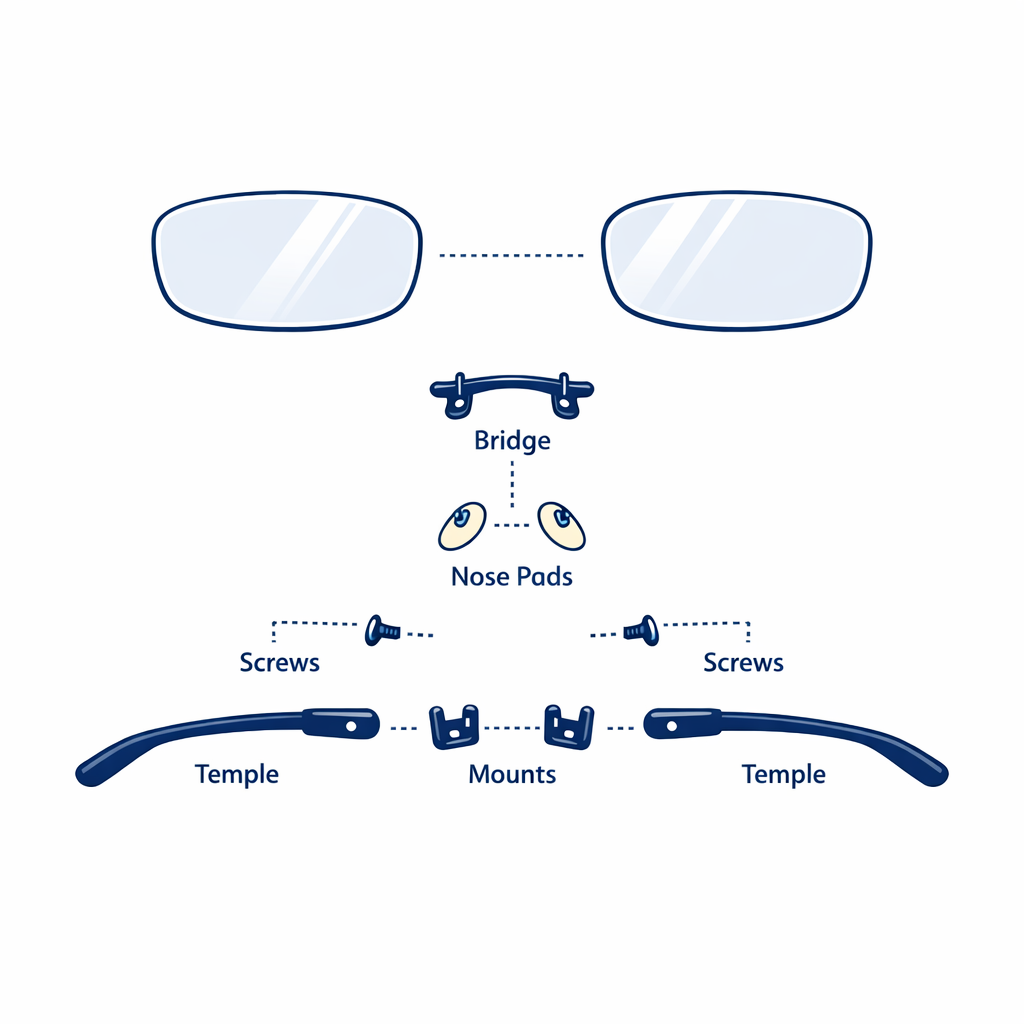
Rimless glasses and frameless glasses usually mean the same thing in everyday shopping language. The lenses do not sit inside a full frame. Instead, the bridge and temples attach directly to the lenses through small mounts.
Semi-rimless glasses are the middle ground. They still have a visible frame, but only around part of the lens, so you get some of the light look of rimless eyewear with a little more structure and protection.
Who should wear rimless glasses?
Rimless glasses are a smart option for people who want their eyewear to feel visually subtle and physically light. They often work well for office wear, all-day computer use, formal settings, and anyone who dislikes the look of thick frames covering the eyebrows or cheeks.
They are not the automatic best choice for everyone. If you are very hard on glasses, toss them into bags, wear them for active work, or want the most forgiving frame possible, a full-rim pair may fit your routine better.
Why the style is popular again
The current appeal of rimless eyeglasses is less about nostalgia and more about flexibility. They can look polished, modern, understated, and premium without trying too hard.
They also work across age groups because the look is not tied to one loud trend. The lens shape does most of the style work, so the same rimless setup can feel classic with an oval lens or sharper and more current with a geometric shape.
What is new in 2026
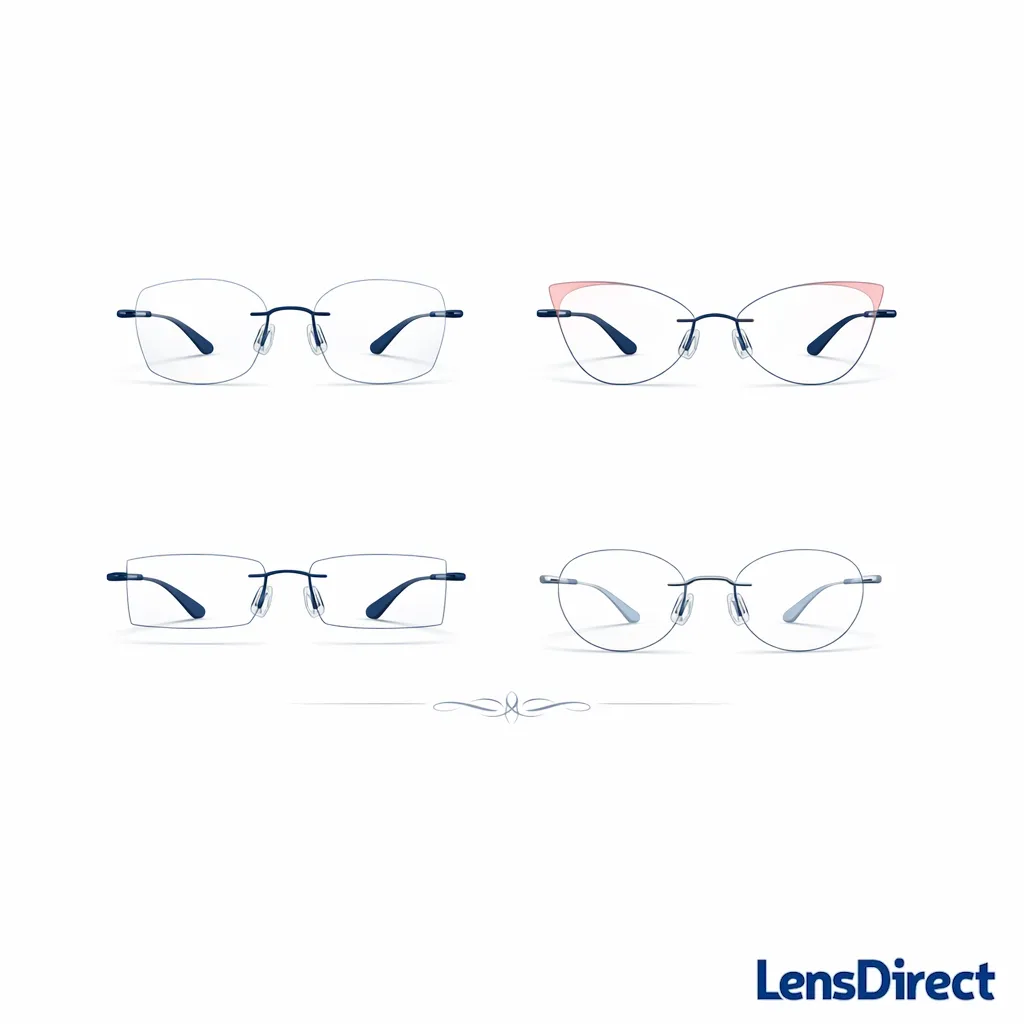
In 2026, the rimless look is less “invisible office frame” and more “clean, intentional minimalism.” Shoppers are leaning toward thinner hardware, better nose-pad fit, and lens shapes that feel a little more defined than the tiny ovals that gave old-school rimless styles a dated reputation.
The biggest shift online is that buyers are being more practical. Instead of asking only whether rimless glasses look good, they are asking the better question: are rimless glasses durable enough for how I actually live?
Pros of rimless glasses
Lightweight comfort
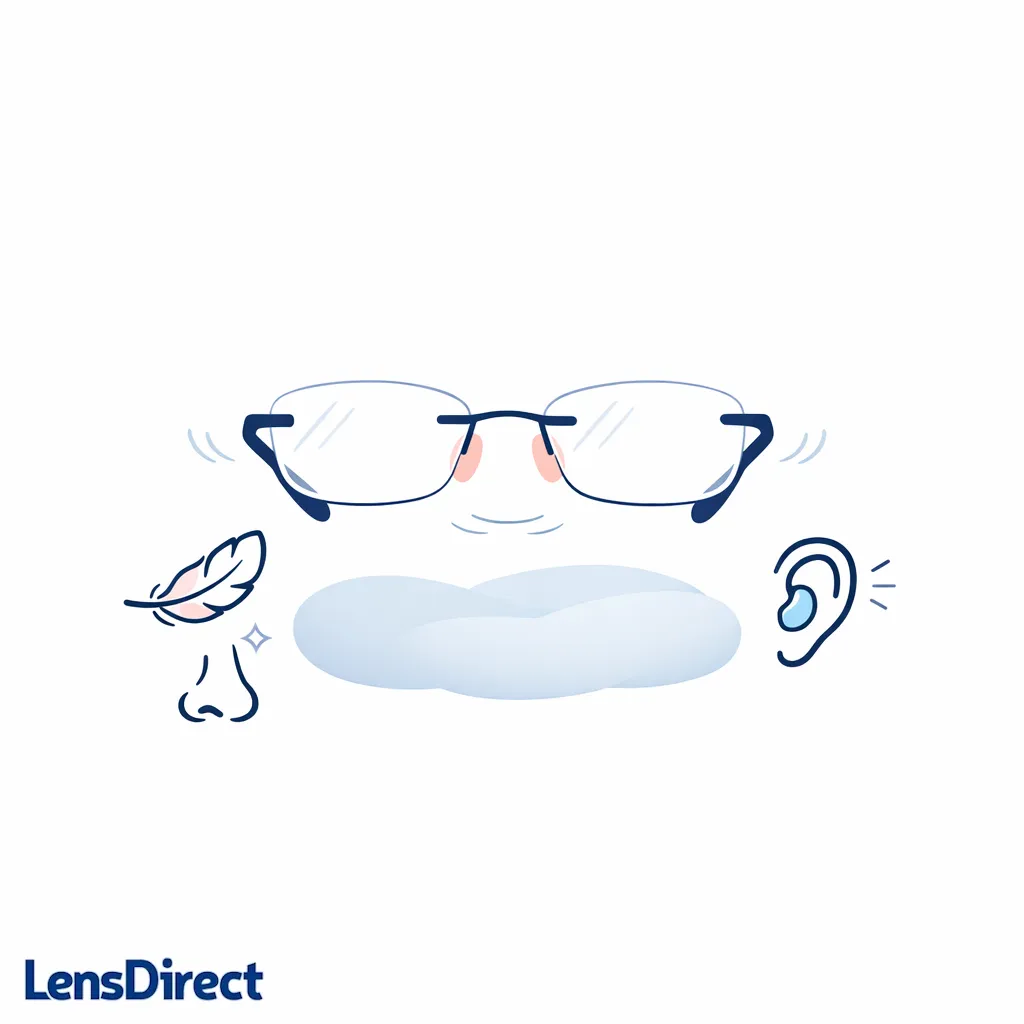
This is the biggest selling point for most people. With less material around the lenses, rimless glasses often feel easier on the nose and ears, especially during long workdays.
If you are sensitive to pressure points or you simply hate noticing your frames every few minutes, rimless can be a very satisfying switch. The lighter visual look often matches a lighter on-face feel.
Wider, less obstructed field of view

Many wearers feel that rimless glasses give them a more open view because there is less frame in their peripheral vision. That can be especially nice if you are moving between screens, meetings, and everyday errands.
This does not mean the lenses change your prescription experience. It just means the frame itself is less visually present, which some people find more comfortable and less distracting.
Minimalist look that highlights facial features
Rimless eyewear tends to emphasize your eyes, skin, and facial structure instead of the frame. If you want glasses that blend in rather than announce themselves, this is the appeal.
That makes rimless styles popular with people who wear formal clothing, want a polished professional look, or switch often between glasses and contacts. The frame rarely clashes with jewelry, makeup, or a work wardrobe.
Style versatility for work and everyday wear
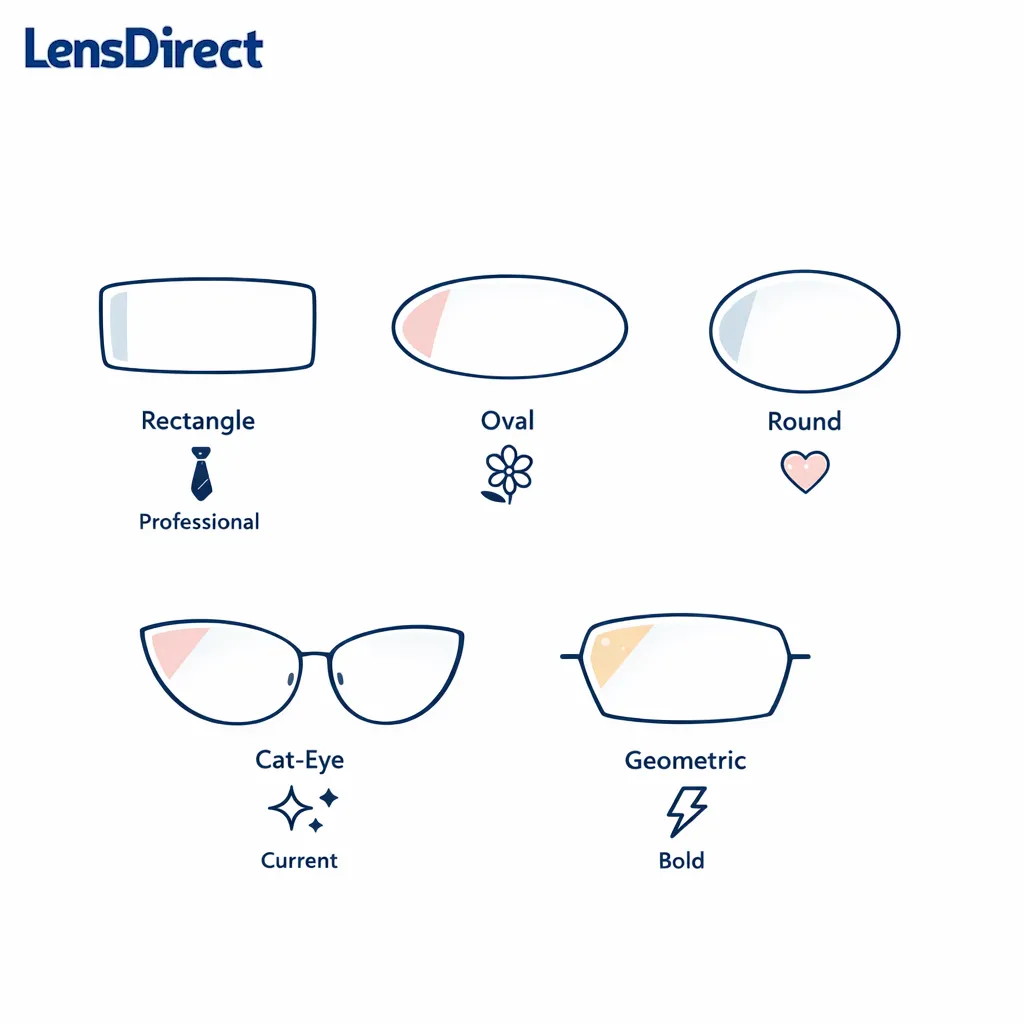
A well-chosen rimless pair can look dressy or casual depending on the lens shape and temple design. Rectangle lenses usually read more businesslike, while softer ovals and rounds can feel more relaxed.
If you want one pair that does not fight the rest of your look, rimless glasses are hard to beat. They are especially useful for people who want eyewear that disappears into the outfit instead of dominating it.
Cons of rimless glasses
Lens-edge exposure and breakage risk
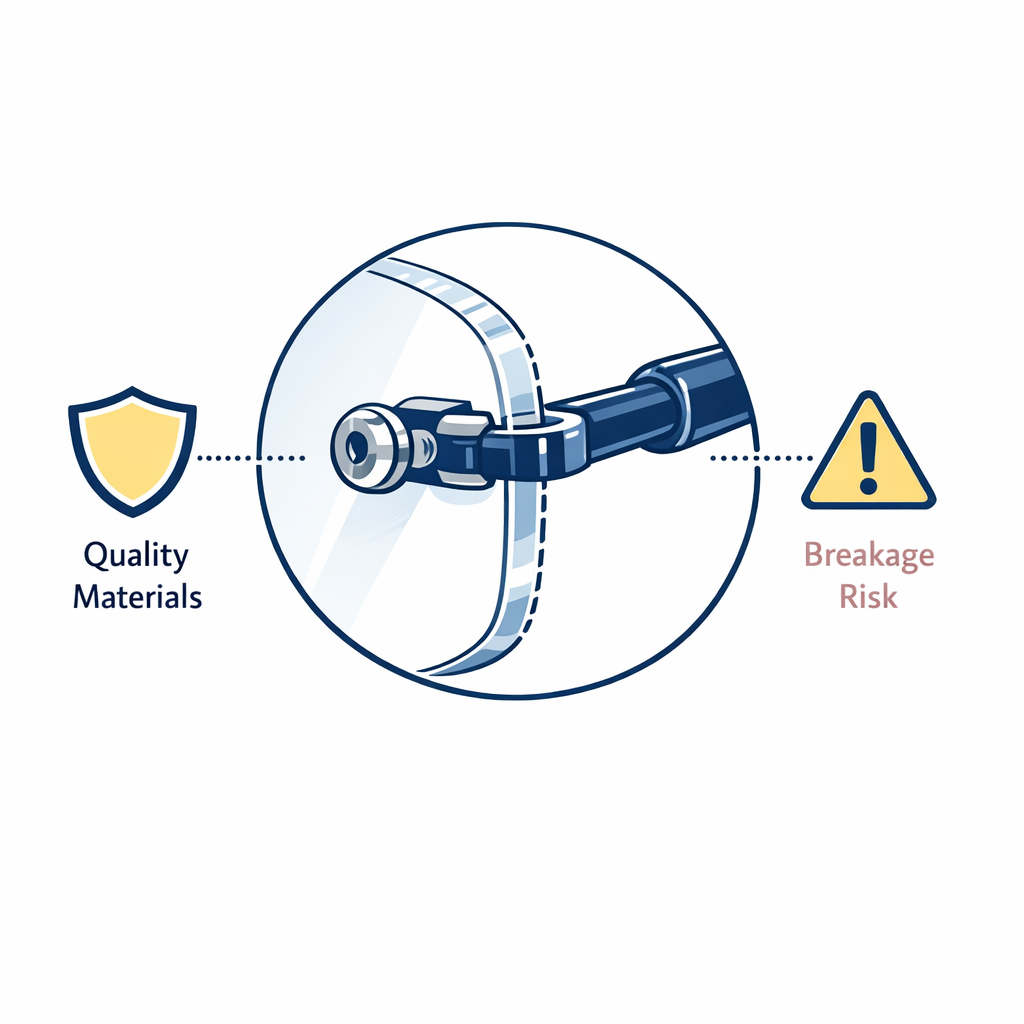
The main tradeoff is simple: when there is no full frame around the lens, the lens edge is more exposed. That means rimless glasses can be less forgiving if they are dropped, crushed in a bag, or twisted carelessly.
This does not make them automatically fragile. It does mean durability depends more on good materials, careful handling, and a realistic match between the frame and your lifestyle.
More maintenance around screws and mounts
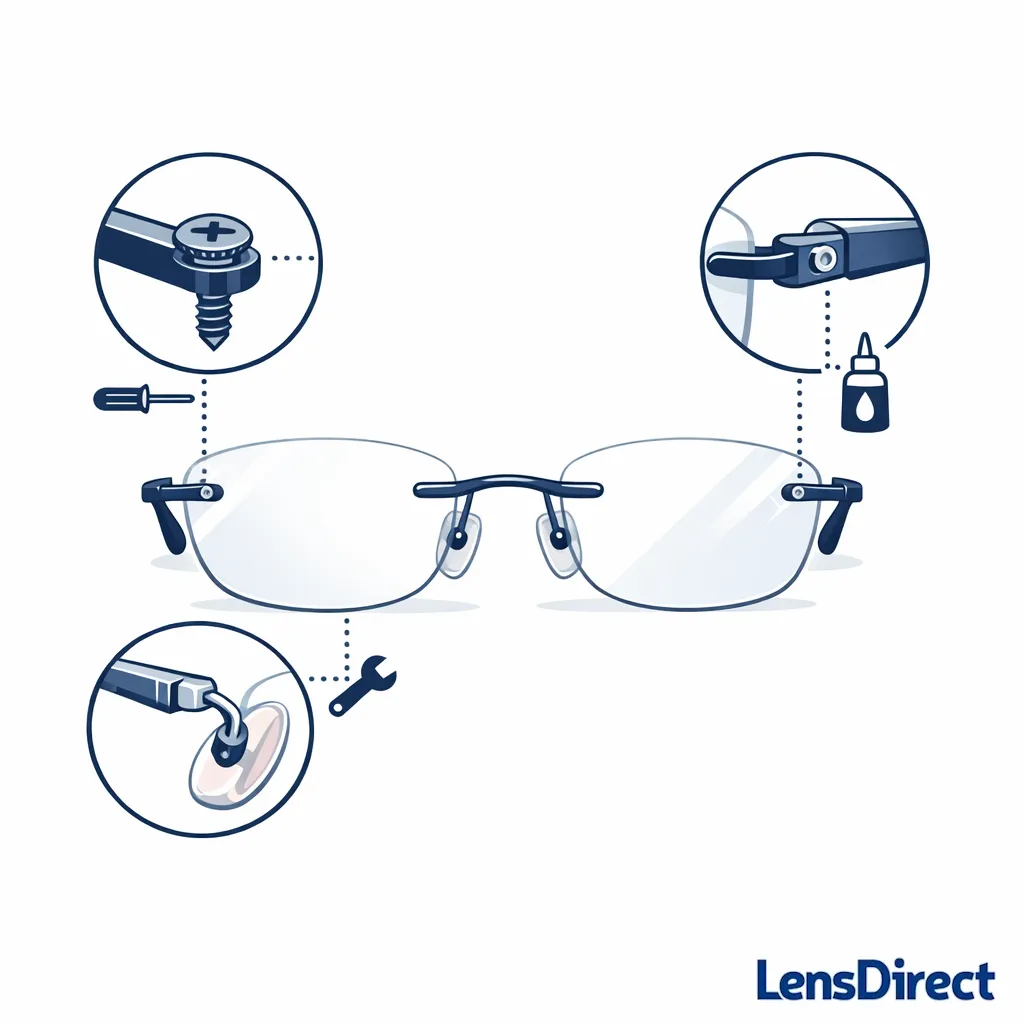
Rimless glasses rely on small connection points, so little issues matter more. If a screw loosens or the alignment shifts, you may notice it faster than you would on a chunkier full-rim frame.
That is why rimless shoppers should think beyond style. A pair that looks great online still needs solid hardware, clean drilling, and a fit that does not constantly slip or get yanked off one-handed.
Limits for strong prescriptions and thick lenses
Rimless can still work for stronger prescriptions, but it is not always the easiest or cleanest-looking choice. If your lenses are thick at the edges, the exposed edge may be more noticeable than it would be in a full-rim frame.
This does not mean “no.” It means you should compare lens materials carefully and be honest about whether you want the thinnest appearance, the toughest setup, or the lightest possible feel.
Smudges and scratches are more noticeable
Because rimless glasses draw less attention to the frame, your lenses become the star of the show. Smudges, edge grime, and scratches can stand out more quickly.
If you like an always-clean look, you may need to wipe them down more often. A minimalist frame rewards good maintenance.
Are rimless glasses durable enough for everyday wear?
Yes, rimless glasses can be durable enough for everyday wear if you choose quality materials and treat them carefully, but they are usually less robust than full-rim frames. Think of them as durable when chosen well, not indestructible by default.
There is also an important baseline safety point: in the United States, most everyday prescription eyeglass lenses are subject to the FDA’s impact-resistant lens requirement. That helps, but it does not eliminate the extra stress that rimless mounting can place on the lens and hardware over time.
Best frame materials: titanium, stainless steel, memory metal
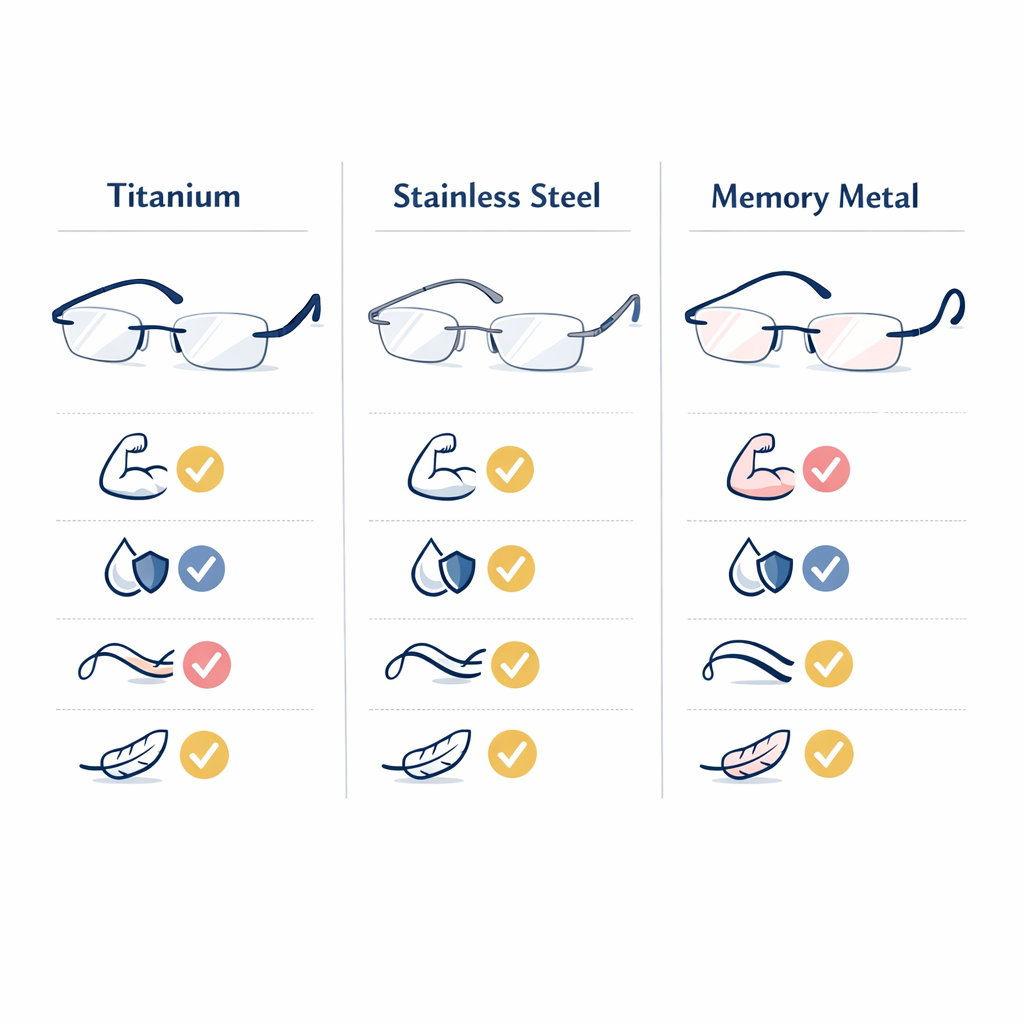
If durability is your top priority, start by filtering for better hardware rather than the cheapest available rimless frame. Titanium and stainless steel are good places to begin if you want a cleaner, stronger-feeling everyday pair, and memory metal is worth comparing if you tend to be rough on temples.
More important than the marketing word on the product page is the overall build. Look closely at the bridge, hinge quality, nose-pad arms, and the way the mounts connect through the lens.
Best lens materials: polycarbonate, Trivex, high-index
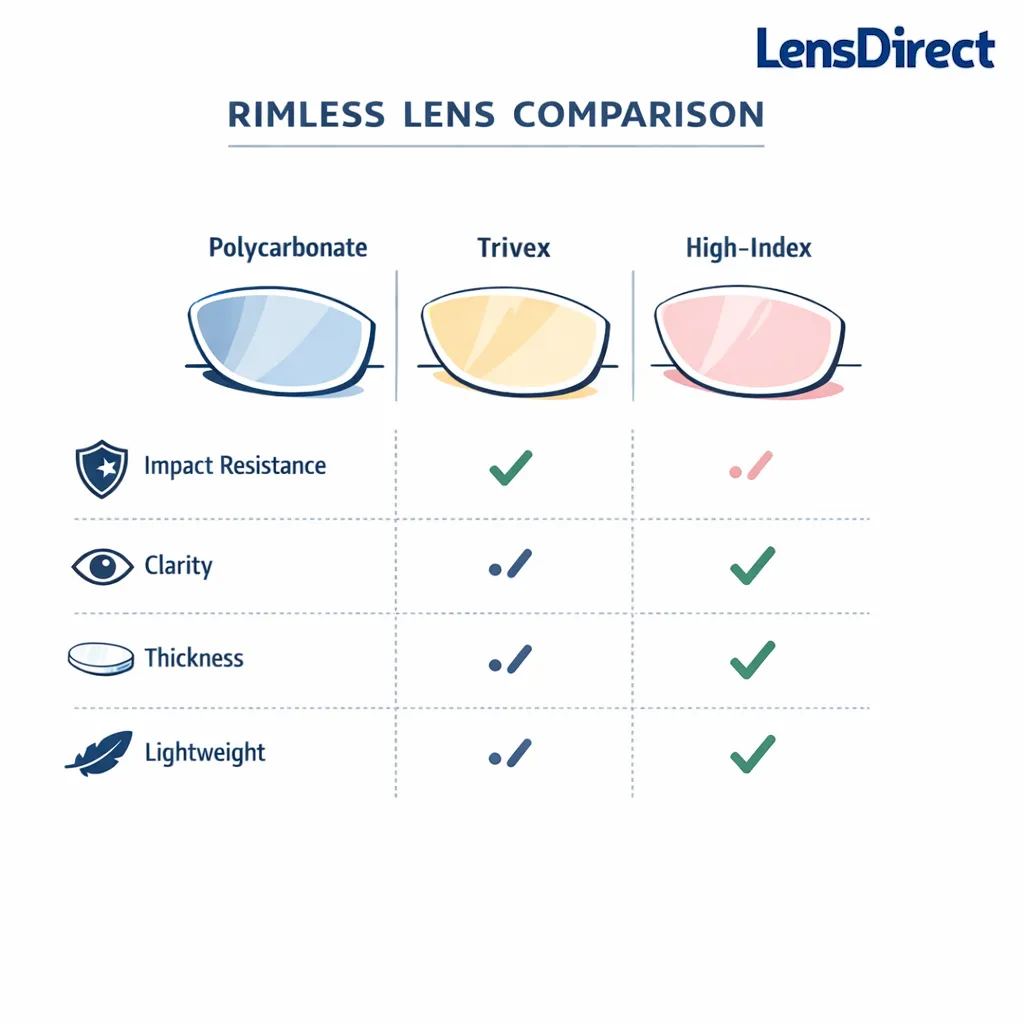
For rimless glasses, the lens choice matters almost as much as the frame. If durability comes first, many shoppers start by comparing polycarbonate and Trivex. If your prescription is stronger and lens thickness is a bigger concern, high-index is usually part of the conversation too.
The best choice depends on your prescription, how rough your daily routine is, and how much you care about edge thickness. If you are unsure, ask your optician which material gives you the best balance of weight, appearance, and everyday toughness for a rimless mount.
Handling habits that affect longevity
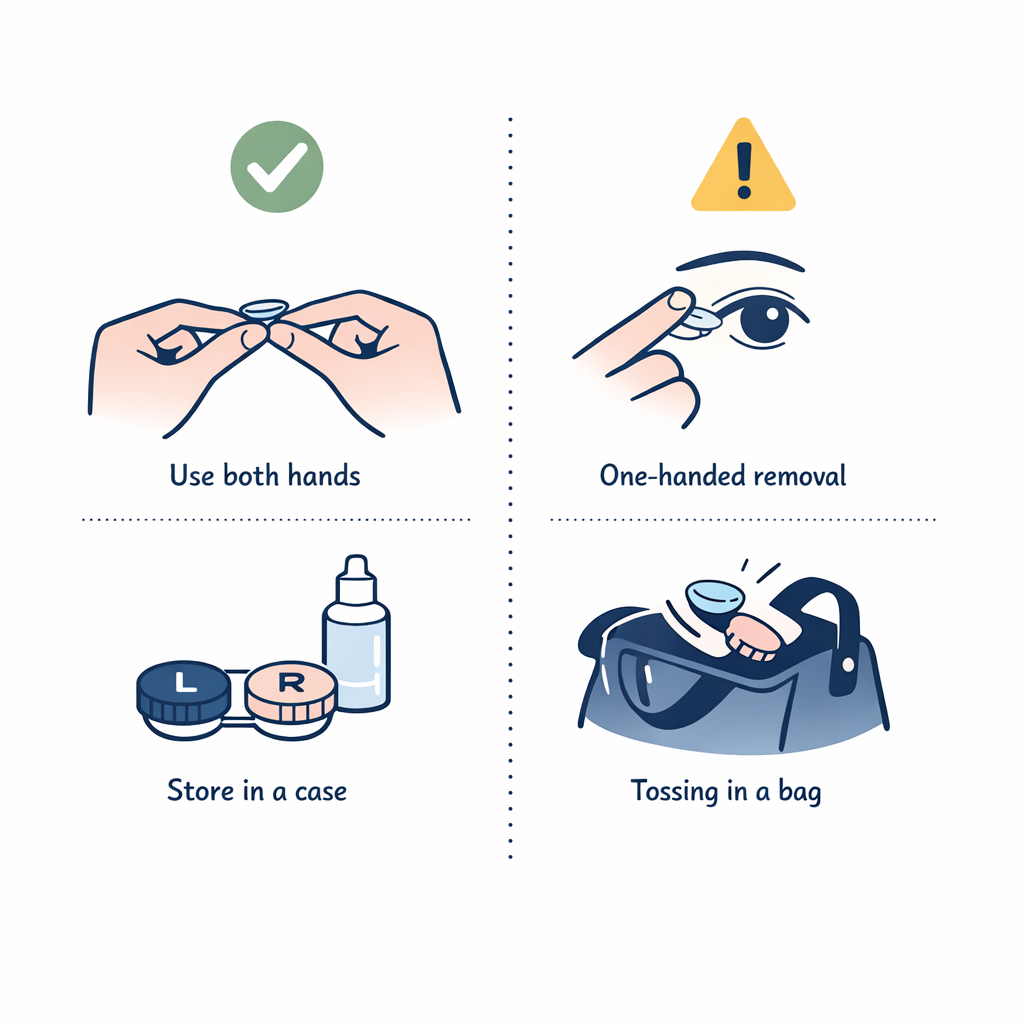
Rimless glasses usually last longer when you handle them with two hands, store them in a case, and stop leaving them face-down on desks and nightstands. The frame has less structure to absorb bad habits, so small habits have bigger consequences.
If you take glasses off one-handed by one temple every day, stuff them into a tote with keys, or fall asleep in them regularly, you are increasing the odds of loosened mounts, crooked alignment, or lens damage.
When full-rim may be the better choice
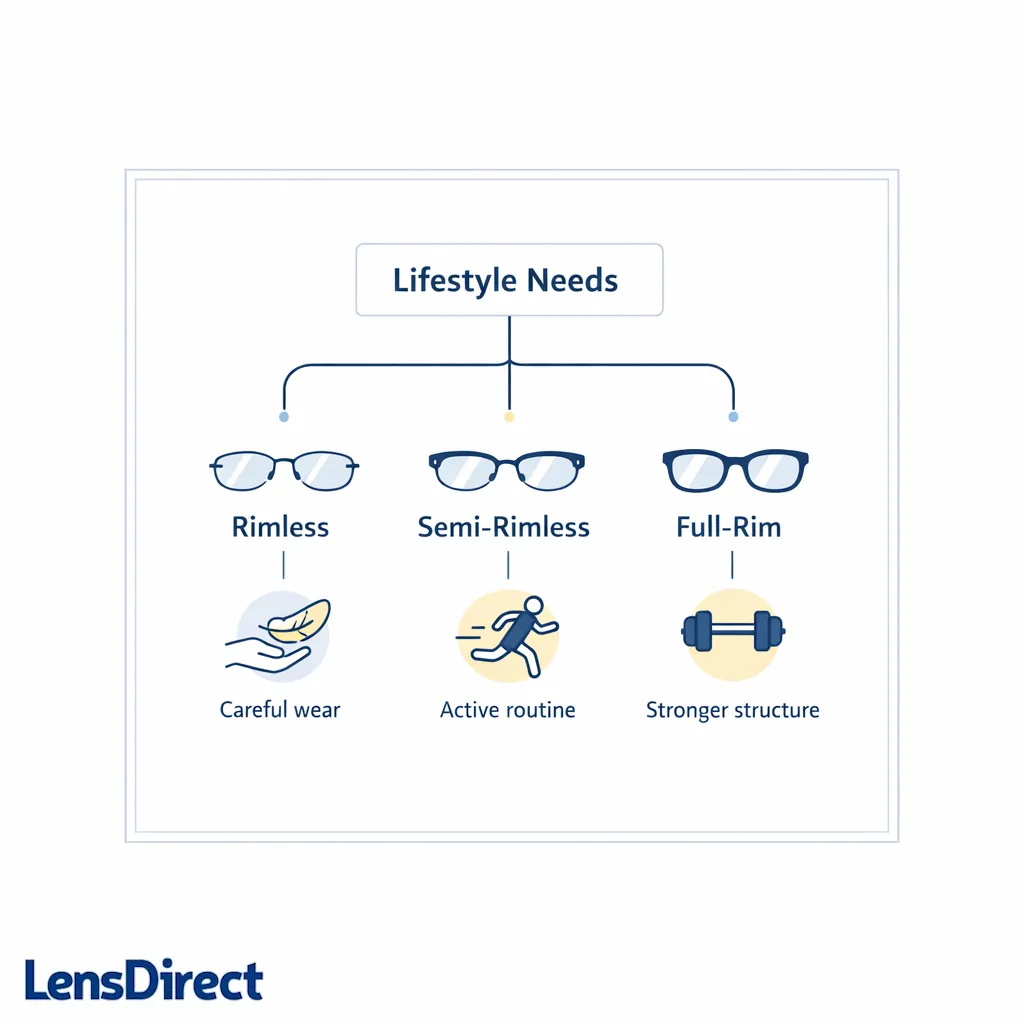
Choose full-rim first if you want the most forgiving option for commuting, travel, physical work, or very frequent wear-and-tear. Full-rim is also the easier answer if you want to worry less about exposed lens edges or you know you are not careful with eyewear.
If you love the light look but want a little more security, semi-rimless can be the compromise. It keeps some of the airy feel while adding more structure than true rimless glasses.
How to pick a durable pair online
Check frame material and mount design
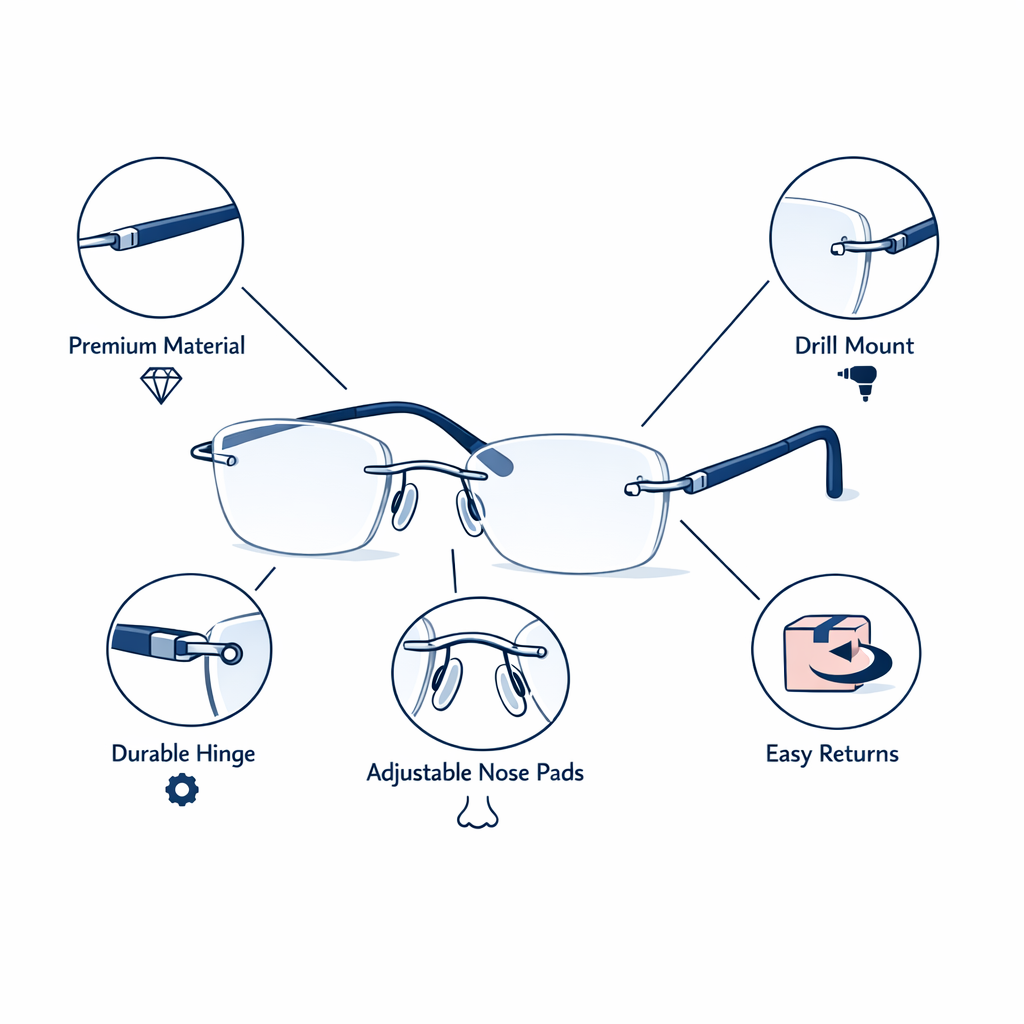
Do not shop rimless glasses by front photo alone. Read the product details and look for clear information about metal type, hinge quality, and whether the frame is built for prescription use rather than just style-first minimalism.
Pay special attention to the mount design, also called a drill mount. That simply means the hardware passes through the lens itself. Cleaner build quality here usually matters more than decorative details on the temples.
Match lens material to prescription and lifestyle
Online, the smartest move is to choose your frame and lens together instead of treating the lens as an afterthought. Your prescription strength, how often you wear the glasses, and how active your routine is should all shape the final choice.
If you are balancing multiple goals, ask yourself one question first: do I care most about toughness, thinness, or lowest weight? That answer will narrow the best lens options quickly.
Review size, bridge fit, and adjustable nose pads
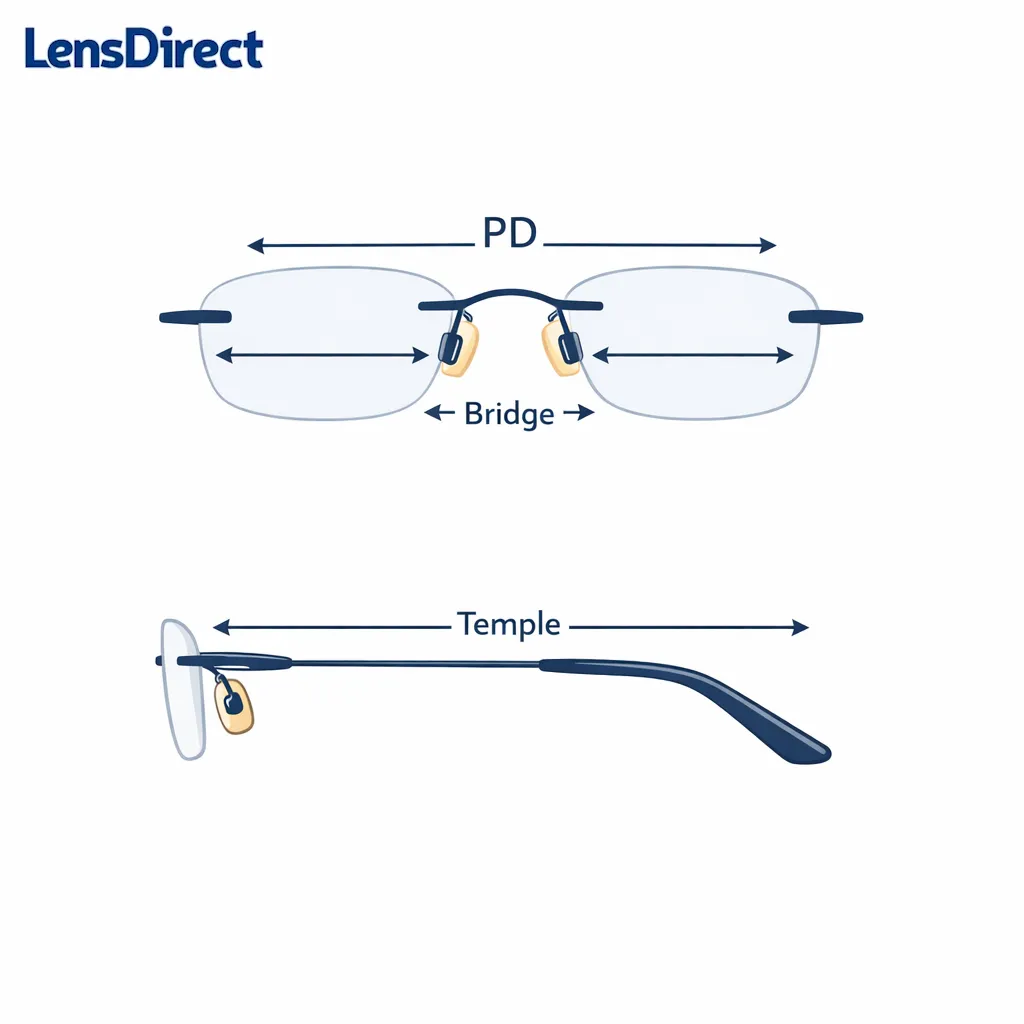
Fit matters even more with rimless eyewear because there is less frame to hide small mistakes. Check lens width, bridge width, temple length, and whether the pair has adjustable nose pads.
Before you order, get an accurate pupillary distance measurement. That is especially important if you want crisp vision, wear progressives, or are trying a lighter, low-profile frame that needs to sit precisely.
Compare return policy, warranty, and virtual try-on
Rimless glasses can look very different on your face than they do in a product thumbnail, so a strong return policy matters. Virtual try-on is helpful, but it should not replace careful attention to measurements and nose-pad adjustability.
If you are between shapes, order the one that better matches your real use case instead of the one that only looks dramatic in a product image. A durable everyday pair should feel stable first and stylish second.
Best rimless glasses by face shape and style goals
Round, square, oval, heart, and diamond faces

No single face shape is “the” face shape for rimless glasses. What matters more is using the lens shape to add balance. Round faces often look sharper with rectangles or soft geometric lenses, while square faces usually pair well with ovals or rounded rectangles that soften strong angles.
Oval faces can wear almost anything, which makes rimless a particularly easy category to shop. Heart and diamond faces often do well with lighter, balanced lens shapes that do not over-emphasize the upper face.
Rectangle, oval, round, cat-eye, and geometric lens shapes
If you want a professional everyday look, start with a rectangle or soft rectangle. If you want something more classic and gentle, oval or round lenses usually feel less severe.
If you want rimless glasses that feel current rather than conservative, look at subtle cat-eye or geometric shapes. The frame may be minimal, but the lens shape still sends a clear style signal.
Common mistakes people make with rimless glasses
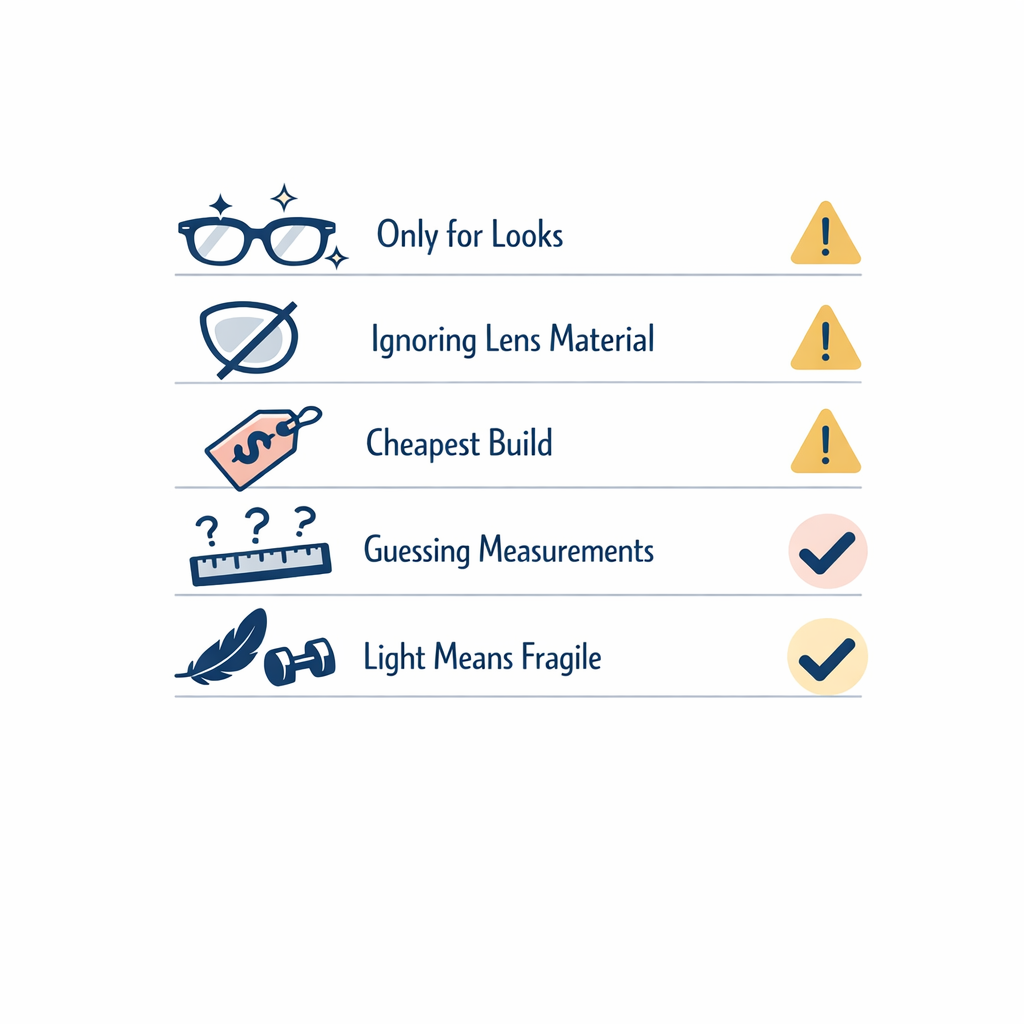
Most disappointment with rimless glasses comes from choosing them like any other frame. They reward precision more than impulse.
- Buying purely for appearance. A beautiful rimless pair can still be the wrong choice if your routine is rough on eyewear.
- Ignoring lens material. The frame is only half the durability story.
- Choosing the cheapest option without checking build details. Minimal hardware leaves less room for weak construction.
- Guessing measurements. Small fit errors stand out faster on rimless frames.
- Assuming “lightweight” means “fragile” or “premium” means “indestructible.” Neither shortcut is reliable.
Care tips to make rimless glasses last longer
Cleaning and storage
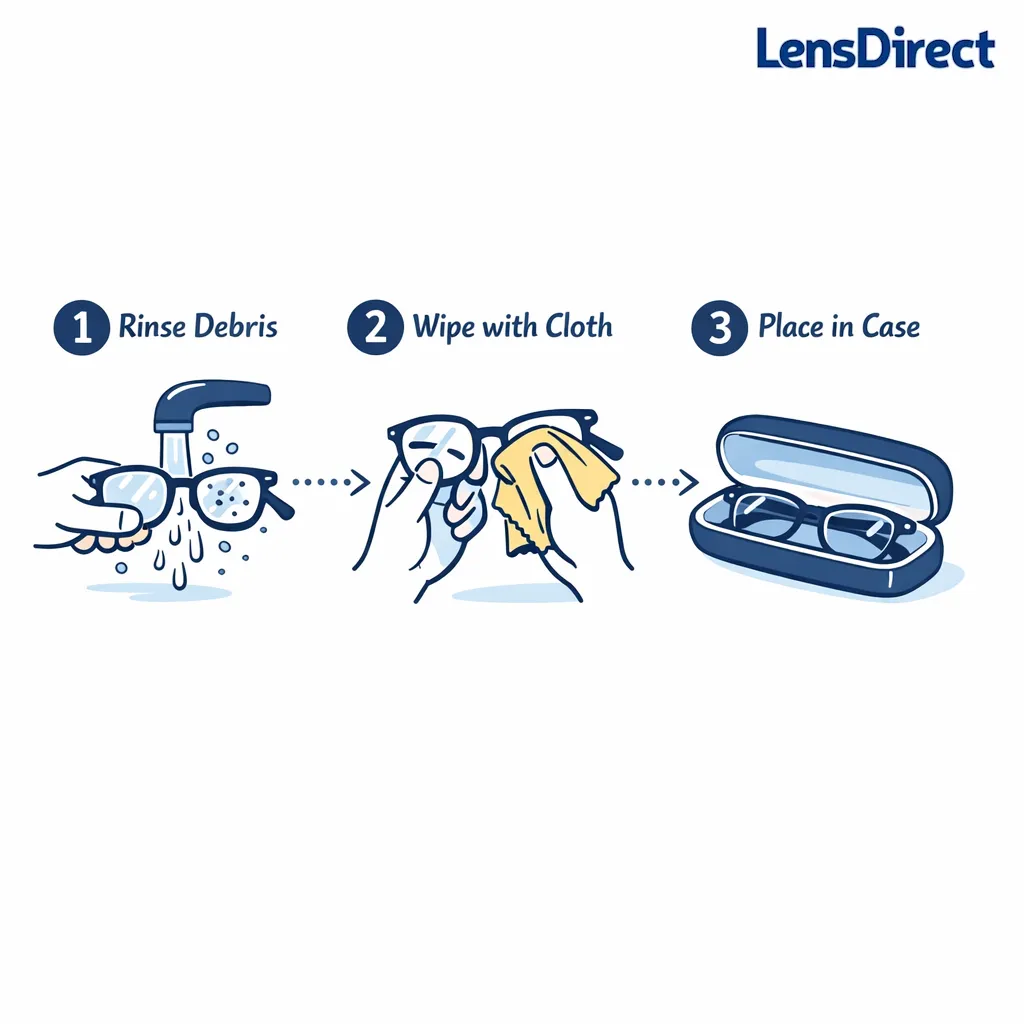
For day-to-day care, follow safe eyeglass-cleaning steps such as rinsing away debris first and using a clean microfiber cloth. Rimless lenses show grime quickly, and wiping dry dust across the lens is an easy way to create avoidable wear.
When the glasses are off your face, put them in a case. A hard case is boring, but it is much cheaper than a cracked lens or bent mount.
Two-hand handling
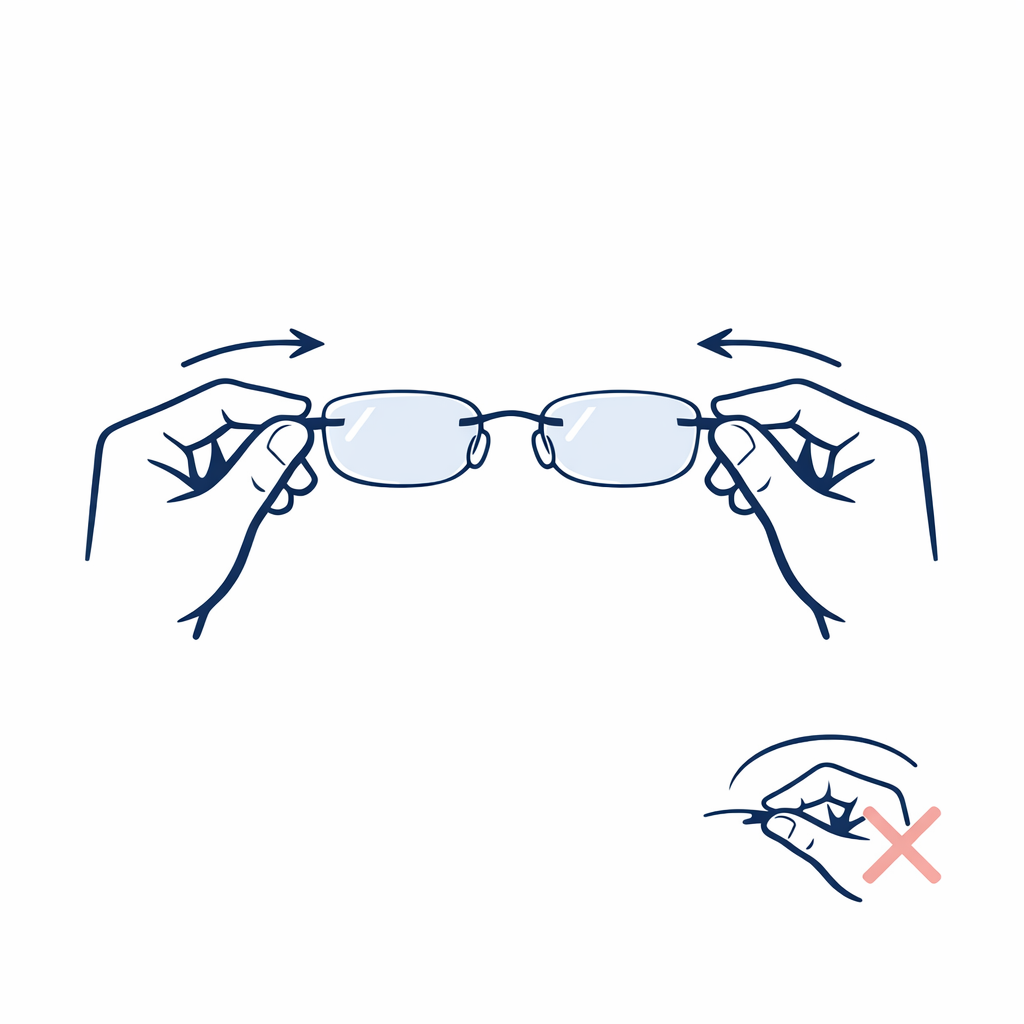
Take rimless glasses off with both hands whenever you can. It is a small habit, but it helps reduce twisting stress on the bridge, temples, and mounting points.
This matters more with rimless than with thick acetate full-rim frames. Minimal structure means uneven force shows up faster.
Screw tightening and optician checkups
If your glasses start to feel loose, crooked, or wobbly, do not wait weeks to deal with it. Rimless issues rarely improve on their own.
A quick adjustment can prevent bigger problems later. If you wear rimless glasses every day, occasional professional tune-ups are a smart part of ownership.
FAQ
Are rimless glasses more fragile?
Usually, yes, at least compared with full-rim frames. The better way to say it is that rimless glasses are less forgiving, not automatically flimsy.
Do rimless glasses make you look older or younger?
Neither by default. Old-fashioned lens shapes can read older, while cleaner rectangles, soft geometrics, and a precise fit can look very current.
Are rimless glasses in style in 2026?
Yes. They are still in style, especially for people who want a light, polished, low-profile look. The difference in 2026 is that modern lens shape and fit matter more than the “rimless” label alone.
Can rimless glasses work with progressive lenses?
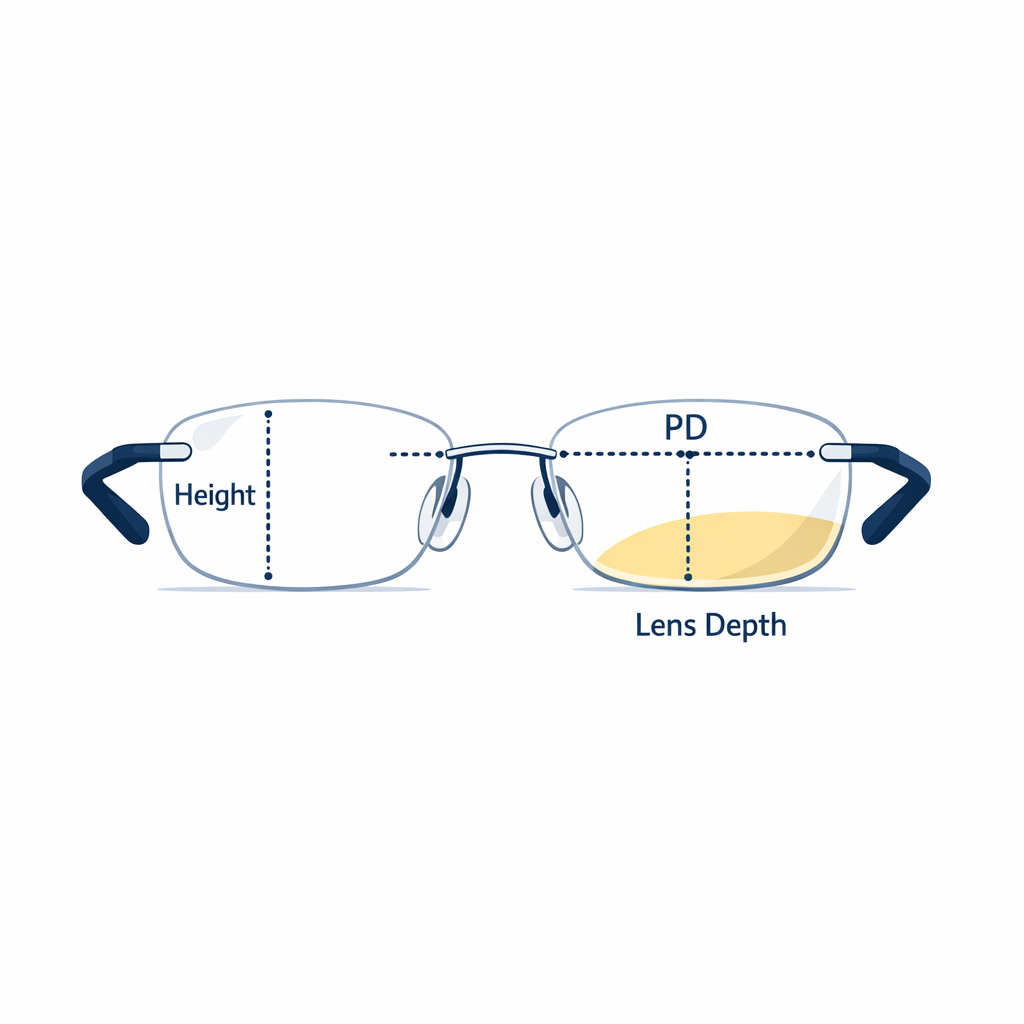
They can, but this is where precise measurements become even more important. If you wear progressives, be stricter than usual about lens shape, fit, and remake policy before you order.
What to do next
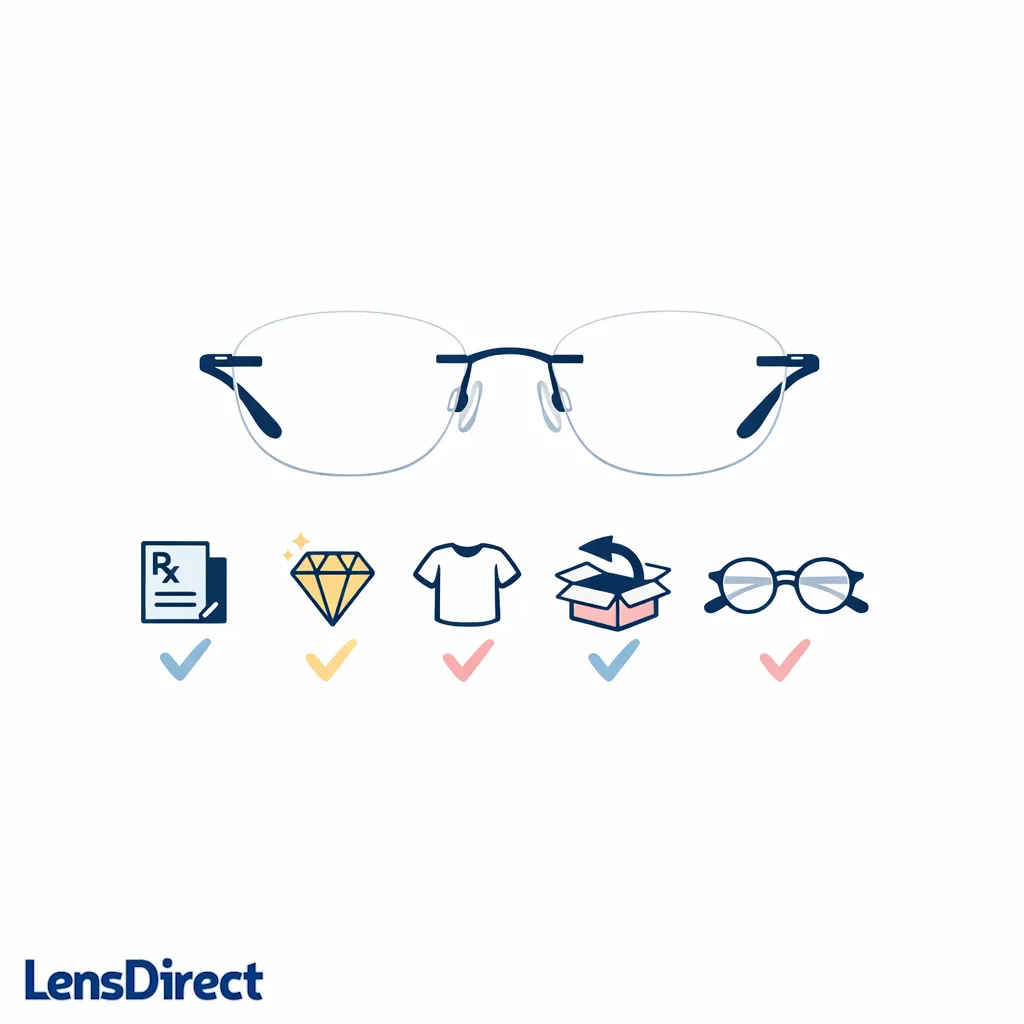
- Start with your lifestyle. If you are careful with glasses and want a light, subtle look, rimless is worth serious consideration.
- Choose materials on purpose. Do not let the frame photo make the whole decision for you.
- Double-check fit details. Focus on bridge width, temple length, nose pads, and PD.
- Use your written prescription. Keep it handy before comparing styles and lens packages online.
- Have a backup answer. If true rimless feels too delicate for your routine, move to semi-rimless or full-rim instead of forcing it.
Find your next lightweight pair
If you want a clean, everyday frame that does not overpower your face, LensDirect is a practical place to compare options. You can Shop Glasses if you are starting fresh, Replace Your Lenses if your current frame still works, or use Find Your Fit if you are still deciding which shape will look best.
Author

Subscribe to our email newsletter to get the latest posts delivered right to your email.