
Astigmatism is a common refractive error that can make vision blurry or distorted, and many people notice it when road signs, small text, or headlights never seem quite sharp enough. If you are buying eyewear online, the goal is not just finding frames you like. It is making sure the prescription, lens design, and fit all work together.
This guide is for anyone shopping for glasses for astigmatism online, whether it is your first pair, a backup pair, or new lenses for frames you already own. You will learn how astigmatism lenses work, what to pay attention to on your prescription, which lens options are worth considering, and how to avoid the ordering mistakes that cause the most frustration.
Do you need special glasses for astigmatism?
Short answer: If your prescription includes astigmatism, you usually need lenses that include CYL and Axis values, because those numbers tell the lab how much correction to build into the lenses and where to place it. The frame usually does not need to be special, but accurate measurements and a stable fit do matter. That is why off-the-shelf readers are usually not a true substitute for prescription glasses for astigmatism.
Special lenses vs standard frames
The correction happens in the lenses, not in a special astigmatism-only frame. In practical terms, many people can wear ordinary everyday styles as long as the frame fits well and sits consistently on the face.
Where shoppers run into trouble is assuming every frame will feel equally precise once prescription lenses are added. With astigmatism, a better fit and steadier alignment can make the finished glasses feel more natural from day one.
Why over-the-counter readers usually do not work
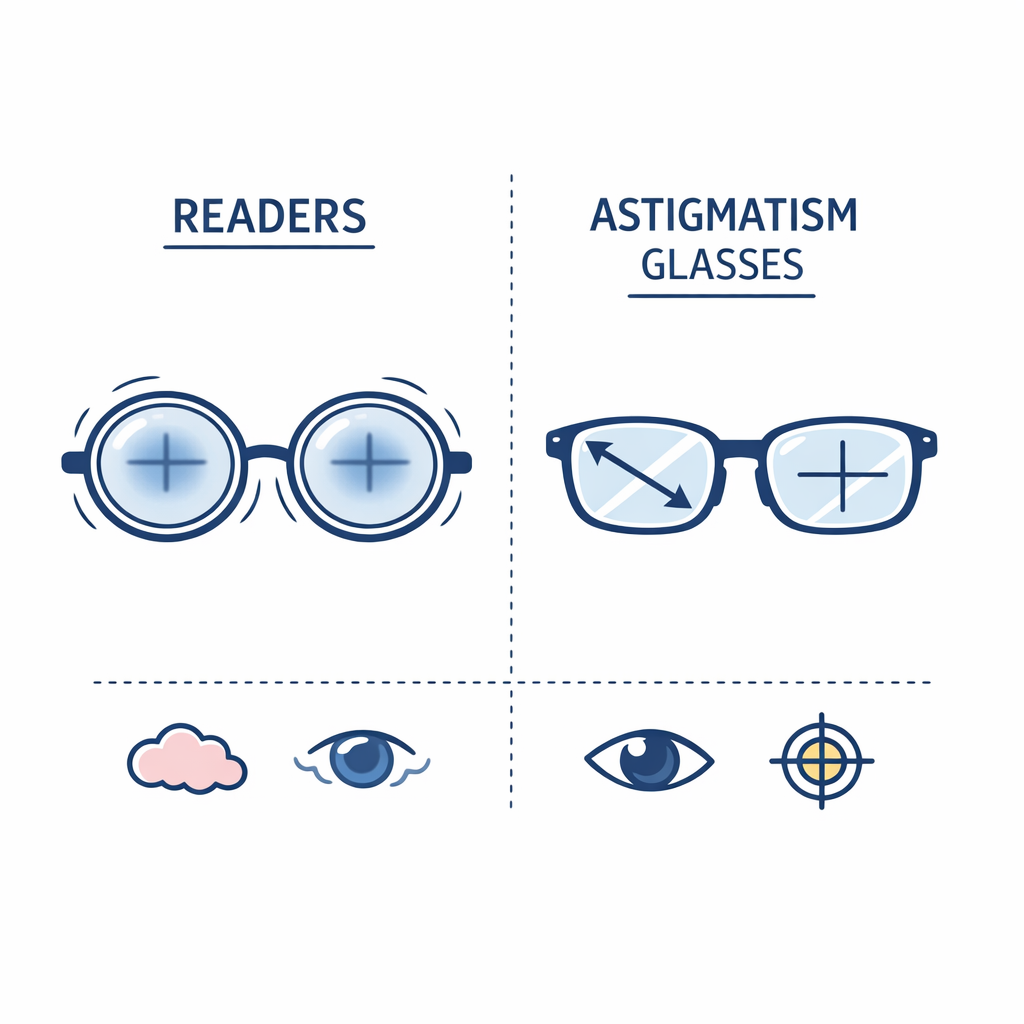
Over-the-counter readers are simple magnifiers, while glasses for astigmatism rely on prescription fields that are customized to your eyes. If your blur is caused by astigmatism, a drugstore pair may make print bigger without making vision truly crisp.
They also are not customized to your lens placement. Before you order prescription eyewear online, measuring your pupillary distance is one of the easiest ways to improve the odds of a better result.
When mild astigmatism may or may not need correction
Some people with mild astigmatism notice very little until they are tired, driving after dark, or doing long stretches of detailed work. Others are more bothered by blur, eye strain, and night-driving problems, which is why many shoppers decide they want glasses even for a relatively mild prescription.
If your prescription is mild and your symptoms are occasional, you may choose task-specific wear instead of all-day wear. If you are unsure, ask your optometrist when glasses for astigmatism are worth wearing full time and when they are mainly helpful for specific situations.
What astigmatism is and why vision looks blurry
Cornea shape, light focus, and distorted vision
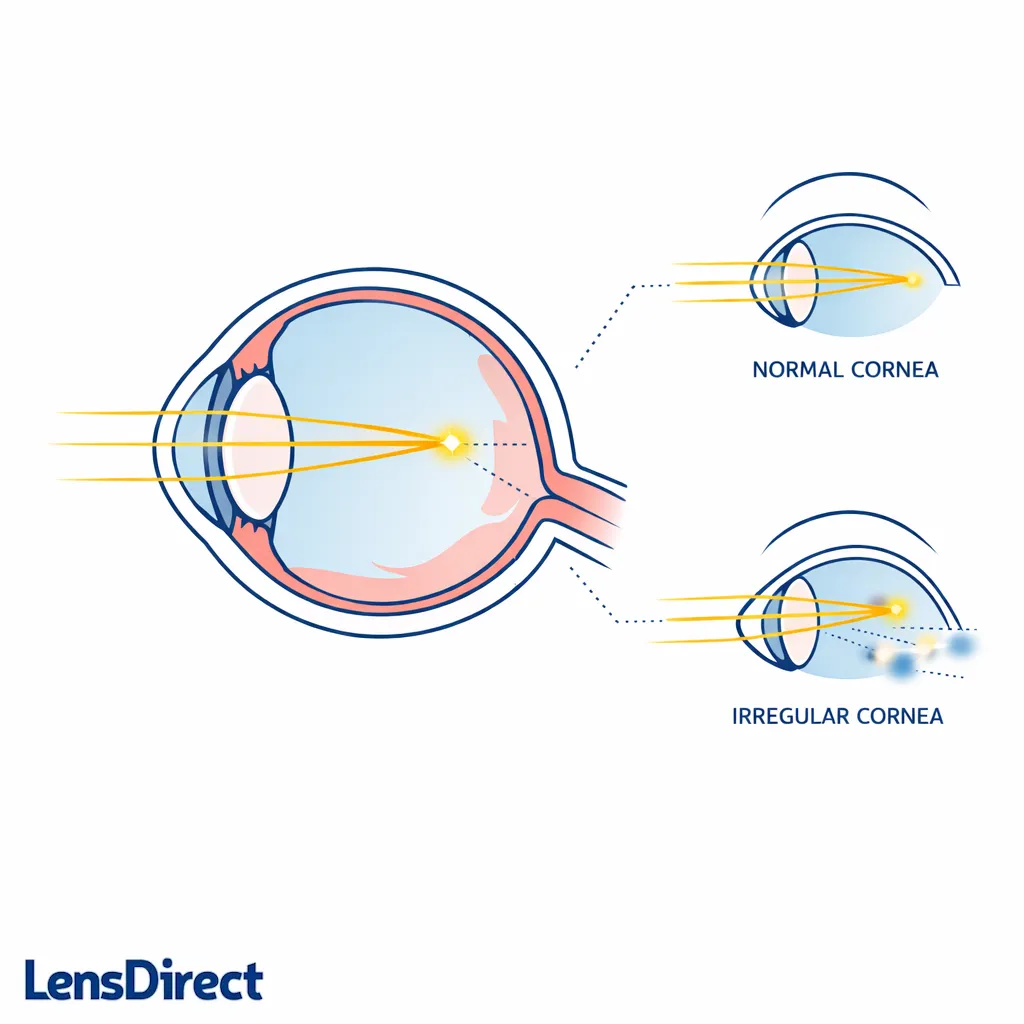
Astigmatism happens when the cornea or lens is curved more in one direction than another, so light does not focus evenly on the retina. That uneven focus can make vision look smeared, shadowed, stretched, or just slightly off even when you try to squint it into clarity.
This can happen on its own or along with nearsightedness or farsightedness. That is why two people shopping for eyeglasses for astigmatism can need very different prescriptions even if they describe the same kind of blur.
Common symptoms, including night glare and eye strain
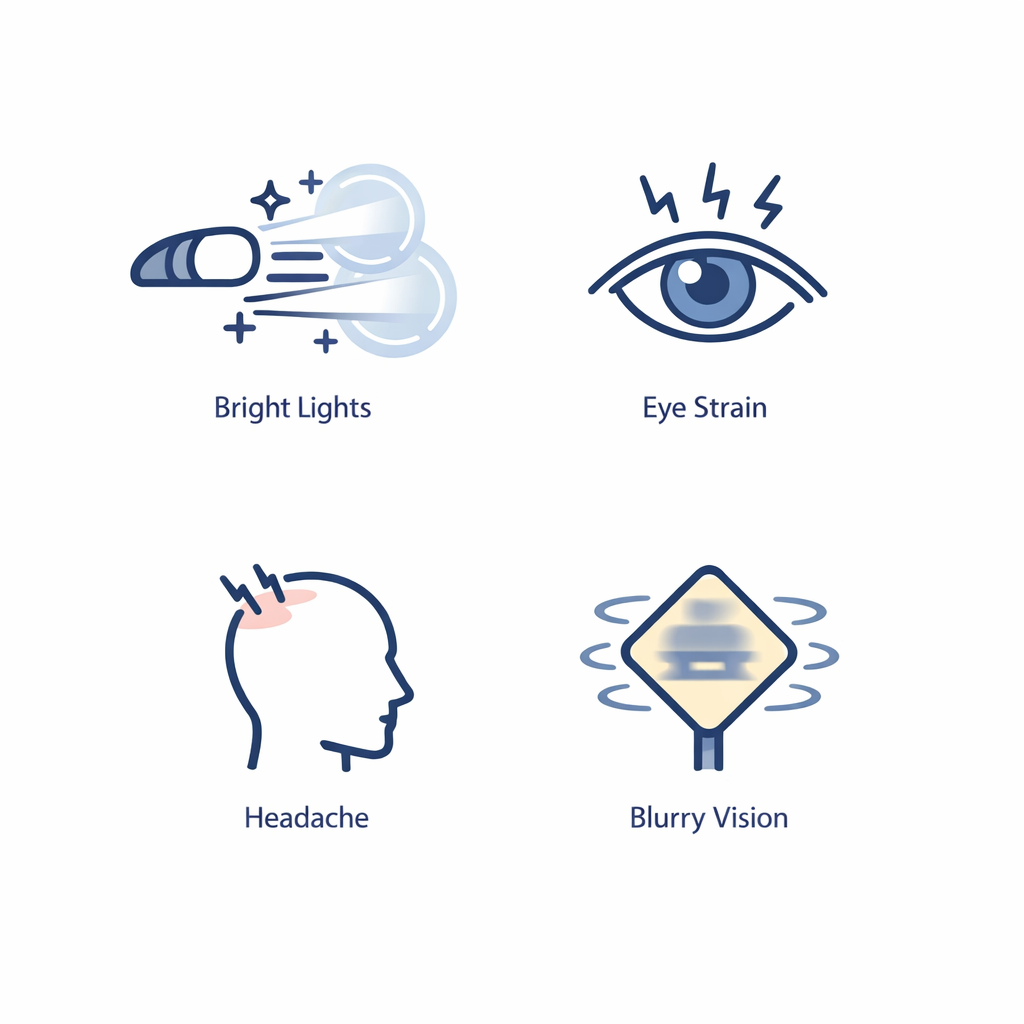
Common symptoms of astigmatism include blurry or distorted vision, squinting, eye strain, headaches, and trouble seeing at night. In daily life, that may show up as glare around headlights, fuzzy menu boards, or a constant feeling that your eyes are working harder than they should.
Those symptoms are a good reason to update an old prescription instead of guessing your way through an online reorder. If your last exam feels outdated, getting a fresh prescription first is usually the fastest path to better glasses.
How glasses for astigmatism work
Cylindrical vs spherical lenses
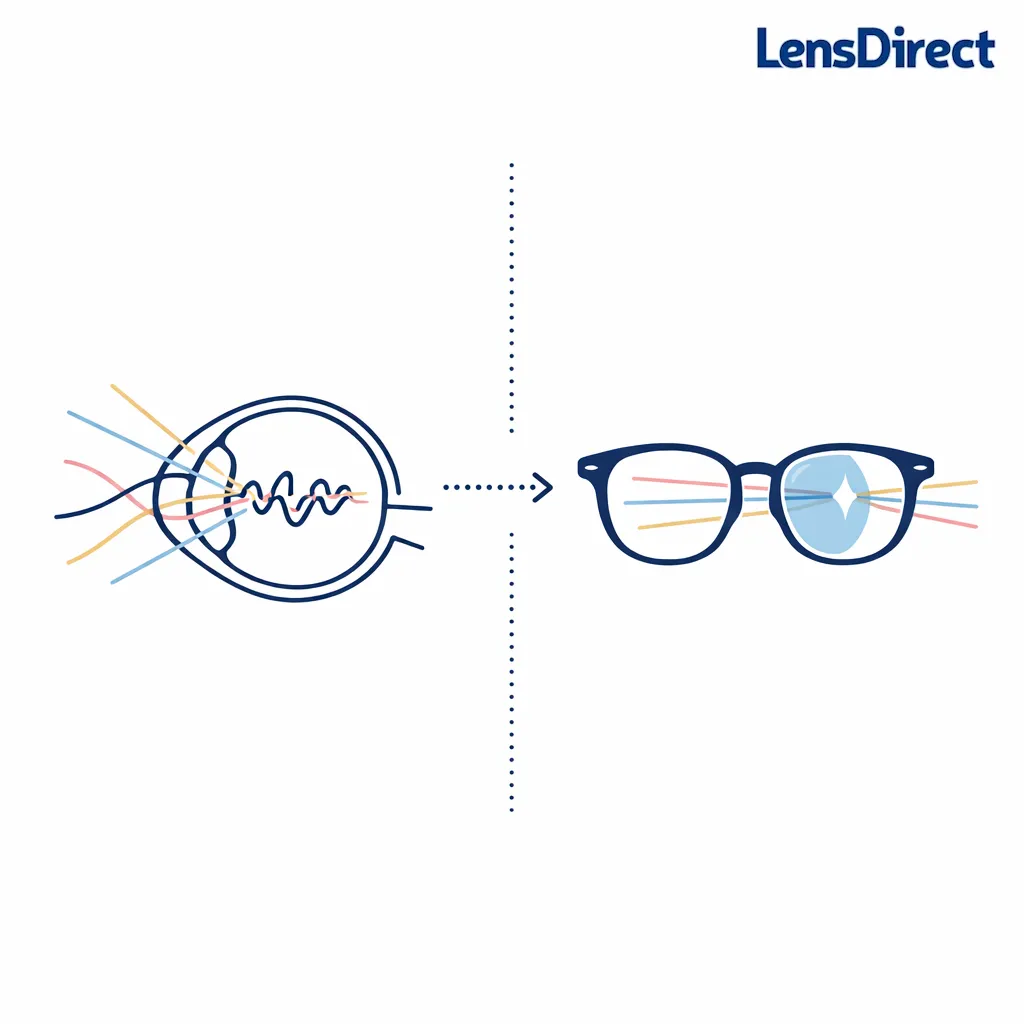
Basic nearsighted or farsighted prescriptions mainly use sphere power, while astigmatism prescriptions add cylinder power at a specific axis to sharpen the uneven focus caused by astigmatism. That is why glasses for astigmatism are not really a separate fashion category. They are a more specific prescription build.
In plain English, the lab is not just making things stronger or weaker. It is placing the correction in the right direction so the lens can clean up the blur that ordinary spherical correction alone will not fully fix.
What CYL and Axis mean on a prescription
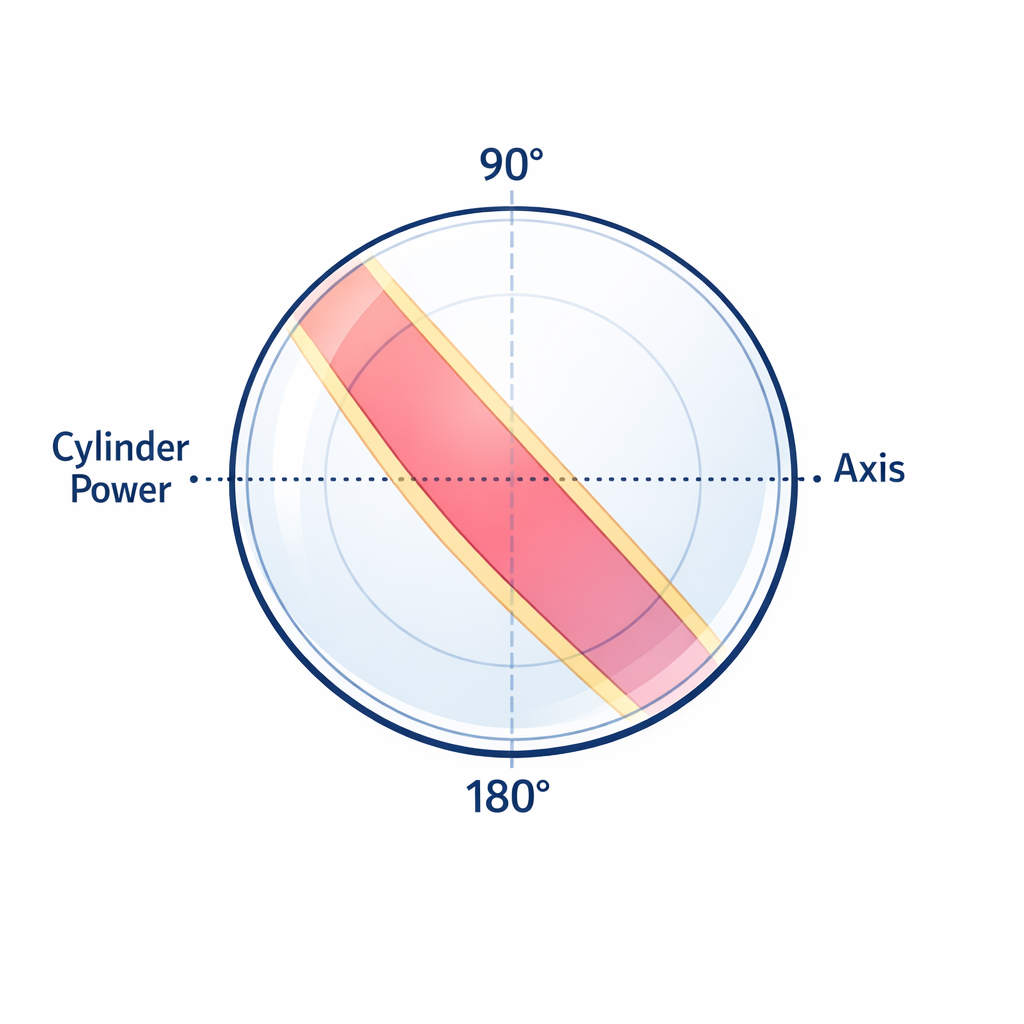
CYL is the amount of astigmatism correction, and Axis is the direction where that correction should be placed. If you are ordering online, these are the fields you do not want to mistype.
If your prescription also includes SPH, that is the sphere power for nearsightedness or farsightedness. If it includes ADD, that usually points to near-vision help for a multifocal design rather than an astigmatism issue by itself.
Can glasses correct astigmatism at all distances?
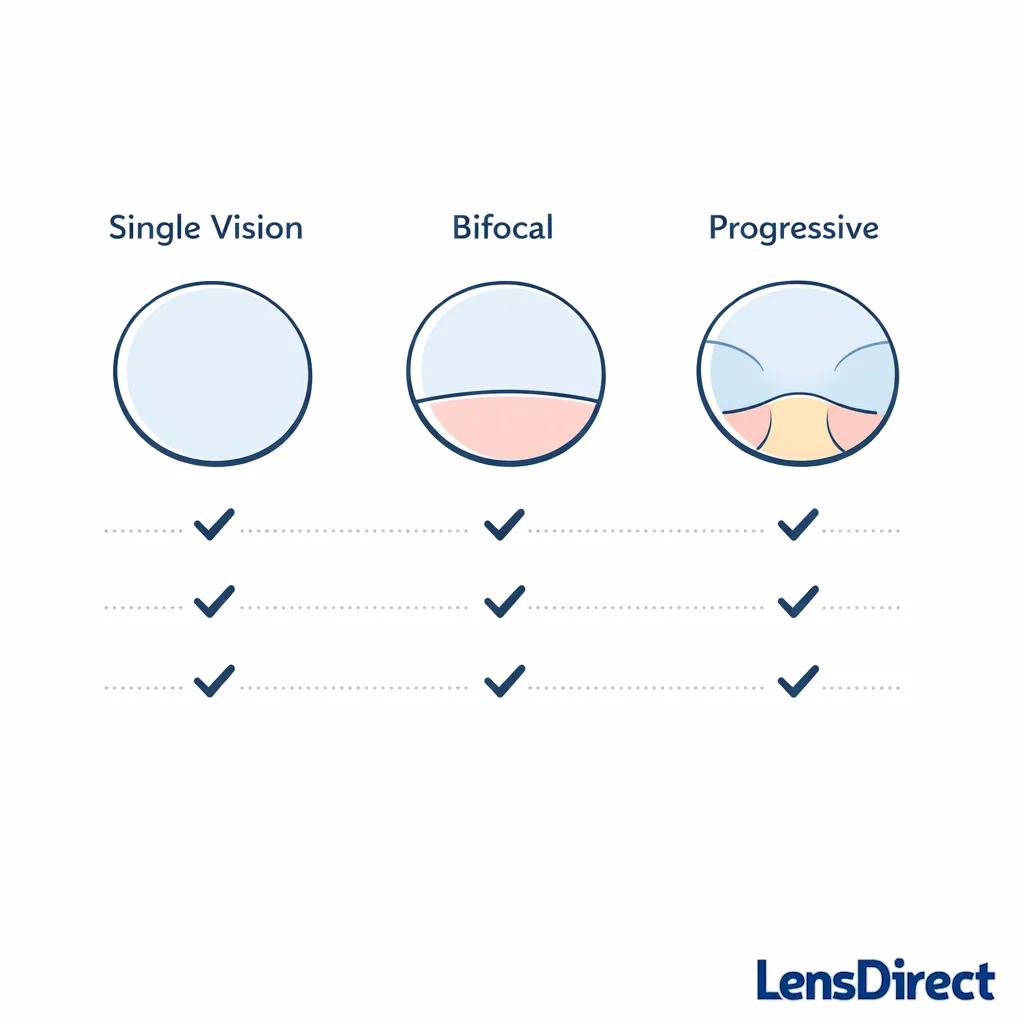
Yes, but the answer depends on the lens design you choose. If you only need one main viewing range, single-vision lenses are often enough, while people who also have presbyopia, the age-related loss of near focusing ability, may need bifocals or progressives so one pair can help at more than one distance.
That is why the best glasses for astigmatism are not always the same from person to person. The right pair matches both your prescription and the way you actually use your eyes all day.
What lens types to consider before ordering

Astigmatism correction comes from the prescription itself. Your lens design and material options determine how the glasses feel, how many distances they cover, and how bulky or light they look in the frame you chose.
Single-vision lenses
Single-vision lenses are usually the simplest starting point if you want one main range for everyday distance, computer work, or reading. They can still include full astigmatism correction, so single vision does not mean generic or basic.
If this is your first pair of glasses for astigmatism, single vision is often the easiest format to start with because it keeps the visual job straightforward. That can be especially helpful while you learn what frame size and lens feel you like best.
Progressive or bifocal options if you also need reading help
If your distance vision and near vision both need help, the choice is no longer just about astigmatism. People with reading needs often compare single-vision readers, bifocals, and progressives based on how often they move between screens, paper, and distance viewing.
For some wearers, a separate pair for reading is still the easiest solution. For others, one multifocal pair is worth it because they want fewer swaps during the day.
High-index, polycarbonate, and Trivex considerations
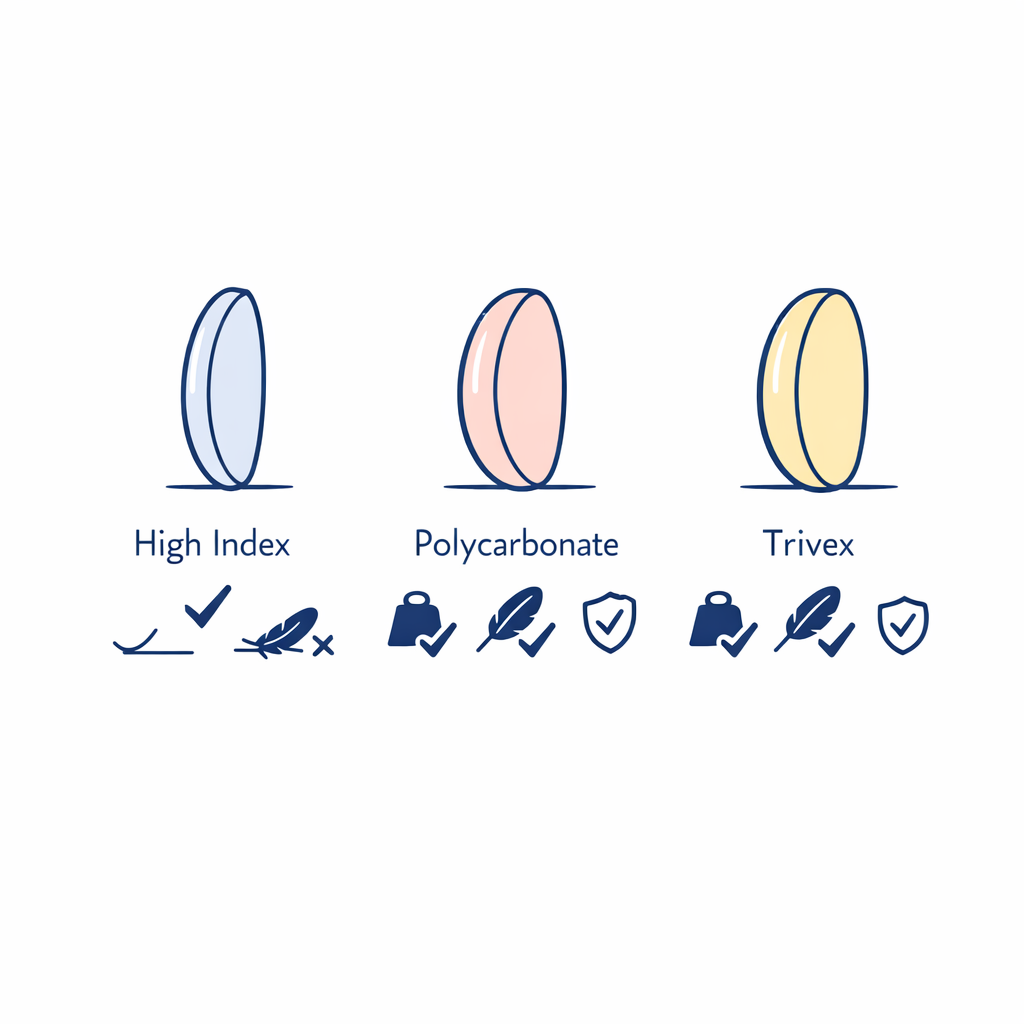
These are material choices, not different kinds of astigmatism correction. When you review lens material options, think about thickness, weight, durability, and the frame shape you want to wear most often.
If your prescription is stronger, thinner materials may be worth considering for comfort and appearance. If durability matters most, material choice can matter almost as much as prescription accuracy.
Anti-reflective coating for glare, halos, and night driving
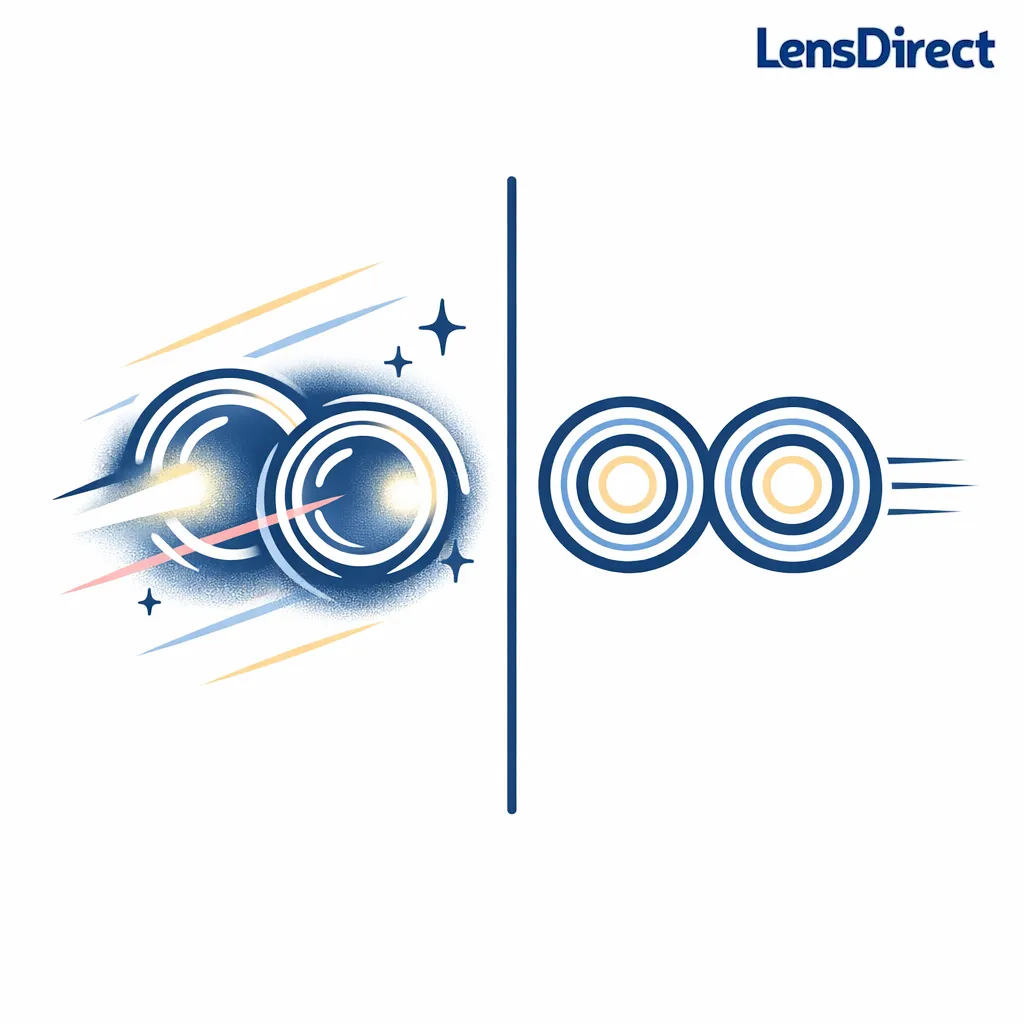
If night glare bothers you, an anti-reflective lens option is worth considering before you order. It does not change the prescription itself, but it can be a smart add-on for people who spend a lot of time driving, on screens, or under bright indoor lighting.
This is one of the easiest upgrades to judge by daily annoyance rather than by jargon. If reflections are a recurring complaint, pick the lens package that better fits where you actually wear your glasses.
- Single-vision: Best if you want one main distance and the simplest day-to-day wear.
- Bifocal or progressive: Best if you need astigmatism correction and reading help in the same pair.
- High-index: Best if you want a thinner look with a stronger prescription.
- Polycarbonate or Trivex: Best if you prioritize lighter weight or added durability.
- Anti-reflective: Best if glare, reflections, or night driving are high on your complaint list.
What to look for when ordering glasses online
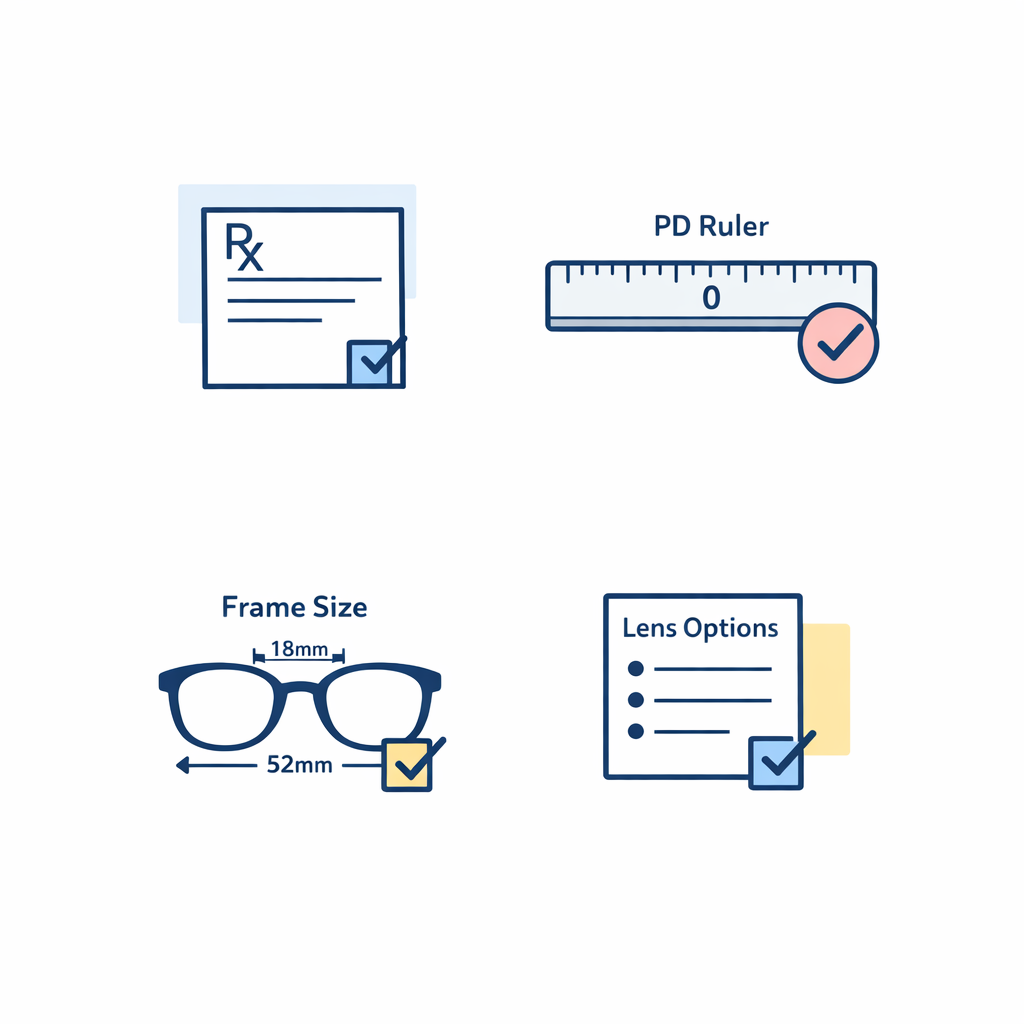
Prescription details you need ready
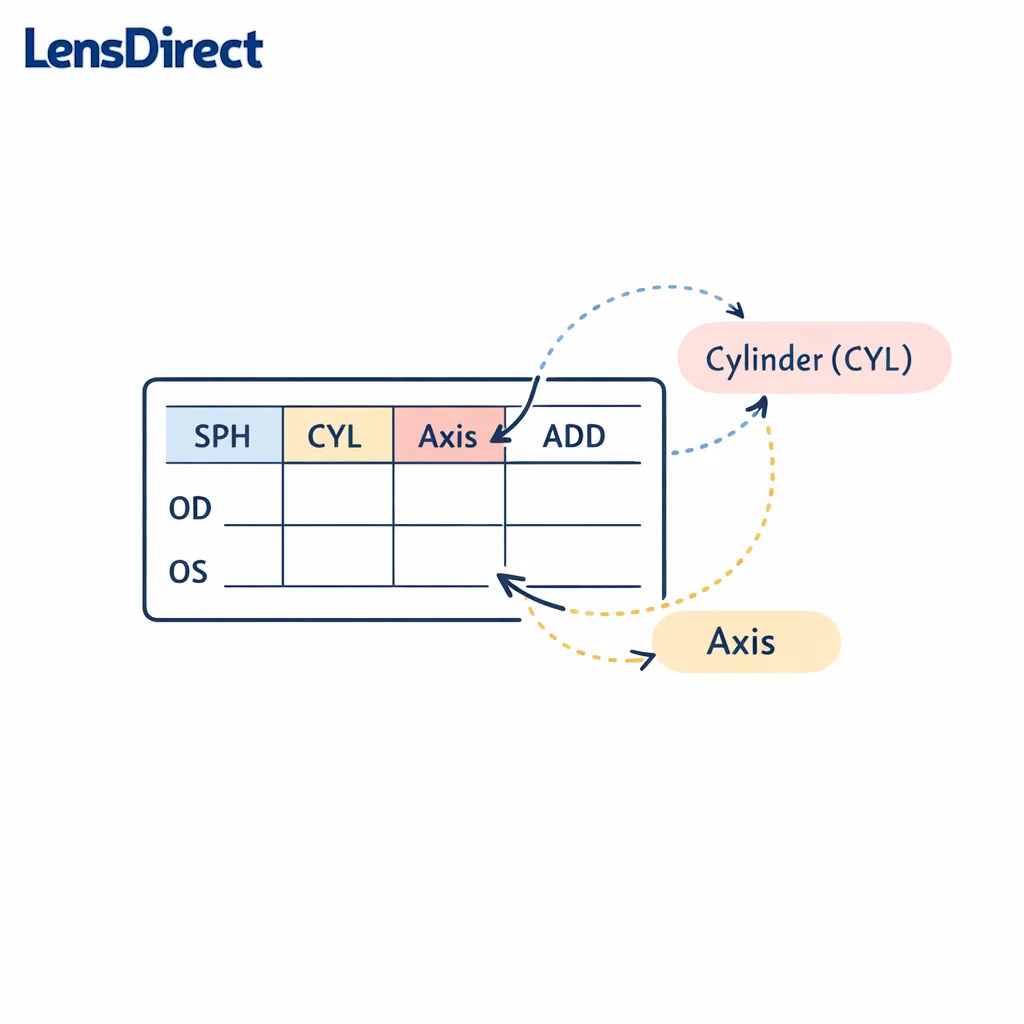
Before checkout, keep your prescription beside you and carefully enter OD, OS, SPH, CYL, Axis, and ADD if your prescription includes them. If anything looks unclear or handwritten in a way you cannot confidently read, call the prescriber’s office before you place the order.
The most common online-ordering mistake is not choosing the wrong frame. It is typing the right numbers into the wrong boxes, especially when CYL and Axis are involved.
PD, frame fit, and lens alignment
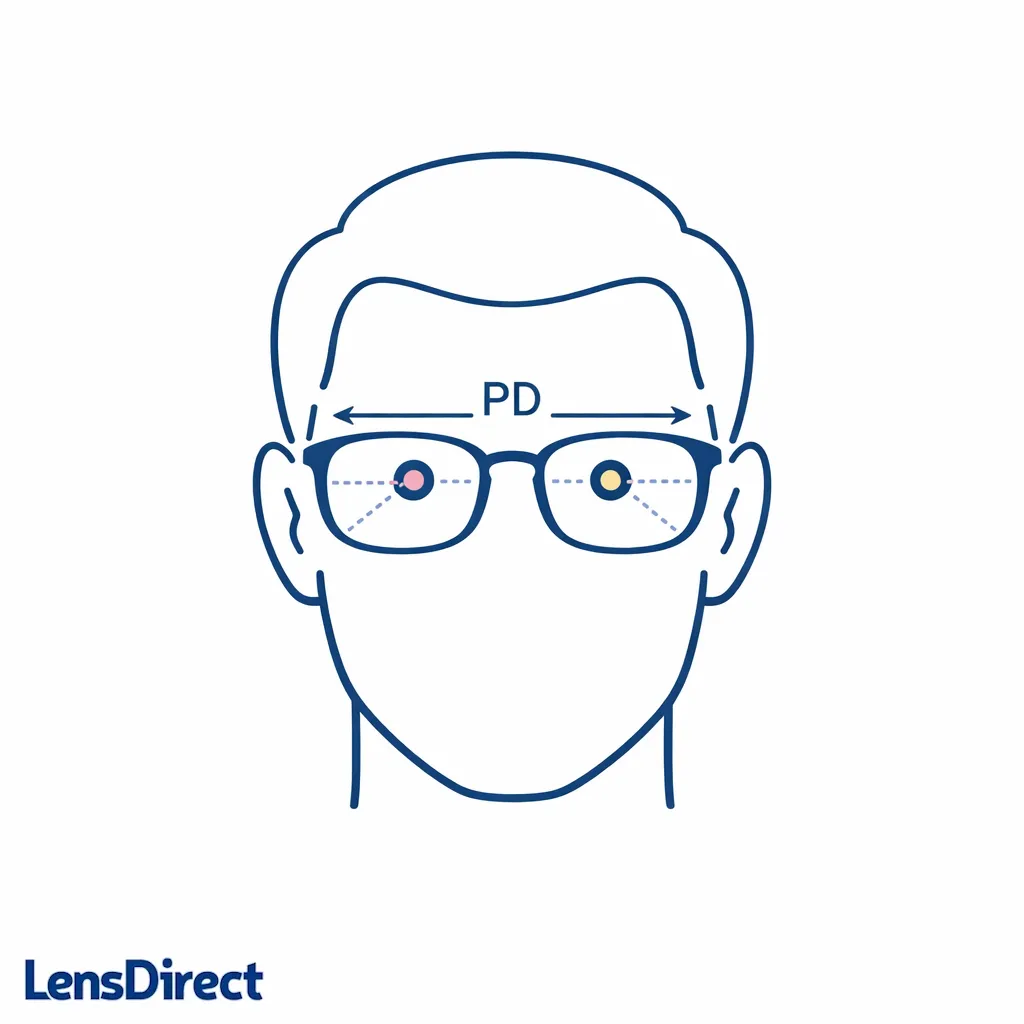
Your pupillary distance, or PD, helps place the lenses in front of your pupils, and that matters for every prescription. With astigmatism, accurate placement is worth extra attention because you want the finished lenses to line up as intended, not just be close.
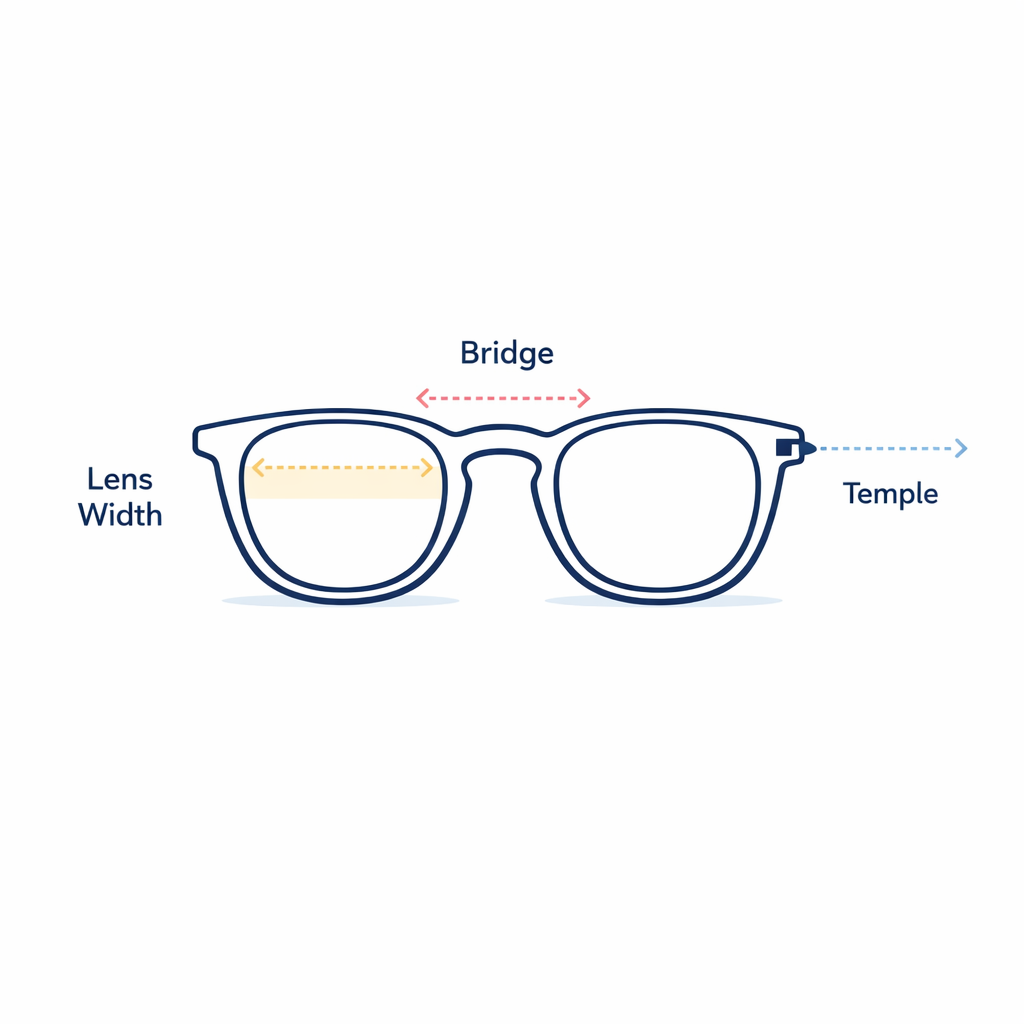
Frame size matters too. If you are not sure where to start, use a fit guide and compare the listed measurements with a pair you already wear comfortably.
Frame stability and why wraparound styles can be tricky
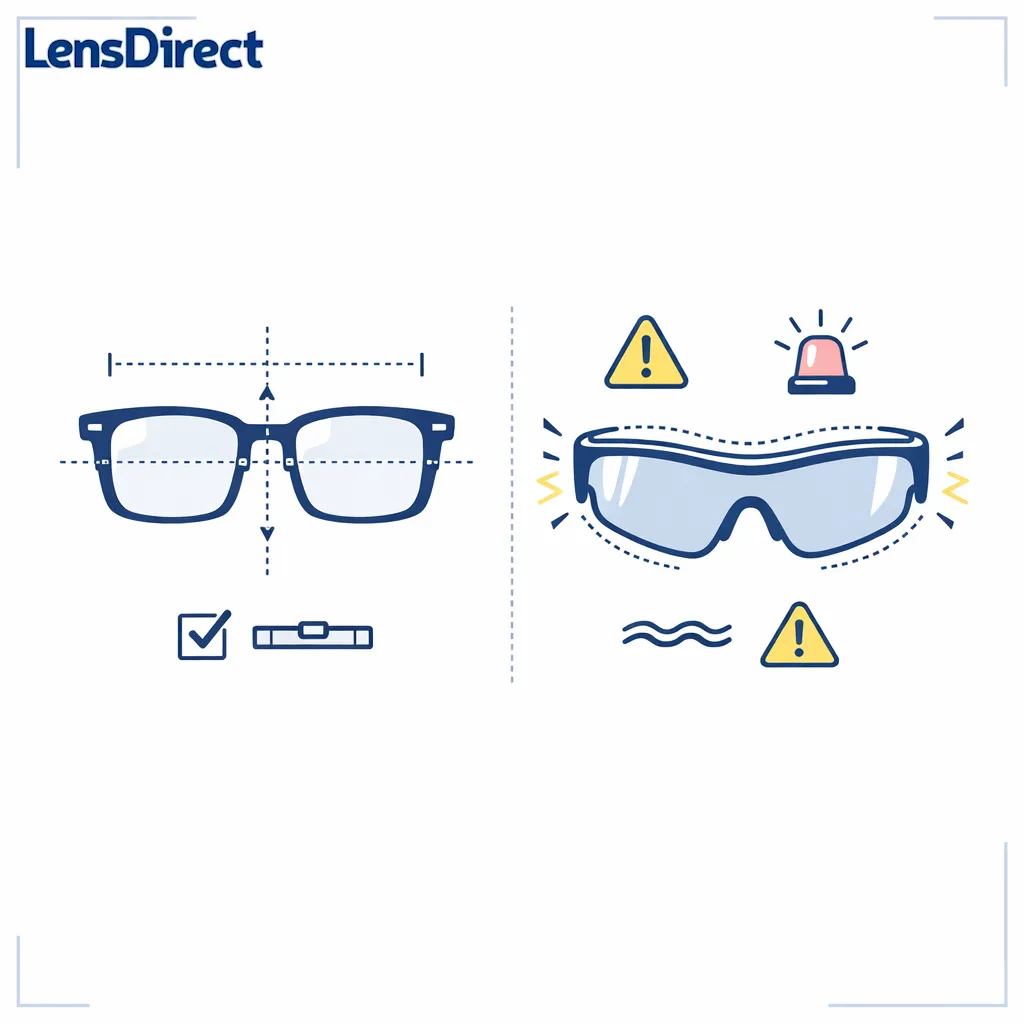
A good-looking frame still has to stay put. When you pick a frame shape that fits your face well, the glasses are more likely to feel consistent throughout the day instead of shifting every time you move.
If you want a heavily curved or sporty wrap style, it is worth double-checking the frame choice before ordering. Astigmatism prescriptions are often happiest when the frame sits predictably and the lens position is easy to keep consistent.
When to ask an optician or doctor for help
Get a second opinion before you order if this is your first astigmatism prescription, you are changing into progressives, or your old glasses never quite felt right. A quick check with your optometrist or optician can be much faster than troubleshooting a pair that feels off after it arrives.
You should also reach out promptly if new glasses cause severe discomfort, double vision, or persistent blur instead of gradually feeling more natural. Safety comes first, especially if you plan to use the glasses for driving.
Common mistakes to avoid
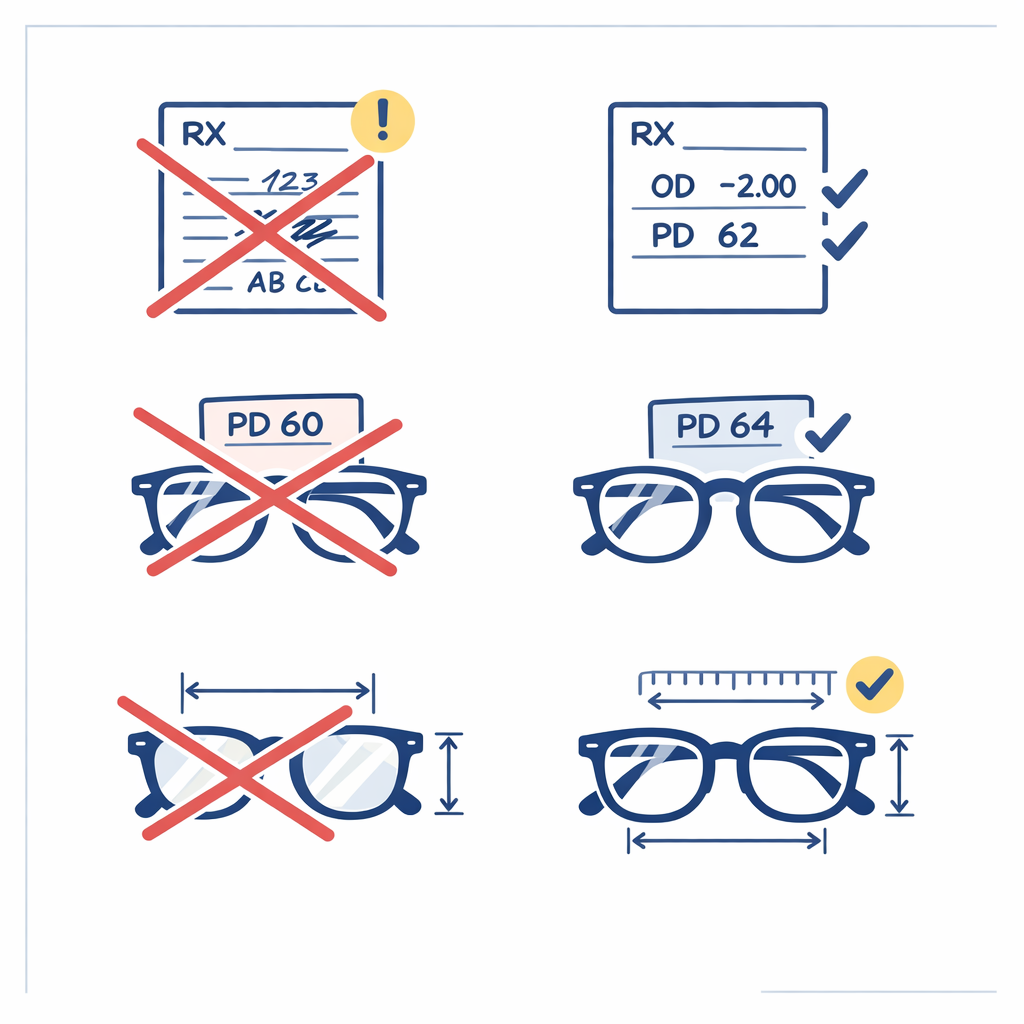
- Reusing an old number instead of remeasuring your PD.
- Mistyping prescription values during checkout.
- Choosing a very different shape without checking frame fit and size.
- Assuming over-the-counter readers can do the same job as prescription astigmatism glasses.
- Waiting too long to ask for help when the prescription, measurements, or frame choice seem uncertain.
How long it takes to adjust to new astigmatism glasses
What is normal in the first few days
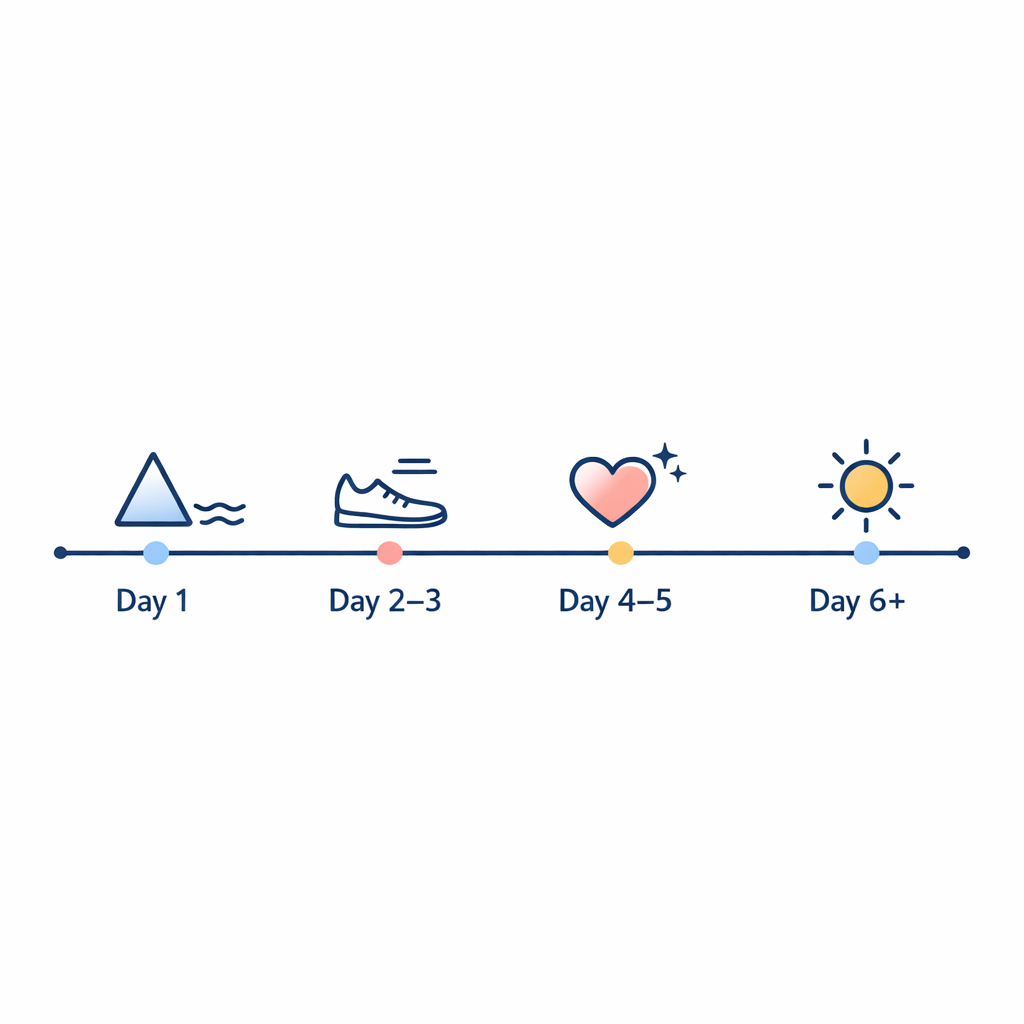
A new pair can feel different at first, especially if your prescription changed or this is your first time wearing glasses for astigmatism. The best practical move is to wear the new pair consistently for normal daily tasks so your eyes and brain have a fair chance to adapt.
What normal usually means is mild and temporary, not dramatic. If the glasses seem a little different but are steadily getting easier to wear, that is very different from a pair that stays uncomfortable every time you put it on.
When distortion, dizziness, or headaches mean something is off
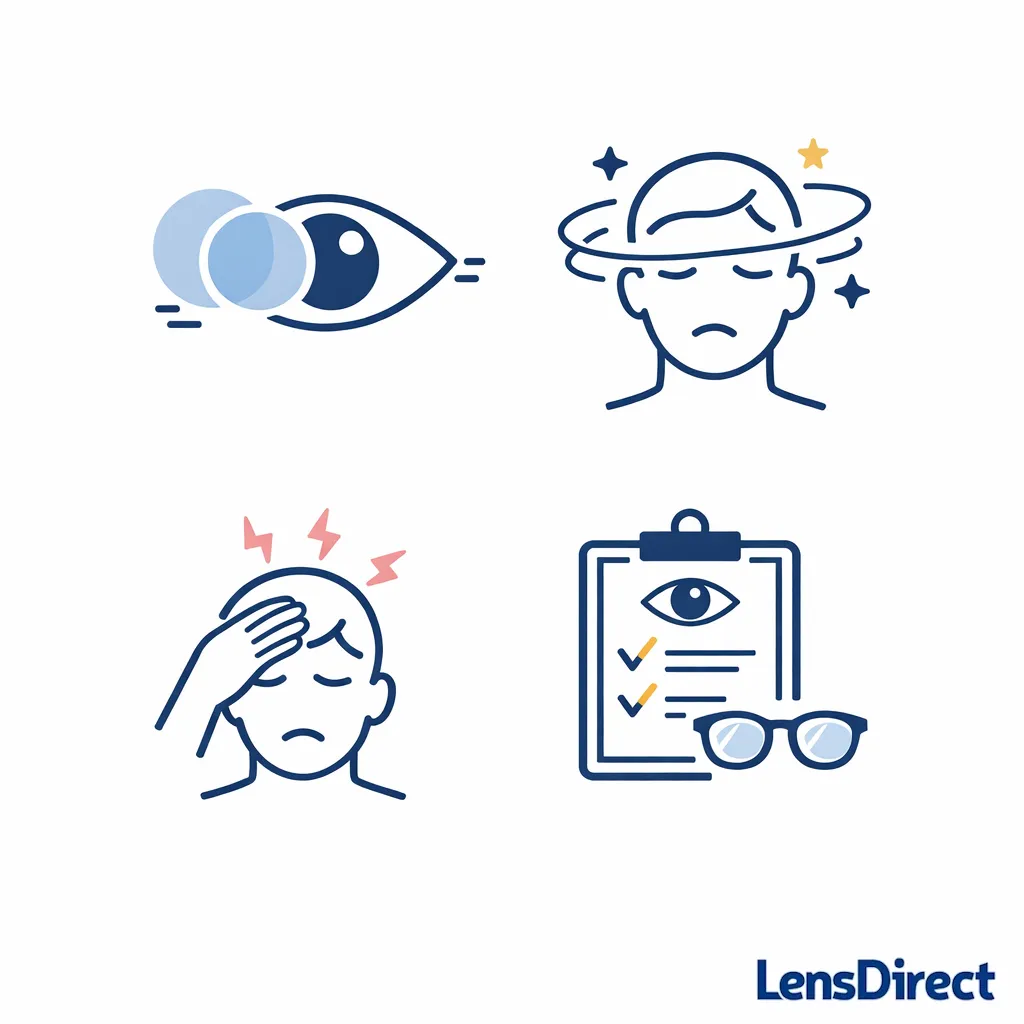
If the glasses keep feeling wrong after a reasonable break-in period, do not assume you just need to tough it out. Persistent blur, strong distortion, headaches, or dizziness are good reasons to contact your eye doctor or optician and have the prescription, PD, and frame fit checked again.
This matters even more if the glasses are for school, work, or driving. A quick adjustment question now is better than weeks of wearing a pair you do not trust.
Glasses vs contacts for astigmatism
When glasses may be the better first option
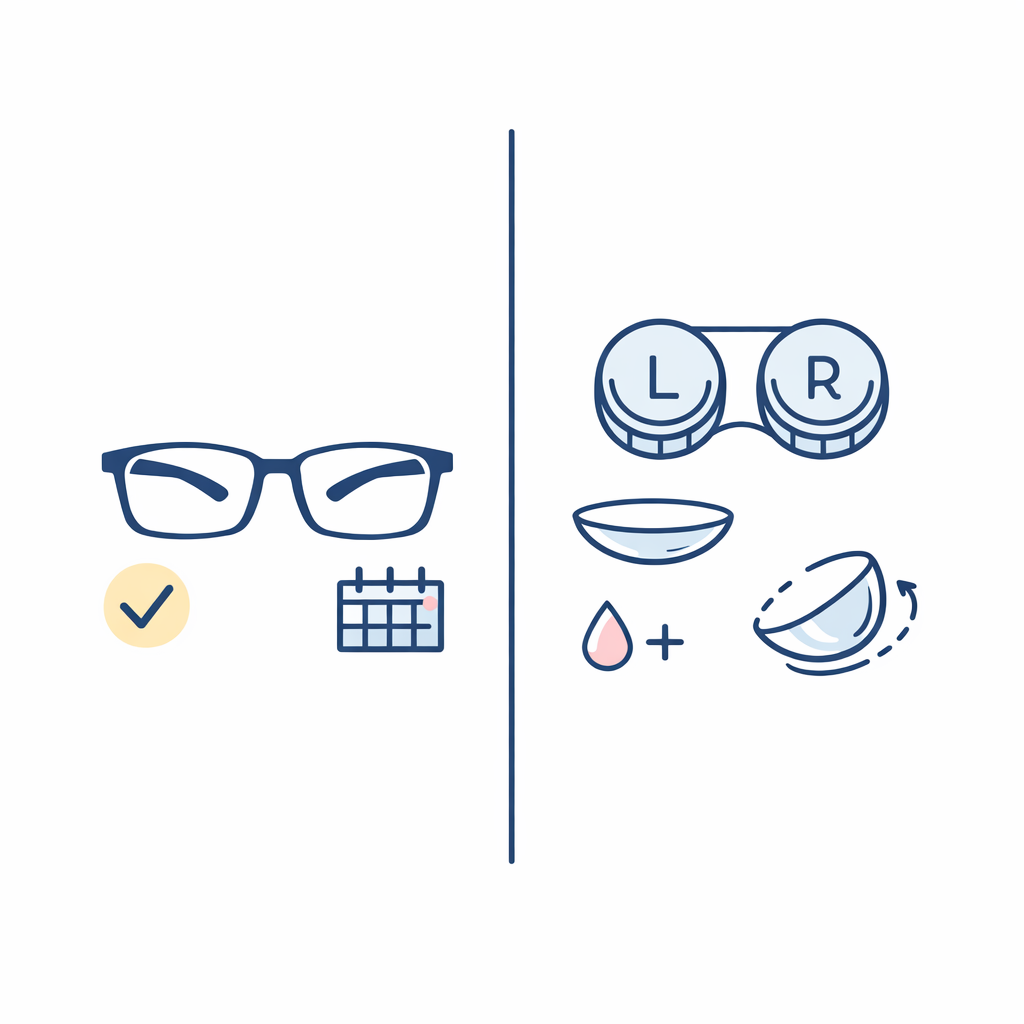
Glasses are often the easier first purchase because they are simple to put on, simple to take off, and easy to keep as a reliable backup. If you want a straightforward way to sharpen vision for work, study, driving, or occasional wear, glasses for astigmatism are usually the lowest-friction starting point.
They also make it easier to compare lens designs, materials, and coatings without adding a contact-lens fitting step. For many shoppers, that makes online ordering feel more manageable.
When toric contacts may be worth considering
If you prefer not to wear glasses all day, ask your eye doctor about contact lenses made for astigmatism. The FDA explains that contact lenses are medical devices, which is why proper fitting, prescription details, wear schedule, and care matter more than brand-shopping alone.
Contacts can be useful for sports, travel, or days when you want a wider field of view. Many people end up happiest with both: glasses as the dependable default and contacts as an option for specific situations.
FAQ
What type of glasses are best for astigmatism?
The best pair is the one that matches your full prescription and your main daily tasks. For many people that means single-vision lenses for one main distance, while others do better with a multifocal option when they also need reading help.
Do you need special glasses if you have astigmatism?
Usually, yes, but the special part is the prescription lens rather than a special frame. If your order includes astigmatism numbers, double-check the prescription fields and measurements before you buy.
Can you fully correct astigmatism with glasses?
Glasses can do an excellent job correcting the astigmatism portion of your prescription when the exam, measurements, and lens build are accurate. The goal is not a generic pair of stronger lenses. It is the right correction placed in the right way.
Is it worth getting glasses just for astigmatism?
If blur, eye strain, or night-driving issues are bothering you, yes, it usually is. If your symptoms are mild, you may decide to wear your glasses mainly for work, screens, driving, or other tasks where sharper vision matters most.
How long does it take for glasses to correct astigmatism?
The lenses start doing their job right away, but your comfort with a new pair can take a little time. If the glasses never start to feel better, ask your doctor or optician to review the prescription, fit, and measurements rather than forcing yourself to adapt.
What to do next
- Pull out your current prescription and verify the entries you will need at checkout, especially CYL, Axis, and ADD if they are listed.
- Measure your pupillary distance before you place the order.
- Use Find Your Fit to narrow down frame shapes and sizing.
- Review lens options based on how and where you actually wear your glasses.
- If you plan to use out-of-network benefits, learn how to get reimbursed by your insurance before checkout.
- If you already love your current frames, consider whether replacing the lenses makes more sense than starting over.
Choose the pair that fits how you actually live
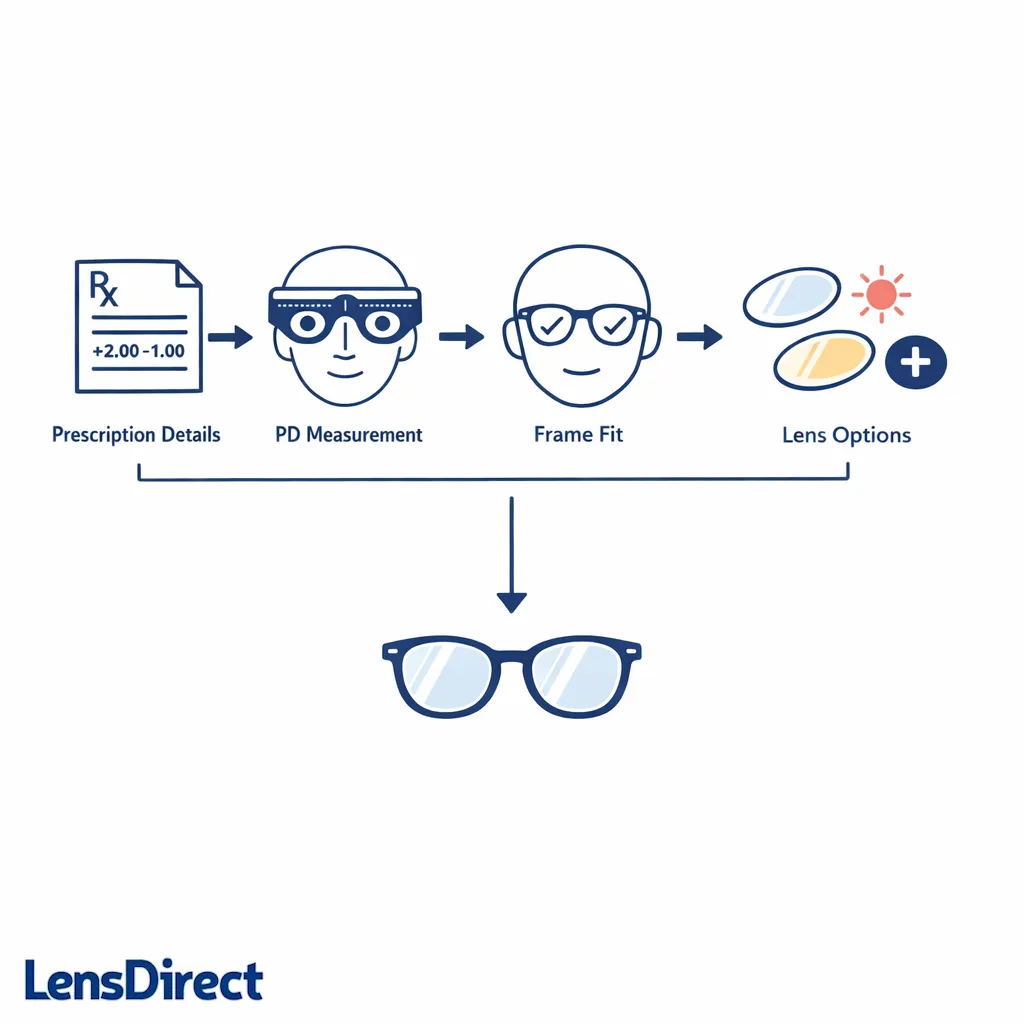
If you want an everyday pair, LensDirect makes it easy to Shop Glasses once you have your prescription ready. If driving, outdoor sports, or bright conditions are a big part of your day, you can also Shop Sunglasses for prescription-ready options.
If you switch between eyewear types, you can Shop Contacts for days when glasses are not your first choice. And if your frames still fit perfectly, Replace Your Lenses instead of replacing the whole pair.
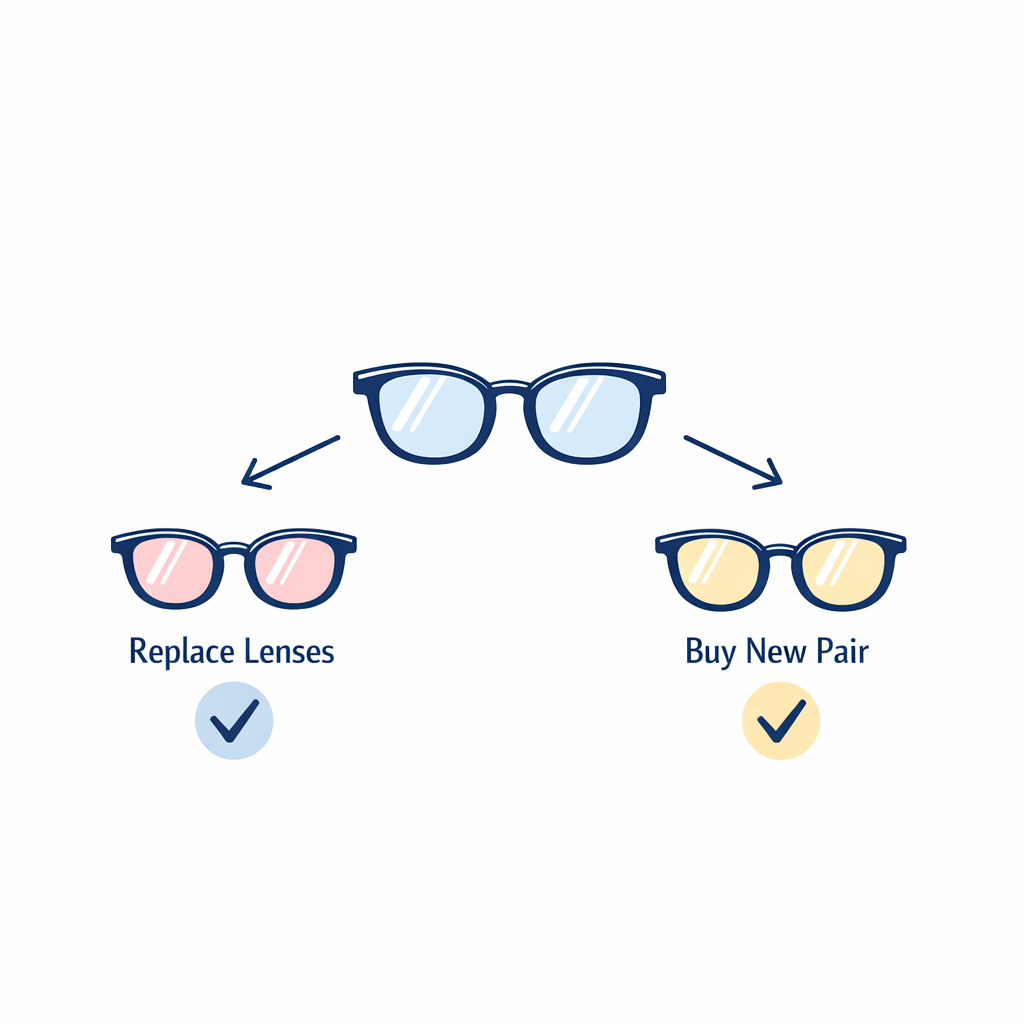
- If you want LensDirect to handle the process for you, choose full-service lens replacement.
- If you prefer a more hands-on route, order replacement lenses by brand.
- If you are still deciding, start with Find Your Fit or learn how to measure your pupillary distance so the order feels simpler.
Author

Subscribe to our email newsletter to get the latest posts delivered right to your email.