

Adjusting to bifocals is usually about learning a new viewing pattern, not “teaching” your eyes to do something unnatural. Because presbyopia is the age-related loss of near focusing ability, bifocals and other multifocal lenses ask you to use different parts of the lens for different distances.
If you are new to bifocals, you are not alone. Most people start noticing presbyopia after age 40, so the first multifocal pair often arrives after years of wearing single-vision glasses or none at all.

This guide is for first-time bifocal wearers, people replacing older multifocal lenses, and anyone wondering whether what they are feeling is normal. You will learn what the bifocal adjustment period can feel like, how to make getting used to bifocals easier, what mistakes to avoid, and when to follow up with an eye care professional.
Short answer: Expect the first several days to feel the most different, and give a new pair about one to two weeks of steady daily wear before you decide it is not working. If vision still feels unsafe for stairs or driving, or symptoms stay strong instead of improving, get the fit and prescription checked.
How long it takes to adjust to bifocals
Typical timeline: a few days to 2 weeks
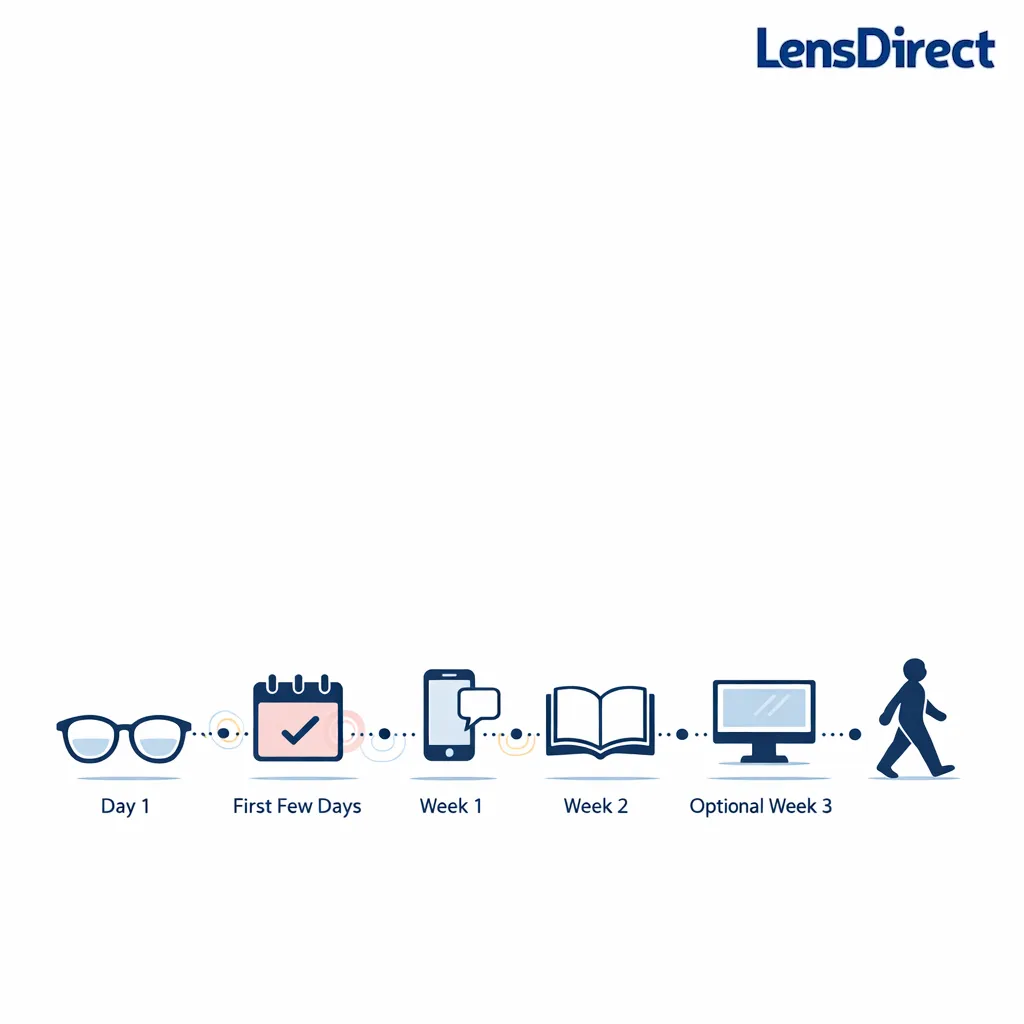
Plan for the first few days to be the most noticeable. You may need to think more consciously about where to look through the lens when you switch between your phone, a book, your computer, and the room around you.
During the first week or two, the goal is simple: make everyday viewing feel automatic again. Instead of forcing your eyes to “work harder,” you are building a new habit so the right part of the lens lines up with the task in front of you.
What can extend adjustment to 3 weeks
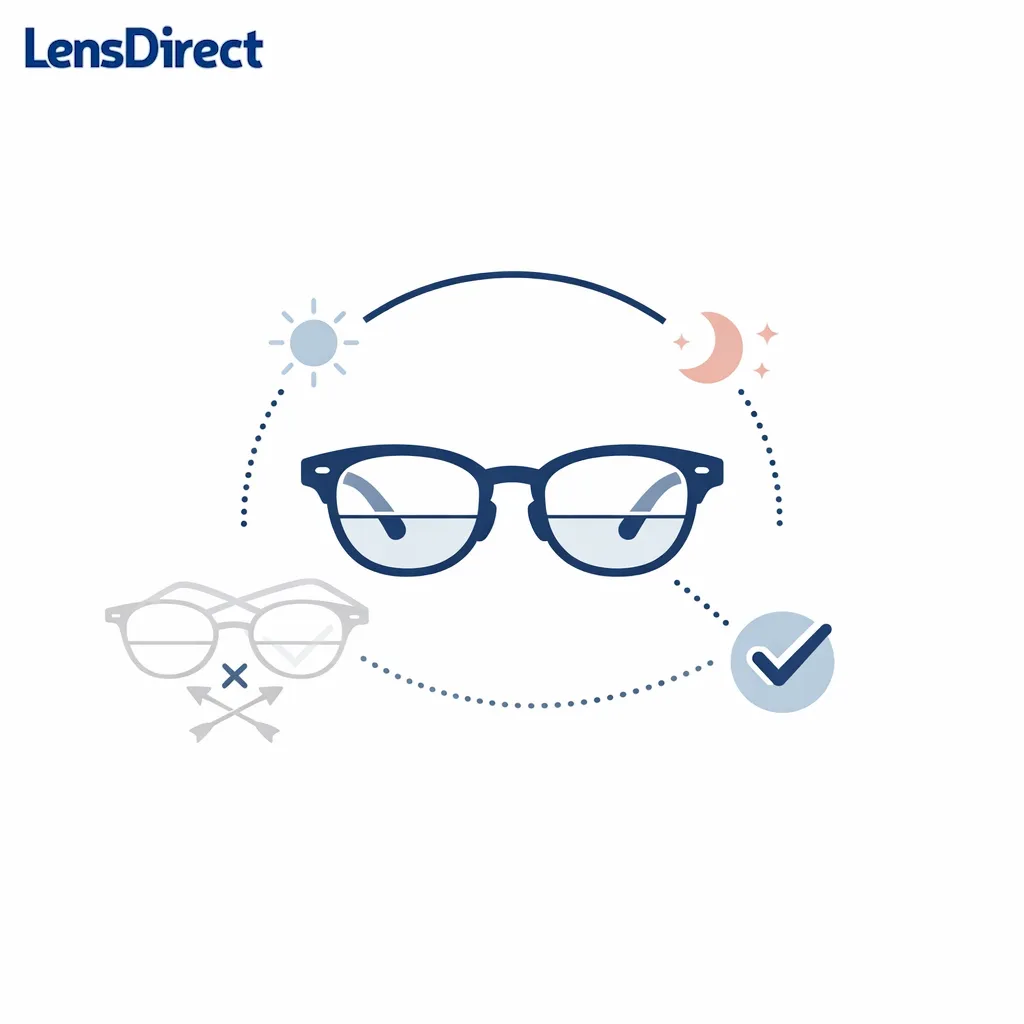
Give yourself more patience if your prescription changed a lot, your near power is stronger than before, or this is your first move from single-vision lenses to a multifocal design. Some wearers also need more practice with no-line progressives because the viewing zones are blended rather than separated by a visible line.
Try not to keep switching back to your old glasses every time the new pair feels strange. That back-and-forth usually makes the new viewing habit harder to learn and can stretch out the adjustment period.
What is normal when wearing bifocals for the first time
Blurry vision, image jump, mild dizziness, headaches

You may notice mild blur if you look through the wrong area, a brief “image jump” when your gaze crosses the segment in a lined bifocal, or a light woozy feeling while your brain gets used to the lens layout. Blurred near vision, eye strain, and headaches are classic symptoms tied to presbyopia, so a new multifocal prescription can feel especially noticeable during reading-heavy days.
What you want to see over time is improvement, not perfection on day one. If you look through the correct zone and things still stay persistently smeared, doubled, or off-balance, that is less likely to be simple adaptation.
Depth perception changes on stairs and curbs
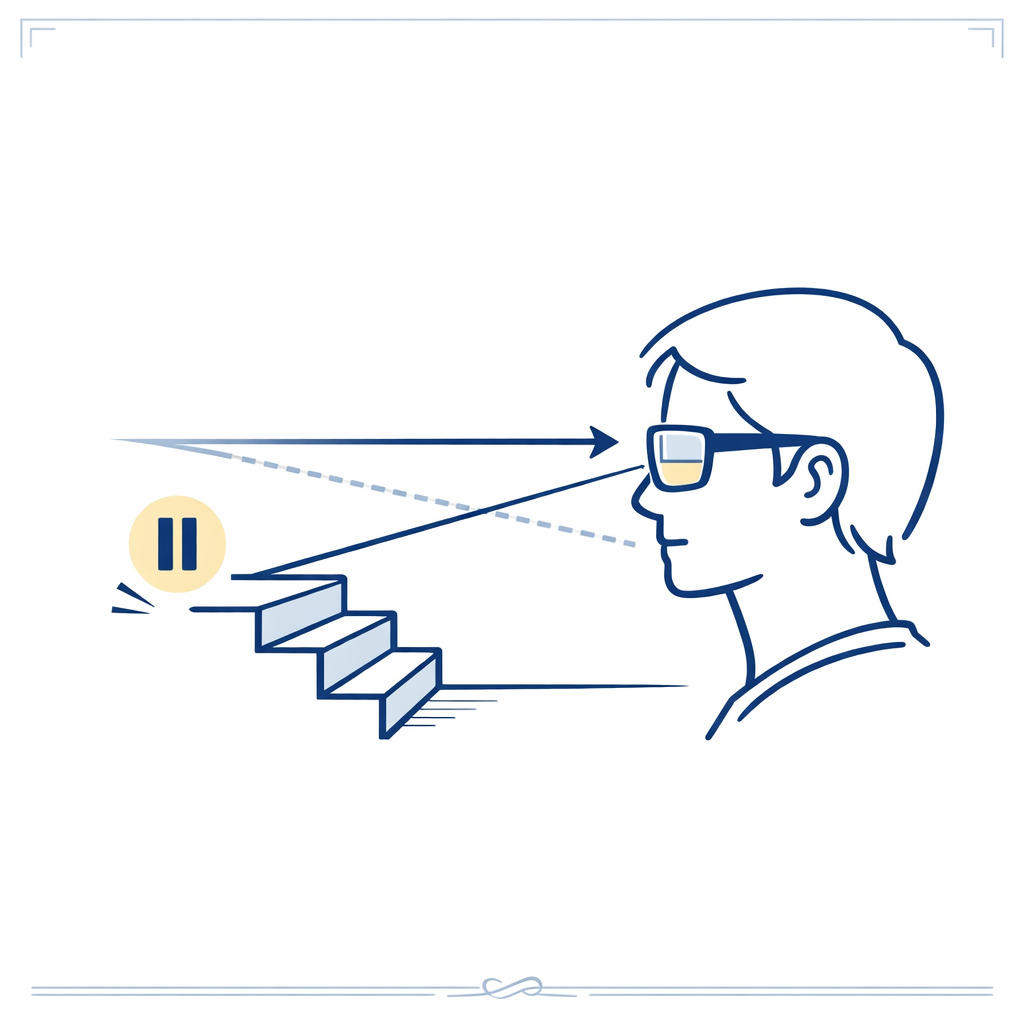
The near segment of a bifocal is designed for close work, not for watching the floor while you walk. That is why stairs, curbs, escalators, and uneven pavement can feel strange at first, and why it is smart to use the distance portion of the lens and slow down until movement feels natural again.
Extra caution matters because falls are a major injury risk for older adults. If a new pair makes you feel unsteady, do not push through it on a busy commute or while carrying something heavy.
Are bifocals difficult to adjust to? Usually they are more awkward than truly difficult. Most people do fine when the prescription is accurate, the glasses fit well, and they wear them consistently during normal daily tasks.
Are bifocals blurry at first? They can be, especially if you are looking through the wrong part of the lens. Mild blur that improves as you learn the viewing zones is common; blur that stays strong in the right zone deserves a recheck.
Tips for a smoother transition to bifocals
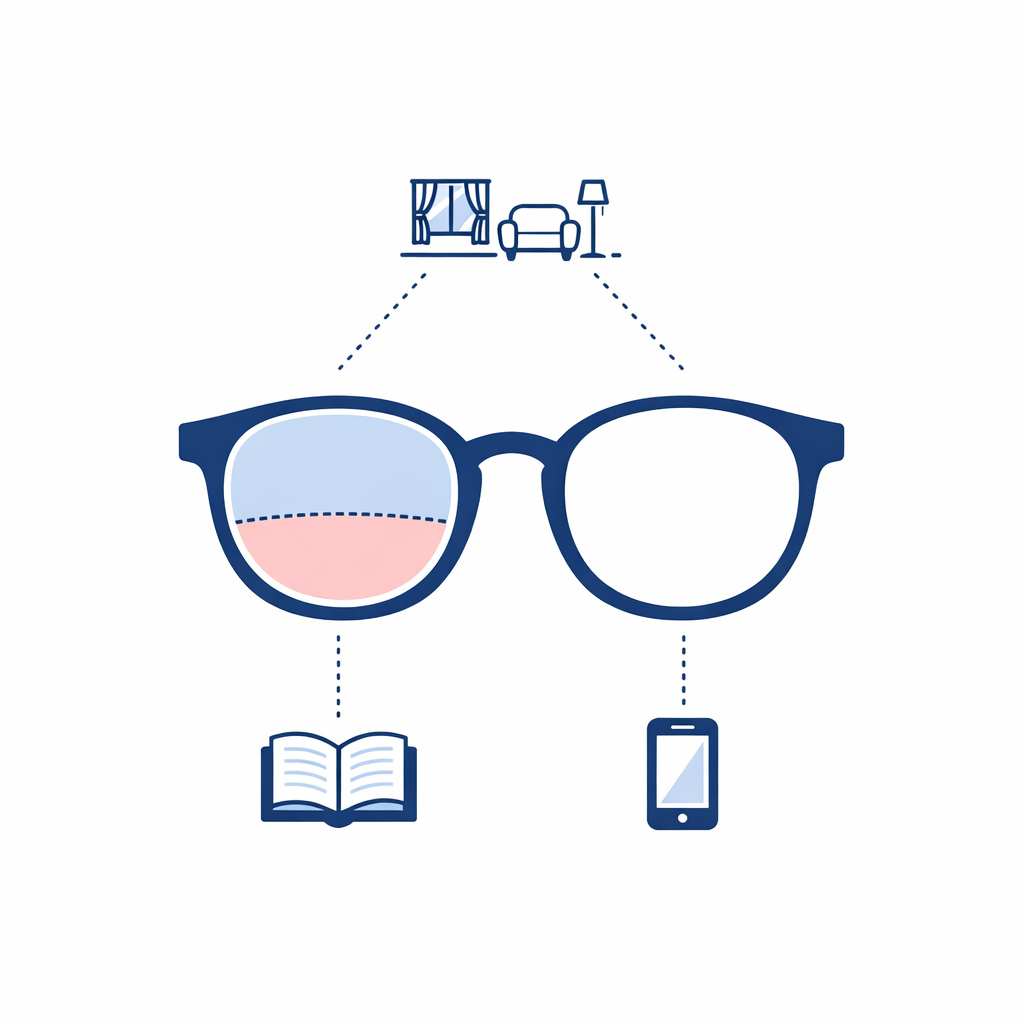
If you want faster, more comfortable bifocal glasses adaptation, keep the routine simple. The biggest win is consistency: wear the new pair enough for your brain to map where distance and near viewing live.
- Wear them consistently and avoid switching back. Put the new pair on in the morning and keep it on for most of the day unless your eye doctor told you otherwise. Short, repeated “test drives” are usually less helpful than steady wear.
- Look down for reading and straight ahead for distance. Let your eyes drop into the reading segment for books, labels, and your phone, then return to the top of the lens when you look across the room.
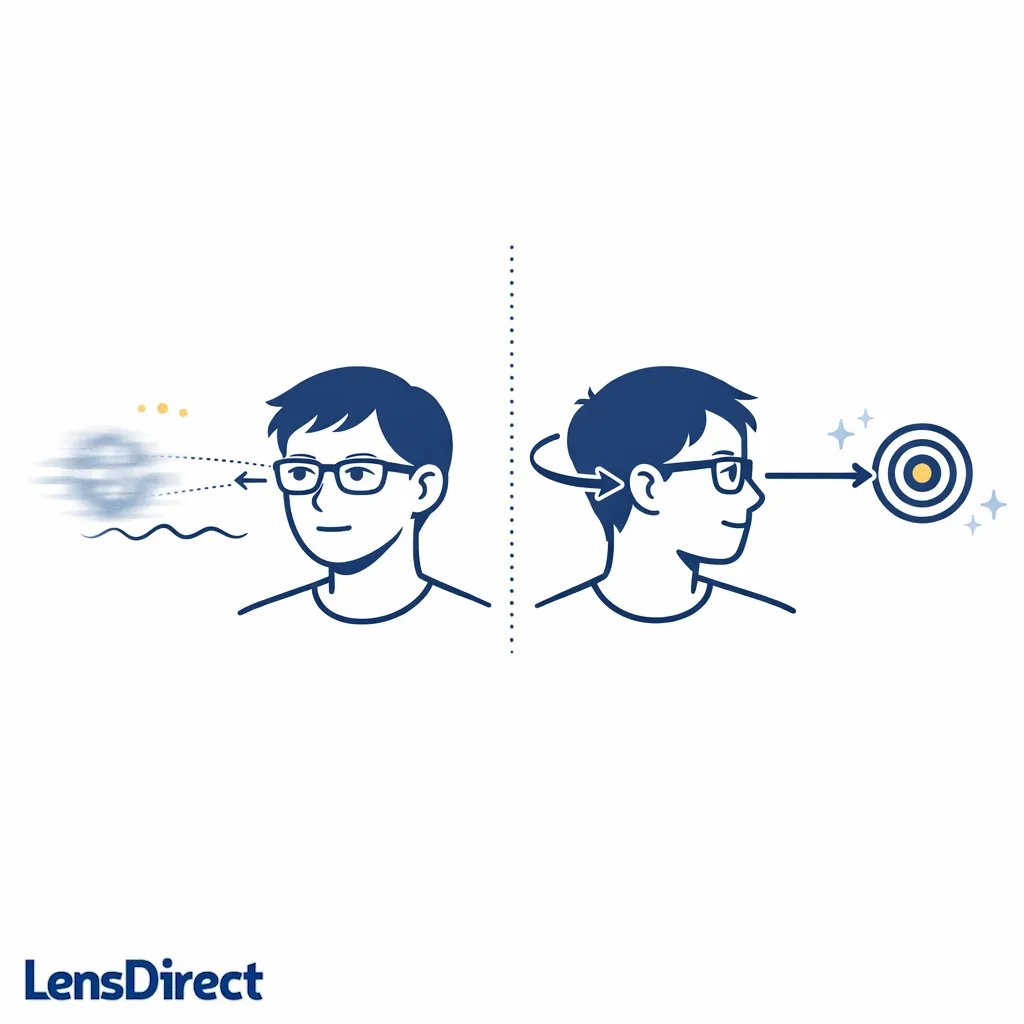
- Move your head and point your nose toward what you want to see. This is one of the best new bifocals tips because it helps you find the clearest zone faster than darting only your eyes from side to side.
- Hold reading material at a natural distance. Do not pull your phone unusually close or push a book too far away to “hunt” for focus. Small posture changes are fine, but extreme positioning usually means you are using the wrong part of the lens.
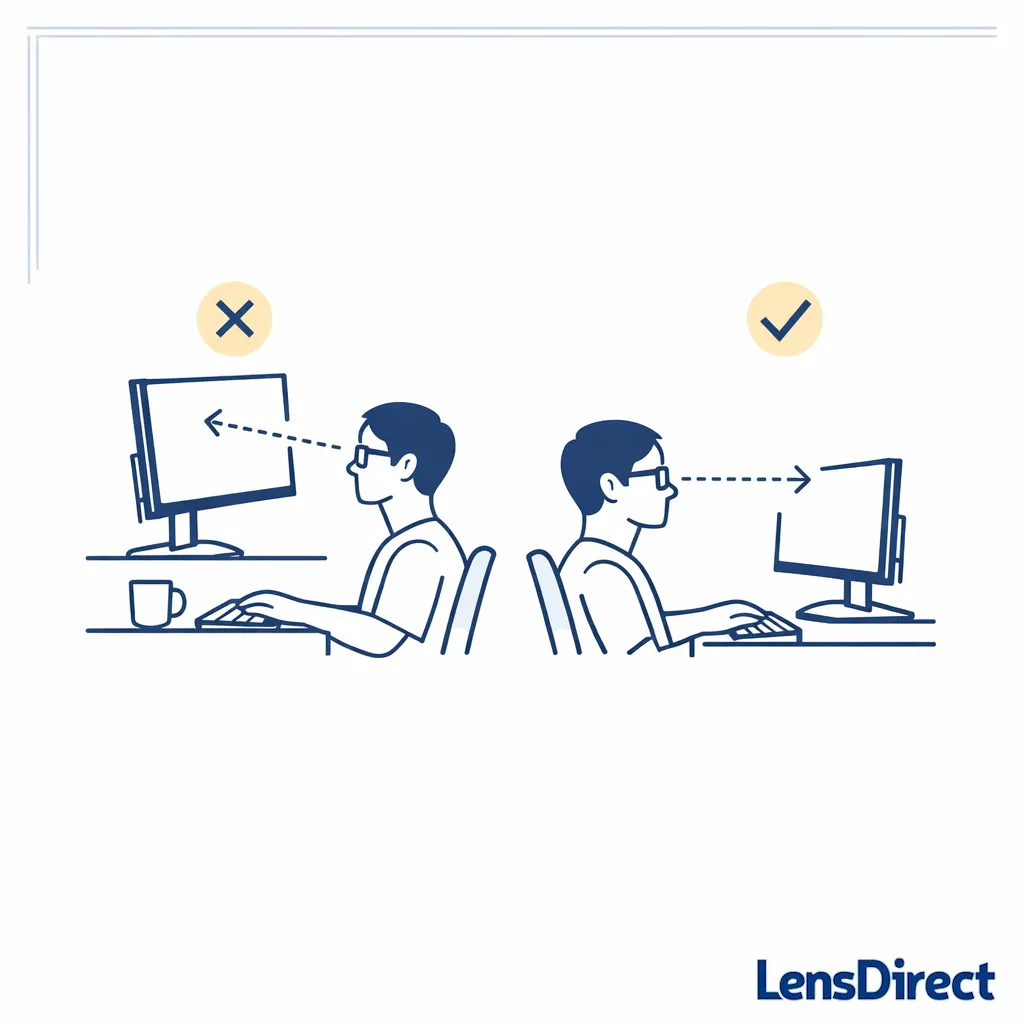
- Position your computer screen slightly below eye level. Long screen sessions can trigger computer vision syndrome and extra eye strain, so a lower monitor often works better with multifocal lenses than a screen set too high.
- Give yourself extra time for walking and stairs. Pause before the first step, use the distance zone, and turn your whole head when you scan. That feels deliberate at first, but soon becomes automatic.

How do you train your eyes to use bifocals? You do it by repetition, not eye exercises. Read through the lower segment, look ahead through the upper zone, move your head toward the object you want to see, and let the new habit build over several days.
Do you move your head or eyes with bifocals? Both, but head movement matters more than many first-time wearers expect. Your eyes still move naturally, but turning your head helps keep the target centered in the clearest part of the lens.

Everyday situations that need extra care
Walking, stairs, curbs, driving, computer use

Walking outdoors is often the first real-world test when you are adjusting to bifocals. Curbs, subway steps, patterned floors, and sloped sidewalks can look a little different until your brain stops paying attention to the lens line and starts using the correct zone automatically.
Driving deserves extra patience. Wear your new glasses on shorter daytime trips first, make sure the distance view is crisp before you head onto a highway, and avoid nighttime driving in a brand-new pair if glare or depth judgment still feels off.
Computer work can feel like a separate challenge because the monitor sits at an in-between distance that many standard bifocals do not handle as comfortably as pure distance or close reading. If you spend hours at a screen, a lower monitor and a chair that keeps your neck relaxed can help, and some people do better with a dedicated computer or occupational pair.
Bifocals vs progressive lenses during adaptation
Lined bifocals vs no-line progressives
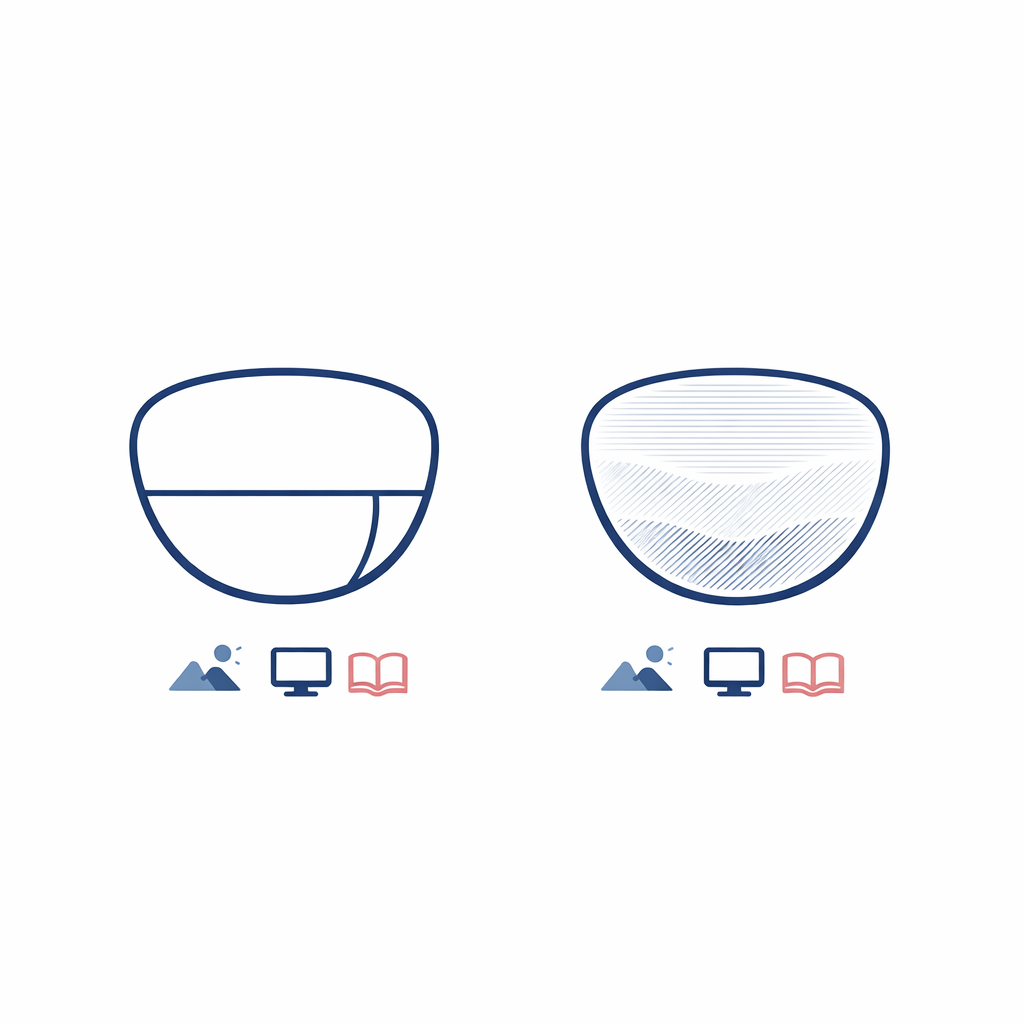
A lined bifocal uses a visible near segment, while a no-line progressive blends distance, intermediate, and near correction. In real life, that means lined bifocals can feel more direct for simple distance-and-reading tasks, while progressives give you a smoother look and more range between far and near.
Some wearers prefer the clearly defined reading zone of lined bifocals. Others prefer the appearance of progressives and do not mind a slightly longer learning curve while they figure out where each viewing zone sits.
When computer or occupational lenses may help
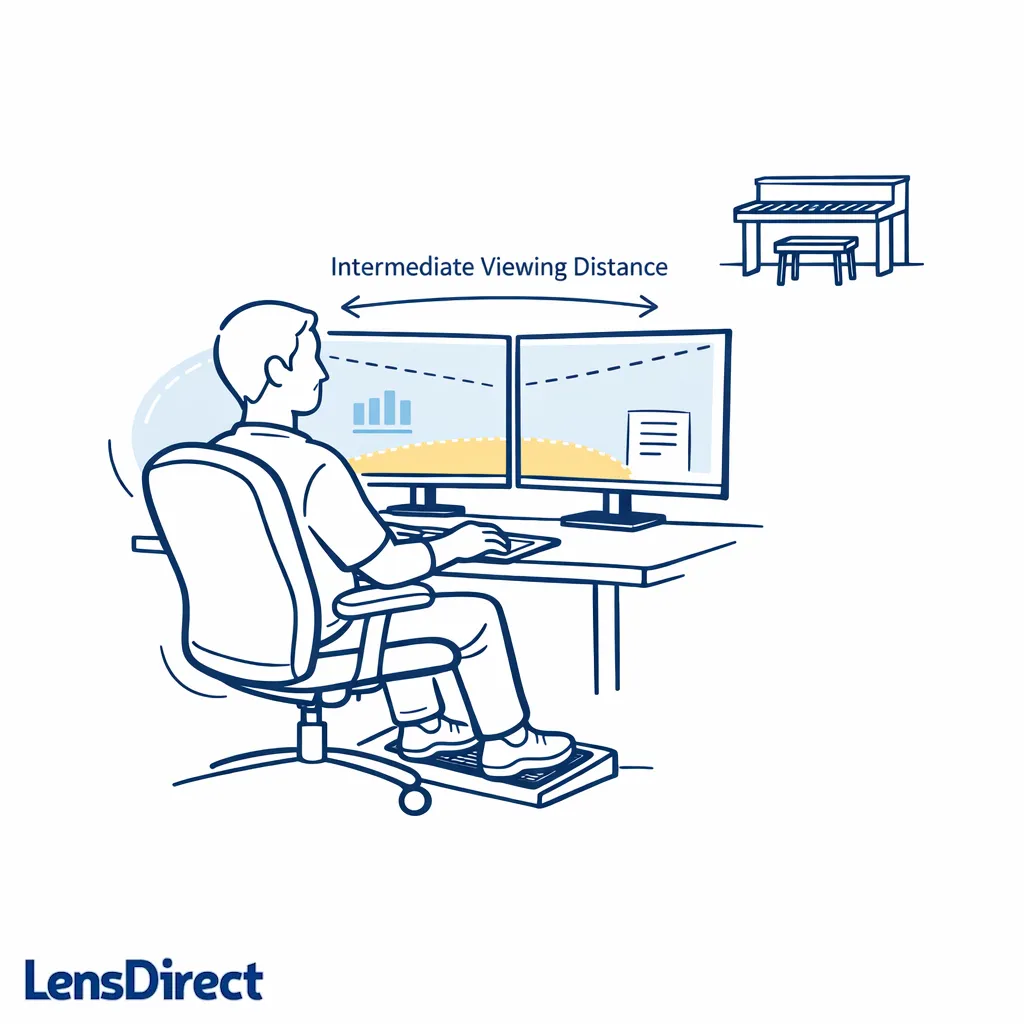
If most of your day happens at a laptop, two-monitor desk, cash register, piano, workbench, or drafting table, the issue may not be “I cannot get used to bifocals.” The issue may be that your main pair is doing a job it was not optimized for.
Computer or occupational lenses may give you a larger, more comfortable zone for intermediate and near tasks. If you can read well but your neck or shoulders get sore by the afternoon, ask your eye care professional whether a task-specific pair would make more sense.
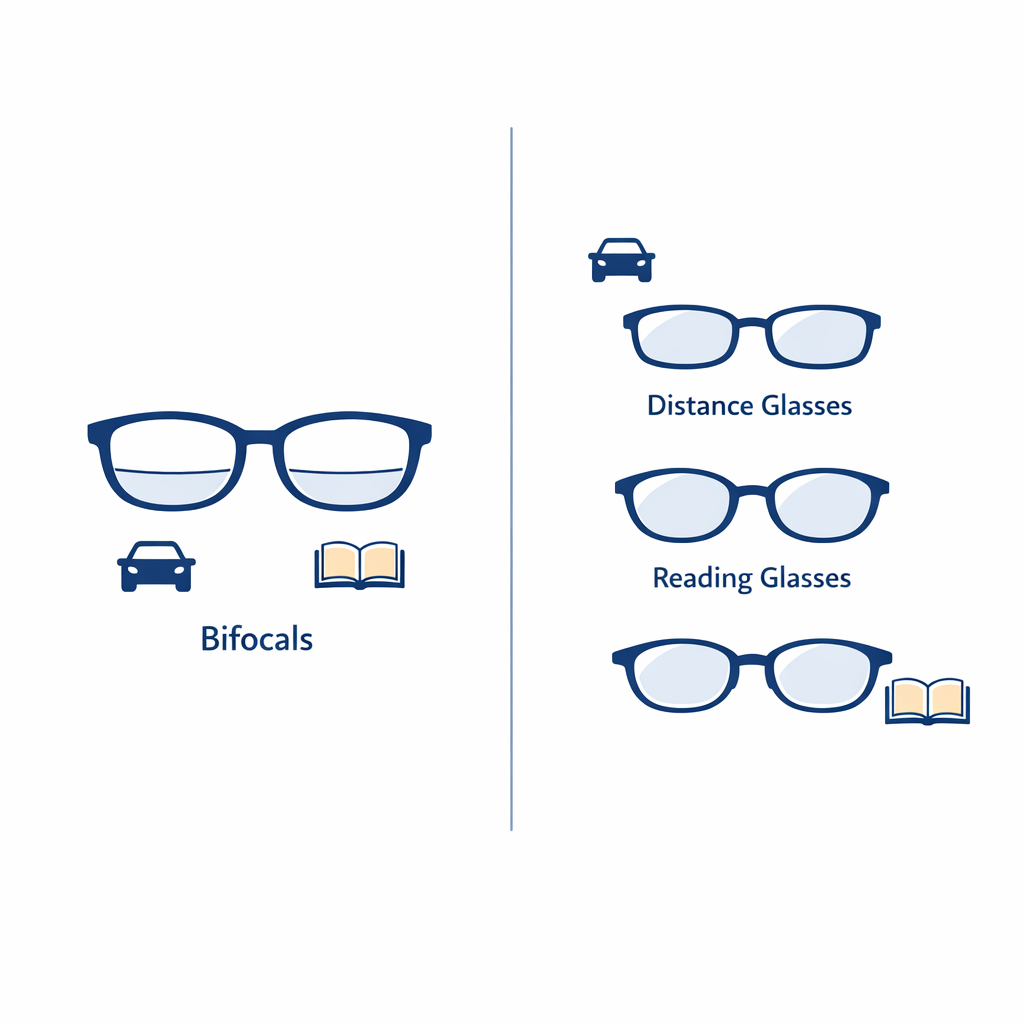
Quick comparison: Bifocals separate distance and near, progressives add a smoother intermediate range, and trifocals use distinct areas for three viewing distances. The best option is the one that matches how you actually spend your day.
Common mistakes and misconceptions
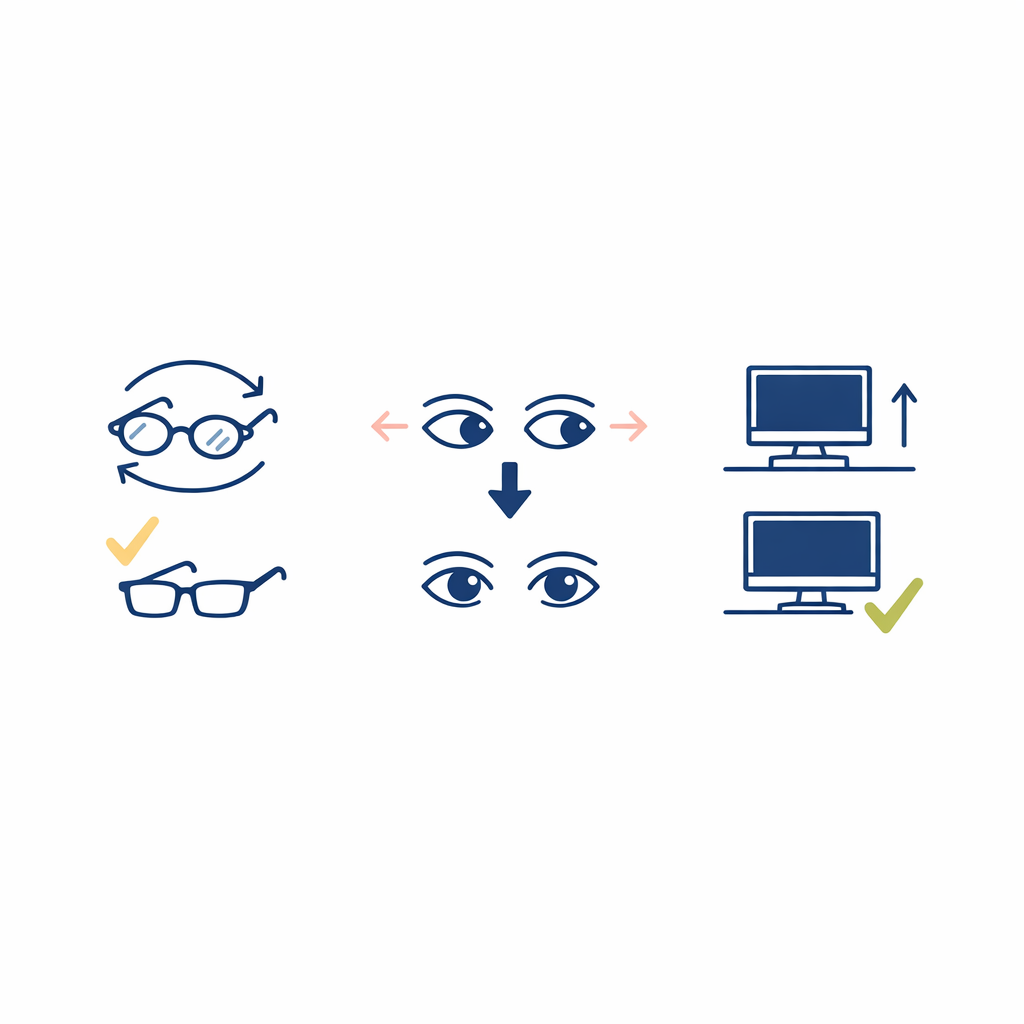
One common myth is that you should “ease in” by wearing bifocals only once in a while. In practice, occasional use often makes the transition feel longer because your brain never gets enough repetition to settle into the new pattern.
Another mistake is moving only your eyes and not your head. If the target sits off to the side, you may end up peering through a part of the lens that is not intended for that task, which creates avoidable blur and frustration.
Some people also assume any discomfort means the prescription is wrong. Sometimes the real problem is simpler: the frame sits too low, the reading segment lands awkwardly for your face, or the screen at your desk is much too high for comfortable multifocal use.
When to follow up with your eye care professional
Symptoms that should improve vs warning signs
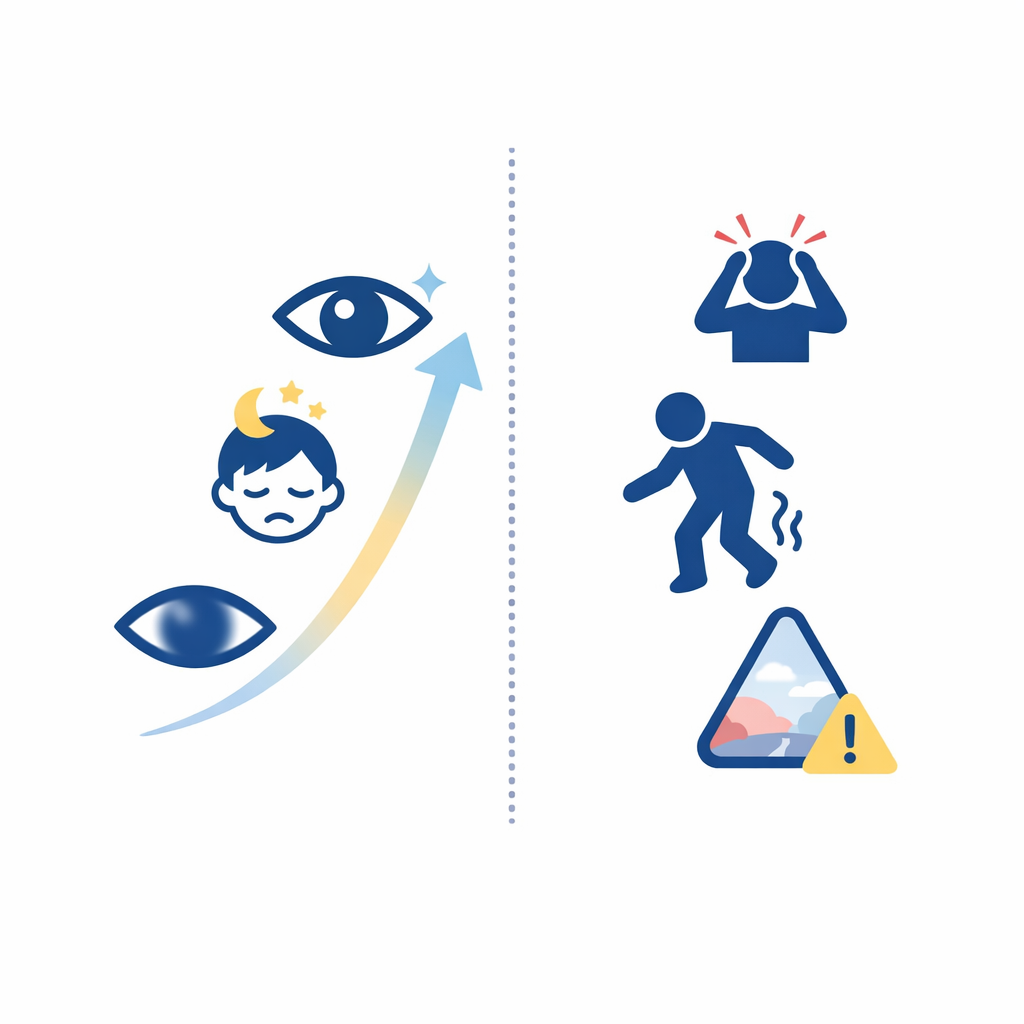
Symptoms that often improve with practice include mild blur while you learn the zones, slight awareness of the lens line, brief dizziness when you first stand up, and mild end-of-day fatigue after heavy reading. These are frustrating, but they should trend in the right direction rather than stay stuck.
- Book a recheck soon: clear vision never shows up through one part of the lens, headaches remain strong after consistent wear, you feel off-balance on ordinary walking surfaces, or driving still feels unsafe.
- Seek prompt medical advice: sudden vision loss, significant eye pain, new flashes or floaters, or a dramatic change that does not feel like simple adaptation.
Fit, segment height, and prescription checks
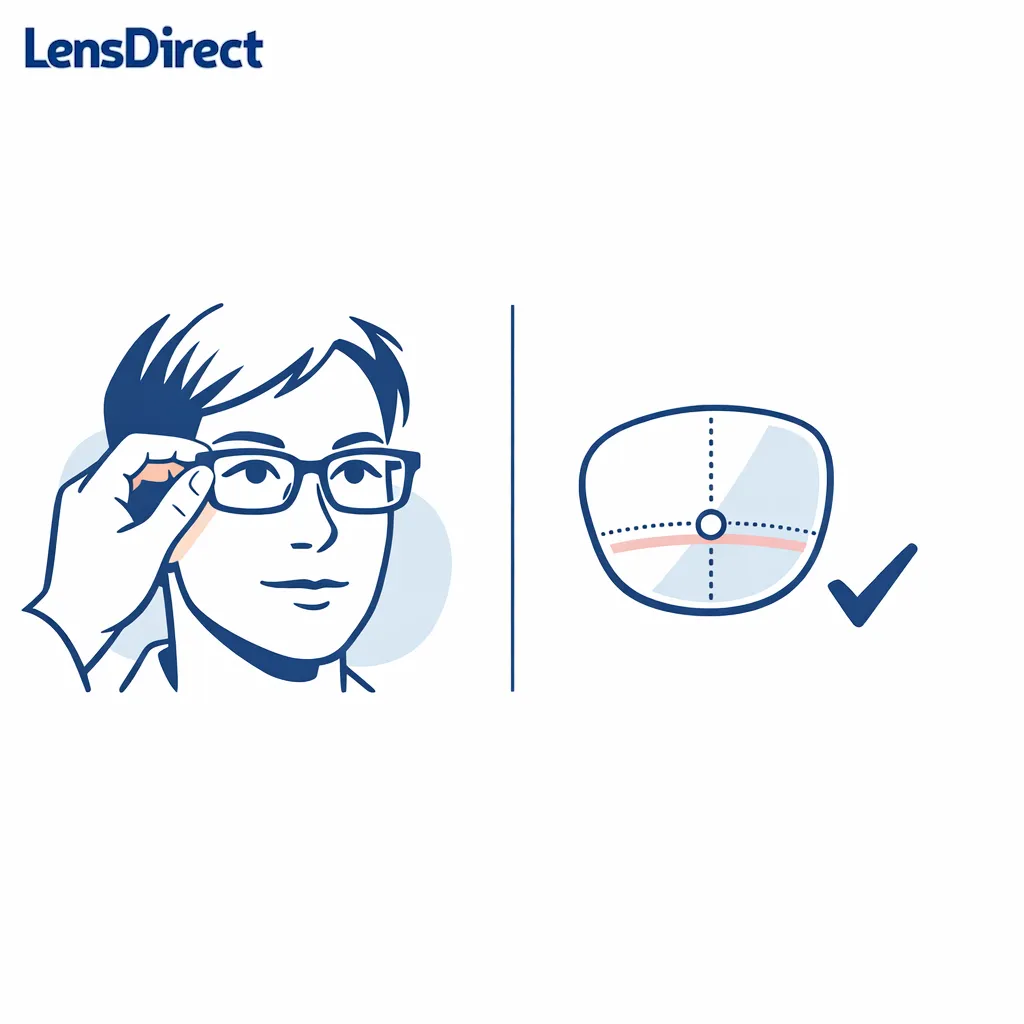
Sometimes the fix is not a brand-new prescription but a measurement adjustment. A small change in how the frame sits on your nose or ears can shift where the reading area lands, and that can make a surprising difference in comfort.
If your glasses still do not feel right, a comprehensive eye and vision examination can help confirm whether the issue is the prescription, the frame fit, the segment placement, or another eye health concern. This matters even more if it has been a while since your last exam or your near vision changed quickly.
Can you go back to regular glasses after bifocals? You can, but you may need multiple pairs to cover the same tasks. Many people keep a single-vision pair for a specific activity, yet rely on bifocals or progressives for convenience during the day.
FAQs
Are bifocals difficult to adjust to?
They can feel strange at first, but strange is not the same as wrong. When the prescription is accurate and you wear the pair consistently, most people improve steadily rather than all at once.
How do you train your eyes to use bifocals?

Practice the habit you want: upper zone for distance, lower zone for reading, and head movement to center the target. Start with simple tasks like reading a label, looking up across the room, and repeating that pattern until it feels automatic.
Can you go back to regular glasses after bifocals?
Yes, but you may trade one pair for several. A single-vision distance pair may work for driving, while a separate reading pair handles books or your phone, which is why many people prefer the convenience of one multifocal pair for daily life.
Are bifocals blurry at first?
Mild blur can happen at first if you are looking through the wrong portion of the lens or your screen is set at an awkward height. Clear improvement over days is reassuring; persistent blur in the correct viewing area is not.
What to do next
- Wear the new pair daily. Give yourself consistent, all-day practice instead of switching back and forth to old glasses.
- Set up your environment. Lower your monitor slightly, improve lighting, and hold reading material at a natural distance.
- Slow down on stairs and curbs. Use the distance zone, turn your head, and give yourself a few extra seconds in unfamiliar places.
- Notice patterns. Ask yourself whether the trouble shows up during reading, distance viewing, computer work, or walking. That pattern helps an optician or optometrist troubleshoot faster.
- Get the fit checked if needed. A simple frame adjustment can sometimes help more than you expect.
- Schedule an exam if symptoms persist. Do not force yourself through weeks of strong blur, headaches, or unsteady vision.

Find the easiest next step with LensDirect

If your current frames still fit well, LensDirect can help you replace bifocal or progressive lenses without starting over. You can Replace Your Lenses, choose Full-Service Replacement if you want to send your frames in, or Order Replacement Lenses if you prefer a DIY route.
If you need a whole new pair, you can Shop Glasses or Shop Sunglasses and choose a frame that fits the way you actually wear your lenses day to day. If you want extra help before ordering, LensDirect also lets you Find Your Fit, Learn How to Measure Your Pupillary Distance, and Learn How to Get Reimbursed by Your Insurance.
If you split time between glasses and lenses, you can also Shop Contacts. The best next step is the one that helps you see comfortably, safely, and with less daily friction.
Author

Subscribe to our email newsletter to get the latest posts delivered right to your email.