
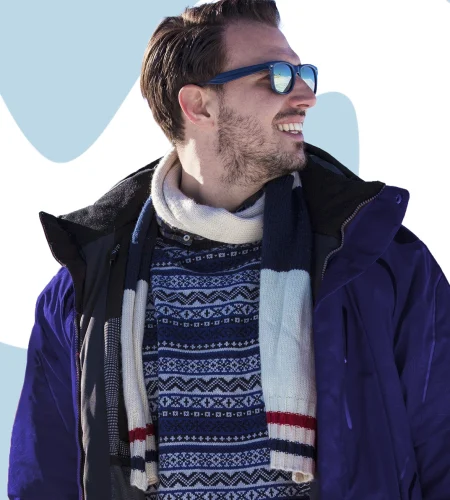
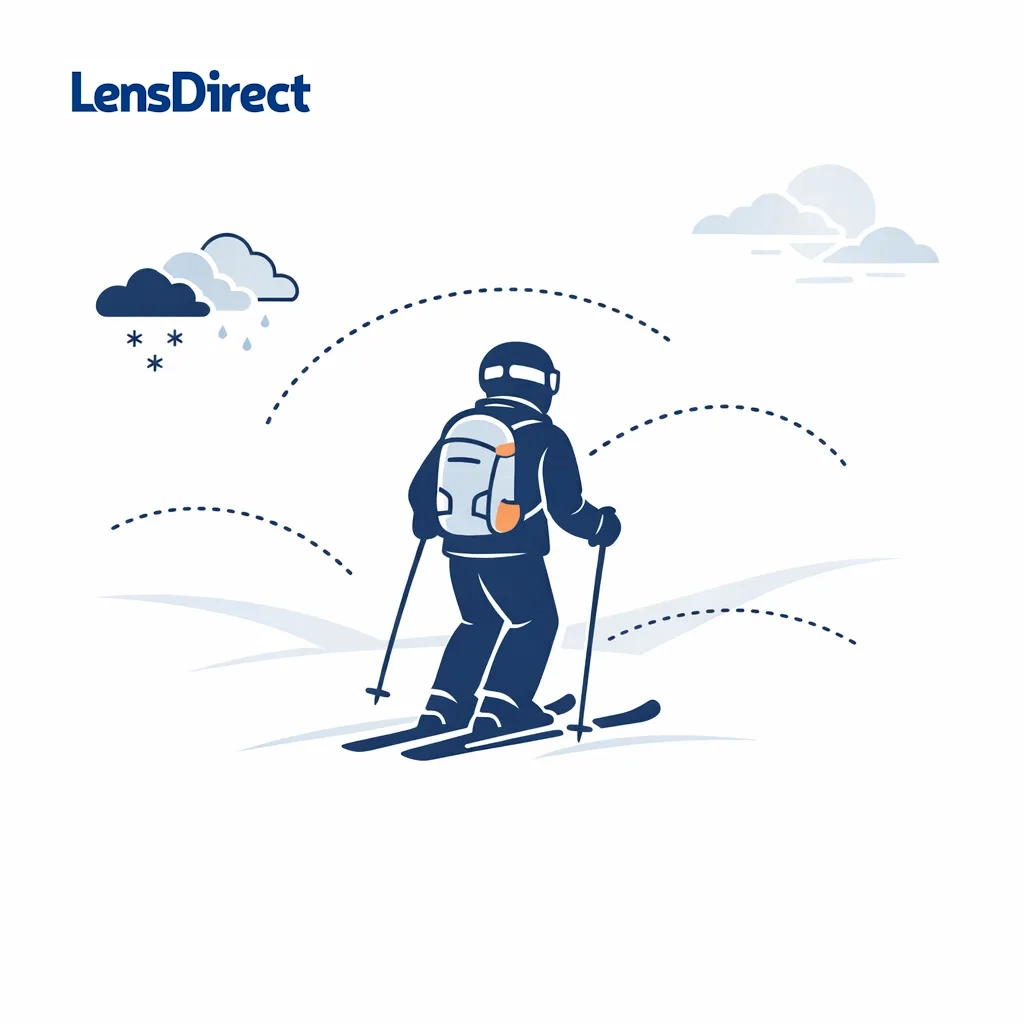
If you’ve ever hit the mountain on a bright day and felt like the snow was glowing, you already know why skiing and snowboarding are different from a normal “sunglasses” situation. Snow reflects a ton of light, altitude intensifies UV exposure, and wind + spindrift can make your eyes water fast. (And yes, “snow blindness” is a real thing — UV reflected off snow and ice can cause photokeratitis.) (American Academy of Ophthalmology)
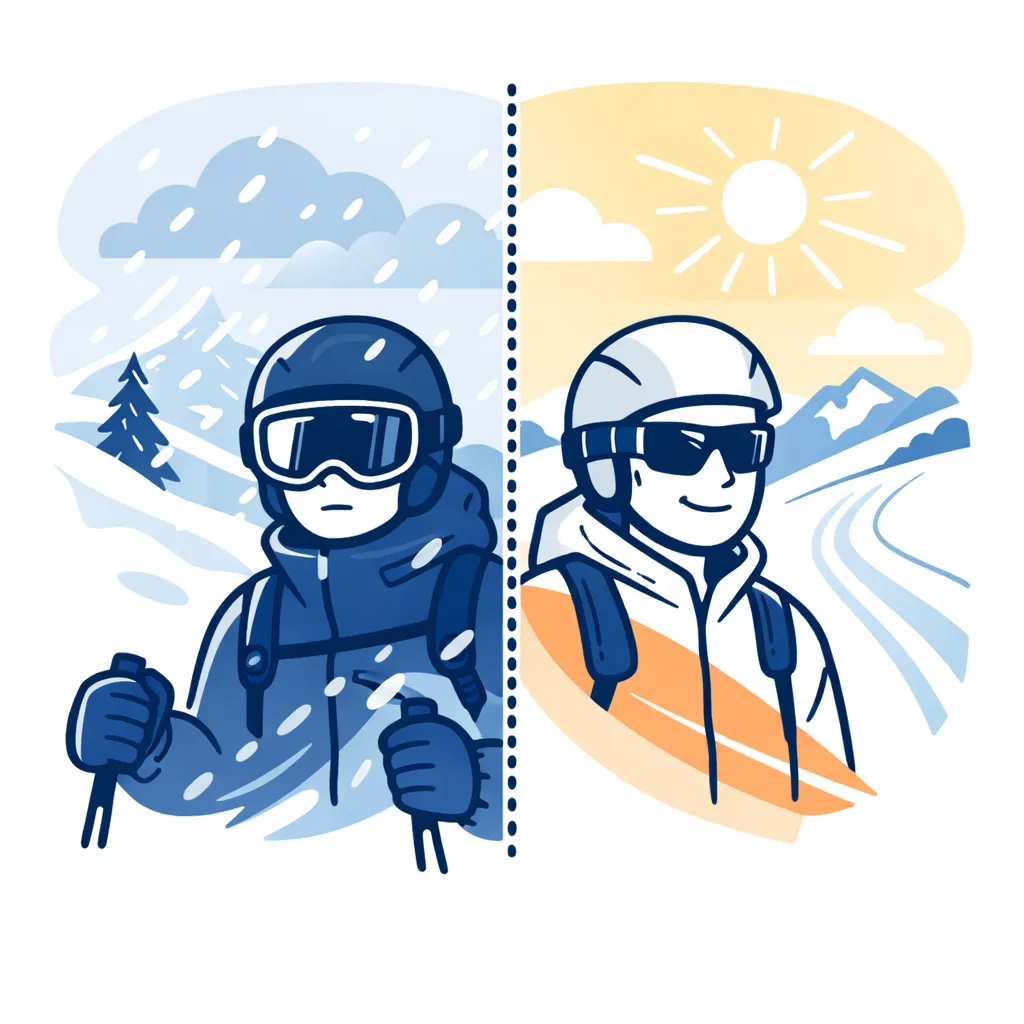
Goggles are still the move for storms, deep cold, and chairlift face-freeze. But for sunny spring laps, bluebird groomers, and uphill touring, a dialed pair of sport sunglasses can be more comfortable, less sweaty, and surprisingly protective — if you get two things right:
- Contrast-enhancing lens tint (matched to light conditions)
- A secure wrap fit that blocks side glare and wind
Here’s how to choose the best sunglasses for skiing/snowboarding — without guessing.
Sunglasses vs. goggles: when sunglasses actually win
Sunglasses can be a great call when:
- It’s clear or lightly cloudy (no heavy snow blowing into your face)
- You’re touring/splitboarding and want more airflow (less fogging, less sweat)
- It’s spring skiing and you’d rather not bake behind a goggle lens
- You’re doing low-speed cruising or taking breaks outside
Goggles still dominate when:
- It’s snowing hard, windy, or very cold
- You’re riding fast, in trees, or in variable conditions all day
- You want maximum face coverage and warmth
If you’re in between, consider a “hybrid” approach: sunglasses for the climb + goggles for the descent.
Lens performance 101: VLT (Visible Light Transmission) matters more than the brand name
The single best way to pick a ski/snow lens is by VLT: how much visible light passes through the lens. Low VLT = darker lens (better for bright sun). High VLT = lighter lens (better for low light and flat light). (Zeiss)
Many eyewear guides also reference filter categories tied to VLT:
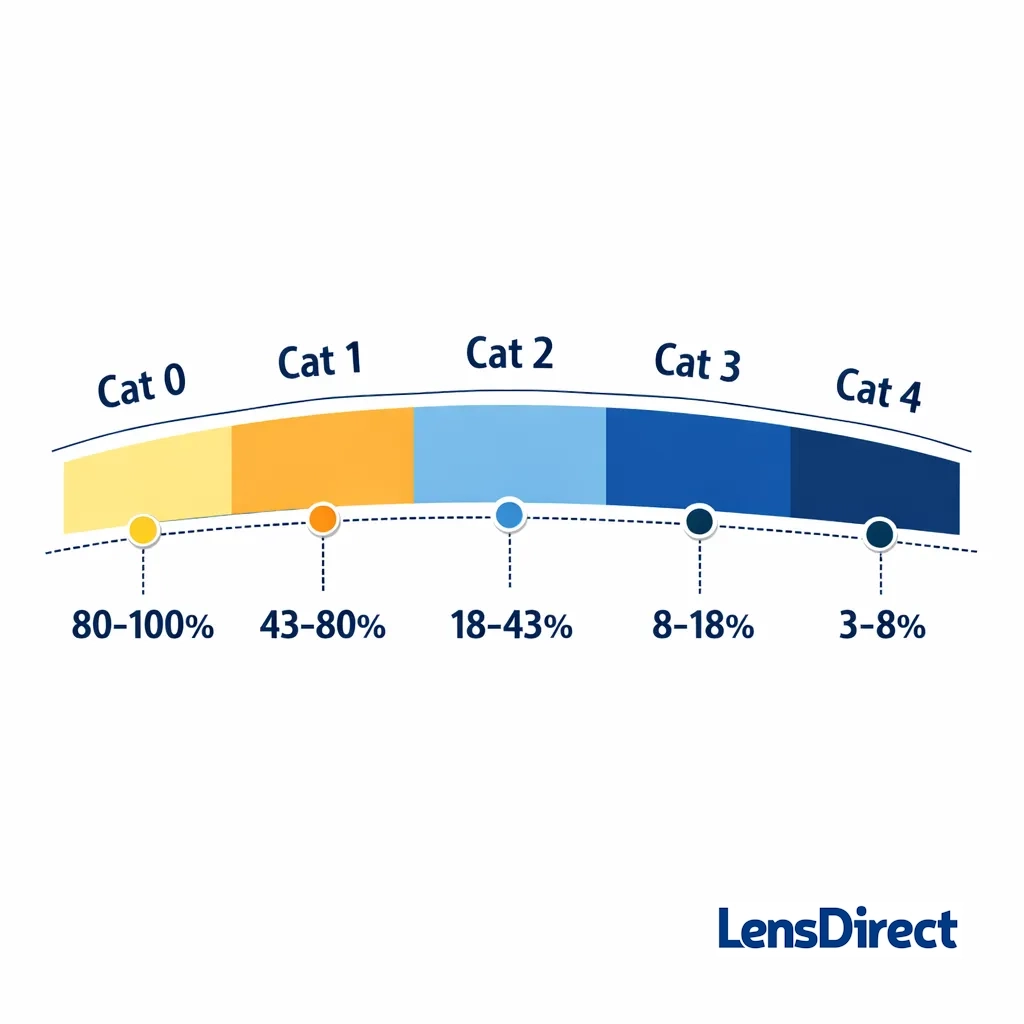
- Category 4: ~3–8% VLT (very dark, extreme sun)
- Category 3: ~8–18% VLT (bright sun)
- Category 2: ~18–43% VLT (mixed/partly cloudy)
- Category 1: ~43–80% VLT (cloudy/low light)
- Category 0: ~80–100% VLT (clear or very light tint)
Quick cheat sheet (mountain edition)
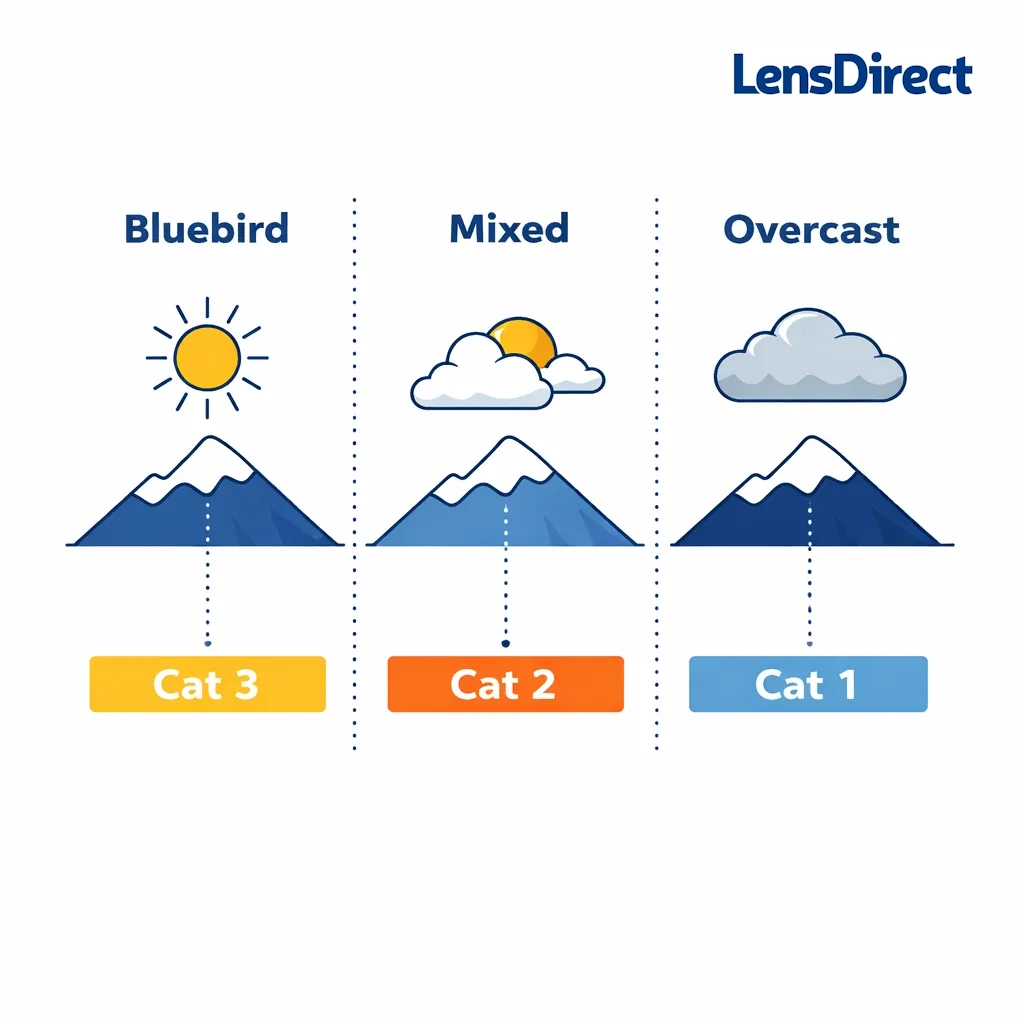
| Mountain conditions | Best VLT range (general) | What it feels like |
| Bluebird, high alpine, spring glare | 8–18% (Cat 3) | You want real darkness + glare control |
| Mixed sun/cloud, “all-day” | ~18–43% (Cat 2) | The most versatile for most people |
| Overcast, stormy, tree runs, flat light | 43%+ (Cat 1) | You need brightness + contrast, not darkness |
Tip: If you only buy one pair of ski sunglasses, a versatile Cat 2 lens (often in an amber/rose/copper family) is usually the safest bet.
Best contrast tints for skiing/snowboarding (and why “flat light” is the enemy)
“Flat light” happens when clouds or diffuse light wipe out shadows — snow becomes a white sheet and bumps/ice/rollovers are harder to read. This is where contrast tints matter.
The most useful contrast tints for snow
- Rose / pink / light rose: boosts definition in cloudy, low-light conditions
- Yellow / gold: brightens the scene and boosts contrast (often best in heavy overcast)
- Amber / copper / brown: classic “snow contrast” tint — good depth perception in mixed light (REI)
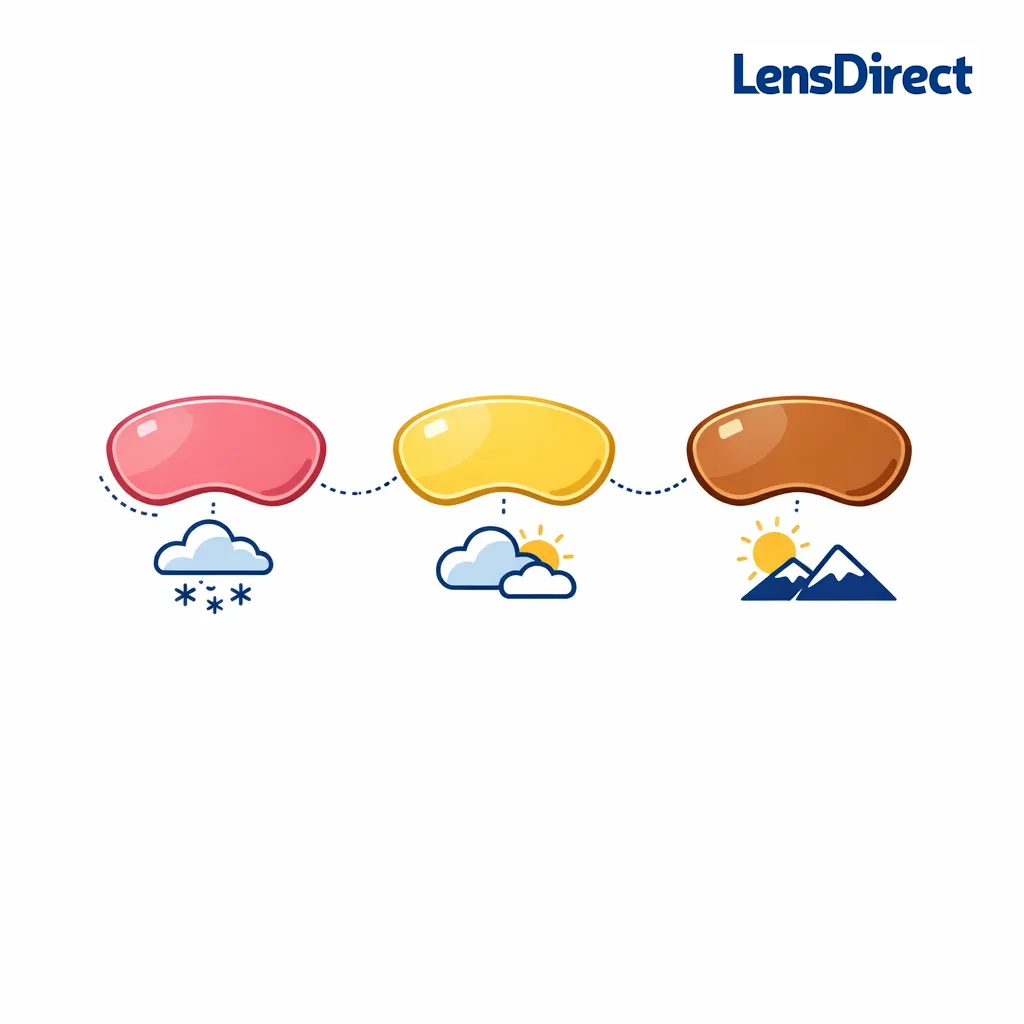
REI’s lens-color guidance sums it up well: softer colors like rose/yellow/gold increase contrast in overcast, low-light situations and typically have higher VLT (around 50% or more). (REI)
What about gray/black lenses?
Gray and black tints are great for true sun because they reduce brightness without changing colors much — but they’re usually less helpful in flat light. If you mostly ride bright spring days, they can be perfect. If you chase storms, you’ll miss the contrast boost.
Mirror coatings: helpful, but not a replacement for the right tint
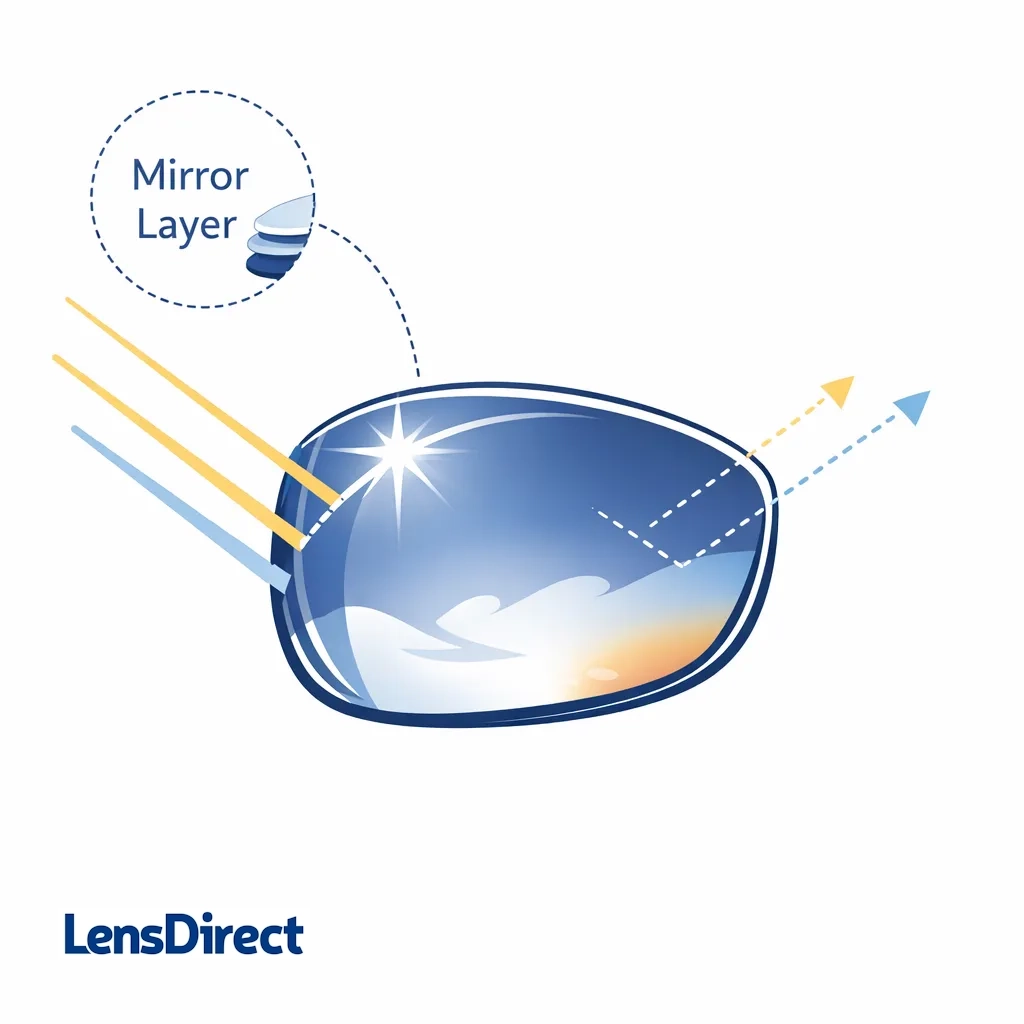
Mirrors reduce glare and perceived brightness.
They’re awesome on sunny days, but they don’t automatically fix flat light.
Think of mirror as a “bonus layer,” while VLT + base tint do the heavy lifting.
Polarized or not for snow? The honest answer: it depends
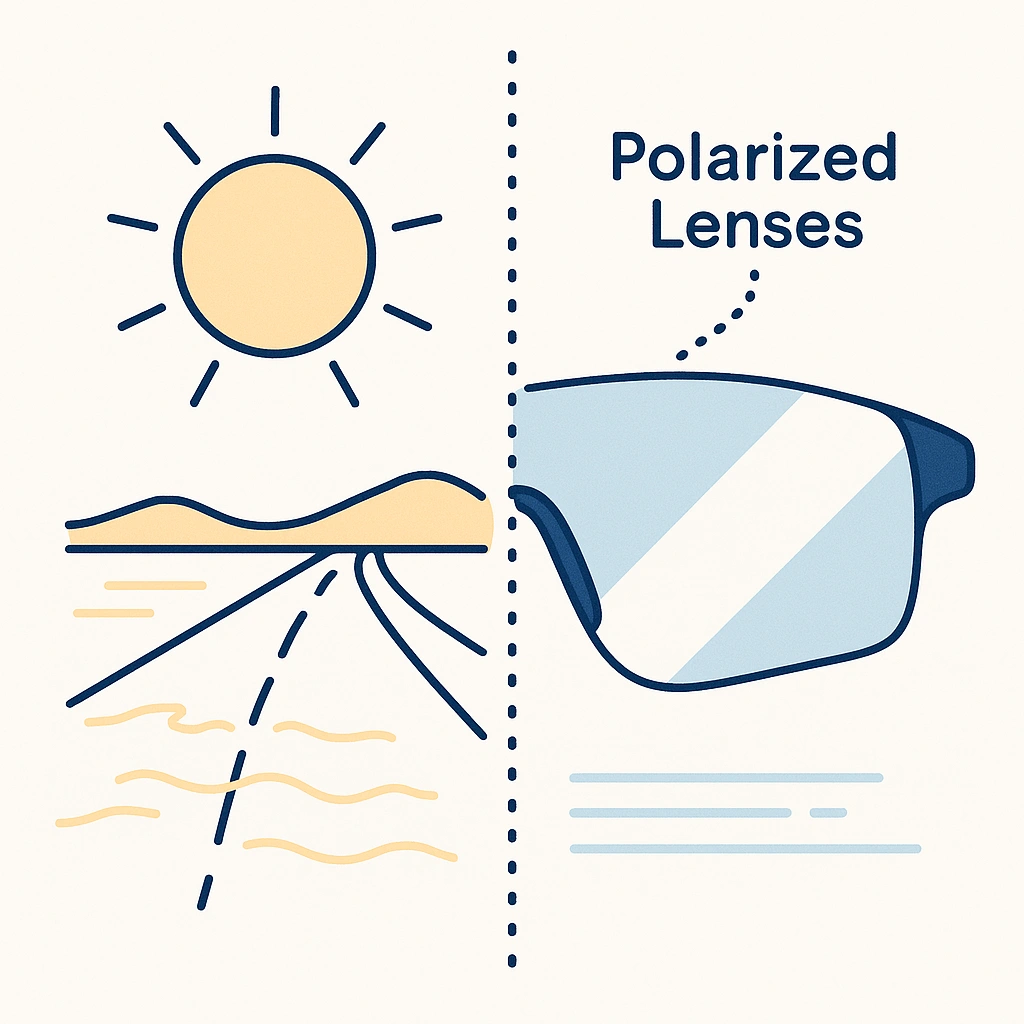
Polarized lenses cut glare (especially off flat reflective surfaces), which can feel amazing on bright days. But on snow, polarization can be a mixed bag.
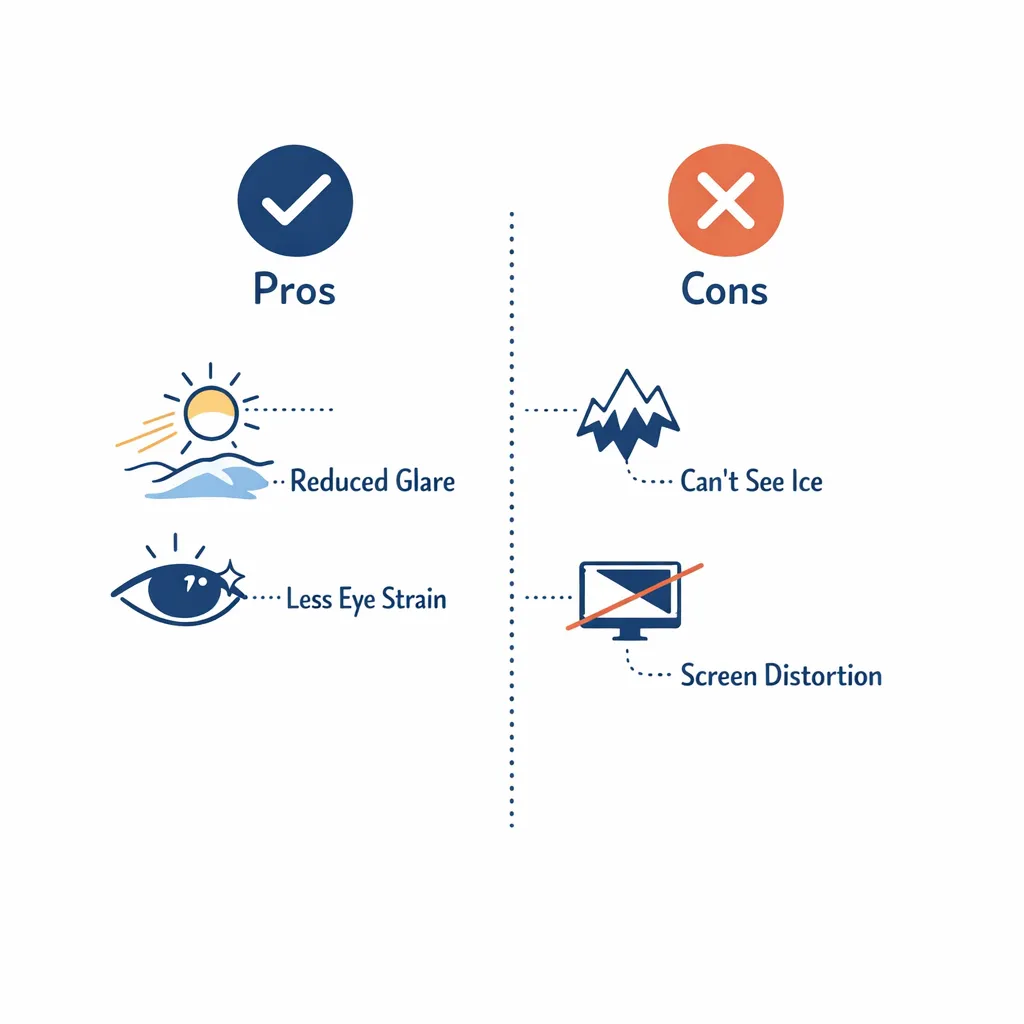
Pros
- Noticeably reduces harsh glare
- Often reduces eye strain in bright sun
Cons (especially for technical terrain)
- Some skiers/riders find polarization can reduce the visual cues that help you spot icy patches or subtle texture changes (because glare can sometimes highlight what’s slick vs. soft). (A Sight for Sport Eyes)
- Polarized lenses can also make LCD screens harder to read (phone, watch, car display, beacon screens), depending on angle. (All About Vision)
Practical take:
- If you mostly ski/ride sunny groomers and spring conditions, polarized can be great.
- If you’re often in mixed light, trees, bumps, or icy steeps, consider a high-contrast non-polarized lens first.
Wrap fit: the #1 frame feature for snow sports
On the mountain, sunglasses aren’t just about darkness. They’re about coverage.
A good ski/snow sunglass frame should:
1) Block side glare and wind
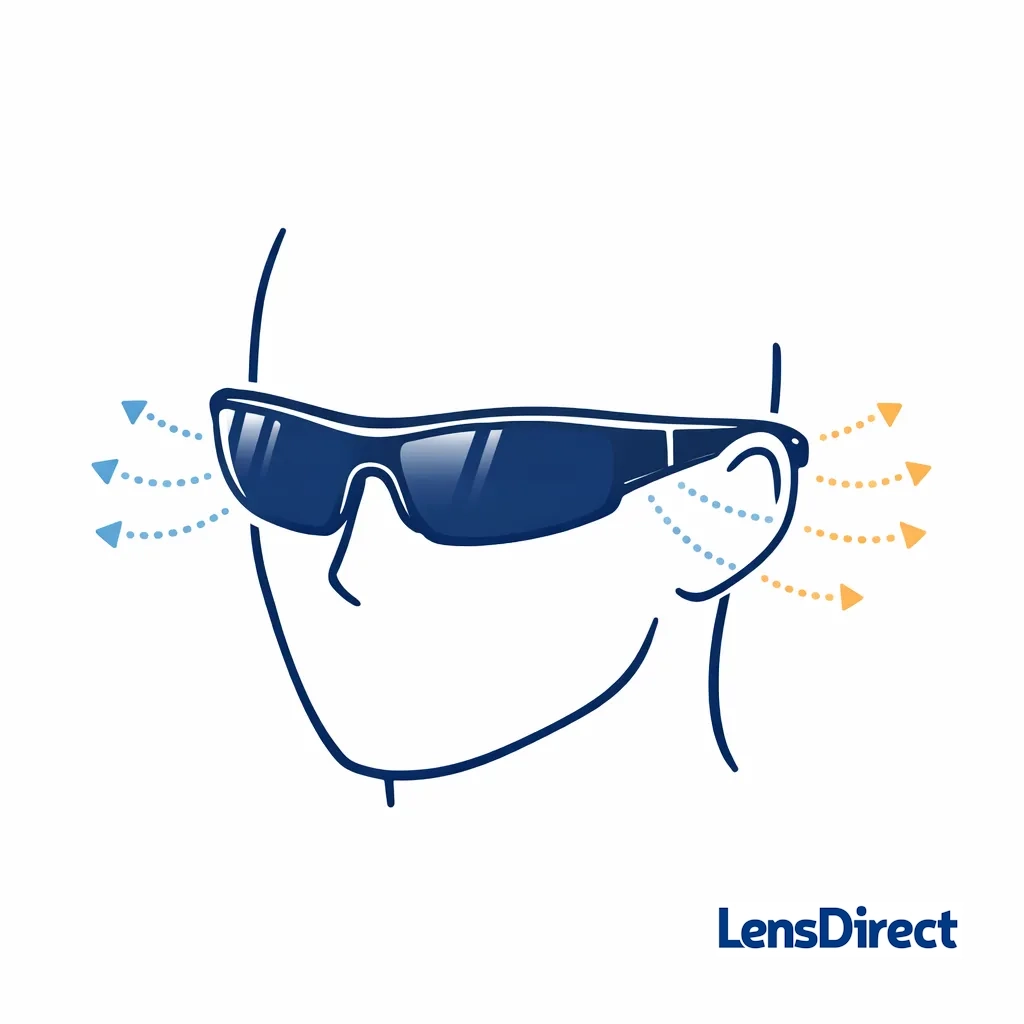
A wraparound or high-base-curve frame hugs your face so bright light can’t sneak in from the sides.
That matters on snow, where light bounces up and around you.
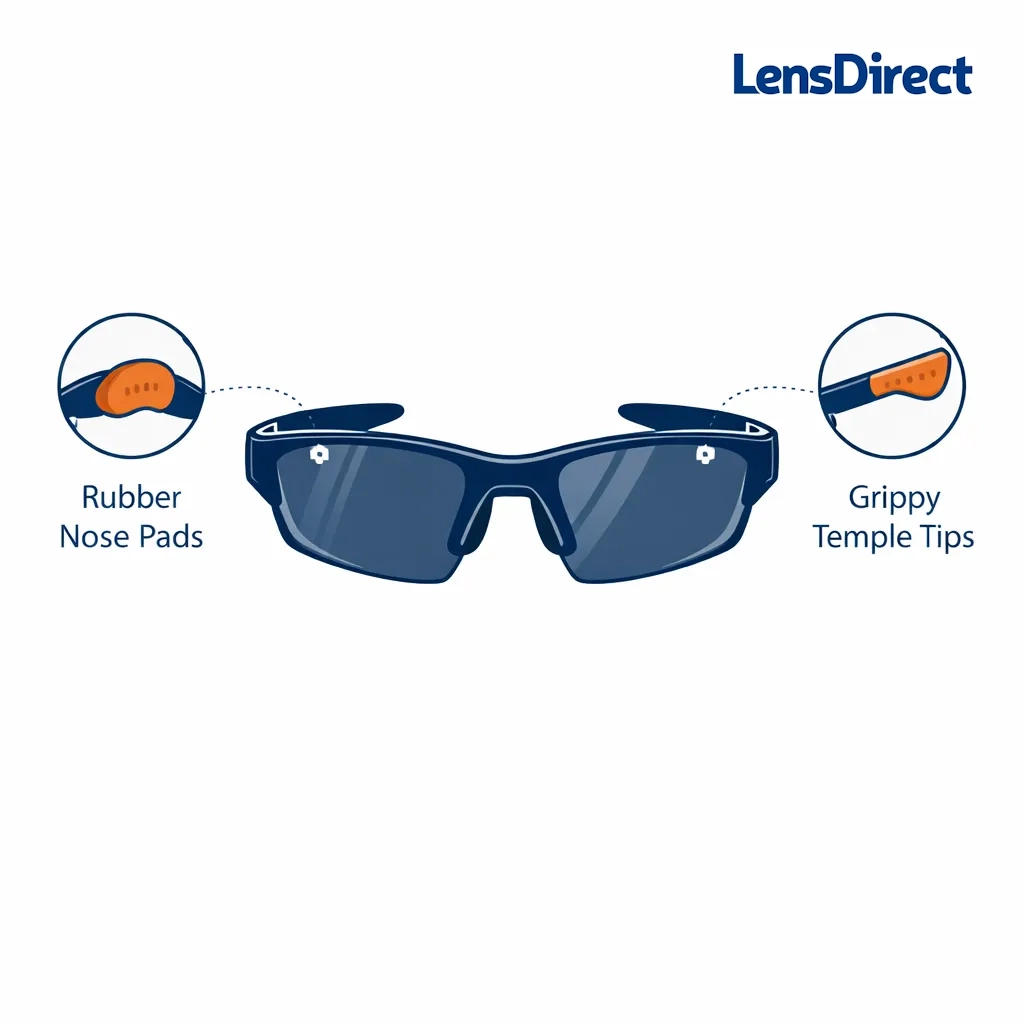
2) Stay put when you sweat (or slam a landing)
Look for:
- Rubberized nose pads
- Grippy temple tips
- A frame that doesn’t pinch under a helmet but also doesn’t slide down when you look down
3) Play nicely with helmets and balaclavas
Bring your helmet into the decision mentally:
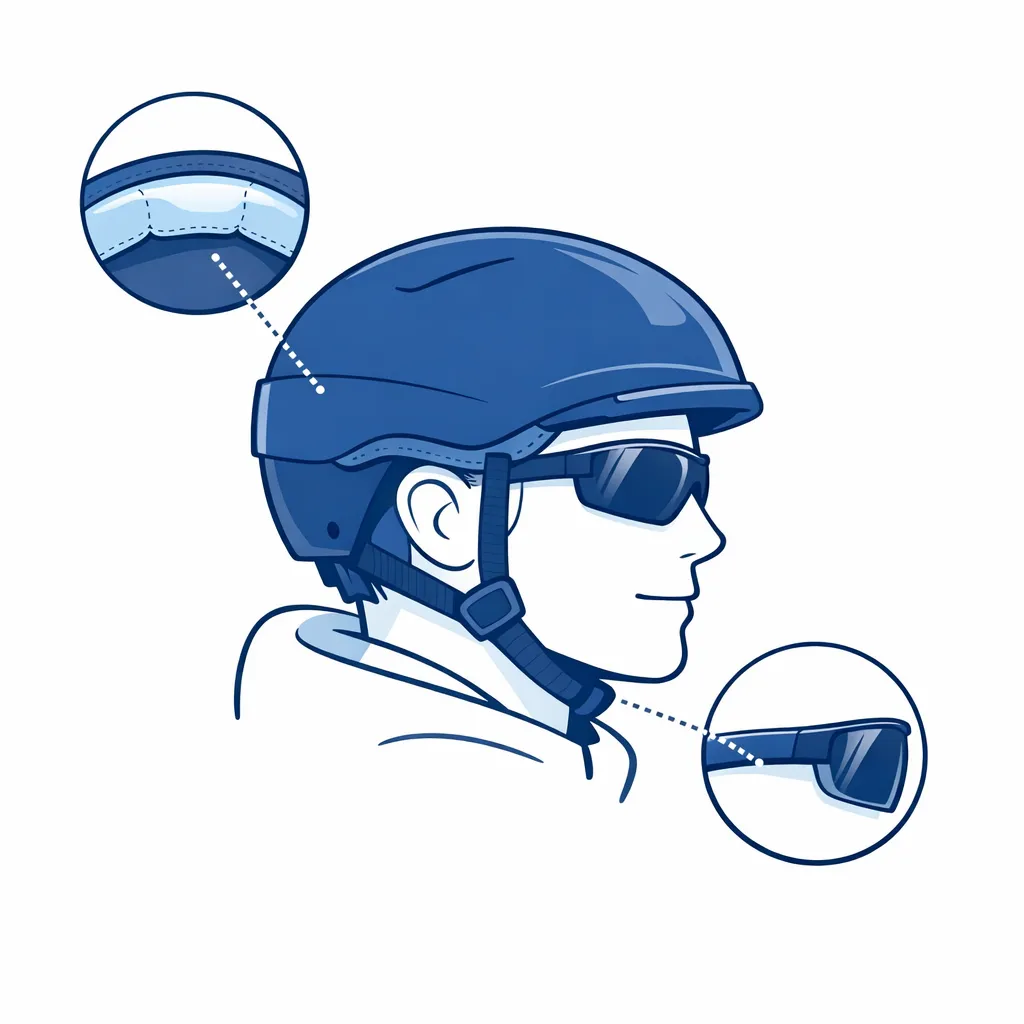
- Thicker arms can create pressure points
- Very straight temples can fight with helmet padding
- A slightly “sport” geometry usually feels better than lifestyle frames
4) Offer impact-resistant lenses
Skiing and snowboarding are high-speed sports. Even if you’re not sending cliffs, crashes happen. Sport sunglasses often use impact-resistant materials (a major plus for mountain use).
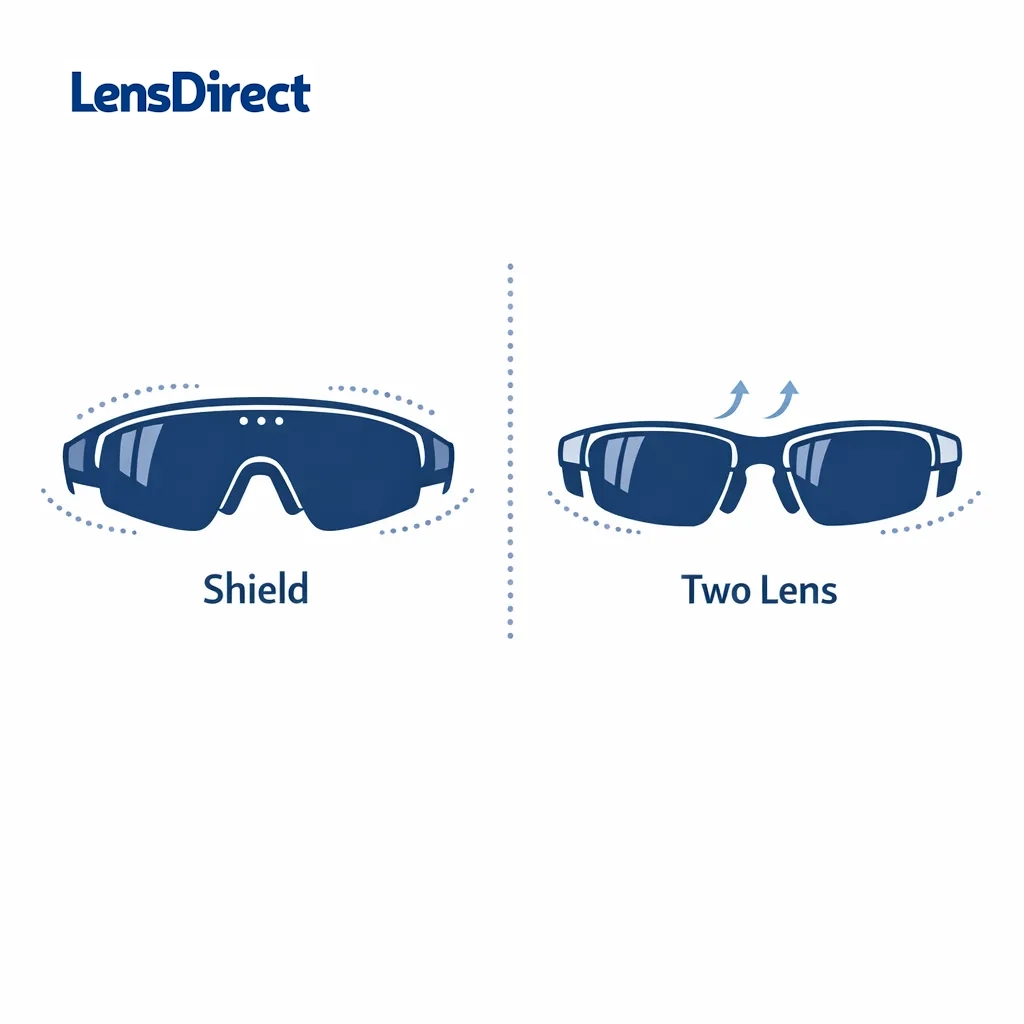
Shield vs. two-lens sport frames
- Shield-style (one-piece lens): maximum coverage, fewer gaps, excellent wind protection
- Two-lens sport frames: often feel more “normal,” can vent a bit more, sometimes easier fit for narrower faces
Don’t forget UV: snow + altitude can punish your eyes
Snow blindness is essentially a UV burn on the surface of the eye (photokeratitis), and it’s linked to UV reflected off snow/ice. (American Academy of Ophthalmology)
When shopping, don’t settle for “dark.” You want:
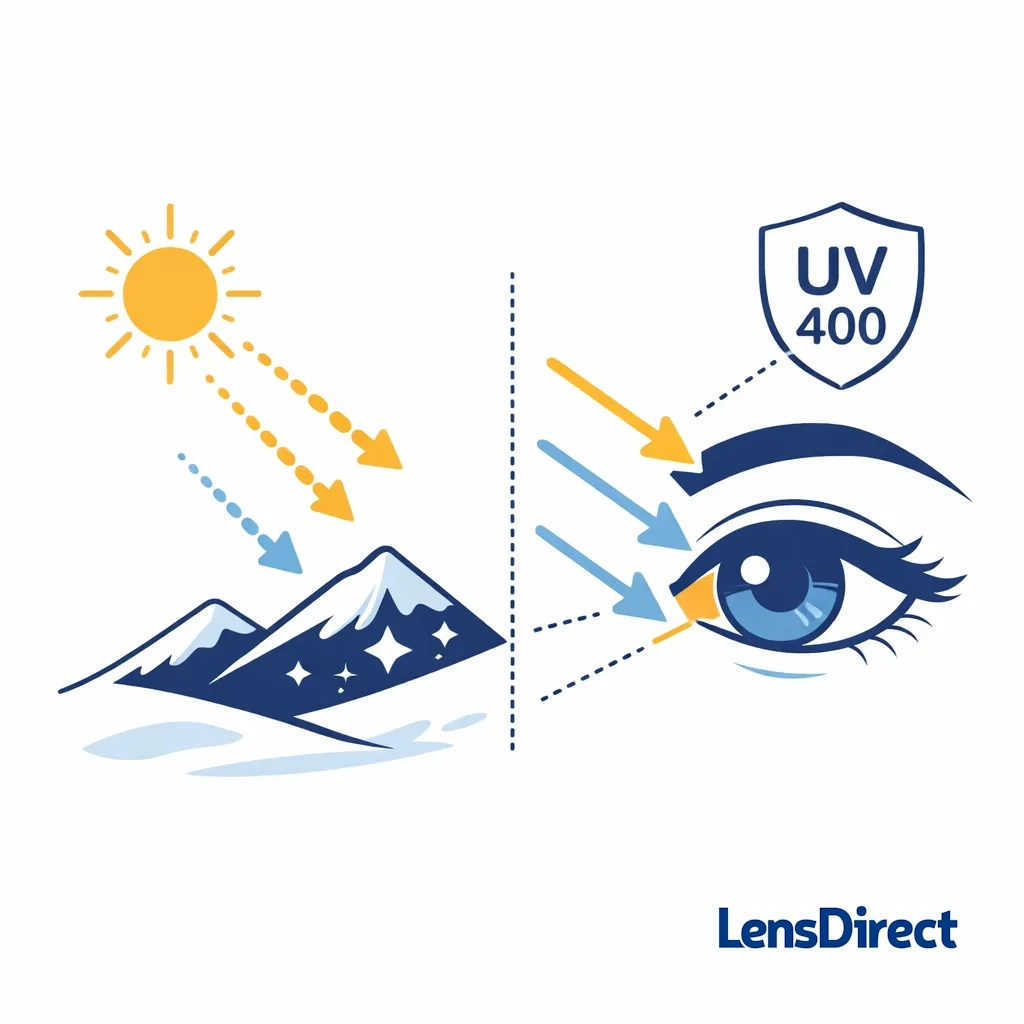
- 100% UVA/UVB protection (often labeled UV400)
- Wrap coverage to reduce stray light
Dark lenses without proper UV protection are the worst combo — your pupils dilate behind the tint, but UV still gets through.
A simple buying checklist (steal this)
If you want sunglasses that genuinely work for skiing/snowboarding, aim for:
- Wraparound fit (minimal side gaps)
- High-contrast tint (rose/amber/copper/yellow) for mixed/flat light (REI)
- VLT matched to your conditions (Cat 2 for “one pair,” Cat 3 for bright sun)
- Anti-slip nose + temples
- Helmet-friendly arms
- Optional: mirror for bright days, photochromic if you ride changing conditions a lot
- Consider polarization only if it matches your terrain and preferences (A Sight for Sport Eyes)
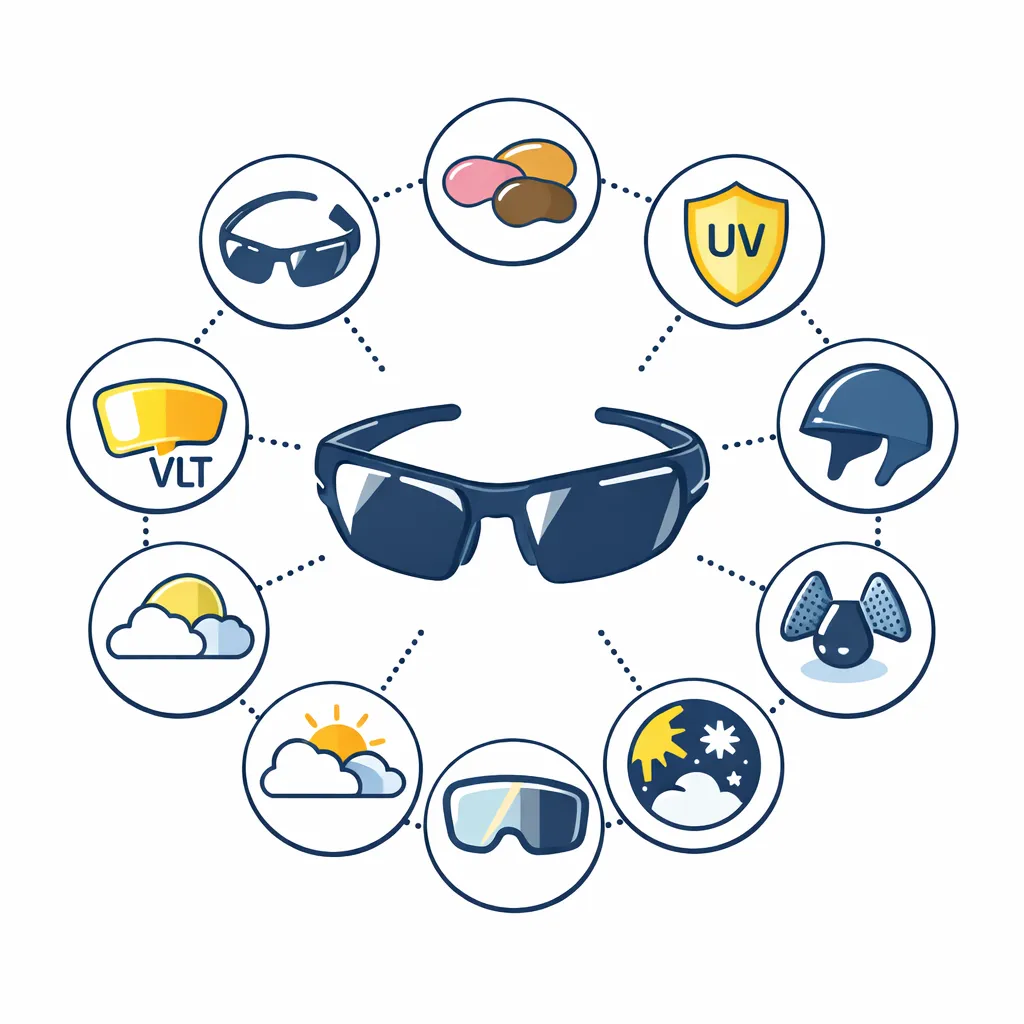
Final thoughts: pick contrast first, then lock in fit
On snow, the “best” sunglasses are the ones that help you read terrain and stay comfortable for hours. If you prioritize:
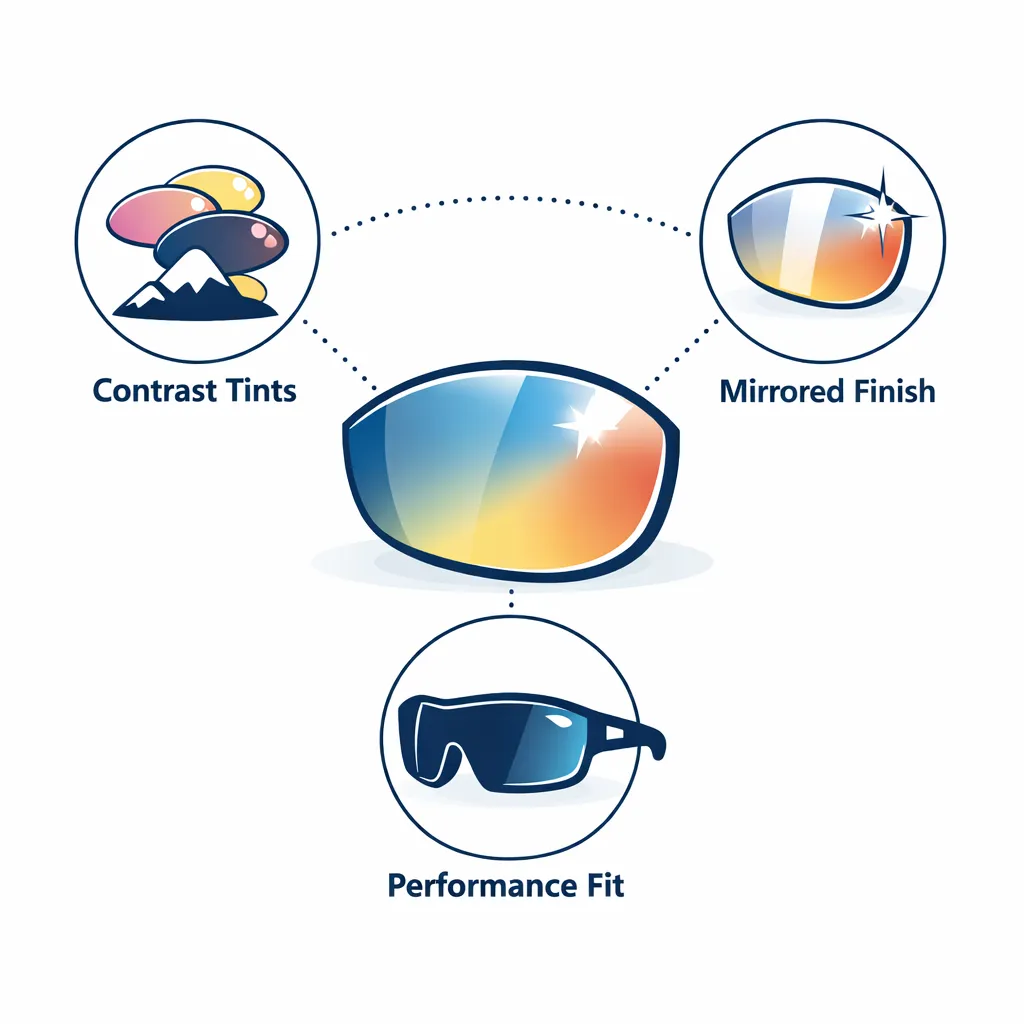
- A contrast-friendly tint with the right VLT,
and - A wrap fit that seals out wind and side glare,
…you’ll end up with sunglasses that feel purpose-built for the mountain — not just stylish at the lodge.
If you’re shopping for your next pair, LensDirect makes it easy to choose sport-ready sunglasses (including prescription options) with lens features like contrast tints, mirrored finishes, and performance fits — so you can see the snow clearly and ride longer, more comfortably.
Author

Subscribe to our email newsletter to get the latest posts delivered right to your email.