
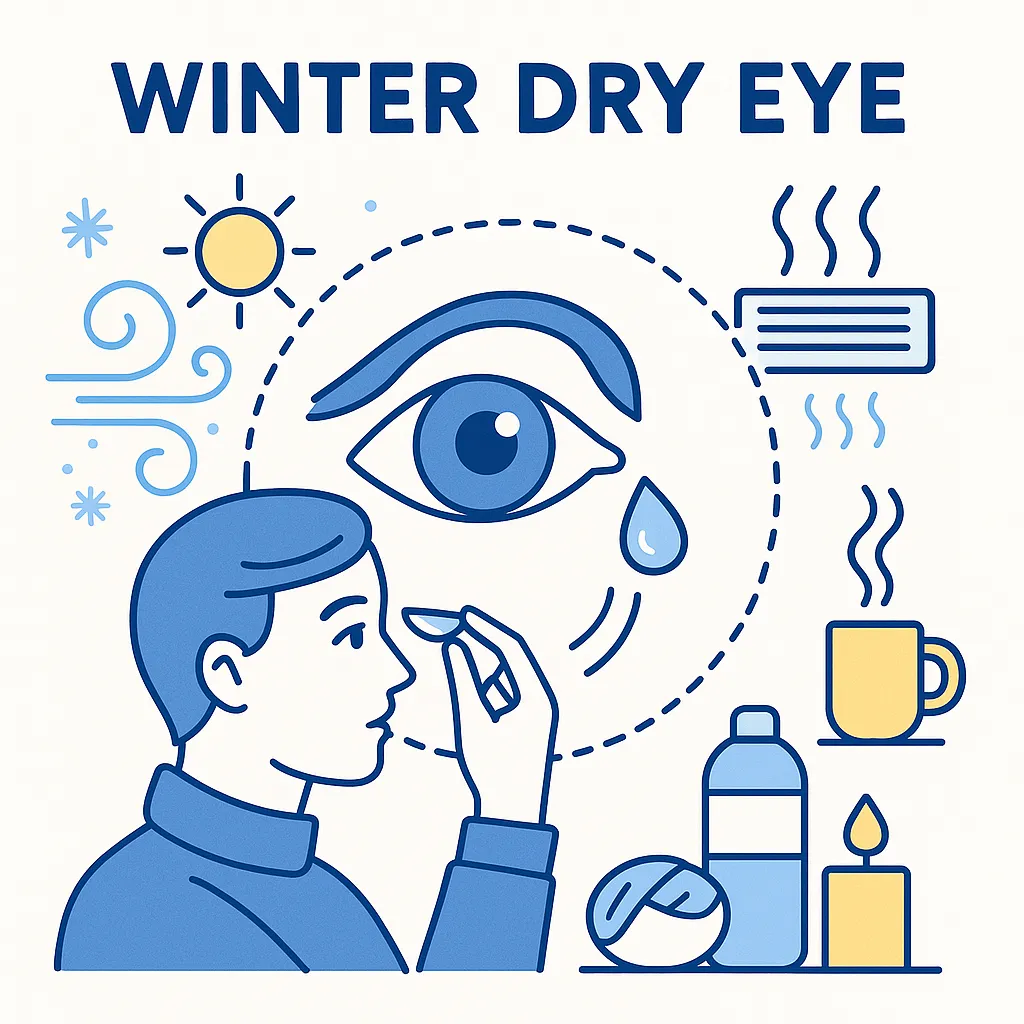
Cold air outside and dry, heated air inside make winter one of the toughest seasons for contact lens wearers.
Reduced humidity and wind strip moisture from the eyes, and that dry environment can cause contact lenses to feel gritty, blurry, or downright painful.
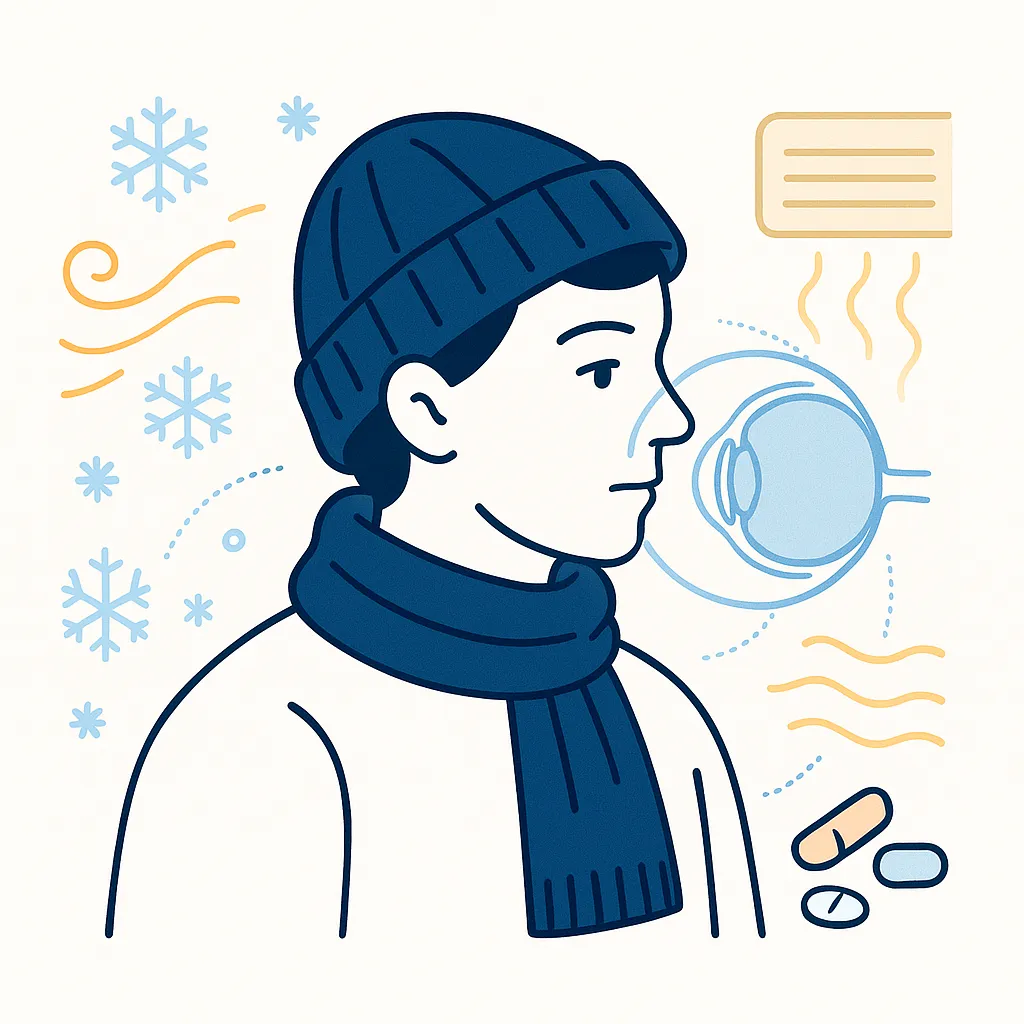
Instead of suffering through the season, use these nine evidence‑backed strategies to keep your eyes comfortable and your vision crisp — plus smart tweaks you can make right away.
First, what winter actually does to your eyes
Your tear film has three layers: a mucous layer that helps tears spread evenly, a watery (aqueous) layer that hydrates, and an oily (lipid) layer that slows evaporation.
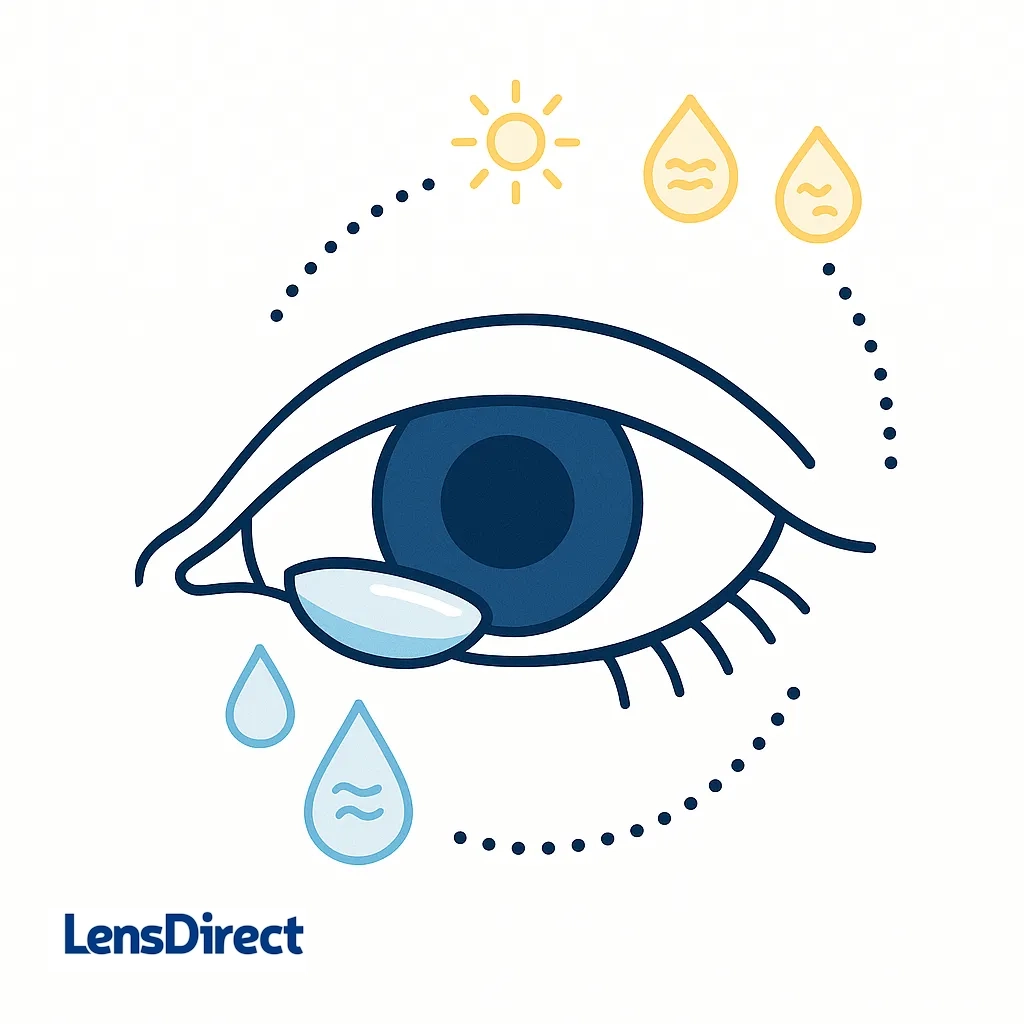
In cold, windy air — and in heated, low‑humidity rooms — the watery layer evaporates faster than usual.
If your eyelid oil glands (meibomian glands) are sluggish, there’s not enough lipid to lock moisture in, so the surface of the eye dries further.
Contacts sit on top of that delicate tear film, so when it’s unstable, lenses feel dry, collect deposits more quickly, and can shift or blur.
1) Hydrate from the inside out
Why it helps: Mild dehydration thickens your tears and reduces overall volume. That means less lubrication between your cornea and the front surface of the lens.
How to do it well
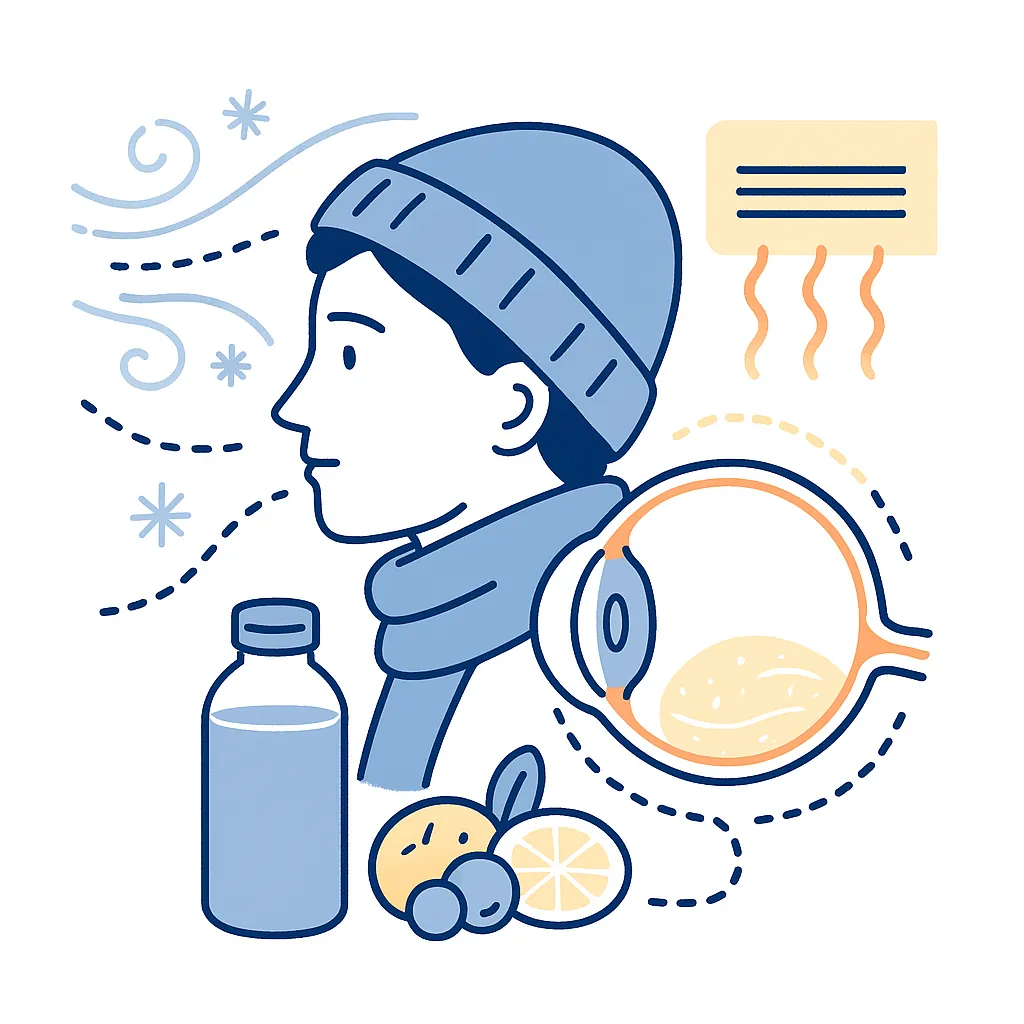
- Sip water steadily all day (a refillable bottle is your best friend). If you struggle to remember, set two or three “water alarms.”
- Go easy on dehydrators: alcohol and high‑caffeine beverages can worsen dryness for some people. If you have them, pair with extra water.
- Add water‑rich foods — cucumbers, oranges, grapes, tomatoes, watermelon — and brothy soups. This is a low‑effort way to nudge hydration up when the air is parched.
Pro tip: If you exercise or spend time outdoors in cold, dry air, consider an electrolyte drink during or after activity to help your body hold onto fluid (ask your clinician if you have dietary restrictions).
2) Use a humidifier at home and work
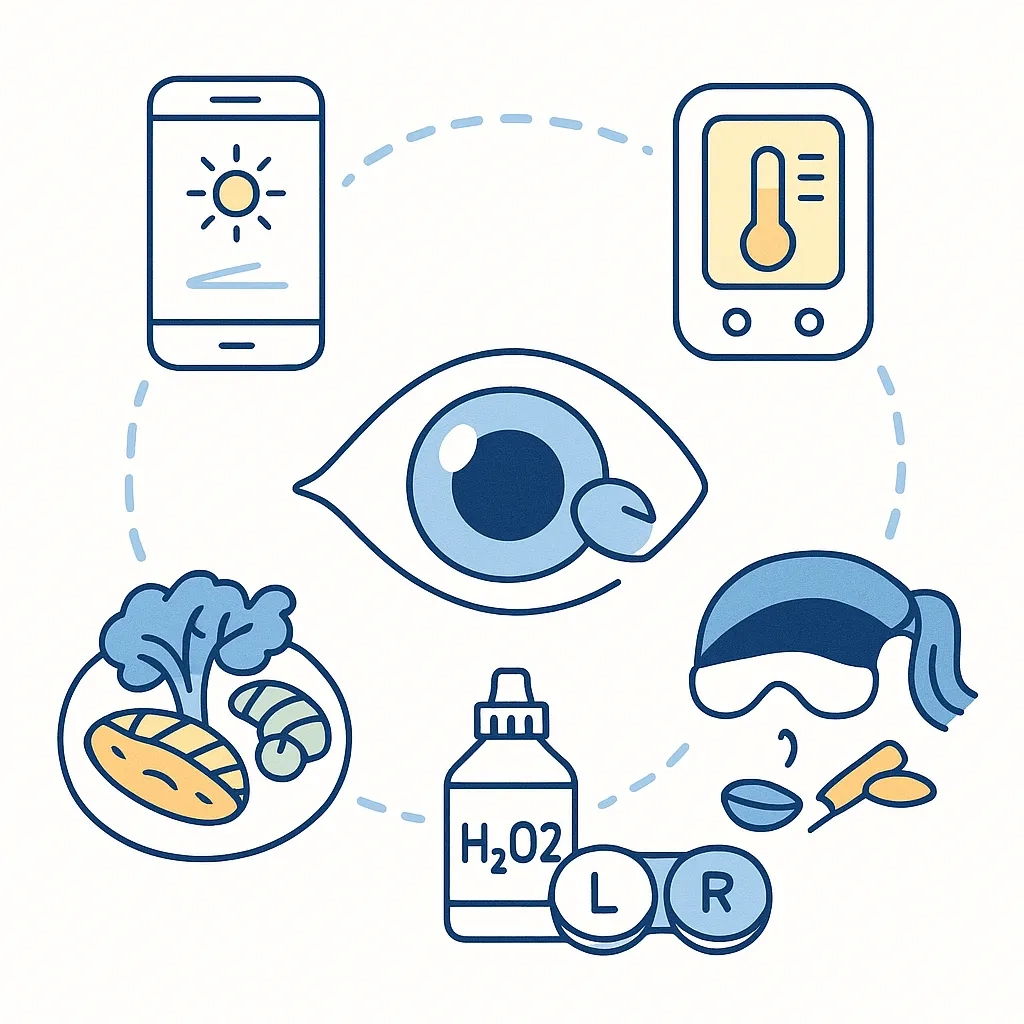
Why it helps: Indoor heating often drops relative humidity under 30%. Eyes tend to feel best around 40–50% humidity.
How to do it well
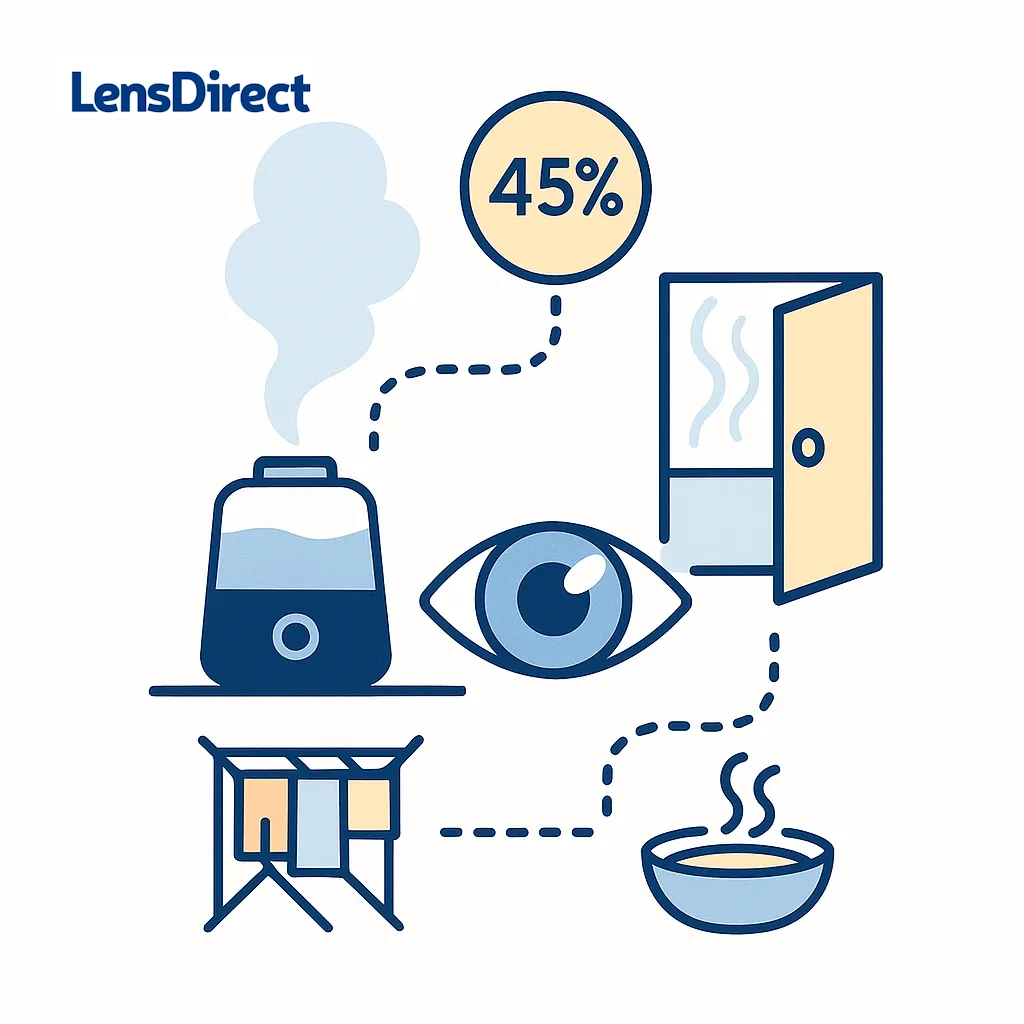
- Place a portable humidifier on your desk or nightstand so the air around your face is moisture‑friendly.
- Clean tanks as directed (usually daily rinse + weekly deep clean) to prevent bacteria or mold.
- If a humidifier isn’t practical, micro‑strategies help: dry laundry on a rack indoors, crack the bathroom door during a steamy shower, and point heating vents away from your face.
Pro tip: Hygrometers (tiny humidity meters) are inexpensive. If you can keep your space around 45% humidity, most eyes feel noticeably better.
3) Blink often and follow the 20‑20‑20 rule
Why it helps: On screens, blink rate can drop by half, so tears don’t refresh the lens surface. Incomplete blinks also leave meibum (eyelid oil) stuck in the glands.
How to do it well
- Every 20 minutes, look 20 feet away for 20 seconds and blink consciously 6–8 times — slow, gentle, complete blinks.
- Position screens slightly below eye level. That small downward gaze decreases the exposed eye surface and slows evaporation.
- Consider a break reminder app or calendar nudge. Simple is best; the habit matters more than the tool.
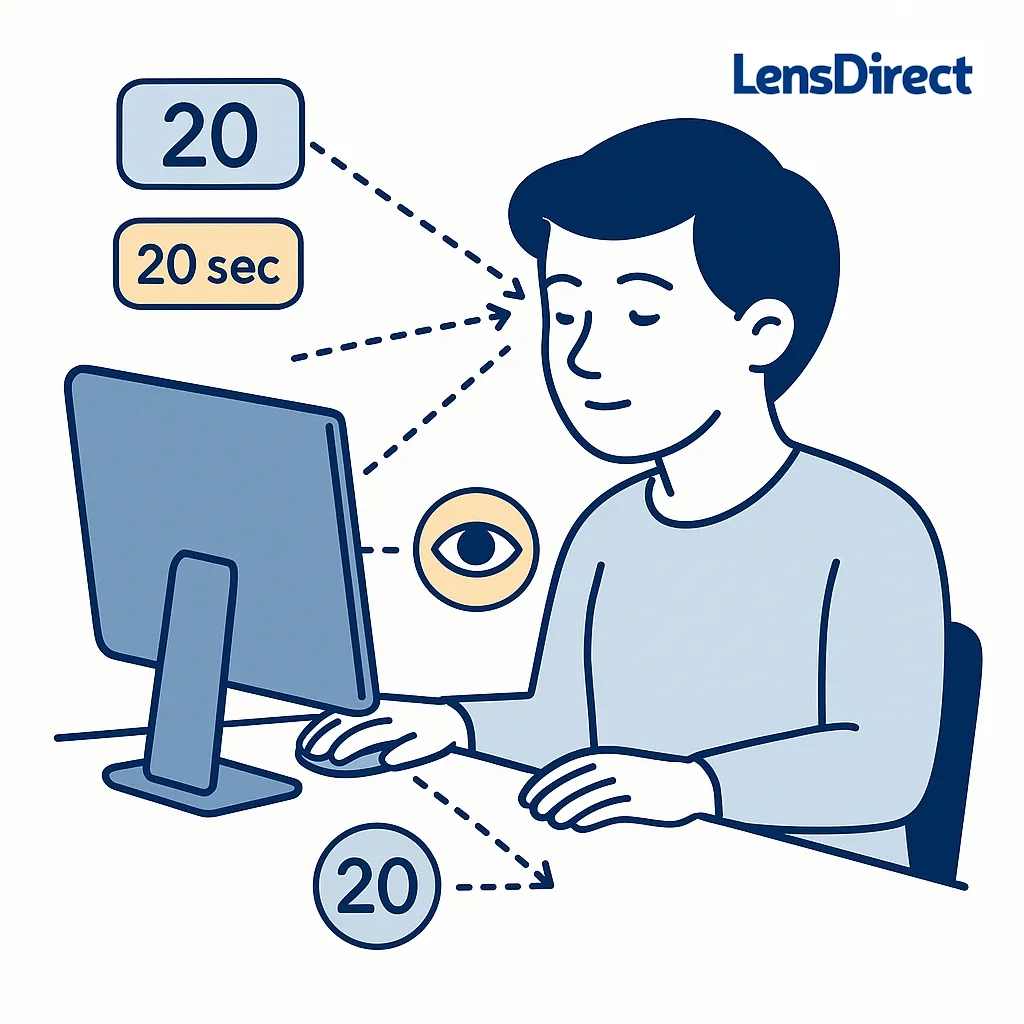
Pro tip: Try a “blink set” before you put drops in. A handful of slow, complete blinks can spread your natural oils and sometimes relieve mild blur without extra drops.
4) Protect your eyes from wind and UV
Why it helps: Wind accelerates tear evaporation, and winter UV — especially reflected off snow — can inflame the ocular surface.
How to do it well
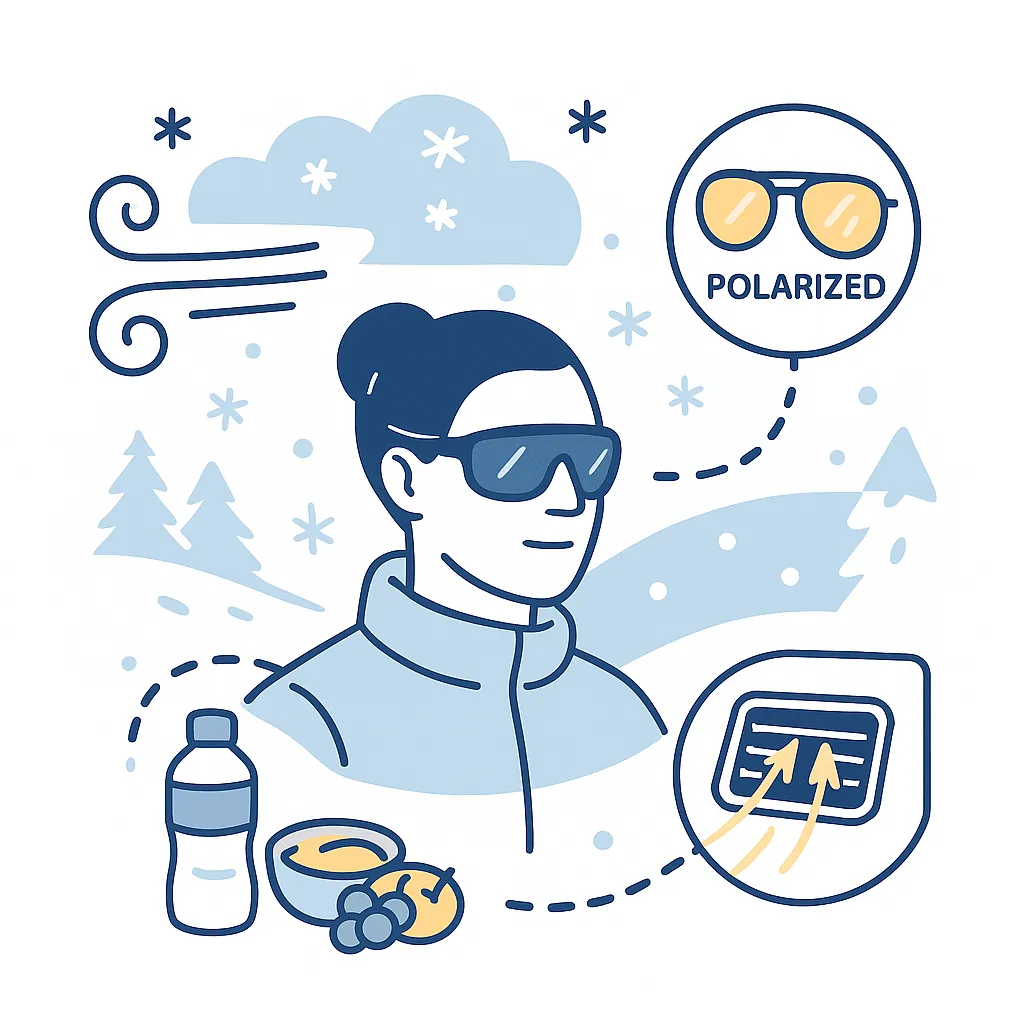
- Wear wrap‑around sunglasses or sport goggles in cold, windy weather. The frame acts like a windbreak, keeping a cushion of moist air near the eye.
- Choose polarized lenses for glare when there’s snow; your eyes will squint less, which helps with comfortable blinking.
- For winter sports, consider a vented goggle with anti‑fog coating. Better fog control means you’re not tempted to pull the goggles down and expose your eyes.
Pro tip: In the car, aim vents toward your torso or feet, not your face.
5) Apply warm compresses and practise eyelid hygiene
Why it helps: Warmth softens the oil in your meibomian glands so it flows more easily, stabilizing the tear film and cutting down evaporation. Clean lids reduce debris that can irritate eyes and foul lenses.
How to do it well
- Use a clean washcloth soaked in comfortably warm water, or a reheatable eye mask designed for eyelids. Apply with closed eyes for ~5–10 minutes.
- After warming, gently massage along the lids (from the top of the lid toward the lash line on the upper lids, and from the bottom up toward the lashes on the lower lids). Light pressure only.
- Clean the lash line daily with a gentle, eye‑safe cleanser or lid wipe to remove oil, makeup, and bacteria.
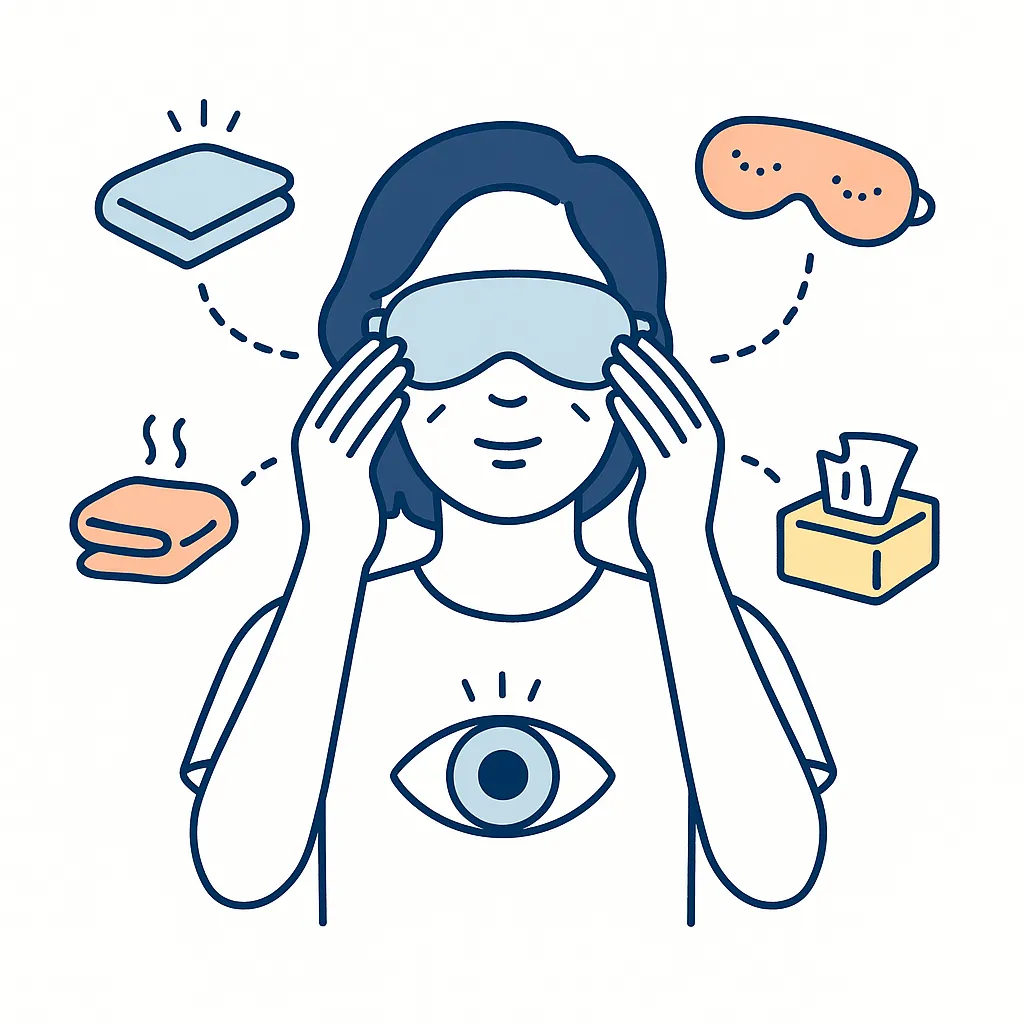
Pro tip: Consistency beats intensity. Short, daily sessions help more than occasional, very hot compresses. If your eyelids turn red or irritated, ease up and talk with your eye care professional.
6) Use preservative‑free artificial tears and rewetting drops
Why it helps: Lubricating drops restore moisture and smooth the lens‑to‑eye interface. Preservative‑free formulas reduce the risk of irritation from frequent dosing.
How to do it well
- During the day in contacts, use rewetting drops specifically approved for contact lenses. Check the label.
- If you’re taking your lenses out (or before inserting them), preservative‑free artificial tears are great — look for single‑use vials.
- Consider drop “weight”: thinner drops feel lighter but don’t last as long; thicker gels last longer but can blur briefly. Many people use thin drops in the day and gel at night (without lenses).
- Lipid‑enhanced or hyaluronic‑acid formulas can be helpful for evaporative dryness — ask your clinician which type suits your eyes and lenses.
Pro tip: Keep a few single‑use vials in your coat pocket and bag. Cold air + a quick walk often = instant relief needed.
Avoid: Redness‑reliever “get the red out” drops. They shrink blood vessels temporarily but can worsen irritation over time.
7) Take lens breaks and consider switching materials or schedules
Why it helps: The longer a lens sits on a dry eye, the more deposits and friction build up. Strategic breaks let your ocular surface recover.
How to do it well
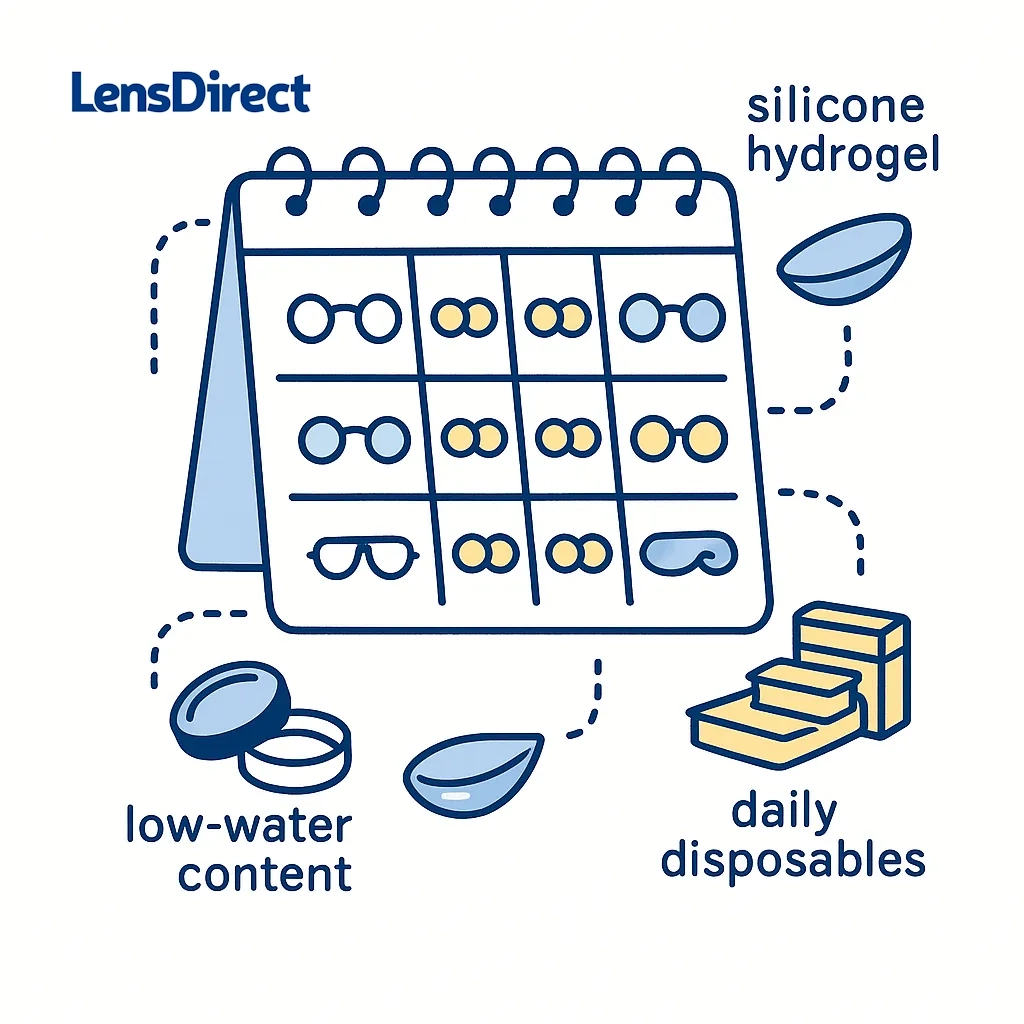
- Build “glasses blocks” into your week — at home in the evenings, on low‑key weekends, or anytime your eyes feel fatigued.
- Revisit your lens material and wearing schedule with your provider. Many people with winter dryness do better in:
- Silicone hydrogel lenses, which allow more oxygen through,
- Lower‑water‑content options (for some, high‑water lenses can pull moisture from the eye),
- Daily disposables, which minimize deposits and start fresh each morning.
- Silicone hydrogel lenses, which allow more oxygen through,

Pro tip: Never sleep in lenses unless your provider specifically prescribes it — and even then, winter dryness is a good reason to rethink that habit.
8) Stay away from smoke and other irritants
Why it helps: Smoke (cigarettes, fireplaces), strong fragrances, and certain aerosols destabilize the tear film and inflame eyelids.
How to do it well
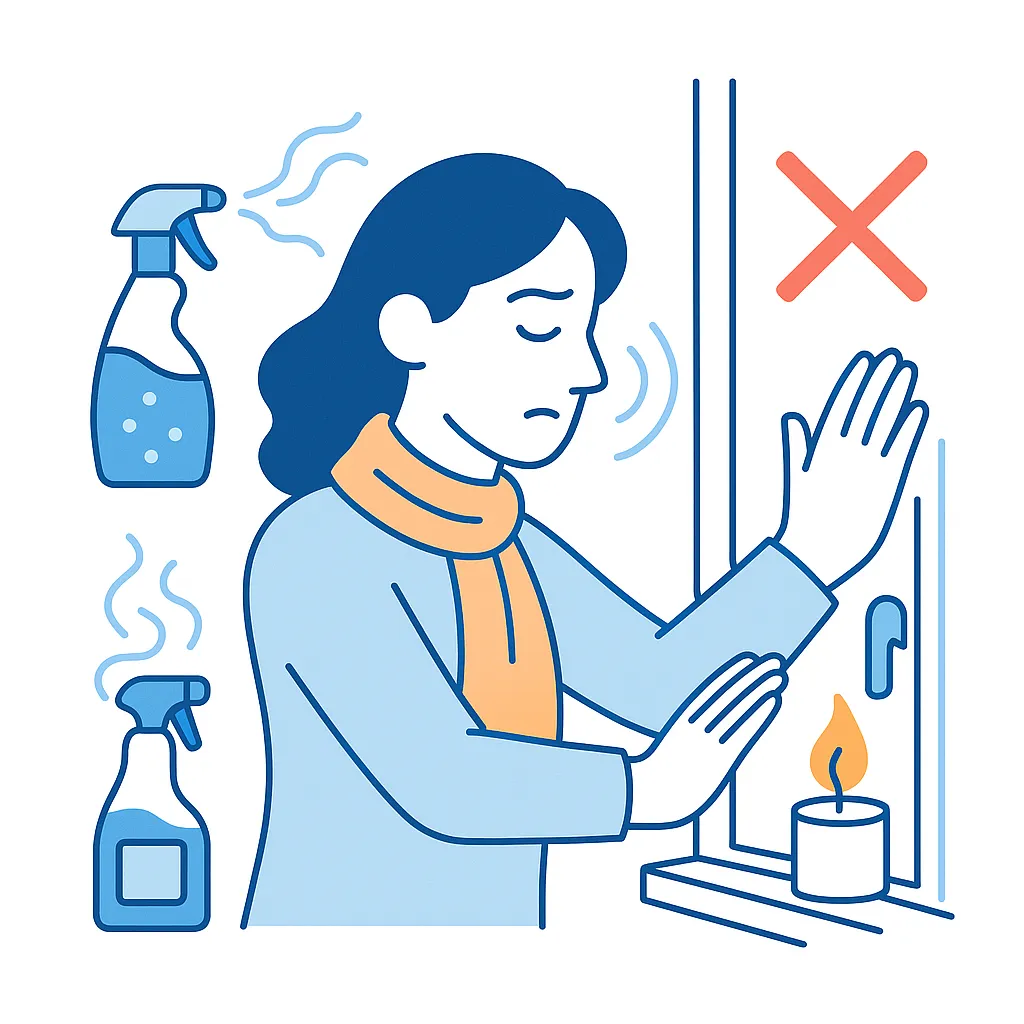
- Avoid smoky rooms; if you’re around a fireplace, sit back from the direct airflow.
- Choose unscented candles or diffusers. If you love winter scents, keep them away from your desk and bed.
- Be gentle with eye makeup: avoid tightlining (lining the inner lash margin), skip waterproof mascaras that require harsh removers, and cleanse thoroughly each night.
Pro tip: If you wear a mask in winter (e.g., on public transit), seal the top edge with skin‑safe tape so exhaled air doesn’t blast upward into your eyes.
9) Visit your eye doctor if discomfort persists
Why it matters: Persistent winter symptoms can signal meibomian gland dysfunction, blepharitis, allergies, or other issues that need tailored care. An eye care professional can:
- Evaluate your tear film and glands,
- Recommend medicated drops (anti‑inflammatory, prescription lubricants),
- Suggest nutritional strategies (such as omega‑3 fatty acids if appropriate for you),
- Discuss in‑office treatments (like gland heating/expressing or light‑based therapies) when needed.

When to go sooner: If you have severe pain, light sensitivity, sudden vision changes, significant redness, or a feeling that something is stuck in the eye, seek prompt care.
Bonus tips that make a surprising difference
- Mind the screen load. Dim overly bright screens, increase text size, and use dark mode at night to reduce squinting. Keep a clean, matte screen to cut glare.
- Check room temperature. Super‑hot rooms dry the air. A moderate setting plus a humidifier keeps your eyes — and skin — happier.
- Eat for your eyes. A balanced diet with omega‑3‑rich foods (salmon, trout, flaxseed, chia) may support tear quality. Colorful produce adds antioxidants that help the ocular surface.
- Night moisture protection. Moisture‑chamber sleep masks or sealed goggles can create a humid micro‑environment while you rest — especially helpful if you sleep under a vent or a ceiling fan.
- Lens care matters more in winter. Wash and dry hands thoroughly before touching lenses; use lint‑free towels. If you use multipurpose solution, rub‑and‑rinse the lenses even if the bottle says “no‑rub.” Replace cases at least every three months. Hydrogen‑peroxide systems can improve comfort for some people; ask your doctor whether they’re a good match for your lens type.
A day‑in‑the‑life winter routine (sample)
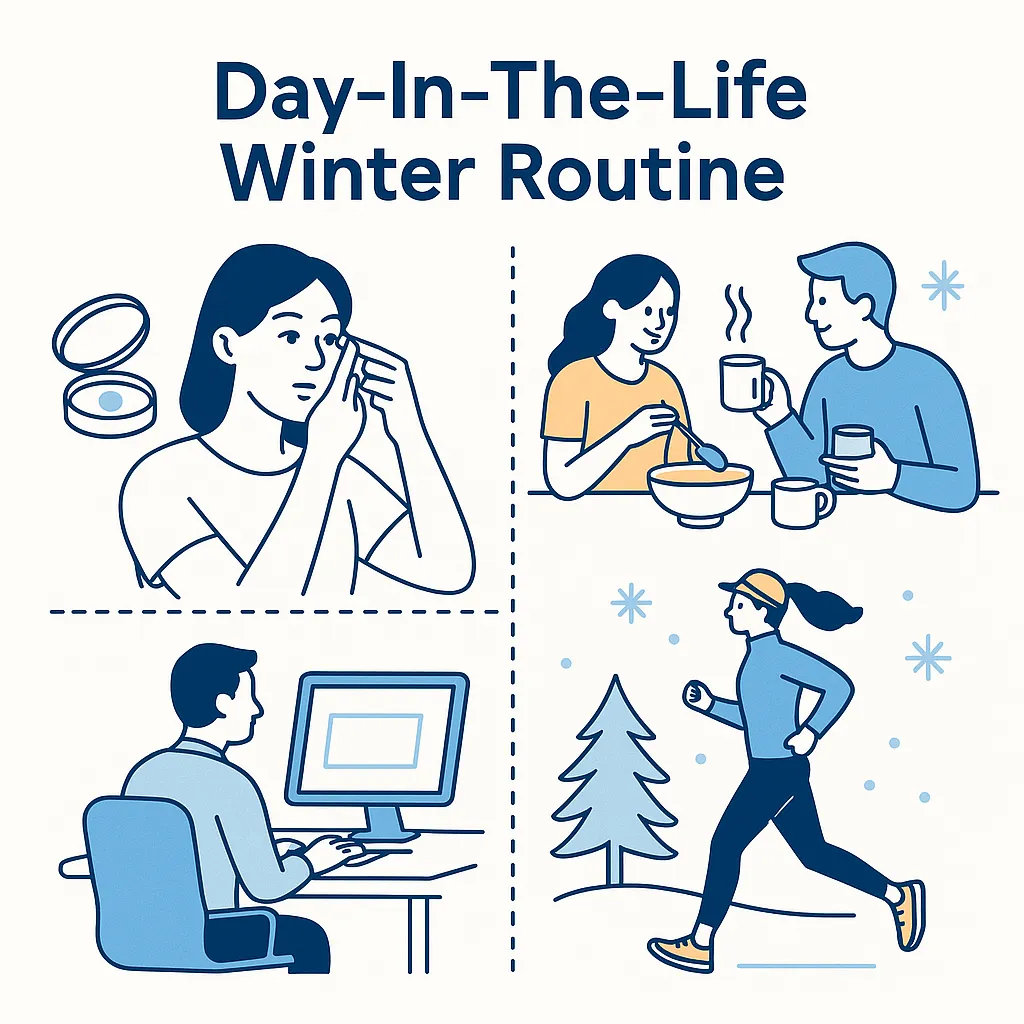
- Morning: Warm compress (5–7 minutes), lid cleanse, insert daily disposable lenses, add a contact‑safe rewetting drop, and put on wrap‑around sunglasses before heading out.
- At work: Humidifier on; screen slightly below eye level; 20‑20‑20 breaks with deliberate blinking each hour; rewetting drops as needed.
- Evening: Switch to glasses after dinner to give eyes a break. Use preservative‑free tears or a gel (without lenses) if eyes feel dry before bed. Moisture‑chamber mask overnight.
- Weekends: One full glasses day or a half‑day off lenses to reset.
Troubleshooting common winter problems
- Blur that clears after a blink: Often evaporative dryness. Add rewetting drops and work on complete blinks; warm compresses help.
- Stinging when you put lenses in: Check that hands are soap‑free (residue stings), lenses are rinsed thoroughly, and solution isn’t expired.
- Foggy vision outdoors with a mask or scarf: Tuck the scarf below your nose or direct exhaled air downward; seal masks at the nose bridge.
- Redness late in the day: Build in a glasses block, use preservative‑free tears after removing lenses, and review lens replacement frequency — overworn lenses inflame eyes.
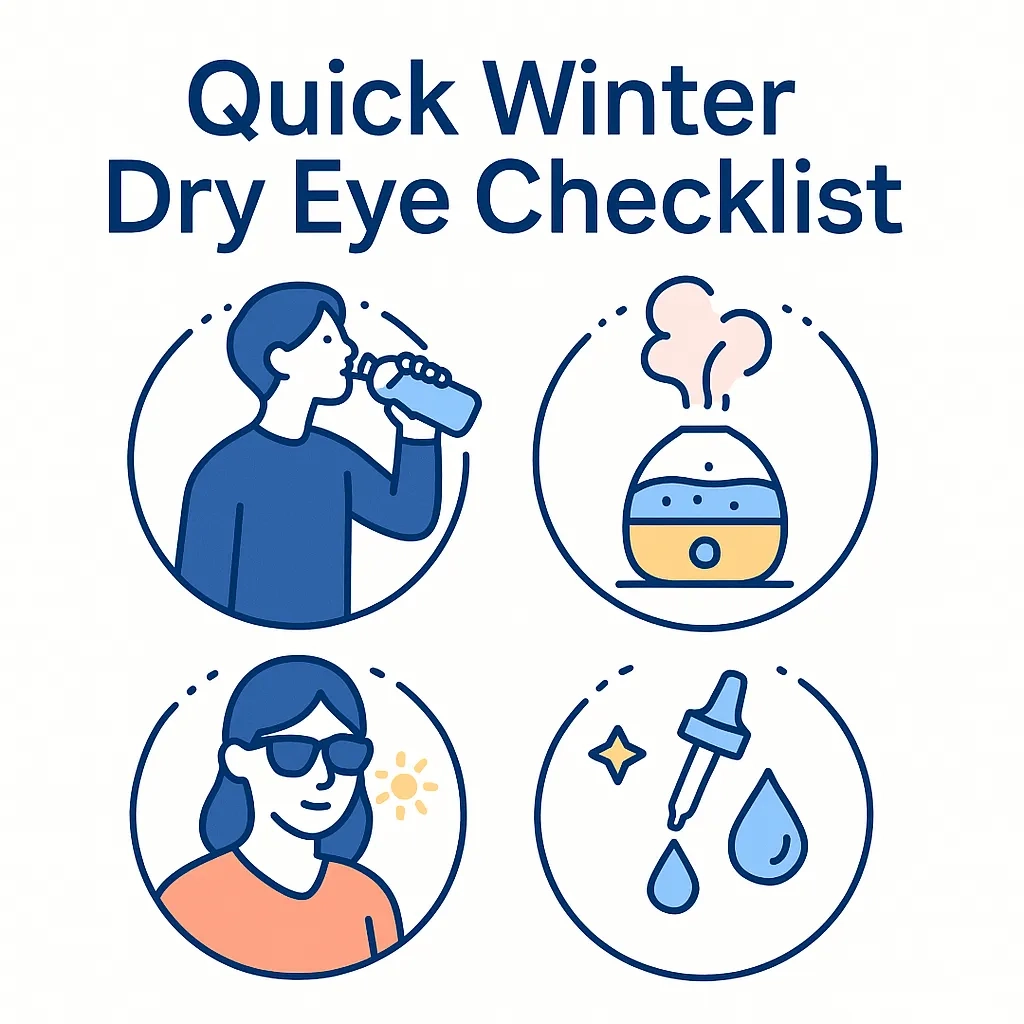
Quick winter checklist
- ☐ Drink water throughout the day
- ☐ Keep indoor humidity ~40–50%
- ☐ Do 20‑20‑20 + conscious blinks
- ☐ Wear wind‑blocking sunglasses/goggles outside
- ☐ Warm compress + lid hygiene daily
- ☐ Use preservative‑free tears and contact‑safe rewetting drops
- ☐ Schedule lens breaks / consider daily disposables
- ☐ Avoid smoke, strong fragrances, direct vents
- ☐ See your eye doctor if symptoms persist or worsen
By layering these habits, most contact lens wearers can turn winter from a season of scratchy, blurry eyes into one that feels manageable — even comfortable. Start with the low‑effort wins (humidifier by the bed, 20‑20‑20 reminders, rewetting drops in your pocket), then add warm compresses and regular lens breaks. If your eyes still protest, book an exam: small, individualized adjustments to your lens material, care system, or treatment plan often deliver outsized relief.
Why LensDirect cares
At LensDirect, we know that winter can be tough on your eyes. Between cold winds, dry indoor air, and extra screen time, it’s easy for discomfort to creep in. That’s why we’re passionate about helping you protect your vision and keep your eyes feeling their best all season long.
From moisture-rich contact lenses to fast, reliable reorders and lens replacement services, we make it simple to stay on top of your eye care routine—even when the weather isn’t on your side. Our goal is to help you enjoy clear, comfortable vision year-round without the irritation of winter dry eye.
Because at LensDirect, your comfort is always in sight.
This article is for general information and comfort strategies only and isn’t a substitute for personalized medical advice. Always follow the guidance of your eye care professional, and seek prompt care for sudden or severe symptoms.
Author

Subscribe to our email newsletter to get the latest posts delivered right to your email.