

If you already wear prescription glasses, bright sun creates an annoying choice: squint through clear lenses, keep switching pairs, or pay for a second prescription just for outdoor use. Clip on sunglasses solve that problem by adding shade over the glasses you already wear, which is why they appeal to commuters, walkers, travelers, and anyone who wants a simpler backup option.
This guide is for shoppers who want a practical answer, not eyewear jargon. You will learn what clip on sunglasses are, how magnetic clip on sunglasses compare with other styles, how to size clip on sunglasses for glasses correctly, which features matter most, and when a dedicated pair of prescription sunglasses still makes more sense. That matters because too much ultraviolet light can damage your eyes over time.
Are clip-on sunglasses any good? Yes, when the fit is precise and the lenses clearly promise real sun protection. The best pairs keep your everyday prescription in place while cutting brightness and glare without adding another full pair to manage.
What are clip-on sunglasses?
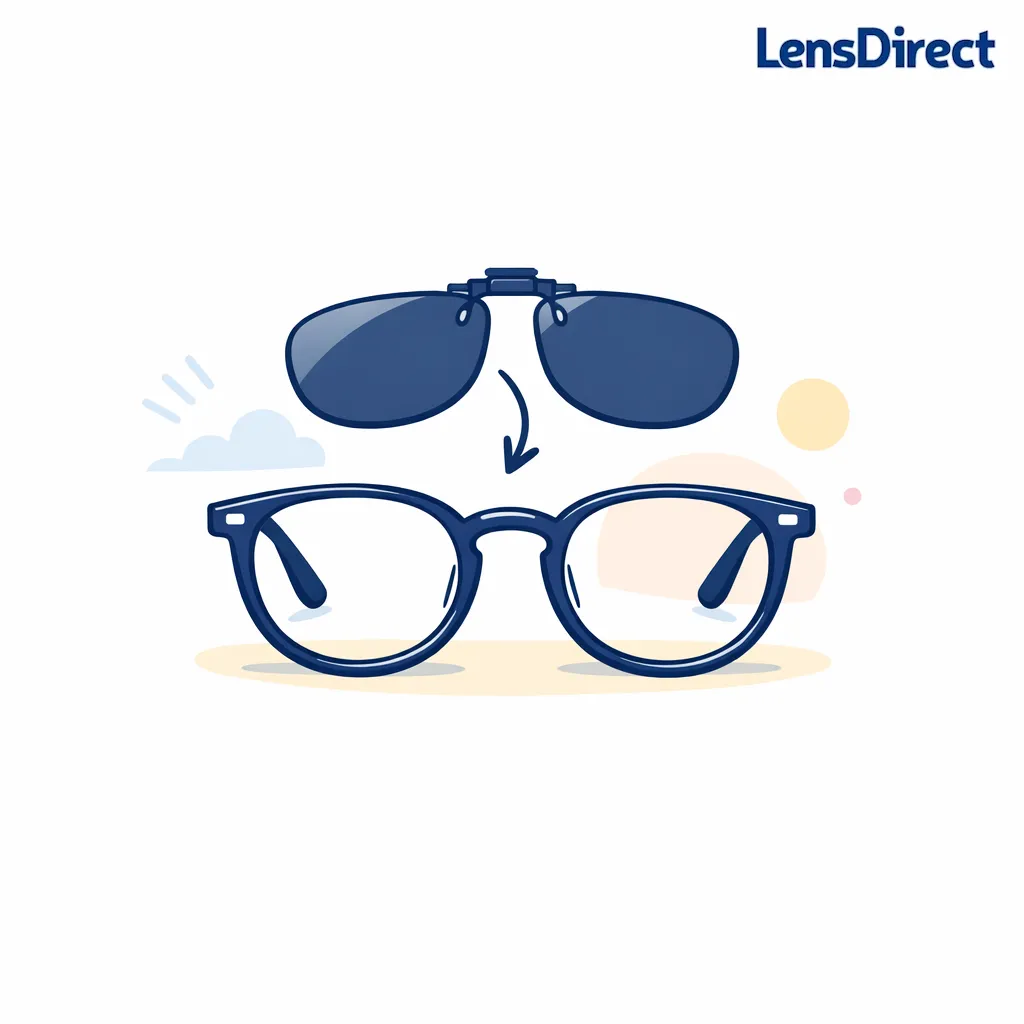
Clip-on sunglasses are tinted lenses that attach to the front of your regular glasses. Instead of changing your prescription, they sit in front of it, so you can go from indoor clear vision to outdoor sun protection in a few seconds.
They are available as magnetic clip on sunglasses, spring-clip styles, flip-up versions, and custom-made sun clips. Some are designed for a specific frame model, while others are more universal and meant to fit a range of shapes.
How clip-ons work over prescription glasses
The idea is simple: your prescription lenses keep doing the seeing, and the clip-on layer handles sun reduction. For many shoppers, that means fewer pair swaps, less cost upfront, and an easier travel setup.
Clip-ons work best when the sun lens closely matches the shape and size of your frame. A good match looks cleaner, covers more of your clear lenses, and feels more stable when you move.
Clip-on vs fit-over vs prescription sunglasses
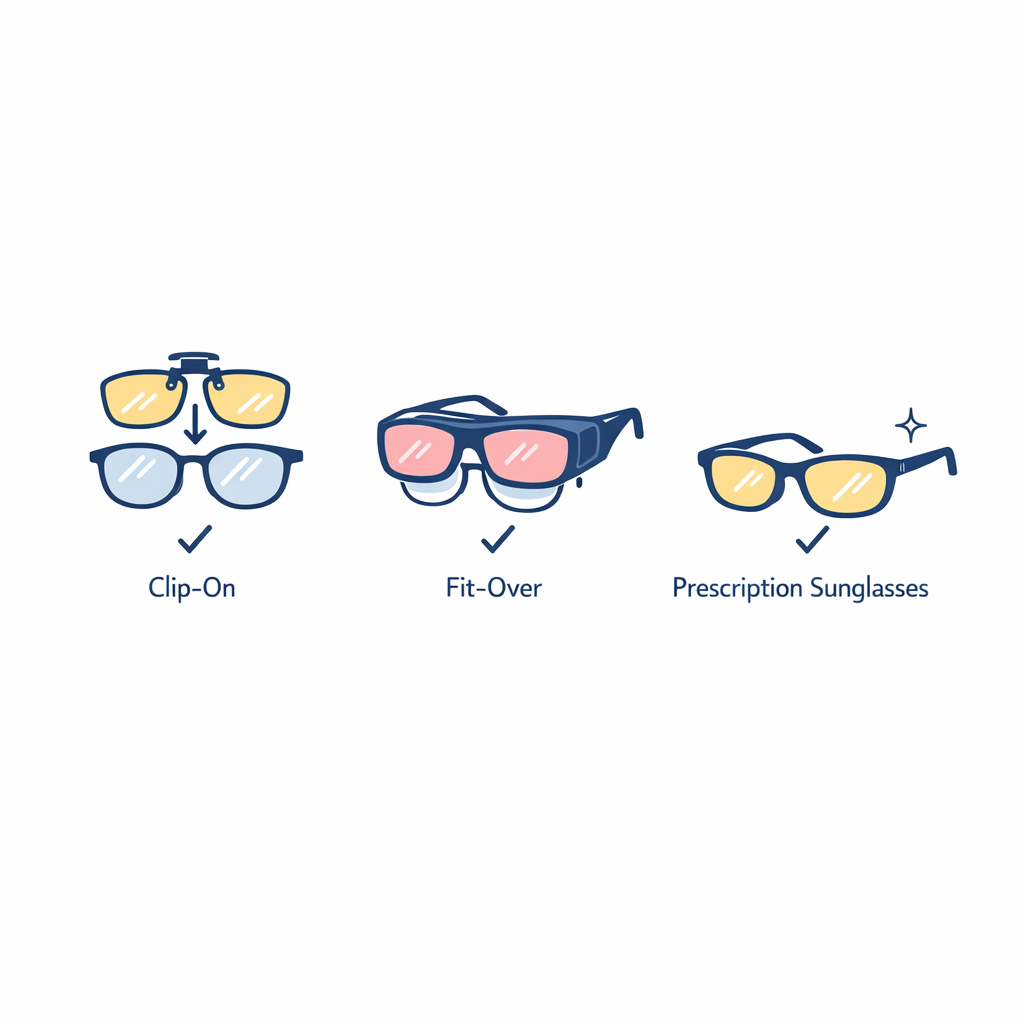
Clip-on sunglasses attach directly to your existing glasses. They usually feel trimmer than fit-over sunglasses and make sense if you already love your frame and prescription setup.
Fit-over sunglasses are full sun frames worn on top of regular glasses. They can be useful for maximum coverage, but some people find them more obvious-looking or bulkier for daily wear.
Prescription sunglasses give you one dedicated outdoor pair. They can feel cleaner and more integrated, but they also mean buying and carrying another full pair, and not every shopper needs that right away.
Why people choose clip-on sunglasses over separate prescription sunglasses
Cost and convenience benefits
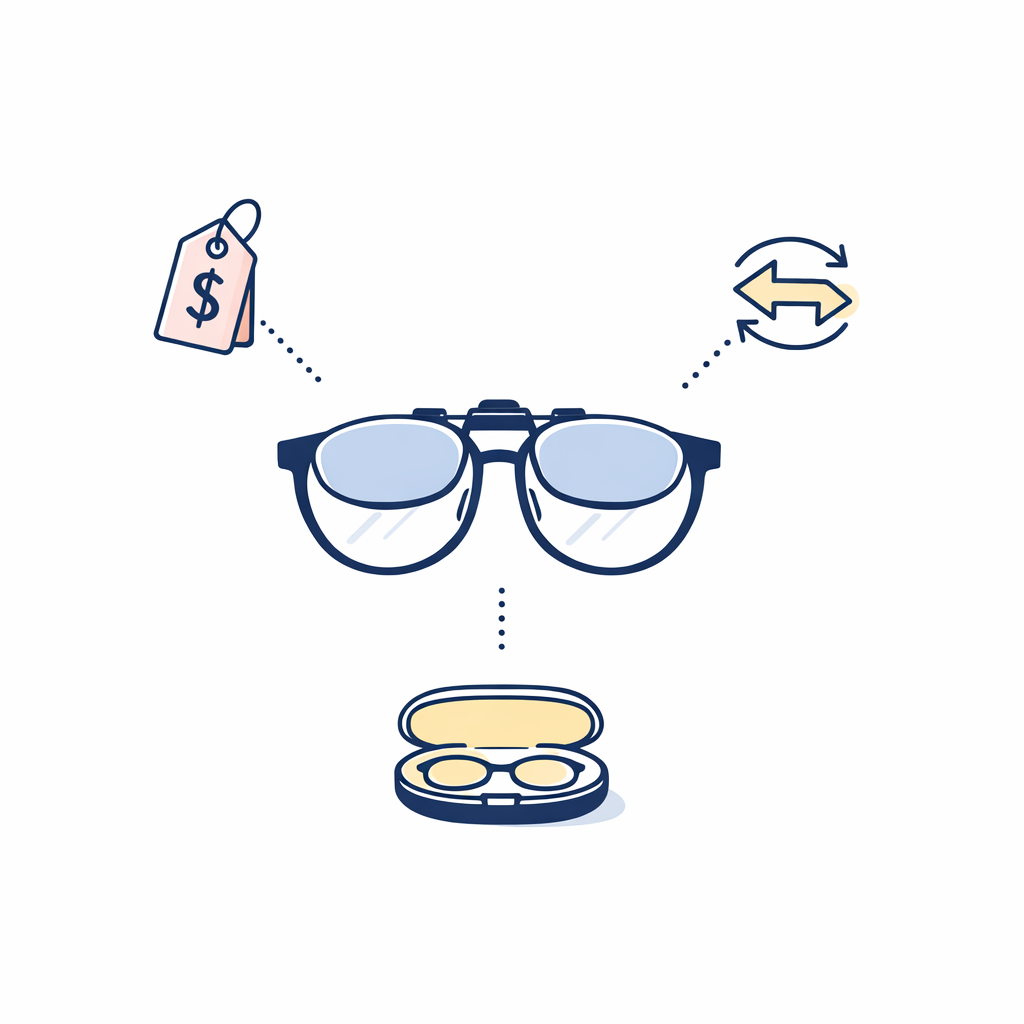
The biggest reason people buy clip on sunglasses for glasses is simple: they already own clear prescription glasses that work well. Adding a sun clip can be a lower-commitment way to get outdoor comfort without immediately ordering another prescription pair.
They are also convenient for quick transitions. If you go in and out of stores, commute by car, or travel light, being able to clip on and off is often easier than keeping track of two full frames.
UV protection and polarized glare reduction
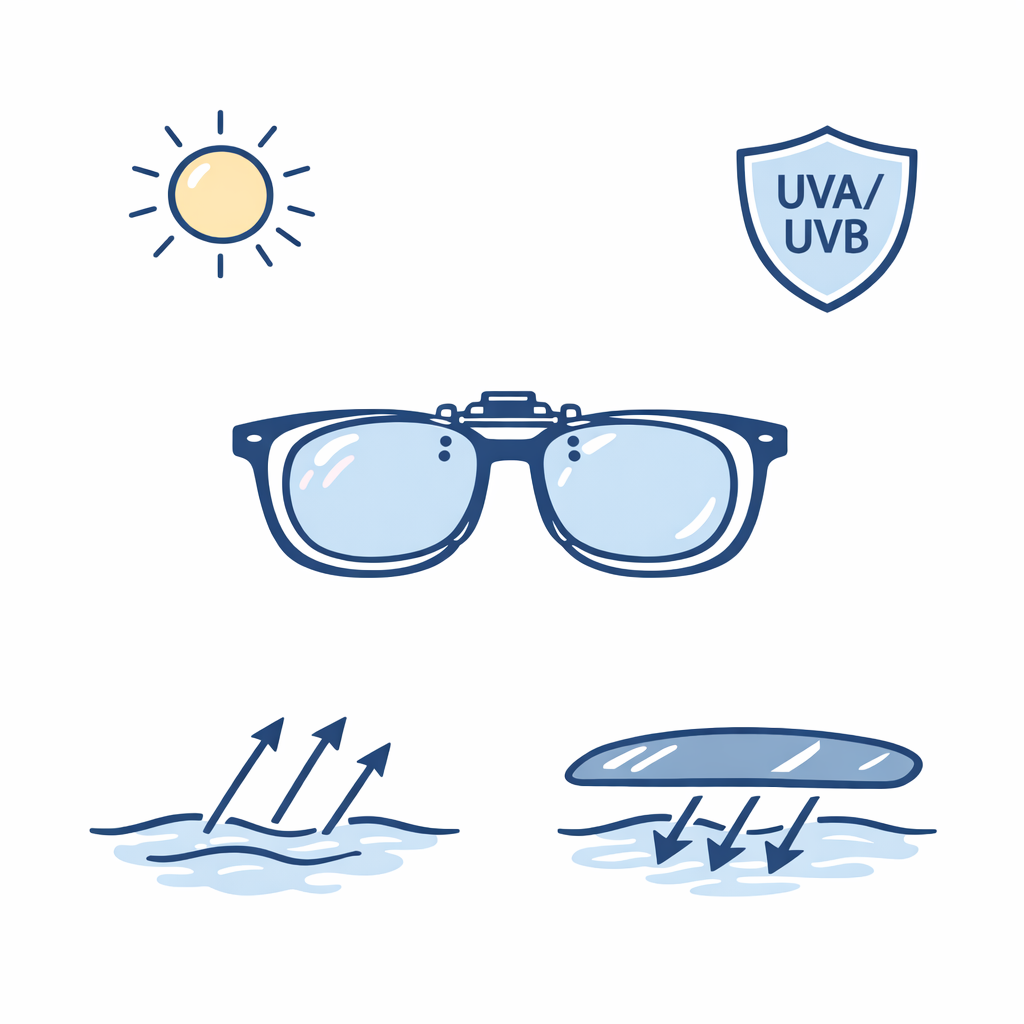
Sun comfort is not just about darkness. When you shop, prioritize lenses described as blocking 99 to 100 percent of both UVA and UVB rays.
If you drive often or spend time near water or snow, look for polarized clip-on sunglasses too. The FDA explains that polarized lenses are designed to reduce glare from reflected light, which can make bright conditions more comfortable.
Everyday use cases like driving, walking, and travel
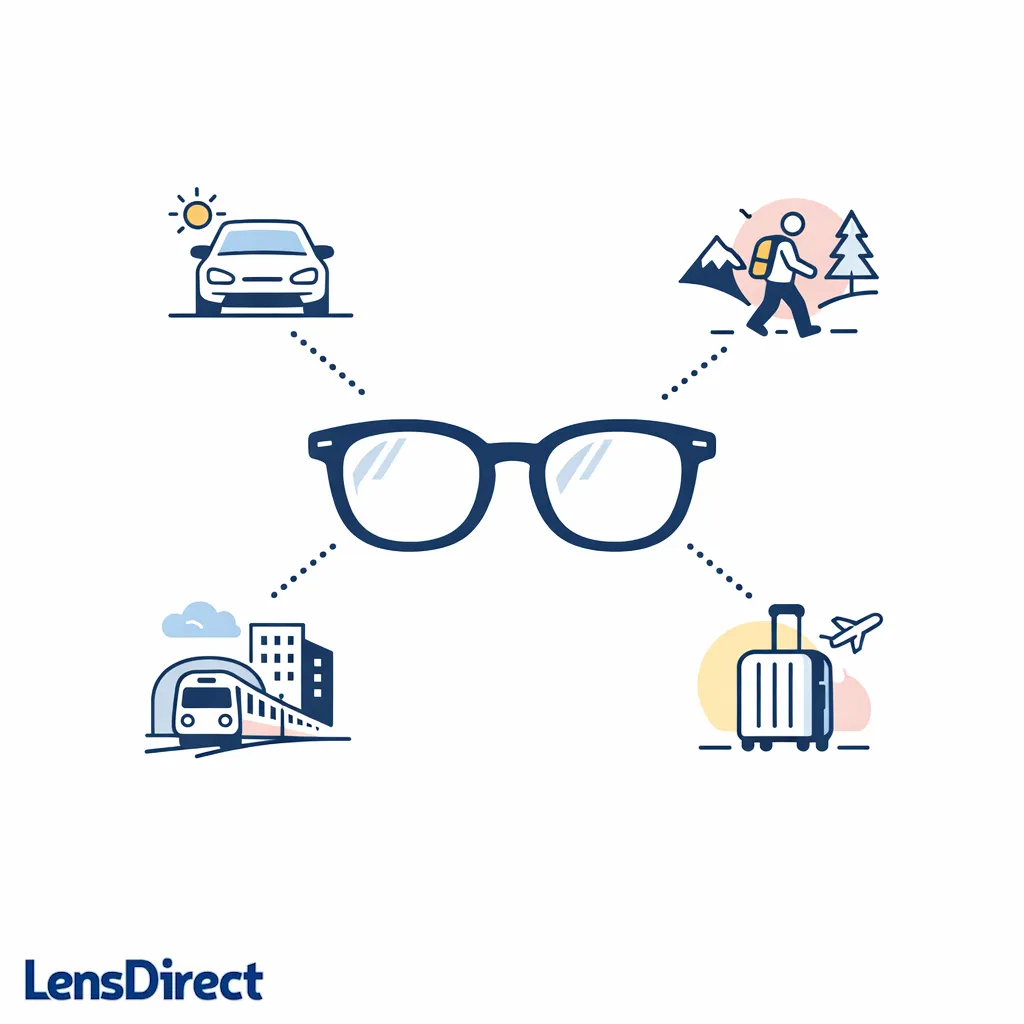
Clip-ons are especially handy for short outdoor bursts. Think school pickup, dog walks, lunch breaks, commuting, sightseeing, or keeping a backup sun option in a bag or glove compartment.
They can also be a smart bridge purchase. If you are not ready to commit to prescription sunglasses yet, clip-ons let you improve daytime comfort now and decide later whether you want a dedicated sun pair.
Types of clip-on sunglasses
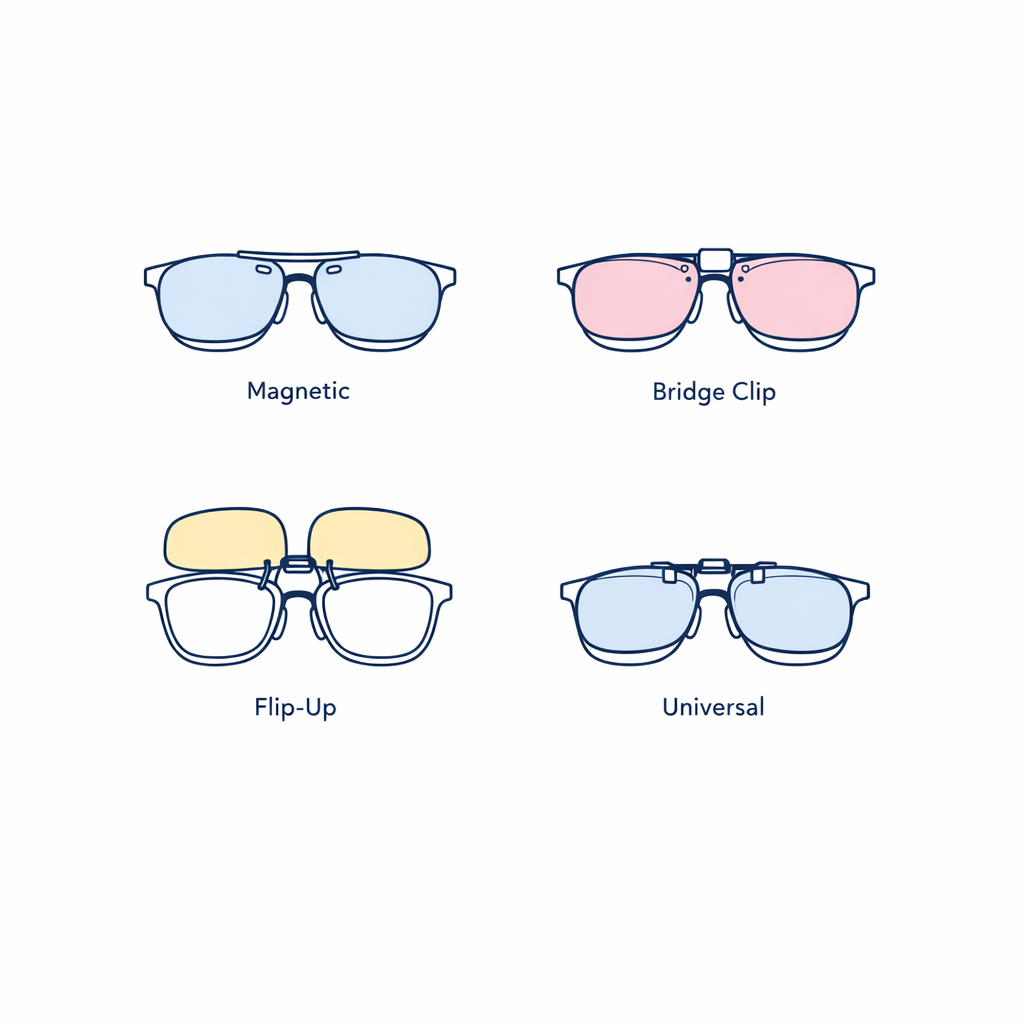
If you are comparing sunglasses with clip on designs, most options fall into four categories:
- Magnetic clip-on sunglasses: a matched sun front that snaps onto compatible frames.
- Traditional clip or claw styles: spring-loaded or pressure-based attachments that grip the bridge or frame.
- Flip-up clip-ons: clip-ons that lift upward instead of fully coming off.
- Brand-specific or universal clip-ons: matched designs for one frame model versus more flexible shapes that fit many frames.
Magnetic clip-on sunglasses
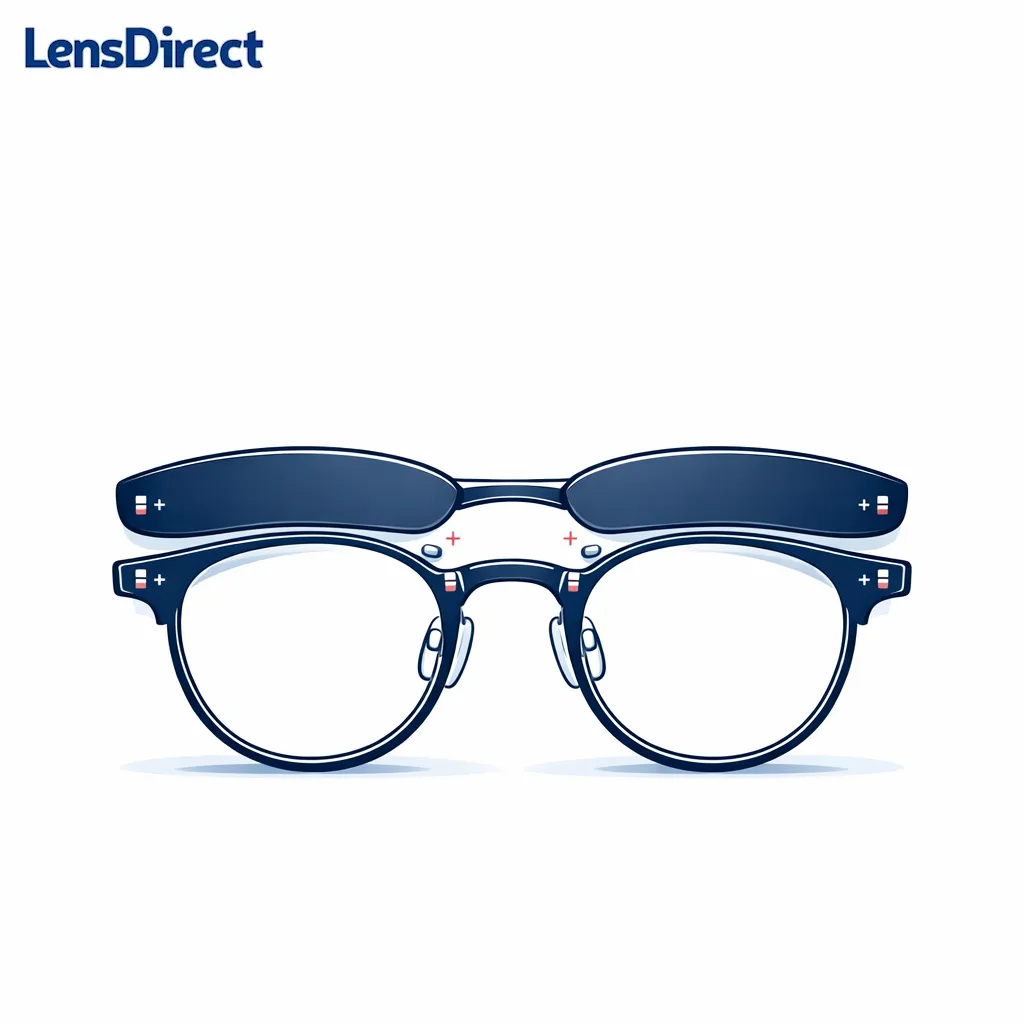
Magnetic clip on sunglasses are the cleanest-looking option for many people. Because the sun piece is usually made for a specific frame, it tends to sit closer to the lenses and look more intentional than a generic clamp style.
The tradeoff is compatibility. If your frames were not designed for a matching magnetic sun front, you usually cannot force a magnetic solution to work well.
Traditional clip or claw-style clip-ons
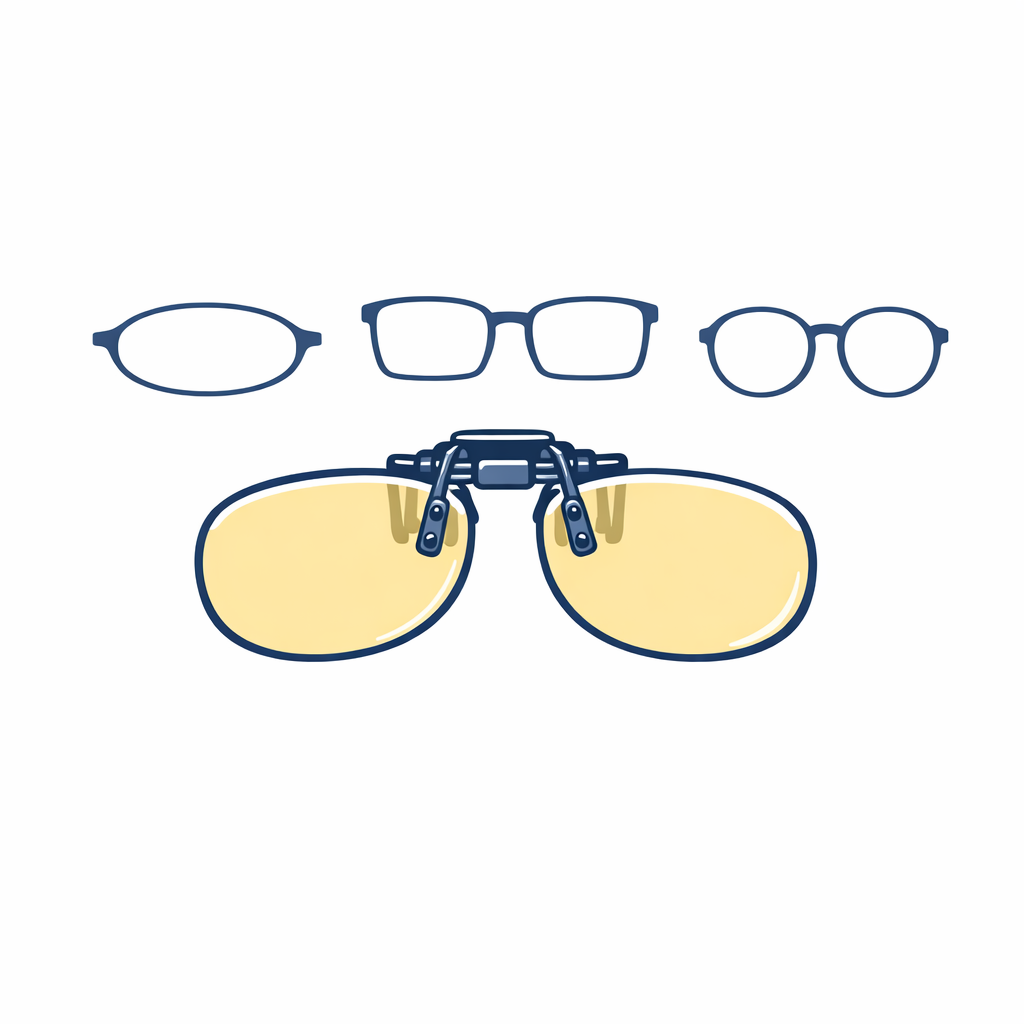
These are the classic clip ons many people picture first. They attach mechanically at the bridge or nose area and can work across a wider range of prescription eyeglasses with clip on sunglasses needs.
The upside is flexibility. The downside is that the attachment point may be more visible, and the fit can feel less seamless on some frame shapes.
Flip-up clip-ons
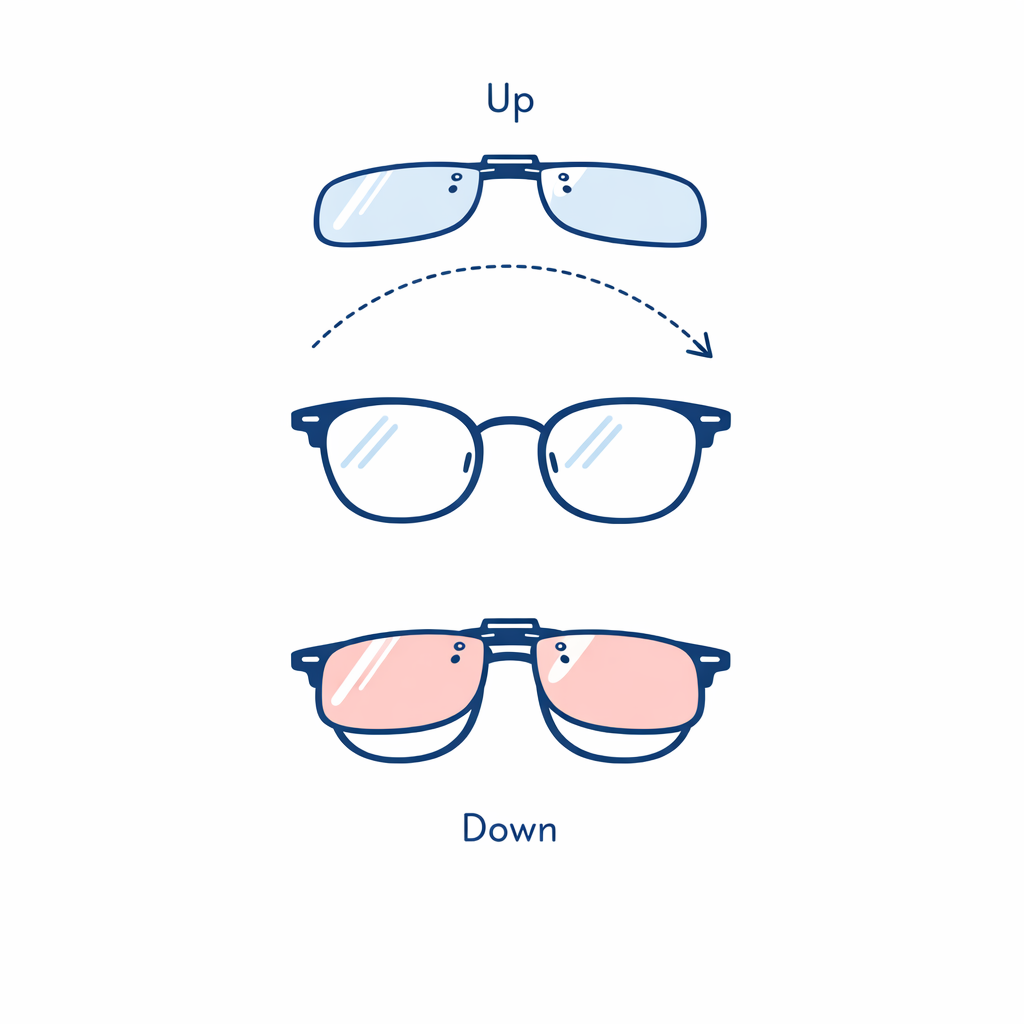
Flip-up clip-ons are convenient if you move in and out of shade constantly. Instead of removing the sun piece, you simply lift it.
They are practical, but they also tend to look the most noticeable. If appearance matters as much as function, many shoppers prefer standard removable or magnetic options.
Brand-specific vs universal clip-ons
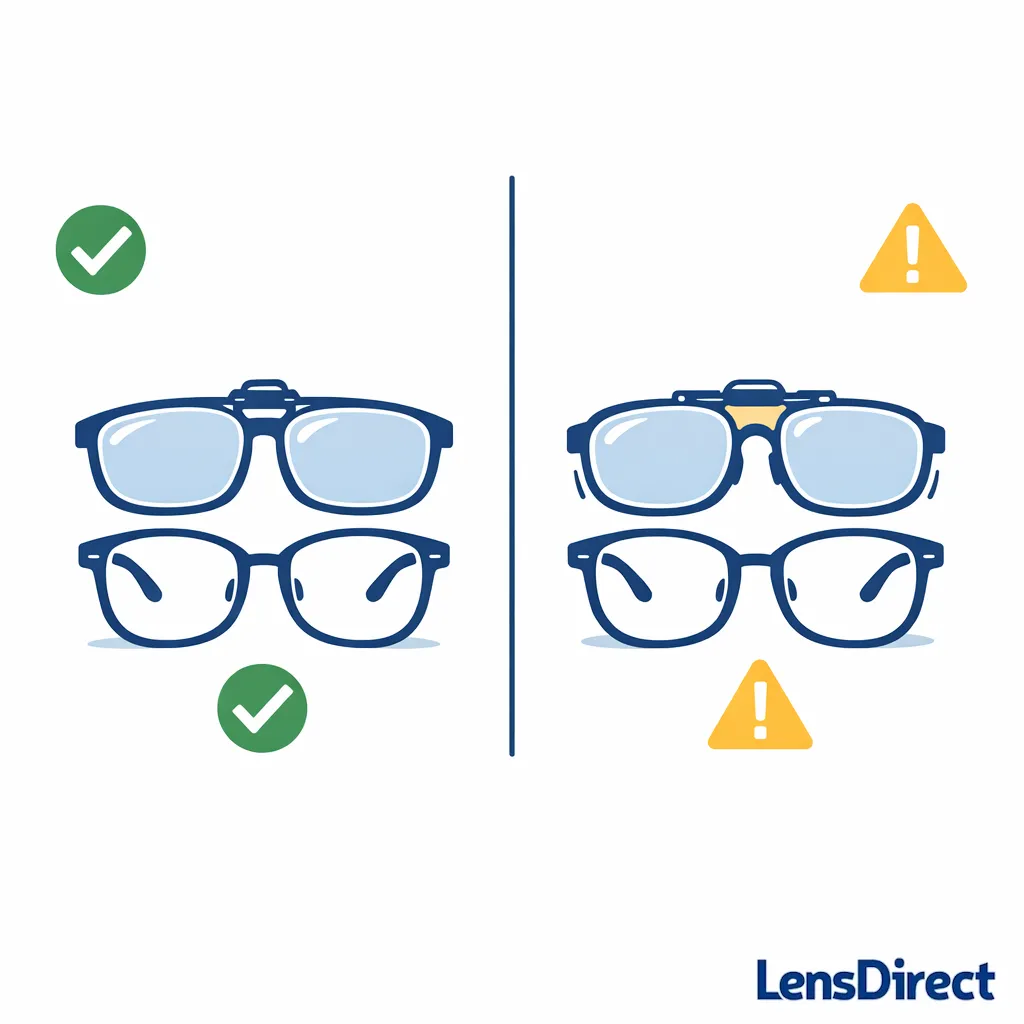
Brand-specific clip-ons are built to match a particular frame shape. Universal clip-ons aim to fit a range of sizes and can be easier to buy quickly, especially if you do not know your exact frame model.
If your glasses have a distinctive shape, unusual bridge, or thin rimless construction, a universal clip may feel like a compromise. That is often when custom clip-on sunglasses start to make more sense.
How to find clip-on sunglasses that fit your glasses
Most frustration with clip on prescription sunglasses comes from buying the wrong size, not from the concept itself. If you want clip-on sunglasses for prescription glasses that feel secure and look balanced, follow a simple fit process instead of guessing.
- 1. Match the lens shape. Compare the outline of your lenses first. Round, square, aviator, cat-eye, and rectangle shapes all need different sun fronts if you want full-looking coverage.
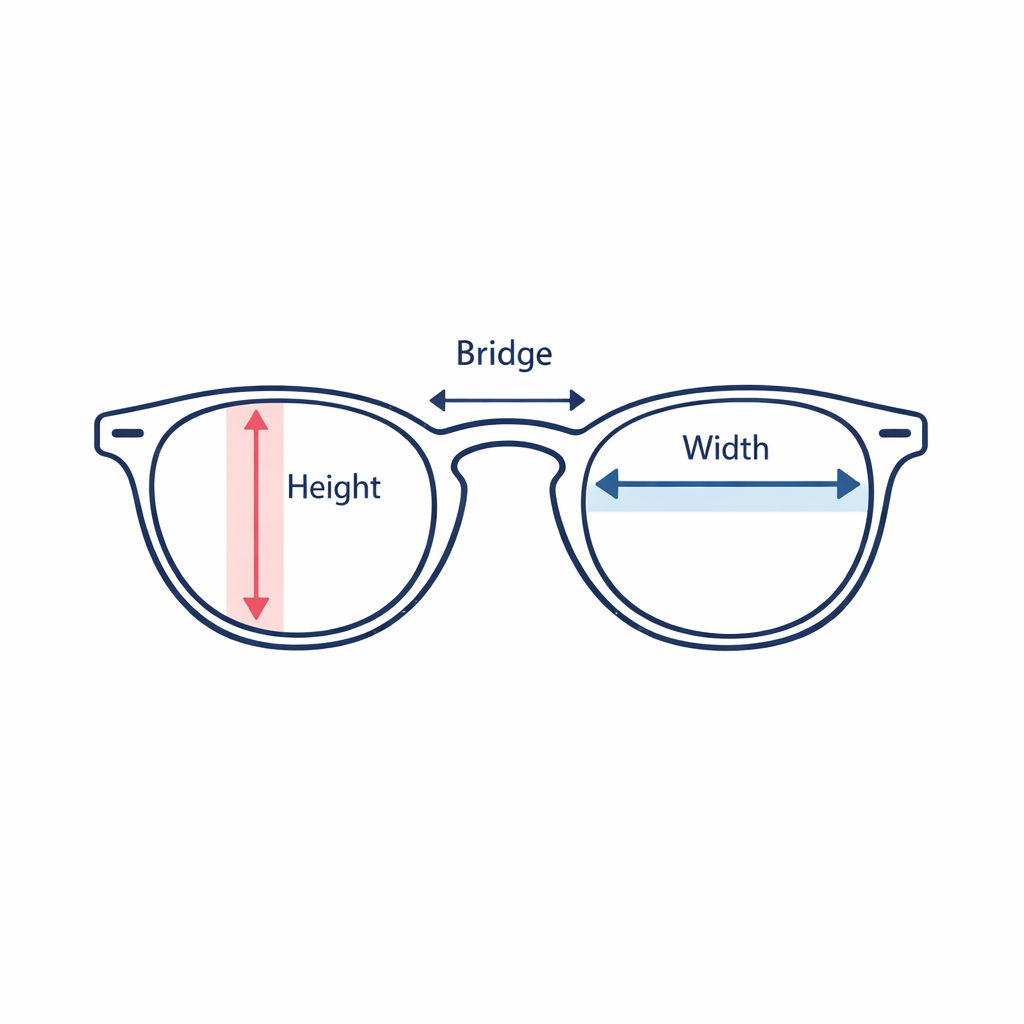
- 2. Measure the visible lens area. Check width and height of each lens opening, not just the total front width of the whole frame. A clip-on that is too short leaves bright gaps at the bottom or sides.
- 3. Check the bridge and attachment style. Make sure the clip mechanism has a sensible place to sit without pinching the bridge or crowding the nose area.
- 4. Review frame thickness and material. Very slim metal frames, thick acetate, rimless styles, and deeply curved frames can all affect how stable a clip-on feels.
- 5. Choose universal or custom on purpose. Universal pairs are faster and cheaper. Custom or frame-specific pairs are better when you want a cleaner fit or have a harder-to-match frame.
Match lens shape
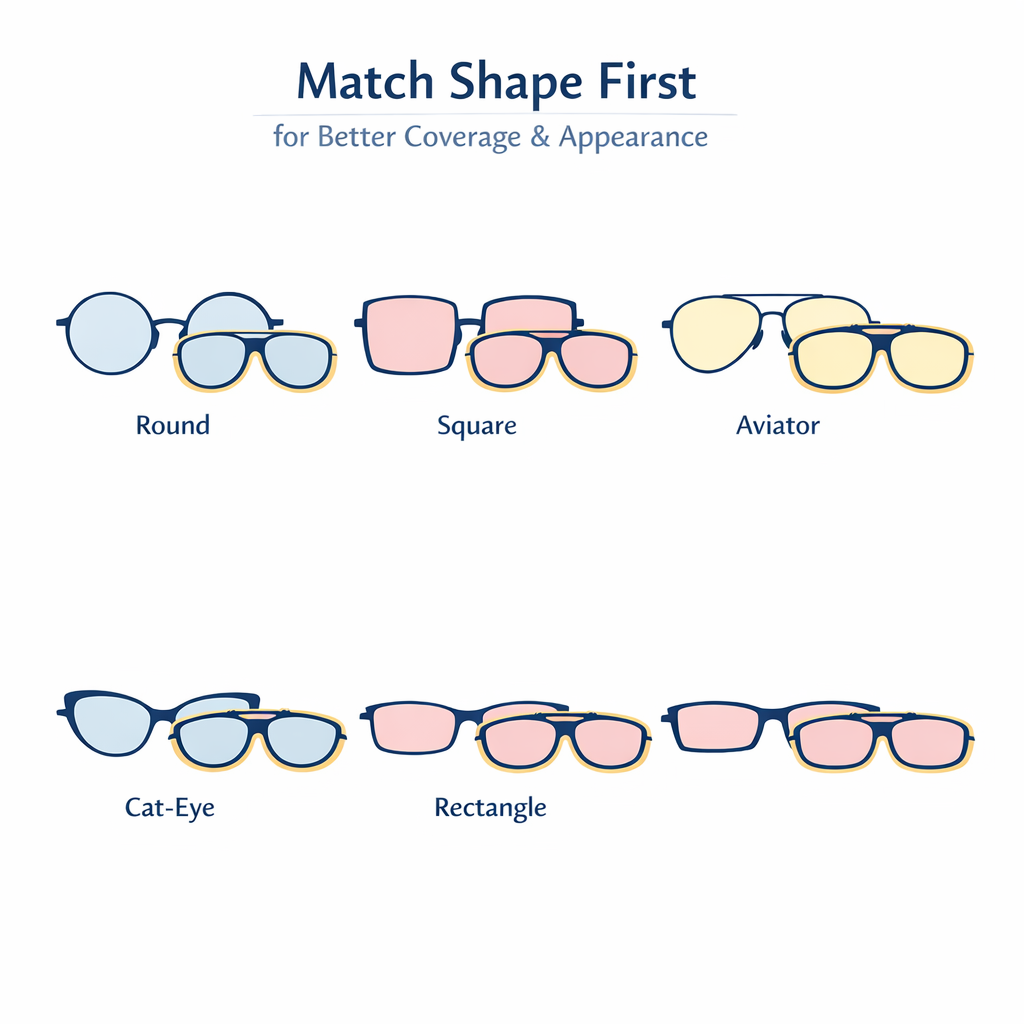
Start with shape before color, brand, or price. If your glasses are softly rounded and you buy a sharply rectangular clip-on, the mismatch will show immediately and may leave parts of your clear lenses exposed.
This is why frame-specific and magnetic clip on prescription sunglasses often look better. The closer the sun piece follows your lens outline, the more natural the finished result looks.
Measure width, height, and bridge
Width tells you whether the clip-on reaches edge to edge. Height tells you whether it covers enough vertically, and bridge space tells you whether the attachment has room to sit cleanly.
If you are also ordering new prescription eyewear online, LensDirect has a simple guide on how to measure your pupillary distance. That is different from clip-on sizing, but it is useful if you decide a fresh pair of glasses or prescription sunglasses is the better long-term route.
Metal frames vs plastic frames compatibility
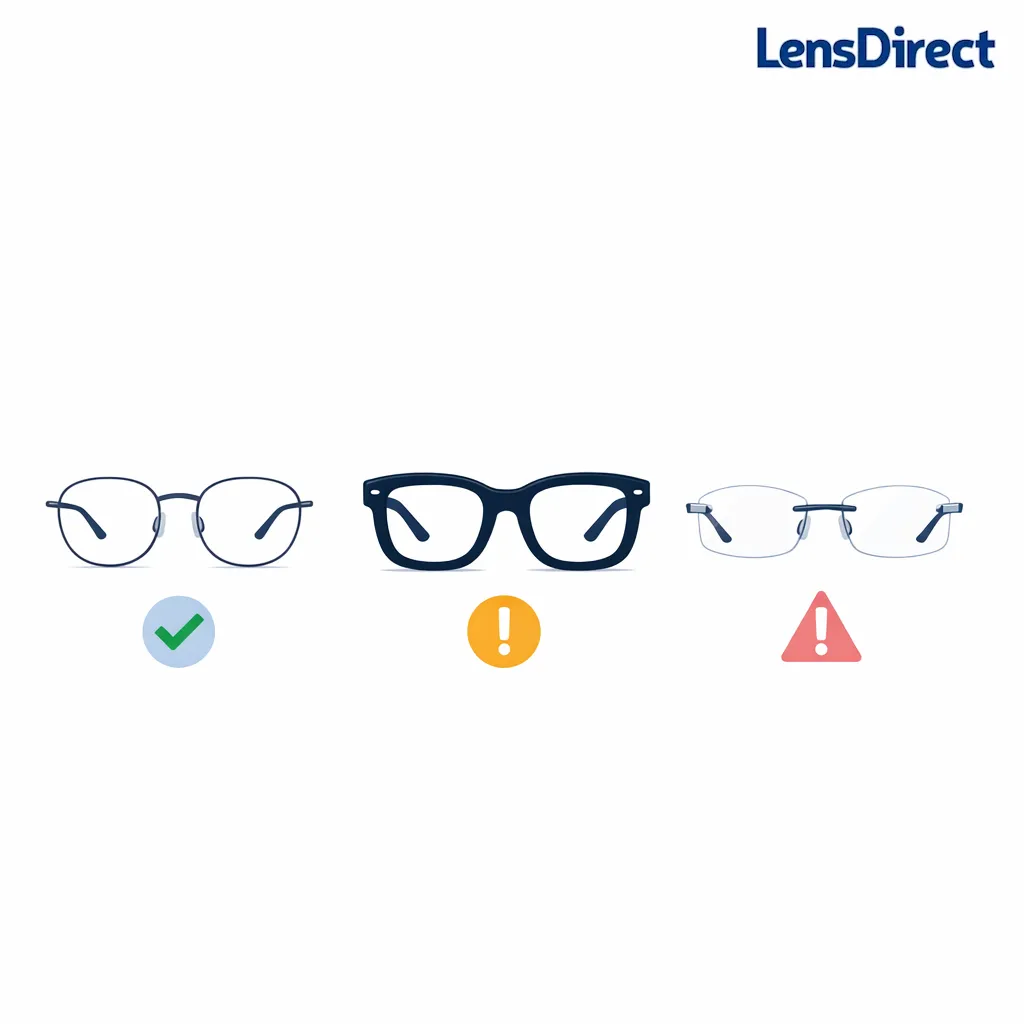
Thin metal frames can work well with many clip-ons because there is less bulk at the edge. Thick plastic frames can also work, but you need enough clearance so the clip sits securely without pressing awkwardly against the front.
Rimless, semi-rimless, or highly decorative frames are usually trickier. In those cases, a custom clip-on or a separate pair of sunglasses may be the cleaner choice.
When custom clip-ons make sense
Custom clip-ons are worth considering if your frames are unusual, premium, or difficult to replace. They also make sense if you plan to wear the sun piece often and want the closest possible fit rather than “good enough.”
If you are still choosing frames from scratch, LensDirect’s Find Your Fit guide can help you narrow down shapes that you will actually enjoy wearing every day.
Are clip-on sunglasses any good?
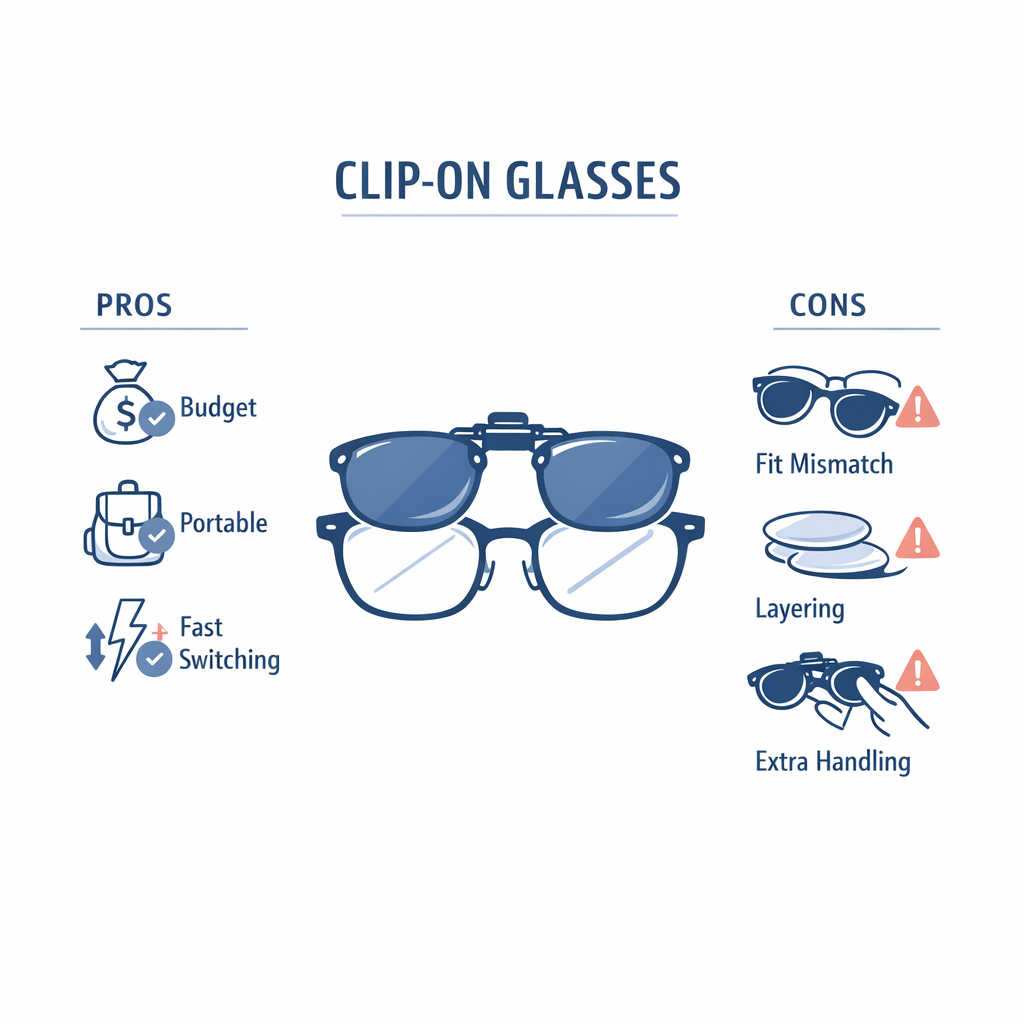
Pros
Yes, clip-ons can be very good when you buy the right format for your frame. They are practical, fast to use, easy to pack, and usually friendlier on your budget than ordering an entirely separate prescription sun pair right away.
They are also great for people who already love the fit of their current glasses. Instead of starting over, you keep the frame and vision setup you trust.
Cons
The main drawbacks are fit, appearance, and extra handling. A poorly matched clip-on can look oversized, leave bright gaps, or feel slightly front-heavy, and every attach-remove cycle creates another opportunity for smudges or scratches.
Some people also dislike the double-lens look from the side. If you care most about a streamlined appearance, dedicated prescription sunglasses may still win.
Who should buy them
Clip-ons make the most sense for people who want flexible, prescription-friendly sun protection without building a whole second eyewear wardrobe. They are especially useful for drivers, travelers, and anyone who alternates between indoors and outdoors throughout the day.
If you spend hours outside every day, want the cleanest possible look, or need sport-specific performance, it may be smarter to talk with your optometrist about prescription sunglasses instead.
Features to look for before buying
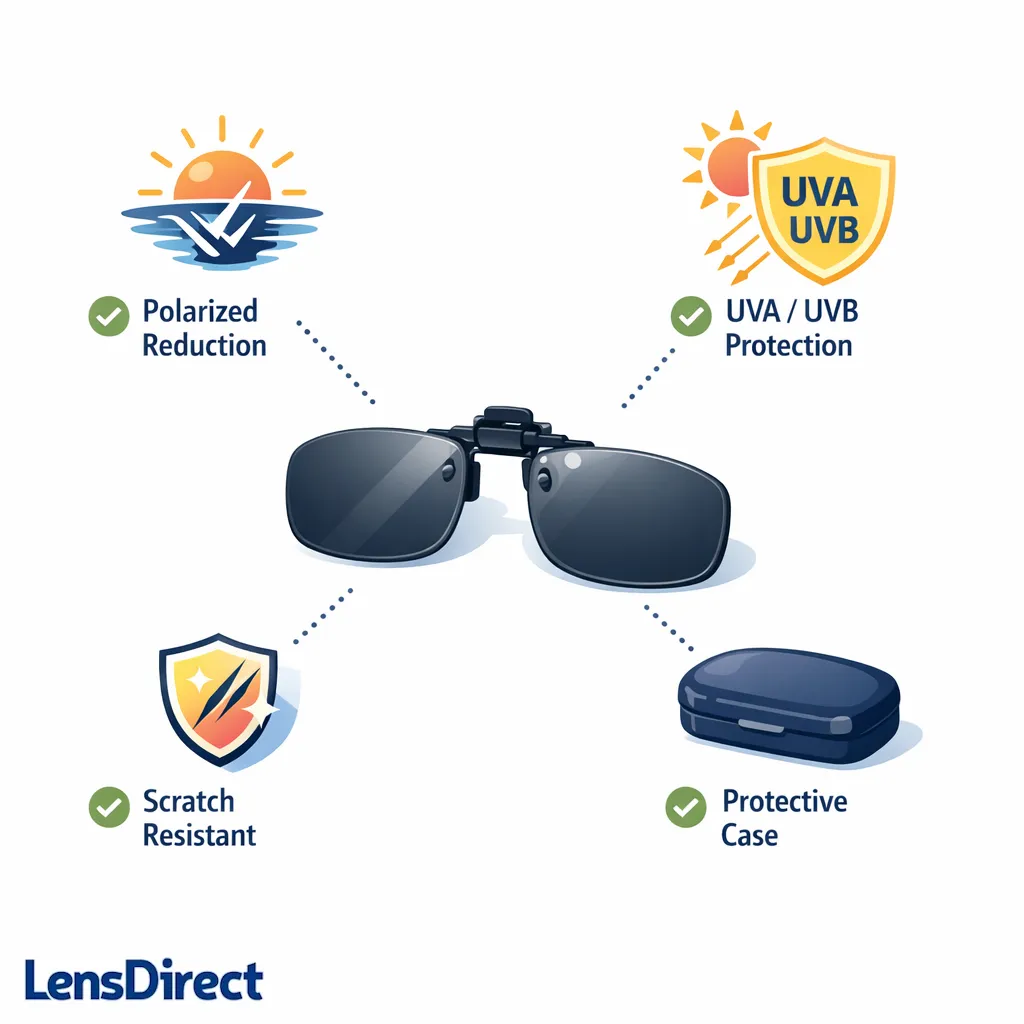
Polarized lenses
Polarized clip-on sunglasses are a strong upgrade if glare annoys you more than brightness alone. For driving, beach days, boating, or snowy conditions, the comfort difference can be noticeable.
Check for both polarization and UV protection on the listing. They solve different problems, and a better pair usually covers both.
UV protection labels
If you only check one line on the product page, check this one. The safest shortcut is a clear promise of 99 to 100 percent UVA and UVB protection.
Do not assume a darker tint is automatically better. The FDA notes that dark lenses do not necessarily provide better protection against UV rays.
Scratch resistance and durability
Because you put clip-ons on and take them off often, durability matters. Look for lenses and hinges that feel sturdy enough for repeated use, plus a clip mechanism that does not seem flimsy or overly tight.
If you tend to toss eyewear into a tote, backpack, or car console, durability matters even more. A cheap pair that scratches immediately is rarely the bargain it first seems to be.
Weight, portability, and included case
A good clip-on should feel easy to carry and easy to store. Even a well-fitting pair becomes annoying if it is too awkward to pocket or if it arrives with no case and no safe place to keep it.
Prioritize a compact case if you plan to travel with it. That small detail often makes the difference between actually using your clip-ons and leaving them at home.
Magnetic clip-on sunglasses: are they worth it?
Best use cases
Magnetic clip-on sunglasses are worth it if you want the most polished everyday experience. They are especially appealing for office-to-outdoor routines, city commuting, and anyone who cares about a cleaner look than traditional clip hardware usually gives.
They are also a strong option when you know exactly which frame you are pairing them with. The matched design tends to feel faster and neater in daily use.
Limitations and frame compatibility
The biggest limitation is that magnetic systems are rarely universal. They work best when the frame front, bridge shape, and magnet placement were designed together.
If your current glasses are not magnetic-compatible, do not let the feature alone drive the purchase. A well-sized standard clip-on will usually serve you better than a magnetic style that almost fits.
Common mistakes to avoid
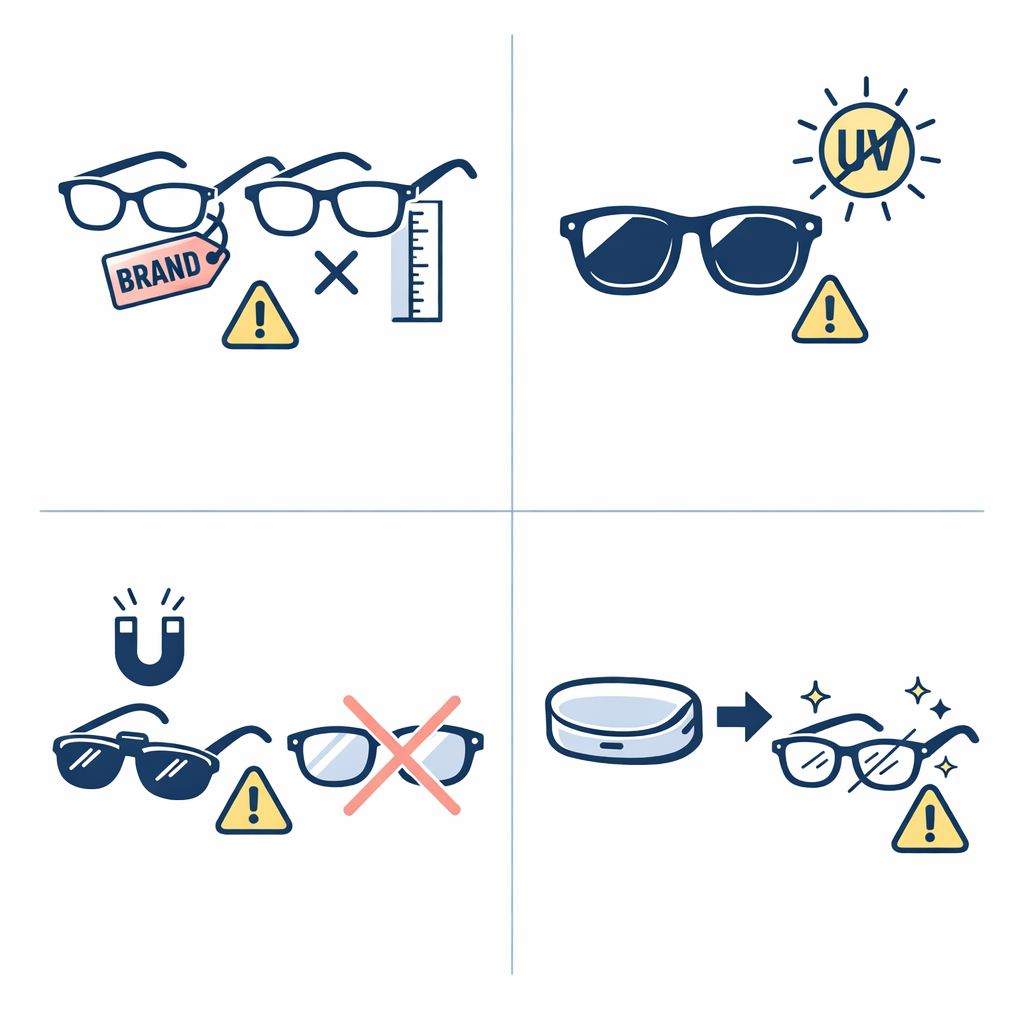
Mistake one: buying by frame brand alone instead of actual measurements. Two frames from the same brand can still have very different lens shapes and bridge layouts.
Mistake two: choosing based on tint darkness while ignoring protection. What matters most is labeled UV coverage, not how dark the lens looks.
Mistake three: assuming magnetic clip-on sunglasses are one-size-fits-all. They are usually best when paired with a frame that was built for them.
Mistake four: skipping the case. The fastest way to ruin an otherwise good clip-on is to let it rattle loose against keys, pens, or other lenses.
Care, cleaning, and storage tips
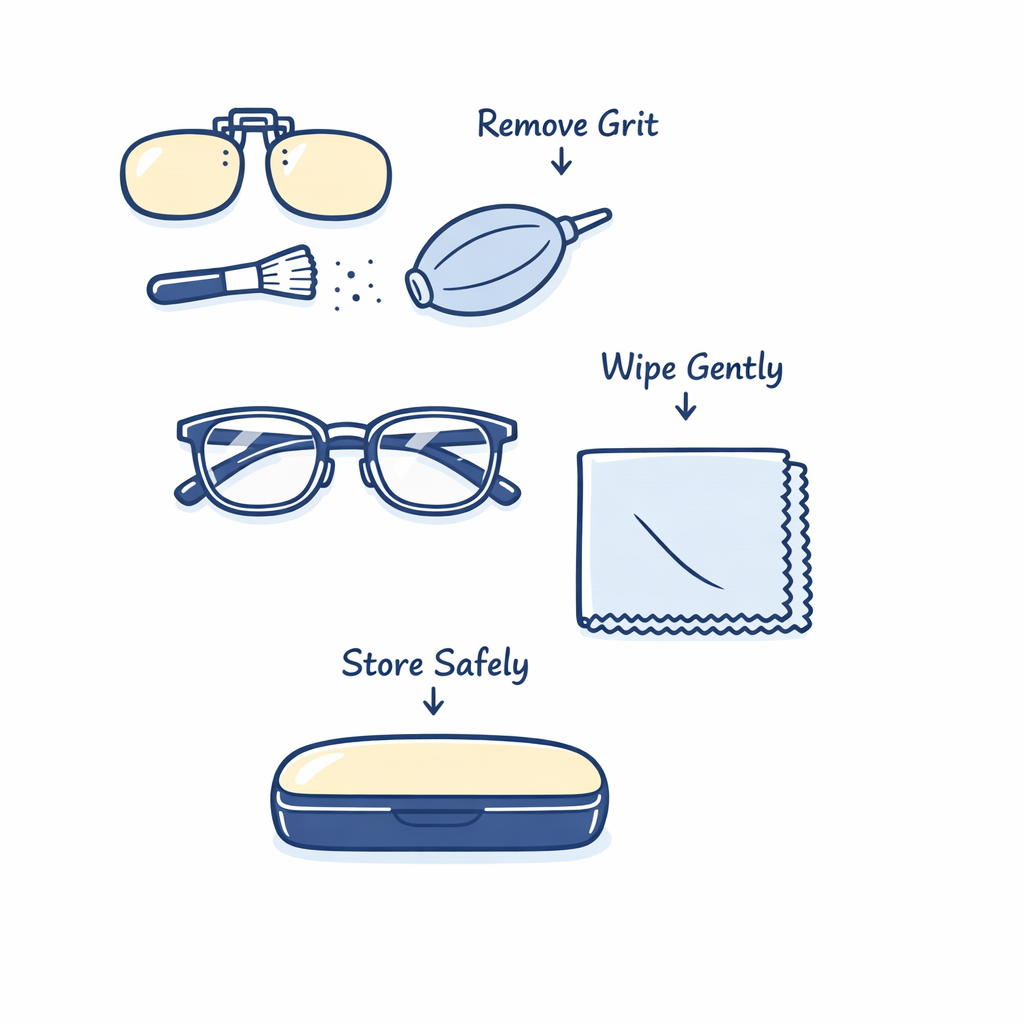
Preventing scratches on both lenses
Clip-ons protect you from sunlight, but they also introduce two lens surfaces that can collect dust, fingerprints, and bag wear. A better routine is to store the sun piece in its case, remove grit before wiping, and use a clean microfiber cloth rather than whatever is nearest.
If the lenses get oily or sandy, clean them before clipping them back onto your glasses. That simple habit helps both the clip-on and your prescription lenses last longer.
Safe attachment and removal
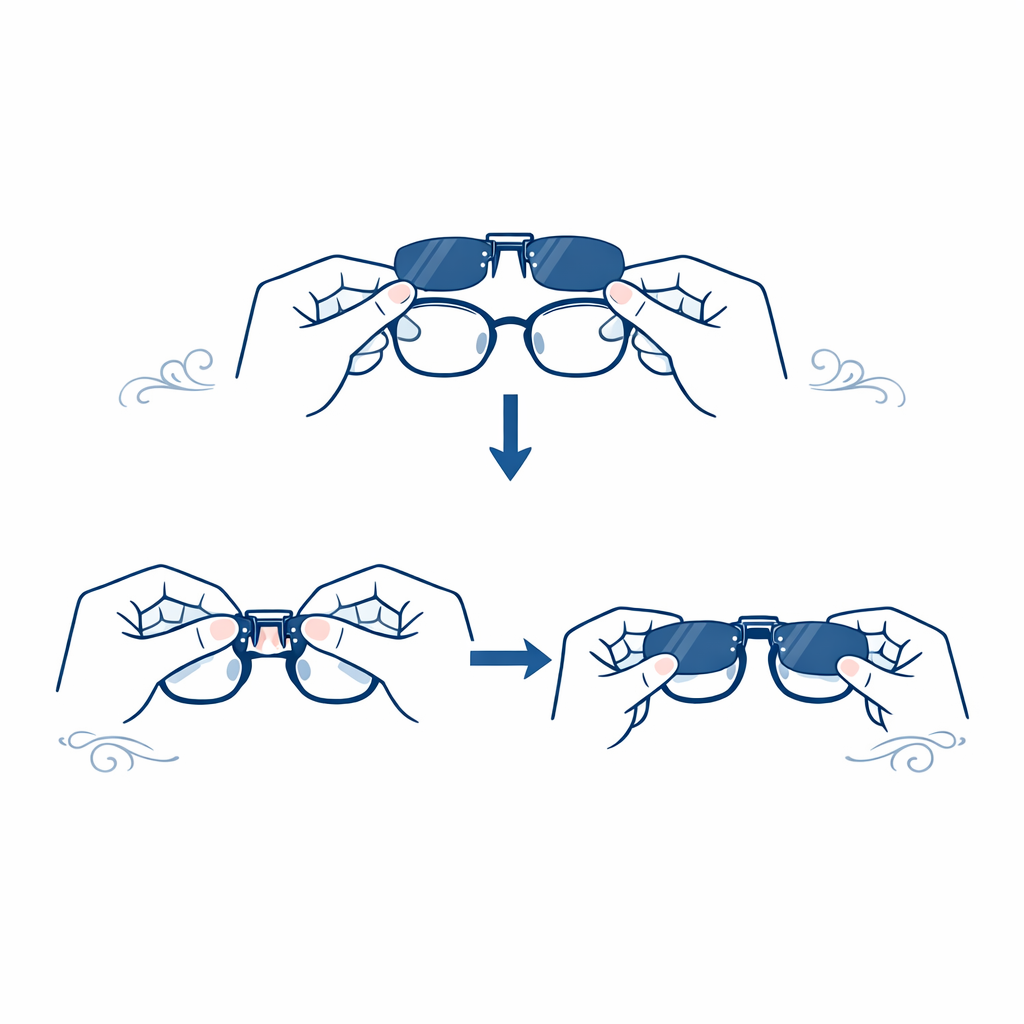
Attach and remove clip-ons with both hands when possible. You want controlled pressure at the bridge or magnet points, not twisting force at one corner.
If a clip feels like it is scraping the frame, pinching hard, or sitting crooked, stop and reassess the fit. Forcing a bad match is rarely worth the risk, especially on frames you wear every day.
FAQs
Do clip-on sunglasses work with prescription glasses?
Yes. Clip-on sunglasses are specifically made to sit over clear prescription lenses, so your vision correction stays the same while the top layer adds shade and glare control.
How do I find clip-on sunglasses that fit my glasses?
Start with lens shape, then measure lens width, lens height, and bridge area. If your frame shape is unusual or you want the cleanest result, move from universal options to custom or frame-specific clip-ons.
What are the disadvantages of clip-on glasses?
The biggest downsides are possible fit mismatch, a more obvious layered look than built-in sunglasses, and the need to handle an extra piece. If those tradeoffs bother you, prescription sunglasses may be the better fit.
Are magnetic clip-on sunglasses any good?
Yes, especially when they are designed for the exact frame you own. They tend to look cleaner and go on faster, but they are less flexible than universal clip-ons.
What to do next
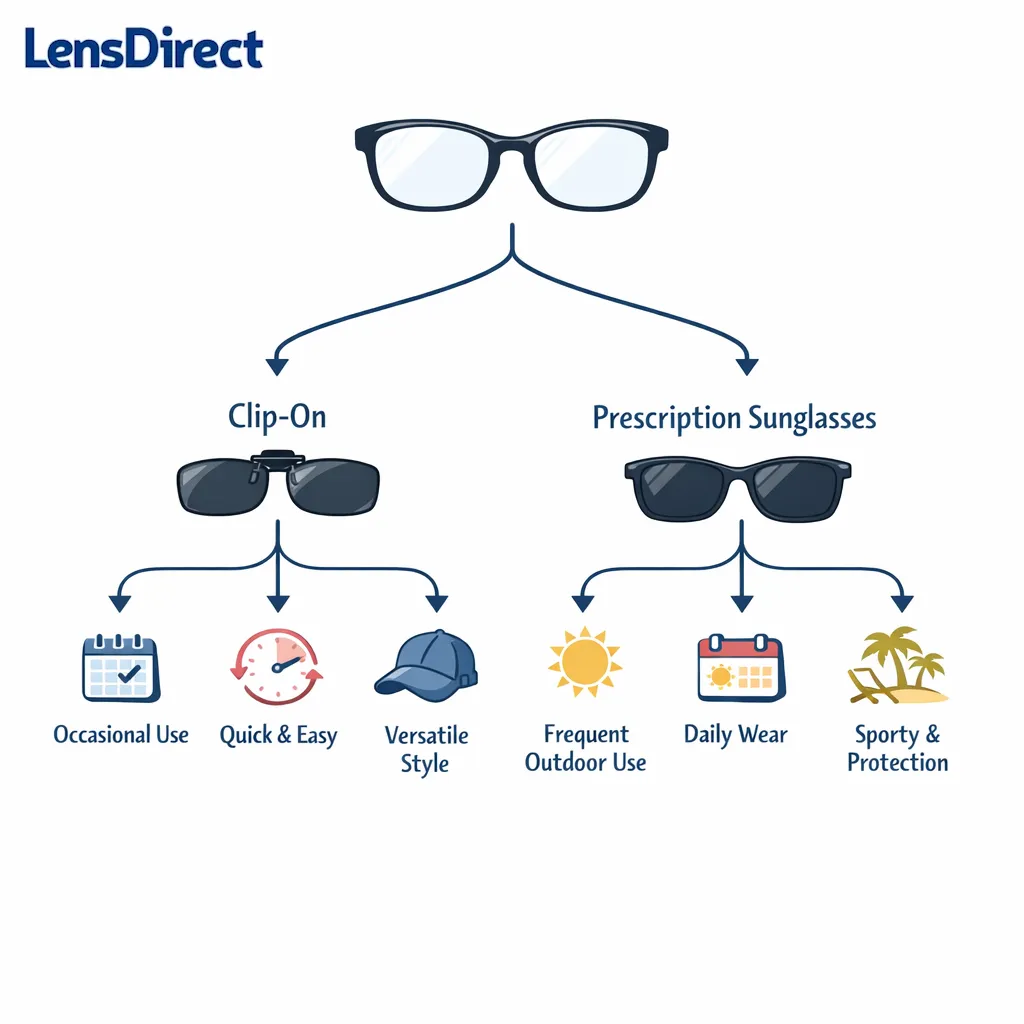
- Decide how often you will wear them. Daily use may justify a cleaner magnetic or custom option. Occasional use may make a simple universal clip-on enough.
- Measure before you shop. Shape, width, height, and bridge fit matter more than brand name alone.
- Check for real sun protection. Look for clear UVA/UVB coverage language, not just a dark tint.
- Choose polarized if glare is your main problem. This matters most for driving and bright reflective environments.
- Be honest about your frame. If your glasses are rimless, unusually shaped, or delicate, compare clip-ons with a full sunglass solution before buying.
- Ask your optometrist when needed. If you have strong light sensitivity, recent eye surgery, or specialty prescription needs, professional guidance is worth it.
Build your easiest sun-ready eyewear setup
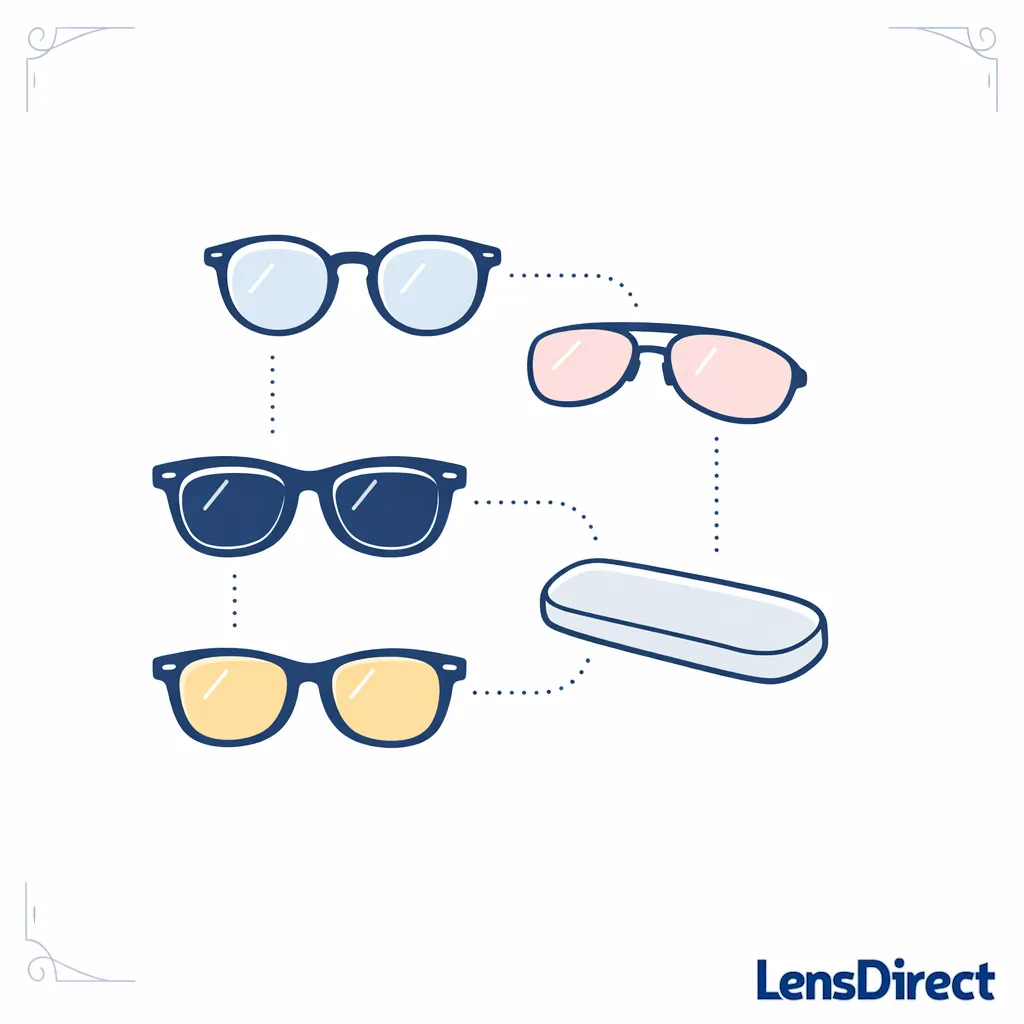
If clip-on sunglasses are your quick fix, LensDirect can help with the longer-term pieces too. The goal is simple: make it easier to see comfortably outdoors, whether that means adding a new pair, refreshing an old favorite, or building a better backup plan.
- Shop Glasses if you want everyday frames that can anchor your next sun setup.
- Shop Sunglasses if you would rather keep a dedicated outdoor pair.
- Shop Contacts if some days are easier with contacts and non-prescription sunglasses.
- Replace Your Lenses if you love your current frames and just want better optics.
- Full-Service Replacement if you prefer sending your frames in for lens replacement.
- Order Replacement Lenses if you want a DIY option for compatible frames.
- Learn How to Get Reimbursed by Your Insurance if you plan to use out-of-network benefits.
If you are still deciding between clip-ons and a full second pair, start with the option that best matches your routine. A well-fitting clip-on solves the everyday problem quickly, and LensDirect gives you room to upgrade later without overcomplicating the choice.
Author

Subscribe to our email newsletter to get the latest posts delivered right to your email.