
If you have glasses you still love, but your prescription is outdated, scratched, or no longer working for daily life, you may not need to buy a completely new pair. For shoppers researching bring your own frames for prescription lenses, the real question is less about whether the idea exists and more about whether your frame is a good candidate.
This guide is for anyone considering new lenses in old frames, whether the pair is designer, sentimental, or just the one that fits best. You’ll learn when it makes sense to replace lenses in existing frames, what can disqualify a frame, how prescription details affect compatibility, and how a mail-in lens replacement service works from start to finish.
Can you put prescription lenses in your own frames?
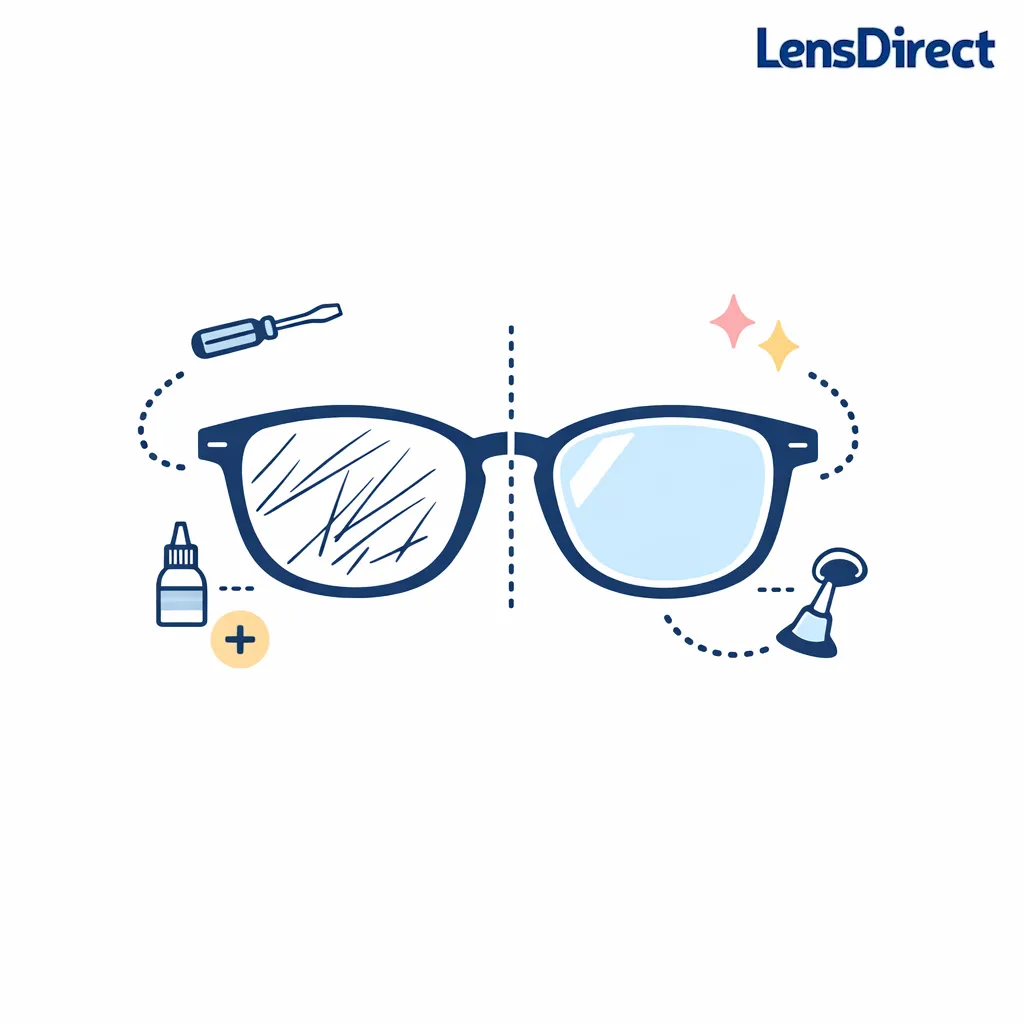
Yes, often. If your frame is still structurally sound, a customer-owned frame lens replacement service can usually cut fresh prescription lenses for it. In this article, bring your own frames, lens replacement, and reglazing all mean replacing the lenses while keeping the frame you already own.
Because prescription glasses are used to correct refractive errors such as nearsightedness, farsightedness, astigmatism, and presbyopia, it is smart to start with a current prescription. In the United States, the FTC’s Eyeglass Rule requires prescribers to give patients a copy of their prescription after a completed eye exam, which makes online ordering possible without having to go back and ask for paperwork later.
- Usually the easiest candidates: full-rim everyday frames sent through a customer-owned frame replacement service.
- Usually worth a closer look: older frames, delicate styles, and highly curved pairs you might otherwise shop as prescription sunglasses.
- Often confused with this service: moving old lenses into a different frame is not the same as ordering fresh replacement lenses for the frame you send in.
When old frames are good candidates for new lenses
Full-rim acetate and metal frames
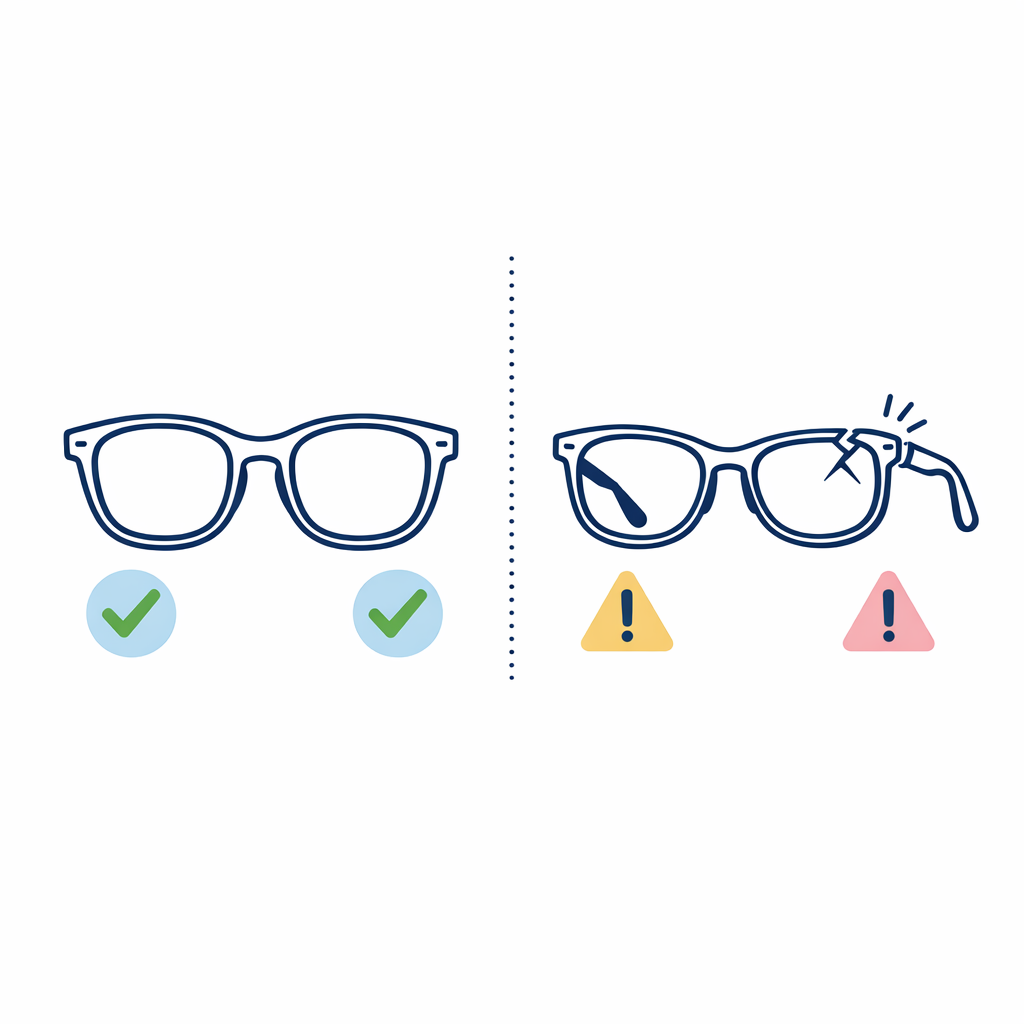
If you want prescription lenses for old frames, full-rim plastic and metal styles are usually the simplest place to start. A mail-in replacement order is generally most predictable when the frame is a straightforward everyday shape, the hinges feel stable, and the rims still hold the current lenses securely.
Designer frames worth saving
Designer frames can be great candidates when the frame itself is still in good condition. If replacing the frame would mean paying premium pricing again or hunting down a discontinued favorite, buying new lenses for the frame you already own can be the more practical choice.
Everyday frames that still fit well
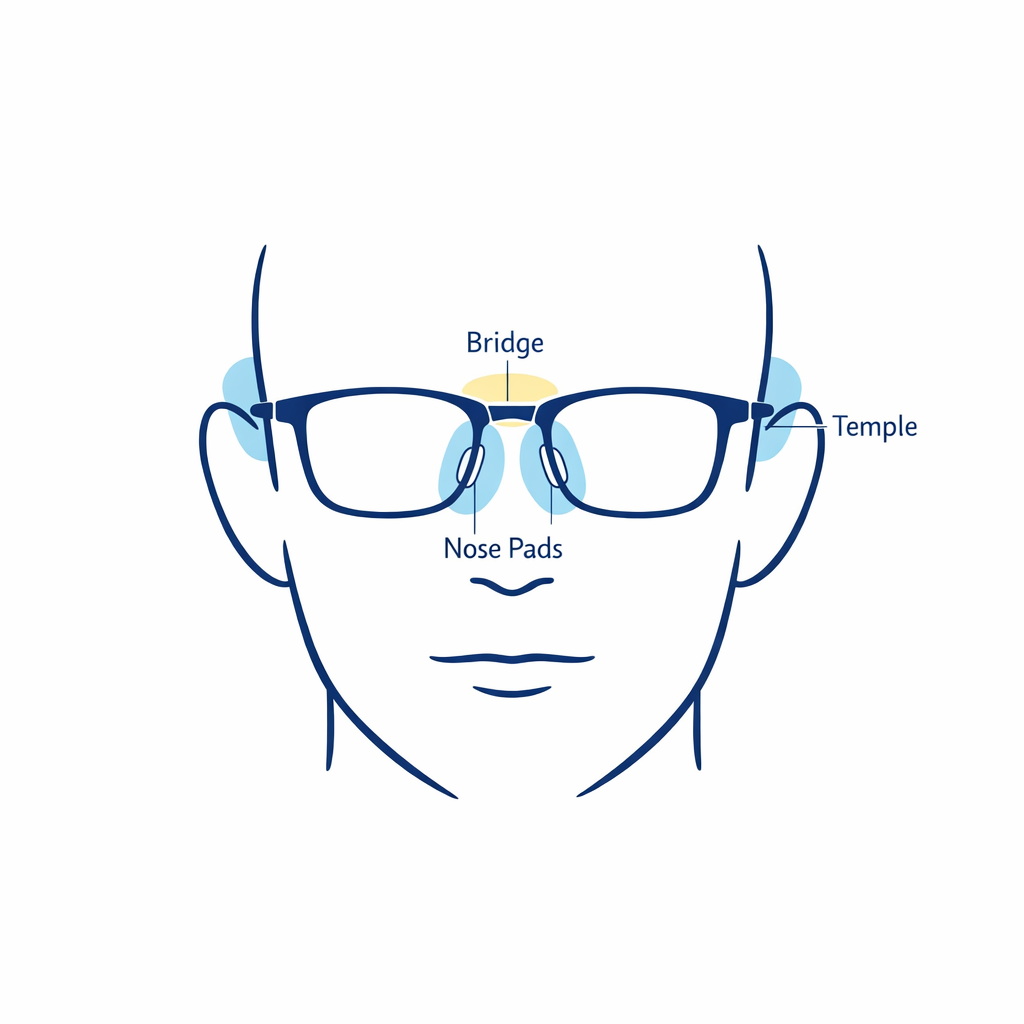
If the frame already sits comfortably on your bridge, stays in place, and feels right behind the ears, replacing only the lenses keeps the part of the experience you already know works. If the fit has never been ideal, compare that against starting fresh with new glasses or using a fit and face-shape guide to find a shape that solves more than a lens update alone.
When your frames may not qualify
Brittle plastic, warped frames, cracked rims
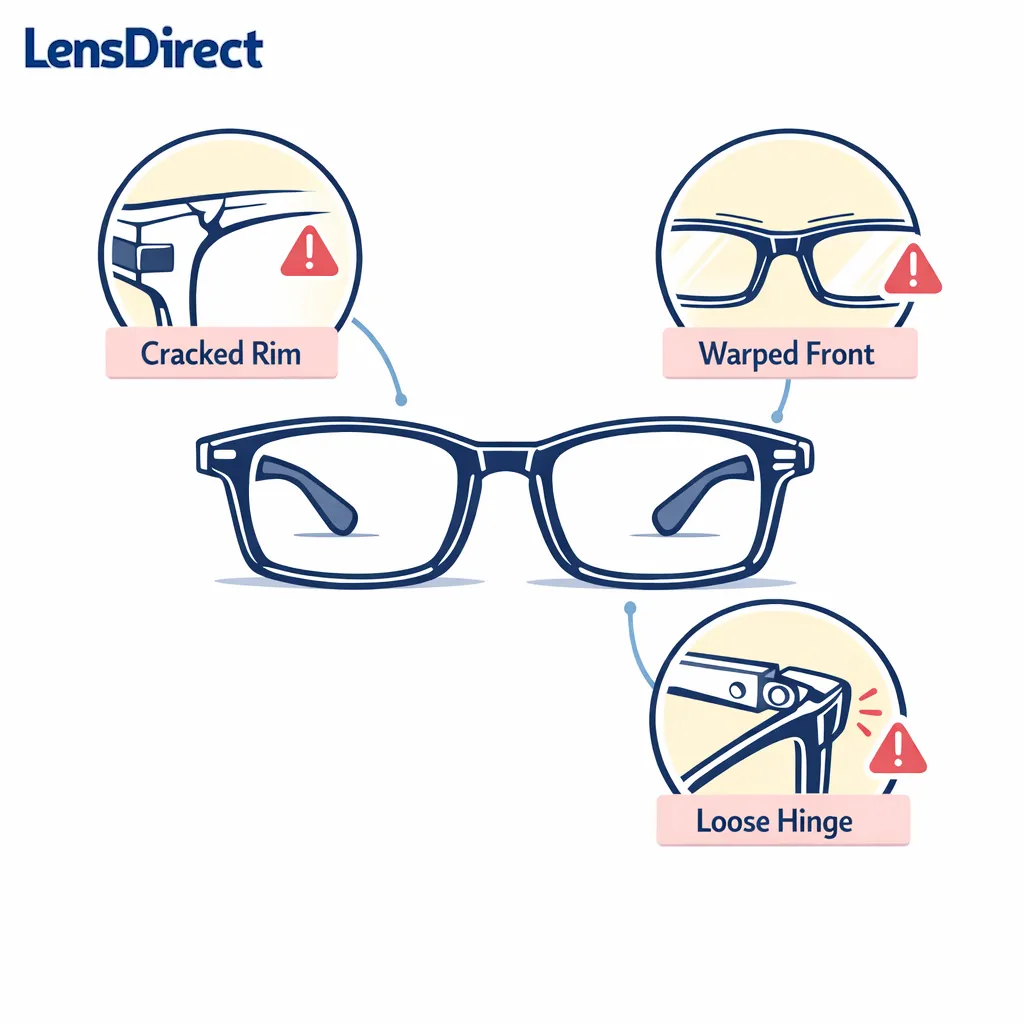
Treat visible cracks, dried-out plastic, major bends, loose hinges, or a frame that no longer sits straight as warning signs before you start a customer-owned frame order. Services that replace lenses in existing frames typically review the frame after it arrives, so acceptance is often inspection-based rather than guaranteed.
If a local shop says no, that does not automatically mean you can never get new lenses in old frames. In practical terms, it often means the shop does not want to take on a frame that looks too worn or unpredictable, which is why an inspection-based mail-in service can be useful.
Rimless, semi-rimless, and wraparound limitations
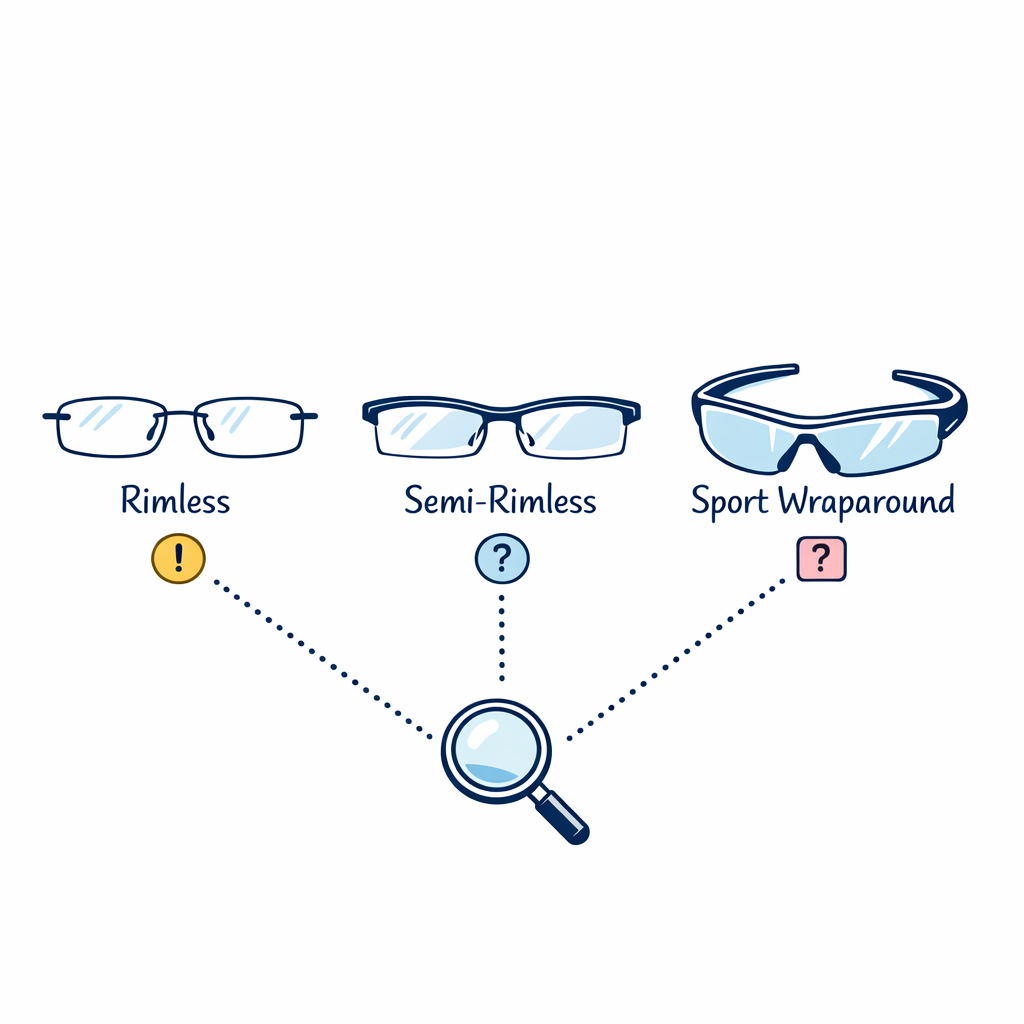
Minimal frames and highly curved sport frames are not automatic no’s, but they do deserve a pre-check. If your pair is rimless, semi-rimless, or very curved, ask before placing a replacement lens order so the lab can confirm that your frame style and prescription are a workable match.
Why old lenses usually cannot go into new frames
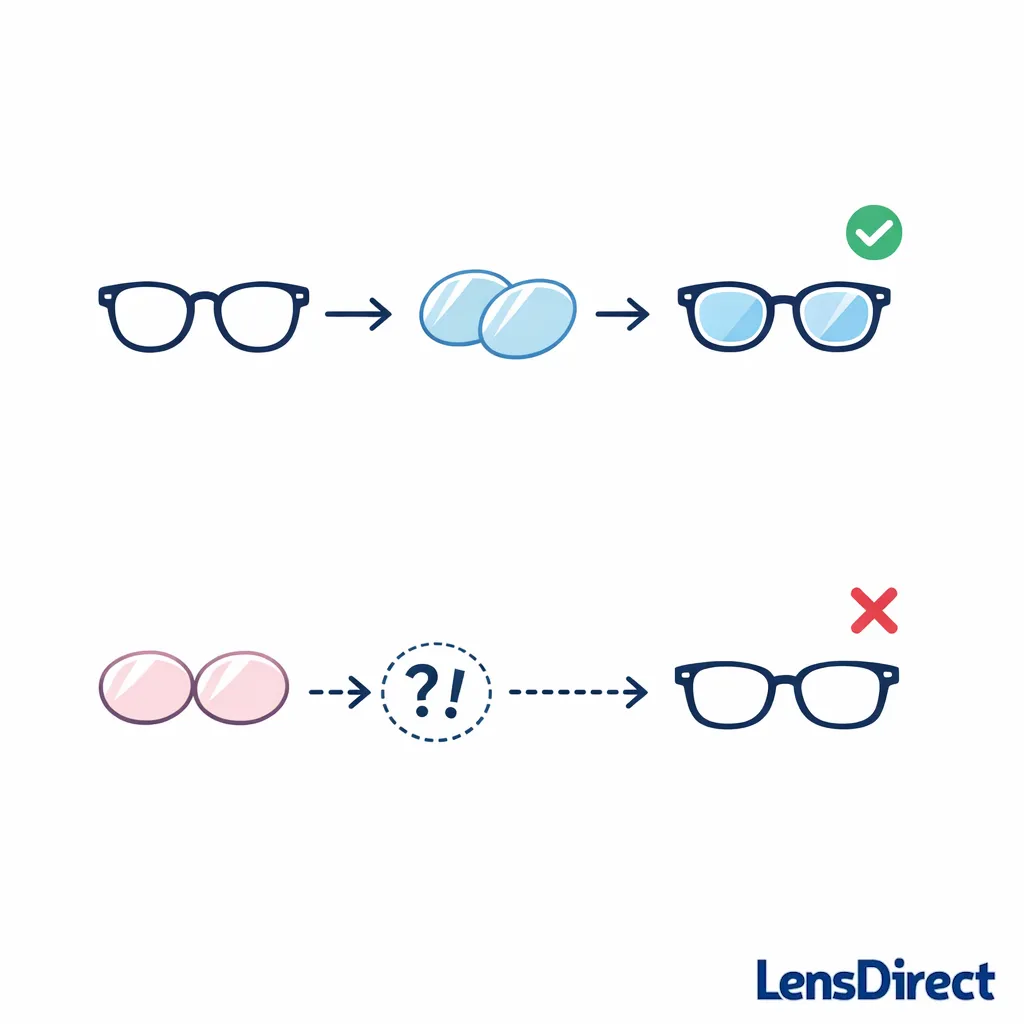
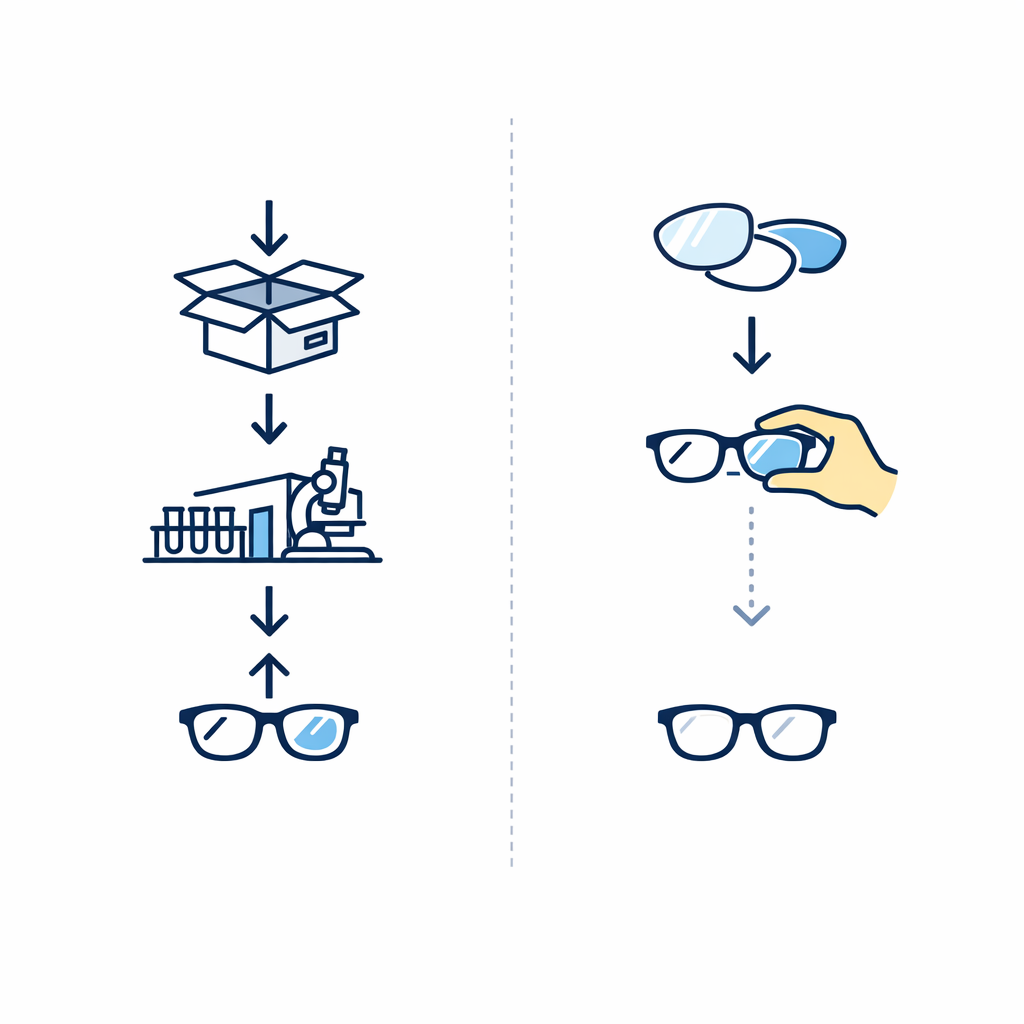
Many shoppers ask a different question than the one lens replacement services are built to solve. Replacing lenses in existing frames means making fresh lenses for the frame you send, while moving old lenses into a totally different frame is a separate request that may lead the lab to recommend newly cut lenses instead.
How your prescription affects frame compatibility
High prescriptions and lens thickness
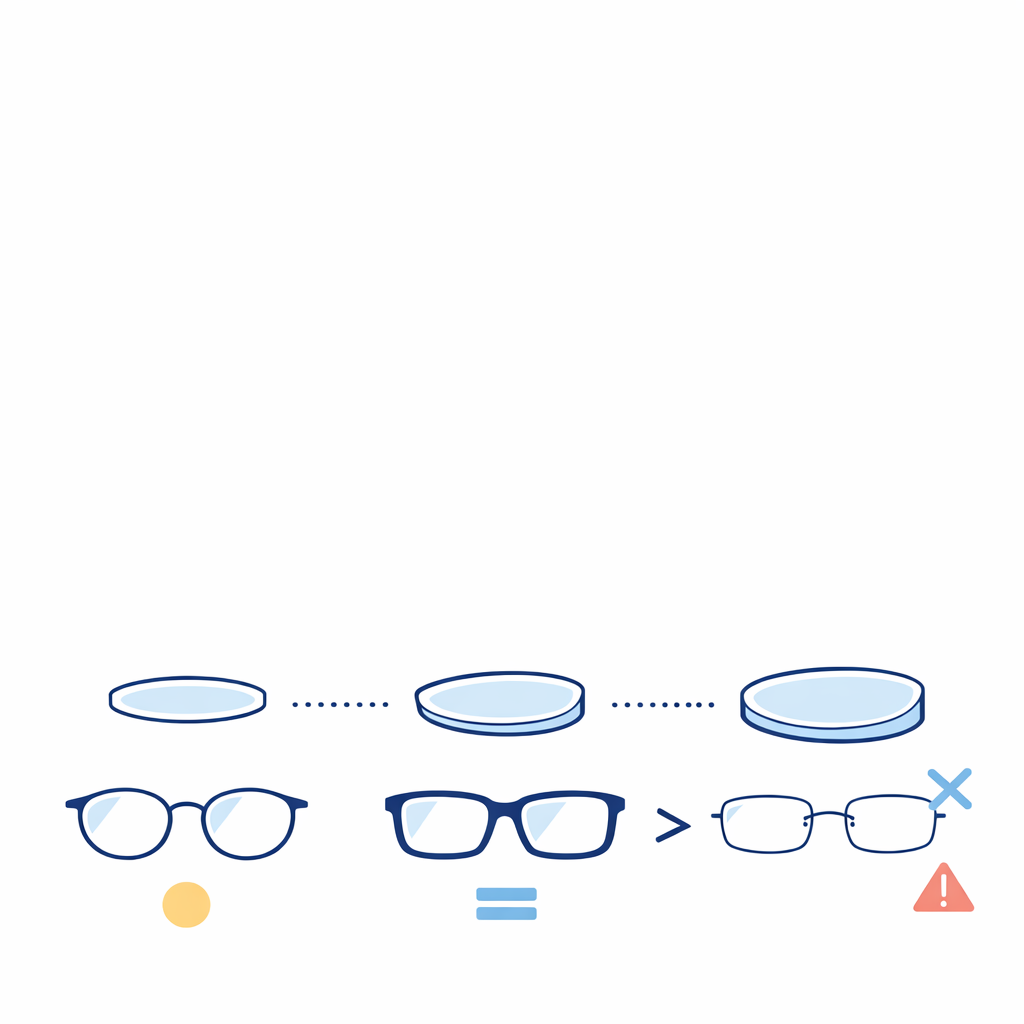
Because different refractive errors and prescription strengths change how a lens needs to be made, stronger prescriptions can narrow your best frame options. If your prescription is on the higher side, ask the lab whether your current frame shape is still a good match before you commit to the order.
Progressives, bifocals, and frame depth
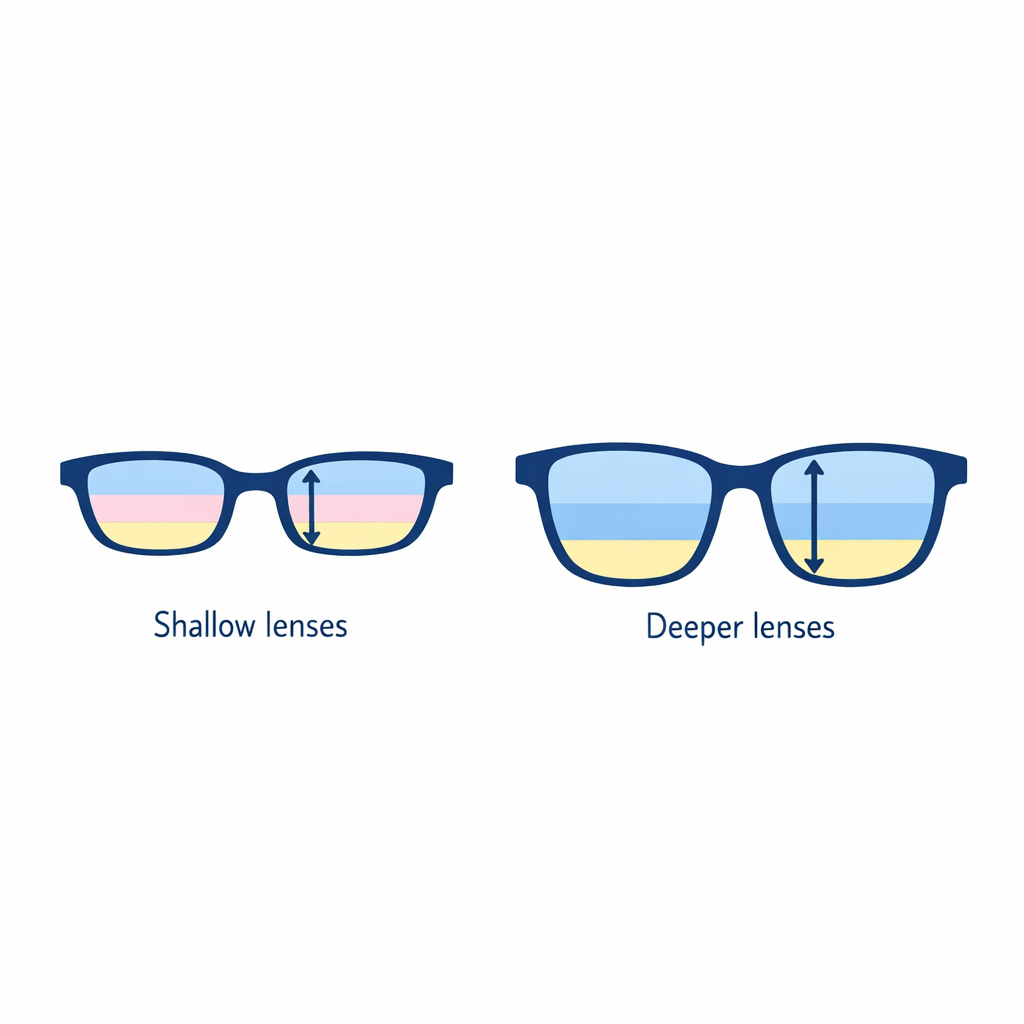
If you wear progressives or bifocals, do not judge a frame by width alone. Before you choose progressive replacement lenses, ask whether the frame has enough lens height for the design you wear, especially if the frame is shallow, narrow, or very small.
Lens materials and coatings that may be recommended
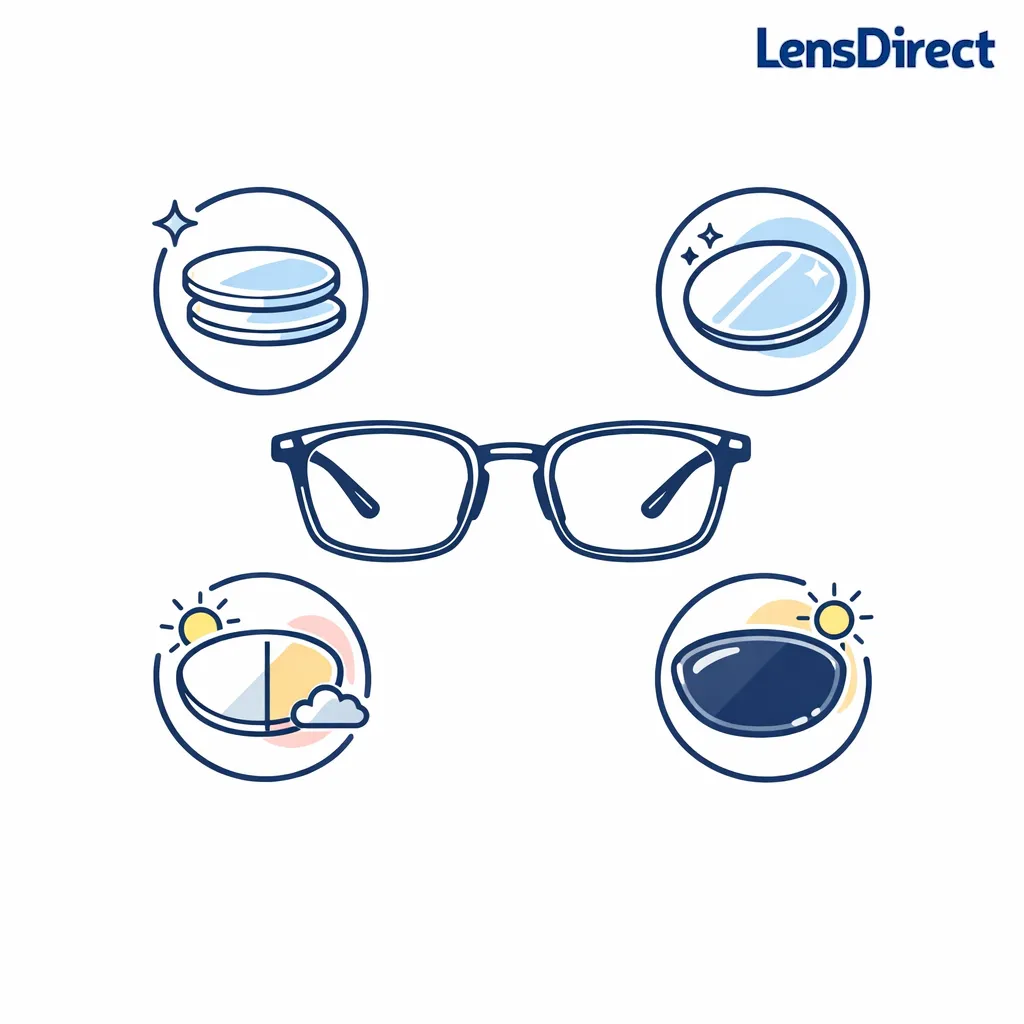
The lens package you choose can change comfort, appearance, and cost. When you configure replacement lenses, you may see options for thinner materials, anti-reflective coatings, photochromic lenses, or sunglass treatments, and the right mix depends on your prescription, your frame, and how you actually use the glasses day to day.
What to check before you order replacement lenses online
Frame condition checklist
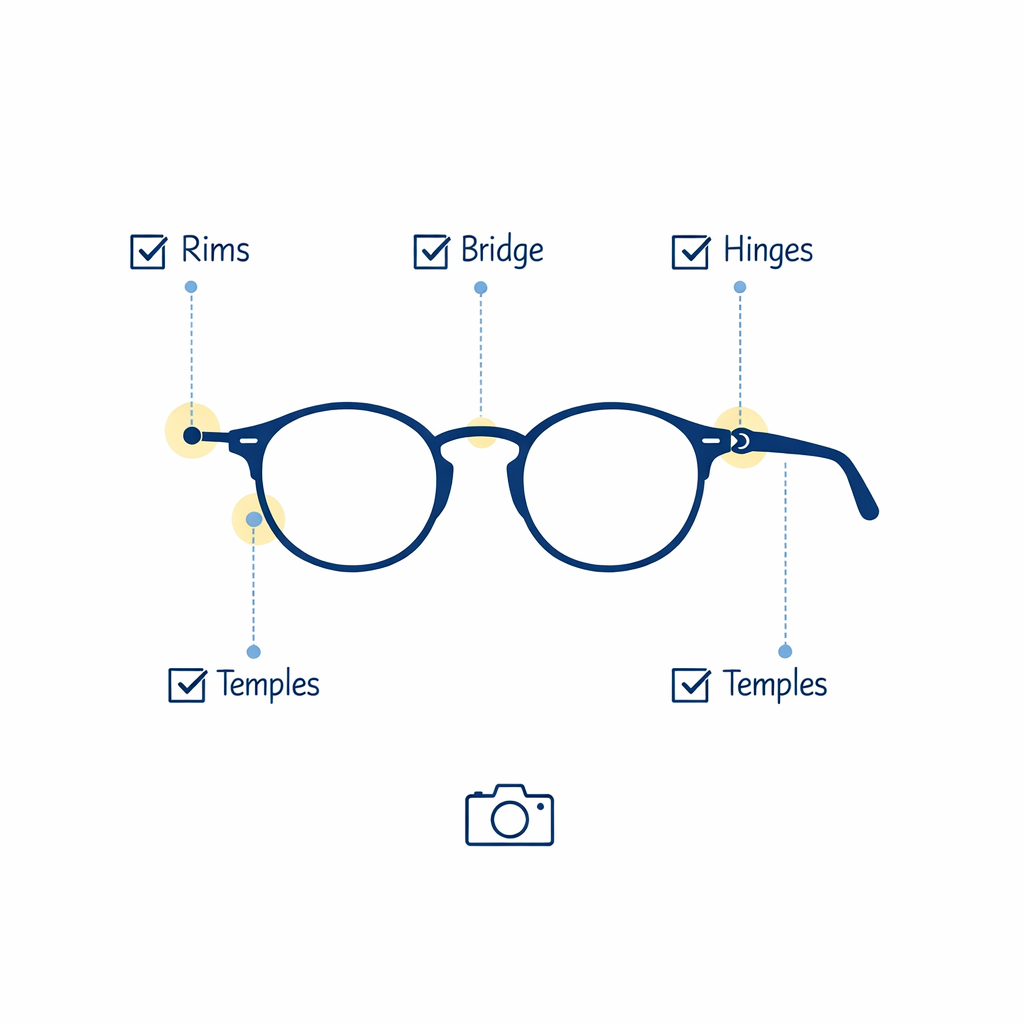
- Inspect the frame front: check the rims, bridge, and corners before you start a lens replacement order.
- Check the temples: open and close both sides to see whether the hinges feel smooth and stable.
- Leave the current lenses in place: unless your replacement service tells you otherwise, keep the old lenses installed.
- Document the condition: take quick photos before shipping, especially if the frame is expensive or sentimental.
Prescription, PD, and original lenses
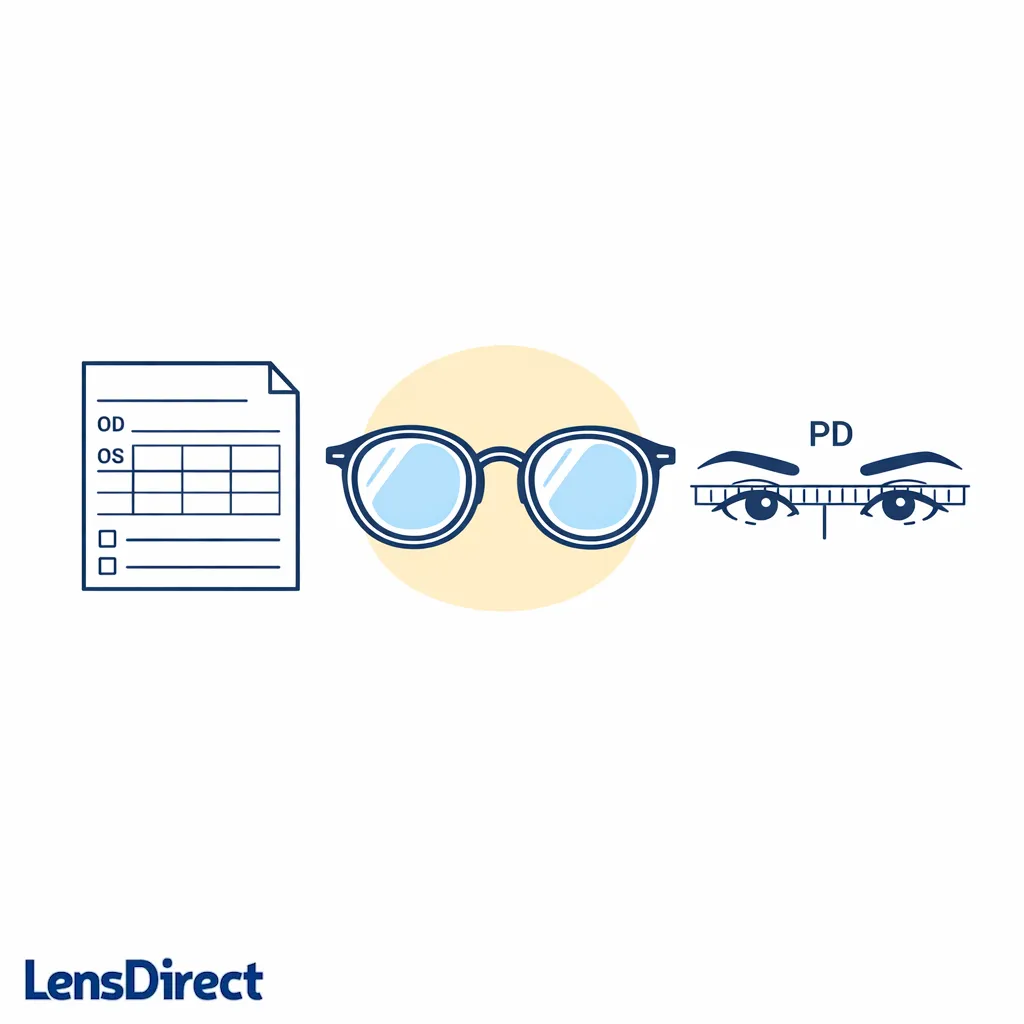
Have your prescription ready before you order, and if you need an updated one, start with an eye exam so you can receive a copy under the FTC’s Eyeglass Rule. You should also have your pupillary distance, or PD, which is the measurement between your pupils used to center your lenses.
Do not assume a prescription page answers every online-order question. If anything looks unclear, especially with progressives, prism, or sunglass needs, ask the lens replacement service before you finalize the order.
Backup pair and turnaround expectations
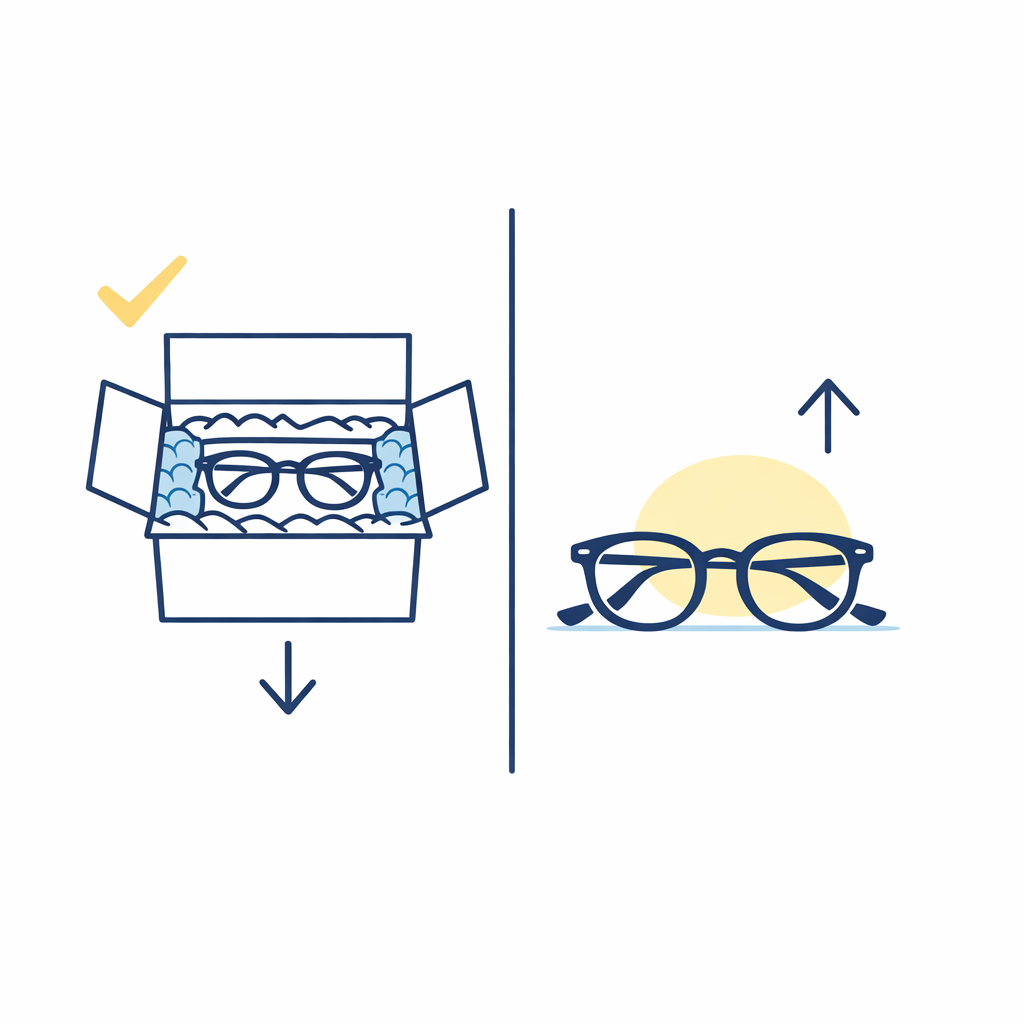
Mail-in replacement means your frame will be away from you for part of the process, so avoid sending the only pair you can wear comfortably. If you need a standby option, browse backup glasses, keep contacts on hand if you wear them, or wait until you have another pair that can cover you.
How the online replacement process works
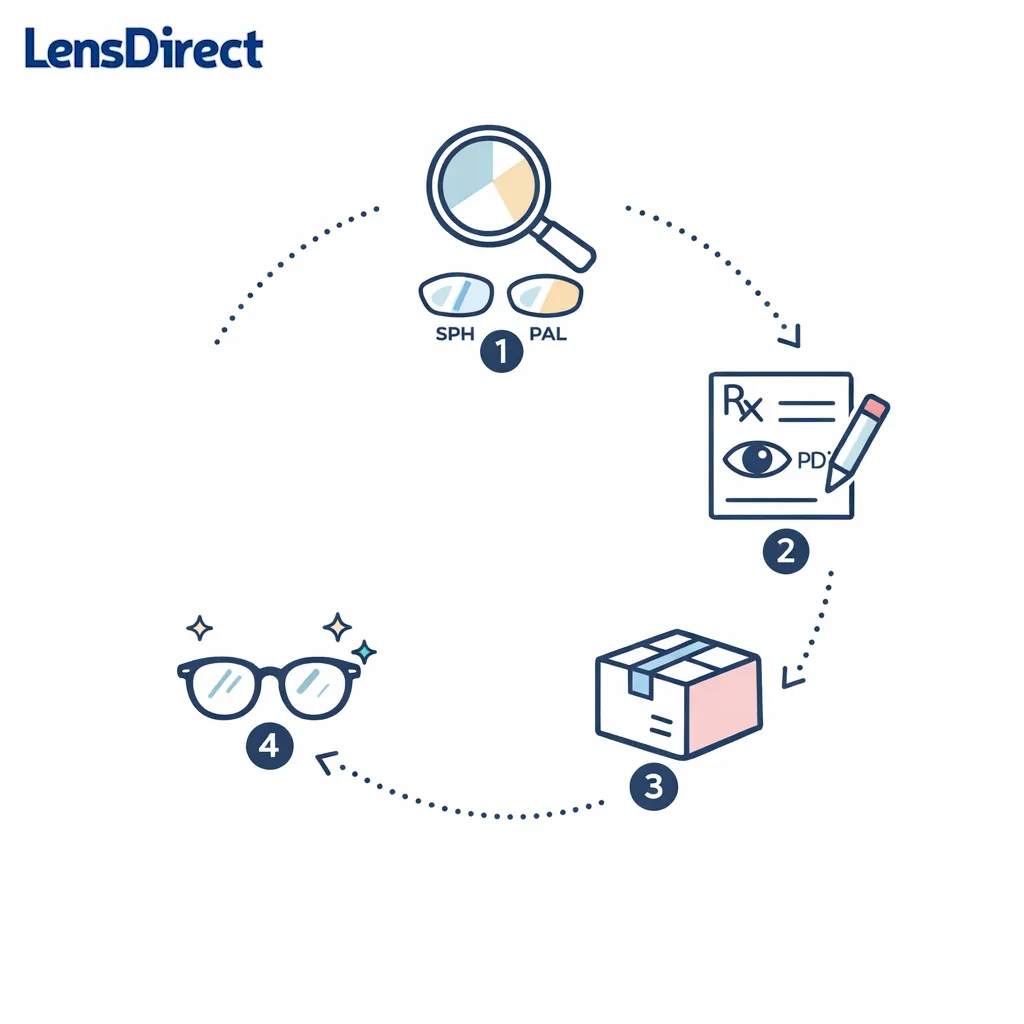
Most online lens replacement follows the same general pattern, and LensDirect offers both a full-service send-it-in option and an order replacement lenses option for supported brands.
- Step 1: Choose your lens type and options, including single-vision, progressives, sunglass treatments, and coatings.
- Step 2: provide your prescription and make sure your PD measurement is ready if your order needs it.
- Step 3: pack and ship your frames carefully using the instructions for the mail-in replacement process.
- Step 4: after arrival, the lab reviews the frame, cuts the lenses, fits them, and sends the completed glasses back through the full-service workflow.
The practical issue is not whether the process exists. It is whether your frame is a good fit for it. If the lab flags the frame after inspection, you are often better off shifting to new glasses or new prescription sunglasses instead of forcing a risky frame through the job.
How much does it cost to put new lenses in old frames?
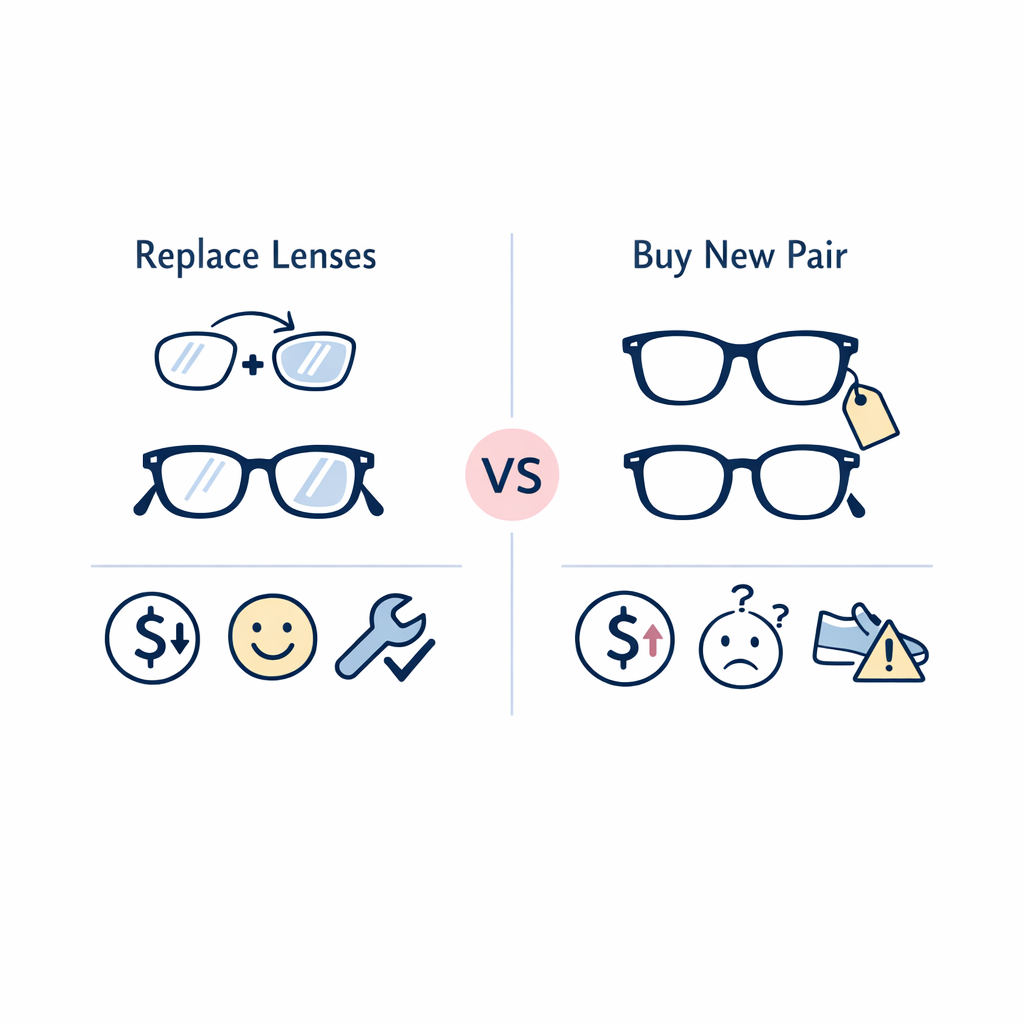
There is no single flat national price for eyeglass lens replacement. The total changes with the options you choose in a live lens configurator, and the biggest drivers are lens design, prescription strength, material, coatings, and whether you want extras like photochromic or polarized sunglass lenses.
- Usually lower: straightforward single-vision replacement lenses in standard materials.
- Usually higher: thinner materials, premium anti-reflective treatments, and prescription sunglass options selected through custom lens choices.
- Usually highest: progressives, specialty prescriptions, and more advanced lens packages.
If the quote starts getting close to the cost of a complete new pair, compare replacing just the lenses with buying new frames and lenses together. The harder the frame is to replace, the more attractive lens replacement usually becomes.
Old, designer, and sentimental frames: is it worth it?
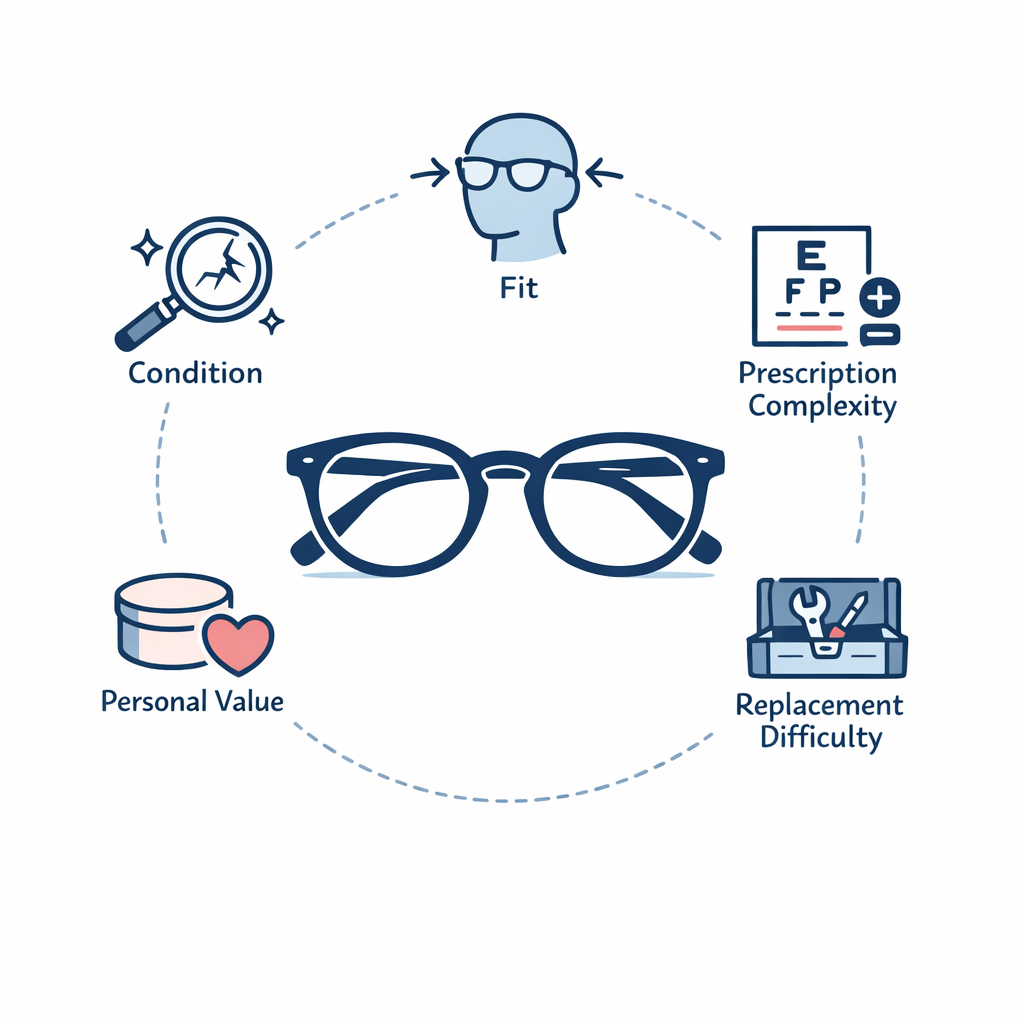
The simplest way to decide is to check five things: condition, fit, prescription complexity, replacement difficulty, and personal value. If the frame still fits, would be annoying or expensive to replace, and looks like a strong candidate for customer-owned frame lens replacement, then keeping it is often the smarter move.
If the frame slides, pinches, looks tired, or would still need adjustment or repair after new lenses, starting over may solve more problems. In that case, compare fresh options in glasses, sunglasses, or a more flattering shape through LensDirect’s fit guide.
Common mistakes and misconceptions
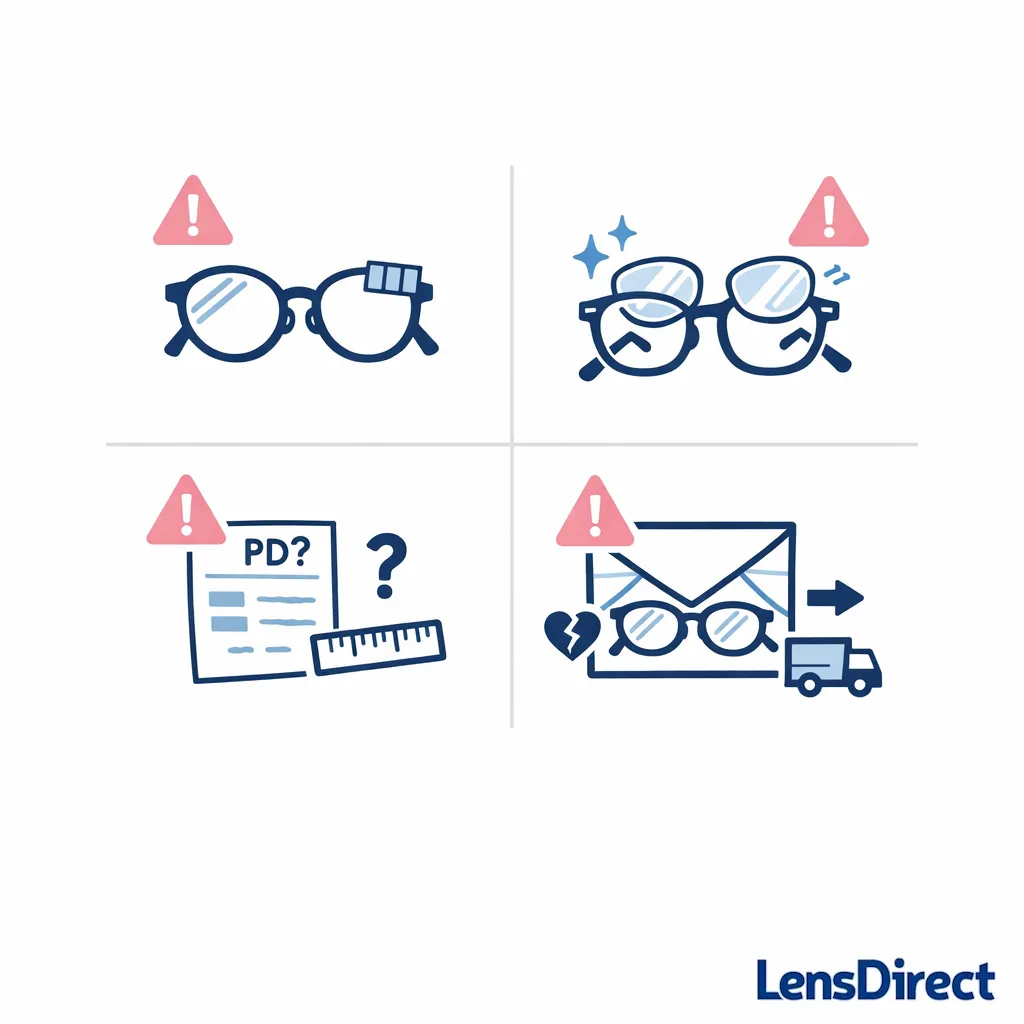
- Assuming old frames are automatically eligible: even with customer-owned frame services, the frame still has to pass inspection.
- Thinking new lenses fix bad fit: if the frame never fit well, a lens swap will not solve that, so compare the shape against a better-fitting option.
- Confusing lens replacement with lens transfer: replacing lenses in existing frames is different from moving old lenses into new frames.
- Sending your only pair: always plan a backup before starting a mail-in order.
- Forgetting PD or prescription details: keep your PD measurement and prescription ready before checkout.
What to do next
- Check the frame first: if it is cracked, badly bent, or loose, ask before placing a full-service replacement order.
- Confirm your prescription: if your vision has changed, update it and keep your copy under the FTC’s Eyeglass Rule.
- Measure PD: use LensDirect’s guide to measure your pupillary distance.
- Choose the right path: compare the send-it-in service with the DIY replacement-lens option if your frame brand is supported.
- Price it against a new pair: review replacement lens options, then compare them with new glasses or prescription sunglasses.
- Plan reimbursement: if you use vision benefits, review how to get reimbursed by your insurance.
FAQs
Can I have prescription lenses put in my own frames?
Yes, if the frame is still in good enough condition for a lab to work on it. A customer-owned frame replacement service is one of the easiest ways to find out because the frame is reviewed as part of the process.
How much does it cost to put new lenses in old frames?
The short answer is that simple single-vision orders usually cost less than progressives and specialty packages. The fastest way to see your actual price is to build the order in a replacement lens configurator using your prescription and preferred upgrades.
Why won’t opticians put new lenses in old frames?
Sometimes the answer is about risk, not style. If a frame looks too worn, too fragile, or too specialized, a shop may decline it and suggest a new pair of glasses instead.
Can I use old frames and get new lenses?
Yes, and it can be a very practical option when the frame still fits well and only the prescription needs updating. It is especially appealing for designer, favorite everyday, or hard-to-replace frames.
Will Walmart, Costco, or LensCrafters do it?
Do not assume a chain-wide yes or no. Ask the specific location whether it accepts customer-owned frames, what prescriptions it can handle, and what it recommends if the frame is declined. If you want a mail-in option built for this use case, LensDirect offers a replacement service for your own frames.
Refresh the frames you already love
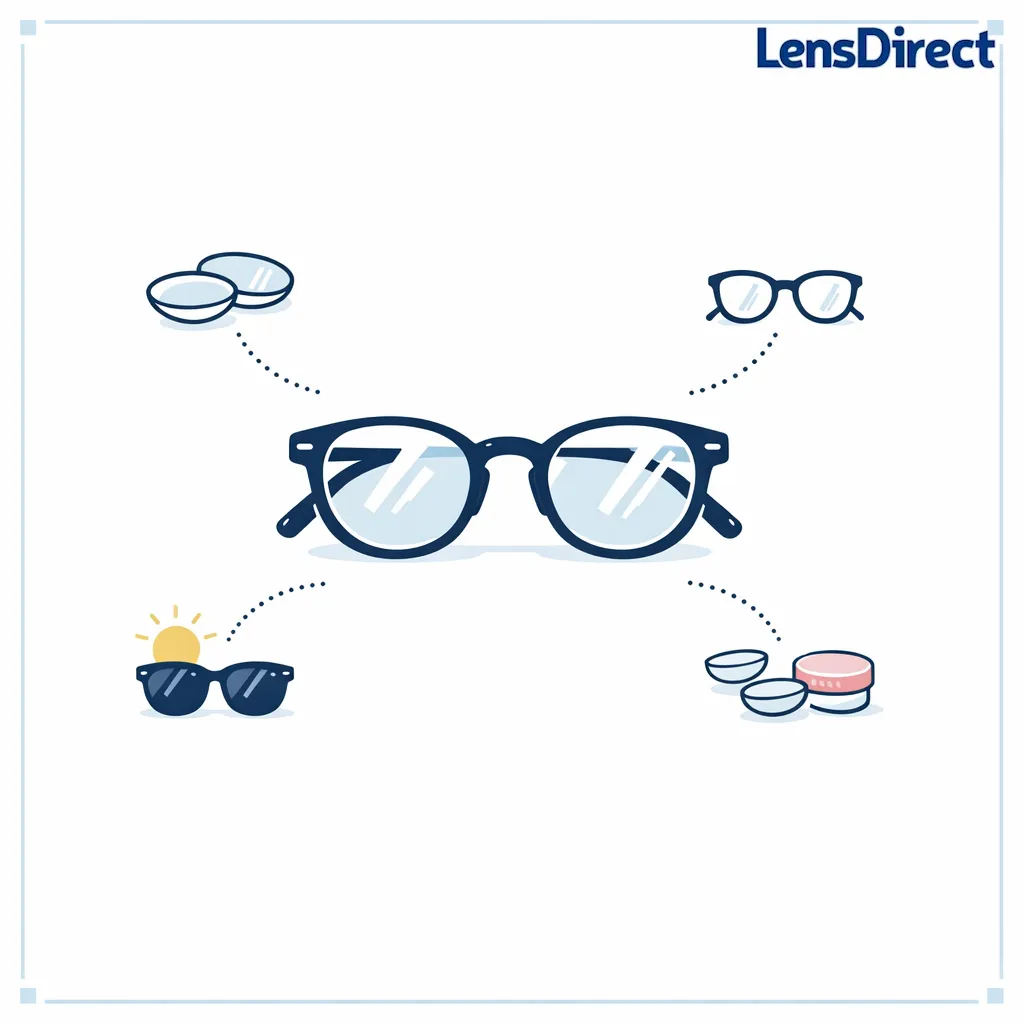
If your current pair is worth saving, LensDirect gives you a simple way to keep the frame and update the lenses. If your frame turns out not to be a good candidate, you can still solve the same problem with a better-fitting new pair, a backup pair, or a fresh set of contacts for everyday flexibility.
- Replace Your Lenses
- Full-Service Replacement
- Order Replacement Lenses
- Shop Glasses
- Shop Sunglasses
- Shop Contacts
- Find Your Fit
- Learn How to Measure Your Pupillary Distance
- Learn How to Get Reimbursed by Your Insurance
Author

Subscribe to our email newsletter to get the latest posts delivered right to your email.