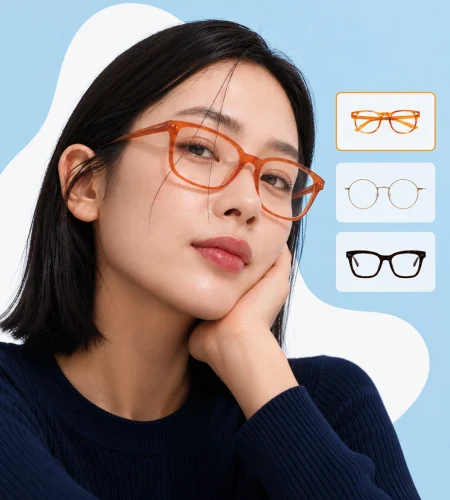
An AI glasses recommendation tool can make online eyewear shopping feel much easier. Instead of scrolling through hundreds of frames, you upload a photo, answer a few style questions, or open your camera and let the tool narrow the list.
This guide is for shoppers who want the convenience of buying glasses online without overtrusting the tech. You will learn how an AI glasses finder usually works, what it tends to get right, what it can miss, and what to double-check before you place an order.
Short answer: AI glasses recommendation tools use a selfie, live camera, or short quiz to estimate face proportions and style preferences, then rank frames from a store’s catalog. When a tool adds front-camera AR face tracking, it can also place digital frames on your face, but it still cannot replace your prescription, PD, or a real comfort check.
Can AI pick glasses for me?
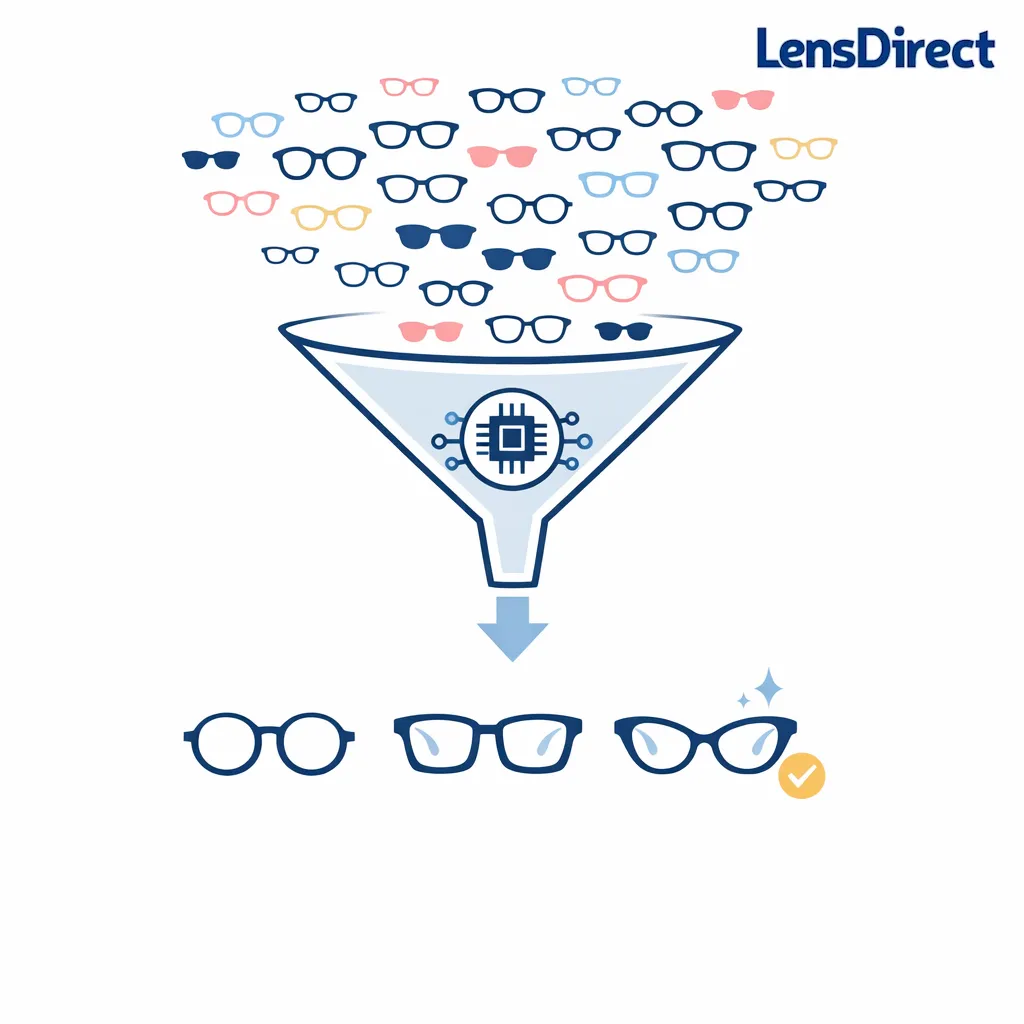
Yes, but think of it as a smart shortlist, not a final verdict. An AI choose glasses tool is often most useful when you want help spotting shapes, colors, and frame families you might not have picked on your own.
Where shoppers get into trouble is assuming a flattering preview means the pair will fit perfectly or work well with any prescription. Style is only one part of a good pair of glasses, so the final decision still needs a quick reality check.
What’s new in AI eyewear shopping
What feels newer about today’s tools is the way recommendation logic and visual preview often show up in the same shopping flow. Instead of only asking whether you like round or rectangular frames, a tool may also use your camera to make the suggestions feel more personal and immediate.
That does not mean the software is judging fit the way an optician would. It is still interpreting images and product data, then making a best guess about what may suit you.
How AI glasses recommendation tools work
Face mapping and facial geometry inputs
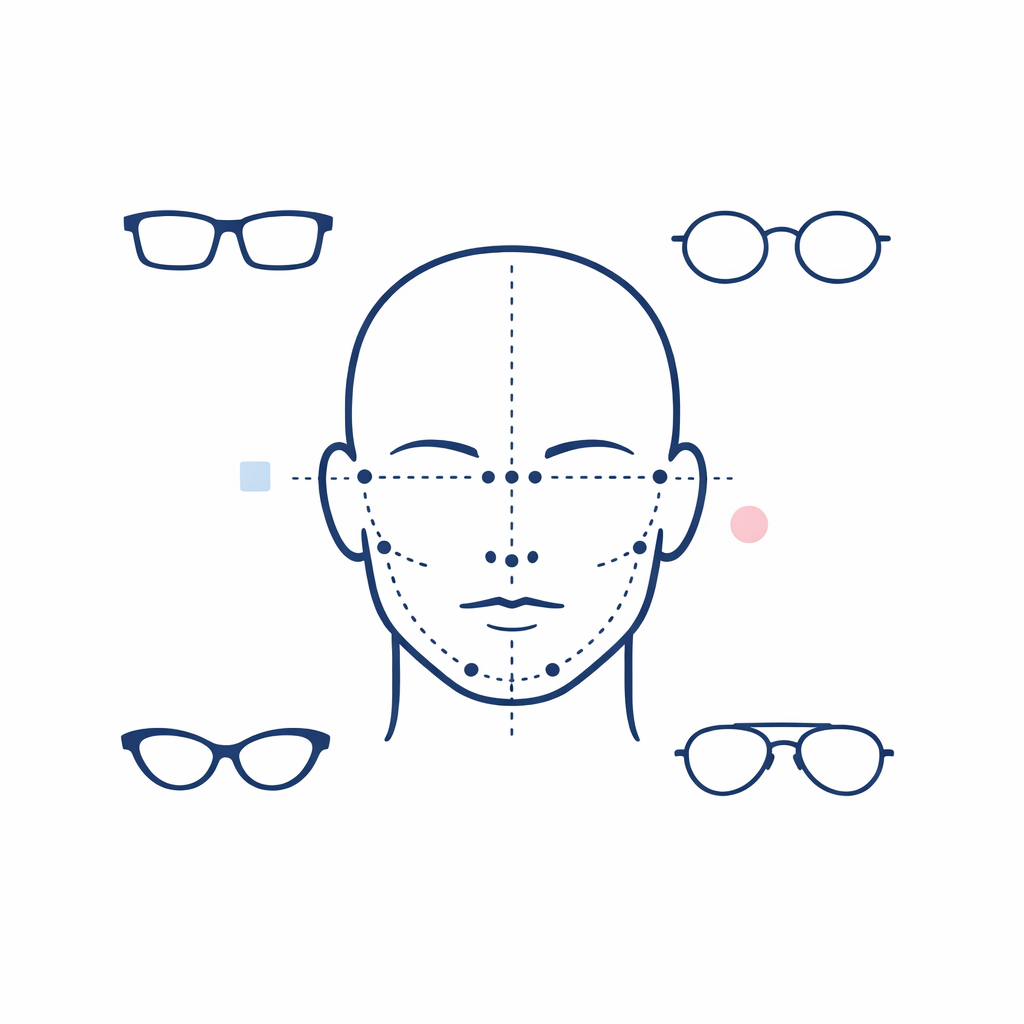
If a tool asks for a clear, front-facing photo, it is usually trying to read visible landmarks and proportions with face detection technology. Those inputs can then be translated into broad categories such as face shape, likely frame width, or how balanced different frame styles may look on your features.
In plain English, the tool is asking questions like these: Is your face longer than it is wide? Does your jaw look more angular or curved? Do your features read as soft, sharp, narrow, or broad on camera?
Style quizzes, catalog matching, and recommendation engines
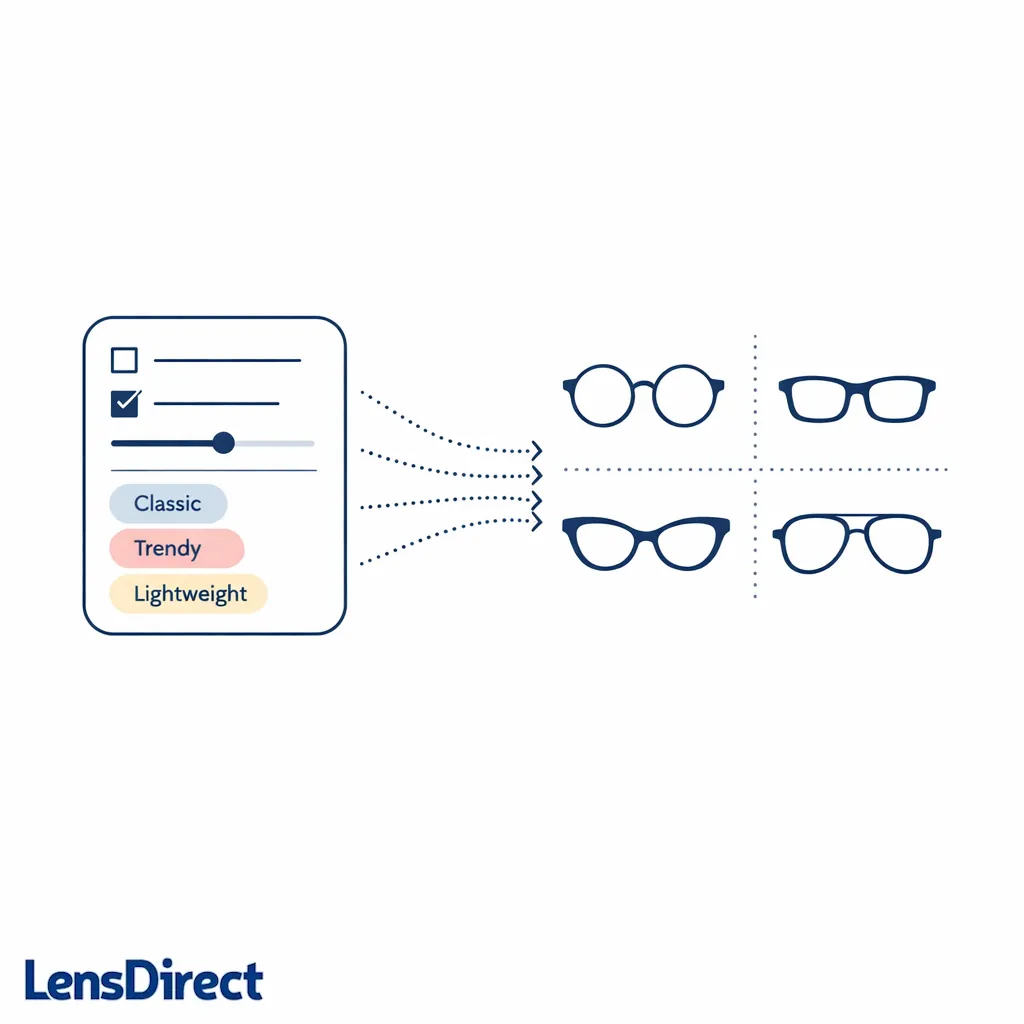
After the photo step, many tools add a style quiz. You may be asked about color preferences, bold versus subtle frames, material, price range, or the kind of look you want for work, weekends, or outdoor wear.
From there, the recommendation engine matches your answers to a store’s catalog. That is why an AI pick my glasses tool is usually best at narrowing options inside one store, not deciding what is best across the entire eyewear market.
Virtual try-on overlays vs. recommendation-only tools
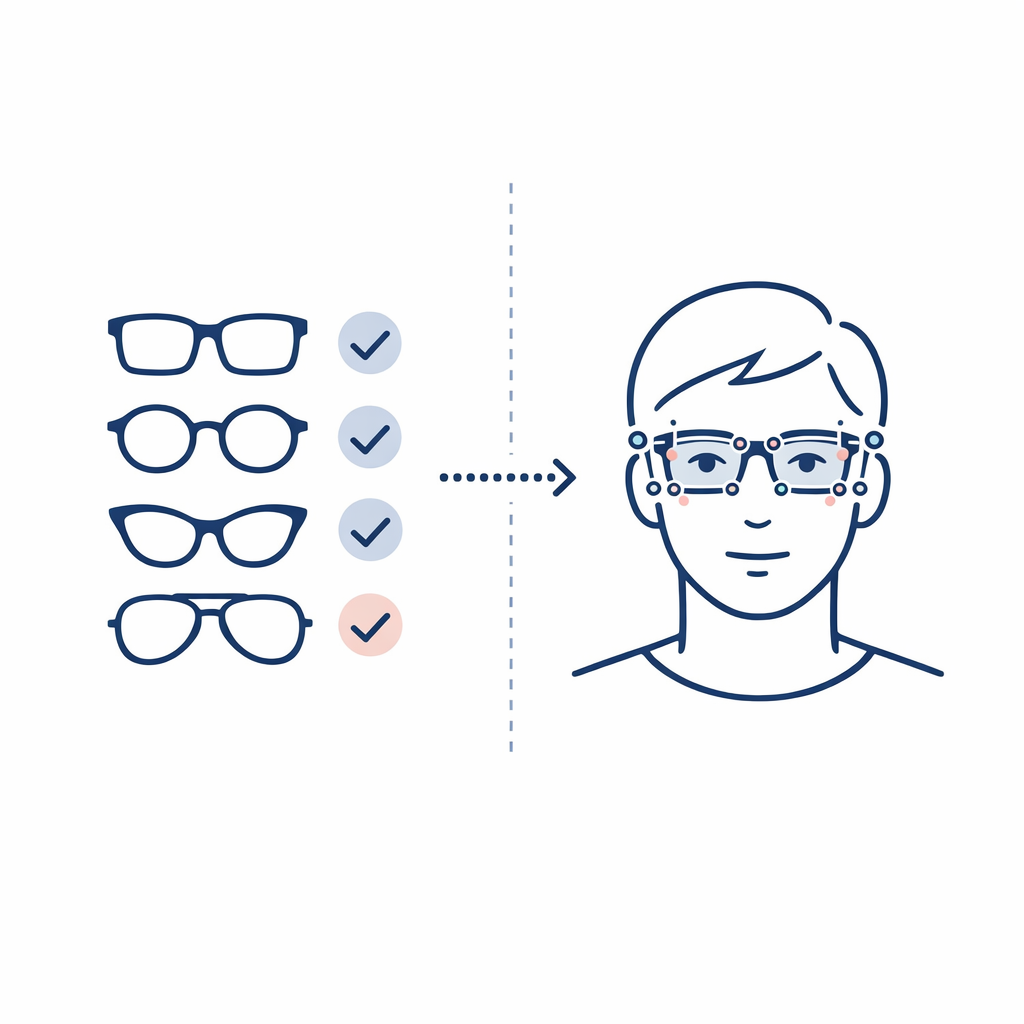
Some experiences stop at a ranked list. Others add a live preview by placing digital frames over your selfie or camera feed using AR face tracking.
That difference matters. A recommendation-only tool helps with discovery, while a virtual glasses try on AI tool helps you visualize the look. For most shoppers, the most useful setup combines both.
What are the best AI apps for choosing glasses?
The best ones are not always the flashiest. Look for an AI glasses selector that gives you clear size information, lets you compare several shapes quickly, and makes it easy to review return options before checkout.
A practical rule is to pick the tool that helps you answer three questions fast: Do I like the style, does the frame size match what already fits me, and do I have the prescription details needed to order correctly?
What these tools usually analyze well
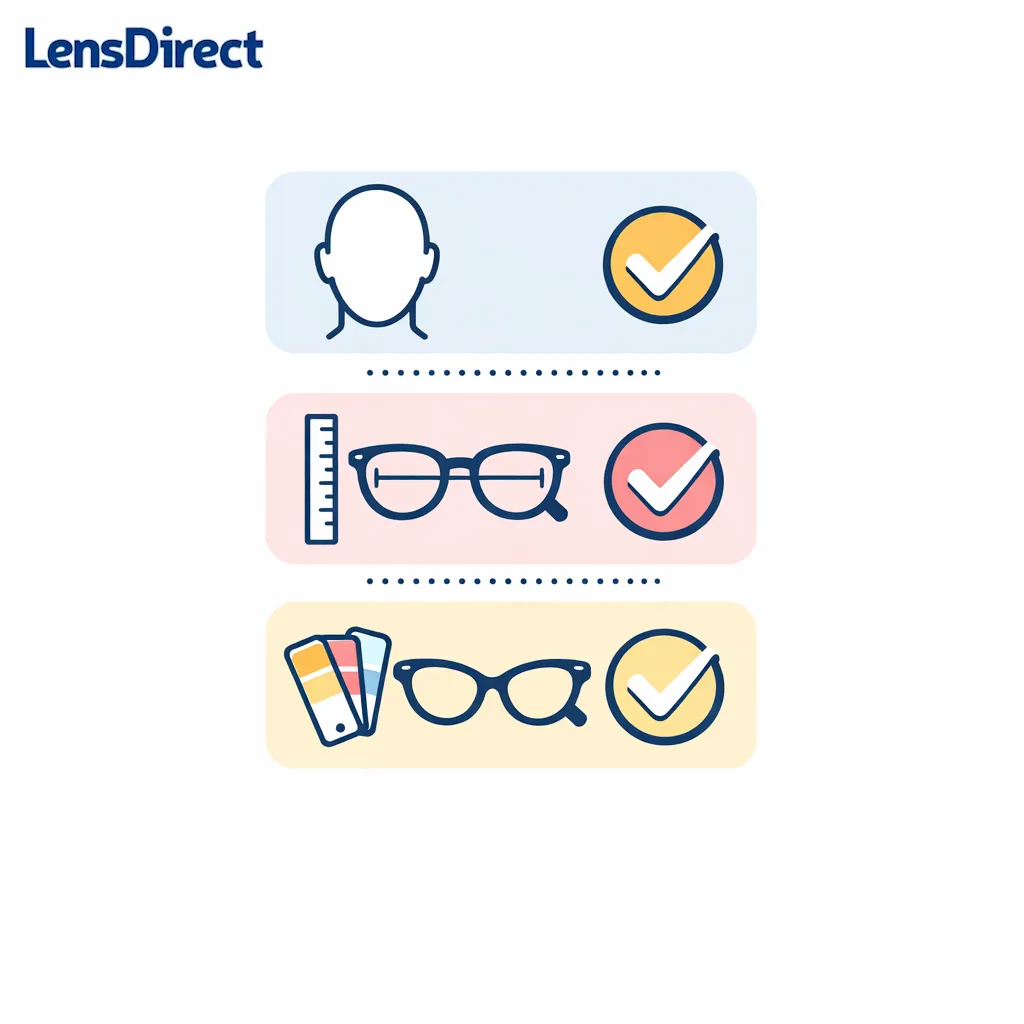
Face shape, jawline, cheekbones, and nose bridge
AI is often most helpful at the first-pass style question: which shapes are worth trying at all. If you are not sure whether to start with round, square, cat-eye, or browline frames, pairing an AI result with a face-shape guide can save time and reduce decision fatigue.
This is where an AI glasses recommendation can feel genuinely useful. It can surface patterns you may already sense, such as preferring frames that soften a strong jawline or add structure to rounder features.
Frame width, lens alignment, and visual style matching
These tools can also help with rough width screening. If a recommended frame looks proportional on your face and its listed measurements are close to a pair you already wear comfortably, that is a good sign to keep it on your shortlist.
They are also good at visual matching. Someone who likes thin metal frames, darker neutrals, or a minimal look can often get to the right style family faster with an AI glasses frame finder than with manual filters alone.
Speed, convenience, and comparison shopping
The biggest advantage is speed. An AI glasses finder can cut a giant catalog into a manageable set, which is especially helpful if you are replacing an everyday pair, shopping between meetings, or comparing prescription glasses and sunglasses online.
It can also reduce second-guessing. Seeing a few recommended shapes side by side often gives shoppers more confidence than starting with a blank search page.
What AI frame finders can miss
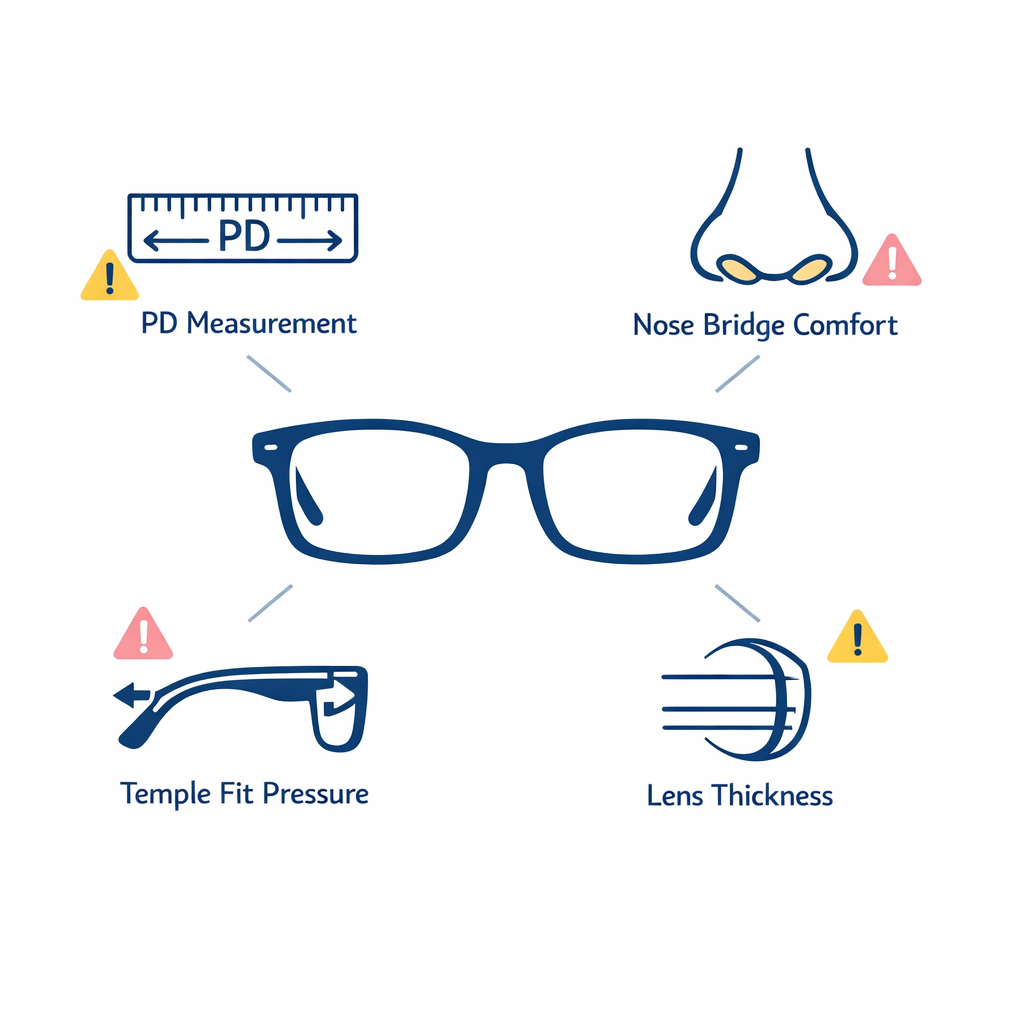
Pupillary distance and prescription-specific fit issues
Your lens prescription and your frame choice have to work together. The FTC’s Eyeglass Rule requires prescribers to give you a copy of your prescription after your exam, but an AI style tool still does not provide a verified pupillary distance measurement or confirm that every recommended frame is ideal for your lens power.
This matters even more if you have a stronger prescription, progressive lenses, or a history of sensitivity to lens positioning. In those cases, it is smart to cross-check with your optometrist or an experienced optician before you order.
Bridge comfort, temple fit, and lens thickness realities
A frame can look perfect on-screen and still feel wrong after a full day of wear. Pressure at the bridge, slipping at the nose, pinching at the temples, or an unexpectedly chunky finished lens are all real-world issues that a photo-based AI choose glasses tool may not fully predict.
If you already know you need adjustable nose pads, low-bridge fit, longer temples, or lighter lens options, use those needs as hard filters before you trust the recommendation list.
Camera angle, lighting, and photo upload distortion
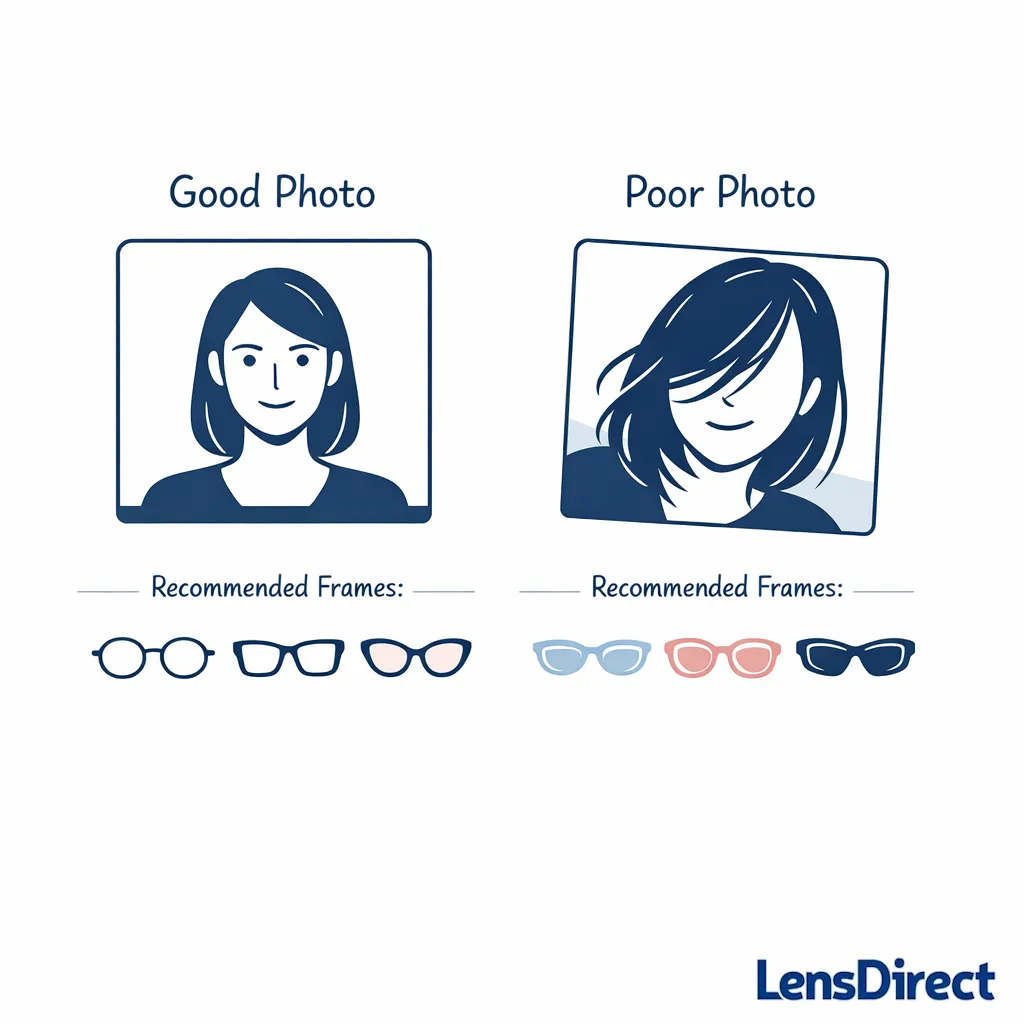
The tool can only work with the image it receives. Because face detection models depend on visible facial features in the captured image, a tilted head, poor lighting, shadows, bangs, wide-angle selfie distortion, or old photos can change the result.
This is one of the biggest reasons shoppers get mixed answers from different AI pick my glasses tools. Small changes in the photo can lead to different guesses about your proportions.
Brand inventory bias and limited frame sets
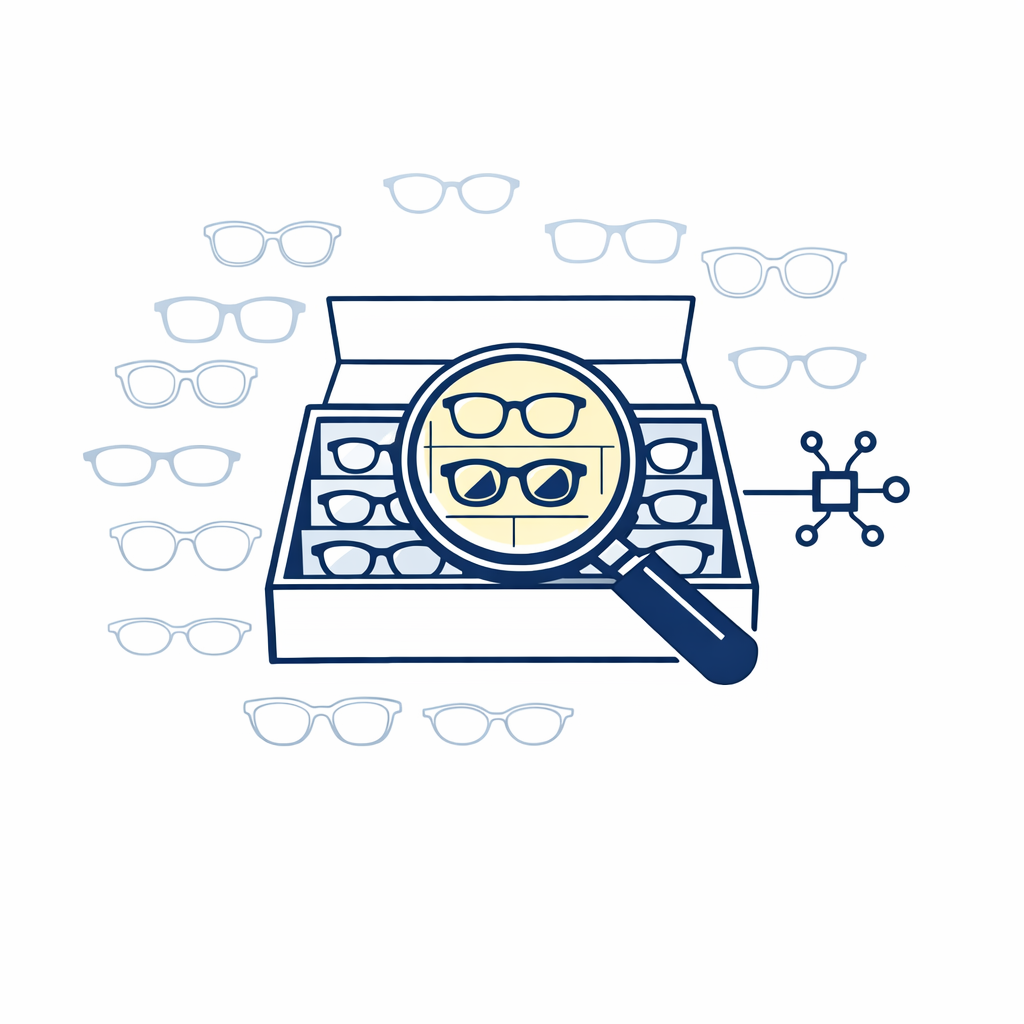
An on-site AI eyeglass finder is usually recommending products from that retailer’s own catalog. That makes it helpful for narrowing choices inside the store, but it also means the “best match” is often the best match among those available frames, not across the whole market.
That is not necessarily a problem. It just means you should read the suggestions as curated options, not as an objective final answer.
Do AI glasses actually work?
Yes, if you judge them by the right job. They work well as shopping assistants that help you explore shapes, compare looks, and move faster toward a shortlist.
No, if you expect them to replace measurements, prescription review, or comfort testing. The more your order depends on exact fit, specialty lens choices, or a stronger prescription, the more you should double-check the details yourself.
What to double-check before you order glasses online
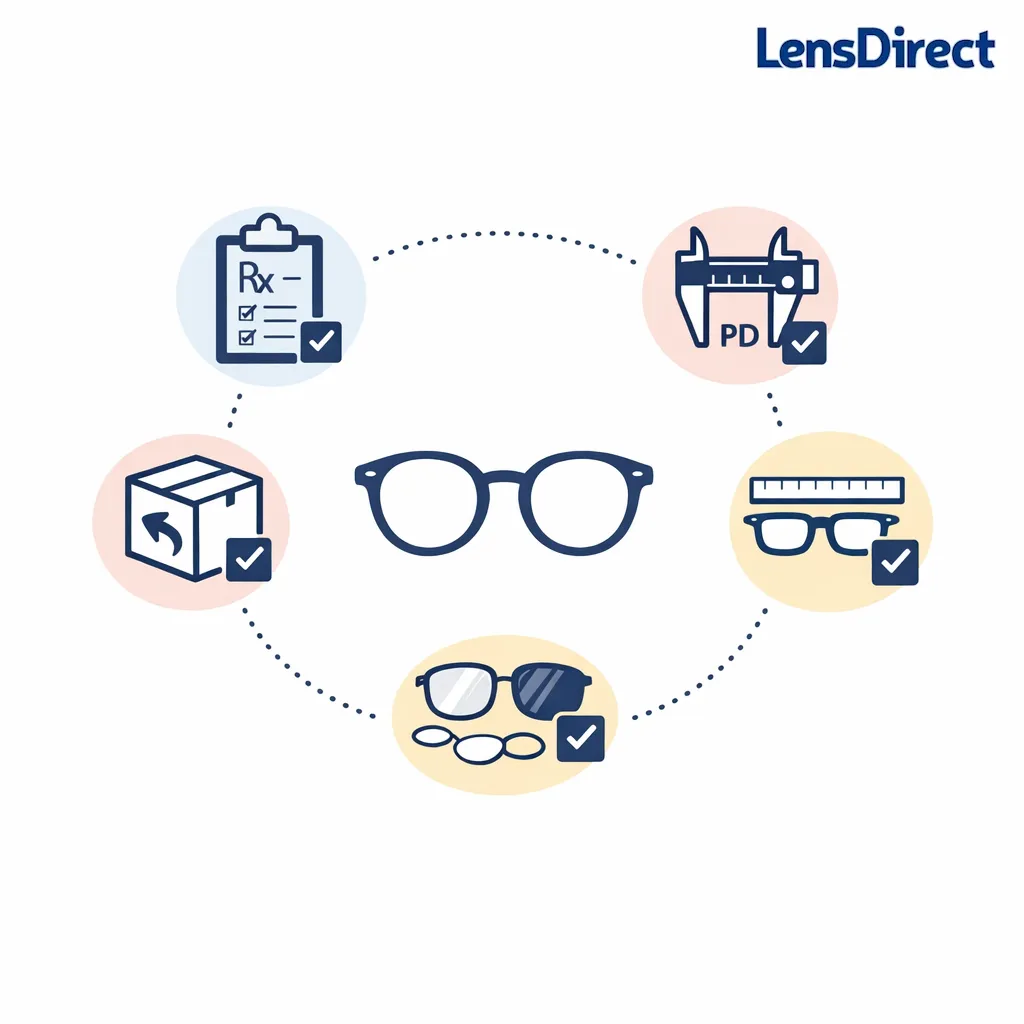
Before you check out, slow down and verify the few details that matter most. If you do only five things, do these:
- Confirm every number on your prescription and keep a copy that you received under the Eyeglass Rule.
- Make sure you have an accurate pupillary distance measurement, because style tools do not replace PD.
- Compare the new frame’s size numbers to a pair that already fits and use a fit and face-shape guide if you need a quick sense check.
- Review your lens options carefully, including the material and coatings you actually want for everyday use.
- Read the store’s return policy, remake policy, and shipping timeline before you order.
Prescription details and PD
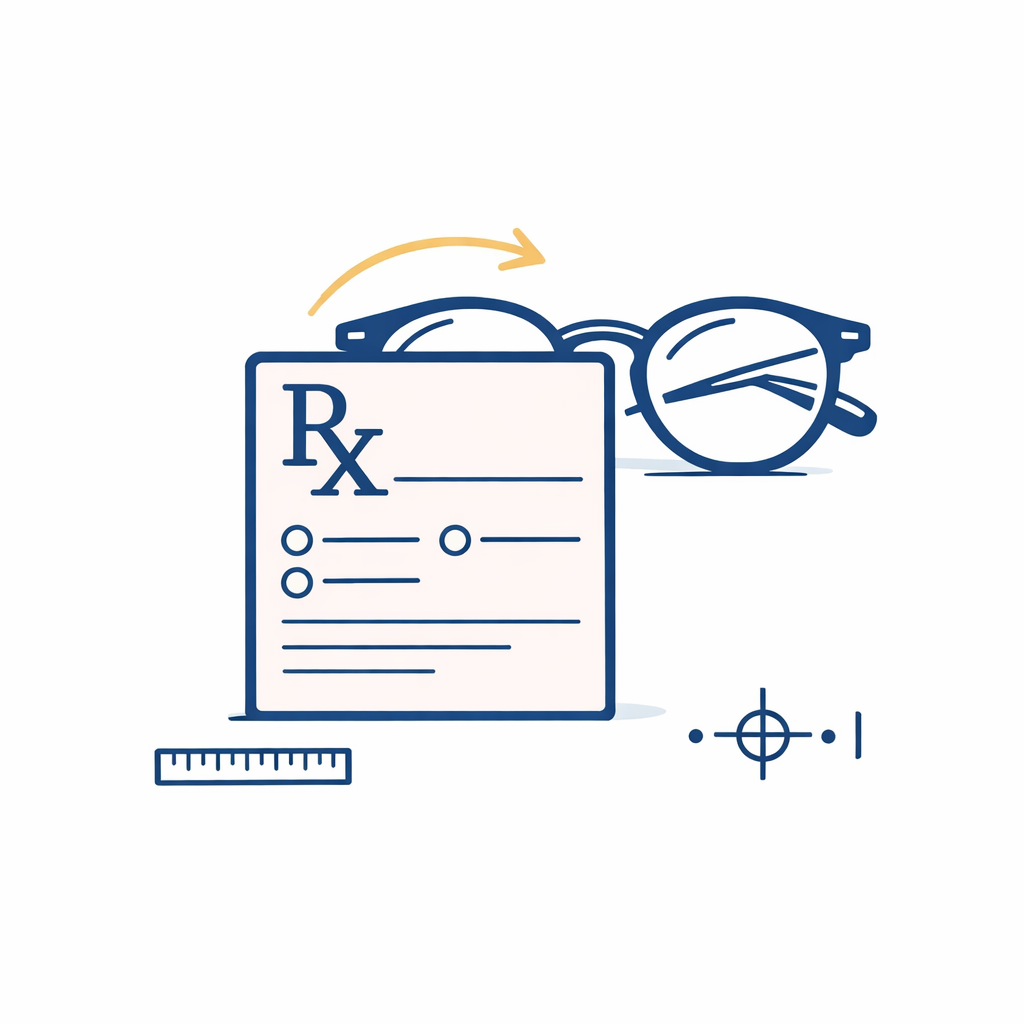
A lot of online-order mistakes happen because shoppers focus on the frame first and the prescription second. Reverse that order. That is why any “best glasses for my face AI” result is only as good as the order details behind it.
If anything on your prescription looks unclear, ask before you buy. If your PD is missing, measure it carefully or have it confirmed so your lenses are centered properly.
Frame dimensions and fit measurements
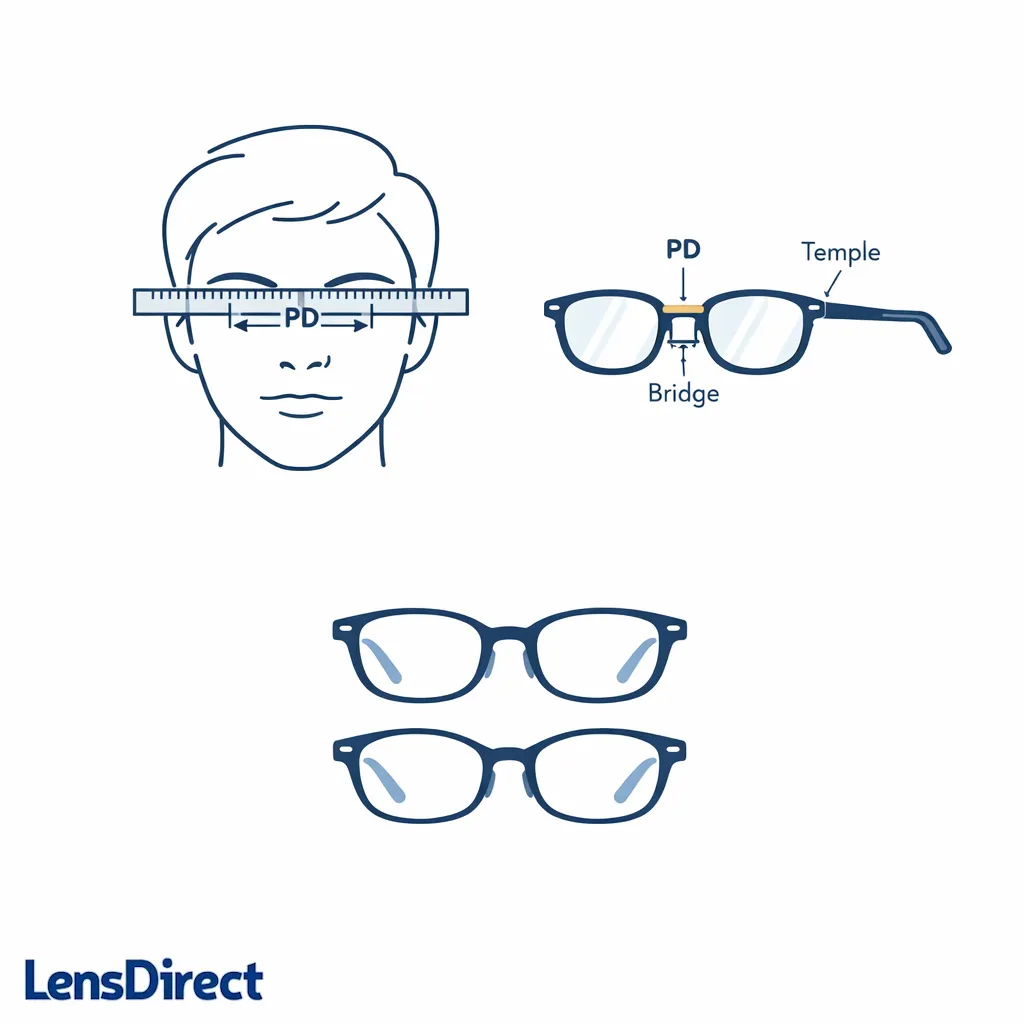
Check lens width, bridge width, and temple length against a pair you already like. This is the fastest real-world filter you have, and it often beats an algorithmic suggestion when the goal is all-day comfort.
Also pay attention to frame shape in a practical way. A frame that looks balanced in a photo may still sit too tall, too narrow, or too close to your cheeks once it is actually on your face.
Lens options, coatings, and material choices
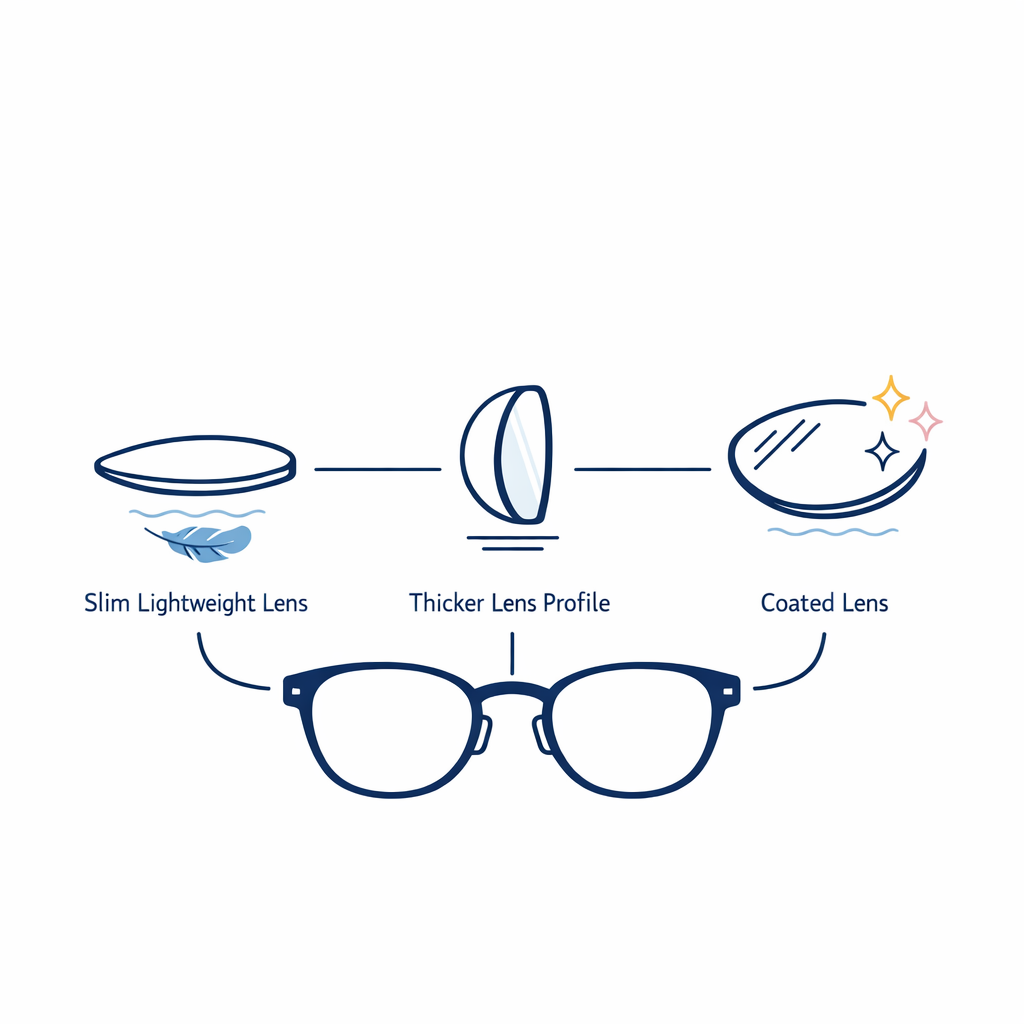
Lens choices affect more than price. They can change weight, thickness, glare control, sun protection, and how the finished glasses feel in daily wear.
If you are replacing old frames with new lenses instead of buying a whole new pair, it helps to review full-service lens replacement and DIY replacement lens options before deciding which route is easier for you.
Return policy, remake policy, and shipping timelines
Even the best AI glasses recommendation is still a prediction. A shopper-friendly return or remake policy lowers the risk if the fit or look is not right once the glasses arrive.
Shipping expectations matter too, especially if you need the pair for work, travel, or as a backup before your current glasses fail.
AI recommendation tools vs. virtual try-on vs. smart glasses
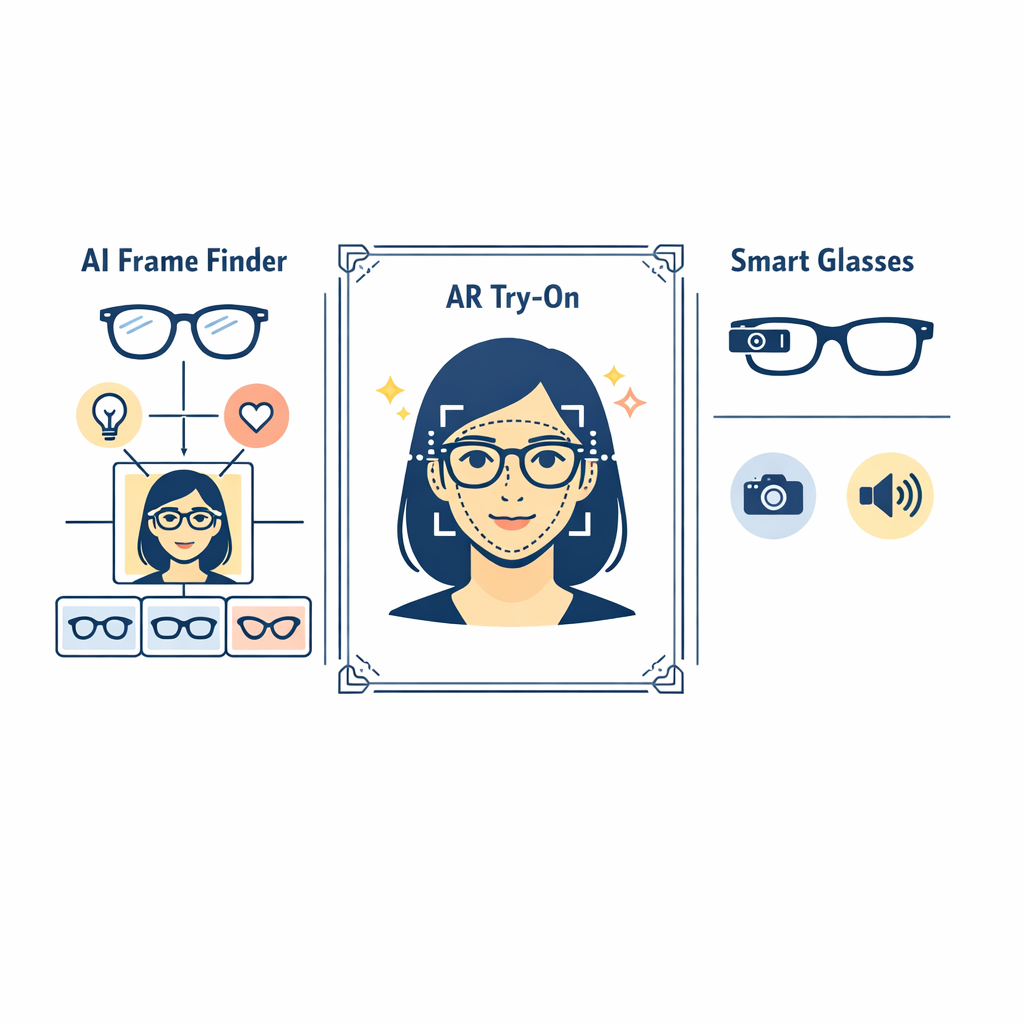
These categories get mixed together in search results, but they solve very different problems:
- AI frame finder: helps narrow frames based on your photo, measurements, or preferences.
- Virtual try-on: shows what a digital frame may look like on your face.
- Smart glasses: wearable hardware with features beyond vision correction.
AI frame finders for shopping
An AI glasses selector is a shopping tool. Its job is to reduce choice overload and suggest frames you are more likely to consider.
AR virtual try-on tools
AR try-on is mostly about visualization. It helps answer, “Do I like how this shape looks on me?” but it is still only an on-screen preview.
AI smart glasses as a different product category
Products such as Meta smart glasses are a separate category from shopping tools. They are wearable devices with built-in features like camera, audio, and assistant functions, not an AI eyeglass finder for choosing prescription frames online.
Is there an app to find glasses that fit your face?
Yes. Many shopping apps and websites now offer some combination of AI analysis, filters, and virtual try-on. Just remember that “fit your face” usually means visual fit first, not guaranteed comfort or prescription suitability.
The safest way to use any app is to combine its suggestions with your own size measurements, PD, and a realistic understanding of how your current glasses fit.
How to use AI glasses selectors more confidently
Start with a clear front-facing photo
Use natural lighting, keep your face level, pull hair away from your face, and avoid dramatic angles. A clean image gives any AI choose glasses tool a better starting point.
Compare multiple tools, not just one result
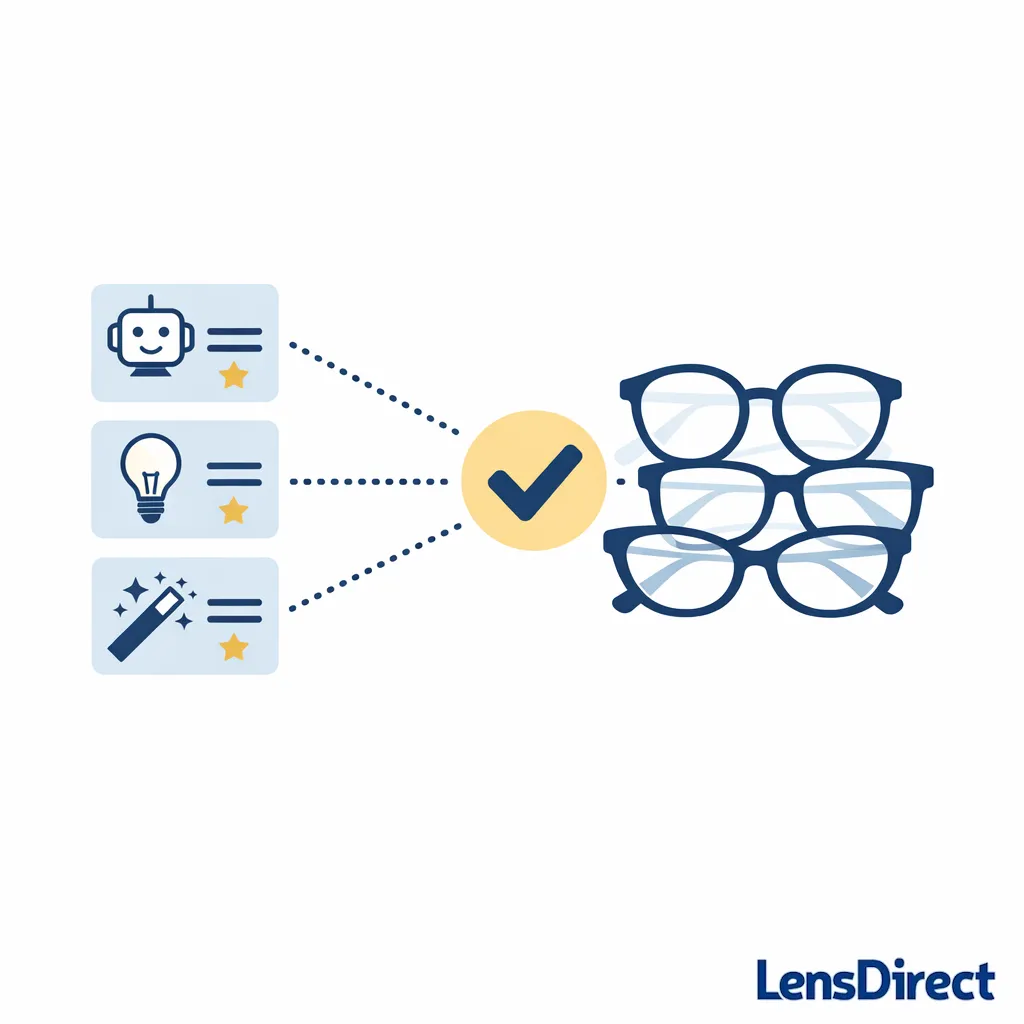
If two or three tools keep pointing you toward similar shapes, that pattern is worth noticing. If every tool gives you a totally different answer, treat the results as inspiration, not guidance.
Cross-check with face-shape guides and measurements
AI is strongest when you pair it with basic fit homework. Use a face-shape guide to sense-check the style direction and measure your PD before finalizing lenses.
Use AI as a shortlist, not the final decision maker
If your vision has changed or your current prescription is old, start with your eye care professional. An AI tool does not replace a comprehensive dilated eye exam or personalized advice about prescription changes, progressives, or unusual fit issues.
Common mistakes to avoid
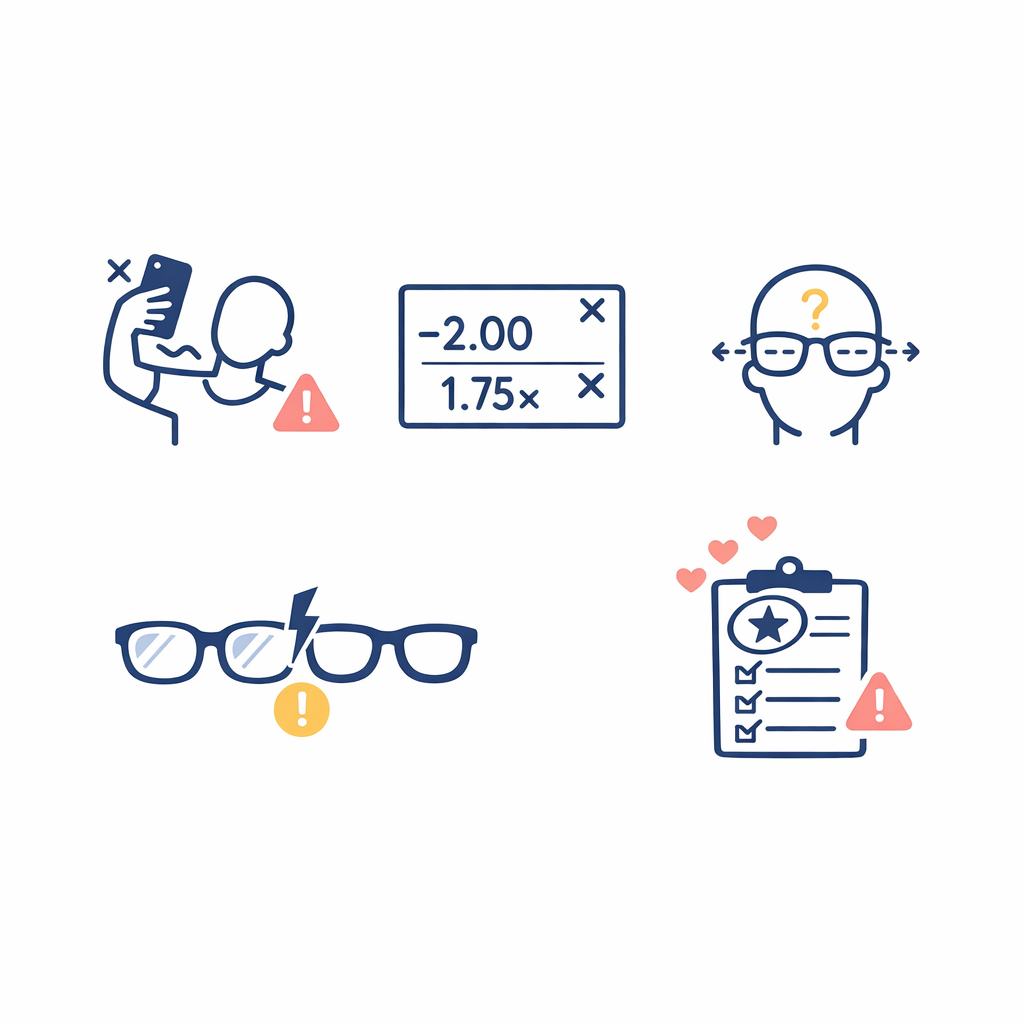
- Uploading an angled selfie and assuming the result is precise.
- Ignoring frame size numbers because the preview “looks right.”
- Forgetting PD until after checkout.
- Choosing a bold frame without thinking about your lens needs.
- Treating one tool’s top pick as the only good option.
FAQs
Can AI choose glasses for me?
It can choose likely candidates for you. It cannot fully judge comfort, prescription compatibility, or whether a frame will feel right after hours of wear.
What are the best AI apps for choosing glasses?
The best tool is the one that combines strong visual suggestions with transparent sizing, easy comparison, and a clear return process. For most shoppers, accuracy in the order details matters more than novelty in the interface.
Do the AI glasses really work?
If you mean shopping tools, yes, they can work well for narrowing styles. If you mean smart glasses hardware, that is a different category with different goals and features.
Is there an app to find glasses that fit your face?
Yes, but use the word “fit” carefully. Apps are best at predicting visual fit and style direction, while true fit still depends on measurements, bridge design, temple length, and lens setup.
How much do AI smart glasses cost?
Prices vary by brand and feature set, and they are not priced or used like ordinary prescription-shopping tools. If you are trying to buy everyday eyewear, make sure you are looking at a frame finder or virtual try-on feature, not a smart-glasses device category.
Start with a smarter shortlist at LensDirect
If an AI glasses recommendation helped you narrow the style, LensDirect can help you finish the job with the practical details that matter. You can browse frames, compare lens options, replace lenses in frames you already love, and use simple tools to check fit before you order.
- Shop Glasses if you are ready to compare everyday frames.
- Shop Sunglasses if you want style plus sun protection.
- Shop Contacts if you wear both glasses and contacts and want an easy backup plan.
- Replace Your Lenses if your frames are still good and only the lenses need refreshing.
- Full-Service Replacement is useful if you want to send your frames in.
- Order Replacement Lenses if you prefer a DIY route.
- Find Your Fit if you want a quick frame-style gut check.
- Learn How to Measure Your Pupillary Distance before finalizing your order.
- Learn How to Get Reimbursed by Your Insurance if you want to lower out-of-pocket cost.
The best use of AI is not letting it make the whole decision for you. It is using it to get to a better shortlist faster, then finishing with the measurements, prescription details, and lens choices that turn a good-looking pair into a good everyday pair.
Author

Subscribe to our email newsletter to get the latest posts delivered right to your email.