

Vision fatigue has quietly become a daily reality for millions of people. By 2026, eye strain is no longer something reserved for long workdays or late nights. It shows up during commutes, while relaxing at home, and even during activities meant to be restorative. For many, it feels constant, background-level, and hard to pinpoint.
This growing sense of visual exhaustion is not best understood as a medical condition.
Instead, it reflects how modern lifestyles ask our eyes to perform nonstop under conditions they were never designed for.
Screens, artificial lighting, multitasking, and shifting visual demands have reshaped what “normal” vision use looks like.
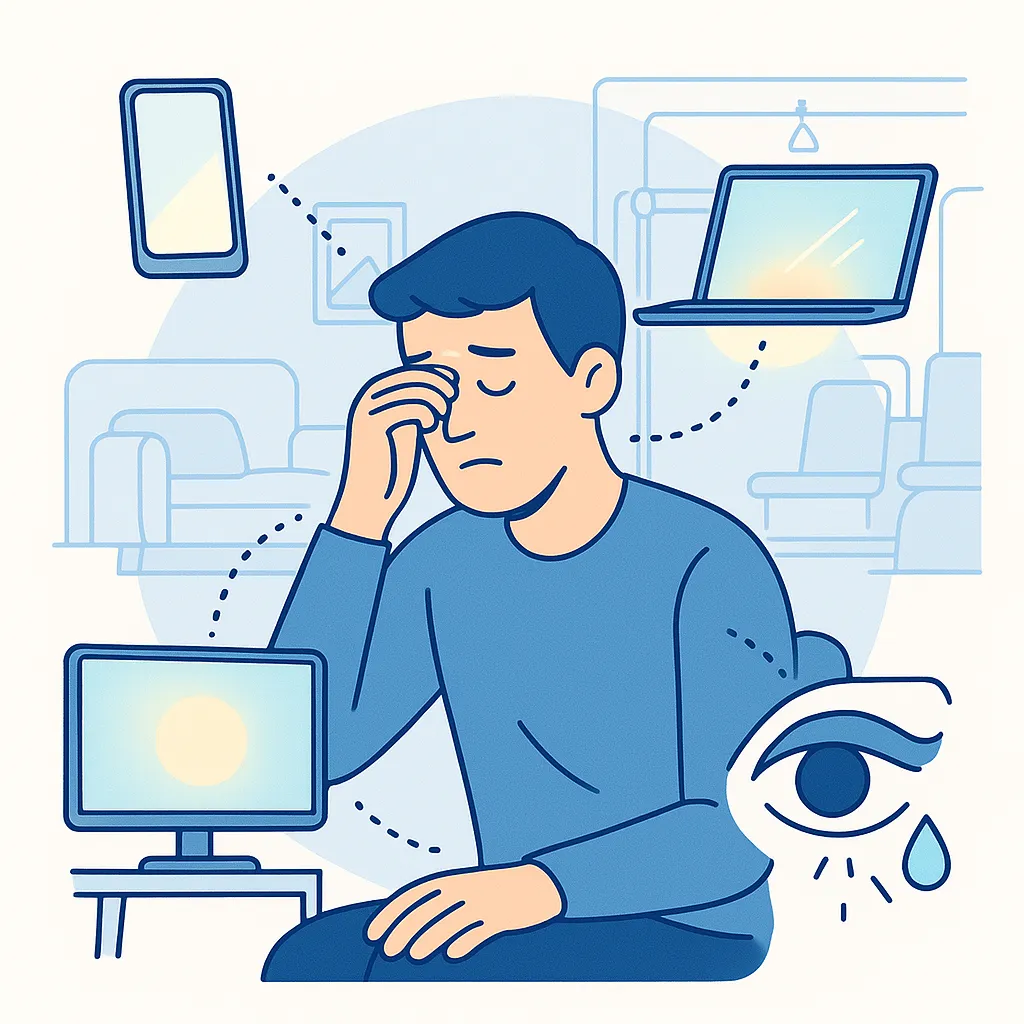
Understanding why vision fatigue feels so common — and what genuinely helps — starts with recognizing how daily habits have changed.
Why Vision Fatigue Has Become So Common
Vision fatigue in 2026 is driven less by any single behavior and more by the accumulation of small, repeated visual stresses throughout the day.
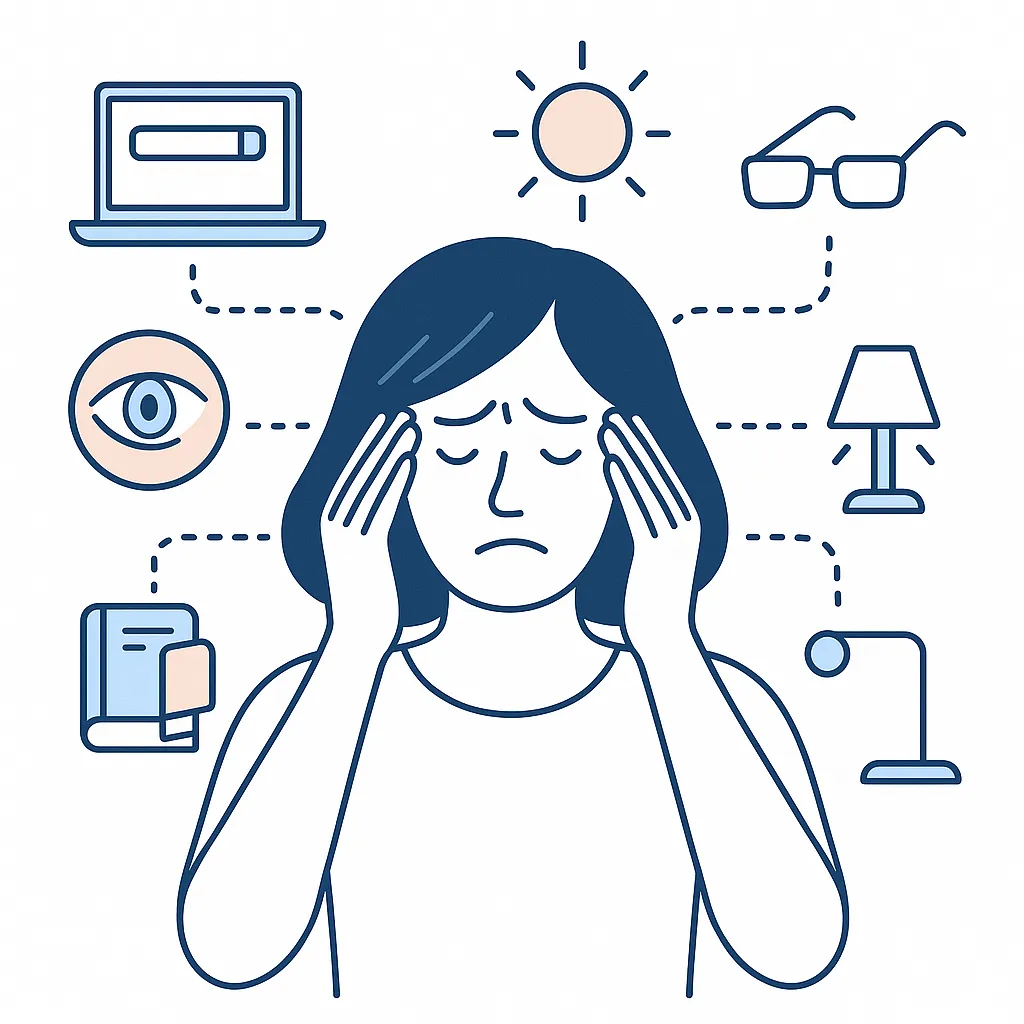
These stresses stack quietly, often without obvious warning signs until discomfort becomes familiar.
Our eyes are remarkably adaptable, but they rely on variation.
Unfortunately, modern routines tend to remove that variation almost entirely.
Constant Near Focus
Much of daily life now happens at arm’s length or closer.
Phones, tablets, laptops, dashboards, and smart devices dominate how information is consumed.
Even leisure activities like reading, gaming, or watching short-form videos demand sustained near focus.
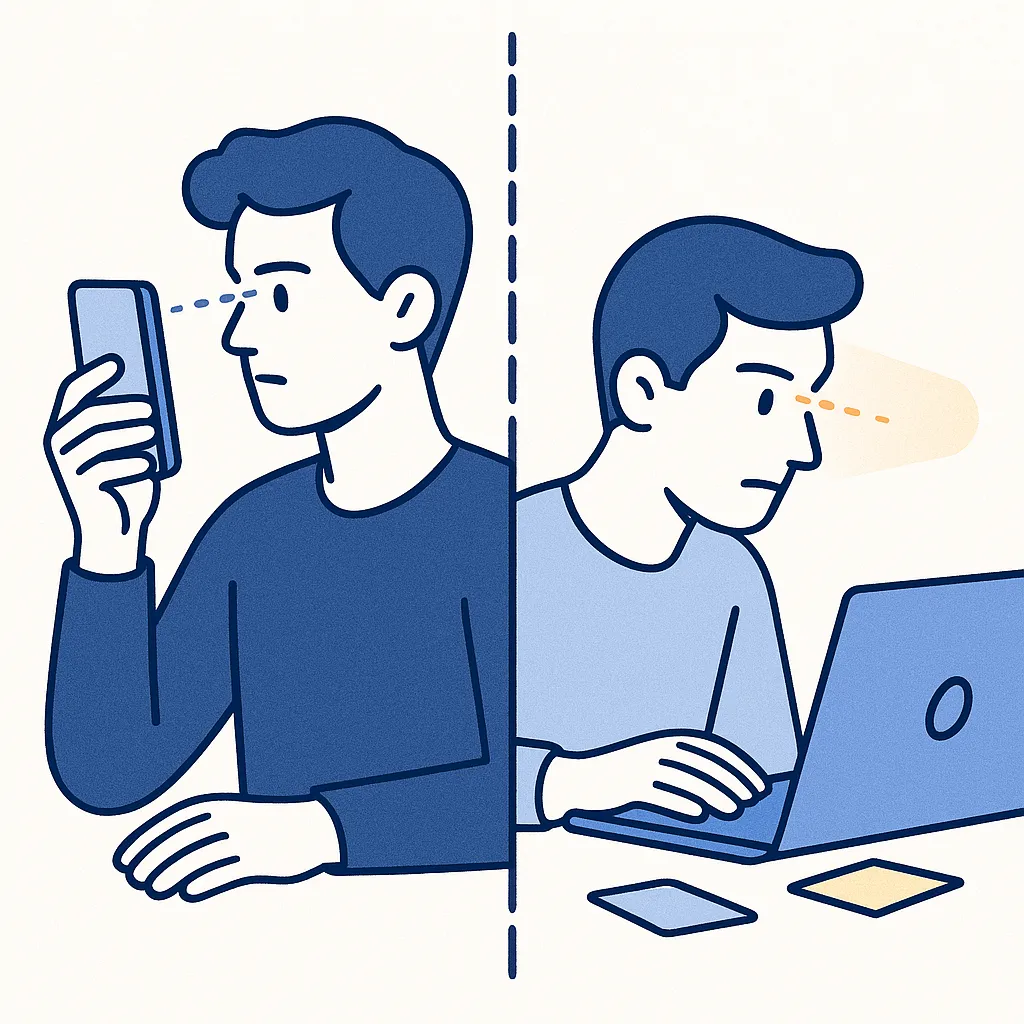
This constant demand keeps eye muscles engaged without the natural relaxation that comes from shifting focus to distant objects.
Artificial Lighting Environments
Lighting in homes, offices, stores, and vehicles is increasingly uniform and artificial.
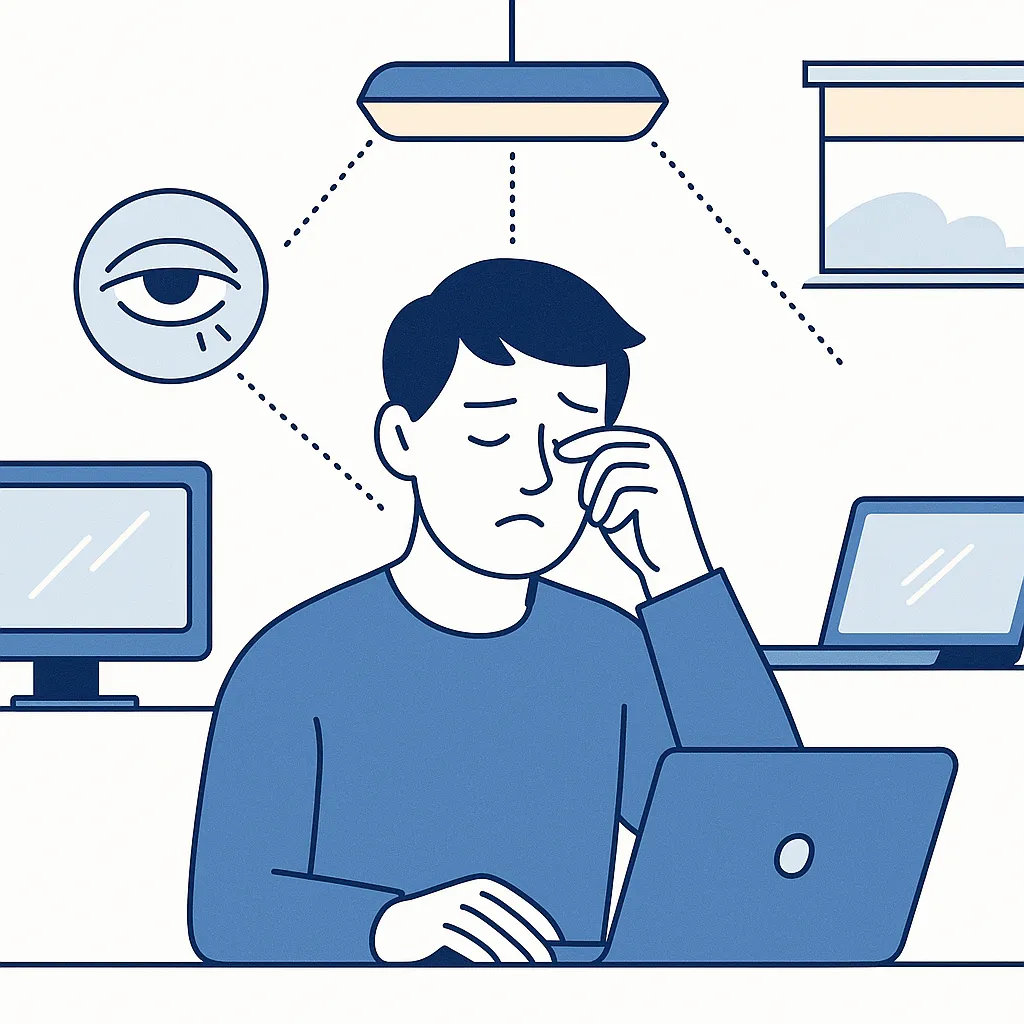
Overhead LEDs, screens as light sources, and bright white illumination reduce contrast and increase glare.
Eyes must work harder to maintain clarity and comfort under these conditions.
Natural light variation, once a built-in part of daily life, is now limited for many people.
Visual Multitasking
Modern vision rarely focuses on a single task.
People glance between screens, notifications, documents, and environments rapidly.
This repeated refocusing taxes both the eyes and the brain.
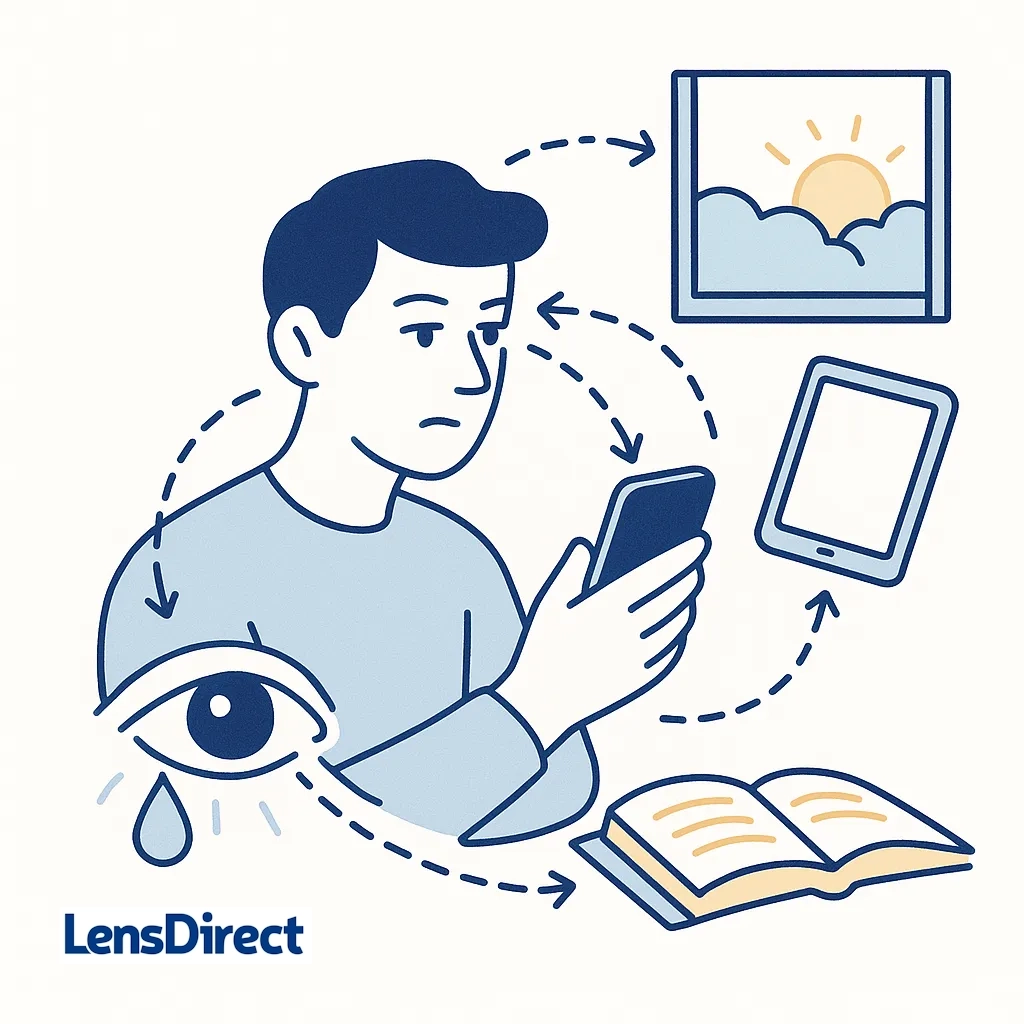
Even short bursts of visual switching can contribute to cumulative fatigue by the end of the day.
Extended Wear Expectations
Eyewear itself is worn longer than ever.
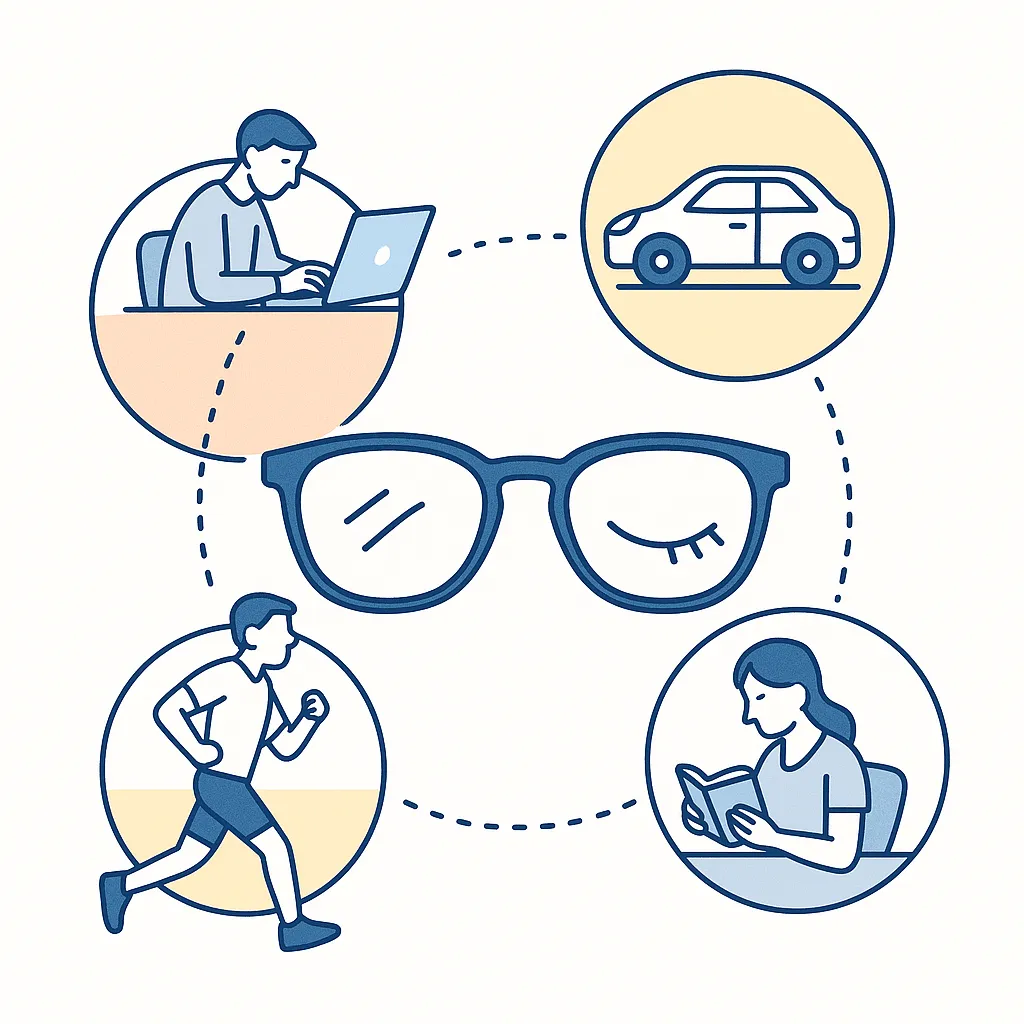
Glasses and contact lenses are often expected to perform across work, errands, exercise, driving, and evening screen time without adjustment.
When lenses are not optimized for varied conditions, discomfort can gradually set in.
Common Strain Triggers in Daily Life
Vision fatigue doesn’t come from one dramatic cause. It builds through everyday moments that feel normal but place steady demands on the eyes.
- Prolonged screen use without breaks
- Poorly positioned screens or devices
- Inconsistent or harsh indoor lighting
- Glare from screens, windows, or overhead lights
- Dry indoor air from heating or cooling systems
- Switching frequently between near and mid-range focus
- Wearing outdated or imprecise prescriptions
- Using one pair of glasses for all activities
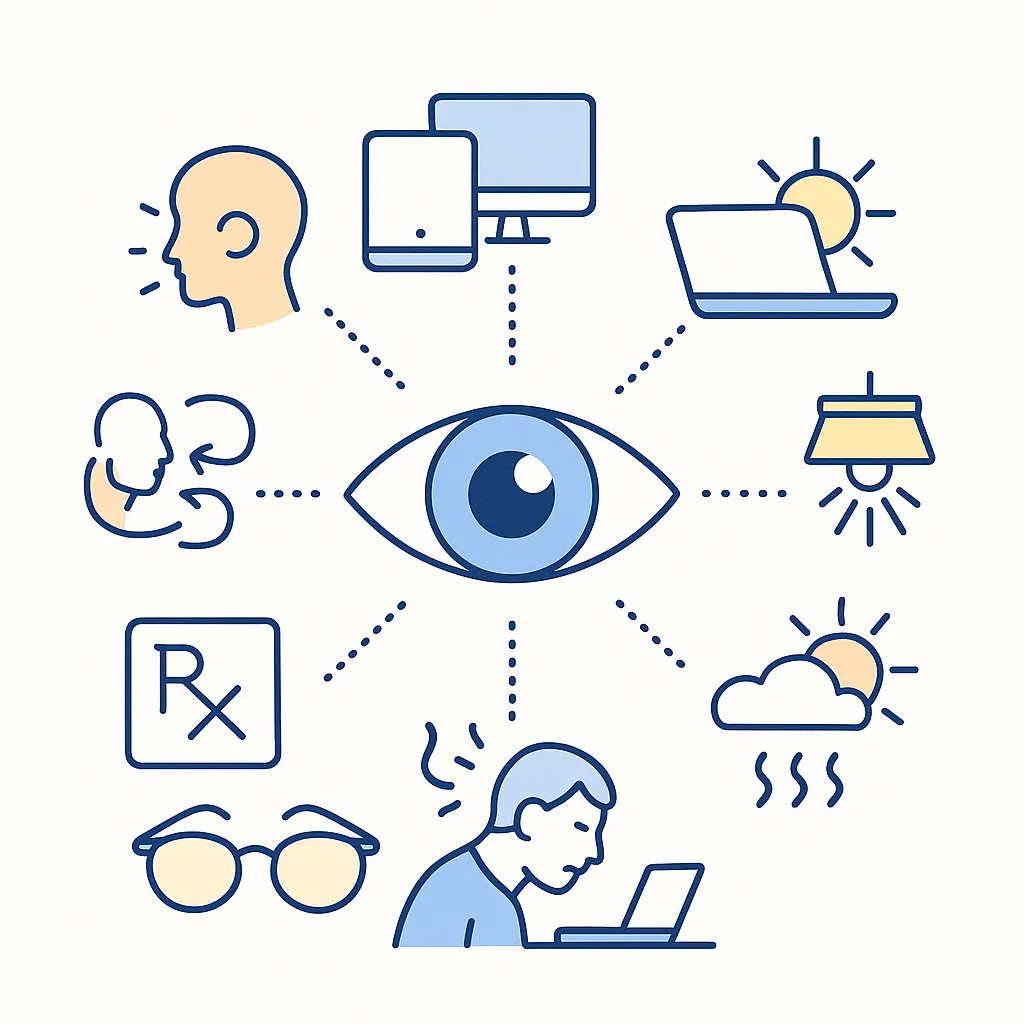
These triggers often overlap, making it difficult to identify a single source of discomfort.
How Vision Fatigue Typically Shows Up
Unlike acute eye problems, vision fatigue tends to present subtly. Symptoms may come and go, changing in intensity depending on the time of day or activity.
Many people normalize these sensations, assuming they are an unavoidable part of modern life.
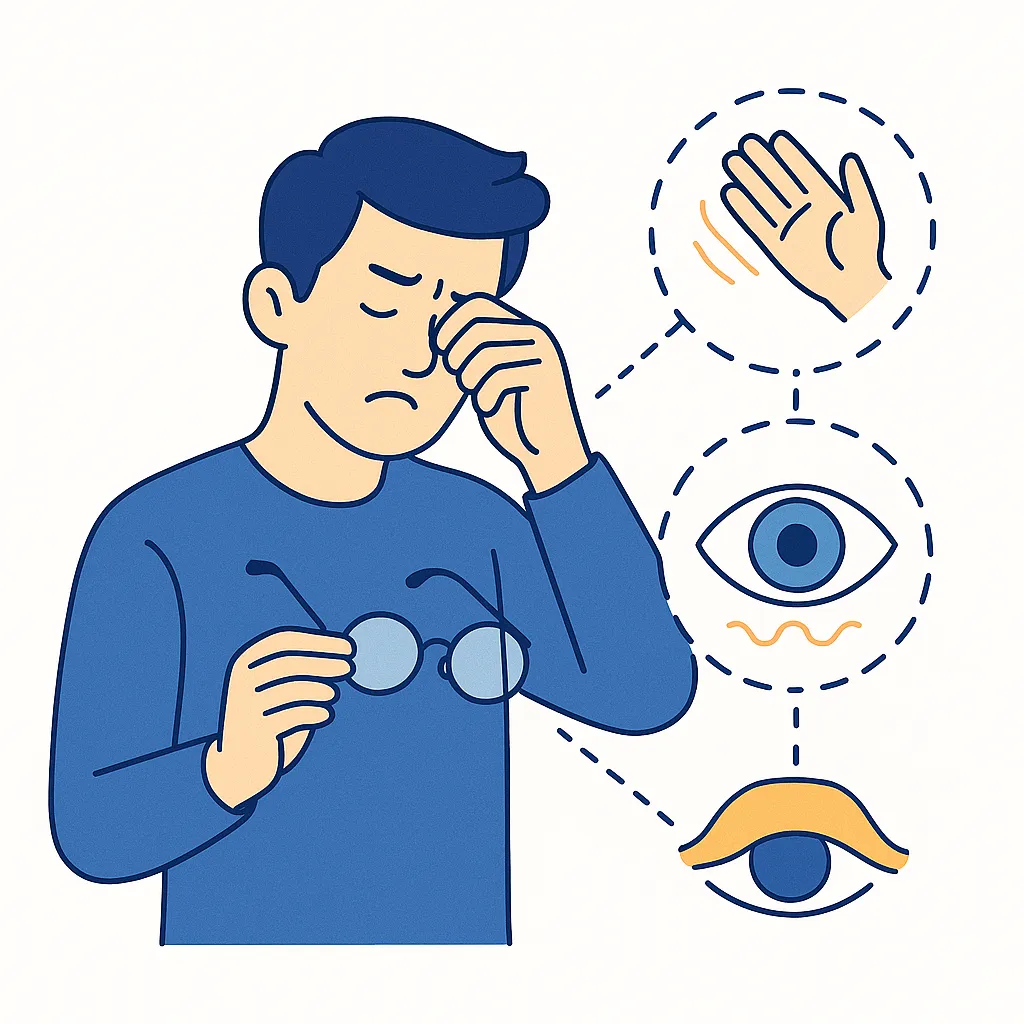
Common Symptoms of Vision Fatigue
Vision fatigue expresses itself in both visual and physical ways. Some symptoms are obvious, while others are easily overlooked or misattributed to stress or poor sleep.
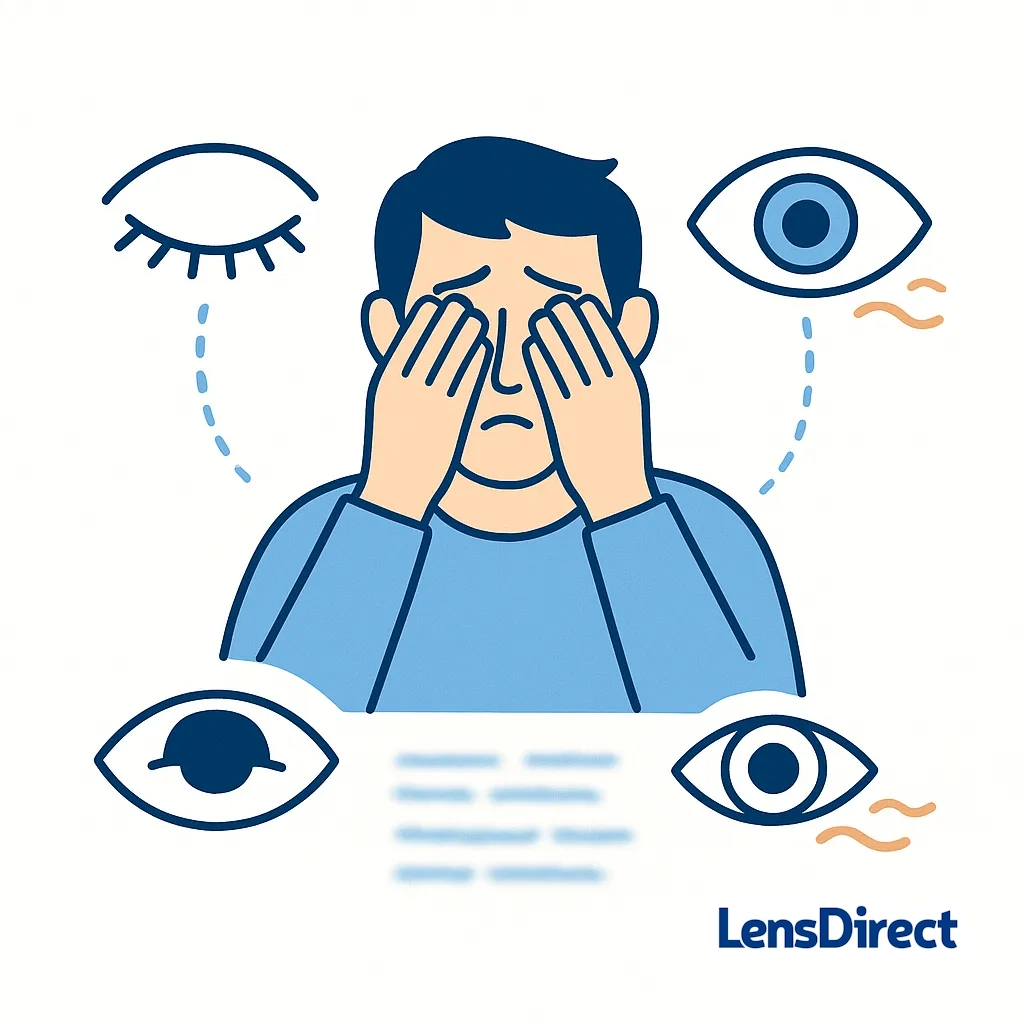
Visual Discomfort
Blurriness that appears late in the day, difficulty refocusing, or a sense that vision feels “heavy” are common signs.
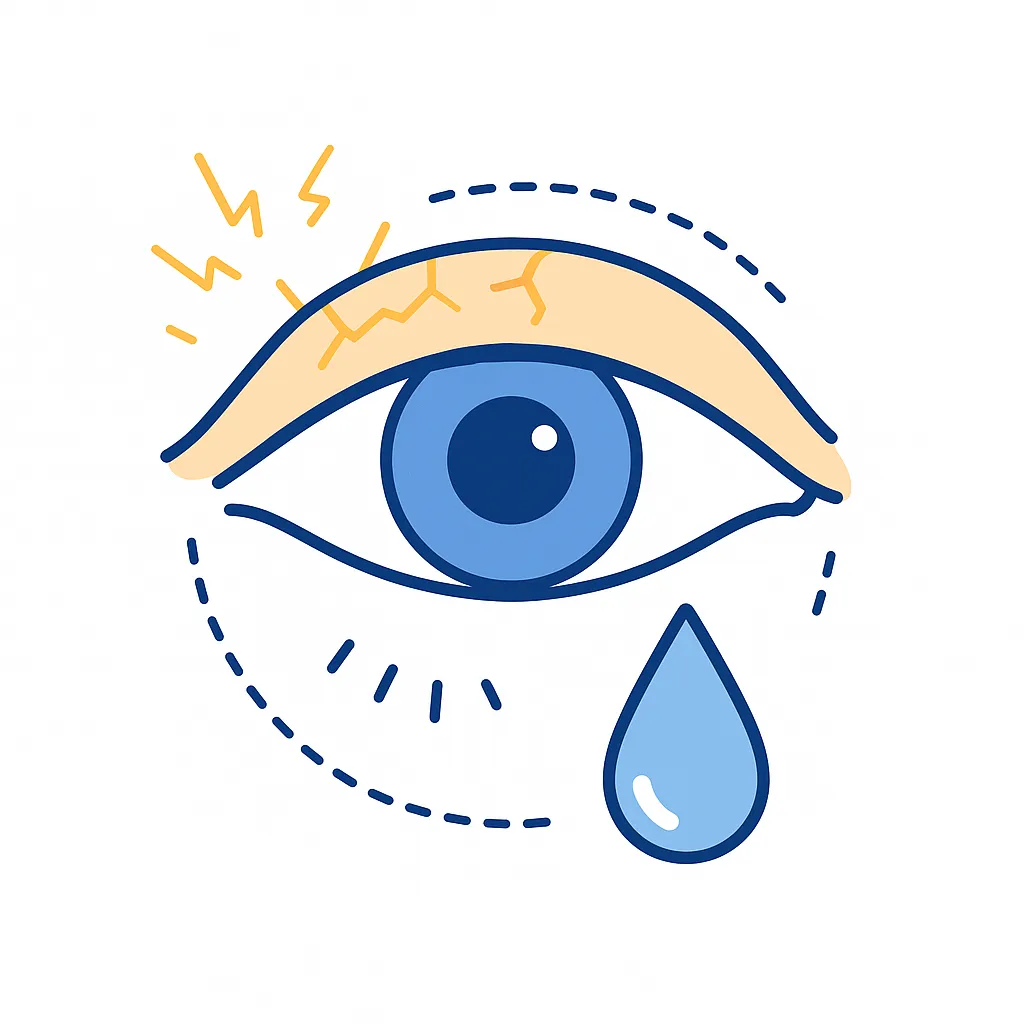
Eye Sensations
Burning, dryness, itching, or watering often accompany fatigue.
These sensations can alternate, making eyes feel irritated one moment and overly watery the next.
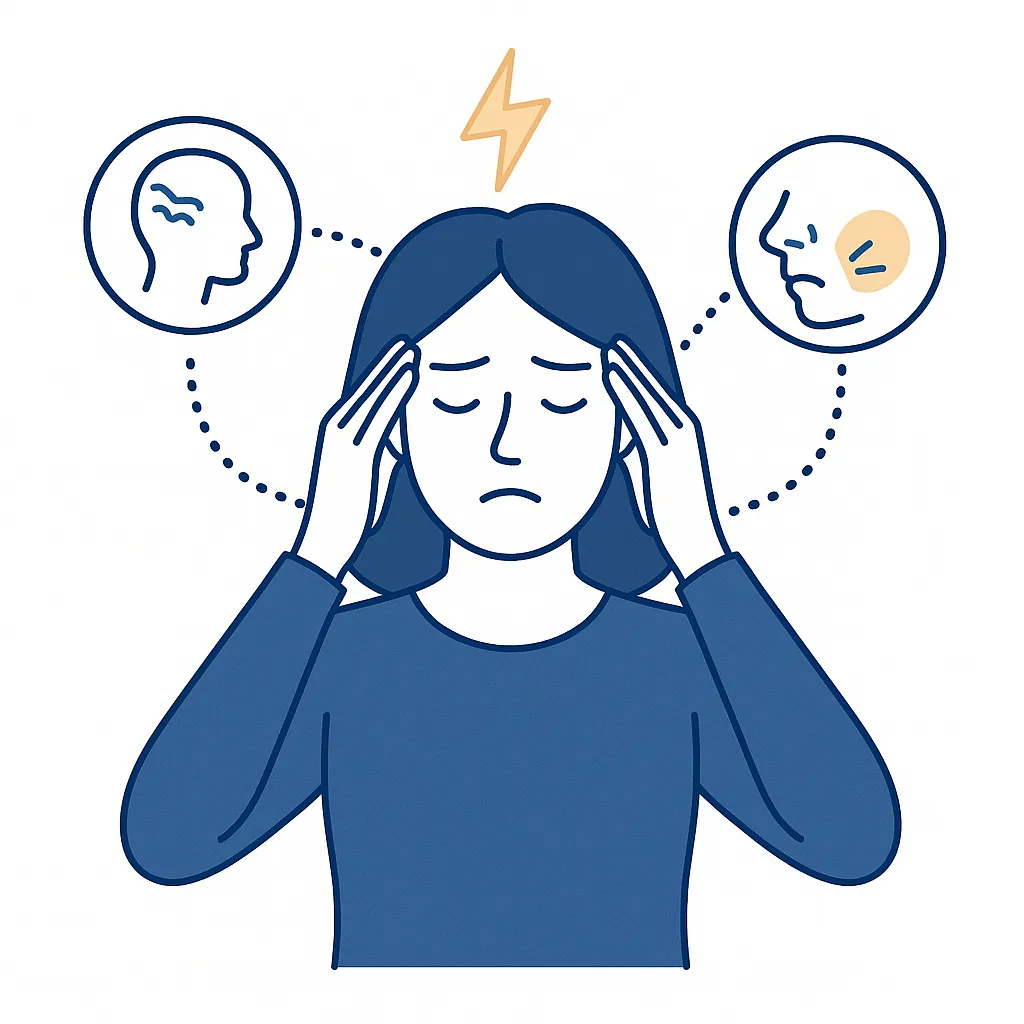
Head and Face Tension
Tension headaches, pressure behind the eyes, or tightness around the temples frequently accompany prolonged visual effort.
These sensations are often mistaken for general stress.
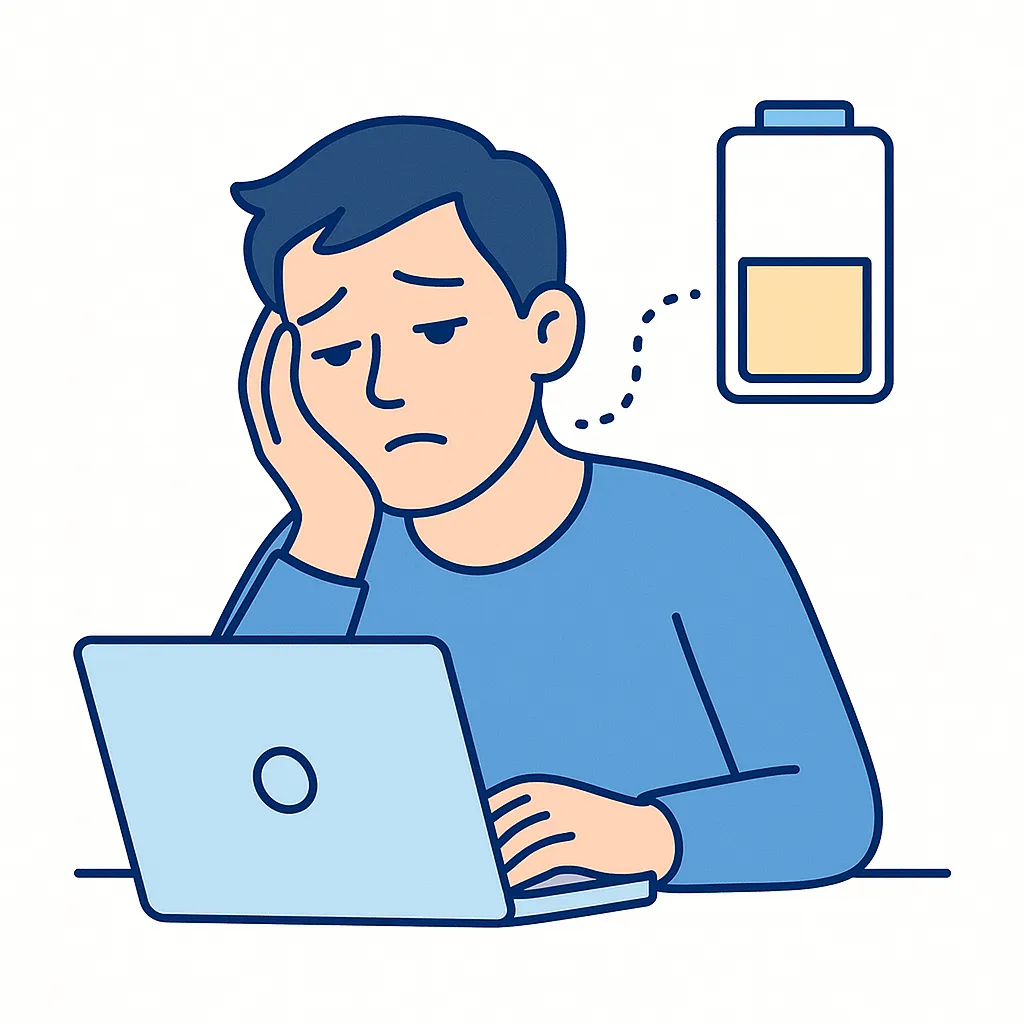
Reduced Visual Endurance
People may notice they tire visually faster than they used to.
Tasks that once felt effortless — reading, working, or watching content — become draining sooner.
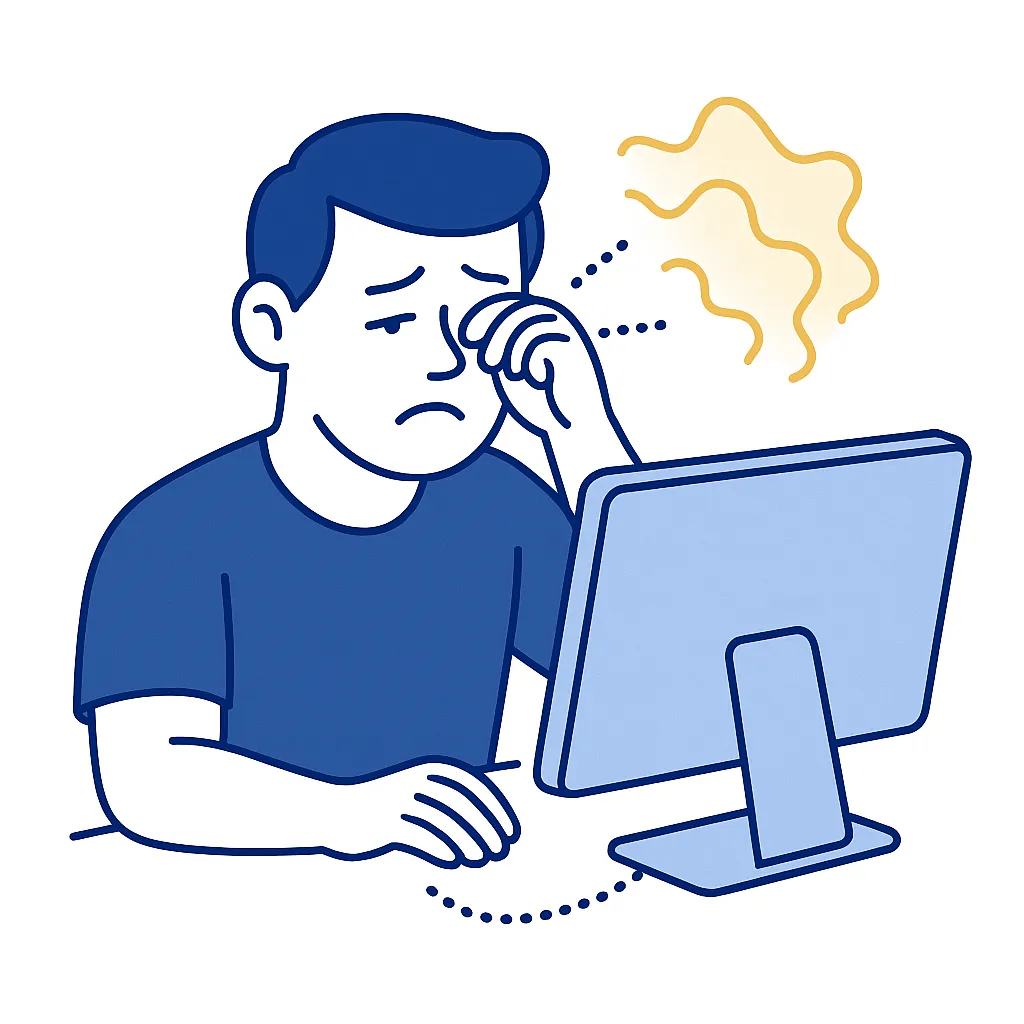
General Fatigue
Because vision is closely tied to cognitive processing, visual strain can contribute to overall tiredness.
Mental exhaustion at the end of the day often has a strong visual component.
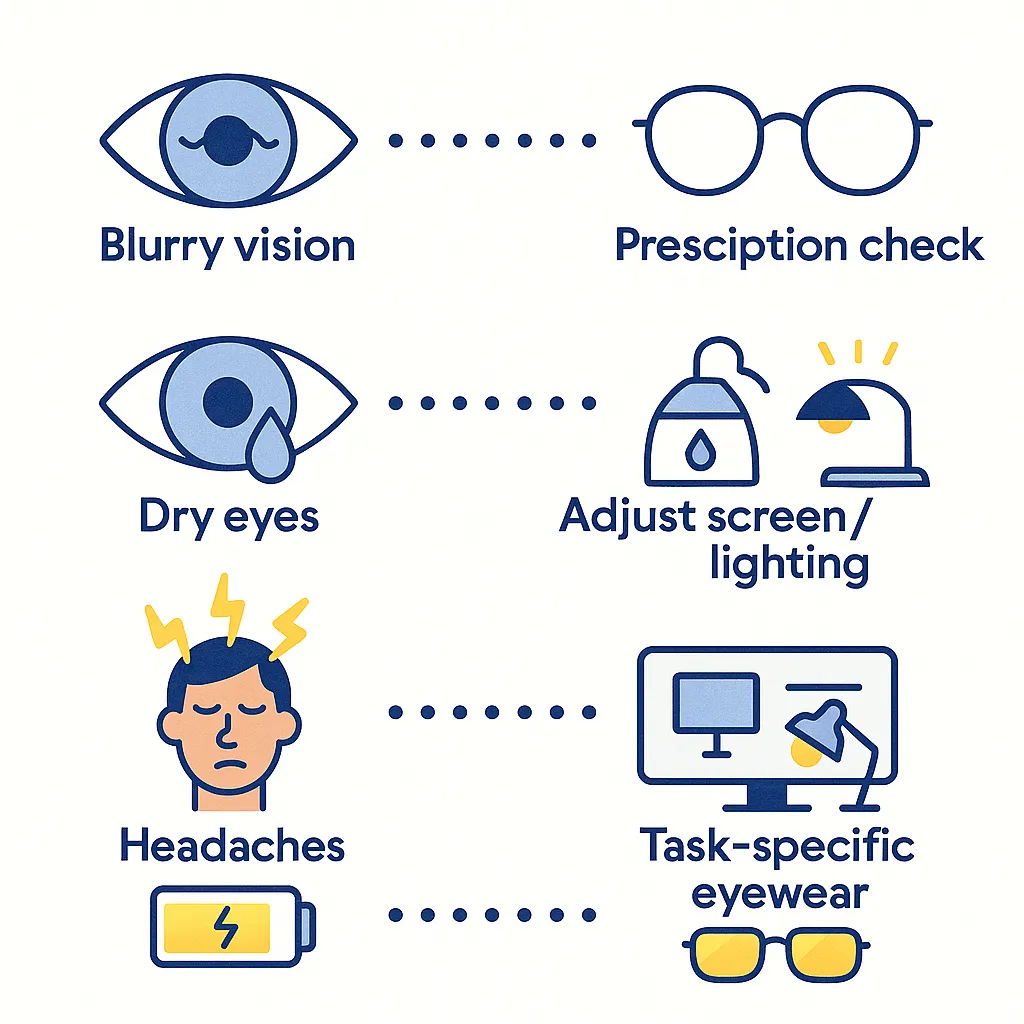
Mapping Symptoms to Practical Responses
Vision fatigue feels vague, but responses don’t have to be. Small, targeted adjustments often provide meaningful relief.
| Symptom | Practical Response |
| Blurry vision late in the day | Review prescription accuracy and lens optimization |
| Burning or dry eyes | Increase blink awareness and manage indoor air dryness |
| Headaches or eye pressure | Adjust screen height, distance, and lighting balance |
| Difficulty refocusing | Introduce regular distance-view breaks |
| Visual tiredness after short tasks | Use task-specific eyewear or lens designs |
| Glare sensitivity | Reduce reflective surfaces and adjust lens coatings |
These responses work best when combined rather than applied in isolation.
Why Vision Fatigue Is a Lifestyle Issue
Treating vision fatigue purely as a medical concern often misses the bigger picture. Most people experiencing daily eye strain do not have an underlying eye disease. Their eyes are responding logically to how they are used.
Modern life places sustained, repetitive, and artificial demands on vision systems that evolved for movement, distance variation, and natural light.
Visual Demands Never Truly Stop
Workdays no longer mark the end of visual effort.
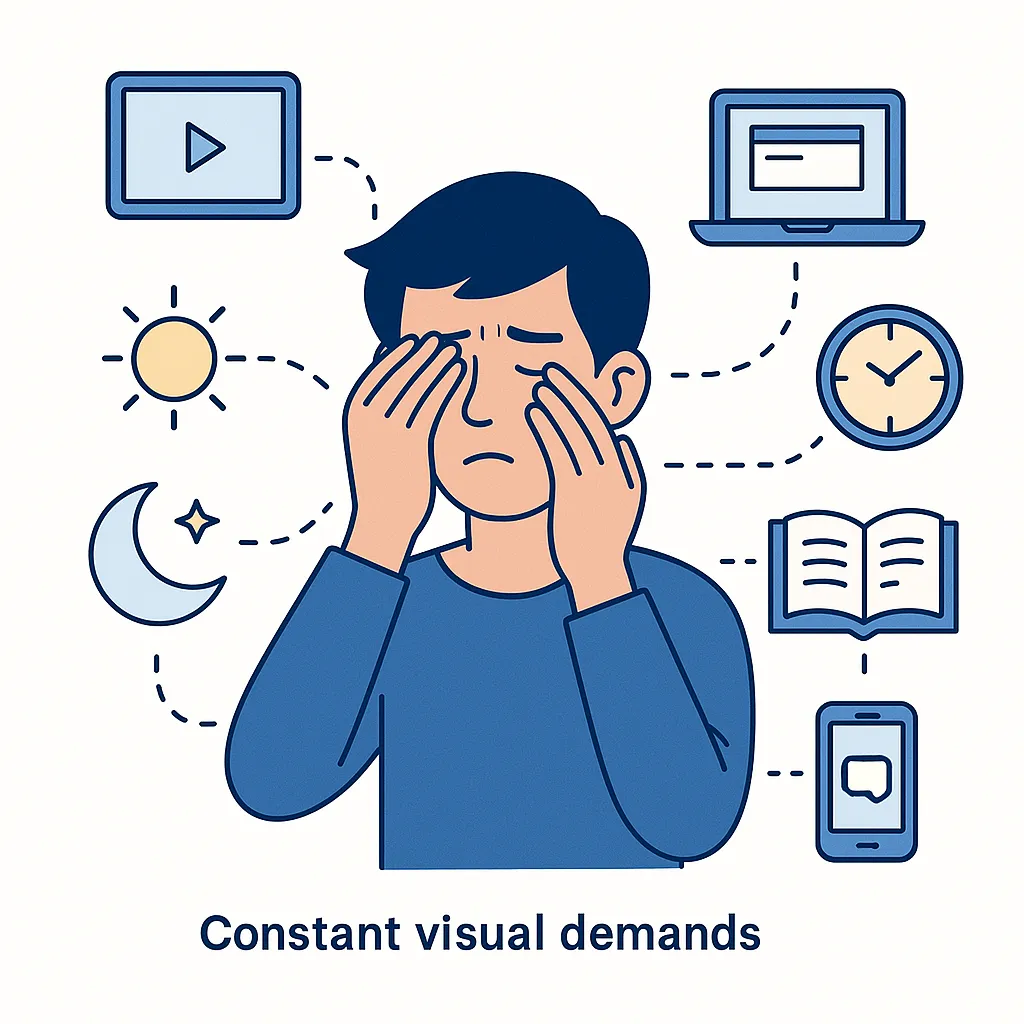
Screens follow people into evenings, weekends, and rest time.
Even relaxation often involves visually intensive activities.
Without intentional breaks or changes, eyes never fully recover.
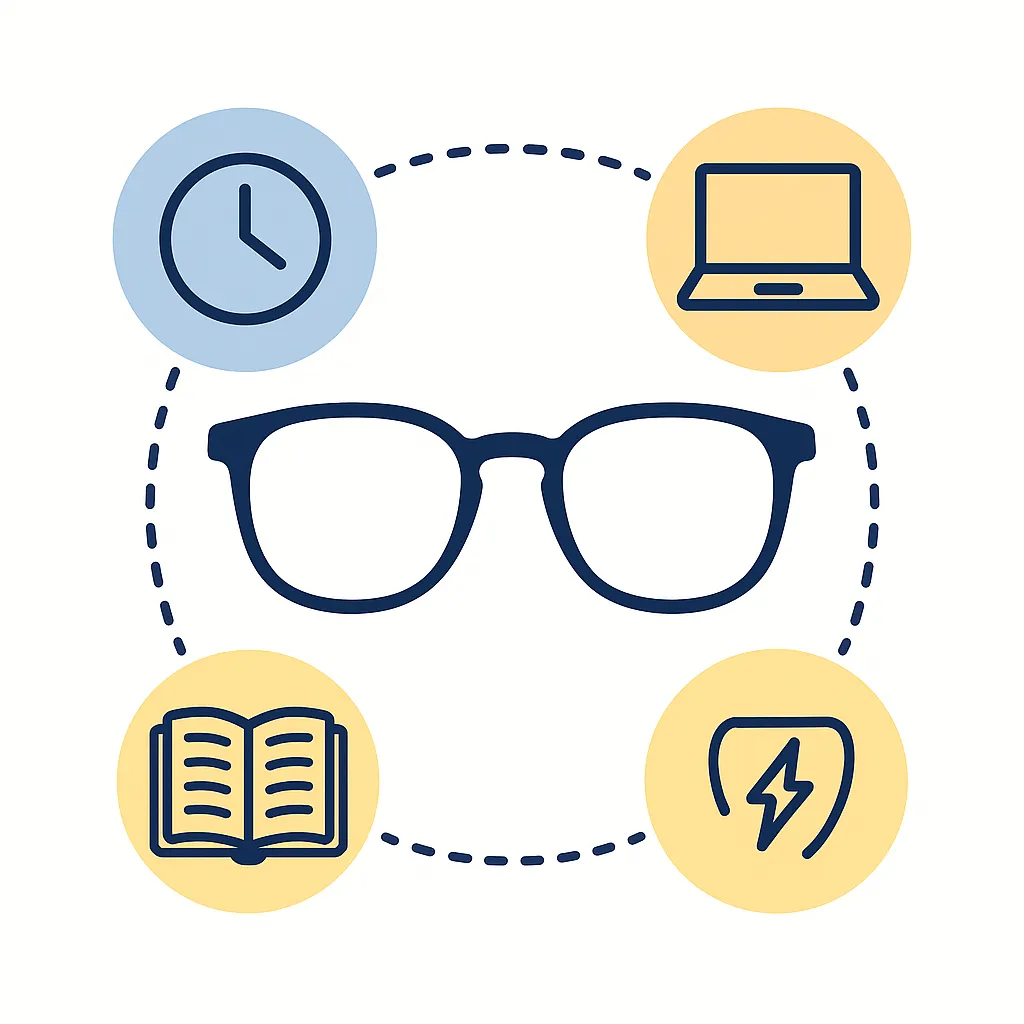
One-Size-Fits-All Vision Solutions Fall Short
Relying on a single visual setup for all tasks assumes that eyes can perform optimally under every condition.
In reality, different activities place different demands on vision.
What works well for reading may not work well for screens, driving, or mixed environments.
Fatigue Builds Gradually
Vision fatigue rarely announces itself suddenly.
It builds quietly over weeks and months, making it easy to dismiss or ignore until discomfort feels normal.
Recognizing this gradual buildup is key to addressing it effectively.
Strategies That Actually Help Reduce Vision Fatigue
Relief from vision fatigue does not require extreme measures. Instead, it comes from aligning visual habits with how eyes naturally function.
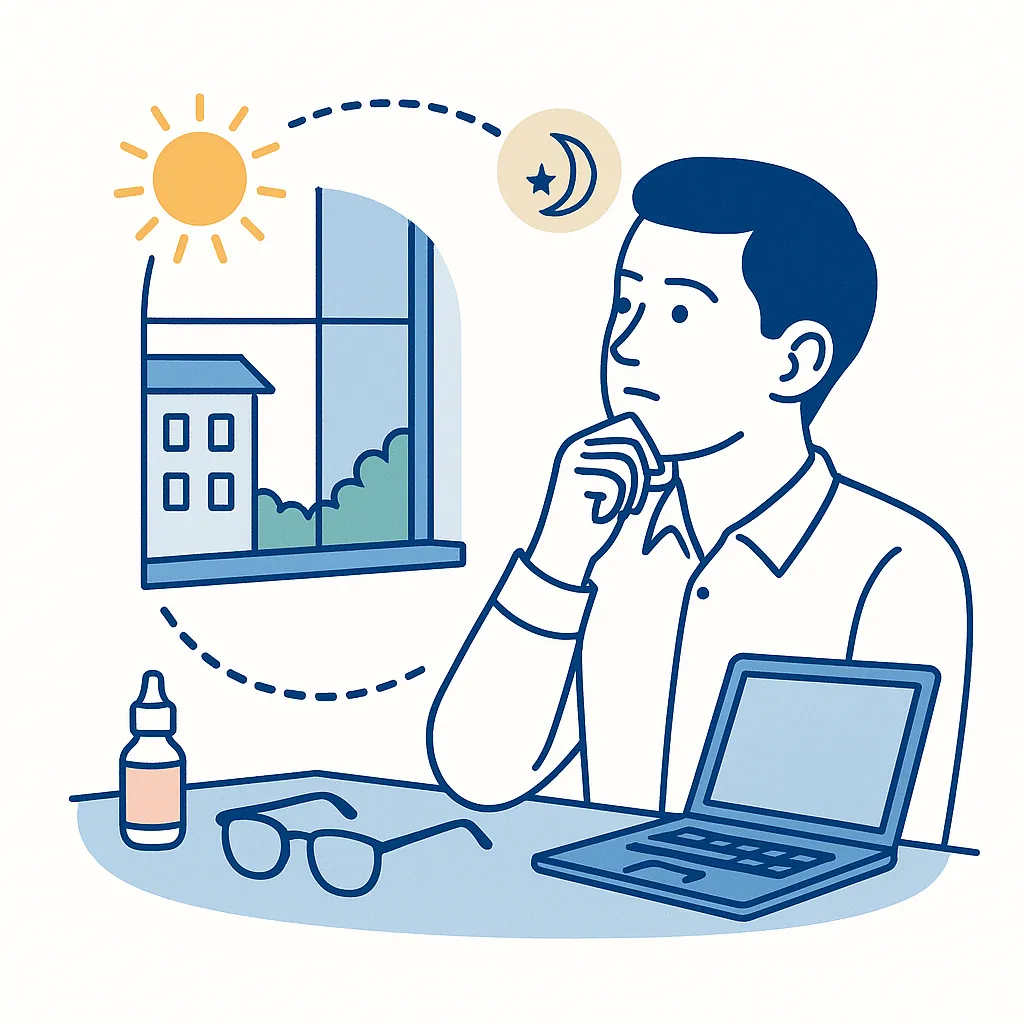
Create Visual Variety
The most powerful strategy is reintroducing variation into daily vision use.
Looking at different distances, shifting focus, and changing environments allow eye muscles to relax and reset.
Simple habits, practiced consistently, make a noticeable difference.
Optimize Eyewear for Real Life
Modern eyewear can be tailored to specific visual demands.
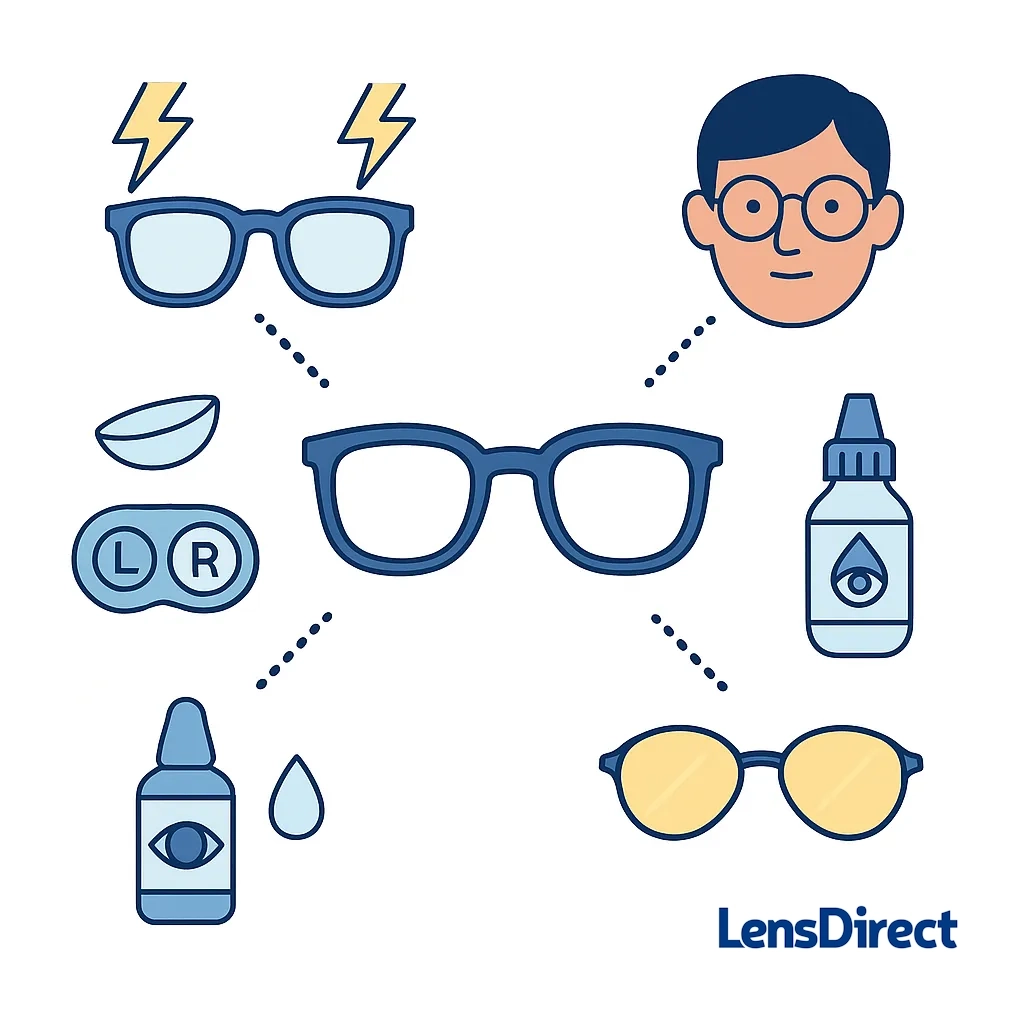
Lenses designed for screen-heavy tasks, extended wear comfort, or mixed-distance use reduce strain by supporting how eyes actually work throughout the day.
Ensuring prescriptions are current and appropriate for lifestyle needs is essential.
Adjust the Visual Environment
Small environmental changes often provide outsized benefits.
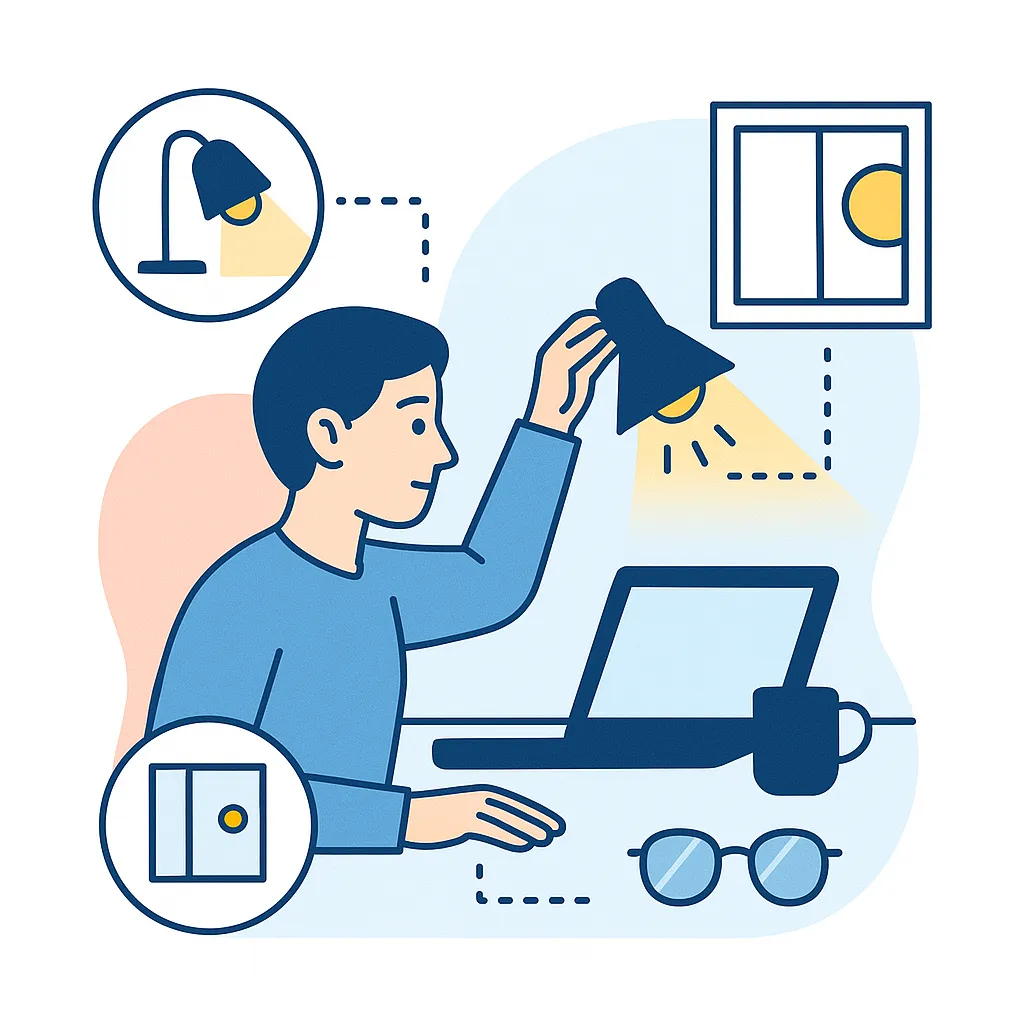
Adjusting screen height, reducing glare, balancing light sources, and minimizing harsh contrasts all reduce unnecessary visual effort.
Comfort improves when eyes are not constantly compensating for poor conditions.
Build Recovery into the Day
Vision recovery doesn’t require long breaks.
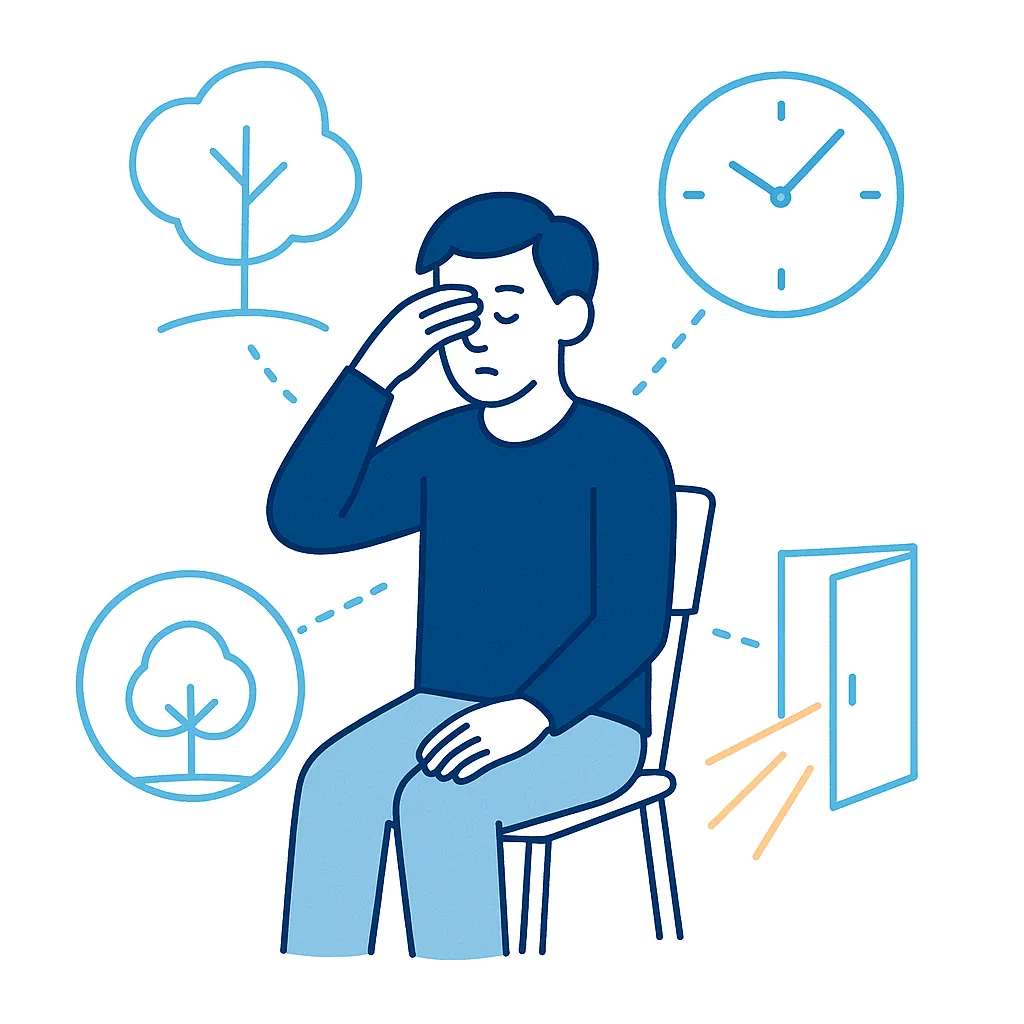
Short moments of distance viewing, closing the eyes briefly, or stepping into natural light can help reset visual systems.
Consistency matters more than duration.
Pay Attention to Wear Time
Wearing the same lenses from early morning until late at night may not serve eyes well.
Having options for different parts of the day supports comfort and reduces fatigue accumulation.
The Role of Modern Eyewear in Managing Fatigue
Eyewear in 2026 is increasingly designed around comfort, adaptability, and lifestyle alignment.
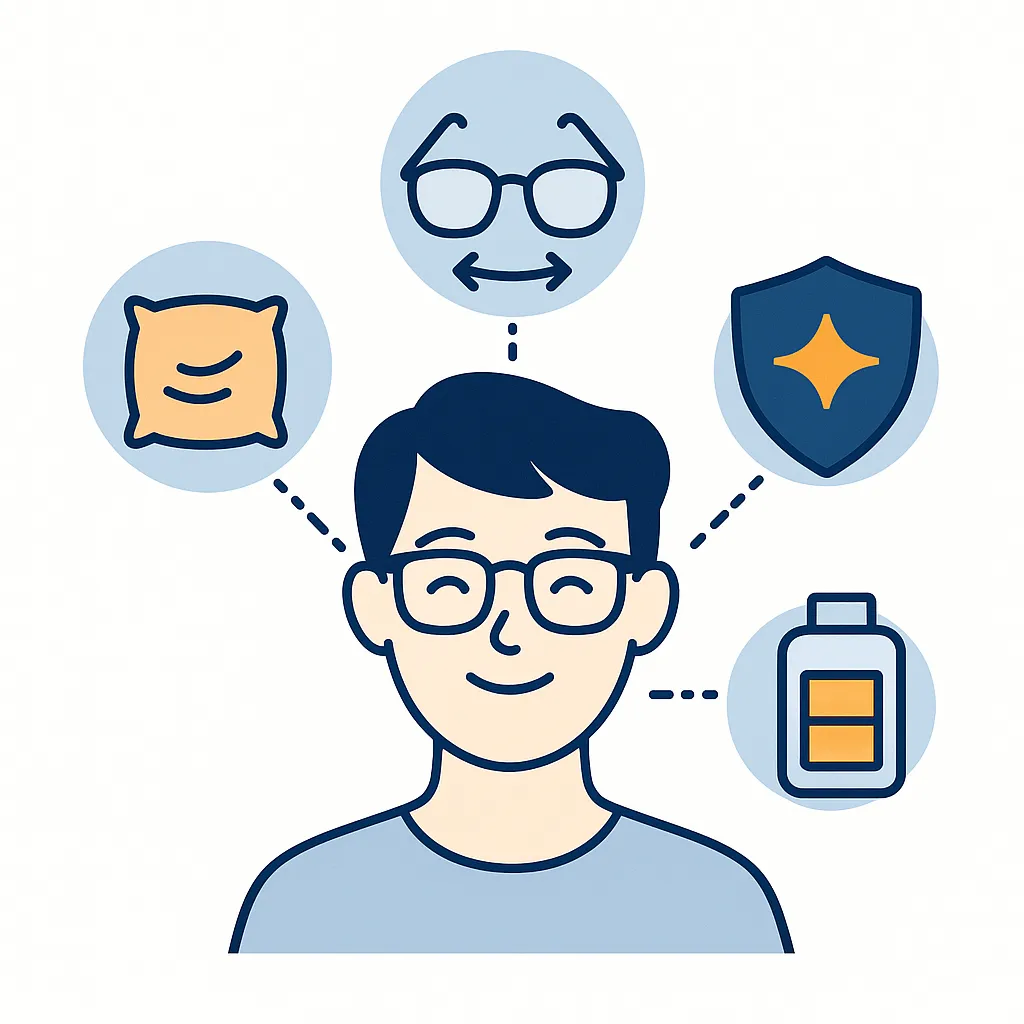
Rather than correcting vision alone, modern lenses aim to reduce effort and support endurance.
Lightweight frames, advanced lens designs, and coatings that manage glare and visual stress contribute to all-day comfort when chosen thoughtfully.
For many people, small upgrades in eyewear quality or fit result in noticeable improvements in how their eyes feel day to day.
Recognizing When Fatigue Is a Signal
Vision fatigue serves as feedback. It signals that eyes are working hard under sustained conditions. Listening to that signal early helps prevent discomfort from becoming chronic.
Rather than pushing through strain, adjusting habits and tools leads to better long-term comfort.
A Reassuring Path Forward
Feeling eye strain in 2026 does not mean something is wrong with your eyes. It means your vision is responding to modern demands.
The good news is that vision fatigue is manageable.
With small lifestyle adjustments, better-aligned eyewear choices, and increased awareness of visual habits, comfort can return.

Eyes are resilient when supported properly. By treating vision fatigue as a lifestyle signal rather than a diagnosis, it becomes easier to respond with confidence and clarity — restoring not just comfort, but trust in your daily vision again.
Author

Subscribe to our email newsletter to get the latest posts delivered right to your email.