

If you already wear monthly contacts for astigmatism, reordering can feel like a simple repeat purchase. In reality, it is one of the best moments to check whether your current lens still makes sense for your comfort, your budget, and your daily routine. A lens that seemed fine at first can feel very different by the last week of the month.
This guide is for shoppers who want a plain-English way to compare monthly toric lenses before buying again. You will learn what matters most, how to think about comfort and stability without getting lost in jargon, where monthly lenses can lose value, and how to make a smarter toric lens reorder with less guesswork.
Are there monthly toric lenses? Yes. Shoppers comparing monthly contacts for astigmatism usually mean Biofinity Toric, TOTAL30 for Astigmatism, Bausch + Lomb ULTRA for Astigmatism, ACUVUE VITA for Astigmatism, or AIR OPTIX plus HydraGlyde for Astigmatism. These are toric lenses that correct astigmatism, and the smartest reorder choice usually comes down to comfort, stability, handling, and routine.
What to compare before reordering monthly contacts for astigmatism
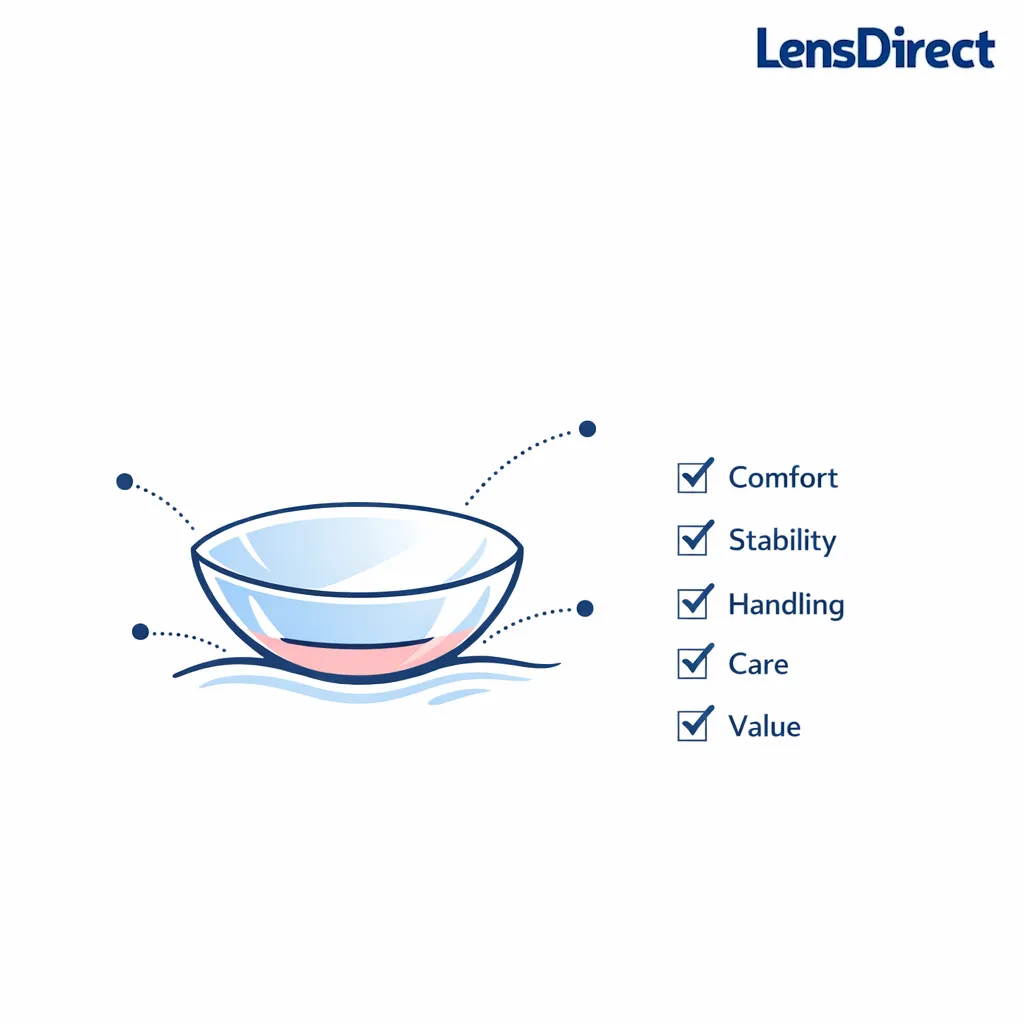
Before you reorder the same box again, compare the lens you wear now against the way you actually live. The right monthly contacts for astigmatism are not just the pair that works on day one. They are the pair you still like on a normal workday, after screen time, near the end of the replacement cycle, and during removal at night.
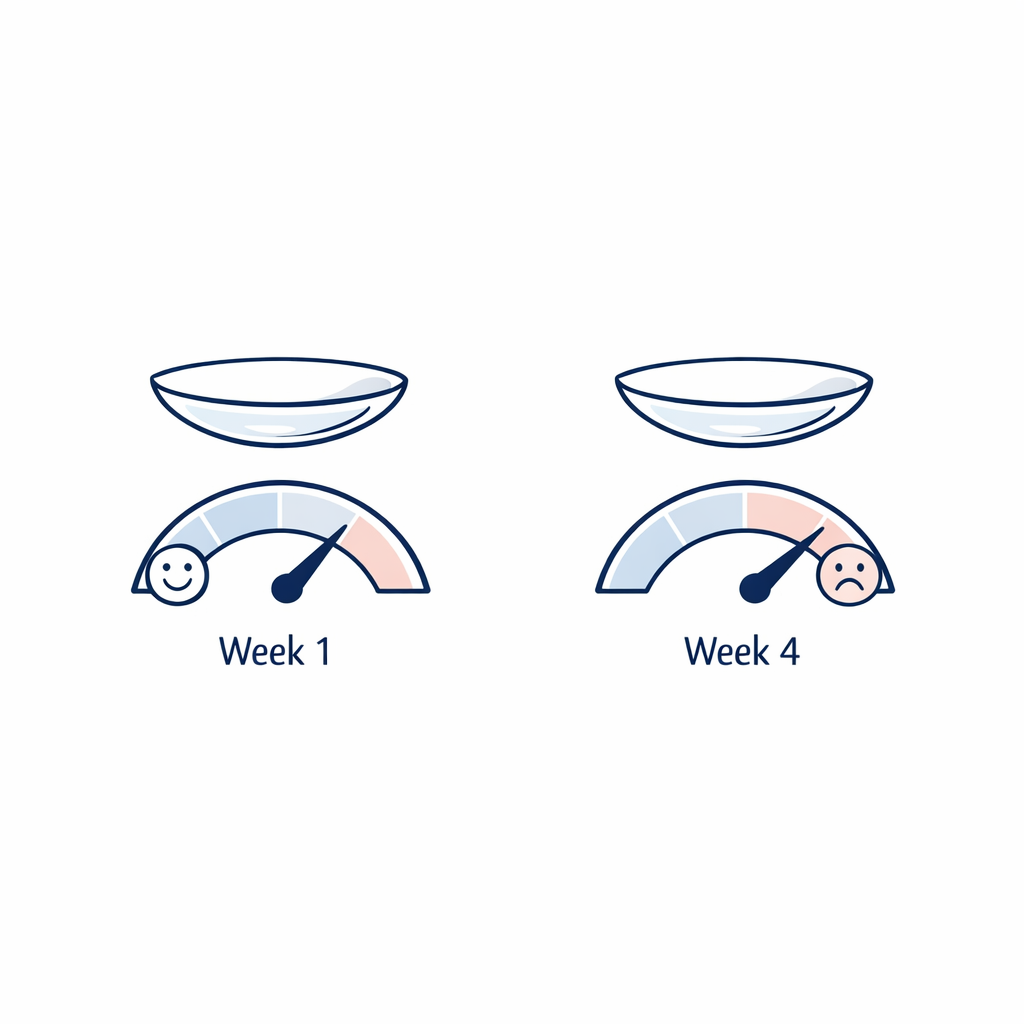
- Comfort through the month: Pay attention to how the lens feels in week three and week four, not just the first few wears.
- Stability: If your vision seems to “settle” after a blink or shifts during movement, that matters more in toric lenses than many shoppers expect.
- Handling: Some monthly toric lenses feel easier to insert, center, and remove than others, even when the prescription is similar.
- Care commitment: Monthly lenses only make sense if you are willing to keep up with cleaning, storage, and replacement habits every time you wear them.
- Value: Compare cost per month for both eyes, not just the price of one box.
Monthly toric lenses vs standard contacts
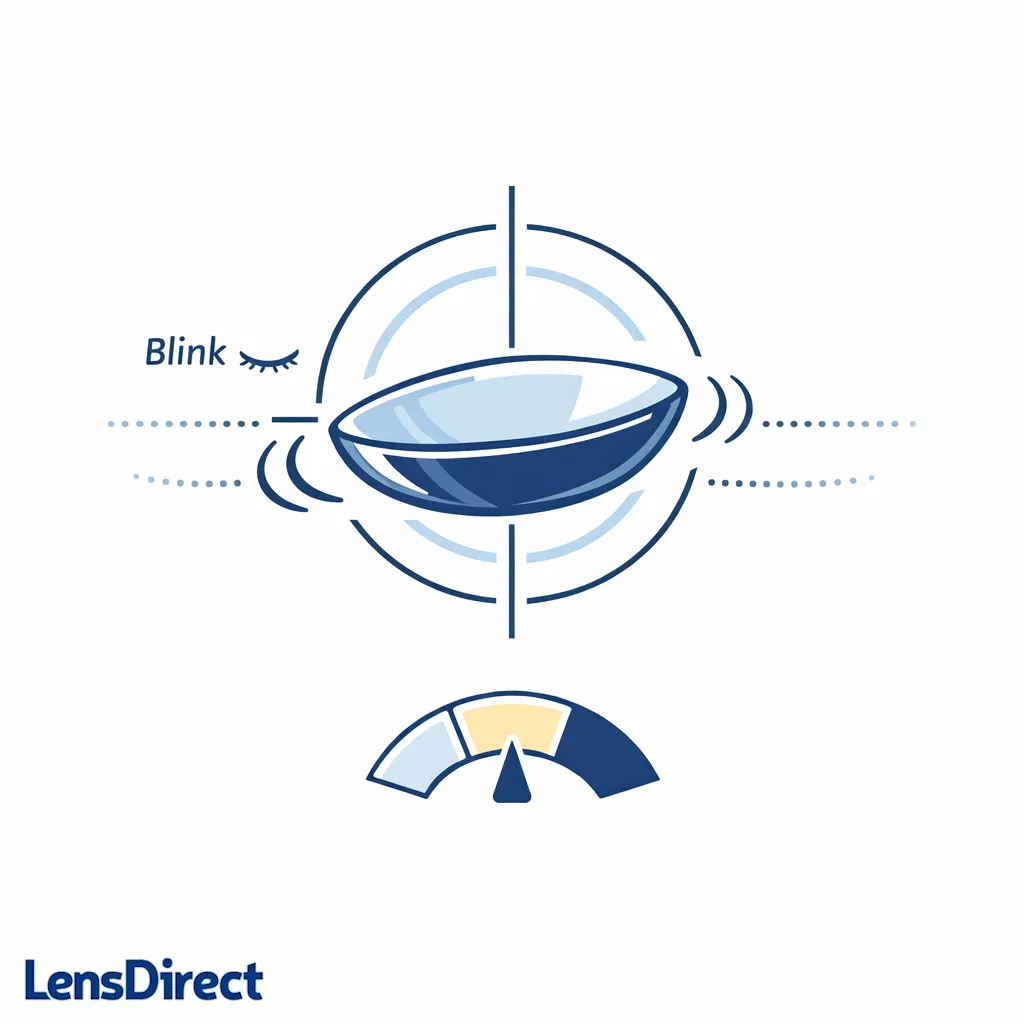
In shopping terms, monthly toric lenses are not just “regular contacts with a different name.” If your prescription is for astigmatism, the lens has to do more than feel soft. It also has to stay visually stable enough that your vision feels consistent during normal blinking, reading, commuting, and screen use.
That is why monthly toric lenses should be compared on two levels at once: how they feel and how steady they feel. A lens that seems inexpensive can still be the wrong pick if it moves around in a way you notice all day.
Why reordering the same lens is not always the best value decision
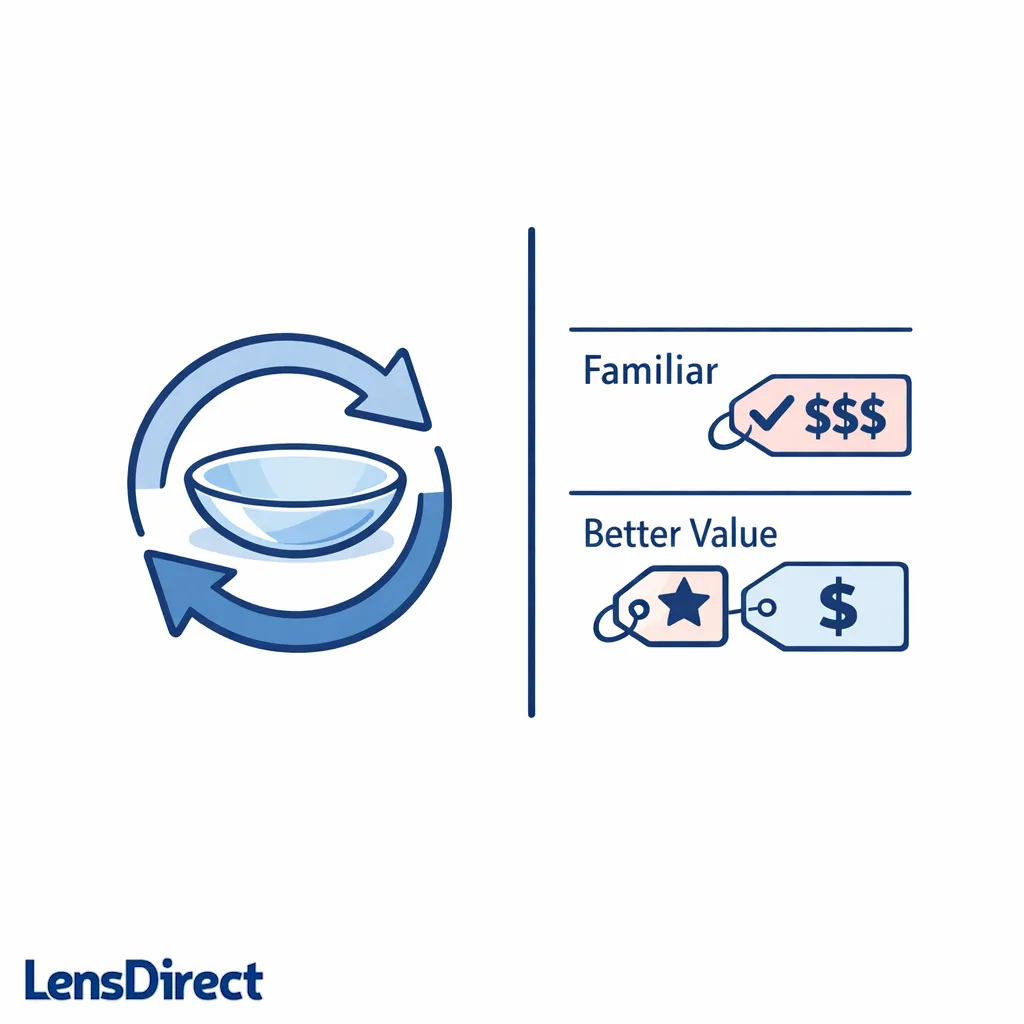
Many shoppers assume that if a lens is “good enough,” the safest move is to reorder it forever. Sometimes that is true. But if you have been tolerating dryness near the end of the day, struggling with insertion, or replacing lenses early because they stop feeling worth it, you may be paying for familiarity instead of value.
The better question is simple: would you choose this same lens again if you were deciding fresh today? If the answer is “maybe,” it is worth comparing monthly contacts for astigmatism more deliberately before you buy again.
Quick comparison of popular monthly toric lenses
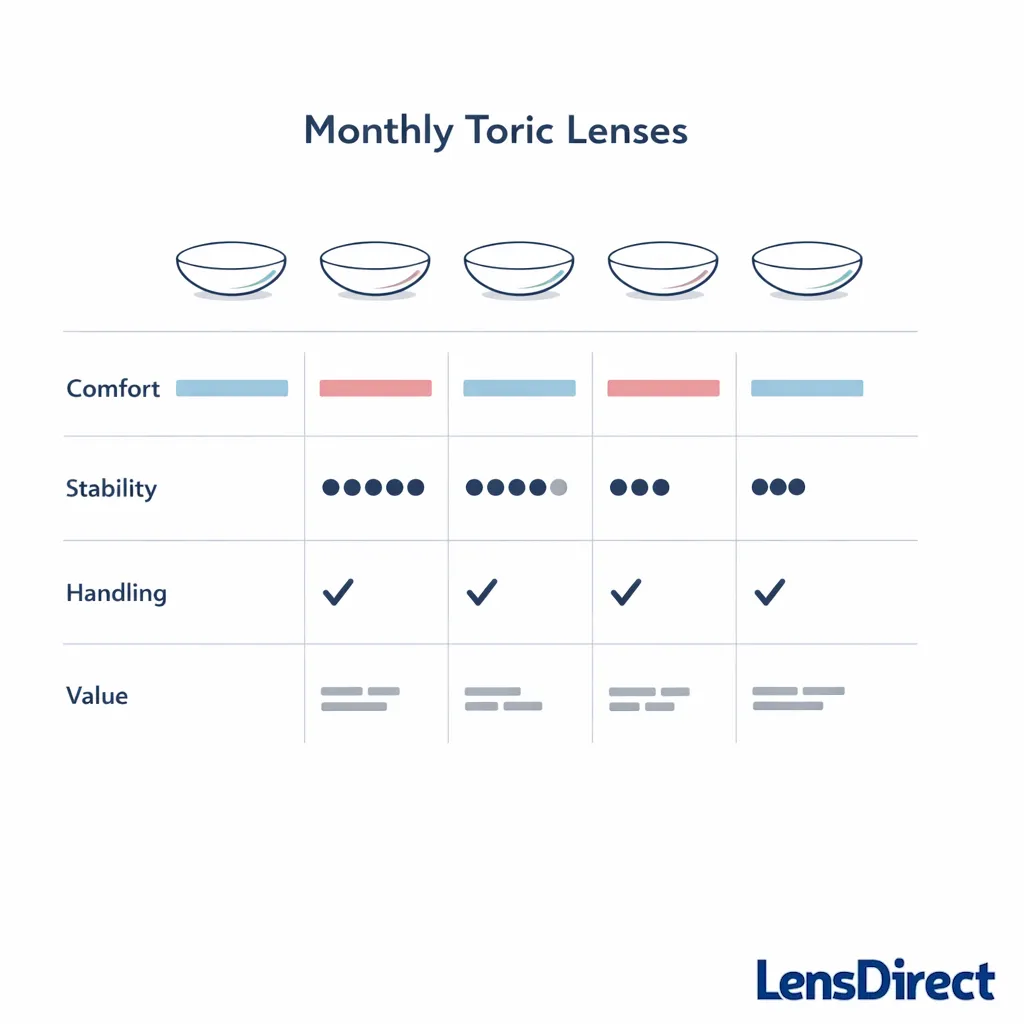
This is not a medical ranking. It is a shopper-first way to think about the monthly toric lenses people most often compare.
- Biofinity Toric: A strong benchmark if you want an all-around monthly lens to compare on comfort, ease of handling, and overall monthly cost.
- TOTAL30 for Astigmatism: Worth a closer look if your biggest concern is how the lens feels later in the month and you are open to paying more for that comparison.
- Bausch + Lomb ULTRA for Astigmatism: A practical option to evaluate if your days are screen-heavy and you notice end-of-day fatigue more than midday issues.
- ACUVUE VITA for Astigmatism: A useful comparison point if you want a lens that feels dependable for everyday wear and easy to judge across a normal month.
- AIR OPTIX plus HydraGlyde for Astigmatism: A good lens to compare if you care about predictable handling and how the lens feels after a long day.
When you build your own astigmatism contacts comparison, do not let brand recognition decide the outcome by itself. Use the brand names as a starting list, then compare each one against your real habits: how often you wear lenses, how sensitive you are to late-day dryness, and how disciplined you are with cleaning.
How monthly toric lenses differ by comfort and stability
Moisture and hydration technologies

Every major brand has its own language for comfort. Some talk about water, some talk about moisture retention, and some emphasize how the lens surface behaves over time. For most shoppers, the useful question is not which trademark sounds best. It is which lens still feels good by the time your day is actually hard on your eyes.
When you compare monthly toric lenses, think in moments. How do your eyes feel after four hours, after a full workday, in air conditioning, on a train, or during a long evening out? Those are better buying signals than a product page buzzword by itself.
Rotation control and stabilized vision
With monthly contacts for astigmatism, “comfort” and “vision” are not separate experiences. A lens can feel physically fine but still bother you if it takes too long to settle after insertion or if it feels less steady during blinking. That is why reorder shoppers should pay close attention to how calm their vision feels, not just how soft the lens feels.
If you notice occasional blur that clears quickly, make a note of when it happens. That pattern can help you compare monthly toric lenses more intelligently than simply remembering whether you “liked” the box.
End-of-day screen comfort

Screen-heavy days expose weak points fast. Some lenses feel fine in the morning but start to feel dry, filmy, or harder to ignore late in the day. If you work at a computer, drive often, or spend long hours indoors, your best monthly contacts for astigmatism may be the ones that feel least annoying at 8 p.m., not the ones that feel most impressive at 10 a.m.
Also judge removal, not just wear. A lens that is frustrating to remove night after night can wear down your patience and make a lower sticker price feel less valuable over time.
Popular monthly toric options to compare
Biofinity Toric
If Biofinity Toric is your current lens, use it as your baseline. Ask whether it still feels worth reordering at full price, whether insertion is consistently easy, and whether week-four comfort is acceptable or merely tolerable. If you keep coming back to it because it is familiar, make sure familiarity is not the only thing it is winning on.
TOTAL30 for Astigmatism
TOTAL30 for Astigmatism is the kind of lens shoppers usually compare when month-end comfort is the main issue. If your current monthly toric lens starts strong but feels less pleasant as the month goes on, this is the comparison to make. Pay special attention to whether the extra spend translates into a noticeably better everyday experience for you.
Bausch + Lomb ULTRA for Astigmatism
This is a strong option to compare when your day revolves around laptops, phones, and indoor air. If your vision is workable but your eyes feel tired or your lenses become more noticeable as the day goes on, test your thinking around late-day comfort rather than first-hour comfort. That is where the reorder decision usually becomes clear.
ACUVUE VITA for Astigmatism
ACUVUE VITA for Astigmatism is a useful comparison if you want an everyday lens that feels straightforward to live with. When deciding whether to reorder, focus on consistency. Did it behave the same way on office days, casual days, and longer days out, or did it perform well only under ideal conditions?
AIR OPTIX plus HydraGlyde for Astigmatism
Compare this option if your biggest question is how the lens handles real life over long days. For many shoppers, the useful test is not whether the lens is exciting. It is whether it remains easy to wear, easy to remove, and easy to trust without becoming irritating as the month progresses.
Cost and value considerations before you reorder
Box size and supply length
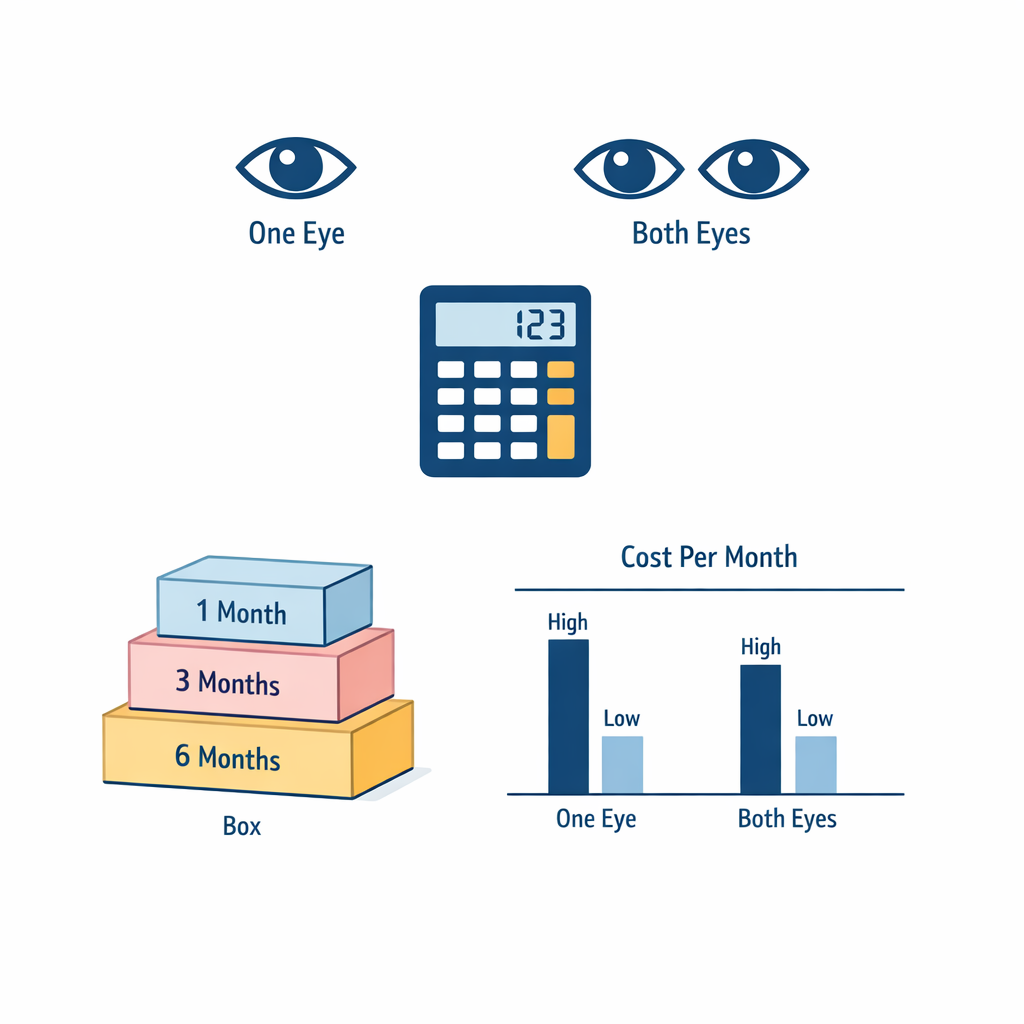
Monthly lens cost can be misleading when you compare by box instead of by month. Always translate the purchase into supply length for both eyes. If one reorder gives you fewer months than it first appears, the cheaper box may not actually be the cheaper choice.
This matters even more with toric contact lenses monthly because left and right eye prescriptions often differ. Your real cost is what it takes to keep both eyes covered on schedule, not what a single product card shows at first glance.
Rebates, subscriptions, and annual-supply savings
Promotions can change the math quickly. A lens that looks expensive at list price may become competitive once you factor in current deals, subscription savings, or a larger reorder. The practical move is to compare your likely total today, not the number you vaguely remember paying last year.
If you buy toric contacts online, make a note of the final out-of-pocket total and the supply length it buys. That single habit makes astigmatism monthly contacts much easier to compare honestly.
When a lower price is not the best overall value
A lower price is not better value if you dislike the routine that comes with the lens. If the lens feels annoying by the end of the day, makes insertion harder than it should be, or tempts you to replace it early, you are not getting the value you thought you were getting.
How much are monthly toric lenses? The honest answer is that the total varies by brand, seller, box size, and current promotion. The smarter comparison is cost per month for both eyes, matched against how well the lens performs for you over the full replacement cycle.
Handling, cleaning, and replacement schedule

Monthly lenses ask more of you than daily disposables. Under the CDC’s contact lens care guidance, reusable lenses need consistent cleaning, safe storage, and fresh solution habits. If that routine already sounds like friction, that is not a minor detail. It is part of the buying decision.
30 days vs 30 wears
A common mistake is mentally treating a monthly lens like something you can stretch because you did not wear it every single day. That mindset usually leads shoppers to judge value the wrong way. A better rule is to follow the replacement rhythm you were given, rather than trying to squeeze extra life out of the box.
Nightly removal and cleaning expectations
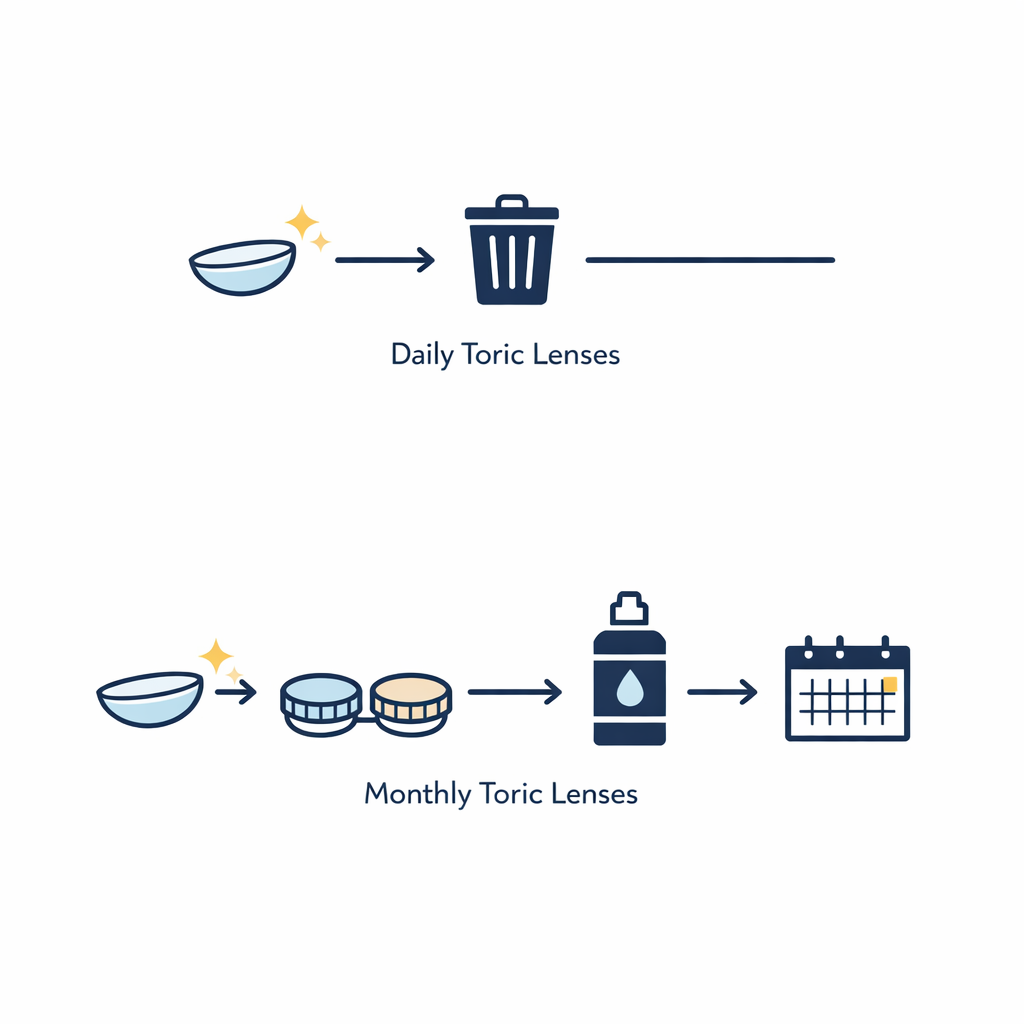
If you want the easiest possible lens routine, monthly toric lenses may not be your favorite format. They ask you to remove, clean, store, and reinsert the same pair again and again. For some shoppers, that is completely worth it. For others, it is the reason daily toric lenses feel simpler and more realistic.
When to replace instead of stretching wear time
If a lens feels off, looks damaged, or keeps reminding you that it is there, do not try to “get your money’s worth” by pushing it further. That is the point where value and comfort stop lining up. If the pattern keeps happening, bring it up with your optometrist before your next reorder.
Daily vs monthly contacts for astigmatism
Who may prefer monthly toric lenses
Monthly toric lenses usually appeal to shoppers who wear contacts regularly, want fewer reorder events, and do not mind a reusable-lens routine. They can also make sense if you are cost-conscious and disciplined enough to care for lenses properly every time.
In other words, monthly is often the better match for consistent wearers with consistent habits. If that describes you, monthly contacts for astigmatism may still be the most practical choice.
When daily toric lenses may be easier
Daily toric lenses may feel easier if you travel often, wear lenses inconsistently, dislike cleaning steps, or simply want the most convenient routine possible. They can also be easier to stick with if you know you are not the type of person who enjoys managing cases, solution, and replacement reminders.
Are monthly lenses better for astigmatism? Not automatically. The better option is the one that fits your prescription, your routine, and your likelihood of following the care steps correctly.
Common mistakes and misconceptions
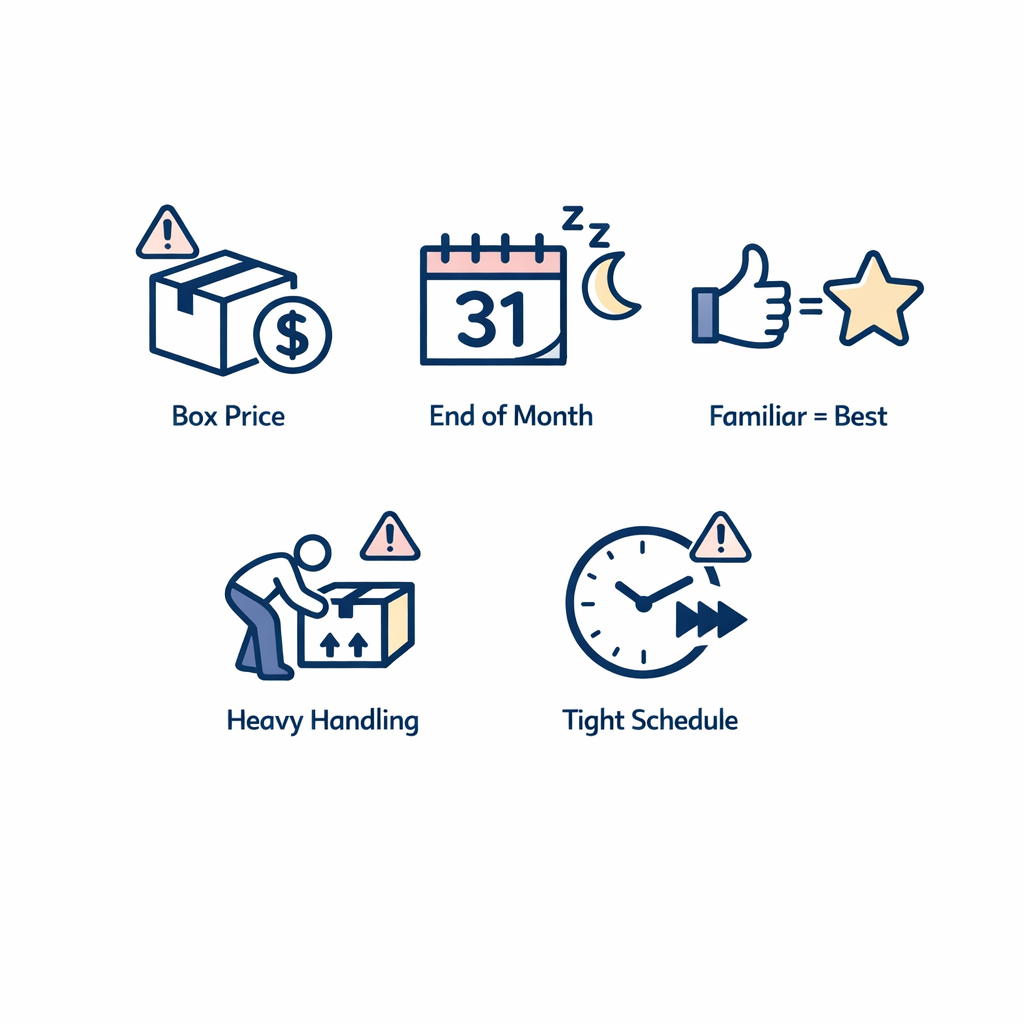
- Buying on box price alone: The cheapest-looking box is not always the best monthly lens cost once you work out supply length for both eyes.
- Ignoring week-four performance: If a lens feels great only at the beginning of the cycle, that matters.
- Confusing “familiar” with “best”: A lens you have always reordered is not automatically the lens you would choose today.
- Underestimating handling: Insertion and removal are part of comfort. If the lens is frustrating to deal with, that should count.
- Stretching the schedule for value: Trying to squeeze more time out of a monthly lens often turns a decent value into a poor experience.
FAQ
Are there monthly toric lenses?
Yes. If you are shopping monthly contacts for astigmatism, you are already in that category. The real decision is which monthly toric lens best matches your comfort, stability, routine, and budget.
Are monthly lenses better for astigmatism?
Not by default. Monthly lenses are better only when they suit the way you wear contacts and the way you care for them. For some people, daily toric lenses are the easier and more dependable fit.
What are the disadvantages of monthly contacts?
The biggest tradeoffs are maintenance and discipline. Monthly lenses ask more of you each night, and they lose value fast if you dislike cleaning, forget replacement timing, or end up replacing pairs early because they no longer feel worth wearing.
How much are monthly toric lenses?
Prices vary, so compare cost per month instead of headline box price. Include both eyes, current promotions, and how long the purchase actually lasts. That gives you a much clearer answer than looking at one product card in isolation.
Can you get monthly contact lenses for astigmatism?
In many cases, yes. The right place to start is your current prescription and fitting, then compare monthly toric options based on real-life wear, not marketing language alone.
What to do next
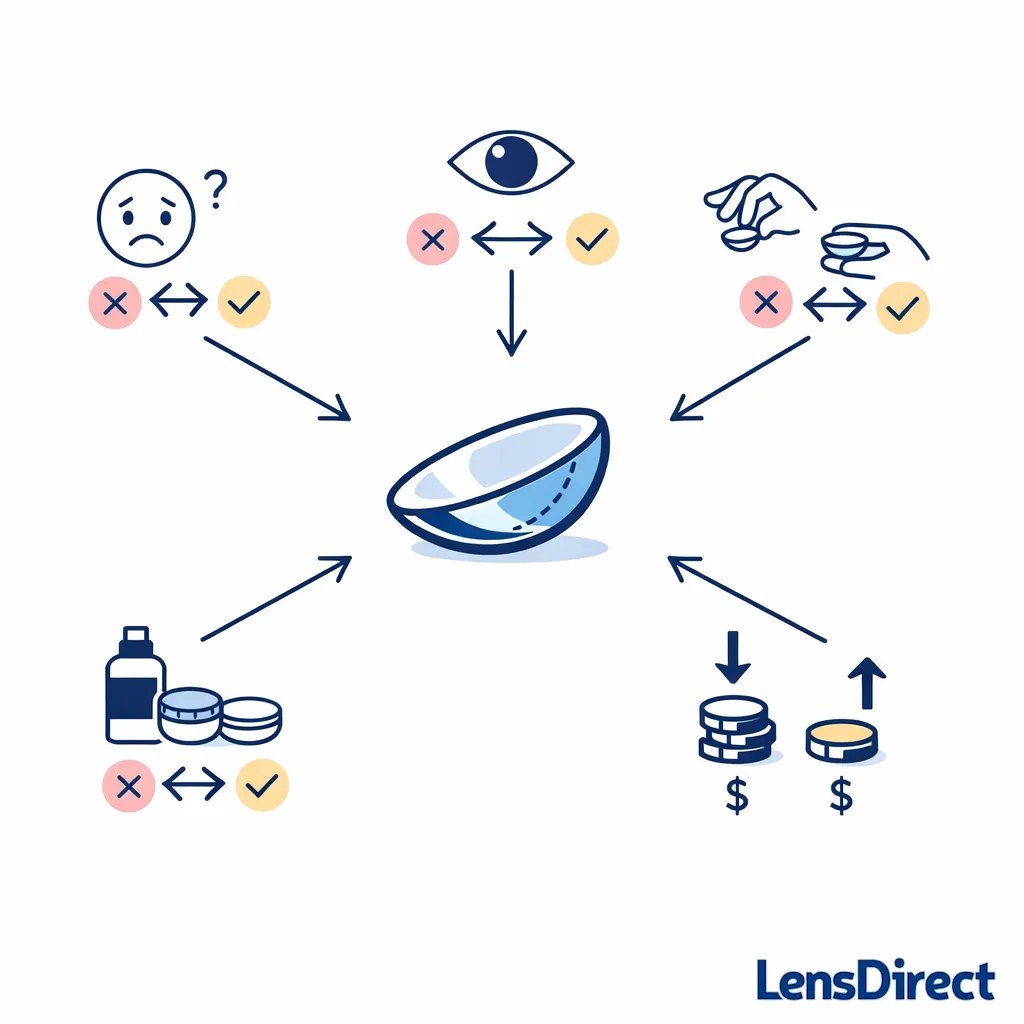
- Review your current lens honestly: Think about week-four comfort, stability, and removal, not just whether the lens is “fine.”
- Compare by cost per month: Work out the real supply length for both eyes before deciding which astigmatism monthly contacts offer the best value.
- Match the lens to your routine: If you dislike cleaning steps, factor that in before you reorder.
- Use your prescription, not guesswork: Under the FTC’s Contact Lens Rule, sellers need a valid prescription to dispense contact lenses, so check that yours is current before ordering.
- Ask your optometrist if something has changed: New discomfort, unstable vision, or repeated frustration are good reasons to get input before switching.
Compare your next reorder with LensDirect
If you are ready to shop monthly contacts for astigmatism, LensDirect can help you compare options without turning the process into a full research project. Start with Shop Contacts if you already know what you want, or keep your eyewear setup flexible with Shop Glasses and Shop Sunglasses for backup and everyday wear.
If you are trying to stretch value, it is also worth checking Learn How to Get Reimbursed by Your Insurance. And if you are updating your overall eyewear setup while you compare contacts, Find Your Fit can help you narrow down frames that make sense for your face shape and daily routine.
Author

Subscribe to our email newsletter to get the latest posts delivered right to your email.