
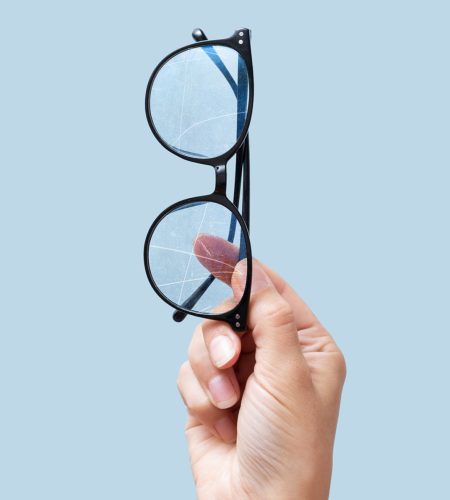
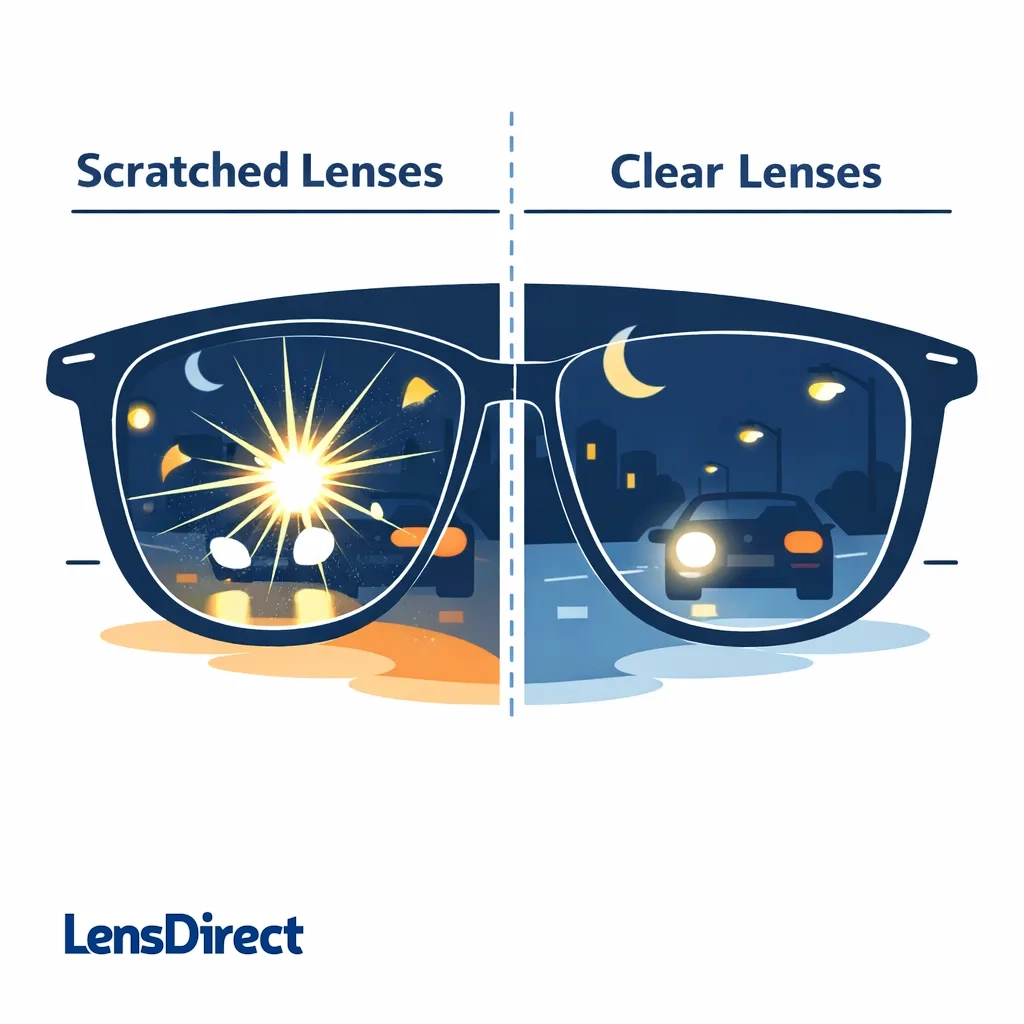
A tiny scratch on your glasses can feel like no big deal — until you step outside at night and every headlight blooms into a starburst, or your screen glare suddenly looks twice as intense.
Scratches don’t just look bad.
They can scatter light, reduce contrast, and create visual “noise” that makes your eyes work harder all day.

So what’s the move when your lenses get scratched: try to fix them, or replace them?
Here’s the honest answer: most scratches on modern prescription lenses can’t be truly “repaired” at home without risking more damage — especially if the lenses have coatings (anti-reflective, blue-light filtering, photochromic, mirror, etc.).
But there are a few situations where you can improve things, plus clear signs that replacement is the smarter (and safer) choice.
Let’s break it down.
First, figure out what kind of “scratch” you’re dealing with
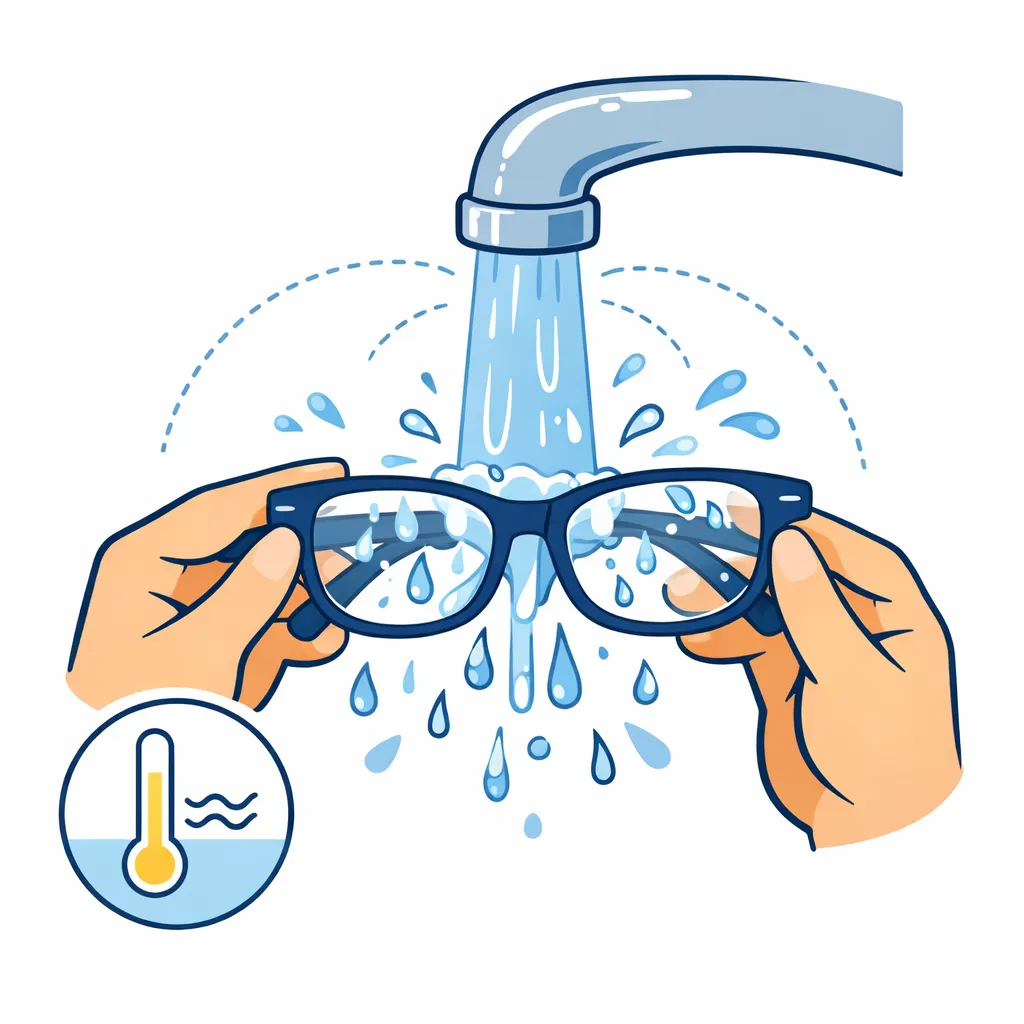
Not all marks are the same. Before you do anything, clean your lenses properly:
- Rinse lenses under lukewarm water (to remove grit).
- Use a drop of lotion-free dish soap.
- Rub gently with clean fingers.
- Rinse again and dry with a clean microfiber cloth.
A lot of “scratches” turn out to be oil smears, dried cleaner, or microfiber lint.
Once they’re clean, identify what you’re seeing:
1) Hairline surface marks (“sleeks”)
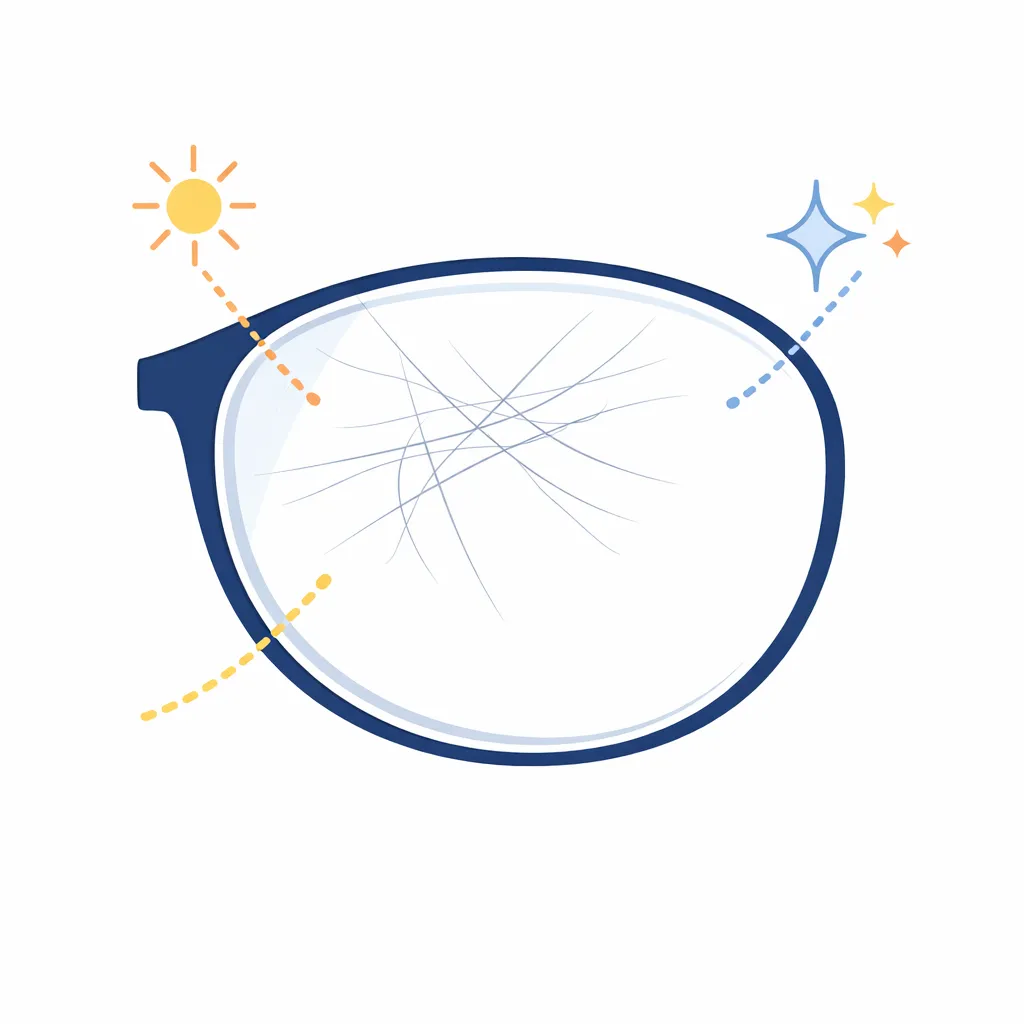
These are the faint, spiderweb-like lines you notice under bright light.
They often come from dry-wiping lenses, paper towels, or dusty cloths.
Impact: Mild to moderate glare, especially at night.
2) A deep scratch or gouge
You can often feel it if you lightly run a fingernail across it (don’t press hard).
If your nail catches, it’s likely deep.
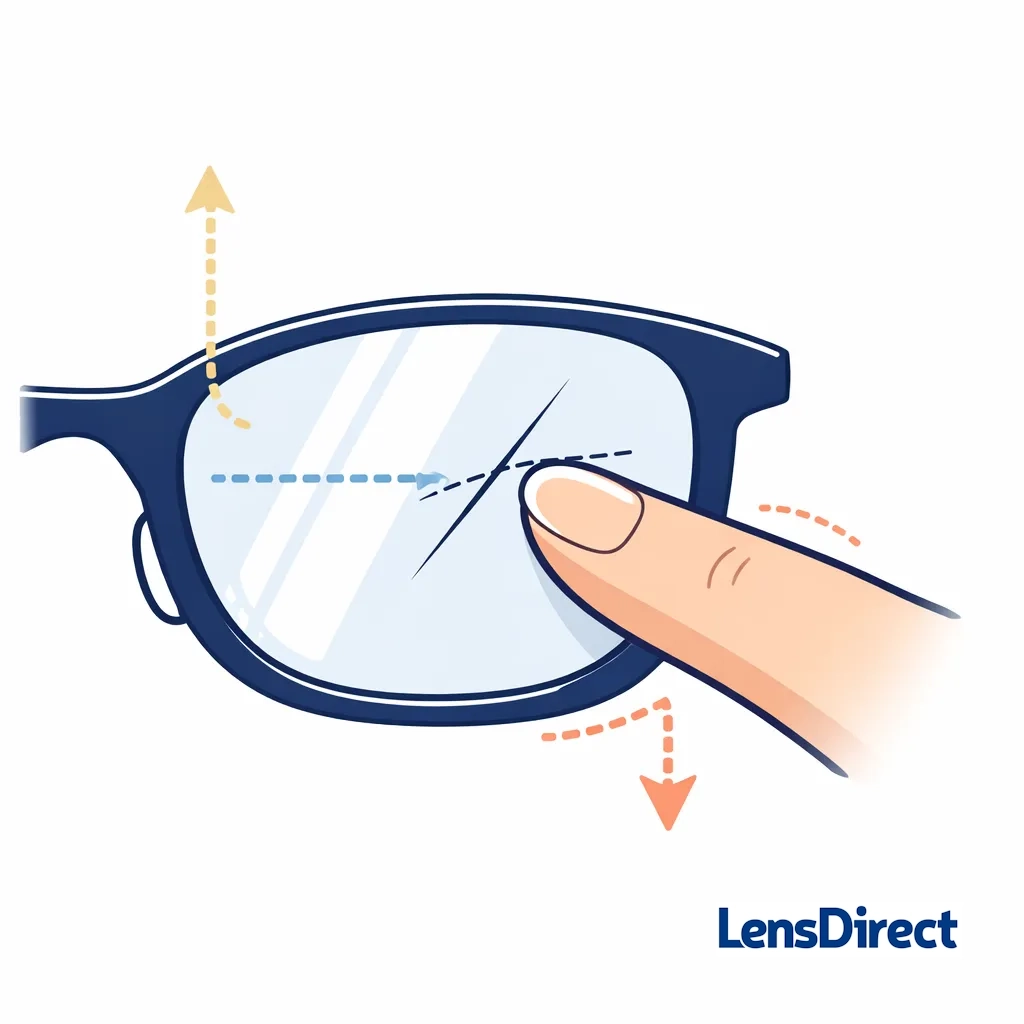
Impact: Distortion, a sharp glare line, and it often sits right in your visual field.
3) Coating damage (not a scratch in the lens)
This can look like:
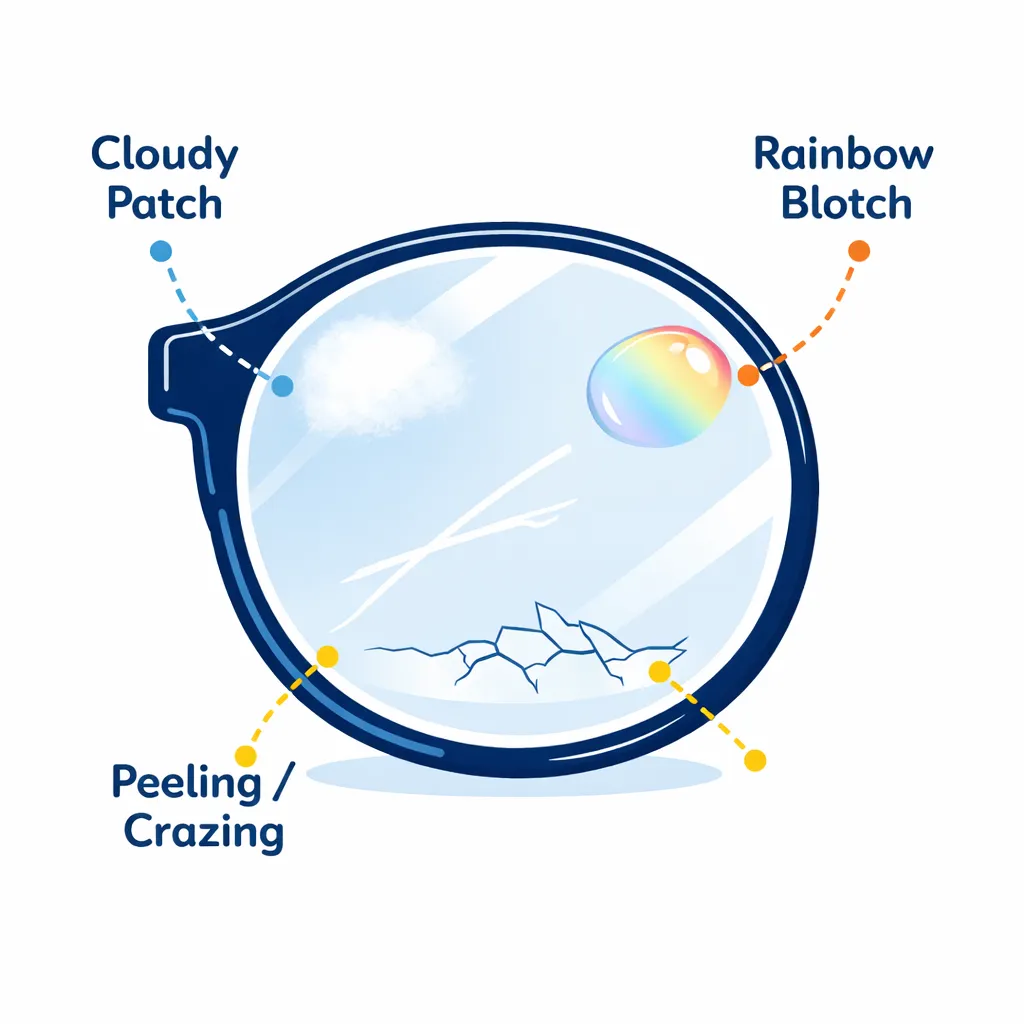
- cloudy patches
- rainbow-like blotches
- peeling or crazing (tiny crackle patterns)
- areas that won’t “clean off”
Impact: Haze, glare, and reduced clarity — even if the lens itself isn’t deeply scratched.
Can you actually fix scratched lenses?
The realistic truth about most lenses
Most prescription lenses today are made from plastics like CR-39, polycarbonate, Trivex, or high-index materials, and they usually have one or more coatings. When they scratch, one of two things happened:
- The coating got damaged, or
- The lens material got gouged, meaning actual material is missing.
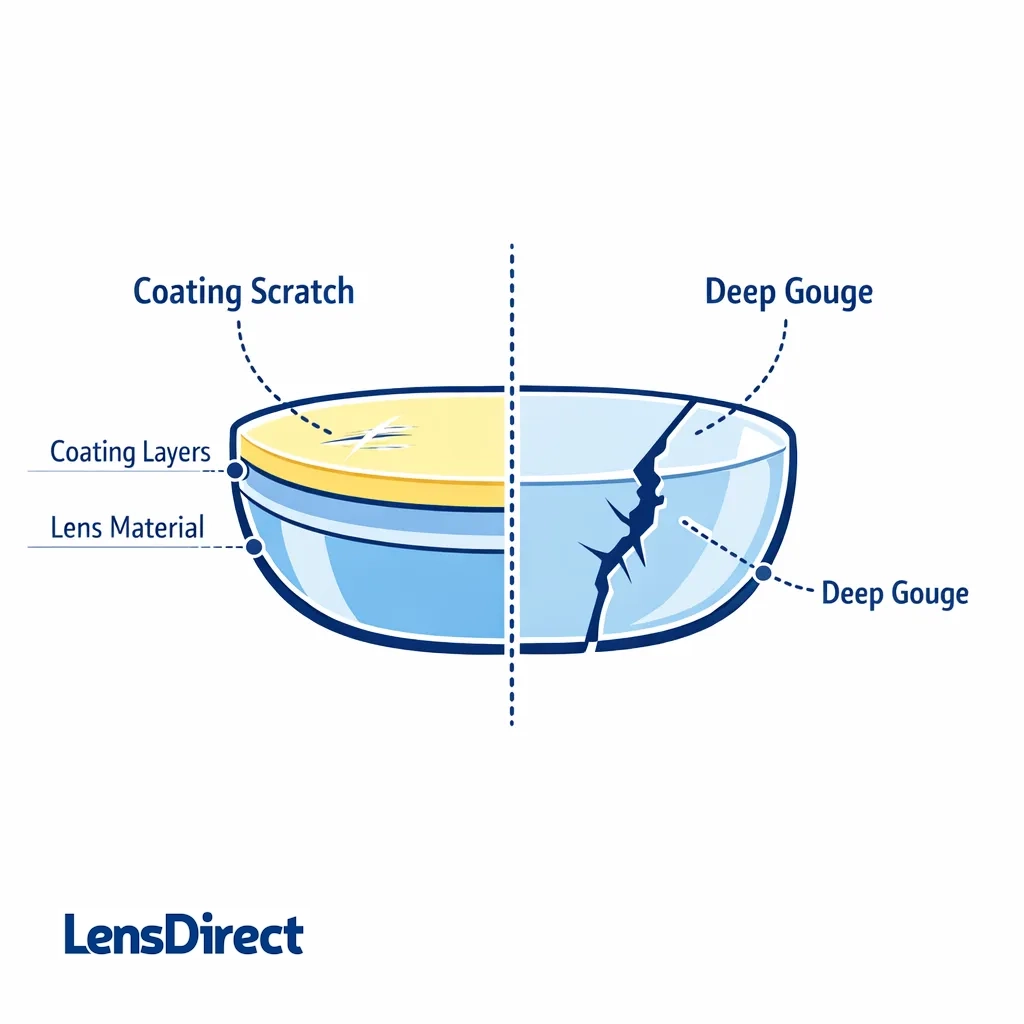
In either case, “fixing” is hard because:
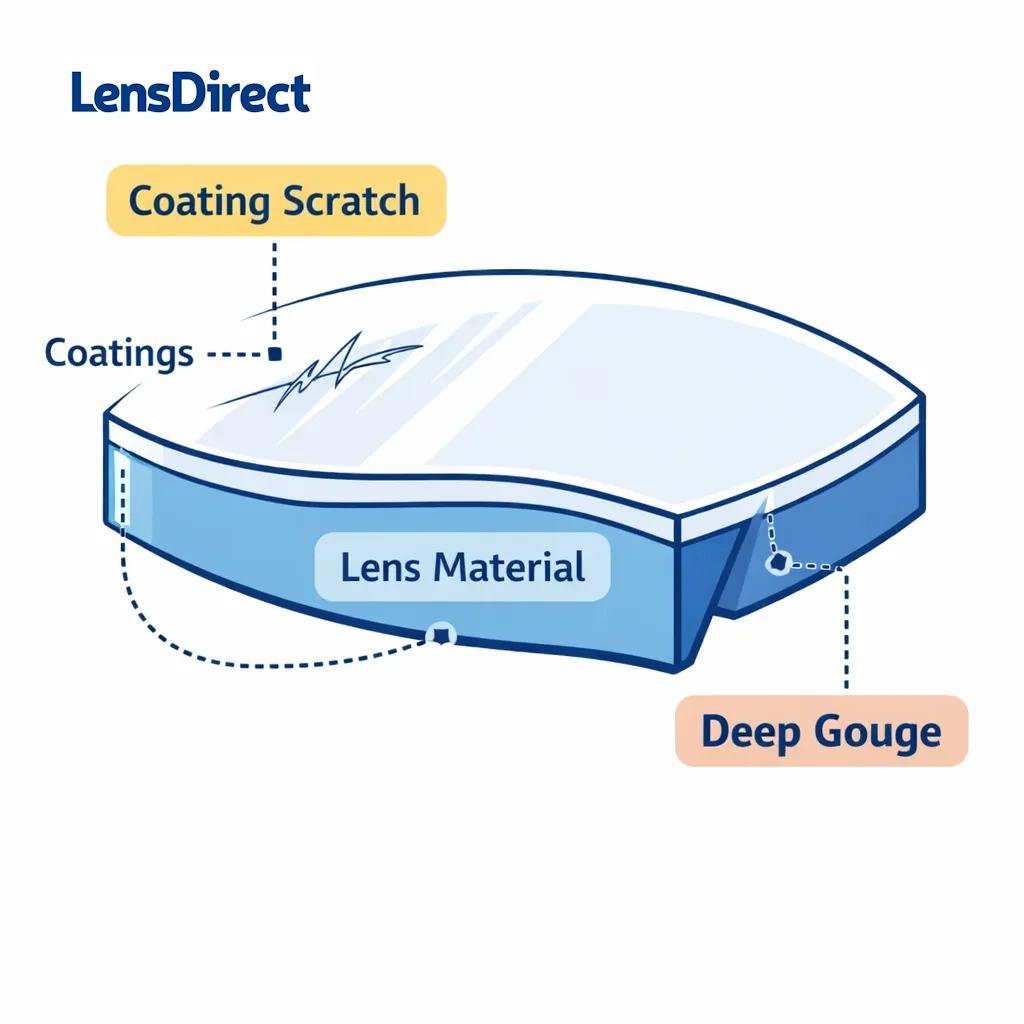
- Coatings can’t be re-applied at home. Once an anti-reflective or hard coat is scratched/peeled, DIY methods often remove more coating and make it worse.
- Polishing removes material. If you sand/polish a plastic lens enough to reduce a scratch, you can create a warped spot that changes how light passes through — basically introducing distortion.
What about professional polishing?
Professional polishing is rarely recommended for plastic prescription lenses, because even a small change in curvature can affect your vision. In practice, most optical shops will recommend replacement instead.
Glass lenses (less common today) can sometimes be professionally polished, but it’s specialized, and it still may not be worth the cost.
The DIY “scratch fix” methods you’ve seen online — do they work?
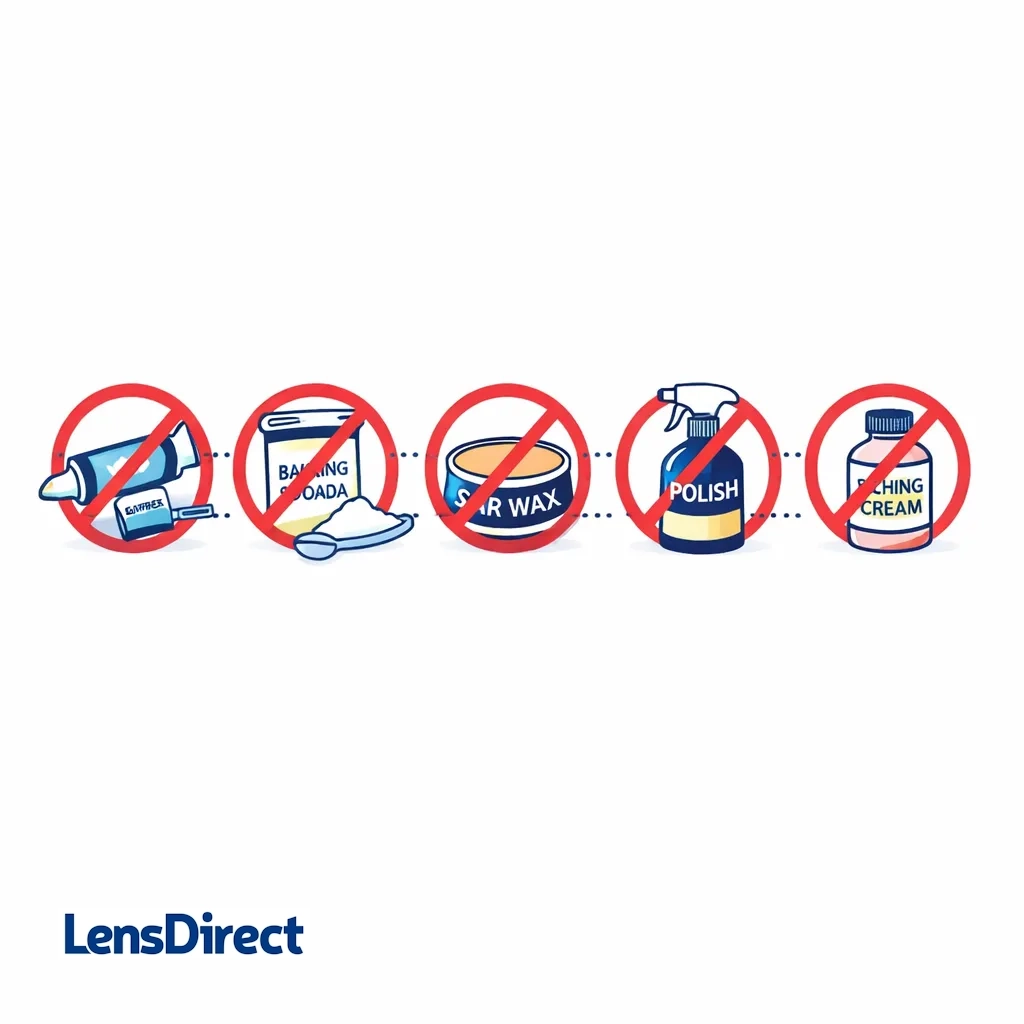
You’ve probably seen hacks like toothpaste, baking soda paste, car wax, furniture polish, or even glass etching creams. Here’s what’s going on:
Why these tricks sometimes seem to work
Some products can temporarily fill in micro-scratches or reduce the contrast of light surface marks.
That can make scratches look less obvious in certain lighting.
The big problem: they can permanently damage your lenses
Many DIY methods are risky because they can:
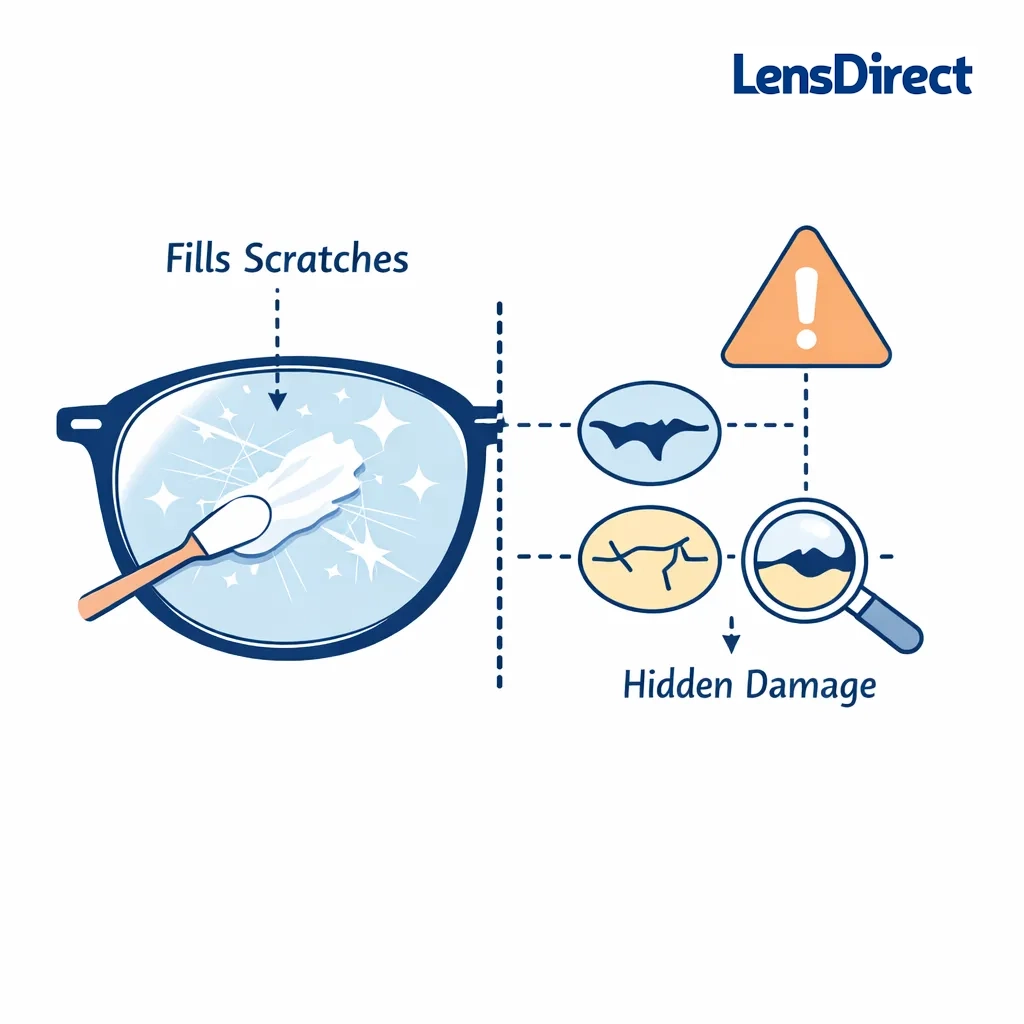
- strip anti-reflective (AR) coatings
- create haze or cloudiness
- grind more micro-scratches into the surface
- weaken scratch-resistant layers
- leave residue that smears and attracts dirt
Toothpaste and baking soda are abrasives. They may reduce a scratch… by adding a bunch of tiny scratches around it.
Waxes and polishes can leave a film that changes how your lenses handle glare and can be annoying to clean off (and can cause more wiping = more wear).
Etching creams are especially risky. They’re not intended for modern coated prescription lenses, and they can cause irreversible damage.
If your lenses have any kind of premium coating (AR, blue-light, photochromic, mirrored, etc.), DIY fixes are very likely to backfire.
When replacement is the better choice (most of the time)
If you’re on the fence, use this checklist. If you hit any of these, replacing your lenses is usually the best move:
Replace your lenses if…
- The scratch is in your main line of sight (center area of the lens).
- You notice distortion (objects look slightly warped, stretched, or “wavy” near the scratch).
- Night driving glare is worse (starbursts, halos, streaks).
- You get more headaches or eye fatigue since the scratch appeared.
- The coating is peeling, clouding, or crazing (that’s not fixable with cleaning).
- There are multiple scratches, even if each one is “small.”
- The lens is cracked or chipped. This is a safety issue — replace immediately.
- You’re in a high prescription (small lens changes can have bigger visual impact).
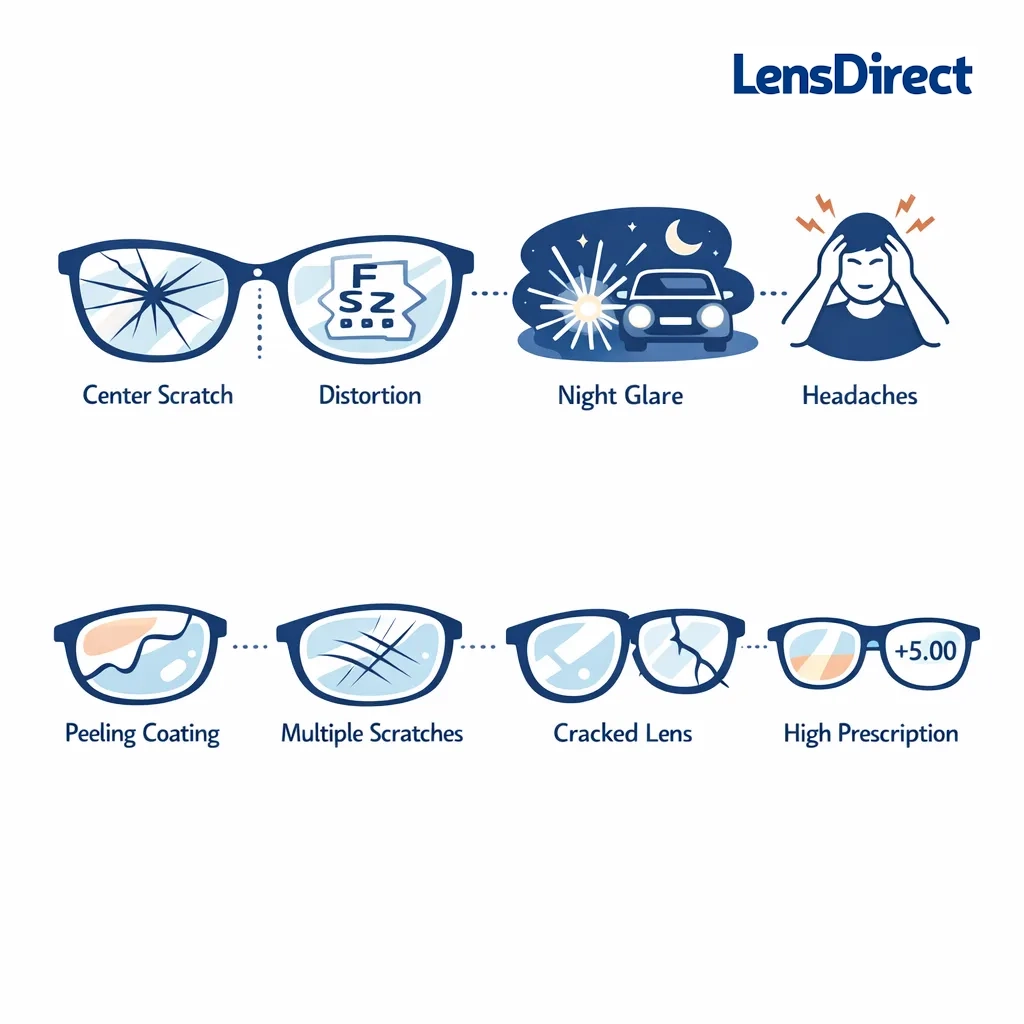
In general, if the scratch affects your vision in real-world situations — driving, screens, bright sunlight — replacement beats living with it.
Replace lenses only vs. replacing the whole pair
Good news: you don’t always need entirely new frames.
Option 1: Replace the lenses, keep the frames
This can be ideal if:
- your frames fit well and you like them
- the frames are still in great shape (hinges tight, no cracks)
- you want an affordable refresh
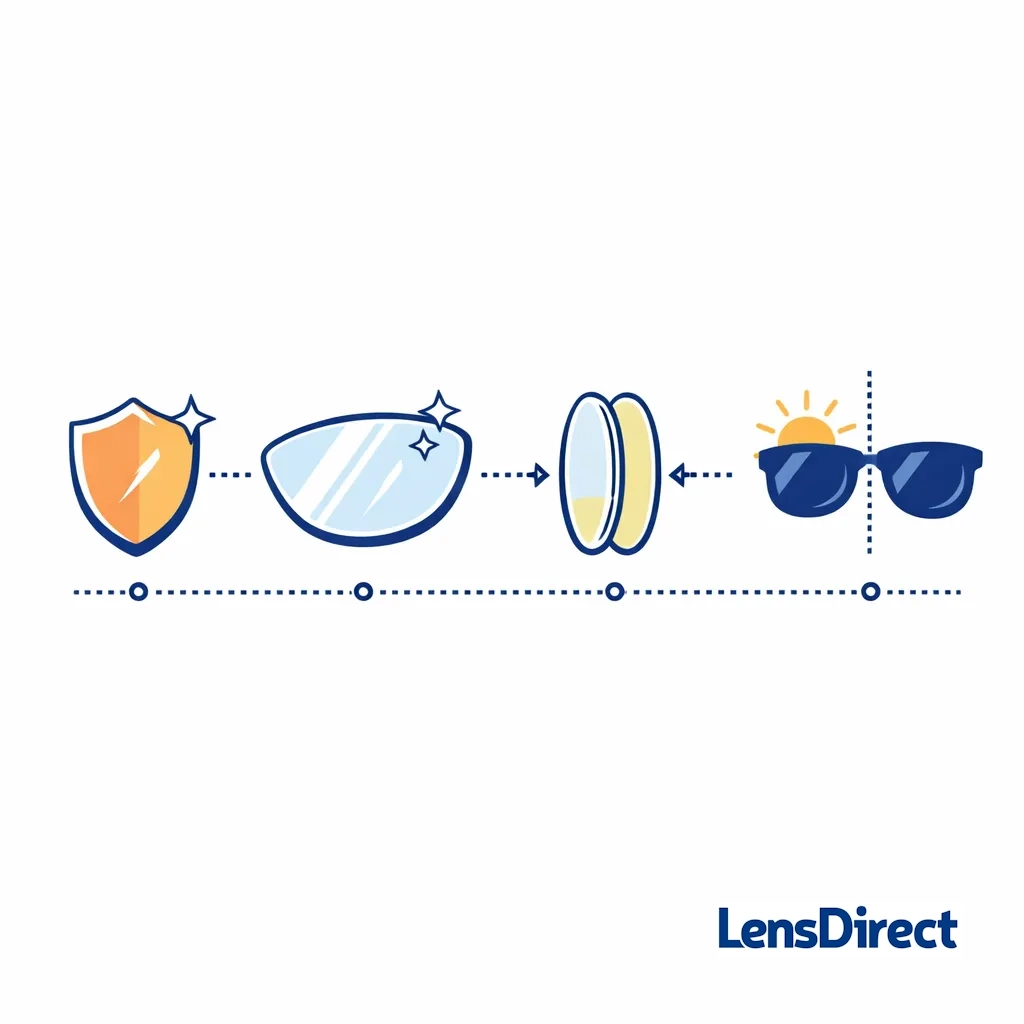
If you go this route, it can be a good moment to upgrade to:
- a stronger scratch-resistant coating
- anti-reflective coating (if glare is a problem)
- thinner lenses if you have a higher prescription
- photochromic or sun lens options if you’re outside often
Option 2: Replace the whole pair
This makes sense if:
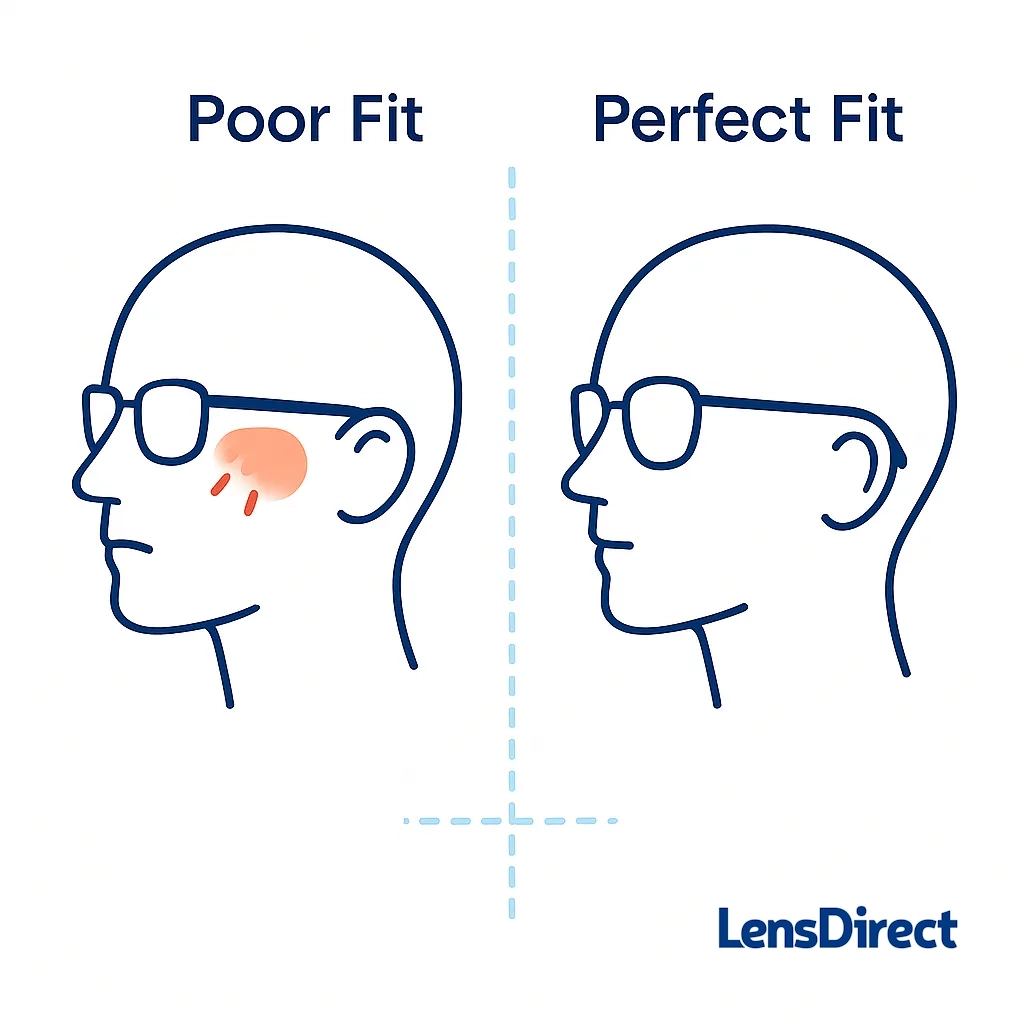
- the frames are bent, loose, or uncomfortable
- the frame style is outdated for your needs (e.g., too narrow for progressives)
- your prescription changed and you want a new look anyway
A quick decision guide: fix, tolerate, or replace?
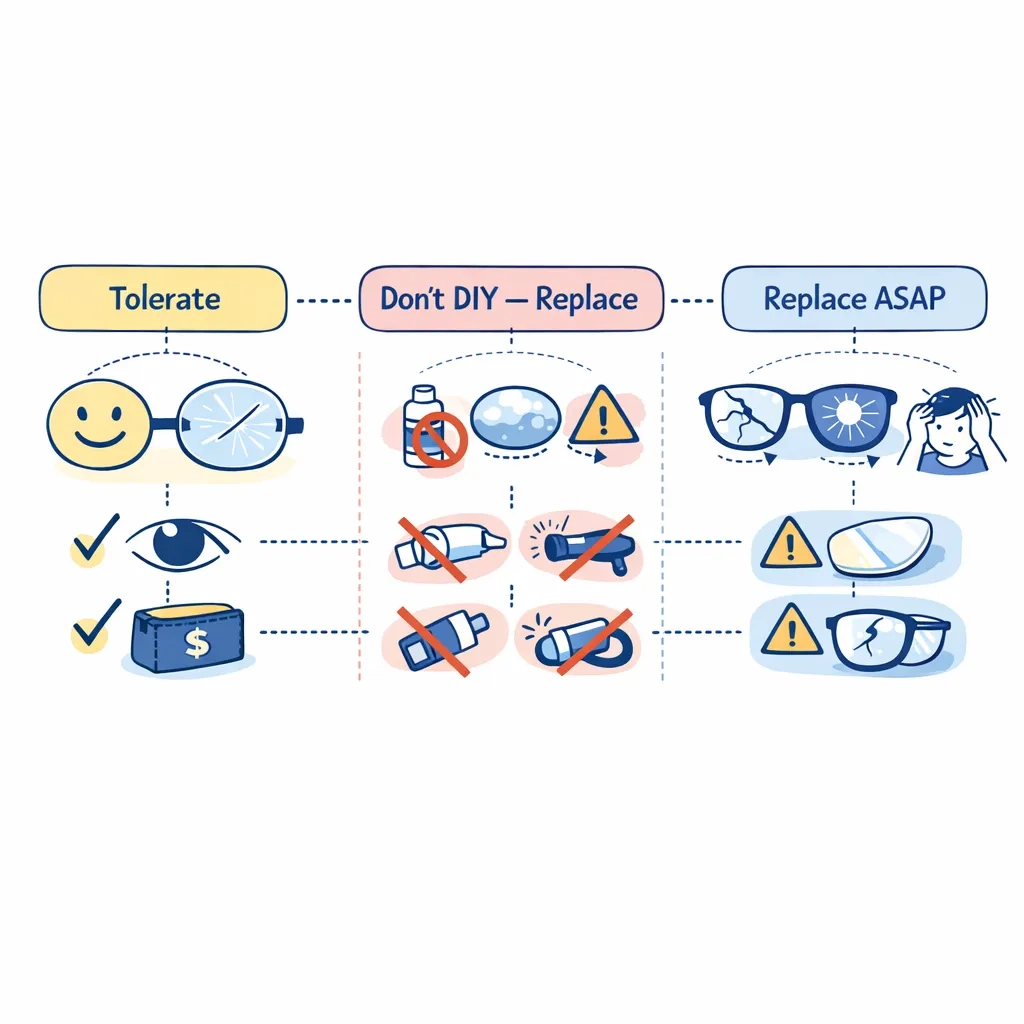
You can probably tolerate it (for now) if…
- you only see it under direct light
- it’s at the edge, not your visual center
- it doesn’t affect night driving or screens

Don’t DIY — just replace — if…
- it’s deep enough to catch a fingernail
- you see glare streaks or halos
- it’s a coating problem (cloudy/peeling)
- it bothers you daily
Consider replacing ASAP if…
- your job involves precision (driving, design, machining, medical work)
- you’re prone to headaches or eye strain
- you drive at night often
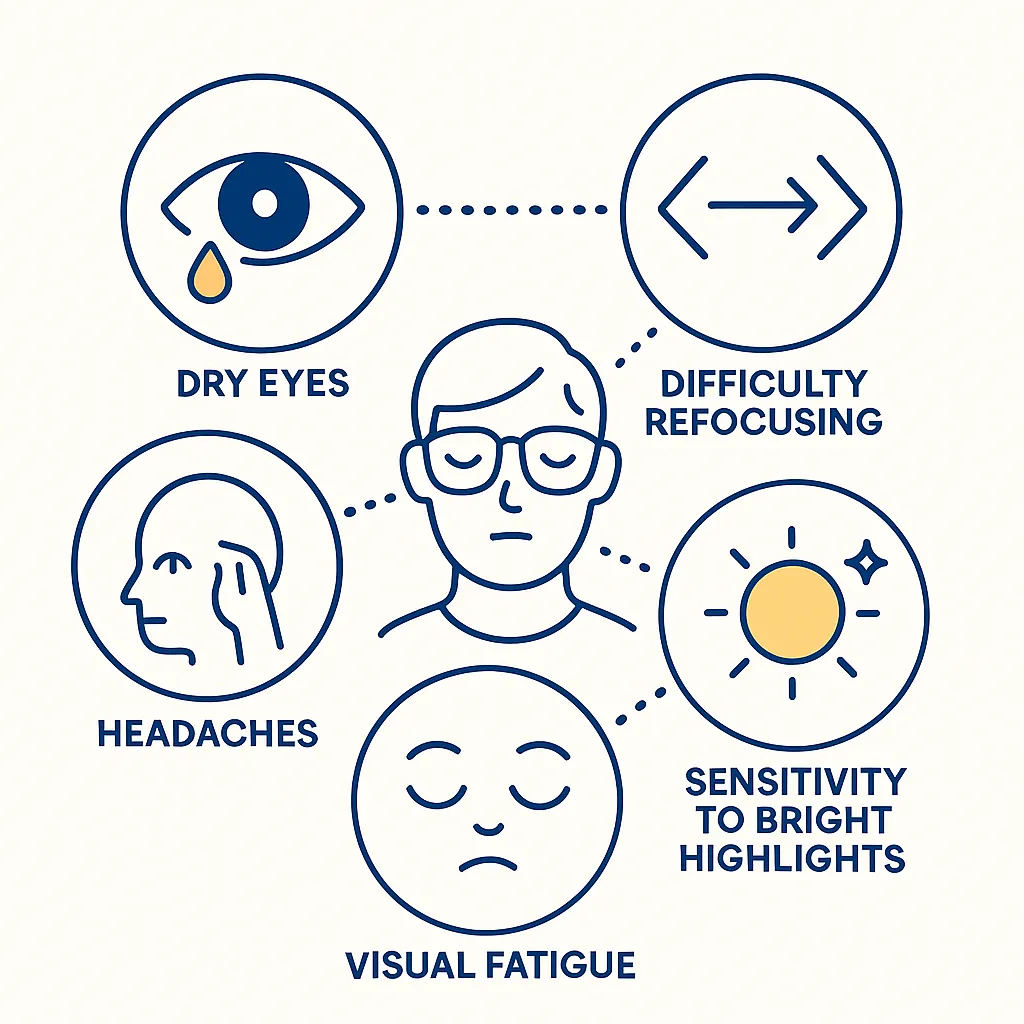
Your eyes do a lot. If your lenses are forcing extra effort, that cost adds up.
How to prevent scratches (so you don’t have to do this again)
Scratches usually come from tiny daily habits. These changes make a big difference:
Clean the right way
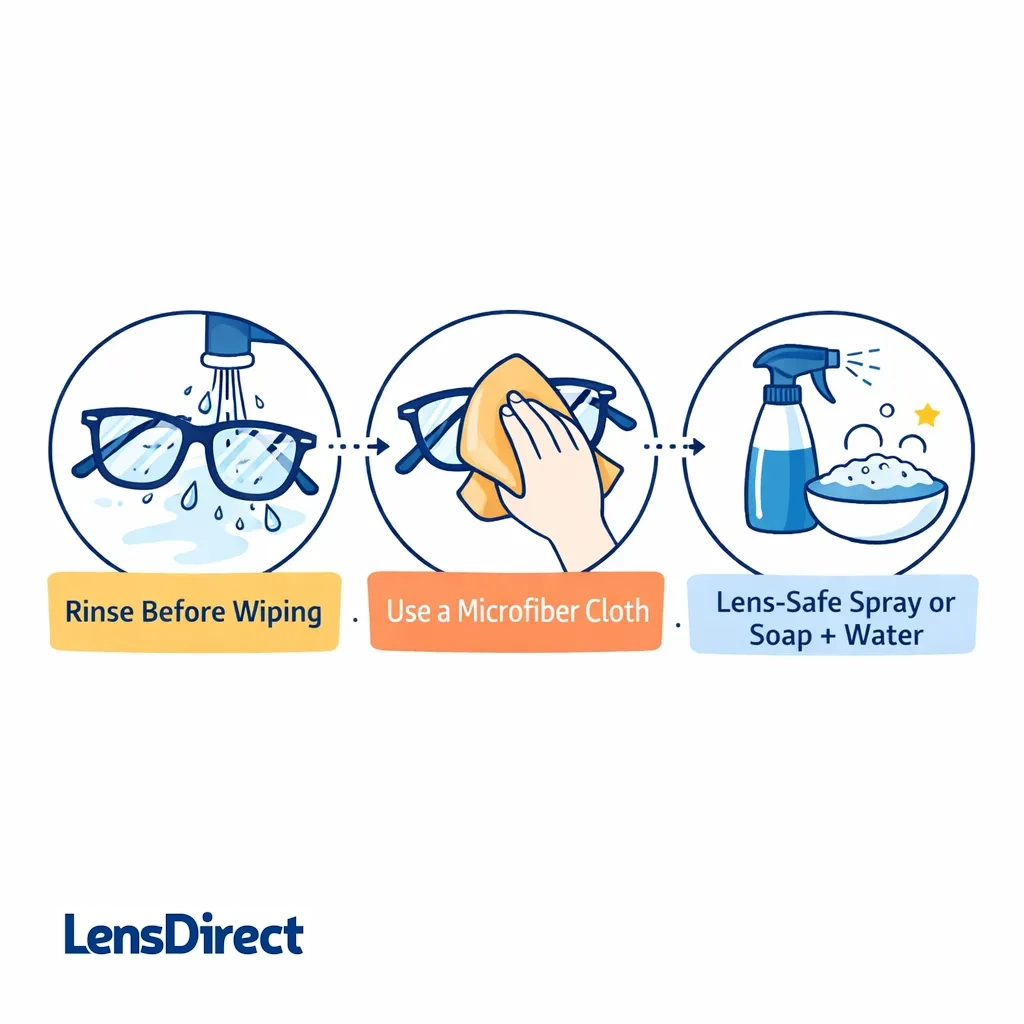
- Always rinse before wiping. Dry-wiping grinds dust into the lens.
- Use a clean microfiber cloth (wash it regularly; don’t use fabric softener).
- Use a lens-safe spray or mild dish soap + water.
Store them like they matter
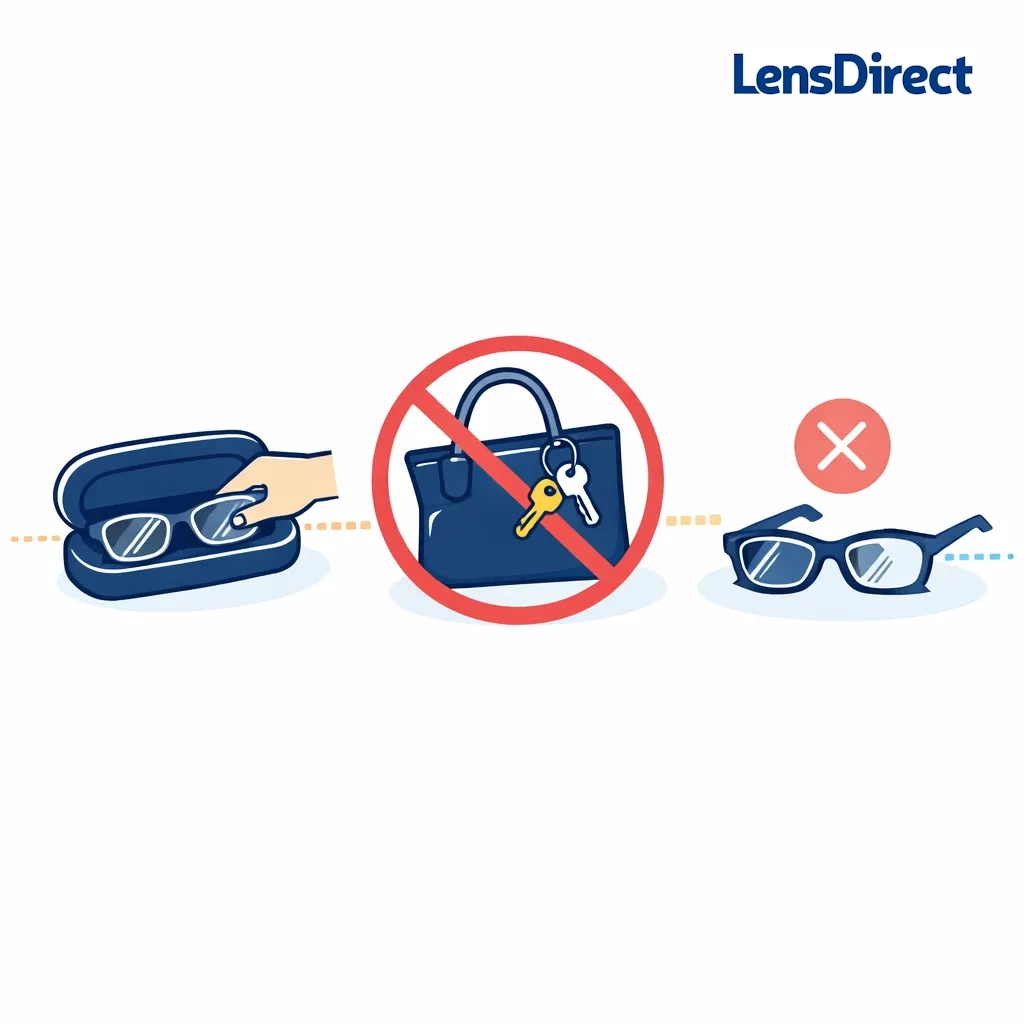
- Use a hard case whenever glasses aren’t on your face.
- Don’t toss them in a bag or pocket with keys.
- Don’t leave them face-down on a desk.
Avoid the sneaky scratch culprits
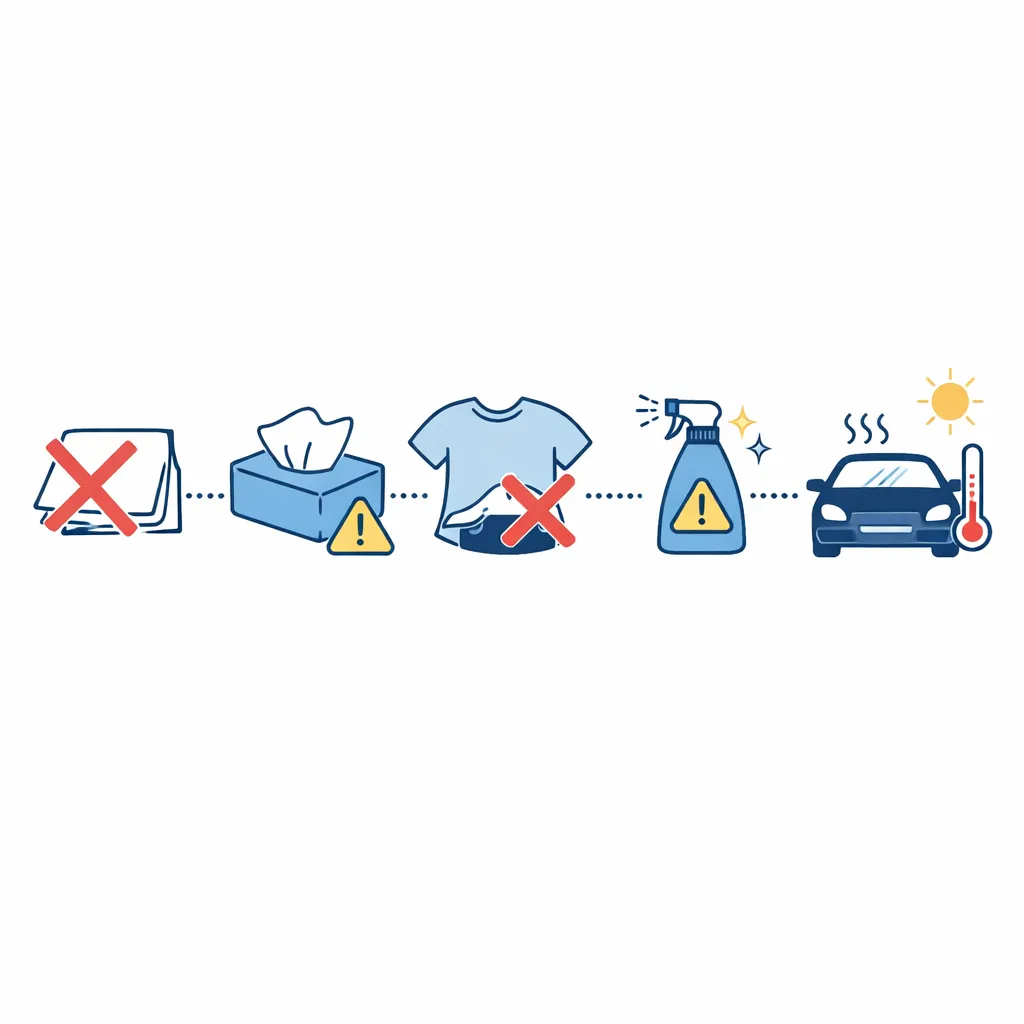
- Paper towels, tissues, shirt hems (too abrasive)
- household cleaners (ammonia-based cleaners can damage coatings)
- heat (leaving glasses in a hot car can degrade coatings over time)
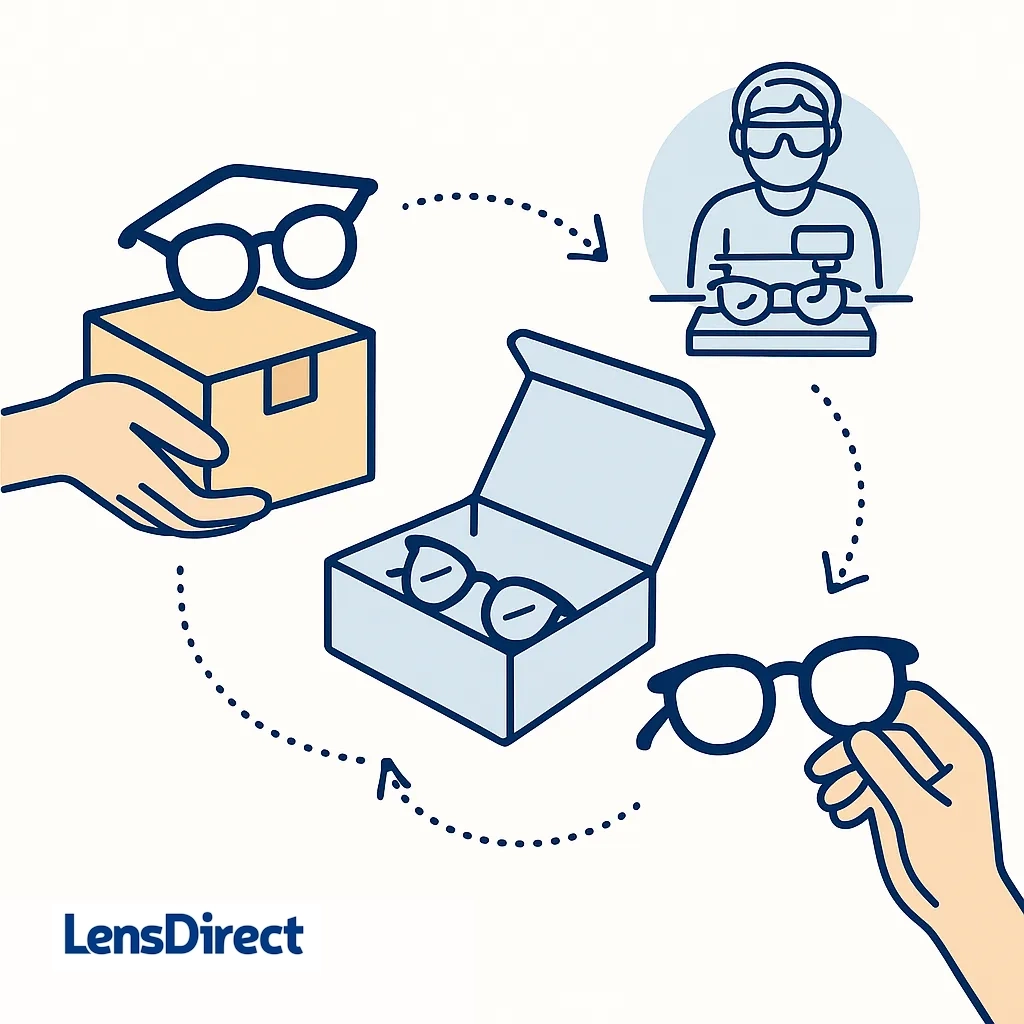
When You Need a Lens Replacement, You Need LensDirect
If you’re hoping for a true “scratch repair” for modern prescription lenses, the options are limited — especially if coatings are involved. Most DIY fixes are more like damage control than real repair, and they often shorten the life of your lenses.
If the scratch causes glare, distortion, headaches, or sits in your line of sight, replacement is usually the clearest, safest, and most comfortable solution.
And if your frames still fit well, lens replacement can be a smart way to get back to crisp vision without starting from scratch.

Bring your favorite frames back to life. LensDirect can replace your scratched lenses with fresh, crystal-clear prescription lenses — often for less than a whole new pair. Upload your prescription, choose your lens options, and get a like-new upgrade delivered to your door. Shop lens replacement today.
Author

Subscribe to our email newsletter to get the latest posts delivered right to your email.