
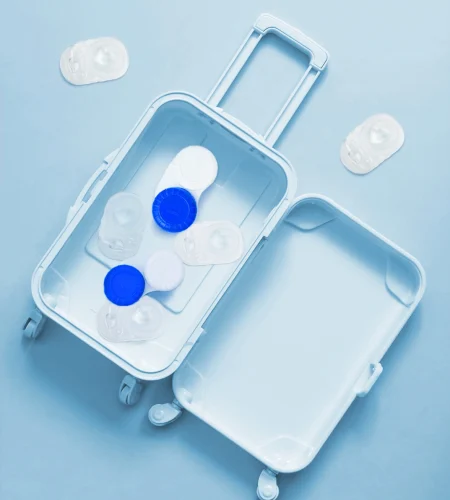
Travel is already a full-contact sport: early alarms, security lines, surprise gate changes, and the “did I pack my charger?” panic spiral. If you wear contact lenses, add one more thing to the list — keeping your eyes comfortable and your lens routine hygienic when you’re nowhere near your usual sink.
The good news: traveling with contacts is totally doable (and often more convenient than glasses), as long as you plan for three things:
- TSA liquids rules (and how contact solution fits in)
- Airplane cabin dryness (why it hits contact wearers harder)
- A smart packing list (so you’re not improvising at 35,000 feet)
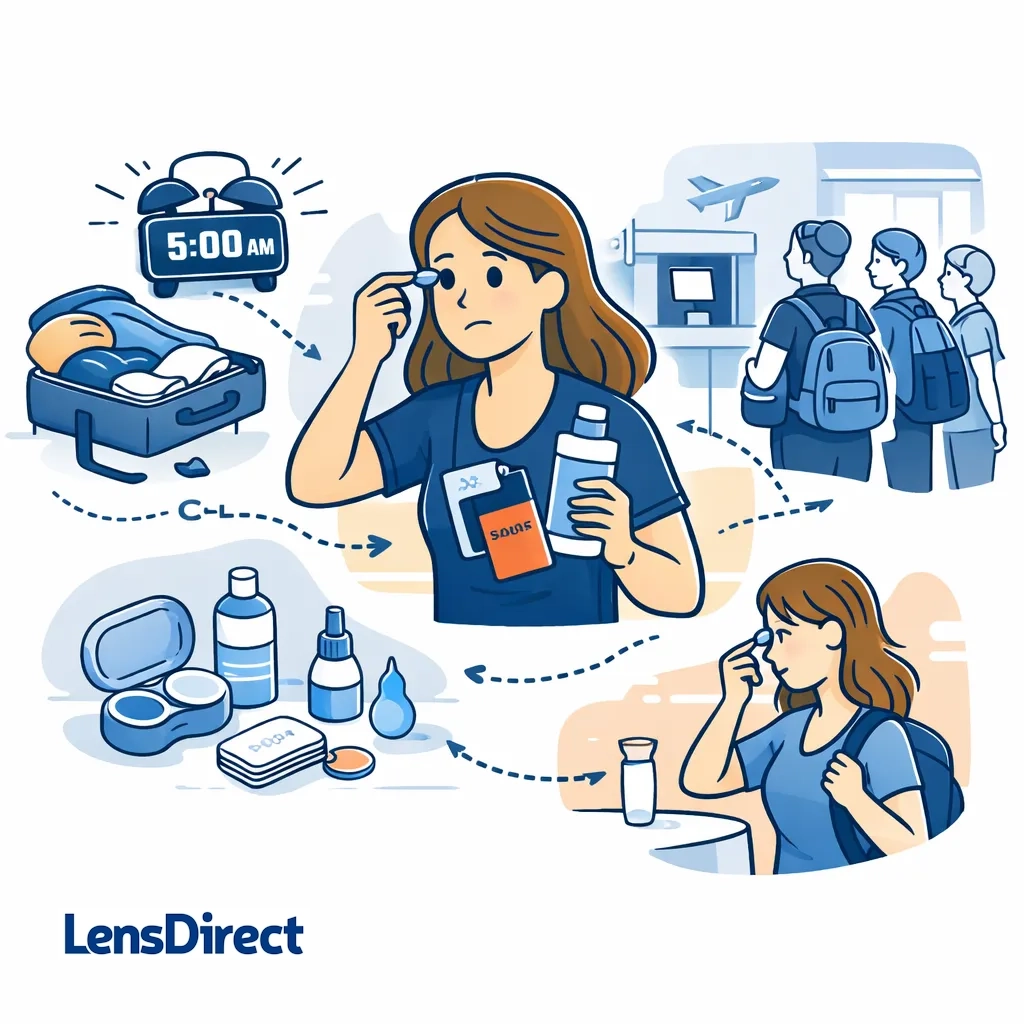
Let’s make sure you land seeing clearly — without the red, scratchy “sand in my eyes” feeling.
TSA rules for contacts: what you can bring (and how to pack it)
Contacts themselves are not restricted. You can pack your lenses in either carry-on or checked luggage. (TSA)
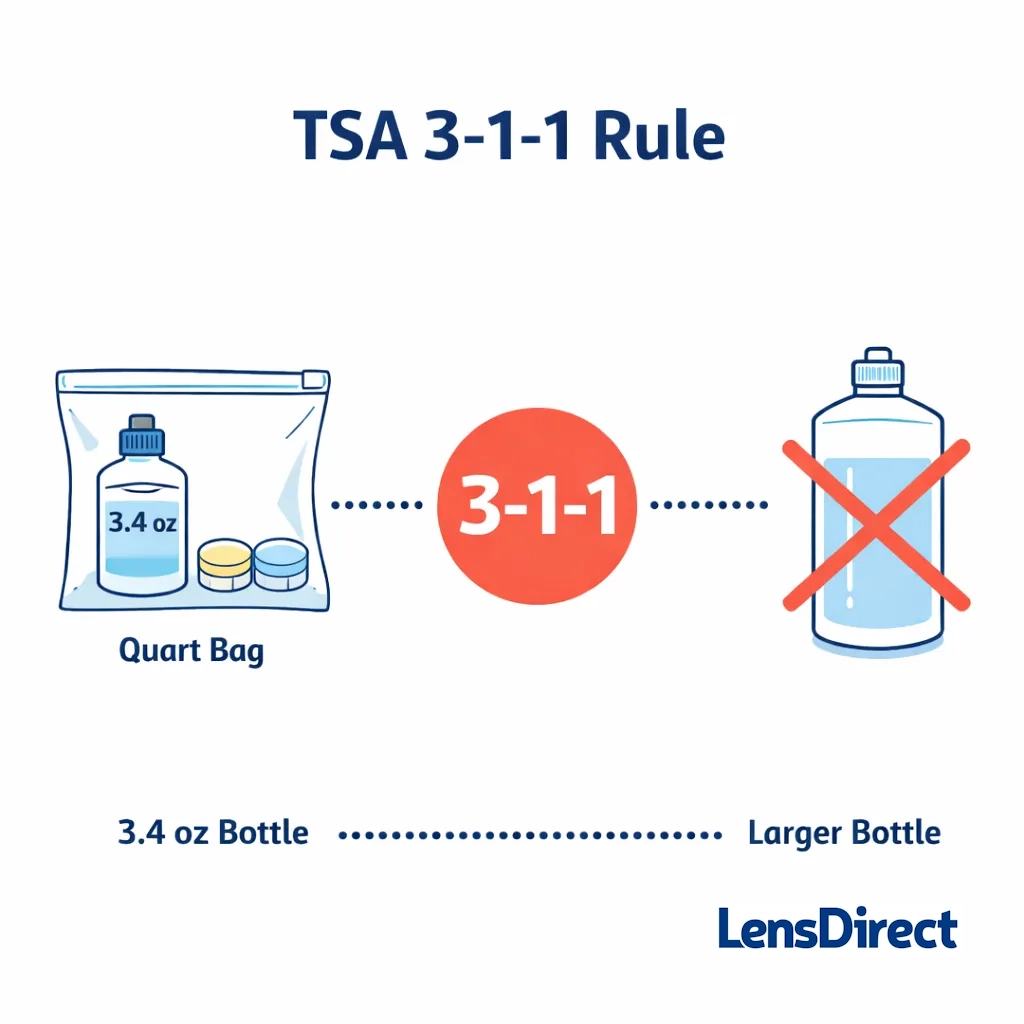
Contact lens solution and rewetting drops count as liquids. That means they normally follow the TSA 3-1-1 liquids rule for carry-ons (containers up to 3.4 oz / 100 mL, all in one quart-size bag). (TSA)
The “medical liquid” exception (and the simplest way to use it)
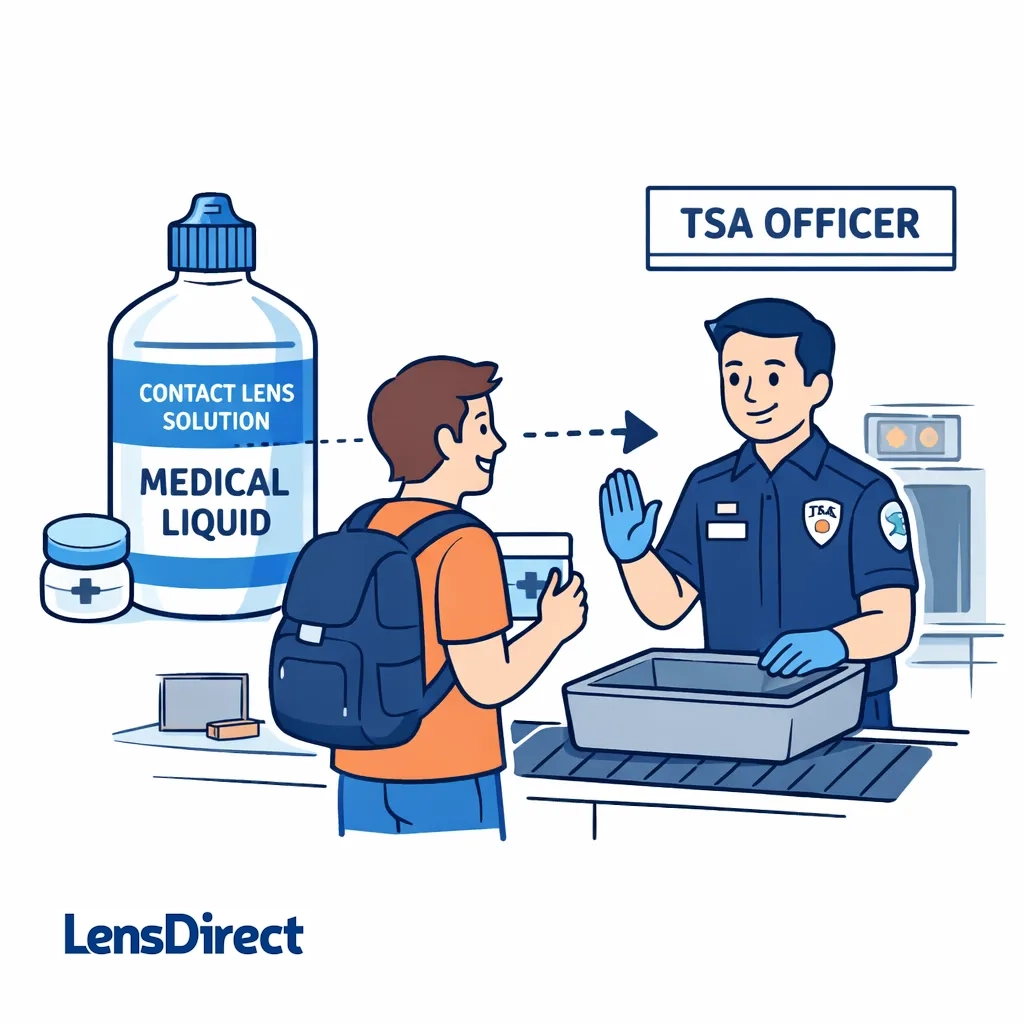
TSA lists contact lens solution as a medical/medical-necessity type item and notes that larger amounts of medically necessary liquids may be allowed in “reasonable quantities,” but you must declare them to the officer for screening. (TSA)
That said, TSA also recommends placing contact lens solutions over 3.4 oz in checked baggage, and the final call is always up to the TSA officer. (TSA)
Practical TSA packing tips (so you don’t get pulled aside)
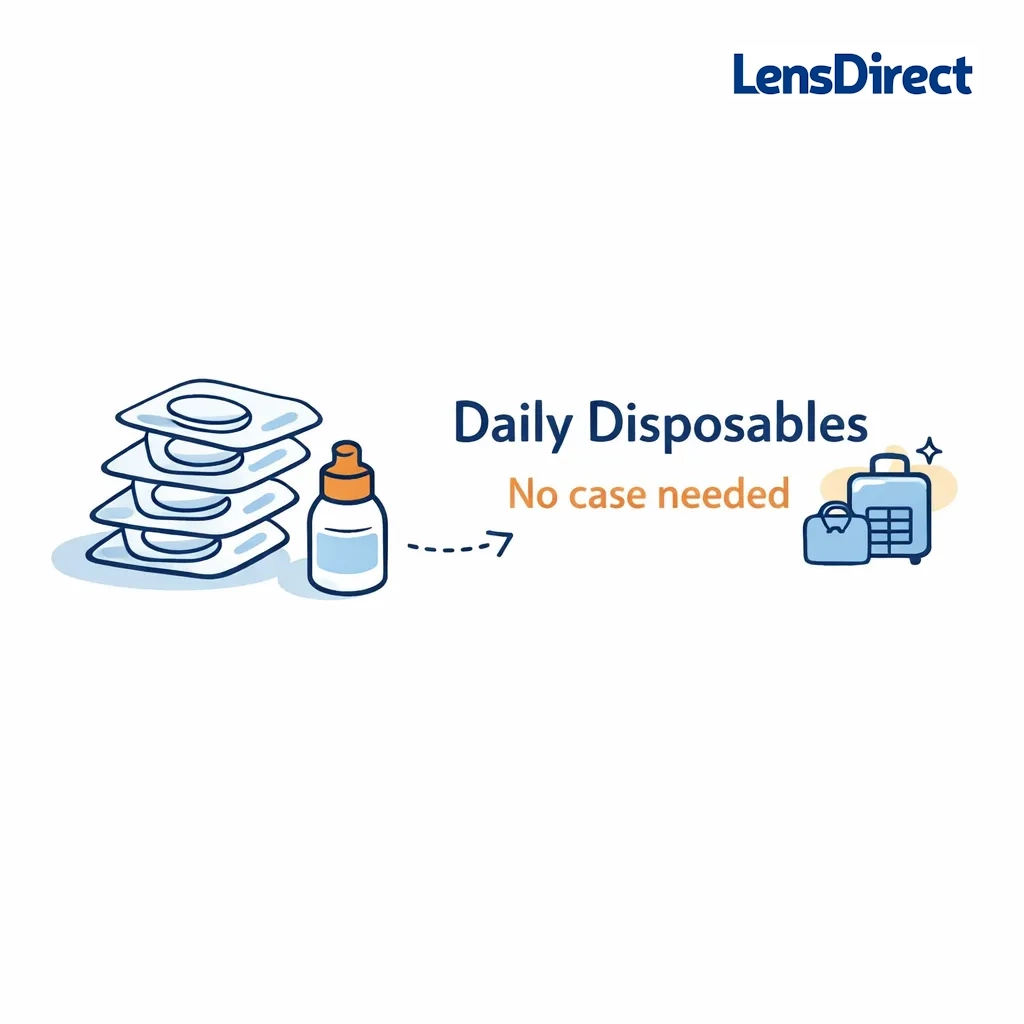
- Easiest option: bring a 3.4 oz (100 mL) or smaller travel bottle of solution in your quart bag. (TSA)
- If you truly need a larger bottle in carry-on: keep it separate and tell the officer before screening (medical-necessity approach). (TSA)
- Avoid heartbreak: pack backup solution in checked luggage (sealed in a zip-top bag to prevent leaks), but keep a small bottle in your carry-on in case your bag is delayed. (TSA)
Pro move: If you wear daily disposables, travel days get dramatically simpler — less solution, less case drama, less “where can I wash my hands?” stress.
Why your contacts feel drier on planes (and how to fix it)
Airplane cabins are dry. Like, desert dry. Research cited in an aviation-focused reference notes aircraft cabin humidity is frequently around 5–10% relative humidity, far below what your eyes are used to. (NCBI) A review of cabin conditions has also reported very low relative humidity levels during flights (with minimums under ~10% on some flights). (Contact Lens Journal)
Low humidity + steady airflow can speed up tear evaporation, which makes contacts feel tight, gritty, or blurry. (Even normal “flowing air” can dry contacts faster.) (AOA)
Before you fly: set yourself up for comfort
- Start with a fresh pair. Put in new lenses right before leaving (or at least don’t start your travel day on lenses that already feel dry).
- Consider glasses for travel days — especially long-hauls. It’s not “giving up,” it’s giving your eyes a break.
- Hydrate early. Dry cabin air + travel fatigue is a one-two punch for your tear film.
- If you’re prone to dry eye: talk to your eye doctor before a big trip about lens type/material, wear schedule, and drop recommendations.
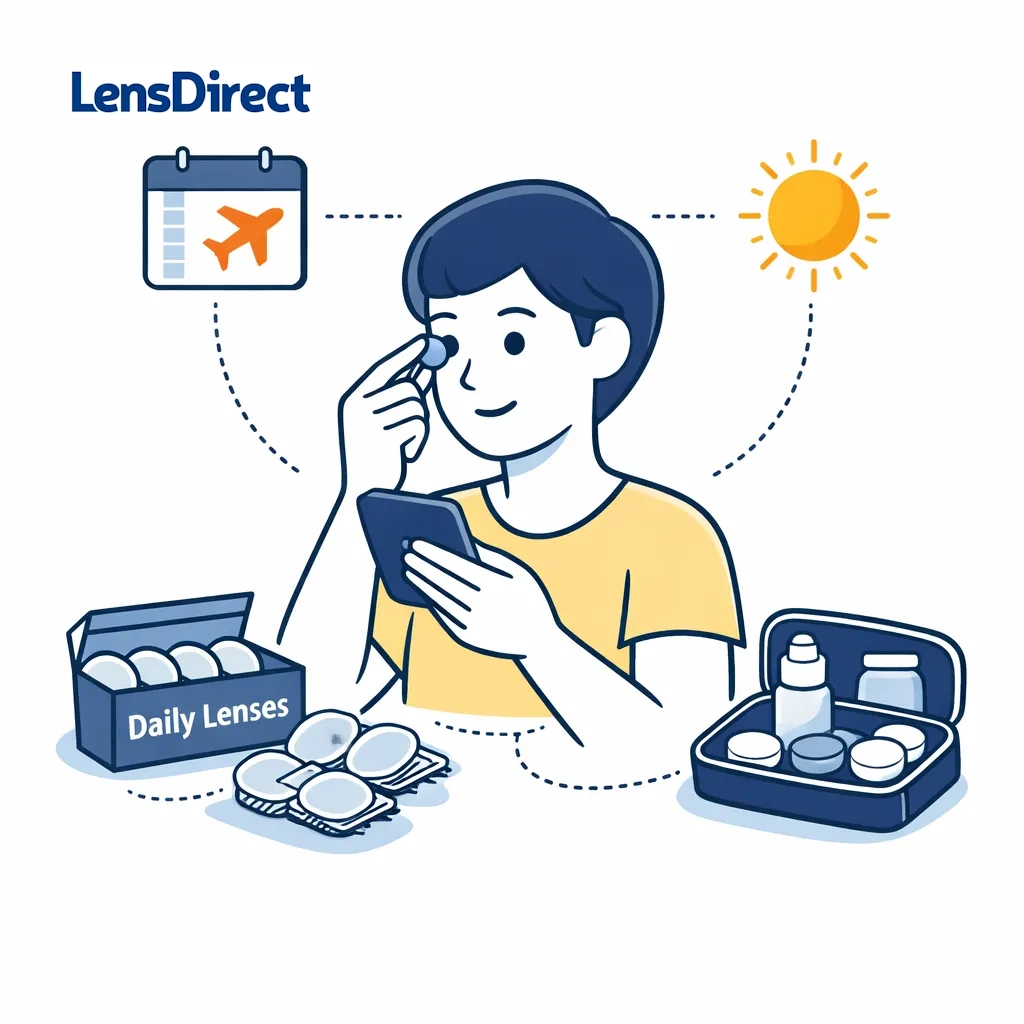
On the plane: do this, not that
Do:
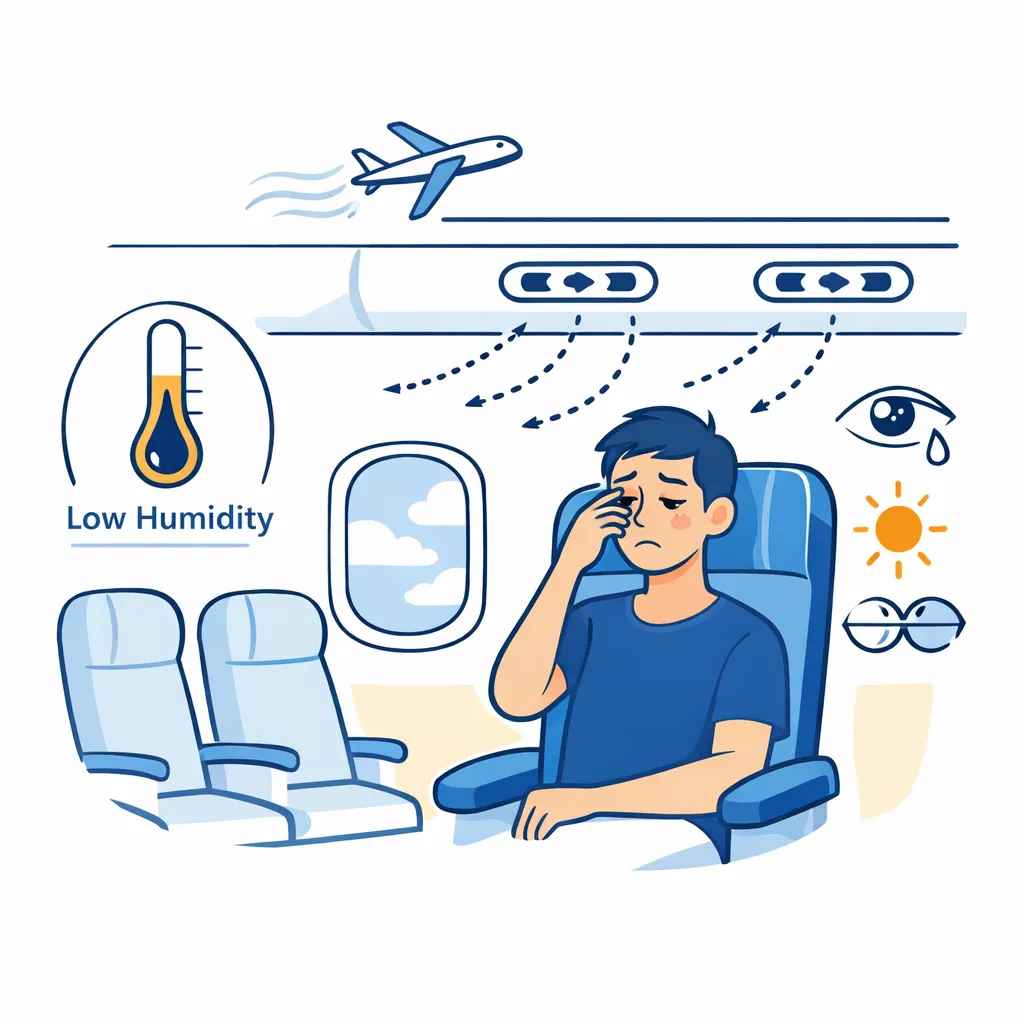
- Aim the overhead vent away from your face. Direct airflow is basically a contact lens dehydrator.
- Use contact-lens-safe lubricating drops (rewetting drops) as needed.
- Blink on purpose. Screens + dry air = “stare-face,” and your eyes pay for it.
- Drink water regularly. (Your eyes will thank you.)
Don’t:
- Don’t sleep in your contacts unless your eye care provider specifically told you it’s okay. The CDC advises avoiding sleeping in lenses unless directed, and the AAO specifically flags flights as a time to remove contacts if you’ll sleep for hours. (CDC)
- Don’t “push through” pain. If lenses start to burn, feel sharp, or your vision gets hazy, take them out.
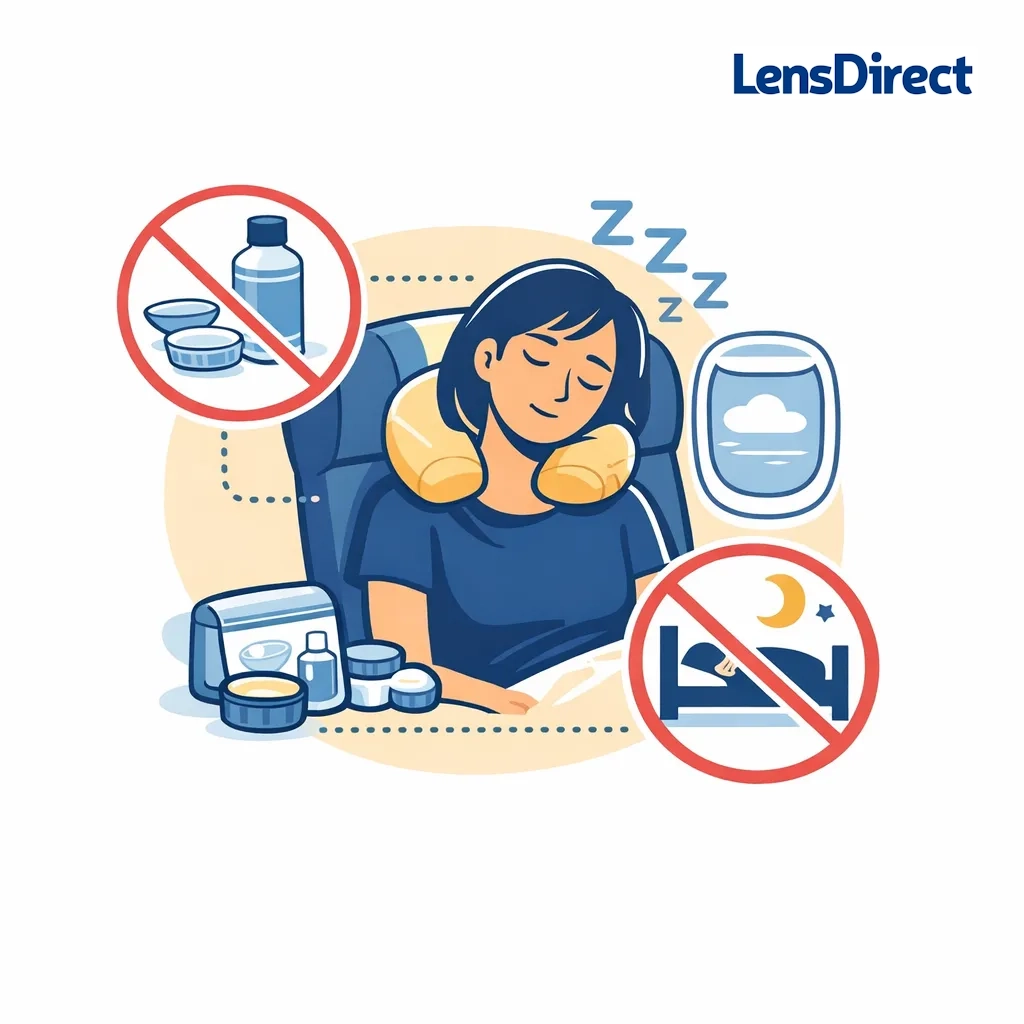
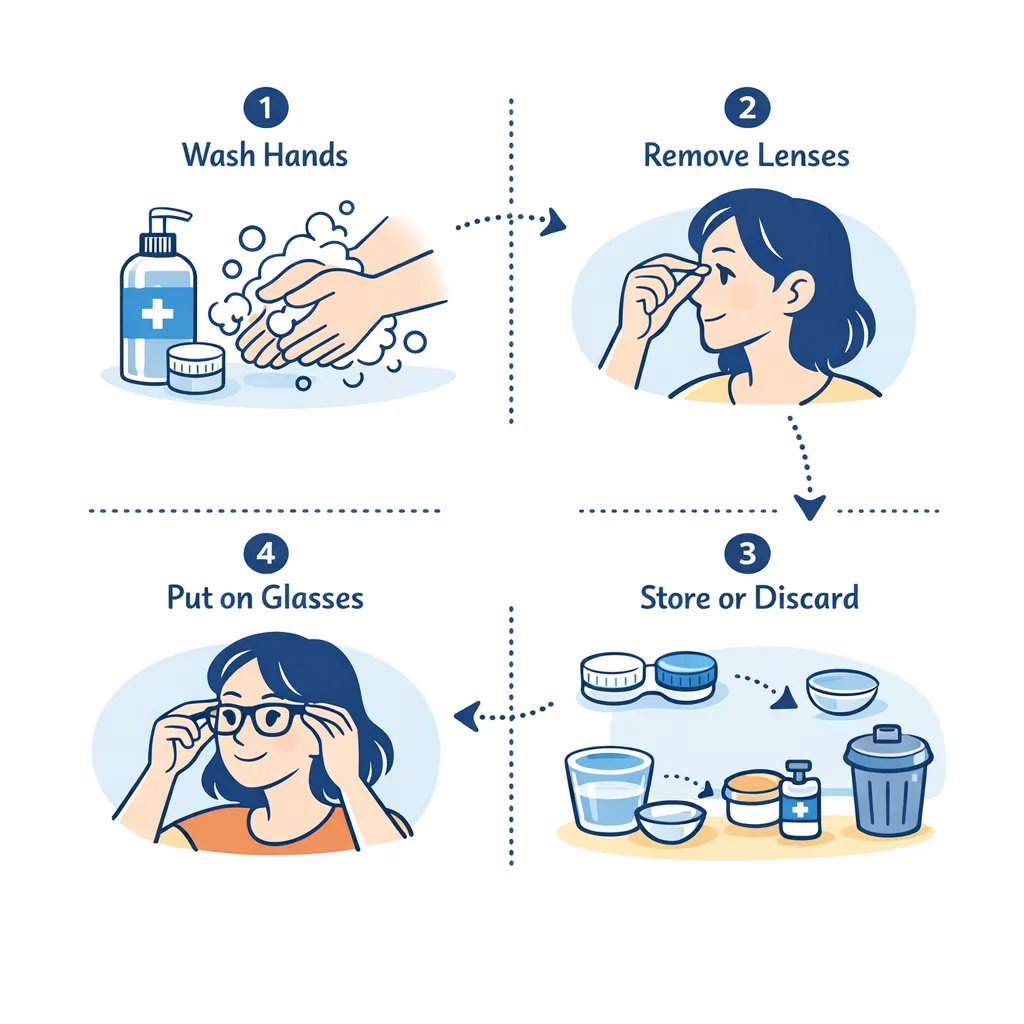
Mid-flight “I need these out now” plan
This is why you want a mini kit in your personal item (not buried in the overhead bin):
Hotel and destination lens hygiene: the travel traps to avoid
Travel increases the odds you’ll handle lenses with less-than-ideal conditions (airport bathrooms, festival porta-potties, questionable sink water). This is where a little planning prevents a lot of regret.
Keep water away from your contacts — seriously
The CDC recommends keeping contacts away from all water (including showering/swimming), and the FDA warns against exposing lenses to water (tap, bottled, distilled, lake/ocean), noting infection risks and specifically calling out Acanthamoeba keratitis associations with non-sterile water. (CDC)
Also, the CDC’s travel guidance points out that tap water is not sterile and should never be used to clean or rinse contact lenses — a big deal when traveling internationally. (CDC)
Bottom line:
- No rinsing lenses or cases with tap water.
- No showering in lenses.
- No swimming/hot tubs in lenses.
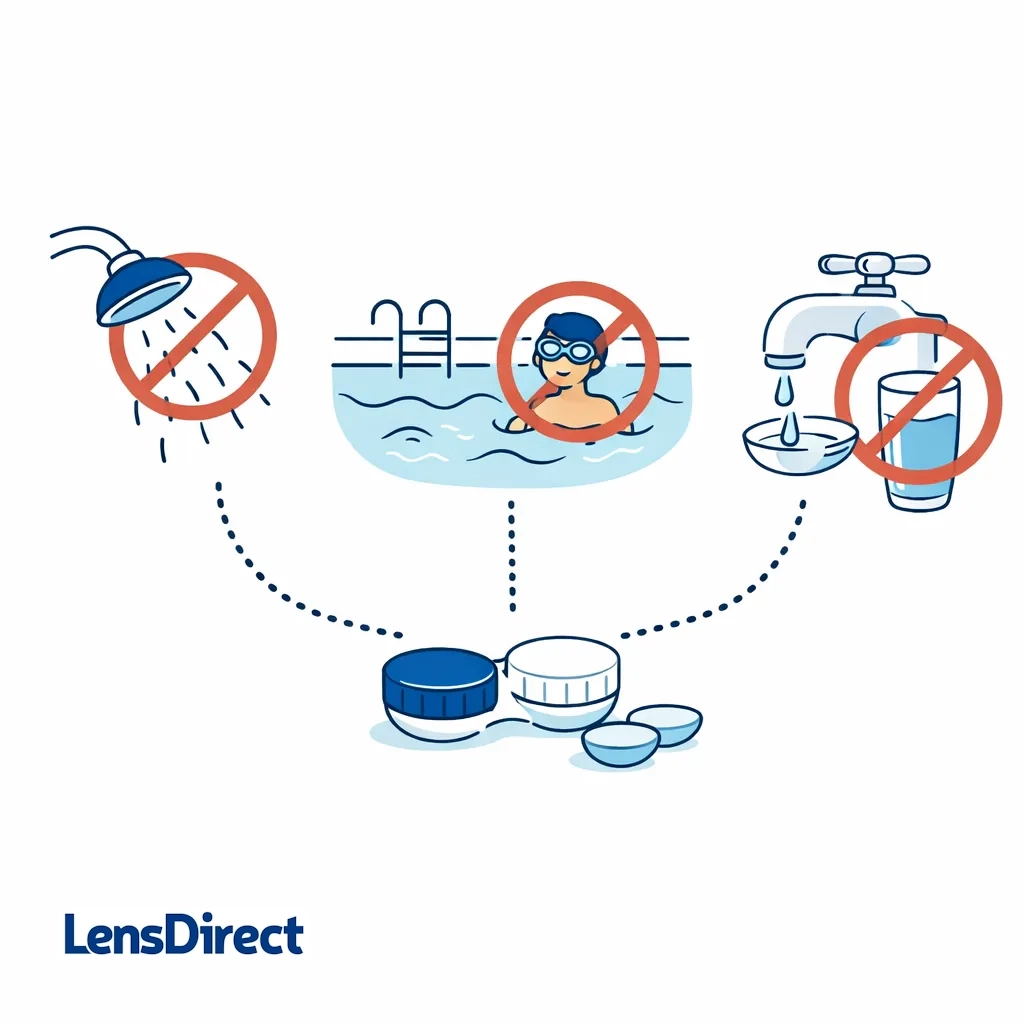
If you’re going somewhere beachy or pool-heavy, consider wearing glasses or using daily disposables for those days (and tossing them immediately after).
The packing list: what contact lens wearers should travel with
Here’s a practical list you can screenshot and use every time.
Your “must-have” carry-on contact kit (keep this on you)
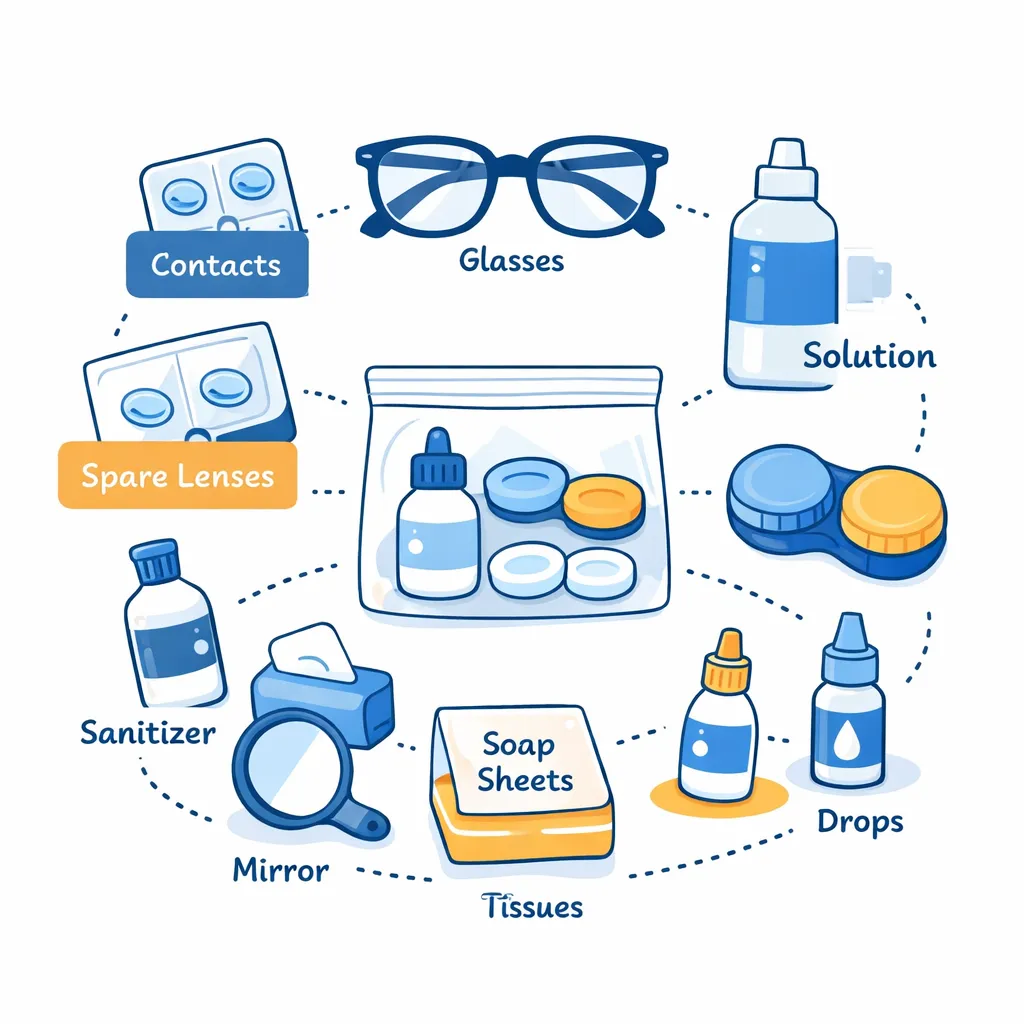
- Enough contacts for the entire trip + extras (at least 2–3 days’ worth of backup, more for longer trips)
- Backup glasses with your current prescription (non-negotiable) (CDC)
- Travel-size contact lens solution (3.4 oz / 100 mL if you want maximum TSA simplicity) (TSA)
- Contact lens case (clean, not crusty, ideally newer)
- Rewetting drops (contact-lens-safe; counts as a liquid)
- Mini hand soap sheets or travel soap (airport sinks run out at the worst times)
- Hand sanitizer (useful in a pinch — let it dry completely before touching lenses) (CDC)
- Small mirror (optional, but extremely clutch)
- A few clean tissues (for drying hands or dealing with watery eyes)
In your checked bag (or hotel stash)
- Full-size contact solution (sealed in a zip bag)
- Extra contact lens case (yes, bring a spare)
- Extra rewetting drops
- Spare glasses/sunglasses (if you have them)
- Lens-friendly lid wipes (helpful if you get makeup/sunscreen near your eyes)
- A simple “eye comfort” backup plan: a warm/cold compress mask (optional but nice)
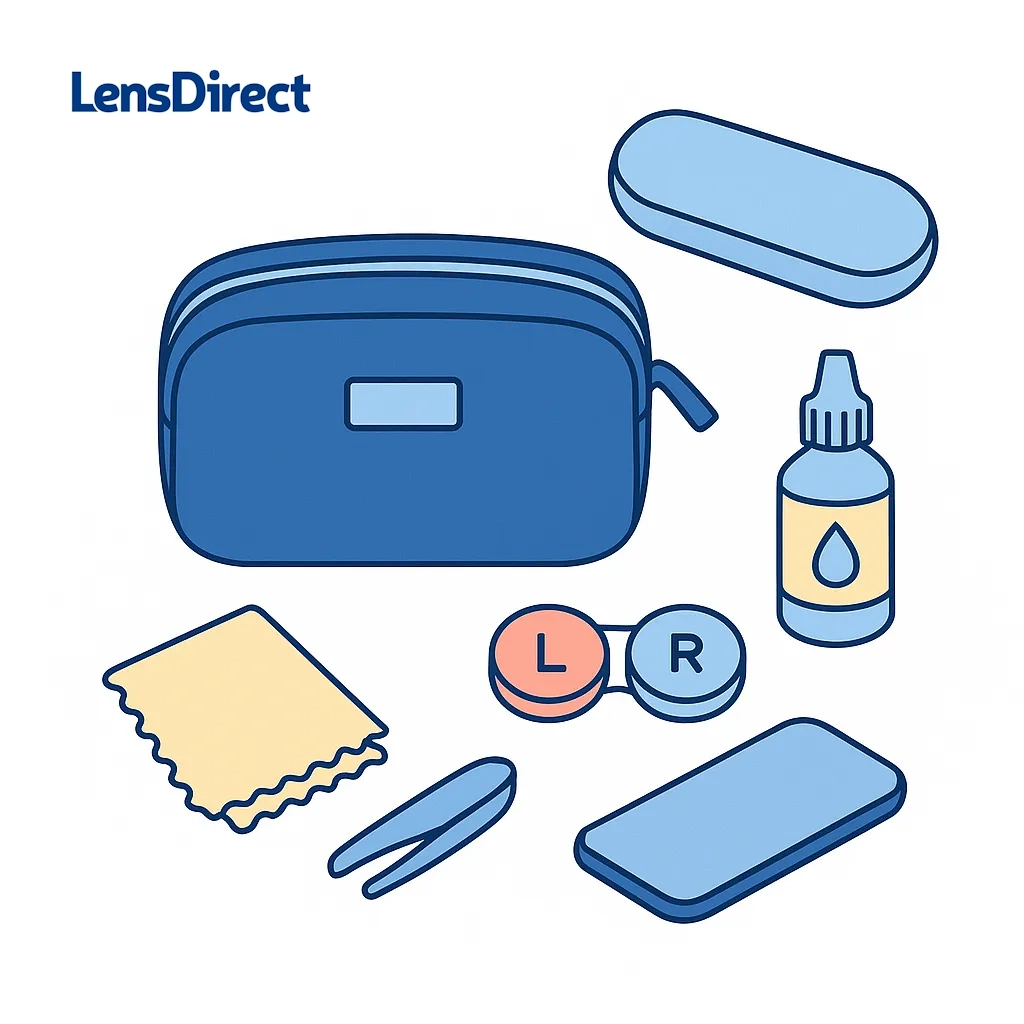
If you’re doing outdoors, desert, ski, or windy travel
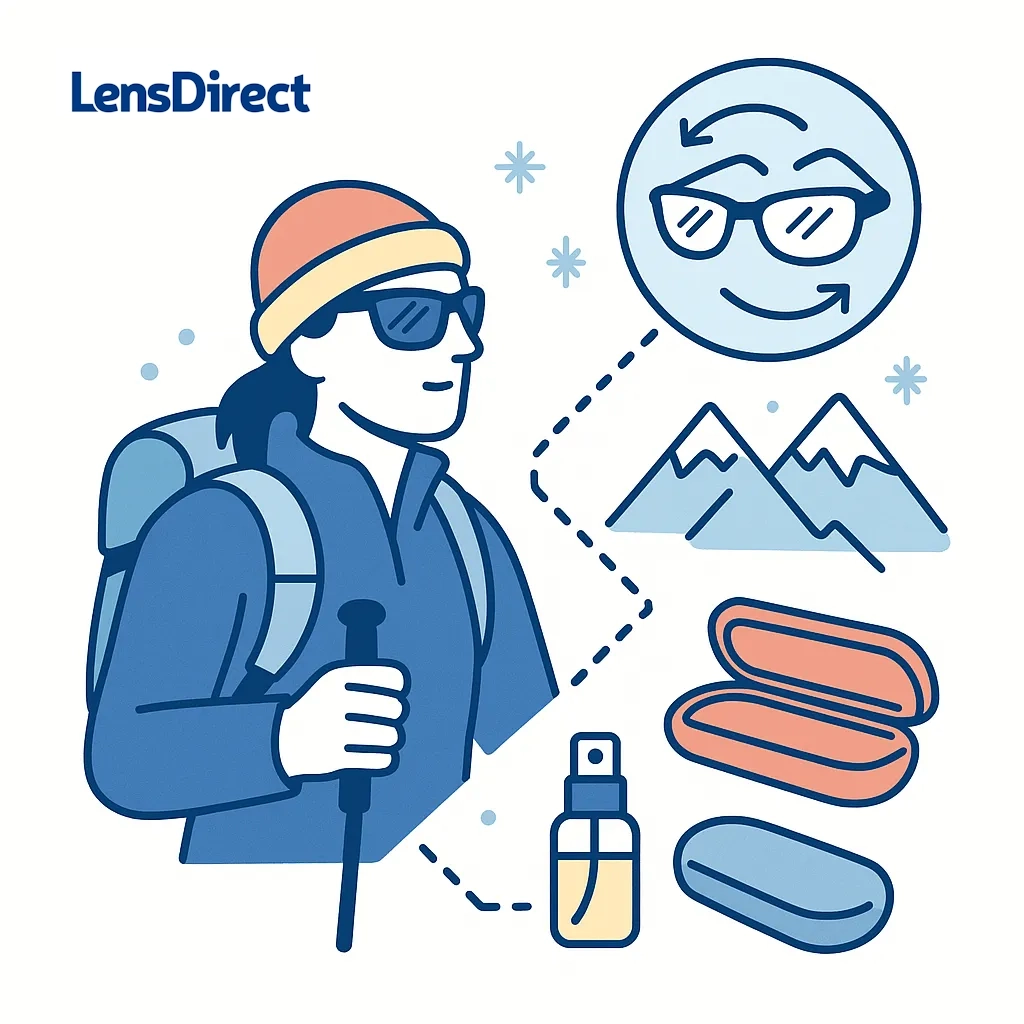
- Wraparound sunglasses (wind is sneaky drying)
- More rewetting drops than you think you’ll need
- A plan to rotate in glasses when your eyes feel cooked
Troubleshooting: when to stop wearing contacts on your trip
If your eyes are telling you something is off, listen.
Take your contacts out and switch to glasses if you notice:
- Increasing redness
- Pain (not just mild dryness)
- Light sensitivity
- Blurry vision that doesn’t clear with blinking/drops
- Discharge or swelling (U.S. Food and Drug Administration)
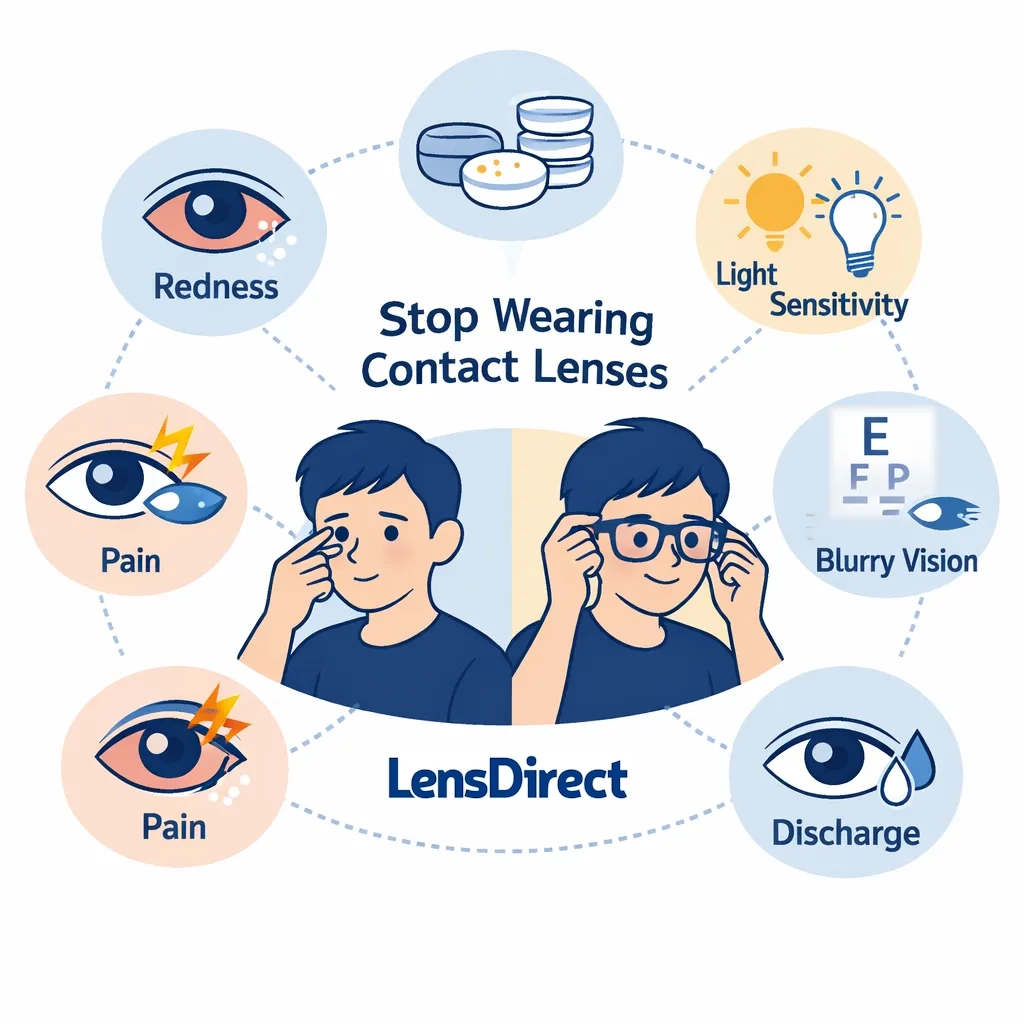
The FDA notes these can be signs of irritation or infection — don’t try to “power through vacation mode.” (U.S. Food and Drug Administration) If symptoms persist, contact an eye care professional.
Quick pre-trip checklist (do this 48 hours before you leave)
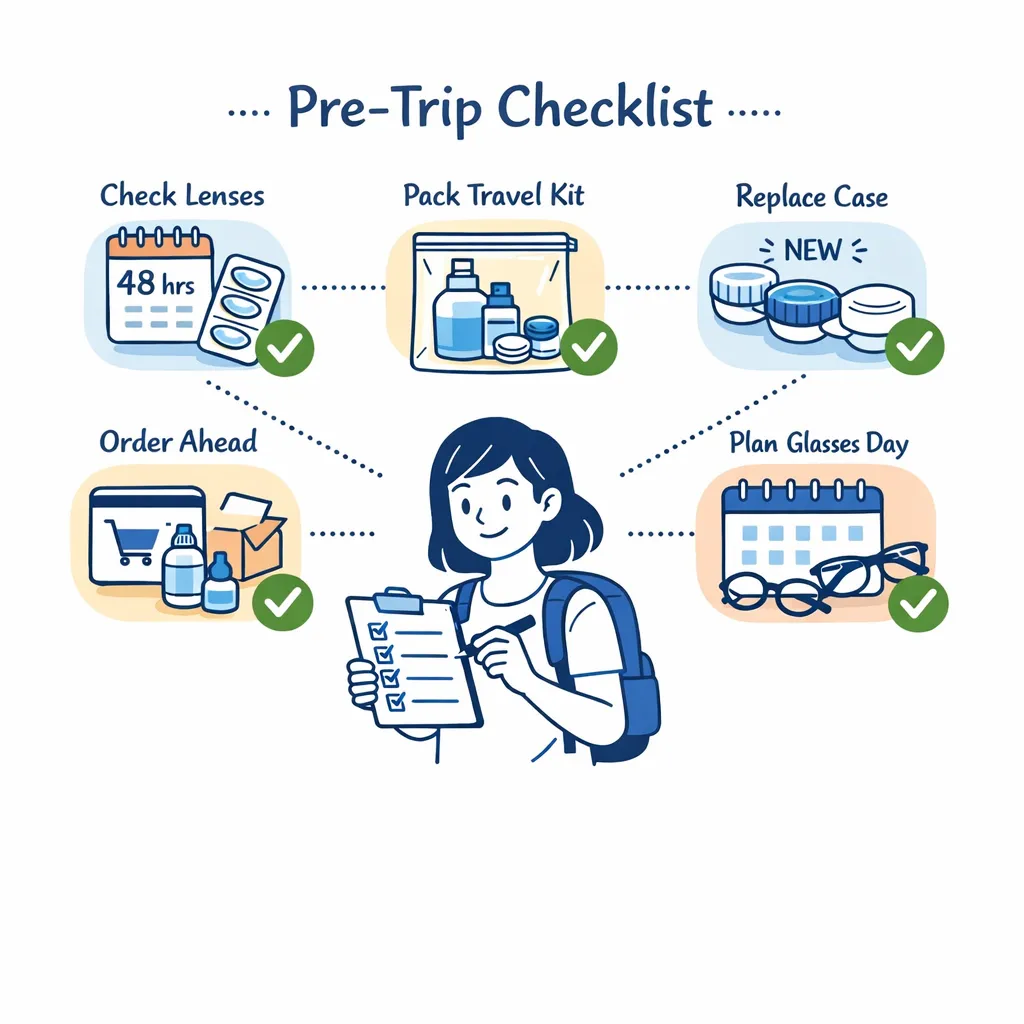
- Confirm you have enough lenses for the trip plus extras
- Pack a carry-on kit that can handle delays and diversions
- Replace your lens case if it’s old
- If you’re running low, order ahead so you’re not stretching wear time
- Know your “glasses day” plan for long flights or early mornings
Travel is unpredictable. Your vision routine doesn’t have to be.
With the right TSA-friendly liquids setup, a plan for airplane dryness, and a no-nonsense packing list, you can wear contacts comfortably from takeoff to touchdown — then switch to glasses the second your eyes ask for it.
And if you want travel to feel even easier, daily disposables (even just for travel days) are one of the simplest upgrades you can make.
Ready for stress-free travel days? Stock up on contacts (plus a backup pair) before your next trip — so you’re never stuck stretching lenses or hunting for solution in a new city. Shop contacts at LensDirect today.
Author

Subscribe to our email newsletter to get the latest posts delivered right to your email.