
Night driving can feel like a totally different sport. The road is darker, your reaction time matters more, and modern headlights can seem intensely bright — especially if you’re dealing with astigmatism, dry eyes, or a slightly outdated prescription.
The good news: there are a few proven ways to reduce glare and improve comfort at night.
The bad news: a lot of “miracle” night-driving glasses are mostly marketing (and some can actually make things worse).
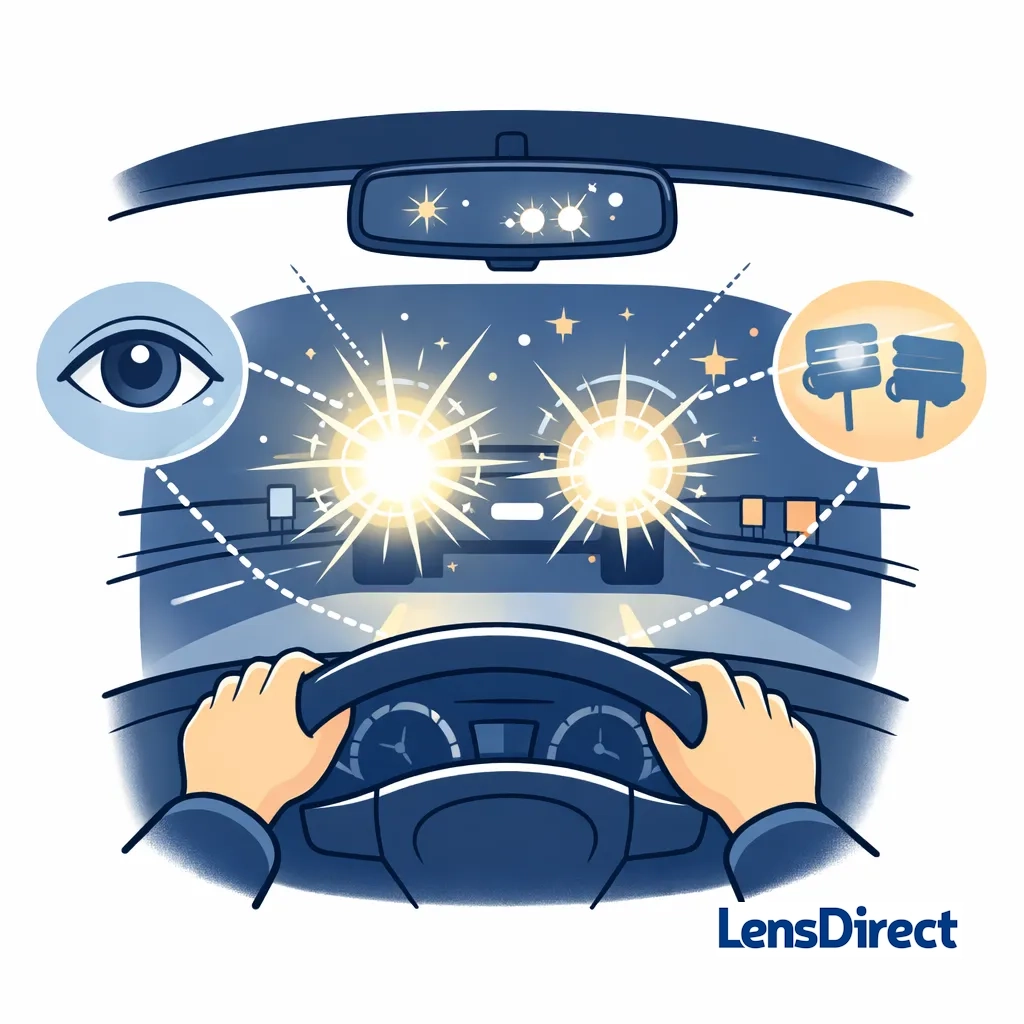
Let’s break down what’s really going on — and what actually helps.
Why headlights look so blinding at night
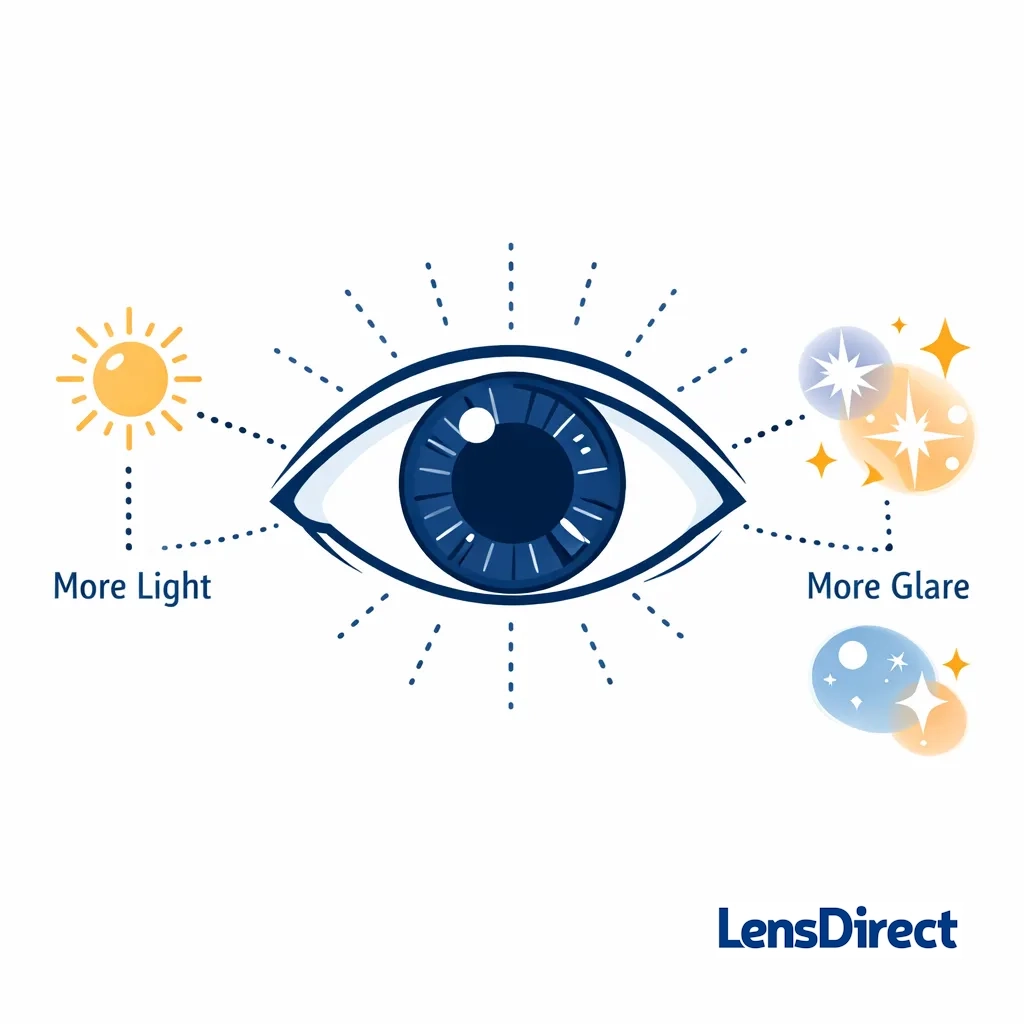
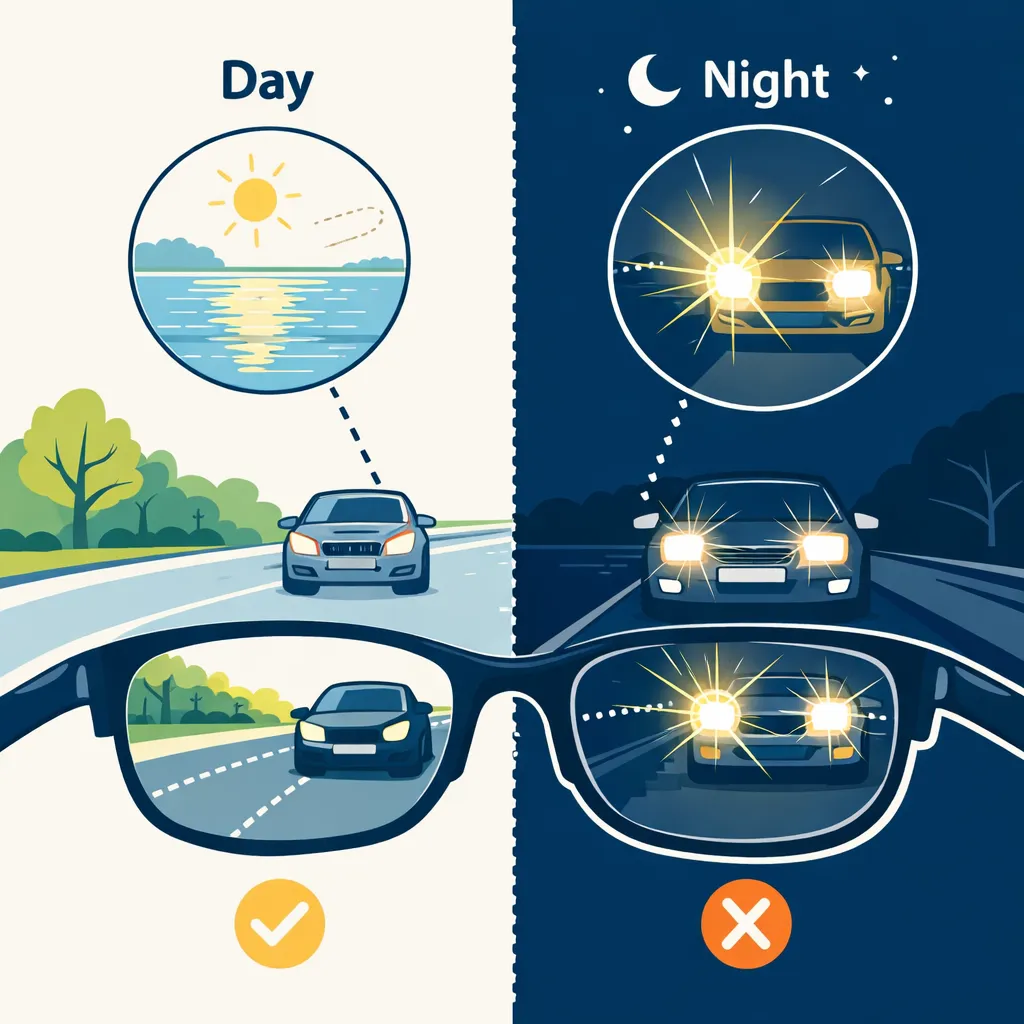
Glare isn’t just “brightness.” It’s light scattering inside the eye and across optical surfaces (your lenses and windshield), which can create halos, starbursts, and that washed-out look that makes it harder to see lane lines and pedestrians.
A few common reasons glare feels worse at night:
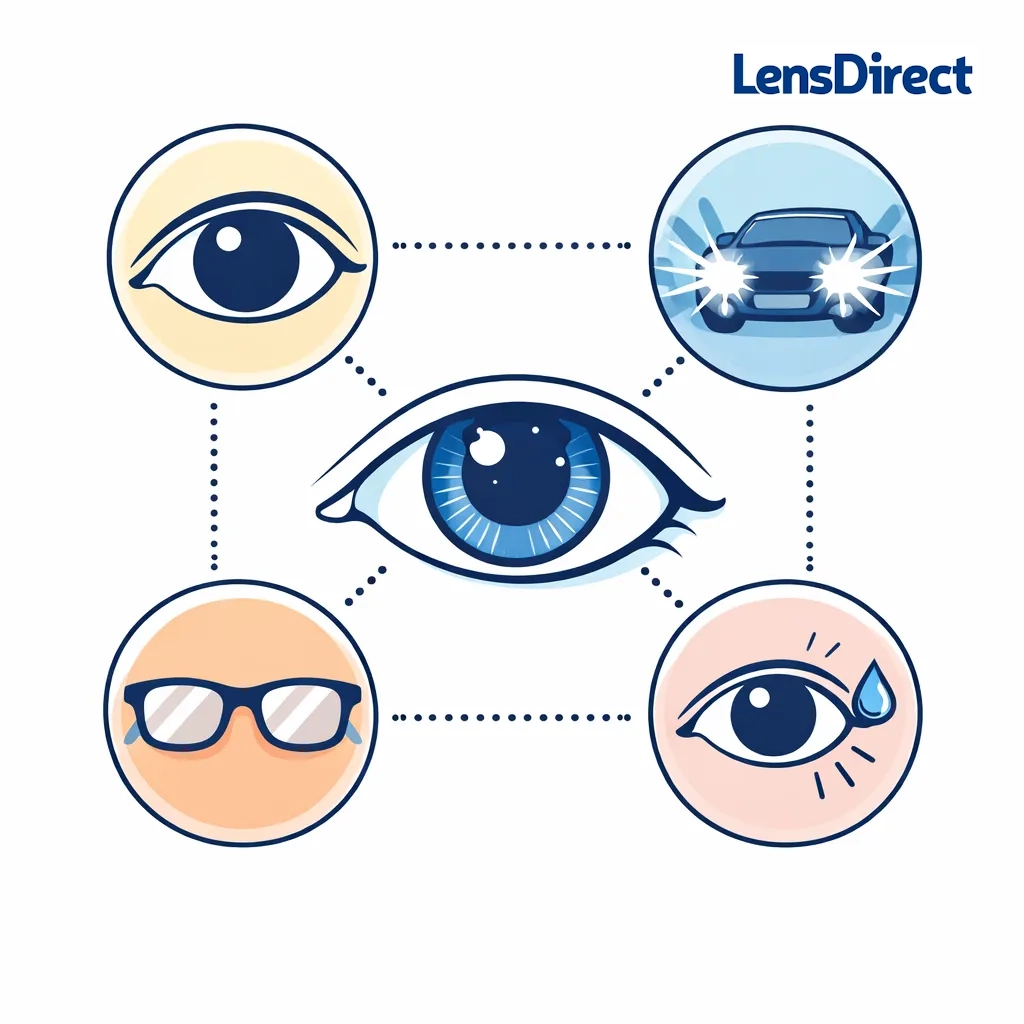
- Your pupils dilate in low light. A larger pupil lets in more light and more optical imperfections.
- Oncoming headlights are brighter than they used to be. LED and HID headlights can produce a harsh, high-intensity beam.
- Small amounts of blur get magnified. Mild nearsightedness, astigmatism, or smudges you don’t notice during the day can feel dramatic at night.
- Your eyes may be drier at night. Dryness can cause fluctuating vision and more light scatter.
If you regularly see strong halos or starbursts, it’s worth taking seriously — sometimes it’s as simple as a lens upgrade, but sometimes it’s an eye-health issue that needs attention.
What actually helps with glare at night
1) An up-to-date prescription (especially for astigmatism)
This is the least exciting fix — and the most impactful.
If you have astigmatism, even a small under-correction can cause:
- Halos around lights
- Starburst effects
- “Double” or smeared headlights
- Faster eye fatigue
If night driving has gotten noticeably worse, your prescription may have shifted (or your astigmatism correction needs refining). Even people who “see fine” during the day can struggle at night with a slightly off Rx.
Pro tip: If your eye exam is current but night glare is still rough, ask your provider specifically about your night driving symptoms. Sometimes a tiny adjustment makes a big difference.
2) Anti-reflective (AR) coating (this one is huge)
If you do one upgrade for night driving, make it anti-reflective coating.
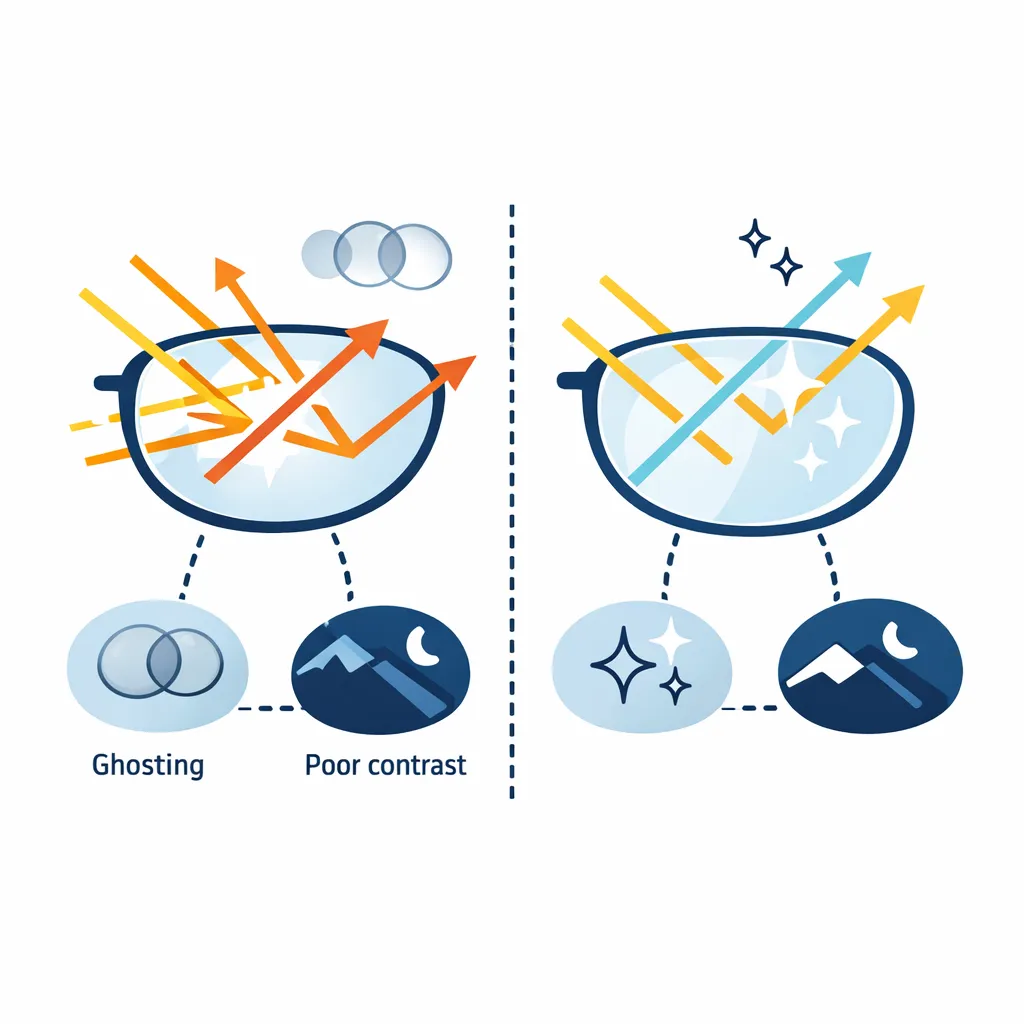
AR coating helps by reducing reflections on the front and back of your lenses, which means:
- Fewer distracting reflections from oncoming lights
- Better contrast
- Cleaner-looking vision (less “ghosting”)
Without AR, headlights can bounce between your lens surfaces and your eyes — especially when your pupils are wide open at night.
If you’re choosing lenses online, AR is one of the best value upgrades for night comfort.
3) Clean lenses and a clean windshield (yes, really)
Smudges, skin oils, dust, and microfilm are glare multipliers. They scatter light and make headlights bloom.
Do this before you assume you need “special” glasses:
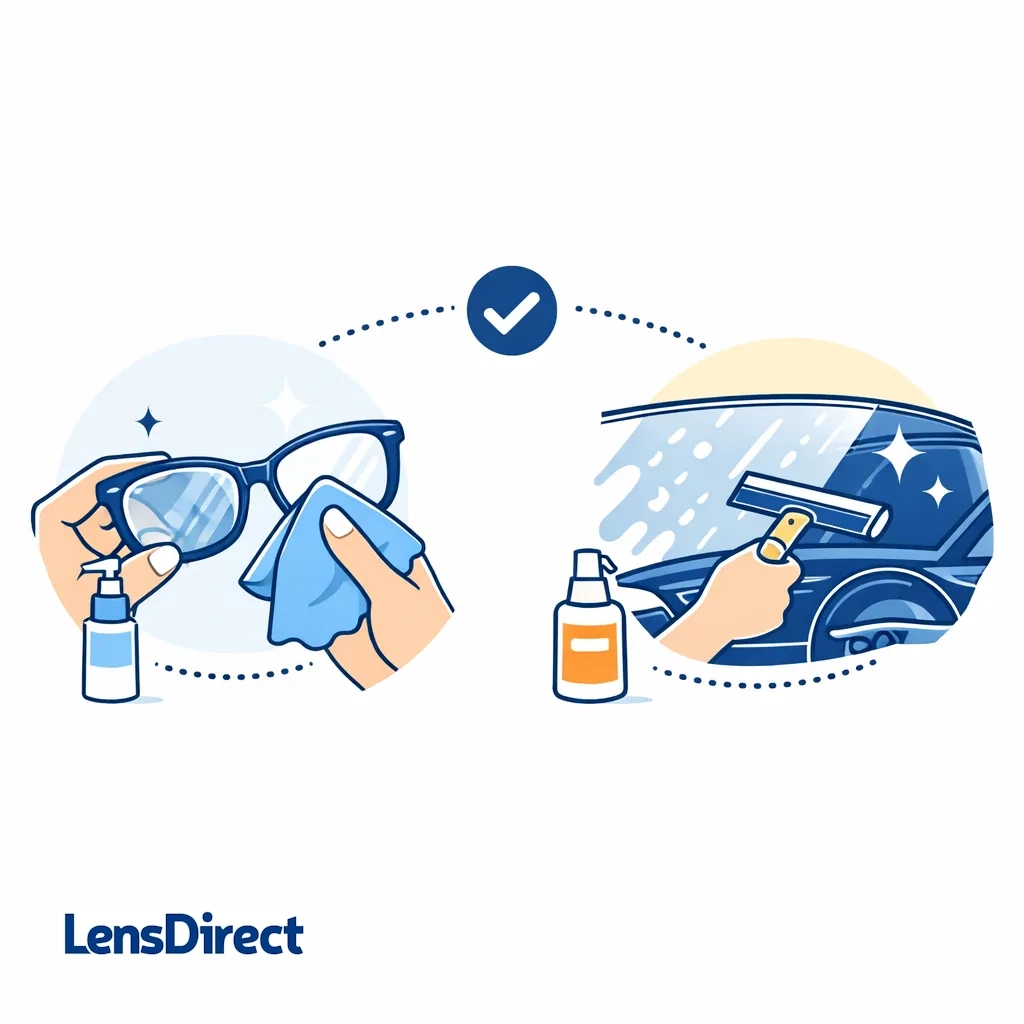
- Clean your glasses with lens spray + a microfiber cloth (not your shirt).
- Deep-clean occasionally with mild dish soap + lukewarm water, then pat dry with a clean microfiber.
- Clean your windshield inside and out. The inside often has a hazy film from off-gassing plastics and HVAC residue.
- Replace worn wiper blades — streaks create glare trails.
It’s not glamorous, but it can be a night-and-day difference.
4) Consider lens material and design upgrades (comfort matters)
These don’t “cancel glare,” but they can improve clarity and reduce distortion:
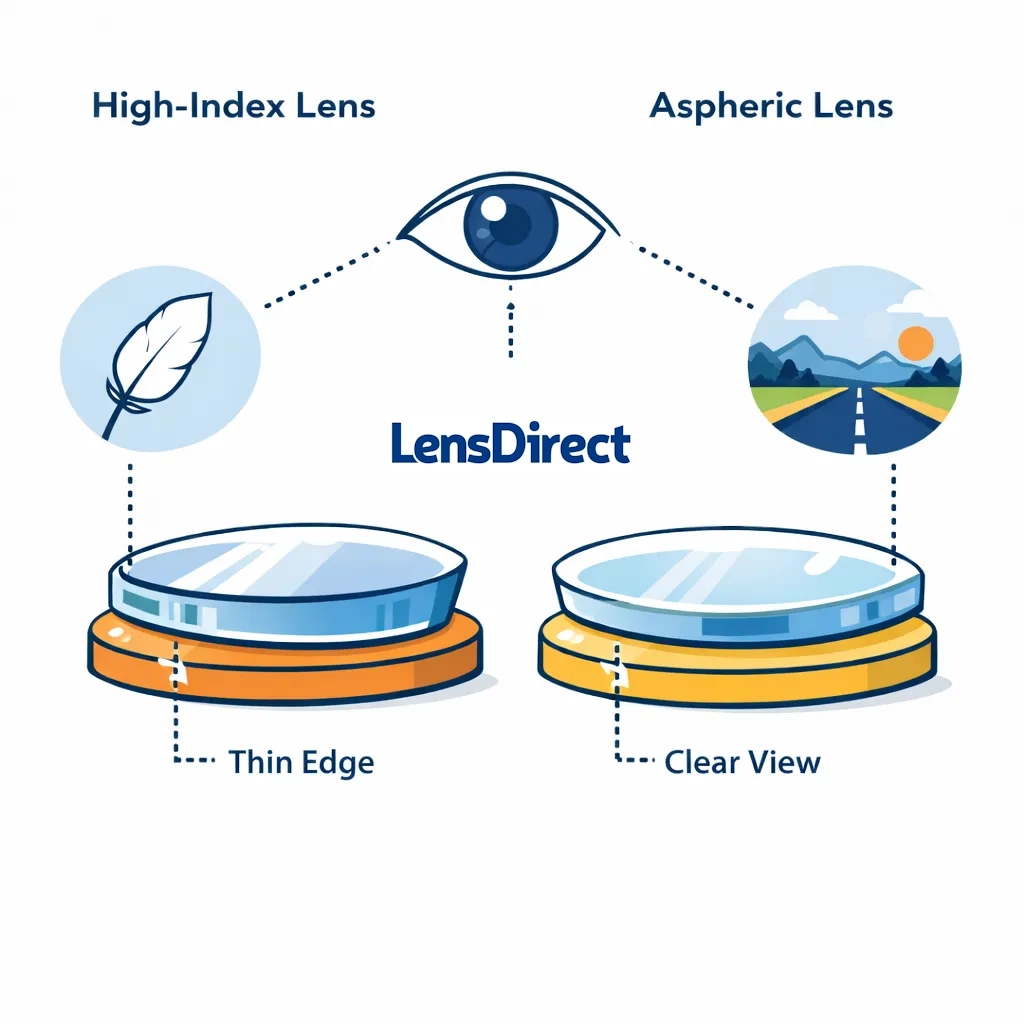
- High-index lenses (for stronger prescriptions): thinner lenses can reduce edge distortion and improve cosmetic comfort.
- Aspheric lenses (common in many modern designs): can reduce peripheral distortion in higher prescriptions.
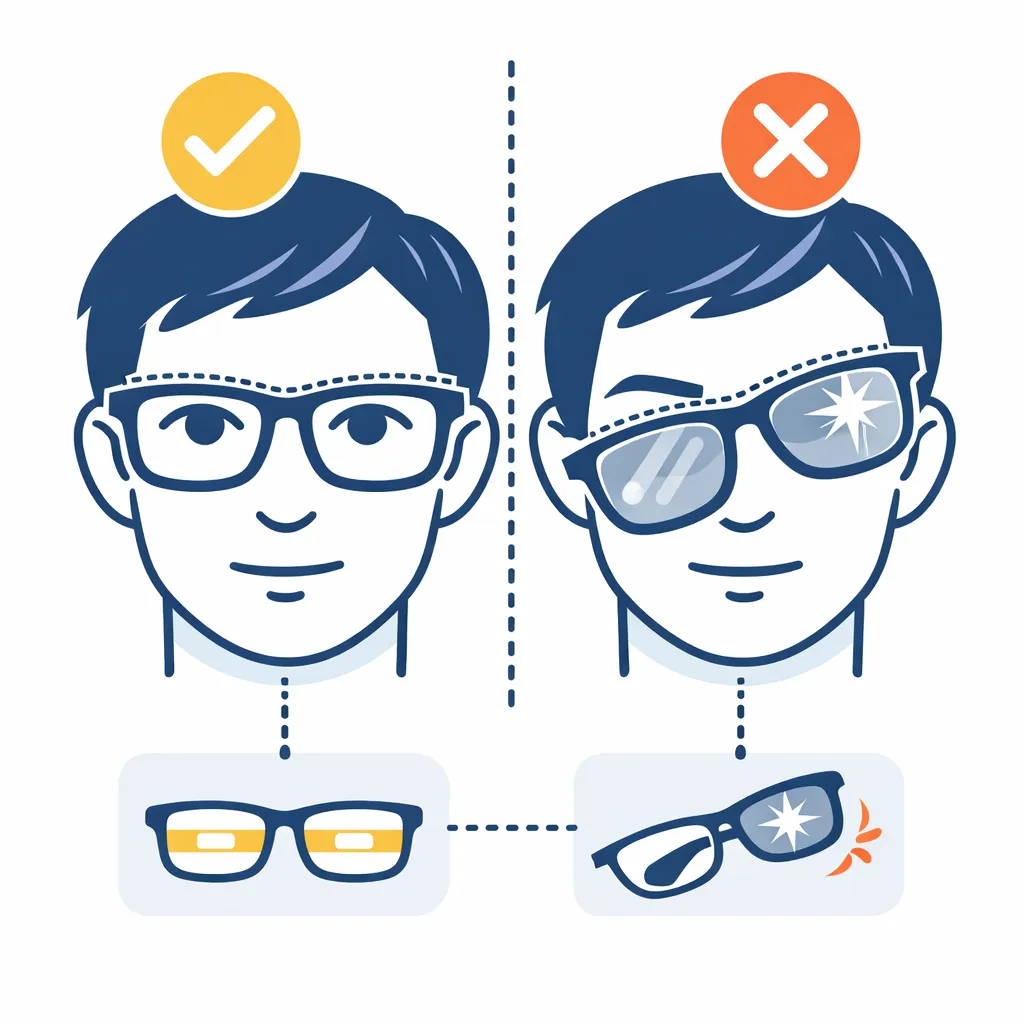
- A well-fit frame: if your glasses sit too far from your face or tilt oddly, you may catch more reflections.
If you notice glare gets worse when you look slightly left or right, fit and lens alignment may be part of it.
5) Treat dry eye (if you get “fluctuating” vision at night)
If your vision seems to blur and sharpen unpredictably — especially with halos — dry eye can be a sneaky cause.
Simple habits that can help:
- Use lubricating eye drops before driving (ask your eye doctor what type is best for you)
- Point car vents away from your face
- Take screen breaks earlier in the evening (screens reduce blink rate)
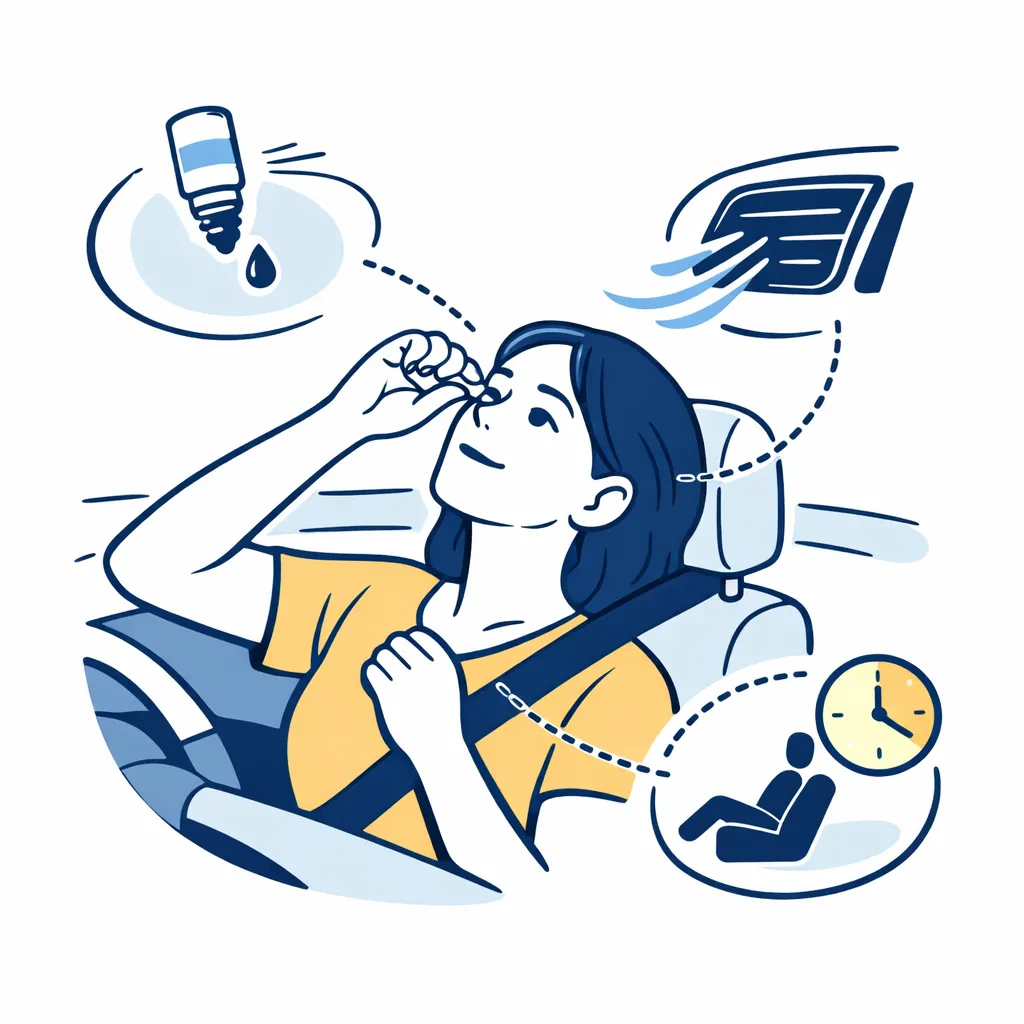
Dry eye doesn’t just feel annoying — it can directly worsen glare by disrupting the smooth tear film your eye needs for crisp optics.
What’s mostly hype (or works differently than advertised)
1) Yellow “night driving glasses”
These are everywhere: yellow-tinted lenses marketed to “cut glare” and “increase contrast.”
Here’s the reality:
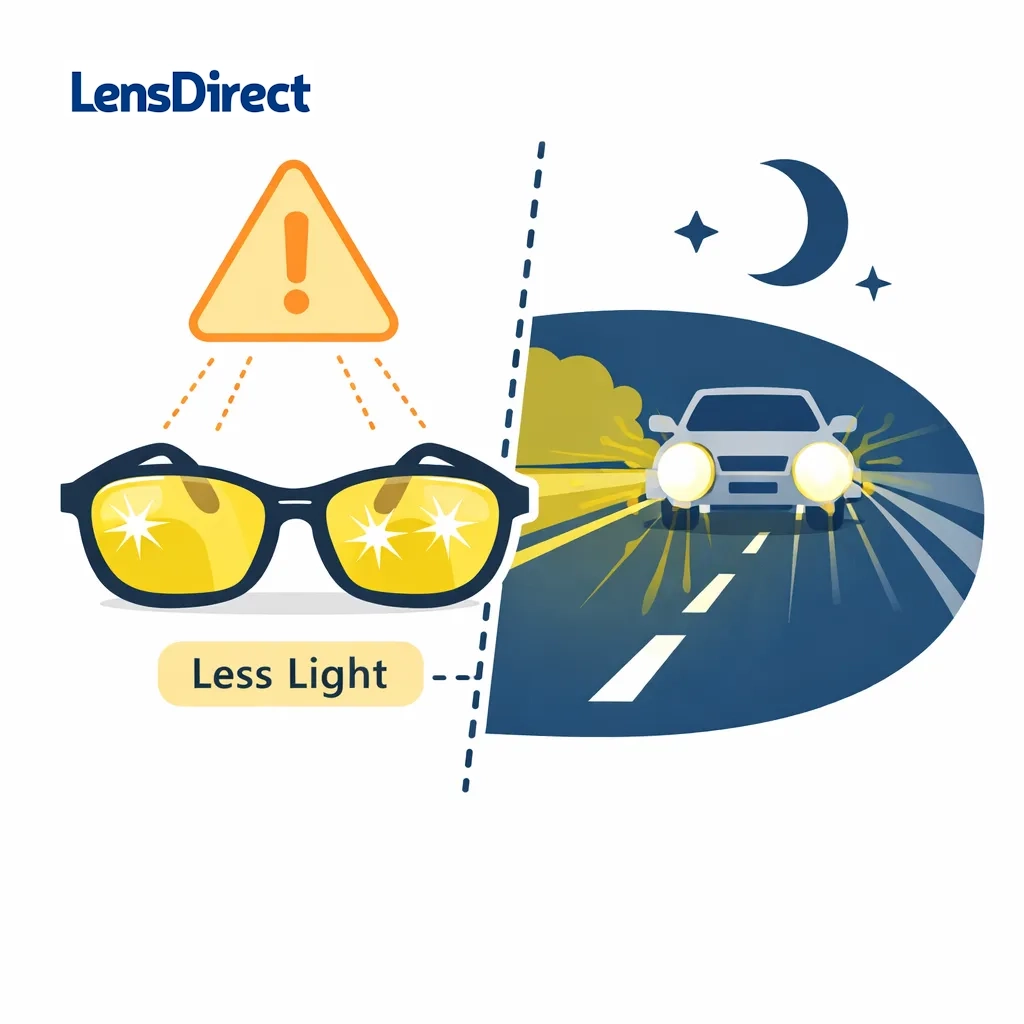
- Yellow lenses reduce some scattered blue light and can boost perceived contrast in certain conditions.
- But they also reduce overall light transmission — meaning less light reaches your eyes.
- At night, when you’re already light-starved, making the world darker is usually not what you want.
Some people feel like yellow lenses help because they change the look of headlights and make the scene seem “warmer.” But for many drivers, they can actually reduce visibility — especially in rainy conditions or poorly lit roads.
If you try them and love them, fine — but don’t expect them to be a magic glare solution, and don’t use anything that makes it harder to read signs or spot hazards.
2) Blue-light blocking lenses for headlight glare
Blue-light lenses are commonly discussed for screens. But headlights and streetlights aren’t “screen light,” and glare at night is mostly about intensity + reflections + scatter, not “too much blue.”
Blue-light filtering might change the color profile of light sources, but it typically won’t:
- Correct astigmatism
- Fix lens reflections
- Remove halos caused by scatter inside the eye
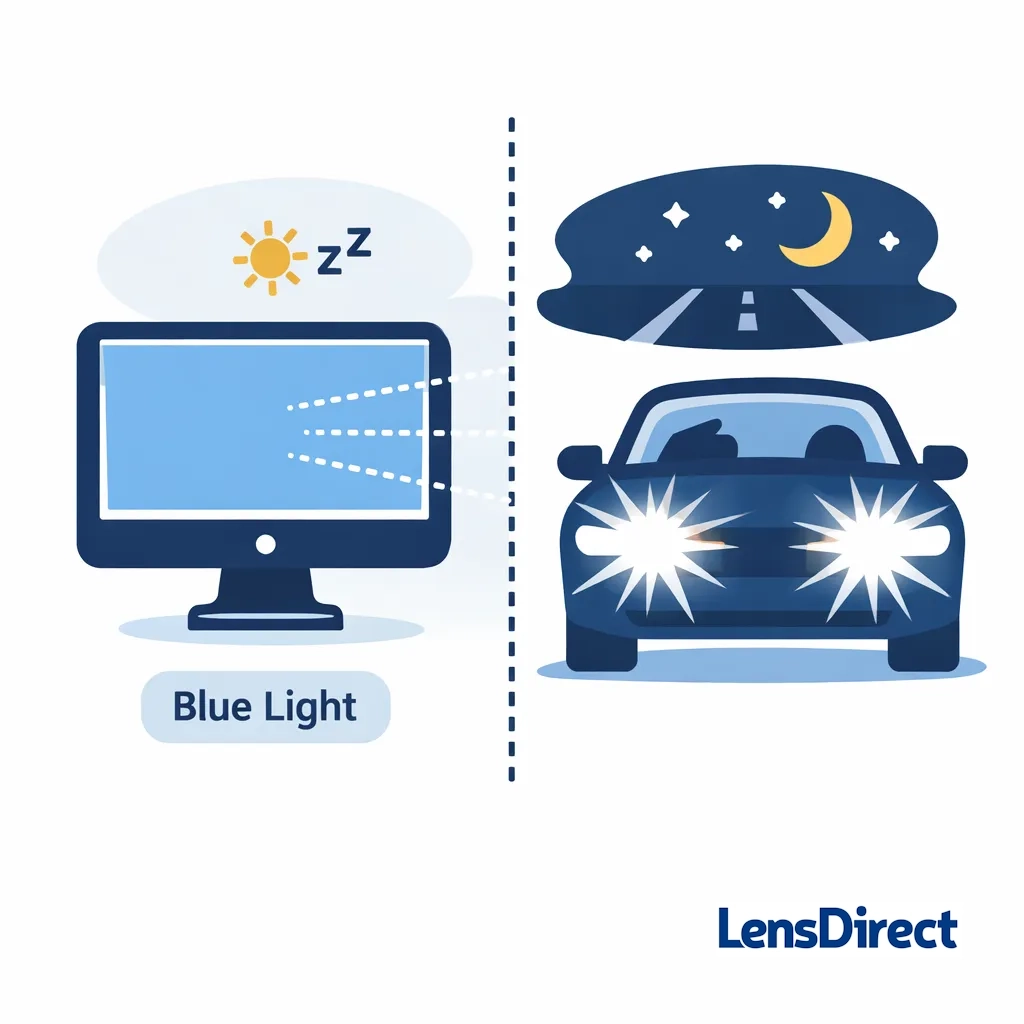
If night glare is your main problem, you’ll usually get more benefit from AR coating + correct prescription than from blue-light filtering.
3) Polarized lenses… at night
Polarization is fantastic for daytime driving because it reduces glare from horizontal reflective surfaces (wet roads, hoods, windshields).
But at night:
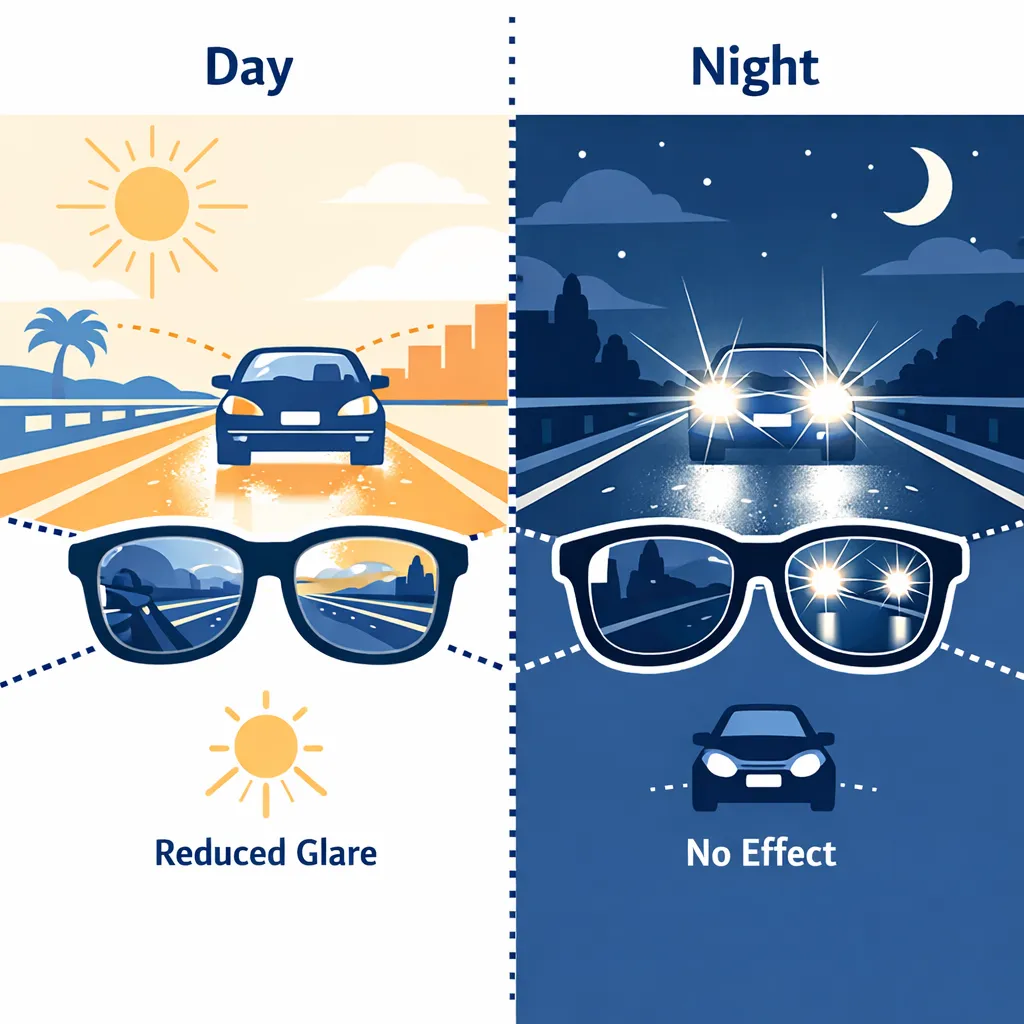
- The biggest issue is direct headlight glare, not reflective surface glare.
- Polarized lenses can reduce overall brightness, which may make it harder to see darker objects.
Polarized lenses are a daytime win, but they aren’t typically the answer for night driving.
4) “One-size-fits-all glare blockers”
If a product claims it works for everyone, regardless of prescription or eye condition, be skeptical.
Glare sensitivity can come from:
- Astigmatism
- Early cataracts
- Dry eye
- Corneal irregularities
- Lens coating issues
- Windshield film and scratches
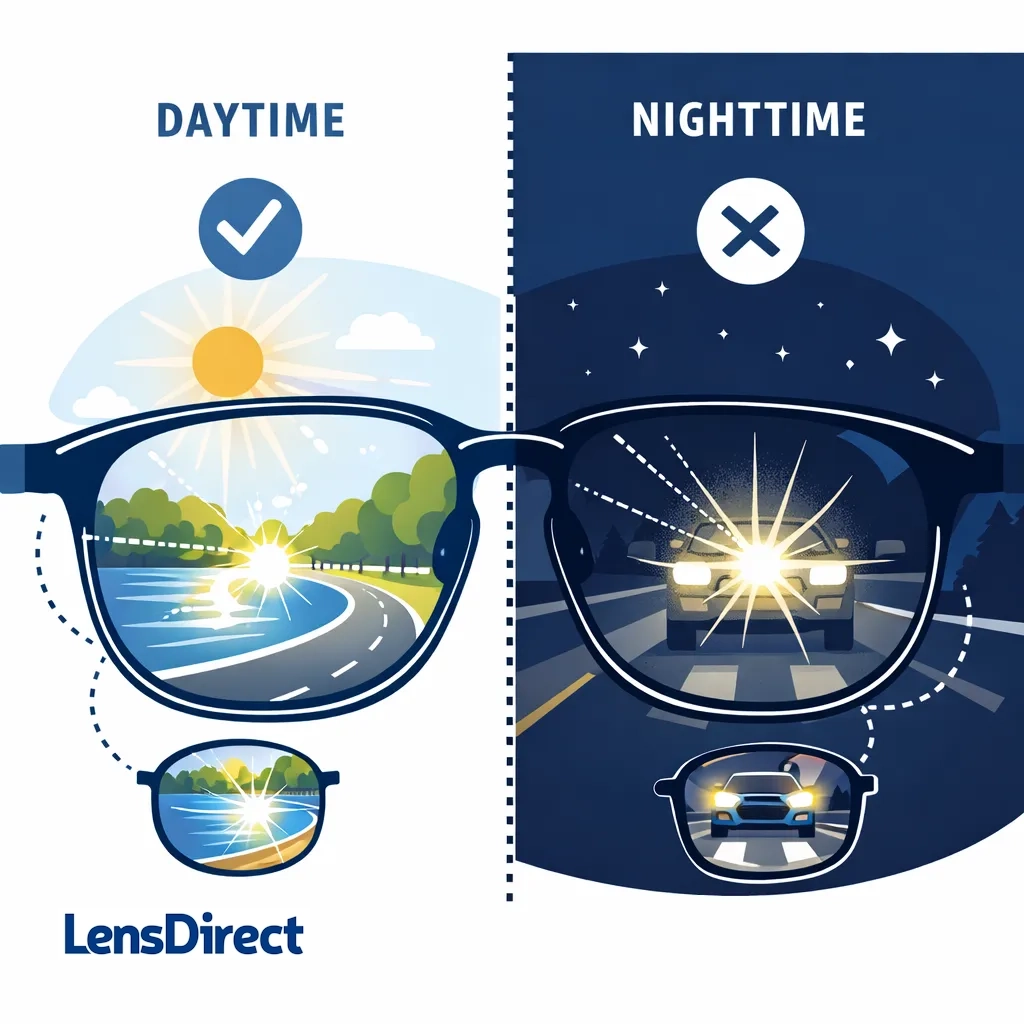
That’s a lot of different root causes. The best fix depends on what’s actually driving your glare.
A quick night-driving checklist (the practical stuff that helps immediately)
Before your next evening drive:
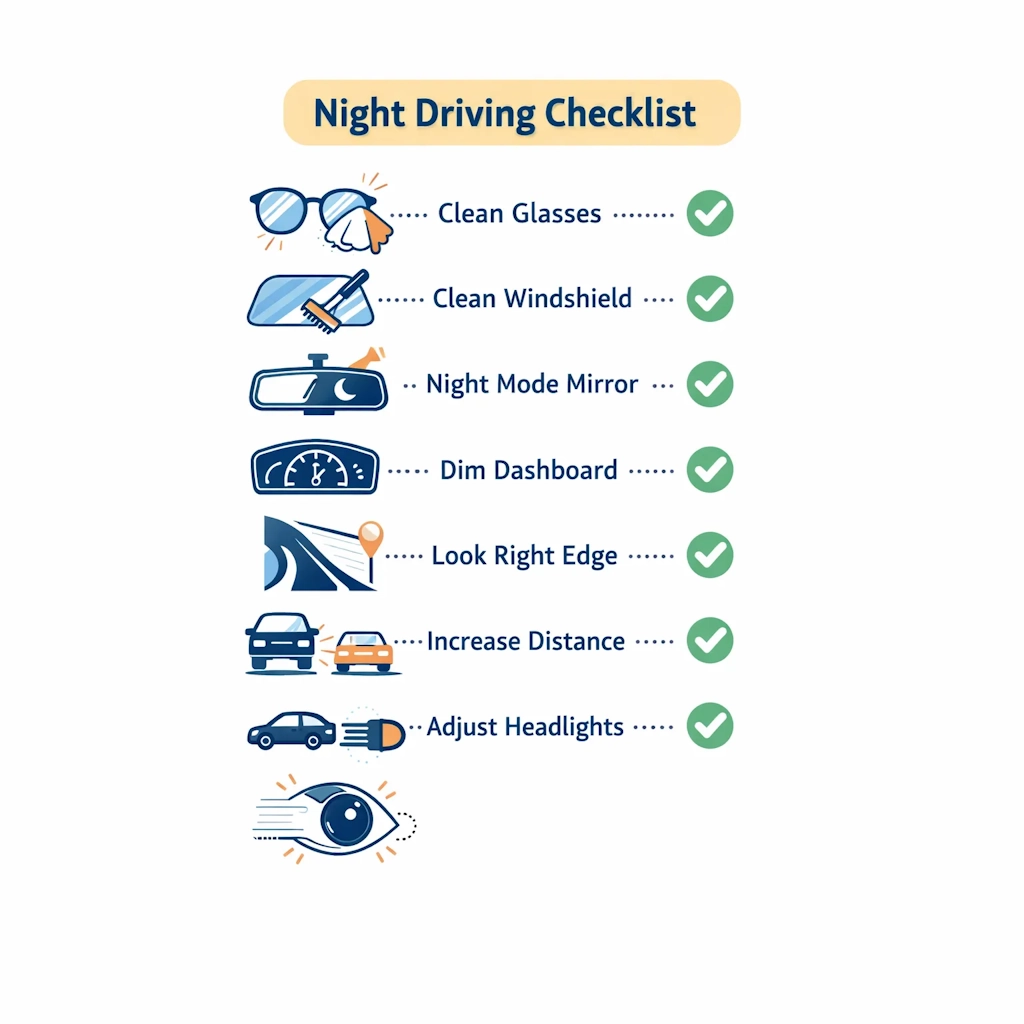
✅ Clean glasses properly (spray + microfiber)
✅ Clean the inside windshield film
✅ Use your rearview mirror’s night mode
✅ Slightly reduce dashboard brightness
✅ Aim your gaze to the right edge line when an oncoming car approaches (don’t stare into headlights)
✅ Increase following distance and reduce speed in heavy glare situations
✅ Confirm your headlights are properly aimed (misaligned headlights make everything worse — for you and everyone else)
These aren’t “glasses solutions,” but they meaningfully reduce strain and improve safety.
When glare is a sign to see an eye doctor
If you notice any of the following, schedule an exam:
- Halos or starbursts that are getting worse quickly
- Blurry night vision even with glasses
- Trouble seeing in rain or low-contrast conditions
- A sudden increase in light sensitivity
- One eye significantly worse than the other
Sometimes the culprit is purely optical (like needing AR or a prescription update). But sometimes it’s an early sign of cataracts, corneal issues, or other conditions that deserve professional evaluation.
What to look for when buying glasses for night driving
If you’re ordering glasses and want a setup that supports night driving, prioritize:
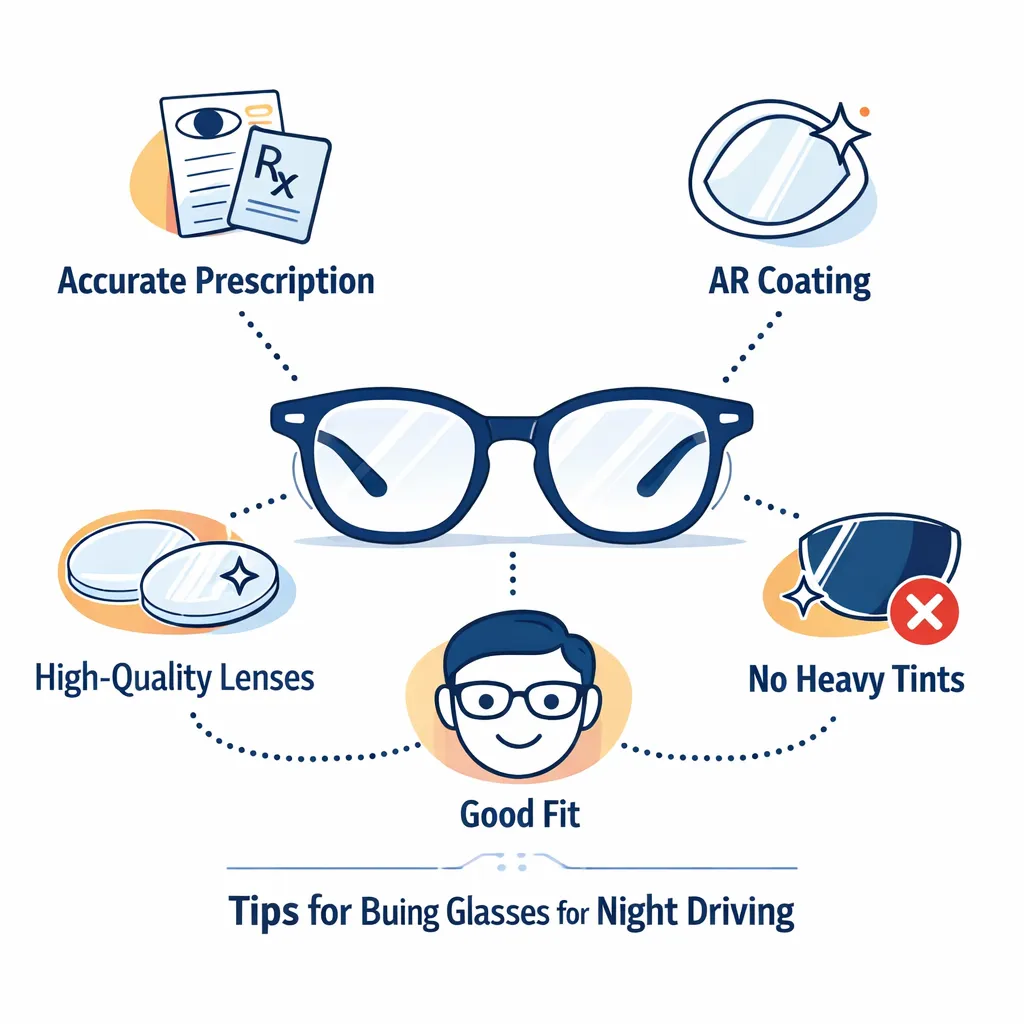
- Accurate, current prescription (especially astigmatism correction)
- High-quality lenses + good frame fit (comfort and clarity)
- Anti-reflective coating (top priority upgrade)
- Skip heavy tints for true night driving
If you want a second pair specifically for driving, consider keeping them in the car so they’re always clean and handy.
Bottom line: what helps vs. what’s hype
Night driving glare is usually best solved by better optics, not “special filters.”
Most helpful:
- Updated prescription (especially astigmatism correction)
- Anti-reflective coating
- Clean lenses + clean windshield
- Managing dry eye and driving conditions
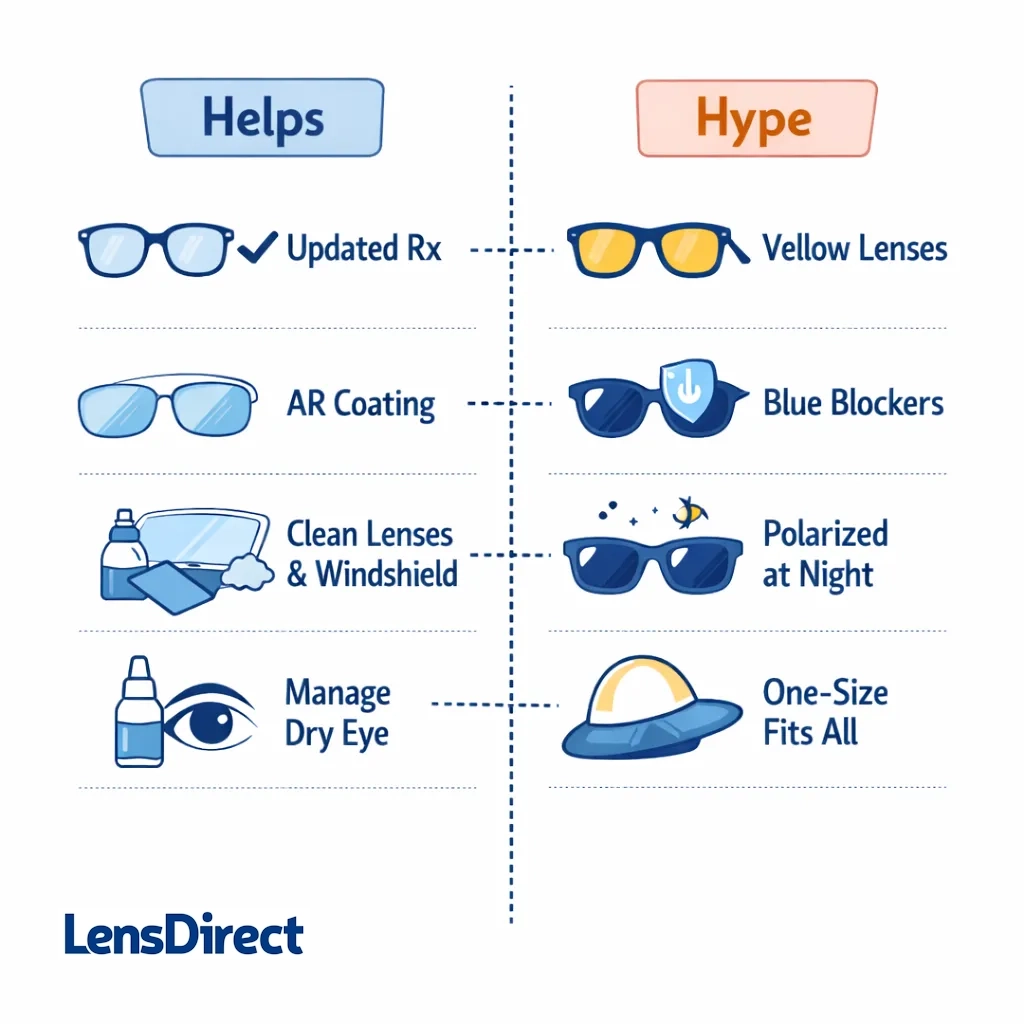
Mostly hype (or limited benefit):
- Yellow night-driving glasses (can darken your view)
- Blue-light blockers for headlight glare
- Polarization for nighttime (better for daytime)
To reduce glare during night driving, get a fresh pair of glasses with anti-reflective coating — one of the biggest upgrades for reducing distracting reflections from headlights. Shop prescription glasses at LensDirect and build a pair that’s made for after-dark comfort.
Author

Subscribe to our email newsletter to get the latest posts delivered right to your email.